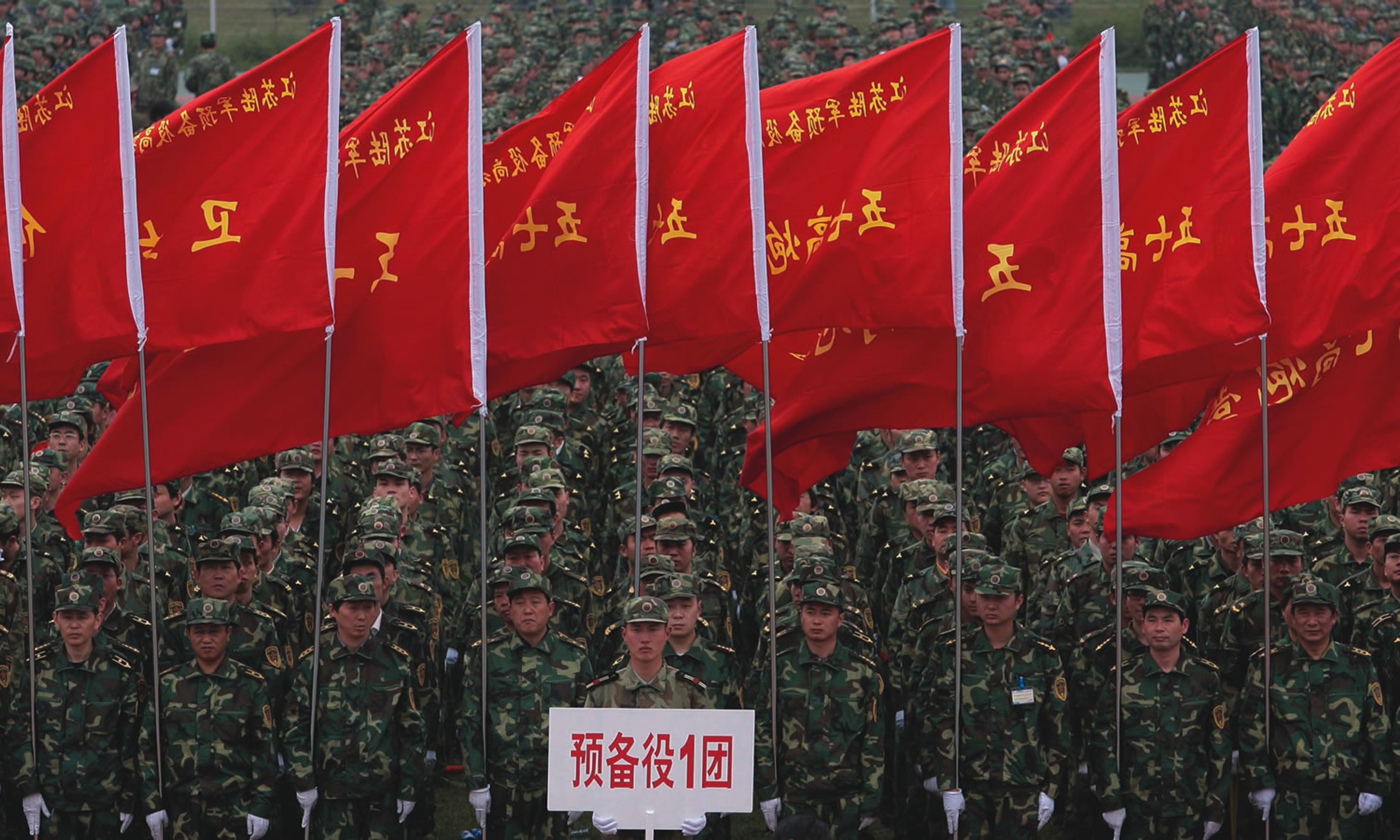
There was a first world war. Then there was a second. They were not identical. But they were sufficiently similar for no one to argue about the nomenclature. Similarly, there was Cold War I, which lasted from the late 1940s until the late 1980s. And now we are in Cold War II. This new Cold War is not the same as Cold War I. But it is sufficiently similar to deserve the name.
It was George Orwell who coined the phrase “Cold War,” in a column published in the (London) Tribune on October 19, 1945, with the title “You and the Atomic Bomb.” Orwell’s argument was that the invention of the atomic bomb, because of its vast expense, ensured the predominance of the only powers capable of producing it (he assumed the Soviet Union would get there “within a few years”), “prolonging indefinitely a ‘peace that is no peace’” between them.
“We have before us,” Orwell wrote,
the prospect of two or three monstrous super-states, each possessed of a weapon by which millions of people can be wiped out in a few seconds, dividing the world between them. It has been rather hastily assumed that this means bigger and bloodier wars, and perhaps an actual end to the machine civilisation. But suppose — and really this is the likeliest development — that the surviving great nations make a tacit agreement never to use the atomic bomb against one another? Suppose they only use it, or the threat of it, against people who are unable to retaliate? . . . Unable to conquer one another, they are likely to continue ruling the world between them.
Interestingly, the third super-state Orwell envisaged was China, which he foresaw would eventually come to dominate East Asia.
Orwell was right that the bomb had brought to an end the era of large-scale wars. He was right that it would create an elite of states with nuclear capability. But he was wrong that the membership of the nuclear club would long remain as small as three. And he was very wrong that the result would be a general “drift . . . not towards anarchy but towards the reimposition of slavery” among all the nuclear powers. In particular, his fear was misplaced that the United States would itself become totalitarian. Writing in 1945 — at a time when many people assumed that the wartime alliance between Britain, the United States, and the Soviet Union would persist into peacetime, despite their ideological differences — Orwell argued that totalitarianism was “the kind of world-view, the kind of beliefs, and the social structure that would probably prevail in a state which was at once unconquerable and in a permanent state of ‘cold war’ with its neighbours.” Yet over 40 years, despite numerous warnings that an imperial presidency combined with a military-industrial complex would do away with American liberties, the opposite happened: The United States in fact became a freer society during the Cold War, not least thanks to civil-rights legislation and greater equality between the sexes. Despite the dire forebodings of Nineteen Eighty-Four, in the real 1984, the contrast between the United States of Ronald Reagan and the Soviet Union of Konstantin Chernenko and Yuri Andropov was a stark one. Nineteen eighty-four was also the year of Bruce Springsteen’s “Born in the U.S.A.,” the kind of proletarian anthem — bitterly critical of his country’s foreign wars and domestic inequities — that was inconceivable in Russia.
When the First Cold War ended, beginning with the reforms of Mikhail Gorbachev and ending with the dissolution of the USSR in 1991, few commentators foresaw the Second — one that would commence almost as soon after the First as the outbreak of the Second World War followed the end of the First World War. The end of history was supposed to have arrived. Globalization was to be the new world order, an integration of economies based on a consensus forged in Washington. Future conflicts, if there were to be any, would be civilizational clashes, born of atavistic differences. Nearly all those who sought to envisage the post–Cold War international order underrated China’s ability to achieve sustained economic growth while at the same time maintaining the political system Orwell had characterized as slavery. The belief persisted — in defiance of all the evidence after Xi Jinping’s accession to power in 2012 — that economic modernization would be followed by political liberalization.
One reason for this self-deception, to which both Democrats and Republicans succumbed, was the ambivalence with which Americans looked back on Cold War I. In his new memoir, President Barack Obama — who in 1984 was an idealistic recent graduate of Columbia — captures that ambivalence very well. “At times,” he writes, “we bent global institutions to serve Cold War imperatives or ignored them altogether; we meddled in the affairs of other countries, sometimes with disastrous results; our actions often contradicted the ideals of democracy, self-determination, and human rights we professed to embody.” “Throughout the Cold War,” he notes in a later passage, the U.S. was guilty of “mistaking nationalist aspirations for Communist plots; equating commercial interests with national security; subverting democratically elected governments and aligning ourselves with autocrats when we determined it was to our benefit.” He continues:
I was . . . part of a post-Vietnam generation that had learned to question its own government and saw how — from the rise of McCarthyism to support for South Africa’s apartheid regime — Cold War thinking had often led America to betray its ideals. This awareness didn’t stop me from believing we should contain the spread of Marxist totalitarianism. But it made me wary of the notion that good resided only on our side and bad on theirs.
Small wonder Obama’s approach to China was so ineffectual, beginning with the unconvincing “pivot” of strategic focus from the Middle East to Asia and fizzling out in the hollow banalities of the 2015 National Security Strategy. “The scope of our cooperation with China is unprecedented,” declared that document:
The United States welcomes the rise of a stable, peaceful, and prosperous China. We seek to develop a constructive relationship with China that delivers benefits for our two peoples and promotes security and prosperity in Asia and around the world. We seek cooperation on shared regional and global challenges. . . . While there will be competition, we reject the inevitability of confrontation.
Compare and contrast that statement with the 2017 version, written under the direction of H. R. McMaster:
China seeks to displace the United States in the Indo-Pacific region, expand the reaches of its state-driven economic model, and reorder the region in its favor. . . . China gathers and exploits data on an unrivaled scale and spreads features of its authoritarian system, including corruption and the use of surveillance. It is building the most capable and well-funded military in the world, after our own. Its nuclear arsenal is growing and diversifying.
The document further states that “China is using economic inducements and penalties, influence operations, and implied military threats to persuade other states to heed its political and security agenda.” As NSS 2017 noted, it had been naïve to assume — as the previous three administrations had tended to — that including Russia and China “in international institutions and global commerce would turn them into benign actors and trustworthy partners.” By the time of Vice President Mike Pence’s Hudson Institute speech of October 2018, the Trump administration had all but acknowledged by name that a cold war was under way. “Beijing,” Pence declared,
is employing a whole-of-government approach, using political, economic, and military tools, as well as propaganda, to advance its influence. . . . Chinese security agencies have masterminded the wholesale theft of American technology — including cutting-edge military blueprints. . . . China wants nothing less than to push the United States of America from the Western Pacific and attempt to prevent us from coming to the aid of our allies. But they will fail.
What are the differences between the two cold wars? Obviously, China is the principal antagonist that the United States faces, not the Soviet Union, which was essentially the Russian Empire under Communist management. There is a much higher level of economic interdependence between the U.S. and the PRC than was ever the case between the U.S. and the USSR: There was never “Amerussia,” the way there was Chimerica. China is a bigger economic challenger than the Soviet Union ever was: There was never any talk of the ruble’s displacing the dollar. There is much more cultural interchange today than in Cold War I: There are between 350,000 and 400,000 Chinese students in America and 2.3 million Chinese immigrants (half of them naturalized). Leading members of the Chinese elite have been educated in the U.S. Technology has changed so that it is harder for each side to conceal military activity from the other, and also much easier for China to access U.S. private- and public-sector data. China does not actively promote socialist revolution around the world. China does not control a significant number of neighboring states. I do not expect nuclear brinkmanship. I do not expect proxy wars.
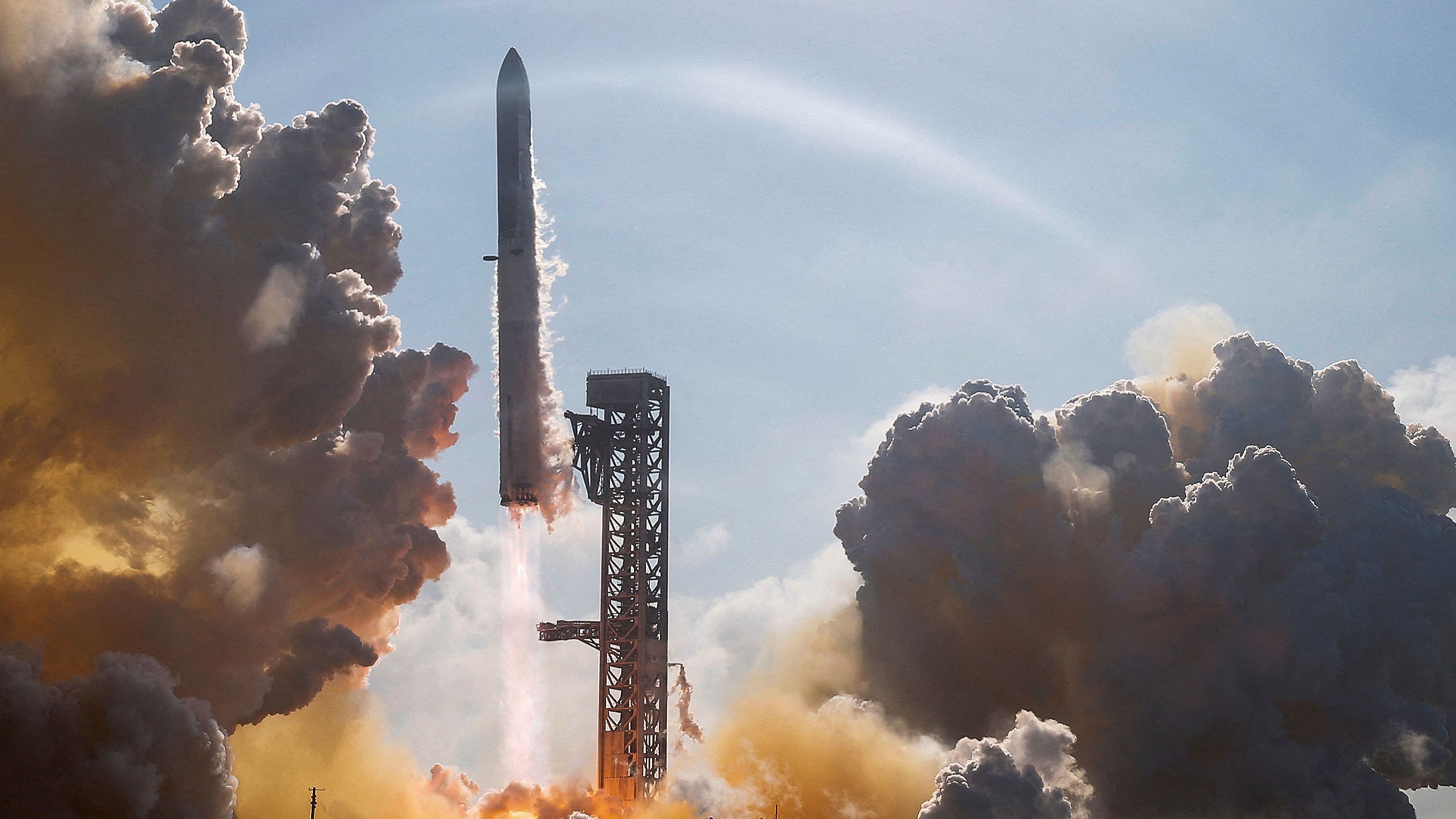
What, on the other hand, do the two cold wars have in common? Much more. As in the early years of the First Cold War, the U.S. and its allies are up against China, Russia, and North Korea. Like the Soviet Union, China is engaged in systemic technological catch-up, employing espionage to acquire Western technology. This is like the U.S.–Soviet arms race, in that it is taking place in multiple fields. In Cold War I, the competition was in nuclear weapons and space (including satellites), but also in information warfare and biological and chemical weapons. Today, China is seeking parity not just in software and hardware but also in artificial intelligence, quantum computing, and even vaccines. China is investing $1.4 trillion over the next five years in AI, 5G, and semiconductors. It is already ahead of the United States when it comes to electronic payments and central-bank digital currency.
Like the USSR, China has both regional and global ambitions. Regionally, it seeks predominance in East Asia, and it is systematically turning the South China Sea into a vast Chinese naval base. Globally, its One Belt One Road (OBOR) initiative looks a lot like the old Soviet imperialism, with aid and infrastructure in return for political loyalty. (Announced lending by Chinese financial institutions to OBOR projects since 2013 amounts to $461 billion.) Like the Soviet Union, China has no compunction about bankrolling corrupt tyrannies, such as Venezuela, as well as exporting surveillance technology to help them crush their own dissidents: Huawei has implemented its “safe cities” project in 700 cities outside China, including cities in Brazil, Mexico, Serbia, Singapore, South Africa, Spain, and Turkey.
Like the USSR, too, China has an ideological objective, which is to curb the spread of Western ideas such as representative government and the rule of law. Since 2018, Xi Jinping has talked repeatedly about struggle (douzheng), particularly “great struggle” (weida douzheng) and “struggle for a new era” (fendou shinshidai), terminology not heard since the Maoist era. At home, China is a one-party state with a leadership that, under Xi, has increased its commitment to the Marxist-Leninist view of both internal power and international relations, as a newly published paper from the State Department’s Policy Planning Staff makes clear. It is building an even more comprehensive system of surveillance than Orwell imagined in Nineteen Eighty-Four. It ruthlessly deploys repressive methods, including mass internment, reeducation, and population control, against internal minorities such as the Uyghurs of Xinjiang. It is determined to end the semi-autonomy of Hong Kong and the de facto democracy and independence of Taiwan.
As in Cold War I, there is an arms race. According to the U.S. Office of Naval Intelligence, by the end of 2020, China will have 360 commissioned warships, compared with a projected total of 297 for the U.S. Navy at the end of this fiscal year. One Belt One Road is expanding into all the “new strategic domains,” meaning the deep sea, outer space, and cyberspace — hence such recent spin-offs as the “Silk Road on Ice” in the Arctic and the “OBOR Space Information Corridor.” The PRC now has more than 1,250 ground-launched ballistic missiles and cruise missiles with ranges between 500 and 5,500 kilometers. At the same time, the U.S. Marine Corps is getting rid of all its tanks so that it can more effectively “island hop” in the event of a conflict in the South China Sea.
Finally, China, like the Soviet Union, only worse, is an environmental and health hazard to the rest of the world. Not only was COVID-19 a kind of super Chernobyl; 48 percent of the increase in CO2 emissions since the Paris agreement is due to China.
Tell an American audience that Cold War II has already begun, and they will mostly object. The same is not true of Chinese audiences. “We already find ourselves in the situation of a New Cold War,” wrote Yao Yang, professor at the China Center for Economic Research and dean of the National School of Development at Peking University, earlier this year. Yan Xuetong, dean of the Institute of International Relations at Tsinghua University, is another scholar who accepts the reality of Cold War II, though he envisages a purely technological race, without nuclear brinkmanship or proxy wars.
To get a flavor of the cold-war mood in China, read Xi’s speech in October marking the 70th anniversary of the Korean War. “Seventy years ago, the imperialist invaders fired upon the doorstep of a new China,” he declared. “The Chinese people understood that you must use the language that invaders can understand — to fight war with war and to stop an invasion with force, earning peace and respect through victory. The Chinese people will not create trouble but nor are we afraid of them, and no matter the difficulties or challenges we face, our legs will not shake and our backs will not bend.” Xi added that “any country and any army, no matter how powerful they used to be” — a clear jab at the U.S. — would be “battered” if they challenged China today.
The world has noticed this change of tone. Attitudes toward China have deteriorated markedly, especially in the past year or two. In the United States, the proportion of people with an unfavorable view of China has risen from 47 percent in 2017 to 73 percent, according to Pew, with voters of both ideological persuasions moving in this direction. Scholars from Orville Schell to Nick Eberstadt now agree that the strategy of engagement failed (see “China Unquarantined,” by Dan Blumenthal and Nicholas Eberstadt, in the June 22, 2020, issue of NR). And similar disillusionment with China can be found in survey data and elite opinion right across the developed world, not to mention much of emerging Asia, notably in India. China’s abrasive “wolf-warrior diplomacy” this year has disastrously backfired. Chinese successes, such as the newly announced Regional Comprehensive Economic Partnership — an Asian trading bloc to fill the space left by the Trans-Pacific Partnership abandoned by the United States — have been outweighed by the emergence of a more cohesive strategic “quad” (Australia, India, Japan, and the United States), as well as by the marked rise of anti-Chinese sentiment in Europe.
True, as we have already seen, the U.S. and China are more economically interdependent now than the U.S. and the Soviet Union ever were. Many (not least on Wall Street) would like to keep it that way. But decoupling is happening and has been for some time. Chinese foreign direct investment (FDI) in the U.S. has been on a downward trajectory since its peak in 2016, owing to the federal government’s Committee on Foreign Investment and other regulations. According to the U.S.-China Investment Project, the 2016 peak was $46.45 billion. Chinese FDI in the U.S. this year stands at just $4.7 billion. In a clear move to limit the influence of China’s tech platforms, 49 countries and 170 telecommunications companies have signed on to support the United States’ “Clean Network” initiative (representing almost two-thirds of global economic output). The Internet is being rewired as Google and Facebook drop plans to connect Hong Kong to a new undersea fiber-optic cable from Los Angeles to East Asia — though of course it was China that long ago initiated the “Splinternet” with its Great Firewall and the import-substitution strategy that produced Alibaba and Ten Cent.
No one announces the outbreak of a cold war. It often takes some commentators years to realize a cold war has begun. Hence the recurrent and often debilitating problem of cold-war denial. When Winston Churchill gave his famous Iron Curtain speech in Fulton, Mo., in March 1946, the New York Times’ commentary made it sound as if the U.S. had some kind of choice between an alliance with the British Commonwealth or an alliance with the Soviet Union, “Senator [Arthur] Vandenberg’s suggestion.” And the Times went on: “It is inconceivable that a leader as shrewd and foresighted as Stalin would draw a people yearning for peace into a new war.” In July 1946, the Times’ Moscow correspondent’s final dispatch appeared on the front page, with the headline: “Soviet [Union] Seen Wanting Peace Despite Its Air of Challenge.” Throughout the late 1940s, there were many American and European commentators who questioned the concept of a cold war — and some kept doing so even after Stalin approved a hot war aimed at unifying Korea under Communist rule.
As in the early phase of Cold War I, the risk of hot war is very real, as Henry Kissinger has repeatedly pointed out. The paradox is that the longer cold-war denial persists, the more likely such a hot war becomes, precisely because the West continues to underestimate the seriousness of the Communist threat. Ultimately, the best argument for Cold War II is that, like Cold War I, Orwell’s “peace that is no peace” must be preferable to World War III.








Comments