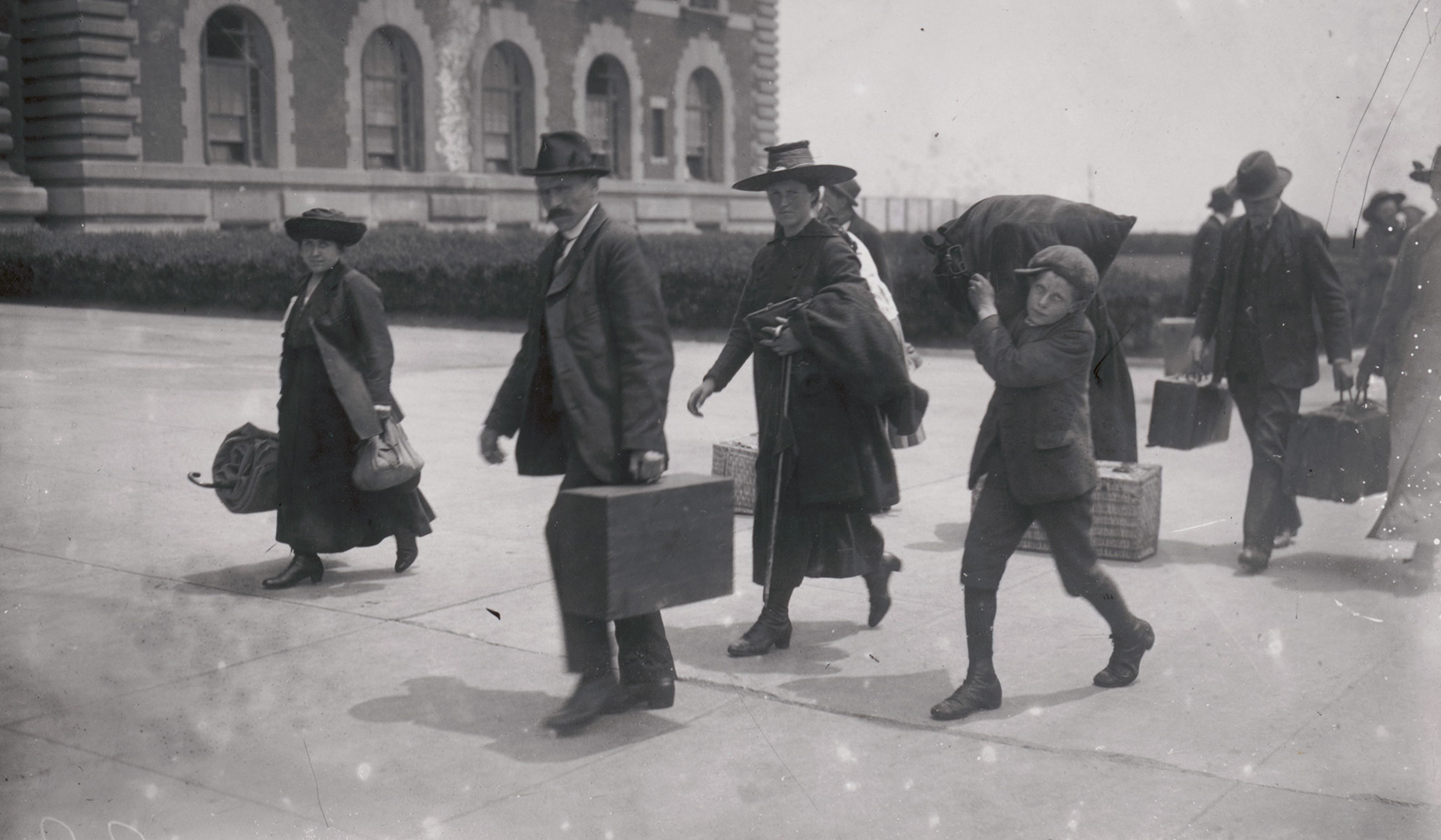
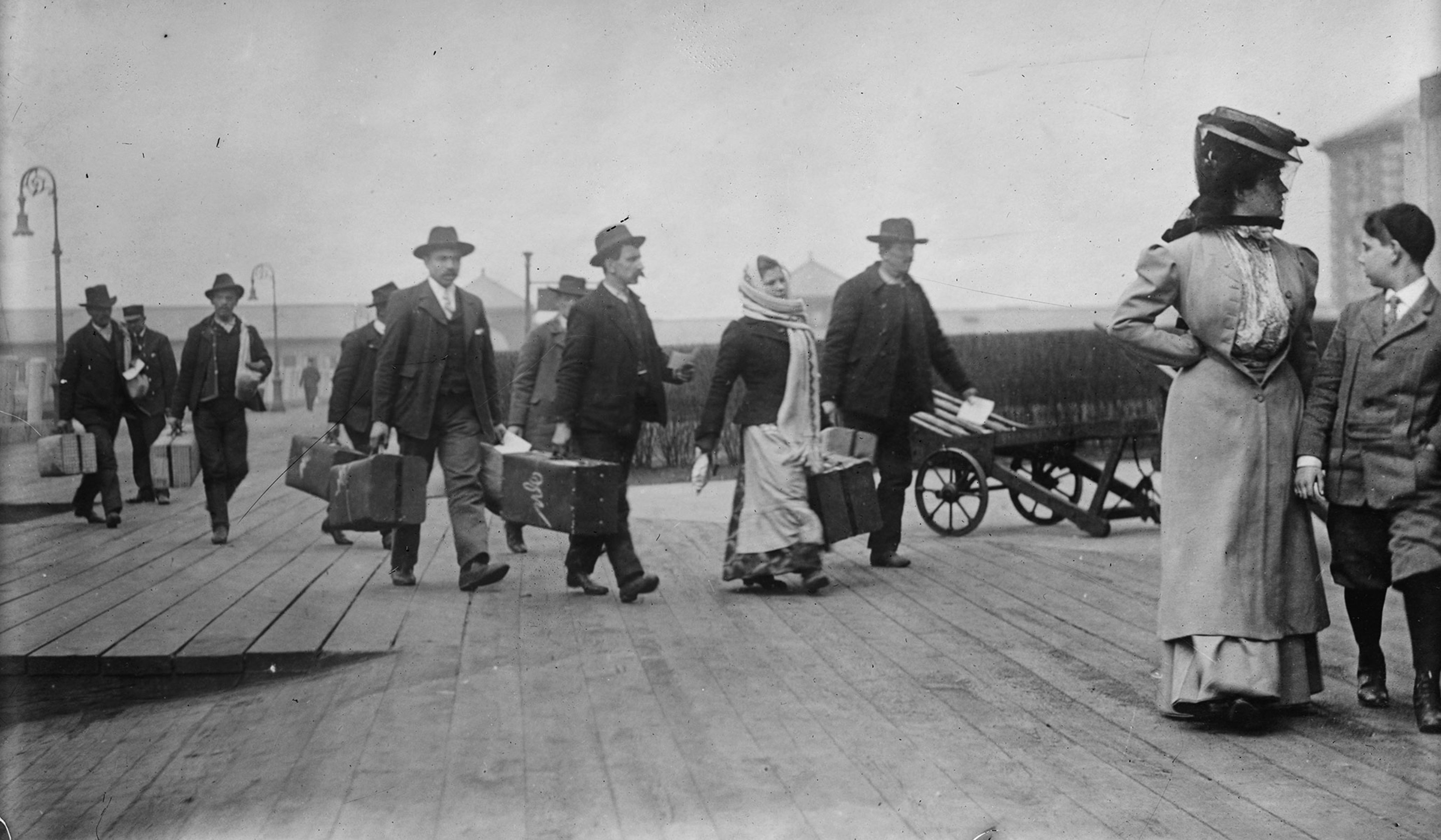
In 1955, it was not unreasonable to believe that mass migration to the United States was a thing of the past. Following the restrictionist legislation of the 1920s, the flow of European migrants had long since slowed to a trickle. By the Eisenhower years, the children and grandchildren of the Italian, Russian, and Polish newcomers who had settled in the U.S. in the late 19th and early 20th centuries were moving out of fading ethnic neighborhoods and into sprawling suburbs, where they intermingled and intermarried with Americans who traced their lineage to earlier waves of migration. Though the so-called bracero agreements brought hundreds of thousands of Mexican laborers to the U.S. between 1942 and 1964, the vast majority of them were seasonally employed farm workers, not immigrants as such. Over the course of the 1950s, the foreign-born share of the U.S. population fell from 6.9 percent to 5.4 percent — in part because the post-war baby boom caused the native-born majority to swell in size — and many demographers expected that share to fall further still.
Needless to say, that’s not quite how things have turned out. As of 2019, the foreign-born share of the U.S. population stands at 13.7 percent, almost double what it was in 1950. Starting in the 1960s, the U.S. embarked on a new age of mass migration, one that’s had a profound influence on every aspect of American life. Between 1965 and 2015, new immigrants and their descendants added 72 million people to the U.S. population, accounting for 55 percent of all population growth over that interval. The editors of NR in its founding era were farsighted in many respects, but I suspect they’d have been more likely to believe that Mars would be dotted with dozens of nuclear-powered human settlements in the year 2020 than that the vice president–elect would be the daughter of immigrants from Jamaica and India.
But just as observers in the 1950s would have been wrong to assume that the days of mass migration to the U.S. were over, we shouldn’t take for granted that our new age of mass migration will continue indefinitely. The conditions that gave rise to large immigrant inflows in recent decades are changing. While some factors point toward increasing immigration levels, others point toward a sharp immigration slowdown.
First, let’s consider the forces pushing in the direction of higher immigration levels.
In the months to come, the incoming Biden administration will almost certainly loosen immigration restrictions imposed by President Trump. Throughout the Trump presidency, public opinion has turned against immigration restriction — an outcome that I anticipated in these pages in 2016 — and this shift has been particularly pronounced among Democrats, who now overwhelmingly favor a more permissive approach to immigrant admissions. In keeping with the changing mood of the Democratic coalition, Biden campaigned on liberalizing asylum policies, legalizing most of the long-resident unauthorized population, and expanding family-based and employment-based legal immigration. Immigrant advocacy groups are pressing for him to go much further.
Even if Republicans maintain control of the U.S. Senate and comprehensive immigration legislation is not forthcoming, the executive branch has wide authority over immigration policy, as critics of the Obama and Trump administrations had to be reminded of again and again. President-elect Biden and his allies are already planning to reverse a number of Trump’s executive actions, including the travel ban and the new public-charge rule, the latter of which may have (in theory) barred hundreds of thousands of otherwise eligible immigrants from securing green cards every year.
Moreover, the Biden White House is poised to use its discretionary power to shield large numbers of unauthorized or otherwise deportable noncitizens from removal. While the Trump administration made an effort to bring the Deferred Action for Childhood Arrivals (DACA) policy to an end, the Biden administration is more likely to double down on it, extending similar protections to, for starters, young noncitizens who arrived in the U.S. after 2007 and the parents of the DACA-eligible. There is no question that the net effect of these policies will be to increase immigrant admissions.
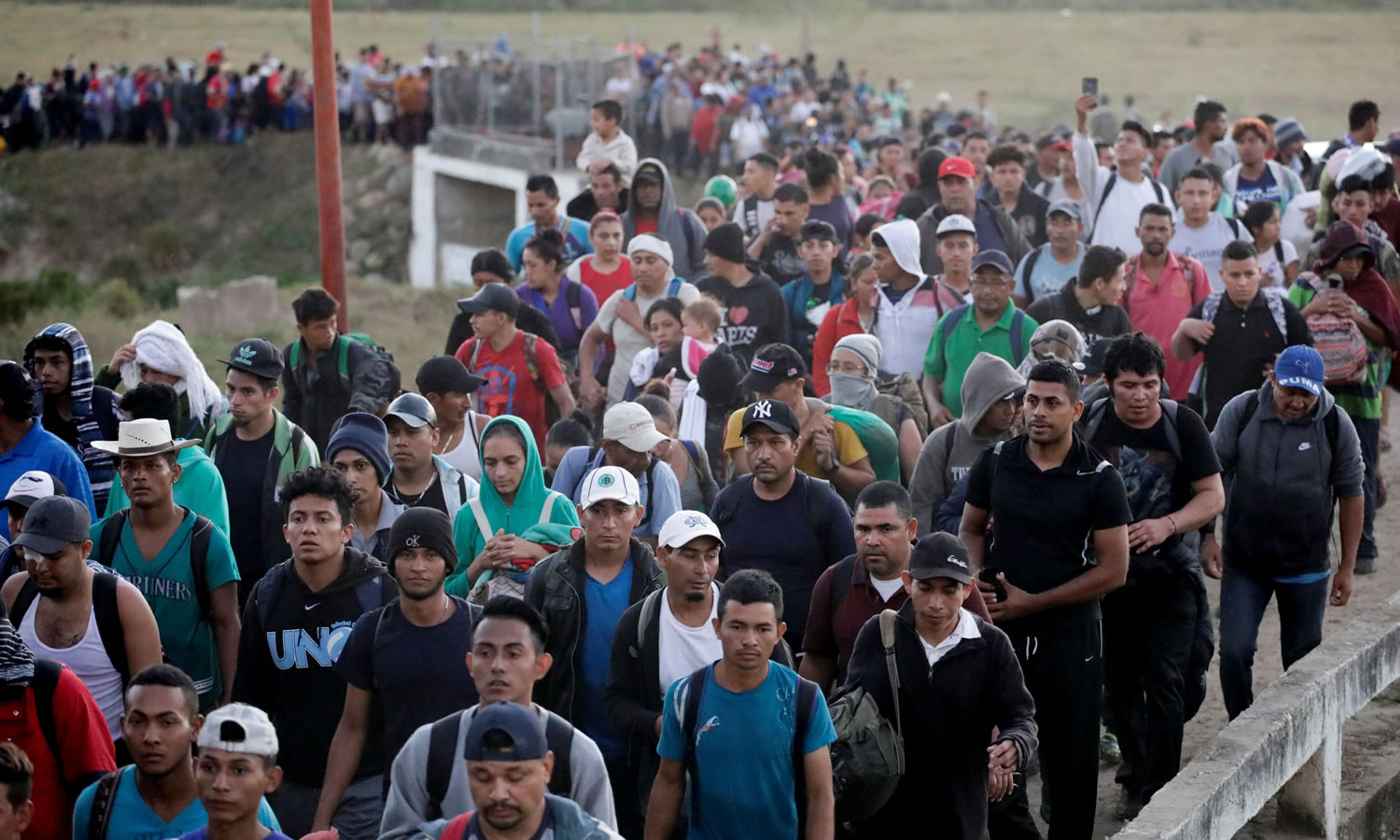
Will Biden’s more permissive immigration policies lead to a surge at the border like the Central American migrant waves of 2014 and 2018? Given the destruction that has been wrought by Hurricane Eta in parts of Central America, and the fact that migrant networks are highly responsive to even the most subtle shifts in U.S. border enforcement and asylum policy, I suspect that the answer is yes, and that a new migrant crisis will pose a serious political challenge to the Biden administration — but let’s hold off on that for now.
The domestic political landscape aside, another factor that points toward higher immigration levels is the continuing demographic rise of Africa. In 2010, the working-age population of sub-Saharan Africa was half a billion; by 2050, that number is projected to grow to more than 1.3 billion. That booming young population could be channeled into productive work at home, or, failing that, could seek it elsewhere. The economists Gordon Hanson and Craig McIntosh predict that, if current patterns persist, the number of African migrants residing outside the continent will almost triple over that period, growing from 4.6 million in 2010 to 13.4 million in 2050. Civil wars, climate change, and other looming calamities could spur emigration well beyond these projections.
Many believe that economic growth in sub-Saharan Africa will dampen migratory pressures. Indeed, this is the impetus for many overseas-development schemes. But there is mounting evidence that as countries grow richer, their citizens actually grow more likely to emigrate rather than less, at least until those countries enter the ranks of middle-income states, such as Mexico and China. And this makes intuitive sense. The poorest of the poor don’t have the resources they’d need to migrate, just as they don’t have the resources to seek higher education. As people grow richer, they’re in a better position to invest in their future earning potential, whether by paying for more education or moving to a more productive town or country, where their labor will command a higher wage. Much of sub-Saharan Africa is entering the sweet spot where emigration levels tend to skyrocket.
Now let’s turn to the forces pushing in the direction of lower immigration levels.
It is often argued that because the U.S. population is aging, we ought to liberalize our immigration policies. Whether you agree or disagree, it’s also worth keeping in mind that the U.S. is not the only country that’s aging — so too are the countries that have been the source of most U.S. immigrants in recent years.
Most foreign-born U.S. residents are from Latin America and East Asia, and both regions have seen their birth rates plummet in recent years. There are exceptions to this pattern, to be sure. Central America is a partial one. Its population is more youthful than that of Mexico, which helps account for the recent Central American migrant waves. But the combined population of the Central American states is dwarfed by that of Mexico alone. Expect migratory pressures from the region to ease as its population ages.
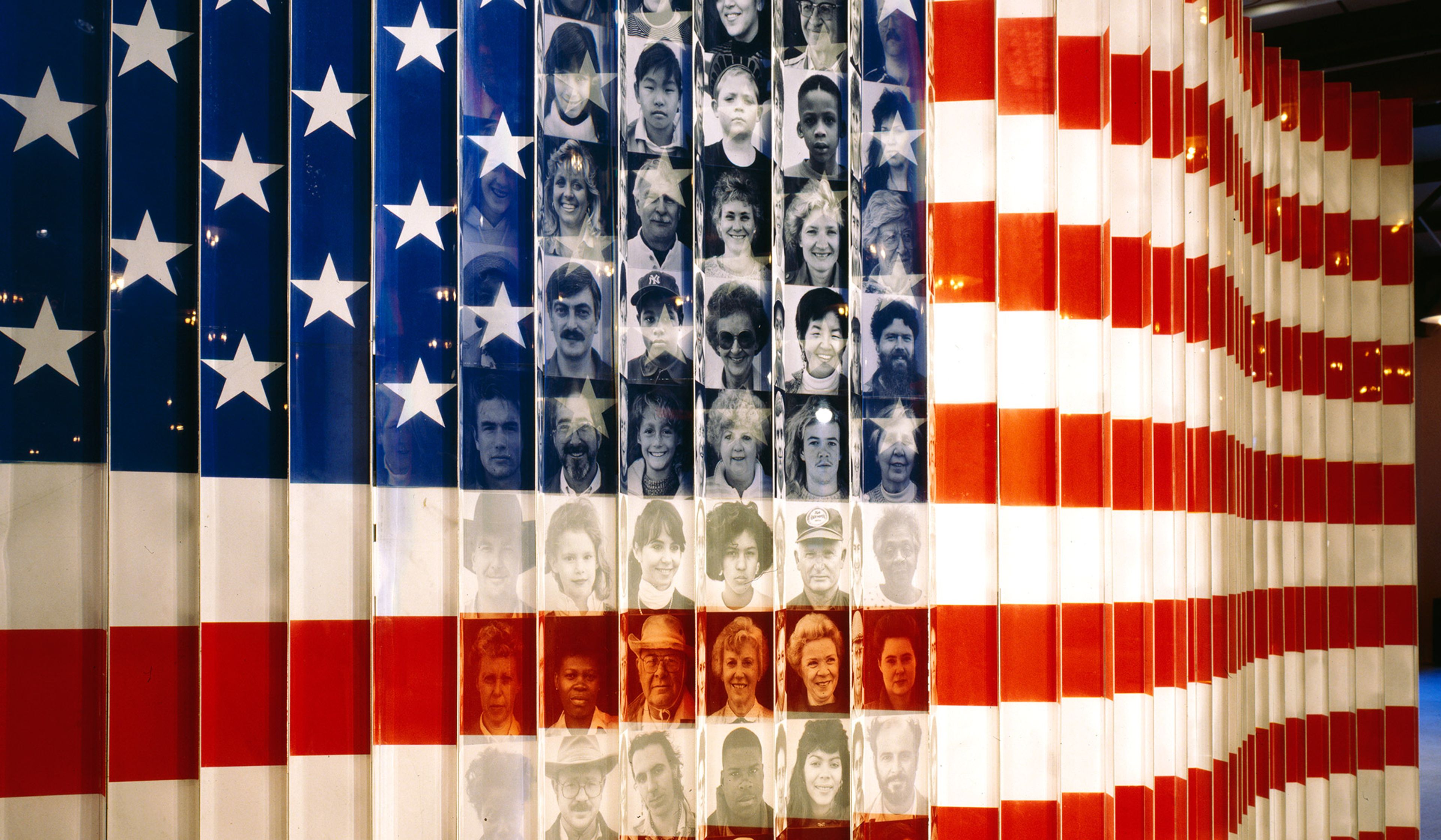

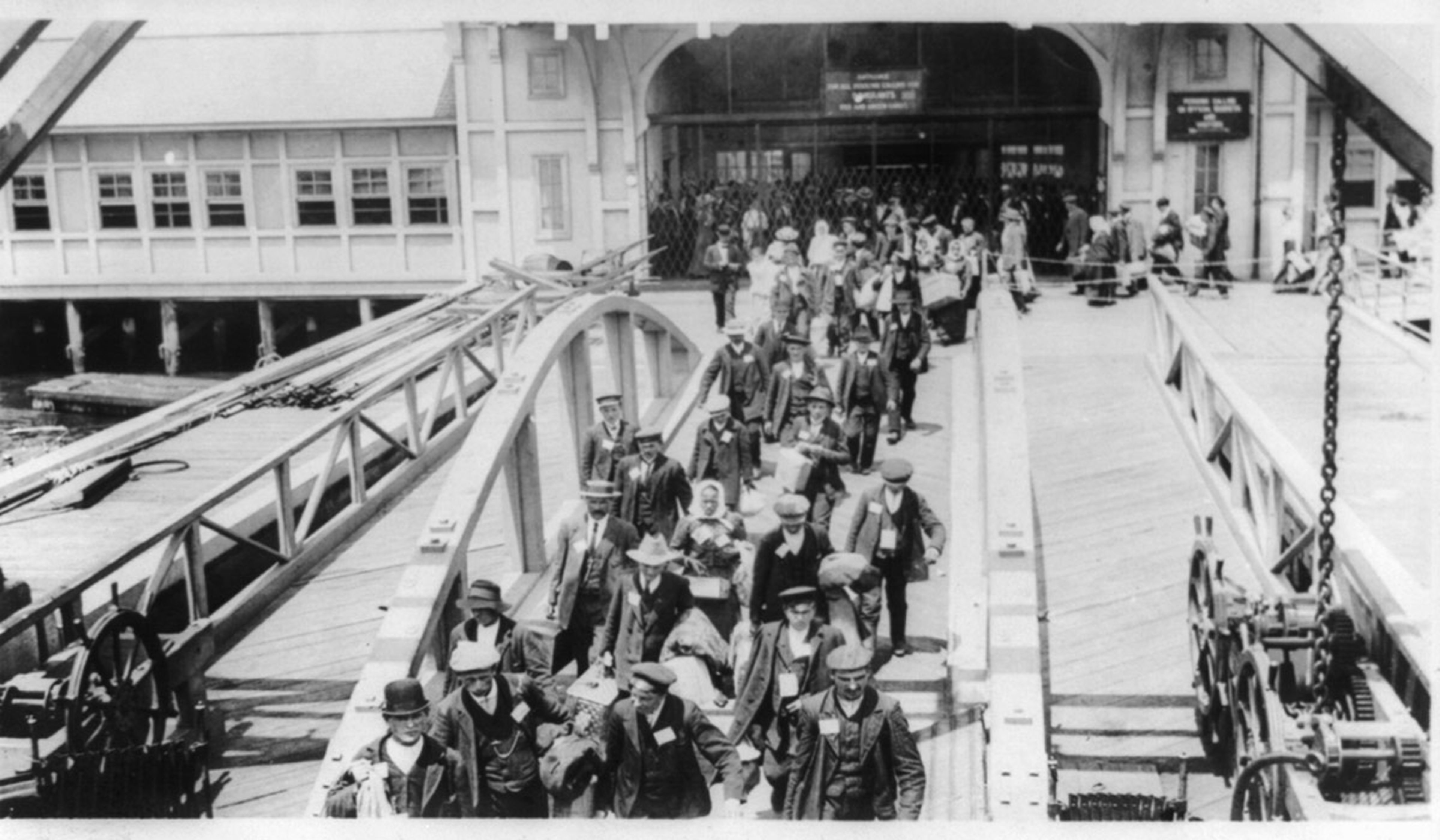
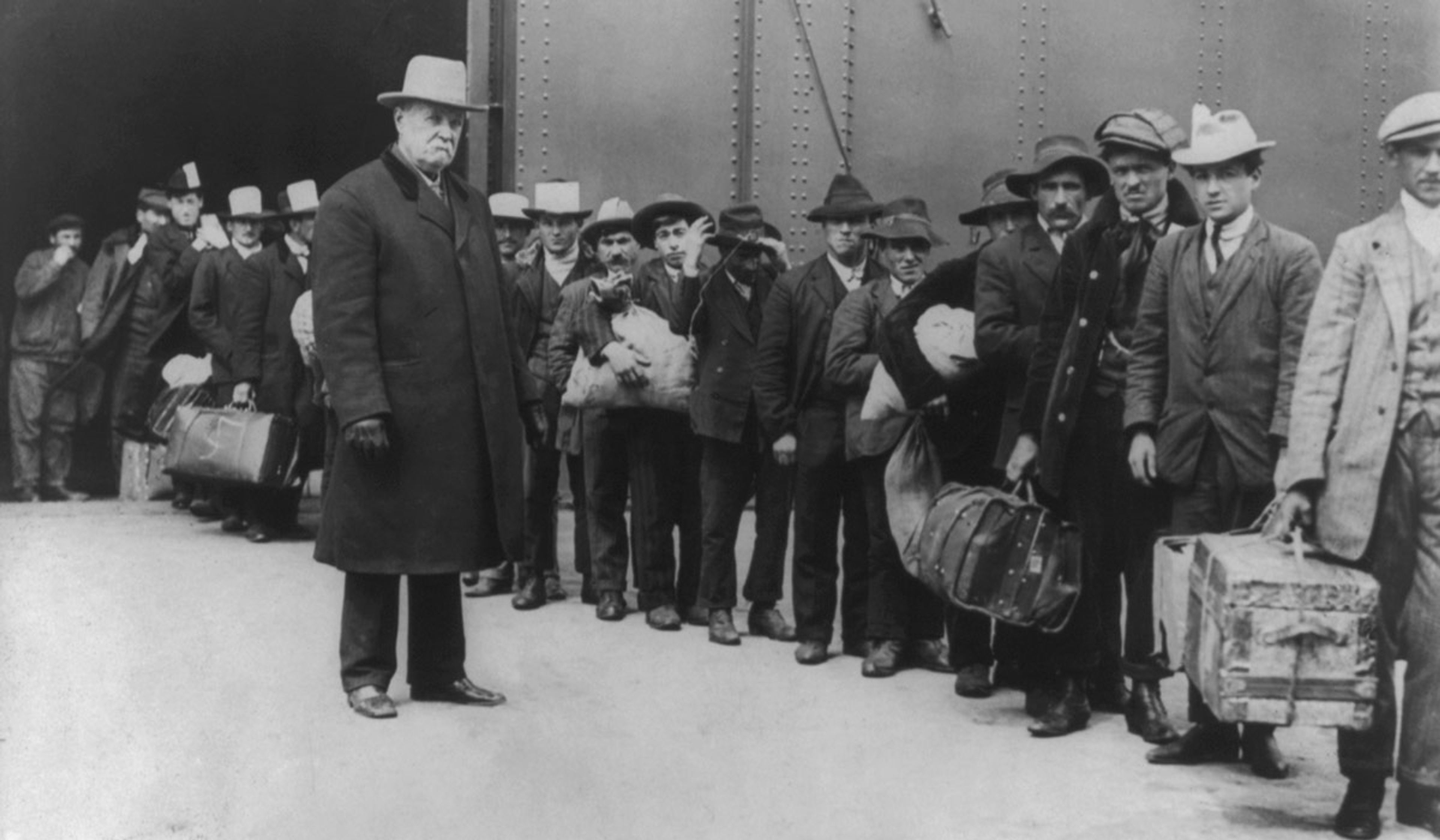


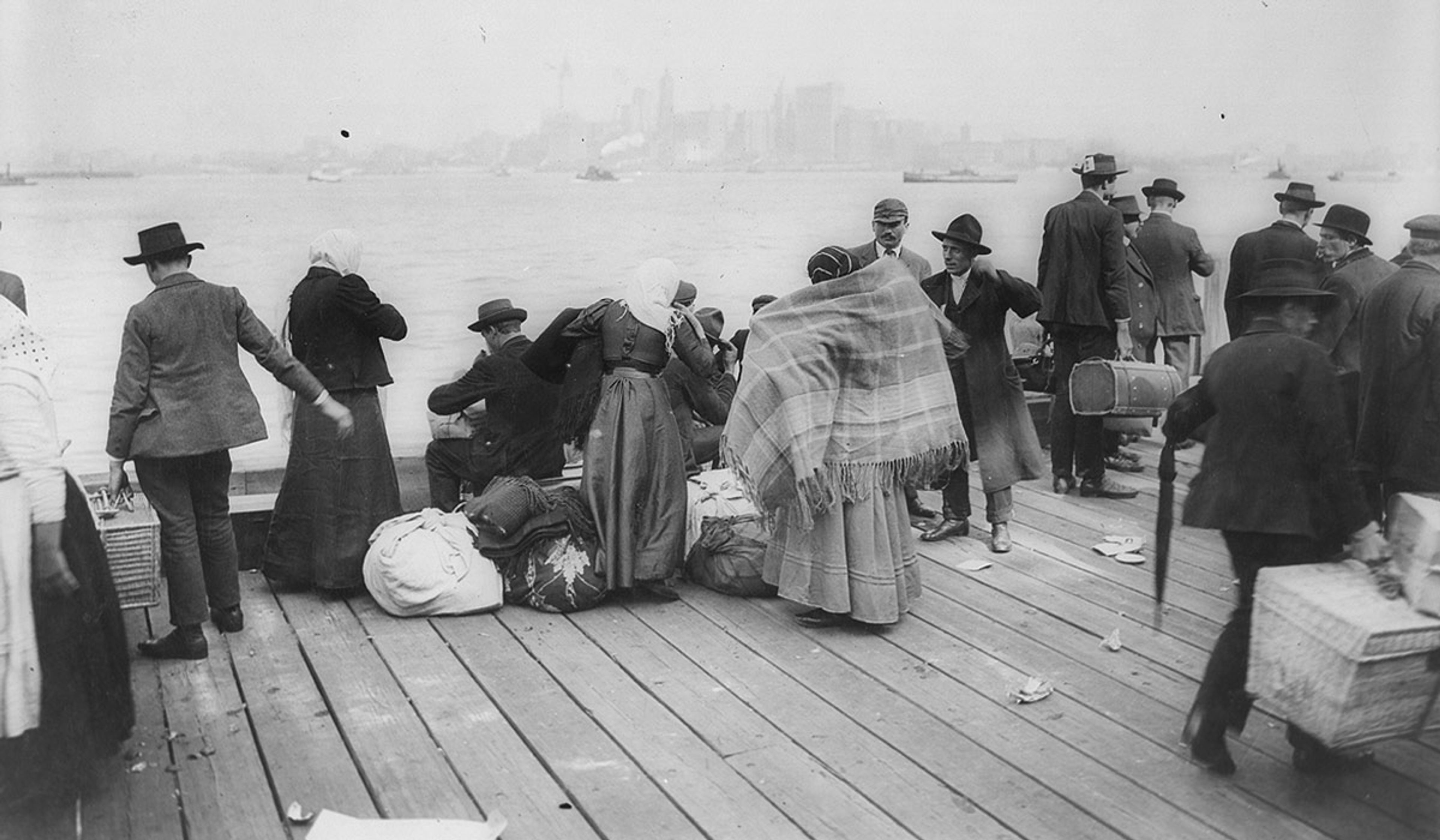

The “American Flag of Faces” display at Ellis Island.
Carol Highsmith/Library of Congress
That leaves sub-Saharan Africa and South Asia as the biggest potential sources of future migrants to the U.S. And to state the obvious, the U.S. is separated from sub-Saharan Africa and South Asia by vast distances. You have to do much more than cross the Rio Grande if you want to make it from the Central African Republic or Bangladesh to a meatpacking plant in Nebraska. Yes, Africa’s working-age population is booming, but African migration is going to have a far larger impact on Europe than on the United States. As for South Asia, its population is more youthful than East Asia’s, but that’s not saying much. And though South Asian immigration to the U.S. is significant, it is skewed toward high-skill workers who come from social groups and regions in which delayed marriage and child-rearing are common. One can imagine a scenario in which the U.S. decides to liberalize its immigration policy to welcome greater numbers of less skilled migrants from South Asia and sub-Saharan Africa, or to dramatically increase refugee admissions. But it’s not at all obvious that this would be an easy sell politically.
One of the chief arguments for immigration is that it represents an economic boon, and in fact there is considerable evidence that high-skill, high-wage immigration bolsters U.S. technological leadership and productivity. The case for low-skill immigration is somewhat more ambiguous, however, particularly when we take into account the fact that offshoring can give U.S. consumers access to many of the benefits of low-skill, low-wage labor (in the form of imported goods and services) without the potential fiscal and social costs. More and more, the case for low-skill immigration is rooted in a humanitarian impulse rather than hard-nosed self-interest. This might be even truer in a world transformed by a “globotics upheaval,” to use a term coined by the economist Richard Baldwin, in which an increasing array of services can be performed by remote workers augmented by machines. In the wake of COVID-19, many of us think of “work-from-anywhere” as a convenience for professionals who’d prefer not to go in to the office on a daily basis. But if we can work from anywhere, rest assured there will be workers overseas who are more than willing to step up to the plate. Virtual immigrants might increasingly serve as a substitute for real ones.
Finally, there is a political factor pushing in the direction of lower immigration levels: the ongoing civic assimilation of the children and grandchildren of post-1965 immigrants to the U.S. For years, political analysts have taken it for granted that Mexican Americans and other citizens of Latin American origin will champion high immigration levels. There is reason to doubt that this is always true, especially for second- and third-generation Americans with Latin roots. But even if we accept that these Americans feel a sense of kinship with people who share their ethnic origins, why would the same sense of kinship extend to potential migrants from Africa and South Asia, with their different religious and cultural traditions? Once political battles over immigration are no longer political battles over Mexican immigration and its legacy, the coalition for restrictionist policies could grow much broader.
Which of these forces will win out? It’s hard to say. A decade or two from now, Americans might be clamoring to attract skilled immigrants to help shore up the population of aging cities and towns. Alternatively, we could find ourselves in a more thoroughly globalized and automated economy, in which remote workers and intelligent machines render immigration, or at least low-skill immigration, superfluous. But anyone who tells you that mass migration will always and forever be with us is lacking in imagination.











Comments