The other day I saw someone ask, rhetorically, whether William F. Buckley Jr.’s well-worn quip — that he’d prefer a government of names picked at random from a phone directory over one composed of Harvard faculty — still held “in the age of QAnon.”
It’s an interesting question and an important one. I’m tempted to say the answer is yes, that government properly constrained should be safe in the hands of reasonably competent ordinary people. Most Q adherents hold down jobs, change out fuses, and balance their bank accounts, so it shouldn’t be a stretch to imagine that they could perform the duties of a county clerk. Indeed, it seems a near certainty that some of them are performing such duties even now.
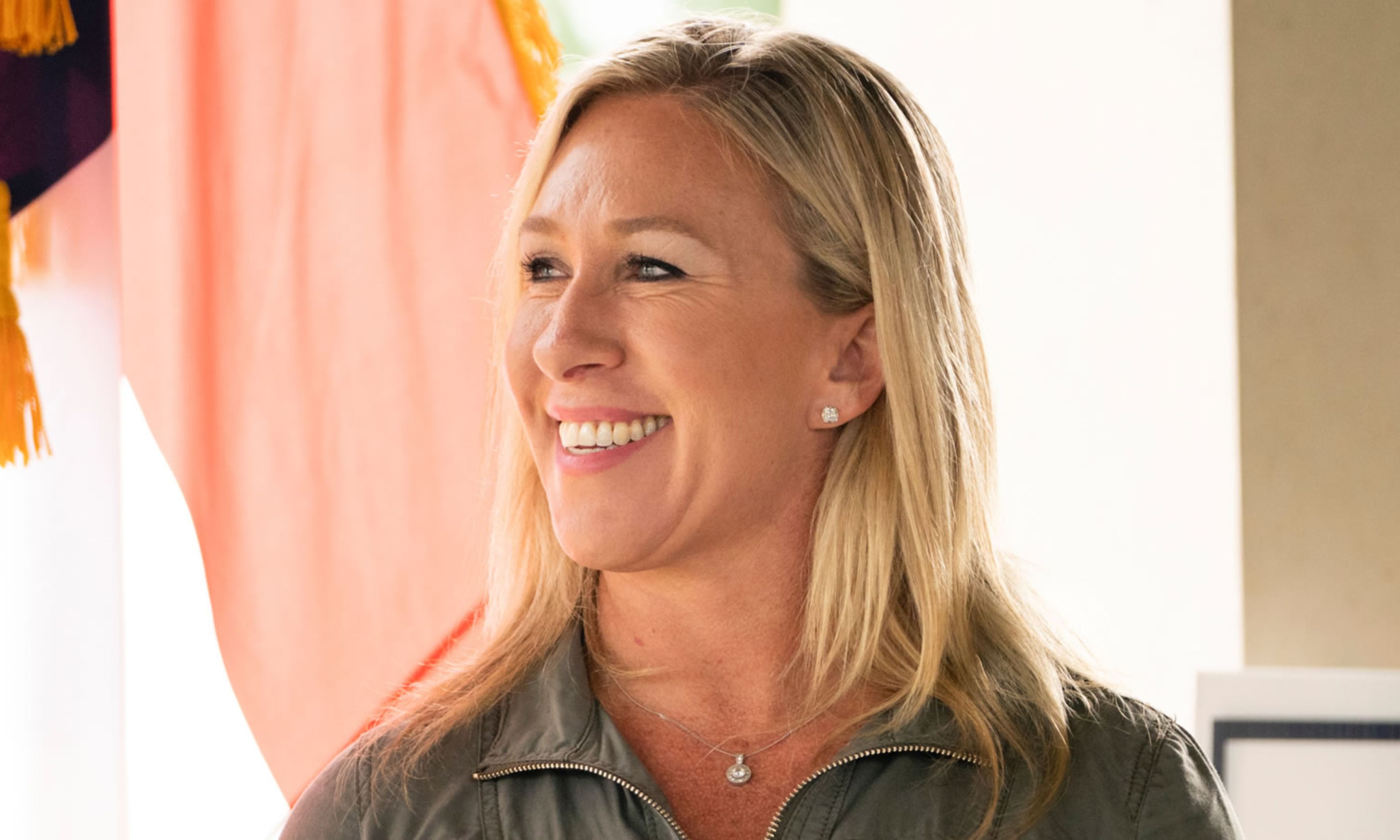
I used to say, during the height of her popularity, that the point of Sarah Palin was that conservatives want a government so small that she could run it. But nobody’s heard from Sarah Palin in quite a while, and we’re hearing all too much from and about Marjorie Taylor Greene, the freshman congresswoman from northern Georgia who indulges a number of derangements and paranoias, including the motley conspiracy endorsed by the QAnon enthusiasts.
Democrats and the press have quite understandably settled on Greene as a serviceable replacement for Trump in most of their narrative schemata about the imminent danger posed by Republicans to the things we most cherish. She’s also become a wedge in the nascent schism inside the GOP, with the predominant MAGA faction either defending or deflecting, and the dissident rump joining the press in denouncing and defenestrating.
As I am, but of course, a creature of the establishment, I think the rump is right on the principle, with perhaps a caveat or two I’ll get to in a minute. It ought to be a straightforward thing for elected Republicans to reject Greene’s repugnant claims about, for instance, the Jews or the Parkland shooting. And until and unless she recants them herself, it ought to be straightforward for Kevin McCarthy to deny her access to a policy-making role in the form of committee assignments. Her constituents’ votes entitle her to a vote of her own in the House, but they do not entitle her to influence or esteem.
The instinct to make excuses for Greene, shared by many of the populists currently in the driver’s seat of the GOP and institutional Right, is misguided and self-destructive. It’s the product of a crude heuristic by which people who ought to know better conclude that anything Mitt Romney and Jake Tapper are against, they ought to be for. This is less the “negative polarization” we hear so much about as it is the simple slobs-vs.-snobs opposition that seems to be at the core of Buckley’s claim. I say “seems to be” because I think this view misunderstands Buckley and a long line of conservative thinking about populist versus elite opinion and rule.
I’ll say why, but first I should give the devil her due: On a number of quite important stories over the last few years, it’s the “kooks” and “cranks” whose beliefs — or at least whose prejudices — have been largely vindicated, and the hectoring establishment who have been revealed as calamitously wrong. This was true on nearly every facet of Russiagate, which ended up producing more evidence of the incompetence and petty corruption of mid-level federal law enforcement than it did about the loyalties of the 45th president. More recently it has been true on Hunter Biden, and the “lab leak” hypothesis, and school closures, and Cuomo versus DeSantis, and so on.
In each of those cases, views that started out associated with cranks, or wingers, or outsiders, were eventually borne out by the facts and accepted by the mainstream. The “normies” are for school reopenings now; the mainstream press has confirmed large swaths of the reporting on the Biden family’s apparent influence peddling; the New York Democrats are starting to turn on the Butcher of Albany; et cetera.
And critically, in each of these cases the smart bet was against the elite’s cunning, its capacity for planning and coordination, its hollowed-out “expertise.” The elite failed because they thought they had control that they didn’t. Because they thought reality could be molded to their ideological exigencies.
This is decidedly not the sort of bet being made by people who think the Rothschilds started the California wildfires with an orbital laser, or the Venezuelans and Italians conspired to flip only the presidential election and only in six key states. Those people are betting on exquisite intrigue, on malevolent design, on plots and machinations that are beyond the capacities of most fiction writers, let alone most bureaucrats. This is a bet not on elite incompetence, but on elite omnicompetence. And on the omnicompetence of populist tribunes like Marjorie Taylor Greene and her friends, too, who after all had to be even more clever than the elites to uncover their dastardly designs.
Buckley never said, and healthy skeptics of elite expertise do not believe, that “the people” know more than the experts about forest fires or voting machines or shorting the stock market (aren’t you glad I didn’t write about GameStop?). Only that the people are expert in their own affairs.
This distinction couldn’t be more critical. Because the remedy for failing elite institutions isn’t to put the Marjorie Taylor Greenes of the world in charge of them. It’s to gird those institutions sufficiently that they couldn’t do much damage even if she were.








Comments