• The MyPillow guy keeps urging a coup. At least nobody has to ask how he sleeps at night.
• The best thing about Joseph Biden’s inauguration as the 46th president was how normal, even bland, it was. The month that opened with the west front of the Capitol swarmed by deadly lunatics ended with it playing host to familiar (albeit masked) faces and familiar rituals. Poetry was recited, piety invoked (no Handmaid’s Tale worries about this Catholic). Biden addressed the corrosive passions that show themselves in so many ways, from tweets to riots: “Politics need not be a raging fire destroying everything in its path. Every disagreement doesn’t have to be a cause for total war.” For the rest, he was vague, unrealistic, and earnest. He promised to do his best, which he no doubt will, according to his lights. He called for unity, which the scope of the nation renders impossible (the structure of its government recognizes this fact). He touched on broad themes — racial justice, ecological crisis — that will be the subject of dispute as to both goals and details. “God bless America and may God protect our troops,” he concluded. Cosign that.
• The five deaths during the Capitol riot included one Capitol police officer, Brian Sicknick, struck in the head by a fire extinguisher. The toll of the injured was much longer. A filing by the Justice Department records 81 Capitol police and 58 D.C. police assaulted by the violent mob. Some of the attacks have gone viral: an officer, pinned between two heavy metal doors, screaming for help; another beaten with flagpoles as he lay prone on the ground; another dragged by a foot down the Capitol steps. The Capitol riot, a few hours long, came nowhere near the economic carnage of the BLM riots of the summer. But in its contempt for the law, and for those assigned to uphold it, it is easily their equal.
• Since the January 6 Capitol riot, a massive security perimeter has surrounded the Capitol building and much of the surrounding area. On January 28, Capitol Police acting chief Yogananda Pittman recommended that at least some of these security measures be made permanent. Two more commendable steps would be to probe fully the day’s security failures and to punish those who failed to prevent, enabled, or participated in the rioting. Also, yes, consider enhanced security precautions for special events or emergency situations. But don’t let a reaction to something extraordinary become the new ordinary. Whatever long-term precautions take root on the Hill should, as much as possible, maintain its historically accessible nature. The locus of self-government must not forever visibly be separated from the people.
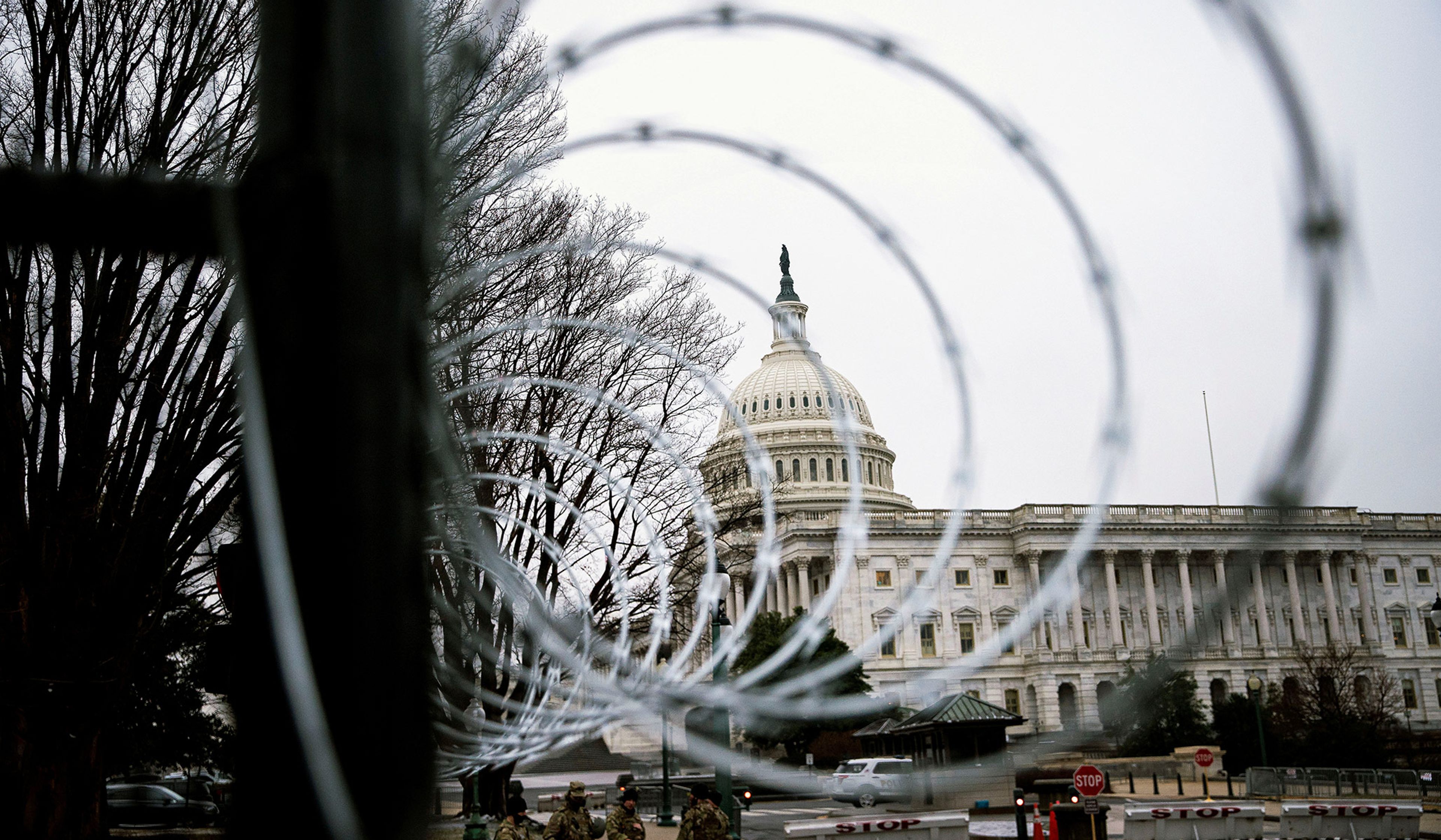
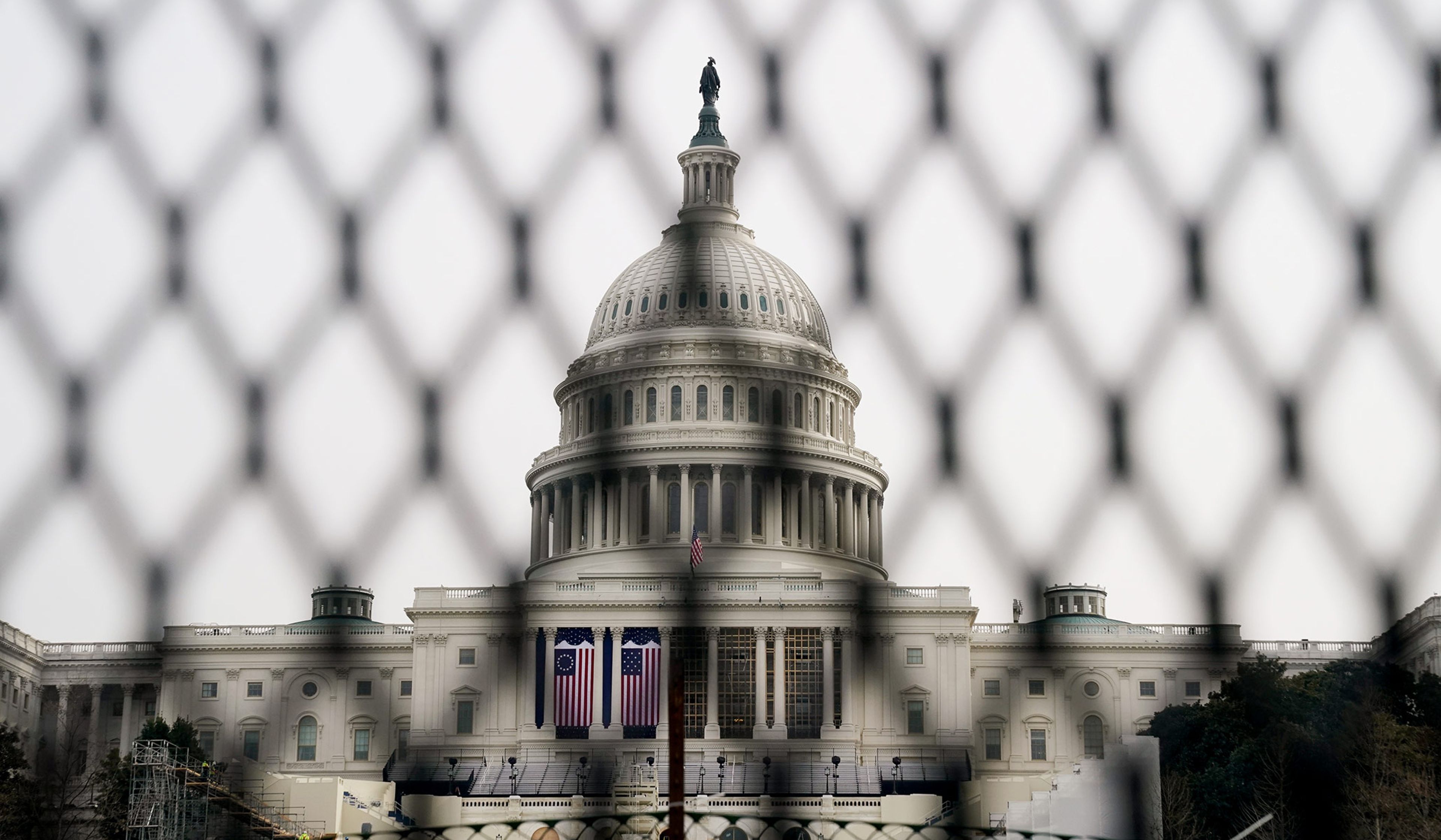
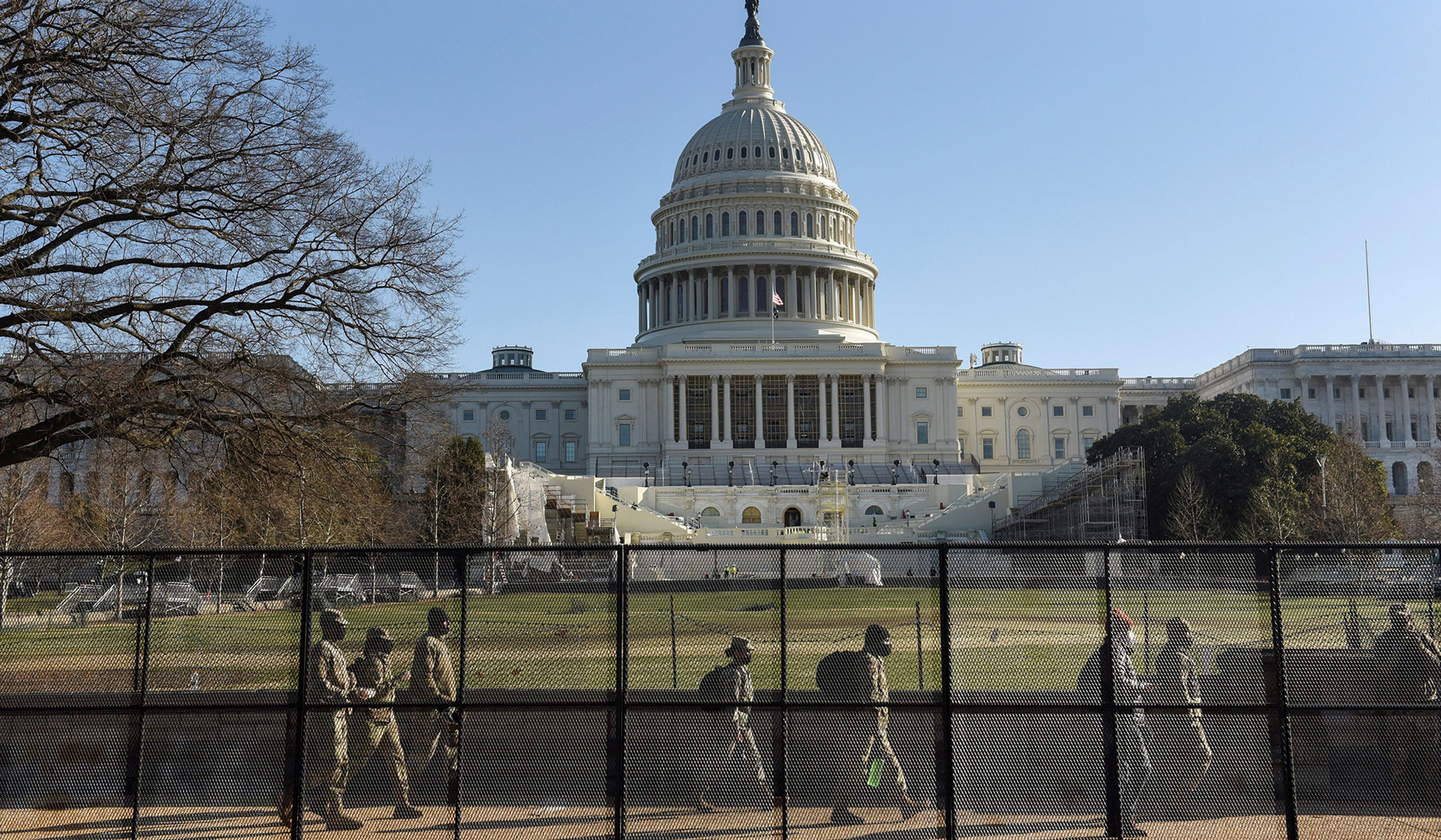
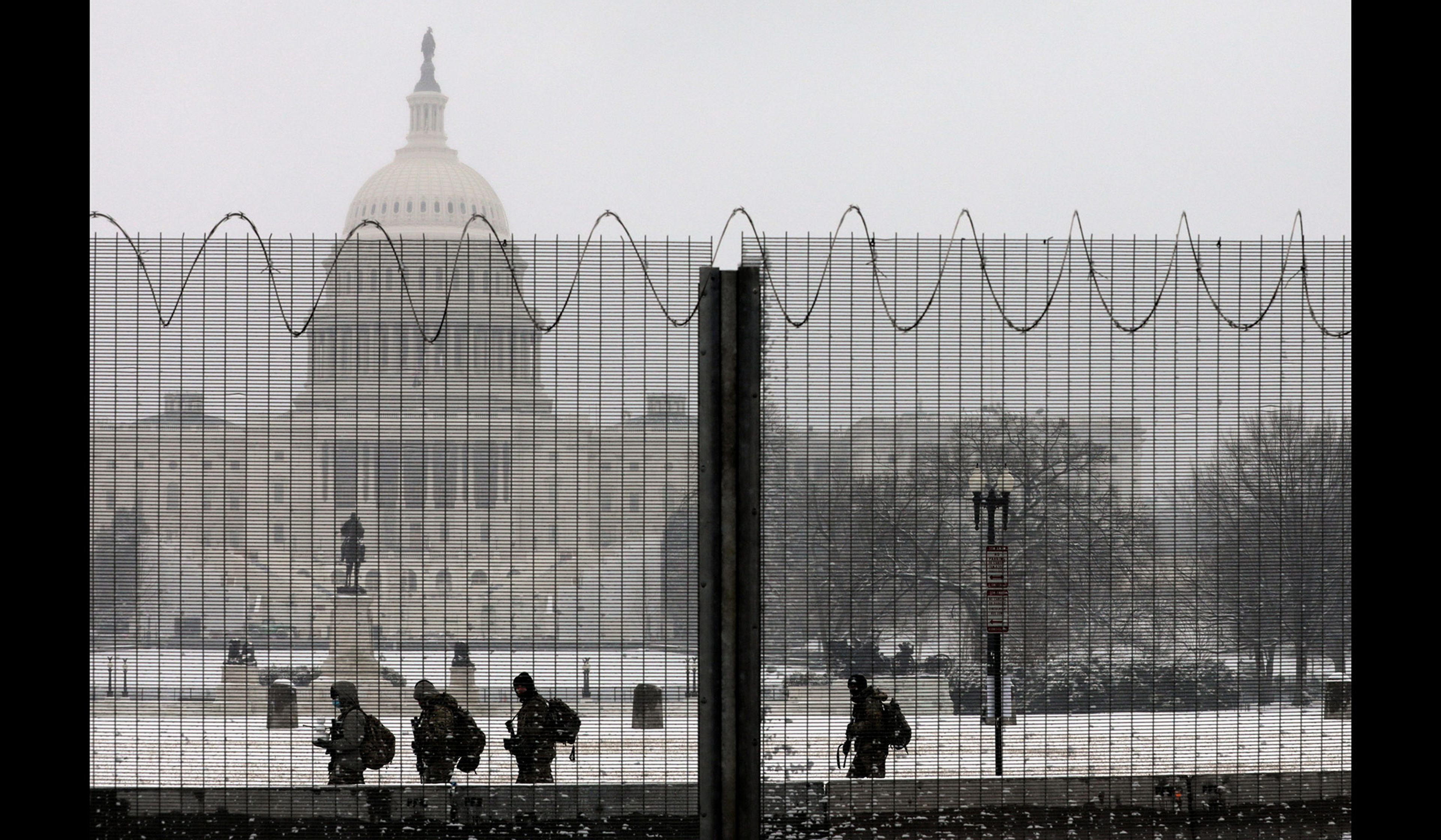
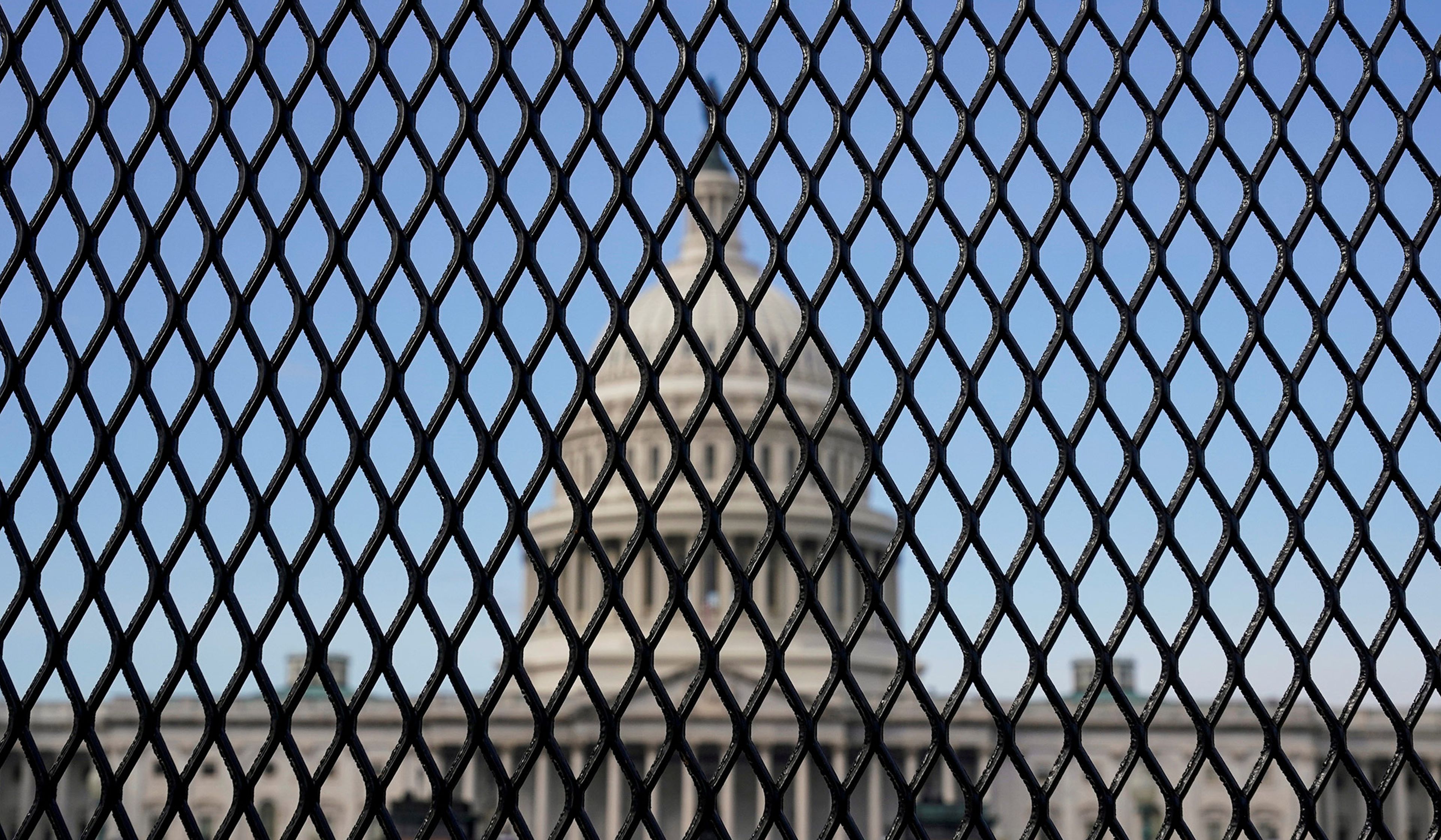
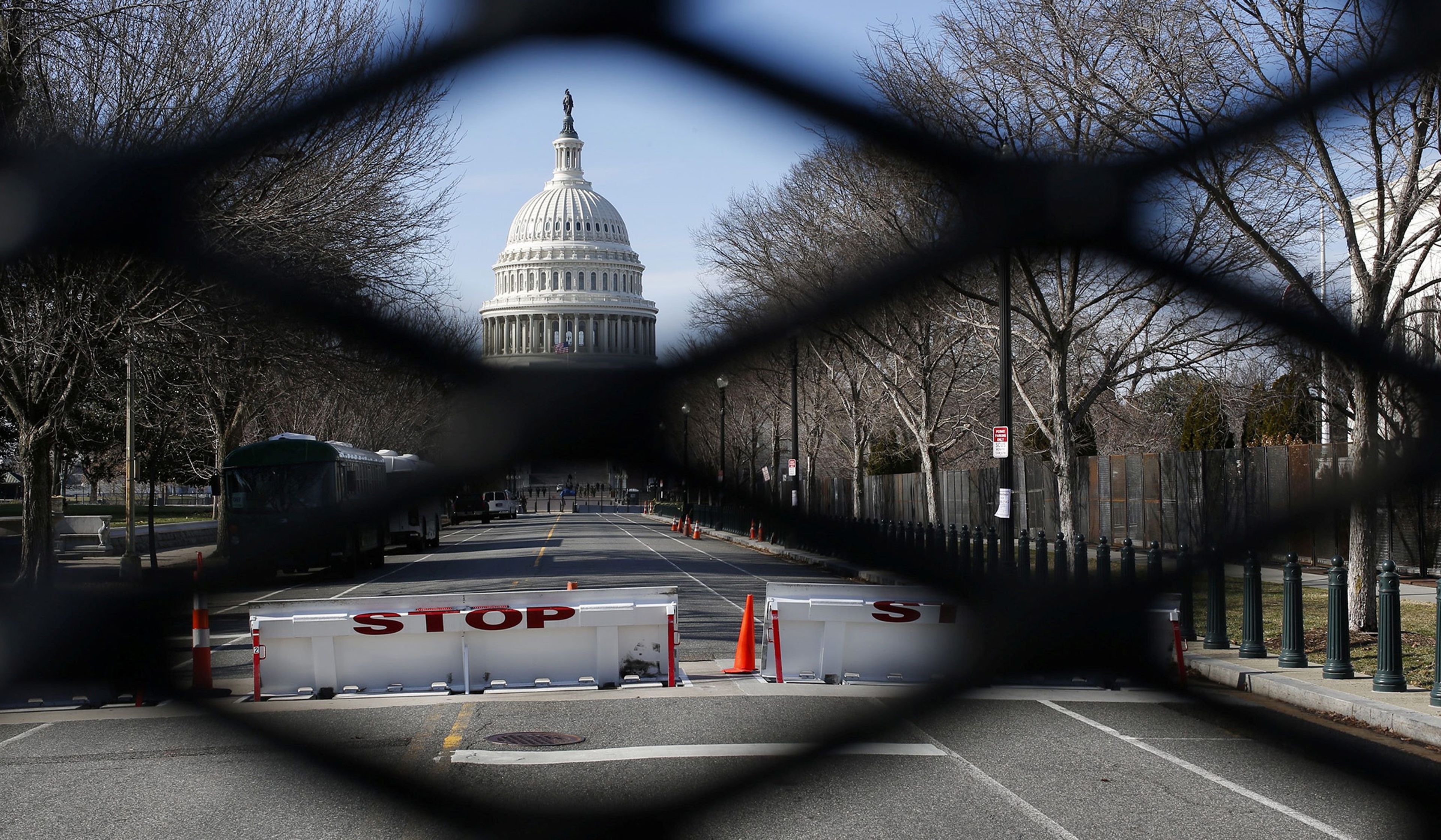
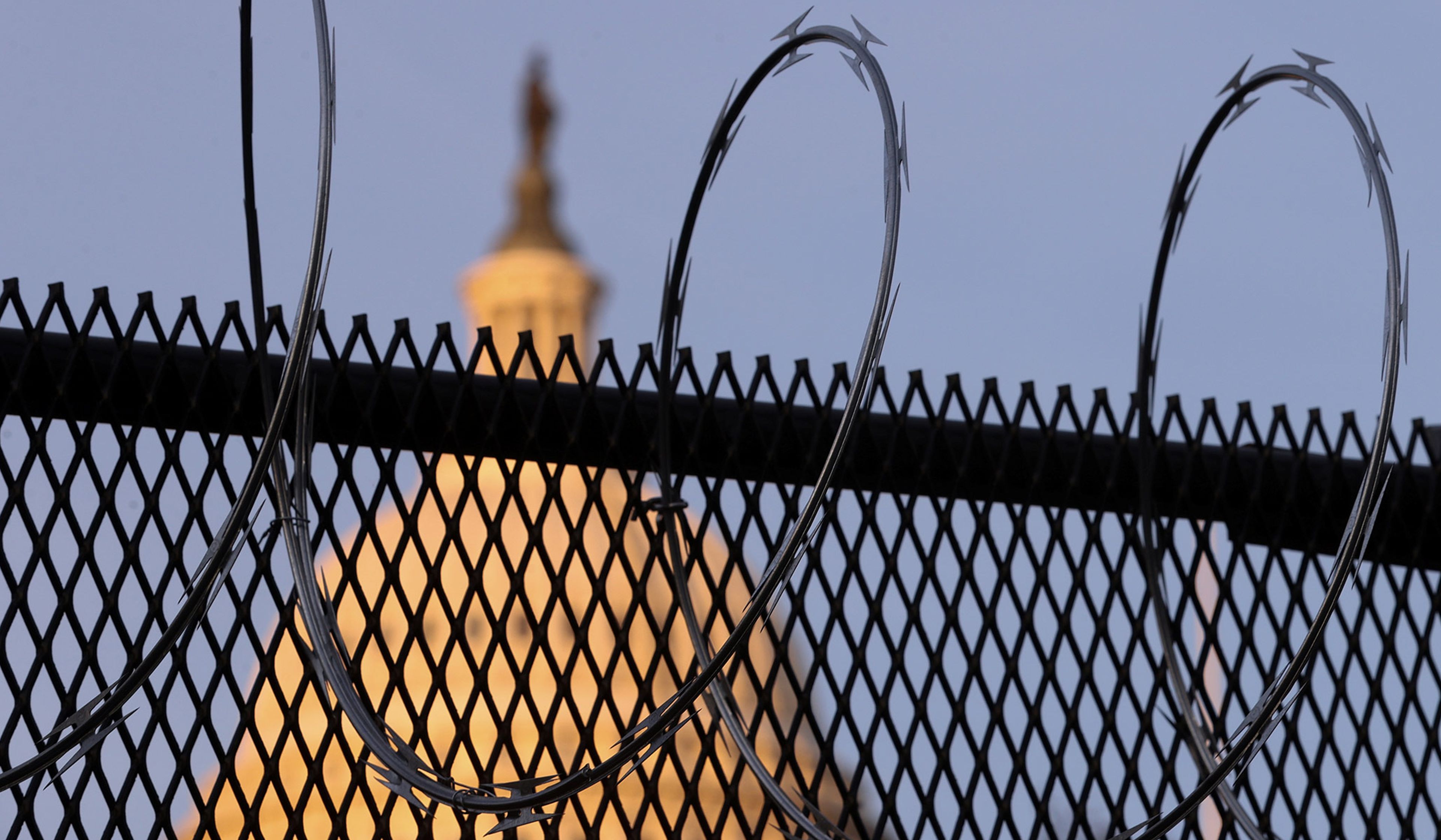

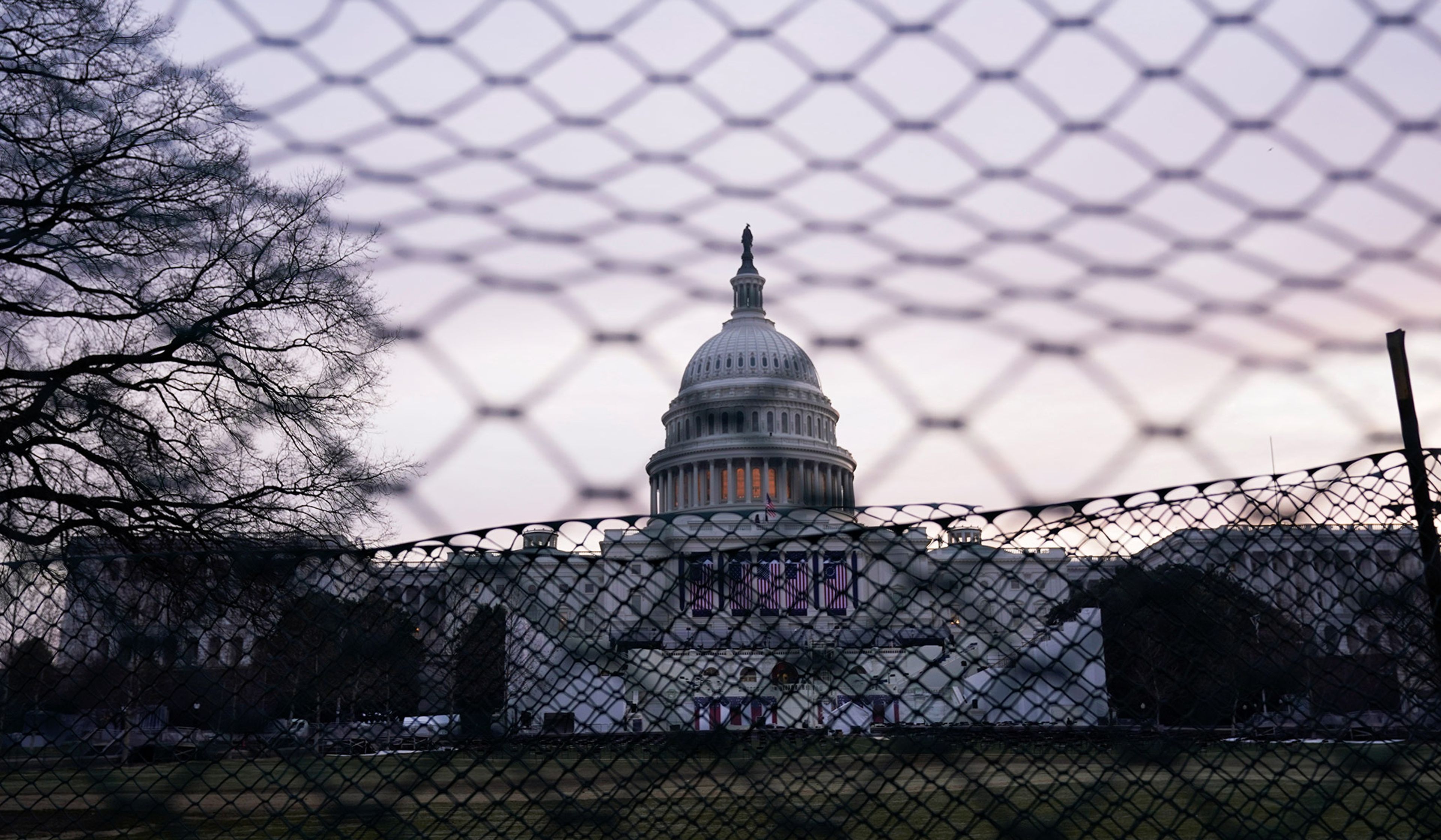

Barbed wire and security fencing surrounds the U.S. Capitol in Washington, D.C., January 26, 2021.
Al Drago/Reuters
• As we went to press, House Republicans were about to meet to discuss the fate of Liz Cheney, whose leadership position was in danger after she voted to impeach Trump. Cheney knowingly put a political target on her own back with her stand on Trump, but it was a vote of conscience, and it would send a terrible signal if Cheney — who is indisputably a thoughtful, responsible member of Congress — were purged from leadership for it. Even if she survives, she will still have lots of work to do back home in Wyoming, where she now has primary challengers. In defiance of an admonition from Minority Leader Kevin McCarthy, the showboat Trumpist Matt Gaetz went to Wyoming for an anti-Cheney rally that attracted an eye-popping 800 people. To her great credit, Cheney has shown that she has principles; the next couple of years will be a test of her political skills and staying power.
• No one can be surprised that a little digging has unearthed more noxious and lunatic things that Representative Marjorie Taylor Greene has said or affirmed over the years, including her musings about a space laser associated with the Rothschilds starting the 2018 California wildfires. There are now calls to expel her from Congress, but this would be a mistake. Greene was duly elected, and the democratic will shouldn’t be overturned lightly. That said, there’s no reason that the GOP needs to give her committee assignments. Then, in two years, voters can decide (assuming she’s not redistricted out of her seat) whether they want not just a conspiracy theorist representing them, but an ineffectual conspiracy theorist who can’t even work with her own party.
• One of the many factors that prevented Donald Trump from succeeding in overturning the results of the 2020 election was the diffuse nature of our electoral system (a fact lost on the system’s left-leaning critics). There were simply too many elements, and too many players, involved in voting and vote-counting for even a president of stubborn will and narcissistic delusion to prevail. But such poison is too strong to withdraw from political life with no effect. Witness the recent replacement of Aaron Van Langevelde, a Michigan state canvasser and Republican who voted on November 23 to certify the result of his state’s election, which had gone to Joe Biden. Van Langevelde did so against pressure from Republicans in his state to vote the contrary. His term was up on January 31, and the Michigan GOP did not ask him whether he wanted another. He remains convinced that he “did the right thing regardless of personal or professional consequences and despite the pressures and dangers faced,” upheld his “oath of office, told the truth,” and did what he could “to defend the rule of law (at a time our nation desperately needs it).” He adds that his conscience remains clear. As it should, unlike that of the party that abandoned him.
• Mitch McConnell briefly blocked a resolution to organize the new Senate, demanding that it commit to keeping the filibuster for the next two years. He relented once two Democratic senators, Kyrsten Sinema of Arizona and Joe Manchin of West Virginia, issued new statements of their support for the institution. Both McConnell and Chuck Schumer declared victory. But some progressives fumed that Sinema and Manchin’s position would doom their most important initiatives. McConnell, meanwhile, succeeded in slowing down the Democrats coming out of the gate. A small win, but a win.
• Rob Portman has had an impressive political career: aide in the White House of Bush 41; congressman from Ohio; U.S. trade representative under Bush 43, and then budget director; senator from Ohio, since 2011. He is smart, competent, and, of course, experienced. Some thought he would make a good president. Now he is retiring, citing an inflamed, polarized atmosphere and the impossibility of getting things done. An adviser to Portman, Corry Bliss, told National Journal, “If you want to spend all your time going on Fox and being an [annoyance], there’s never been a better time to serve. But if you want to spend your time being thoughtful and getting [stuff] done, there’s never been a worse time to serve.” A blunt statement, even with brackets.
• Every time there’s a change of party in the White House, we get a little more used to government by executive decree. When Republicans are in power, abortion funding is curtailed and energy exploration liberalized; when Democrats come back, the reverse. Where Joe Biden has gone further than his predecessors is in pretending that Congress gave him the power to transform U.S. law and policy to implement the progressive agenda on transgender issues — but the Supreme Court essentially blessed this legerdemain in advance last year. Members of the president’s party in Congress mostly do not want to undo the president’s edicts, and members of the opposition rarely even think to introduce legislation to try. Biden’s executive actions have brought a brief burst of attention to presidential overreach. The root problem, though, is legislative abdication.
• On his first day in office, Joe Biden signed an executive order disbanding Donald Trump’s 1776 Commission, which had been established by the outgoing administration to research and promote civic education. The commission drew criticism for the dearth of academic historians among its members, but the contents of the report it released in the waning days of the Trump presidency should be mostly uncontroversial. As the authors write in its introduction, its purpose is to “enable a rising generation to understand the history and principles of the founding of the United States in 1776 and to strive to form a more perfect Union.” It starts by outlining in fairly incontrovertible terms the political principles of both the Declaration of Independence and the Constitution. The report then discusses obstacles that stood in the way of realizing the vision of the Founding and explains how they were overcome. There is no whitewashing of slavery, nor any suggestion that the moral fabric of the early republic was without hideous stains. The authors merely insist, along with Lincoln, whom they quote, that the purpose of the Constitution as ratified in 1787 was “to declare the right, so that the enforcement of it might follow as fast as circumstances should permit.” Most of the report focuses on recounting to the reader just how these circumstances were brought about by heroic figures such as Frederick Douglass and Martin Luther King Jr. The authors may have overplayed their hand and reduced the report’s ability to elicit agreement by provocatively listing “Progressivism” alongside “Communism” and “Fascism” as a major ideological threat to the American way of life and government. But the progressive response to the report has seemed determined to bear out the charge.
• Biden and his team are saying that Trump left them with COVID policy in a shambles. They had to start “from scratch” on vaccine distribution, CNN reported. Anthony Fauci denied it, which got him labeled a “Trump holdover” by the network. The numbers cut through the spin. Biden’s goal, which he presents as an ambitious break with Trump, is to get 100 million Americans vaccinated in his first 100 days. But we were at that million-a-day pace in Trump’s last days. Biden is following the same basic policies, which is reasonable because they are. To Biden’s credit, he has lately been talking of raising his goal. And he is mostly talking about the virus with sobriety and sense, and without distracting drama. Perhaps, then, we should call Biden’s COVID policy “Trumpism without Trump.”
• Notwithstanding his professed personal opposition to abortion, Biden has rescinded the Mexico City policy, which prohibits billions in U.S. foreign-aid money from funding NGOs that provide or promote abortion in other countries. With the same pen stroke, Biden directed his Department of Health and Human Services to consider rescinding a second Trump-administration policy, which blocks abortion providers from claiming federal money under the Title X family-planning program. The policy resulted in Planned Parenthood’s forfeiting about $60 million a year in funding, a small but significant proportion of its half a billion in annual federal funding. Pro-abortion activists cheered Biden for these moves, but a majority of the public tends to oppose funding abortions either at home or overseas on the taxpayer dime — and sizeable numbers of Democrats and pro-choice Americans agree.
• Described as “the world’s largest annual human rights demonstration,” the 48th annual March for Life went virtual this year, due to a combination of COVID concerns and security issues. Since 1974, the march has happened around January 22, the anniversary of Roe v. Wade. Where hundreds of thousands of marchers usually stream along the streets of D.C., this year a small contingent of pro-life leaders was invited to the nation’s capital. These representatives marched down Constitution Avenue and ended the event with a rose-laying ceremony at the Supreme Court. Let the march resume in person next year — although we hope that one day it is no longer necessary.
• Early in the pandemic, New York governor Andrew Cuomo’s regular briefings seemed clear and direct, informative and empathic. They won praise from longtime critics. But Cuomo’s halo, which would bring him a book contract and an Emmy, soon showed dents. A March 25 order to put COVID patients in nursing homes — a course rejected by Florida governor Ron DeSantis — killed thousands of immobilized elderly. Cuomo, who might have pleaded desperation, instead denied responsibility, sometimes insisting that he had given no such order, sometimes blaming Trump-administration policies, most recently saying: “Who cares [where people died]? They died.” This last grotesque remark came in response to a report by state attorney general Letitia James that COVID deaths among nursing-home patients were far higher than previously tallied (12,743, not 8,914). Meanwhile the New York Times reported that high-level health personnel were quitting over Cuomo’s intrusive decisions, sometimes communicated to them via press conference. The governor’s quickie book celebrating his COVID leadership will have to have one hell of an afterword.
• As their children are kept out of school indefinitely, frustrated parents in big, Democratic-governed cities are starting to understand what conservatives have been trying to tell them for years: Their schools are not run for the benefit of the children who attend them but for that of the adults who work there. The children are only an incidental inconvenience. In Chicago, teachers have used the threat of what even the Democratic city leaders have confessed is an “illegal strike” to coerce the district into extending negotiations. New York continues to enjoy precisely the excellence in local government to which Bill de Blasio has accustomed it, i.e., is a wasteland with no prospect of even getting back on the path to normalcy in the foreseeable future. The unions are stonewalling and making irrational demands — e.g., no in-person classes until vaccination rates are 100 percent — because these irrational demands are part of a bargaining strategy, a horse-trading position ultimately directed at the same thing these union actions always are directed at: more pay, less work, more benefits, less accountability. The best evidence we have suggests that schools are not particularly dangerous environments when it comes to COVID-19. People are working, with the proper precautions, in businesses ranging from banks to warehouses. We find it difficult to imagine that the services provided at our schools are less critical than those offered at 7-Eleven.
• In 2020, Arizona voted Democratic in the presidential election for only the second time since 1948. It is now represented by two Democratic senators for the first time since 1953. Normally, this would prompt some introspection about how the party can win back voters. Instead, the Republican Party of Arizona has censured former senator Jeff Flake, the widow of former senator John McCain, and sitting Republican governor Doug Ducey. All three censures are transparently about loyalty to Donald Trump (in Ducey’s case, for not overturning the state’s popular vote), as is a similar censure in South Carolina of congressman Tom Rice, who voted for impeachment. Yet neither Ducey, nor Flake, nor John McCain ever lost an election in Arizona. Ducey was reelected by 14 points in 2018, and has compiled a solidly conservative record as governor. State chair Kelli Ward, by comparison, has lost two statewide primaries, and might wish to consider what Ducey and others know that she does not.
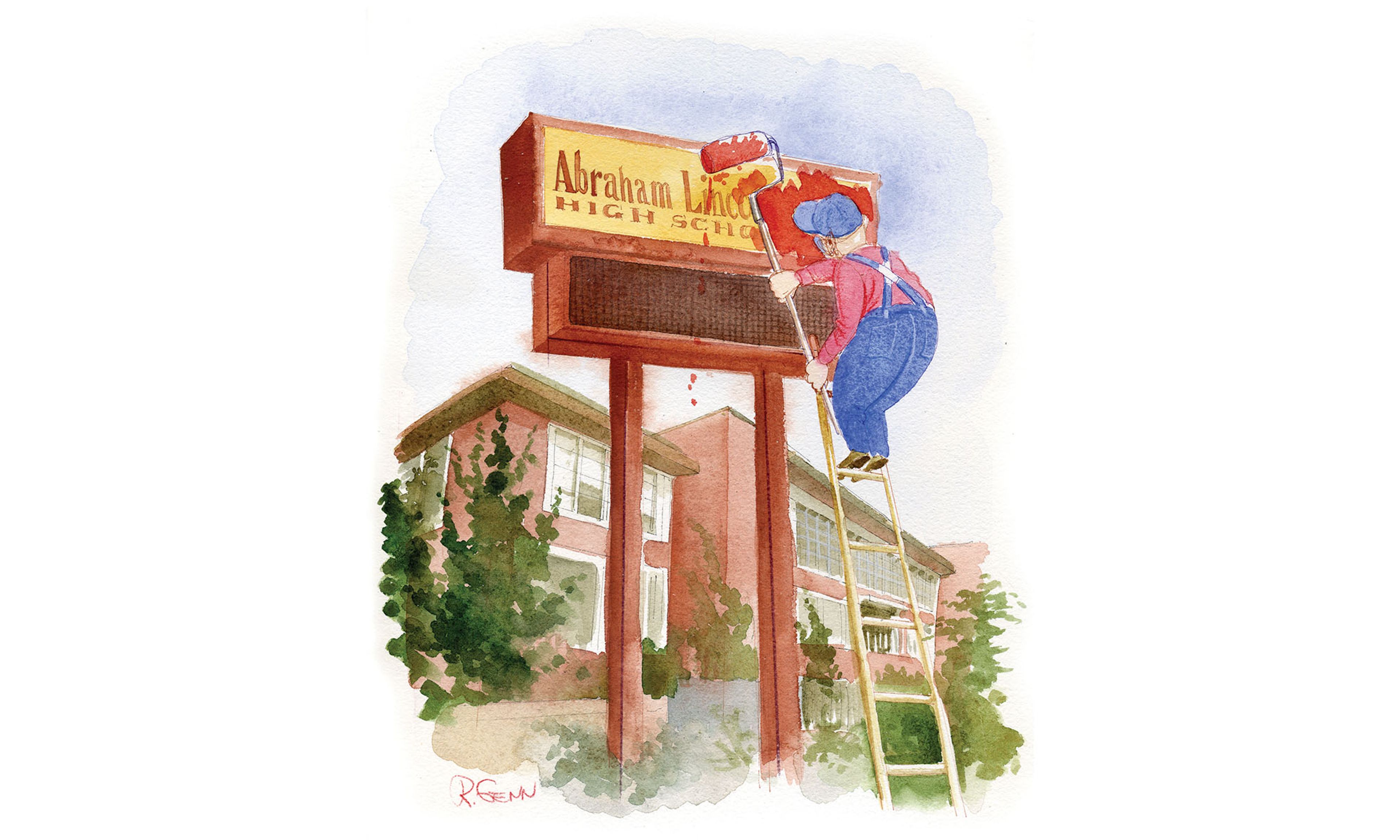
• A San Francisco school board has voted to rename 44 schools the names of which are associated with “dishonorable legacies.” Among these are Washington, Jefferson, and, most shockingly of all, Lincoln. According to the San Francisco Chronicle, the school board in question has chosen to cancel the Great Emancipator because of “the Civil War president’s treatment of American Indians, which included a mass hanging after an uprising.” It’s true that Lincoln signed the death warrants of 38 Dakota men. But this is not the whole story. The military court that initially tried the Native Americans sentenced 303 to die. The executions couldn’t proceed, however, without the president’s signature. When Lincoln was telegrammed the list of the condemned, he recoiled at the sheer number of names. He asked for “the full and complete record of these convictions” and sifted through them to discover “the more guilty and influential of the culprits.” Despite the unimaginable pressures Lincoln was under, he spent hours combing through the transcripts of these trials. He also heard the personal petitions of the convicted men’s family members, many of whom traveled all the way to Washington for an audience with him. In the end, he decided only 38 of the 303 were culpable. When Alexander Ramsey, then governor of Minnesota, suggested to Lincoln that he could win the state in the 1864 election by sanctioning a harsher response, Lincoln replied, “I could not afford to hang men for votes.” We fear, though, that learning more would not have changed the mind of anyone on the school board.
• On January 26, the brick-and-mortar video-game retailer GameStop was the most traded stock on the planet. In a financial-market flash mob, the denizens of Reddit’s WallStreetBets forum piled into shares and options of the company, pushing up prices and squeezing out of their positions the many hedge funds that had bet against GameStop. For a brief time, it seemed like the inmates were running the asylum, with GameStop’s market capitalization going from $3 billion to $25 billion in a week. Reality caught up with Reddit retail traders before the regulators did, when Robinhood and other brokerages halted trading in the stock. The brokerages that facilitated the rally faced margin calls from the clearinghouses that settle trades, which demanded more cash to transact in high-risk stocks. With trading in the stocks at such a high volume, Robinhood and Interactive Brokers saw an outright halt as the only solution, and GameStop’s stock promptly fell back down to earth. All in all, the rally lasted roughly four days. While it served as a source of entertainment for some and schadenfreude for others, it had a negligible effect on the market.
• In news that ought to surprise absolutely no one, McDonald’s CEO Chris Kempczinski has been sounding relaxed in the face of an increased federal minimum wage: “Our view is the minimum wage is most likely going to be increasing whether that’s federally or at the state level. . . . And so long as it’s done . . . in a staged way and in a way that is equitable for everybody, McDonald’s will do just fine through that.” Even if the increase is less “staged” than McDonald’s might prefer, the company will be able to cope and perhaps even benefit from an increase in costs that its less deep-pocketed competitors might find rather more difficult to manage. That is because McDonald’s has the market power to pass on some of the increased labor costs as higher prices. It’s also because both the company and (we would imagine) its franchisees have the resources to invest in automation to replace some workers who suddenly become more expensive: If the federal minimum wage increases to $15, we expect to see many more of those kiosks silently awaiting your order.
• Bien-pensants including Anand Giridharadas of MSNBC and Max Boot and Oliver Darcy of CNN now argue that cable companies such as AT&T and Comcast should no longer carry Fox News Channel — and should probably kick off One America News Network, Fox Business Network, and NewsMax TV as well. They must hope no one notices that AT&T owns WarnerMedia, which owns CNN, or that Comcast owns MSNBC. In other words, MSNBC and CNN employees are demanding that the parent companies of their employers take action to shut down their competitors. That would run afoul of the Federal Communications Commission, which prohibits cable companies from giving preferential treatment to their own outlets. More important, it would turn America’s cable corporations into de facto news censors. As for Giridharadas’s authoritarian suggestion that Fox News should simply not be allowed to exist, it is more hostile to the First Amendment than anything Donald Trump ever said. There’s plenty to gripe about all around the cable-news world. But there is no justification for corporate titans or the FCC to step in and shut outlets down, and those calling for such actions demonstrate a galling contempt for free speech.
• “Orwellian” is an overused descriptor in our politics, but it can accurately be applied to the Washington Post’s scrubbing of a 2019 profile of Kamala Harris. The original included an anecdote in which Harris compared life on the campaign trail to that of a prisoner, holding her hands out and begging for “a morsel of food” and some “wahtahhh.” “Your standards really go out the f***ing window,” she remarked. It was a strange and unflattering excerpt, especially for a former prosecutor, but if we were setting out to revise Harris’s story, we might have started elsewhere.
• Salon has concocted a smear that Arkansas senator Tom Cotton is guilty of “repeatedly falsify[ing]” his military record, and too many in the mainstream media are treating the smear with anything other than the derision it deserves. No one disputes that Cotton honorably served as an infantry officer during two combat tours — the first in Iraq with the 101st Airborne and the second in Afghanistan with a provincial-reconstruction team — and was awarded the Combat Infantryman Badge and the Bronze Star. Cotton graduated from the grueling U.S. Army Ranger School and identified himself as a Ranger in 2012 and 2014 congressional campaigns, but according to Salon, Cotton was never an “actual Army Ranger” because he did not serve in the 75th Ranger Regiment. In fact, multiple Army leaders have said it is fair to call all Ranger-school graduates Rangers, although there has not been unanimity on the topic. “You carry the title of Ranger from here on out,” Major General Scott Miller told graduates in 2015. Secretary of the Army John McHugh agreed. That year, Shaye Haver and Kristen Griest became the first women to graduate from Ranger school, and a U.S. Senate resolution was passed by unanimous consent honoring the women “as our Nation’s newest United States Army Rangers.” Dozens of news outlets — including CBS, NBC, Fox, Time, Newsweek, and Salon — hailed the women as the first female Rangers. In order to conform to Salon’s new definition, Newsweek editors went back and “corrected” its 2015 story to strip the women of the title. Rick Merritt, who served 25 years in the 75th Ranger Regiment and rose to the rank of regimental sergeant major, maintains that all Ranger-school graduates are Rangers for life. He told the Arkansas Times that Salon’s article is “absurd,” “unfair,” and “almost slanderous.” In other words, just another day at the office.
• “The bear is stirring,” people say, referring to the Russian government. Less often referred to are the Russian people themselves. They are stirring. The anti-corruption activist who leads the opposition to Vladimir Putin, Alexei Navalny, returned to Russia on January 17. He was arrested at the airport. Two days later, his foundation released a video that showed a vast palace and estate, apparently built for Putin’s pleasure. Navalny is not only brave but shrewd. Russians took to the streets, protesting their corrupt government, risking life and limb. The authorities claimed small turnouts, but videos told a contrary story. A joke circulated: “The police reported several hundred protesters on Saturday, and several thousand of them were arrested.” Russia is more than the dictatorship centered in the Kremlin. It is people — including those in the streets — too.
• After the Kremlin’s latest crackdown on protesters, 26 members of the European Union issued a statement condemning it. There are 27 members of the EU. The EU could not issue a statement as a bloc because Hungary refused to join. The Hungarian government under Viktor Orbán has often played this role. Hungary vetoed resolutions against the Turkish government after Turkey invaded Syria in “Operation Peace Spring,” to “cleanse” the Kurds. Orbán and the Turkish leader, Recep Tayyip Erdogan, have close ties. Orbán was the only European leader to attend Erdogan’s latest “inauguration.” Hungary has also vetoed resolutions against China and its human-rights abuses. If Orbán’s hostility to liberalism isn’t just support for authoritarianism, maybe he should not lean into the caricature.
• The Chinese Communist Party has dramatically stepped up its campaign to grind down Taiwan’s resistance to its efforts to forcibly reunify the island with the mainland. In recent weeks, the Party’s military wing has sent numerous fighter jets through the democracy’s air-defense identification zone (ADIZ). On January 23, it sent eight bombers and four fighters, and this was followed two days later by a 15-aircraft incursion. When, at the end of January, the People’s Liberation Army sent seven more military planes into Taiwan’s ADIZ, though, the Taiwanese announced that a U.S. reconnaissance plane was in the area as well. No doubt, this is a test for the new Biden administration, which responded to the CCP’s harassment of Taiwan with a rock-solid statement reiterating U.S. support for the island’s security. This year is the centennial of the Party’s founding, and military analysts are bracing themselves for catastrophe.
• For five years, Aung San Suu Kyi has been known as “the civilian leader” of Burma (a.k.a. Myanmar), and also as “the de facto leader.” That is because she has always shared power with the military, which has had the ultimate control. How much freedom of action did Aung San Suu Kyi have? That was always in question. Last November, her party, the National League for Democracy, won a huge majority of parliamentary seats (82 percent). The military alleged voter fraud — and has now seized power in a coup. Aung San Suu Kyi and dozens of others are under arrest. In Washington, President Biden condemned the coup and threatened a return to old sanctions. It is a sensible response.
• In the wake of the Beijing regime’s crackdown in Hong Kong, Britain is liberalizing its treatment of holders of British passports from before the handover to China. The new policy will allow emigrants to work and eventually apply for citizenship in Britain. The numbers involved mean that the consequences of this offer may become a significant issue in Chinese and, probably much more, British politics. One way or another, around 5.4 million people (out of Hong Kong’s population of 7.5 million) could move to the U.K. (population 68 million). For their part, the Chinese authorities have now stated that they will no longer recognize these passports. Their motive? Pique, almost certainly, but perhaps also a signal to, surely, many of Hong Kong’s most politically restless that now is the time to go. How many will take Beijing’s hint (if that is what it is) or London’s offer? The British government expects that some 300,000 Hong Kong people will move to the U.K. over the next five years. Maybe. But when, in 2004, Britain opened its doors earlier than most of the EU to the citizens of some of the new member states that had emerged from communism, it expected that 5,000 to 13,000 would turn up. In 2004–05 alone, 129,000 arrived, an influx that continued and, in the end, generated a reaction now widely seen as a significant step along the way to Brexit. Interesting times ahead.
• Charles Littnan, the lead scientist for the National Oceanic and Atmospheric Administration’s Hawaiian Monk Seal Research Program, has a problem. The endangered monk seals he studies are doing what kids tend to do: get into trouble. Juvenile monk seals in the remote, northwestern Hawaiian Islands have been repeatedly found with eels stuck up their noses. They are, apparently in a bout of teenage rebellion, snorting them just for the kicks. The “most plausible” theory, Littnan told the Washington Post, is that monk seal youngsters are pretty similar to their humankind peers. “It almost does feel like one of those teenage trends that happen,” Littnan laments. Researchers have repeatedly had to catch the seals in order to remove the eels lodged up their snouts. The seals are fine, even if none of the eels have yet survived. Littnan has been reduced to begging the seals to “make better choices.”
• “Honesty, directness,” said Larry King, the Strunk and White of radio and TV talkers. He was listing the elements of his no-frills interview style, easy on the mind yet effective in drawing out the personalities he lobbed his softball questions to. The poor boy from Bensonhurst stumbled into radio in Miami in the 1950s. Initially terrified of the live mike, he stuck to the obvious and the basic and soon found that his lack of pretension appealed to guest and audience alike. In his career of more than half a century, he interviewed more than 50,000 people, including U.S. presidents, foreign leaders, Hollywood idols, and world-beating athletes as well as crime victims, disaster survivors, and students of the paranormal. Larry King Live, his nightly interview and call-in TV show, launched in 1985 and soared for 25 years. It remains the longest-running program in CNN’s history. The recipient of one Emmy and two Peabody awards, King was inducted into the National Radio Hall of Fame in 1989. In January, at age 87, the king of talk, which he called “one of the great pleasures in life,” wrapped up his extended conversation with the world. R.I.P.
• Stunned that some white viewers of the movie Sounder (1972) were nonplussed by its depiction of a black family as close-knit, Cicely Tyson, two decades into her acting career and pushing 50, resolved never to accept roles that fed pejorative racial stereotypes. A different artist deciding to become “an actress for the cause” — Tyson’s expression, in her memoir, published in January — might have ended up producing agitprop. In Tyson’s case, the marriage between conviction and art enhanced the art. Her nuanced portrayal of the protagonist at different ages in the TV movie The Autobiography of Miss Jane Pittman (1974) won acclaim for the depth of the soul that she poured into the fictional character. To prepare for the task of being Jane Pittman, a former slave, at age 110, she visited nursing-home residents and observed their mannerisms and voice and speech patterns. She won two Emmys for the role. She won Academy, Tony, and Peabody awards for her scores of performances in film, on stage, and on TV. Late in life she marveled that “a reticent girl, born in the slums,” as she described herself, “ever stumbled into such a grand arena.” Dead at 96. R.I.P.
• No sooner did Hank Aaron achieve success than he found himself conscripted into a role he never bargained for. From his childhood in Mobile, Ala., during the Great Depression, he knew hardship but also the value of discipline. At age 18, he joined the Indianapolis Clowns of the Negro American League. The next thing he knew, he was playing right field for the Milwaukee Braves. A couple of batting championships and several hundred home runs later, America had designated him a face of the civil-rights movement. Hate mail and death threats escalated as he closed in on Babe Ruth’s record of 714 career home runs. If he felt intimidated, he didn’t show it. If he felt righteous indignation, he weighed his words before expressing it. He modeled grace and restraint. In 23 MLB seasons, he amassed 3,771 hits, including 755 home runs, and 2,297 runs batted in, more than anyone before or since. “It was not fame I sought,” he said at his induction speech in Cooperstown in 1982, “but rather to be the best baseball player that I could possibly be.” It’s the country’s good fortune that he was more than that. Dead at 86. R.I.P.
Trying Trump
Senator Rand Paul (R., Ky.) introduced a motion declaring it unconstitutional to hold an impeachment trial for a former president. The Senate voted 55-45 to table the motion, with all the Democrats and five Republicans in the majority. Senator Paul said that the impeachment of President Trump was “dead on arrival”: If 45 senators think it is unconstitutional to convict him, the required 67 votes for it cannot be obtained. Even if a few of the 45 merely wanted to continue debate on the constitutional issue, Trump won’t be convicted.
That issue is hotly contested. There is no evidence that the Founders specifically contemplated it. Scholars, including conservative originalists, reach different conclusions on it based on the text and history of the Constitution. Most think that impeachment can reach the acts that former officials took while in power; others say that as its chief purpose is the removal of a dangerous or corrupt official, it cannot apply to those who no longer hold title.
It has escaped no one’s attention that senators’ views on this constitutional point have fallen almost entirely on party lines. Neither Democrats nor Republicans have treated the impeachment with the seriousness it deserves. Democrats rushed a vote in the House and are now trying to keep a Senate trial from getting in the way of their taxing and spending. Republicans have taken refuge in the claim that Trump did not explicitly call for any violence at the Capitol. They mostly ignore what he inarguably did: Pretend he had won the election, make baseless claims of misconduct against election administrators, initiate frivolous litigation and then urge state and federal officials to break the law to keep himself in power, and finally whip up a mob to pressure Congress to that end.
The Senate is going to take up the trial, whether or not impeachment was a wise course to start down; conviction will not happen, even if it is merited. What senators should seek, given these realities, is to put as many relevant facts on the record as possible — which should include both letting Trump present his defense fairly and determining whether he withheld any needed assistance to Capitol security on the day of the riot. Senators, regardless of their view on the constitutionality or prudence of impeachment and conviction, should condemn Trump’s reckless behavior. Acquittal may leave Trump able to run for office again. It should not erase his disgrace.











Comments