Most of our communicating is done by speech. Women are the most talkative, followed in order by children, pets (via barks, meows, and other such), and men. Even the shopper and the cashier exchange a “Thank you” or a “Have a good one.” Least spoken to — only spoken at — is the guy in the gas station: “Twenty dollars on No. 3.”
A secondary form of communication is the written word. The letter (“I have the honor to remain”) became the short letter (“Sincerely”) became the email (“Best”) became the message (“lolz”). Maybe Homer had it right; just keep talking, throw in some wine-dark seas and rose-fingered dawns, and you will remember the next thing.
Where people own their own houses, as they do in the country, a third form of communication takes place in the front yard.
I don’t know when seasonal banners, unknown in my youth, began to be hung. Now they are common. In spring and summer they might show birds on leafy boughs; come autumn, the represented leaves turn color along with the real ones. In winter there are birds in the snow, or big six-armed snowflakes. They are not a redundancy so much as a gesture of welcome or reply to the turning world: Here we are, all in it together.
Another theme of wintry banners is Frosty the Snowman, which raises the rich subject of Christmas decorations. When I was new to the city I had friends who lived in a still-Italian slice of an outer borough where the lighted houses, trees, crèches, and sleighs looked as if they strained the grid. Better than these — better than anything I have ever seen, because it is funnier — is the display at the auto-body shop on the state road. They park a pickup with a crane on the grassy shoulder; an old plastic Santa leans out of the cab, looking backwards; the cable is tugging on a sled or a shopping cart loaded with packages; behind it stand a cluster of white-metal-deer lawn decorations, impersonating reindeer, looking on. We wait for it every year, and mourn its passing.
Recently, solid Christmas celebrants have given way to inflatables. Santas, Grinches, and penguins (to include the other pole) pop up on lawns and even roofs. Doug, traditionalist in all things, grumbles about thinning them with BB shot. But they are bright and visually boisterous, and they indicate children in residence. If their owners turn off the hot air during the day, however, they sink into puddles of deflation, which have a depressing effect.
The melancholy, long, withdrawing roar of the sea of faith is marked by the paucity of Christmas displays that are actually Christian. (Santa Claus was once a saint, but that is a pretty frayed connection.) A few nativity figures appear here and there, holding their posts. One house on a back road had Mary, Joseph, and their Child inside an actual lean-to, normally used perhaps for firewood or trash, which made the depiction of benighted refugees all the more persuasive.
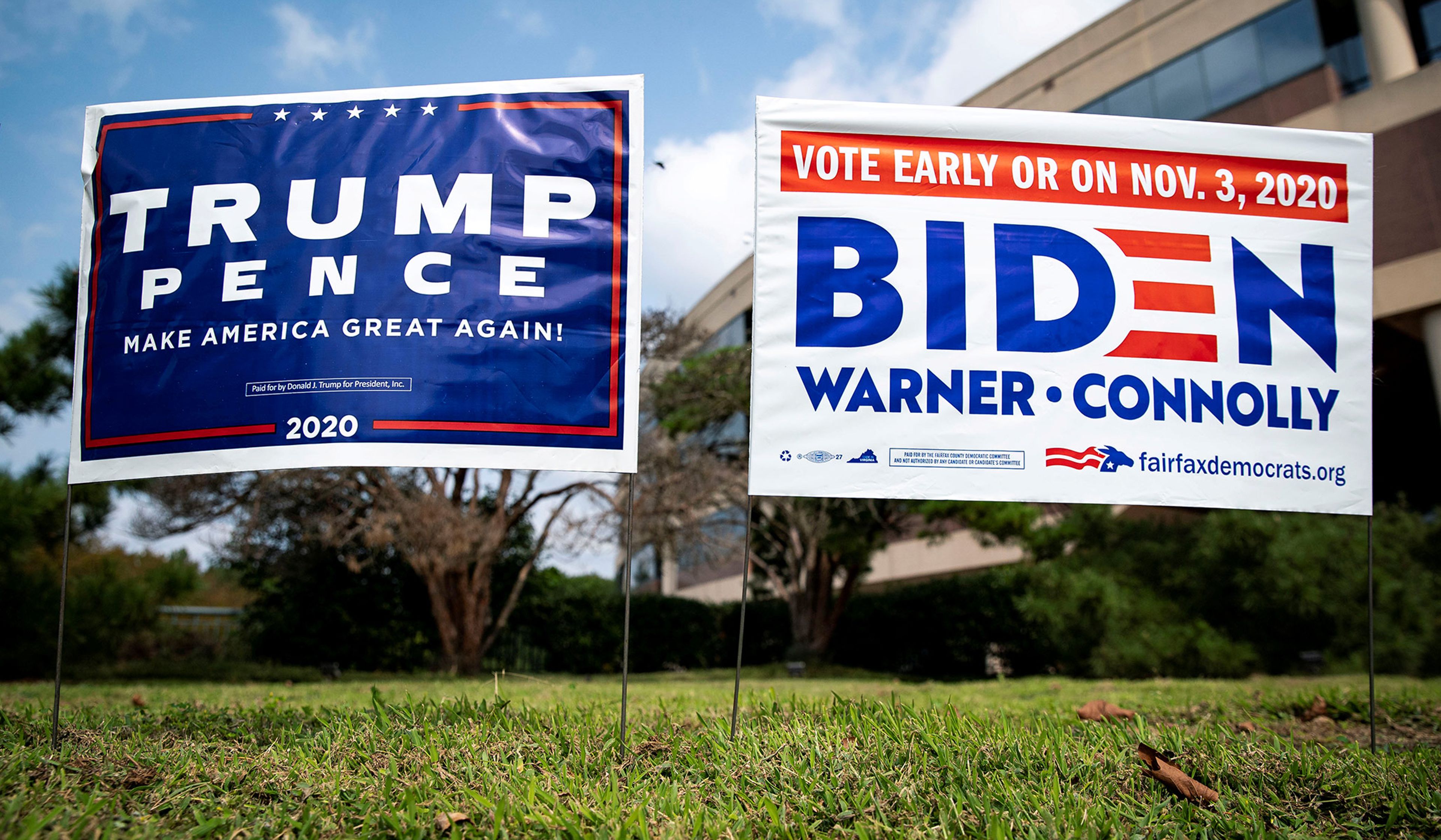
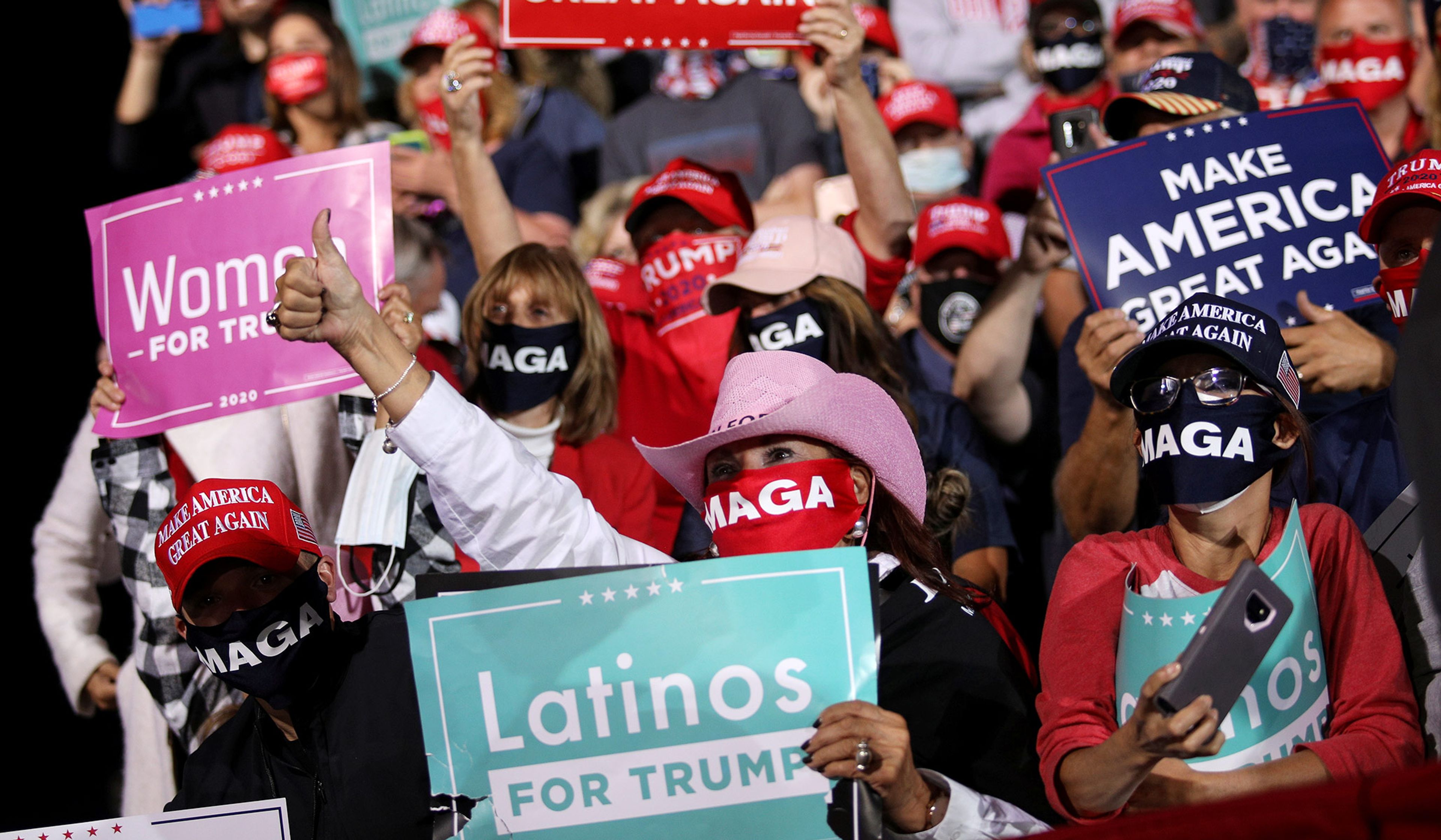
No tears for religion, politics is the new one. Our county is blue, thanks to a college town and a small city, which has lately attracted hipsters. But we live in a reddish or at least purple part of it. In the Aughts the most common yard signs touted the crackpot M.D. It was impossible, during the last war, to tell whether they were posted by wingers or the Left. Three cycles ago I saw only one sign for the cranky war hero. His campaign color scheme was black: great marketing. Four years later there was more activity for the gentleman tycoon; one partisan set up an empty chair, as an homage to the convention stunt of the old director. Then came the ungentlemanly tycoon, and his promotional pizzazz found an echo in a burst of signage. Some of it was homemade. Two roadside billboards set at an angle addressed northbound and southbound cars alike, the flag between them projecting like a ship’s prow. Other supporters flew the campaign flag, emblazoned with the candidate’s name (he has always been keen to generate revenue from name brands, whether steaks, wines, or college classes). A couple towns away there was a house that compelled admiration by sheer effort. So many banners filled its front yard, you could not read them all as you passed. One afternoon, just before the election, there was a man among them, doing cheerleader’s gestures. I hope he got a thank-you note; he put in more work than Brad Parscale. After the election came the post-election and the theme of stopping the steal. Next to these extroverted displays, the appeals on behalf of the eventual winner, however numerous — and there were a lot of them — seemed positively demure. A few signs have been taken down now, but many remain, and will, I suspect, for a long time.
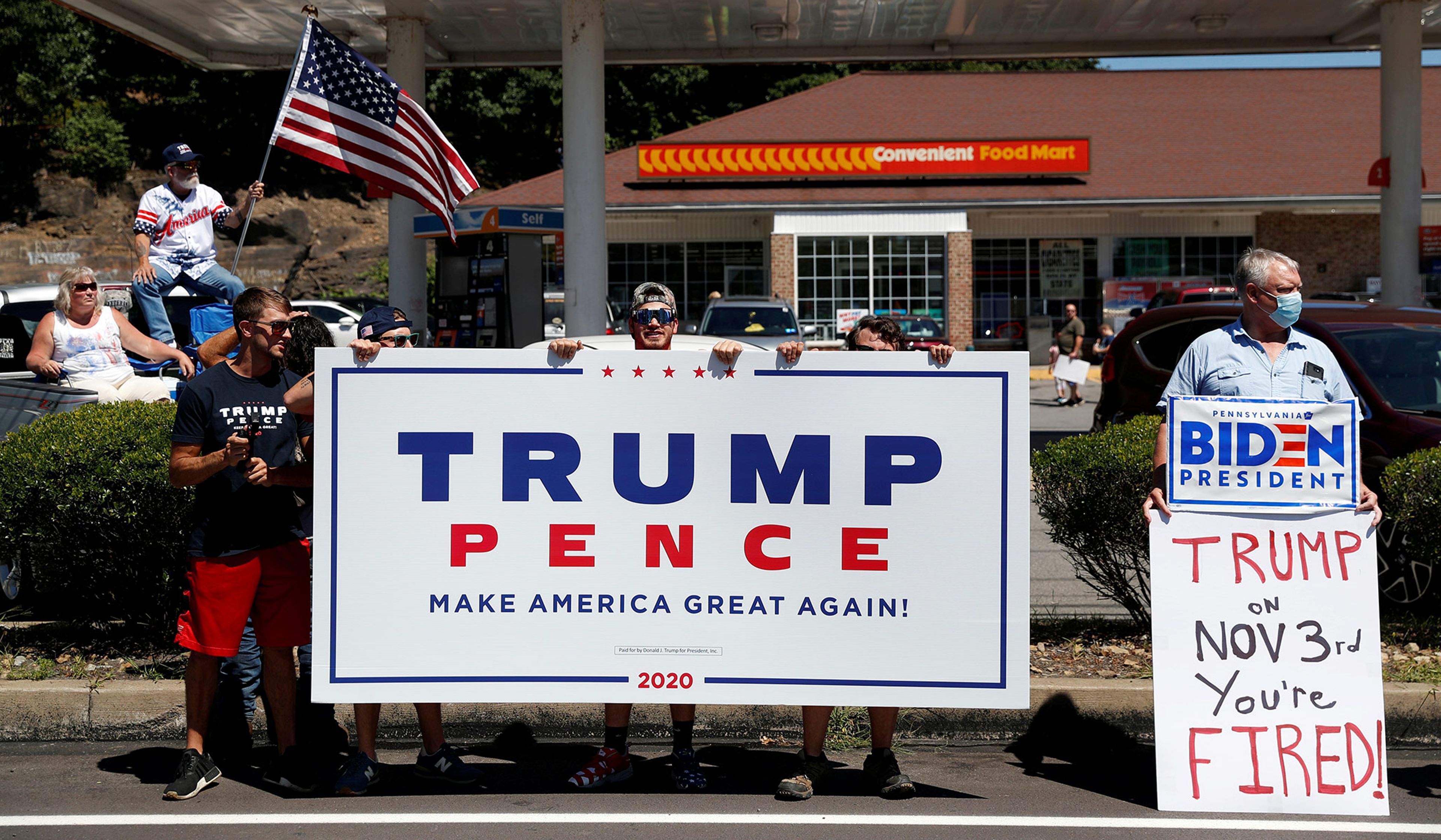
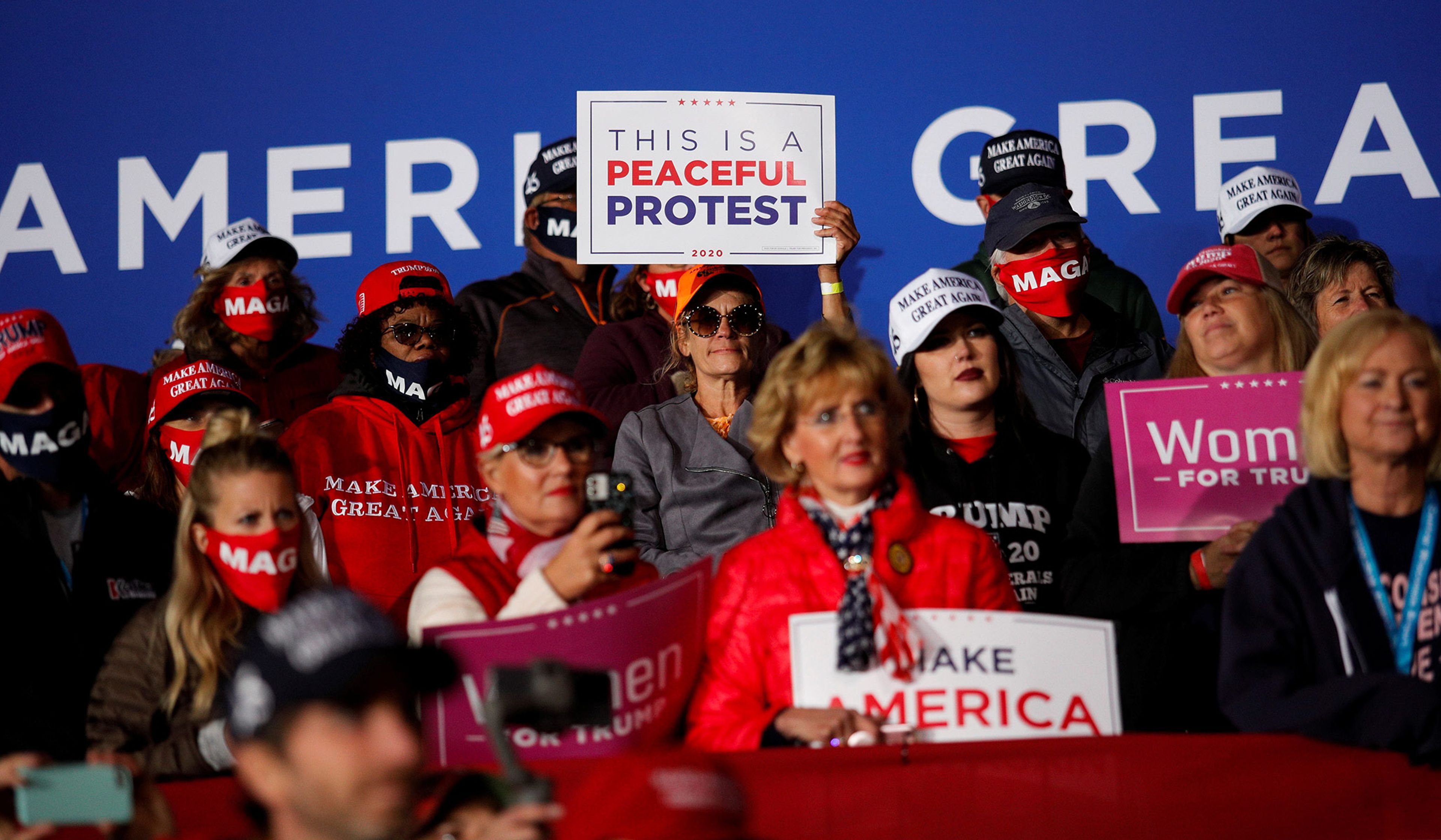



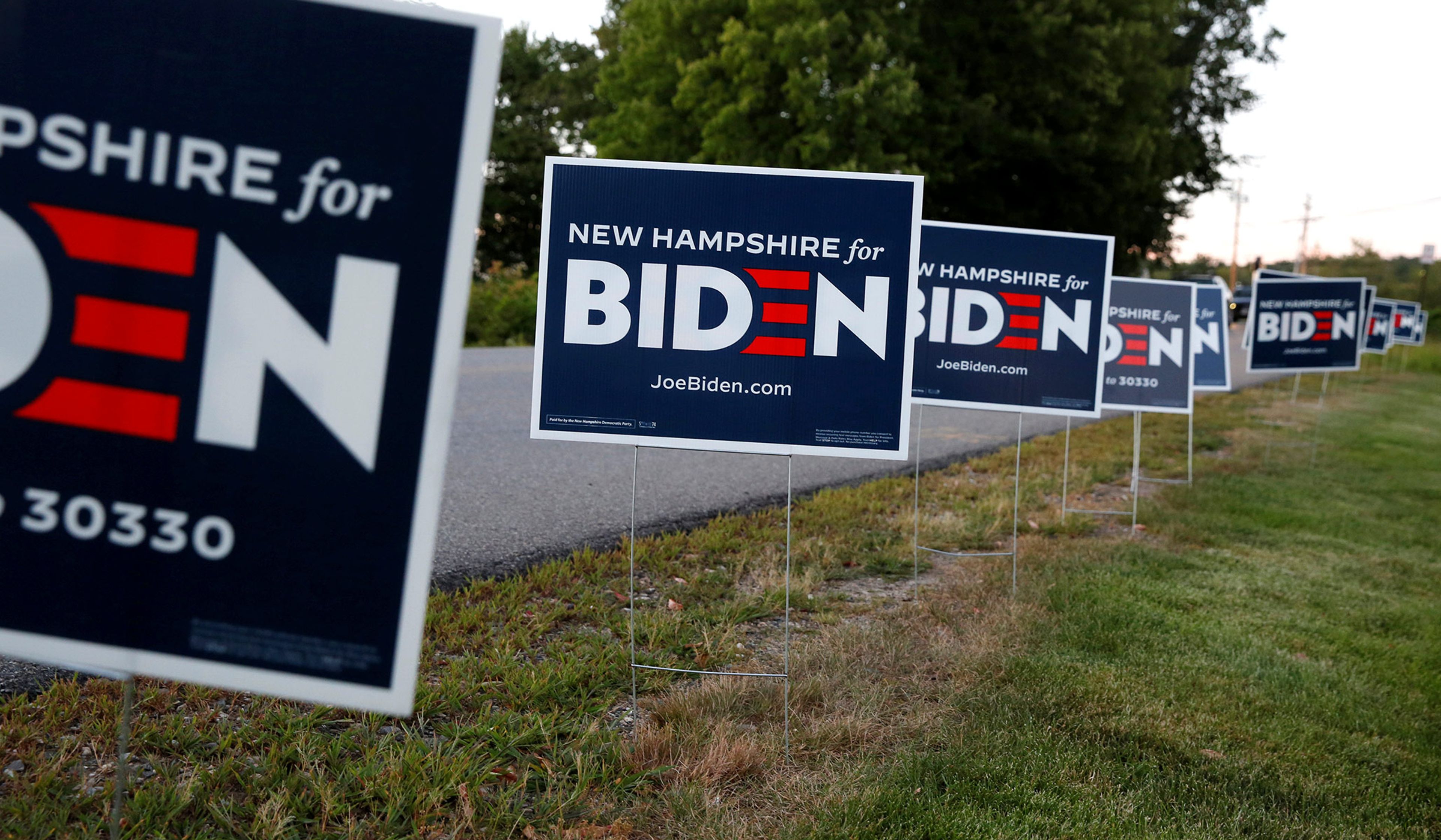
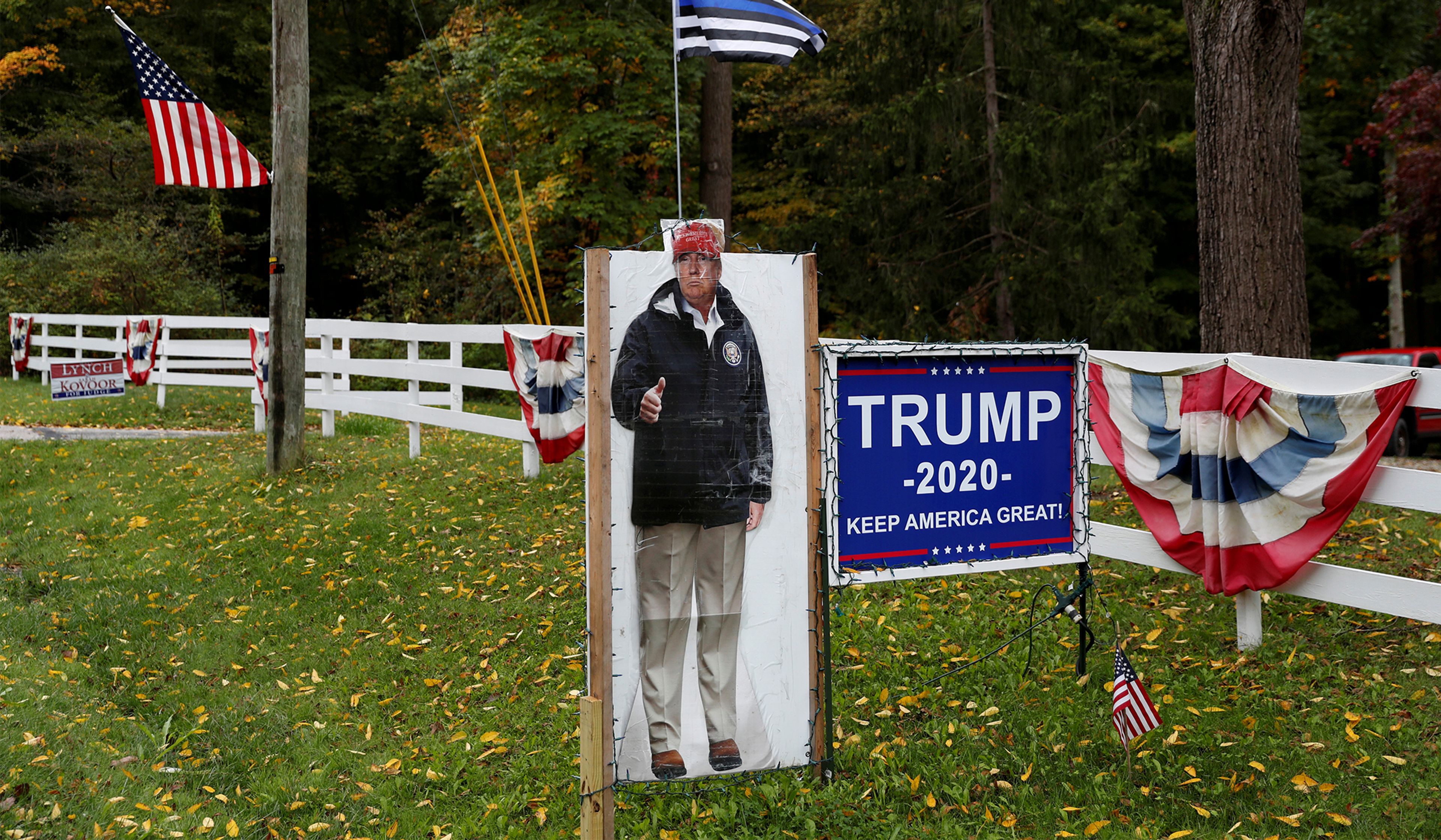
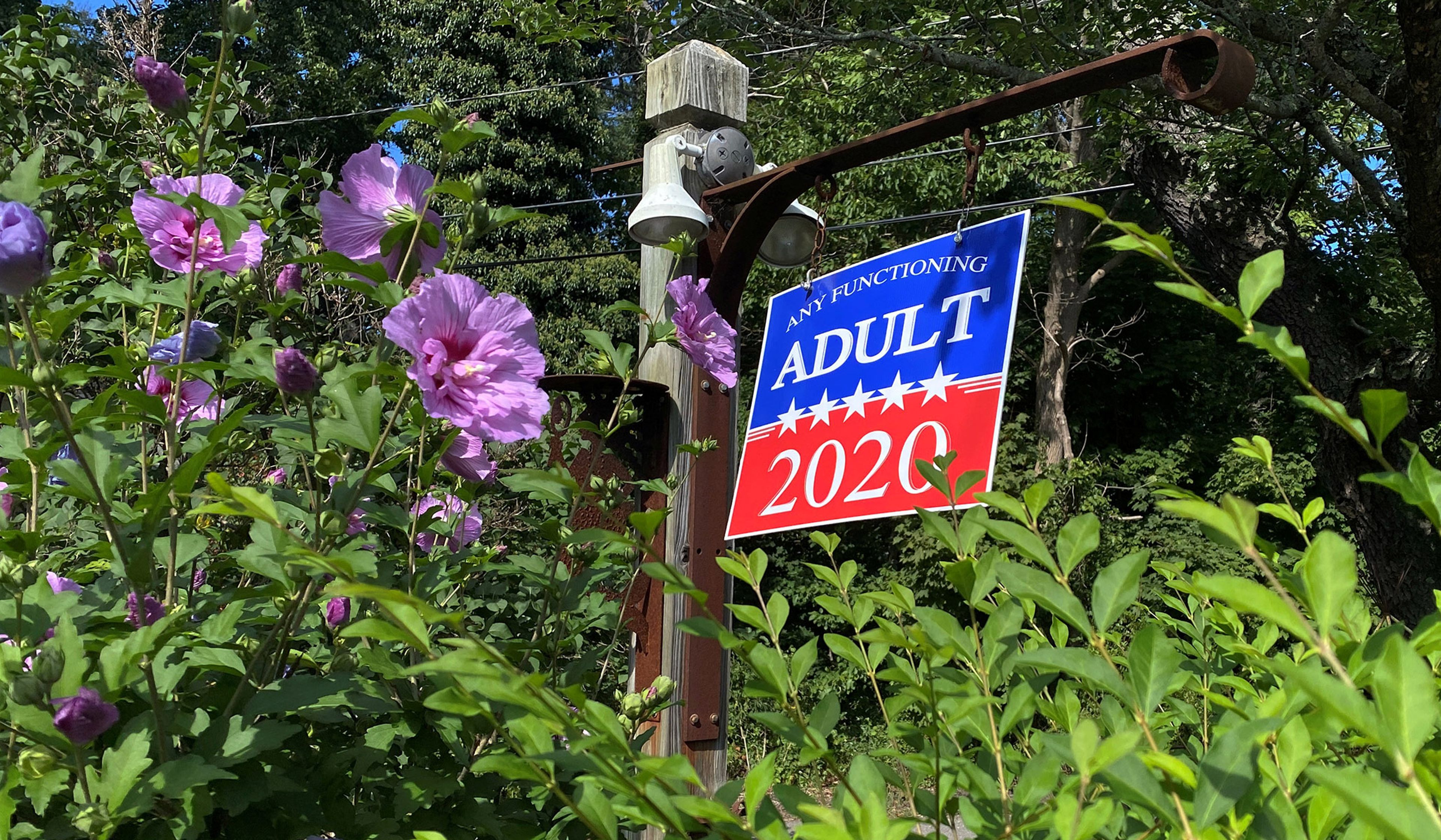
A man holds a sign in support of Democratic presidential candidate Joe Biden as supporters of President Donald Trump gather ahead of his campaign stop in Old Forge, Pa., August 20, 2020.
Shannon Stapleton/Reuters
Gail Collins’s book on William Henry Harrison in Arthur Schlesinger Jr.’s presidential series does not have much to say about his administration, it having lasted only 30 days, but it says a lot, smartly and entertainingly, about his campaign. There simply wasn’t a lot to do in rural America, which was most of America, in 1840. Court sessions, if you lived near a courthouse; religious revivals; old news in newspapers, even older if your copy was secondhand. So when the Harrison campaign announced that they were assembling an enormous ball, which they proposed to roll from — burg to — ville, that was something to get your attention. Now we are stuffed, like force-fed geese, with information, misinformation, and diversion. And yet politics can still weave its spell.
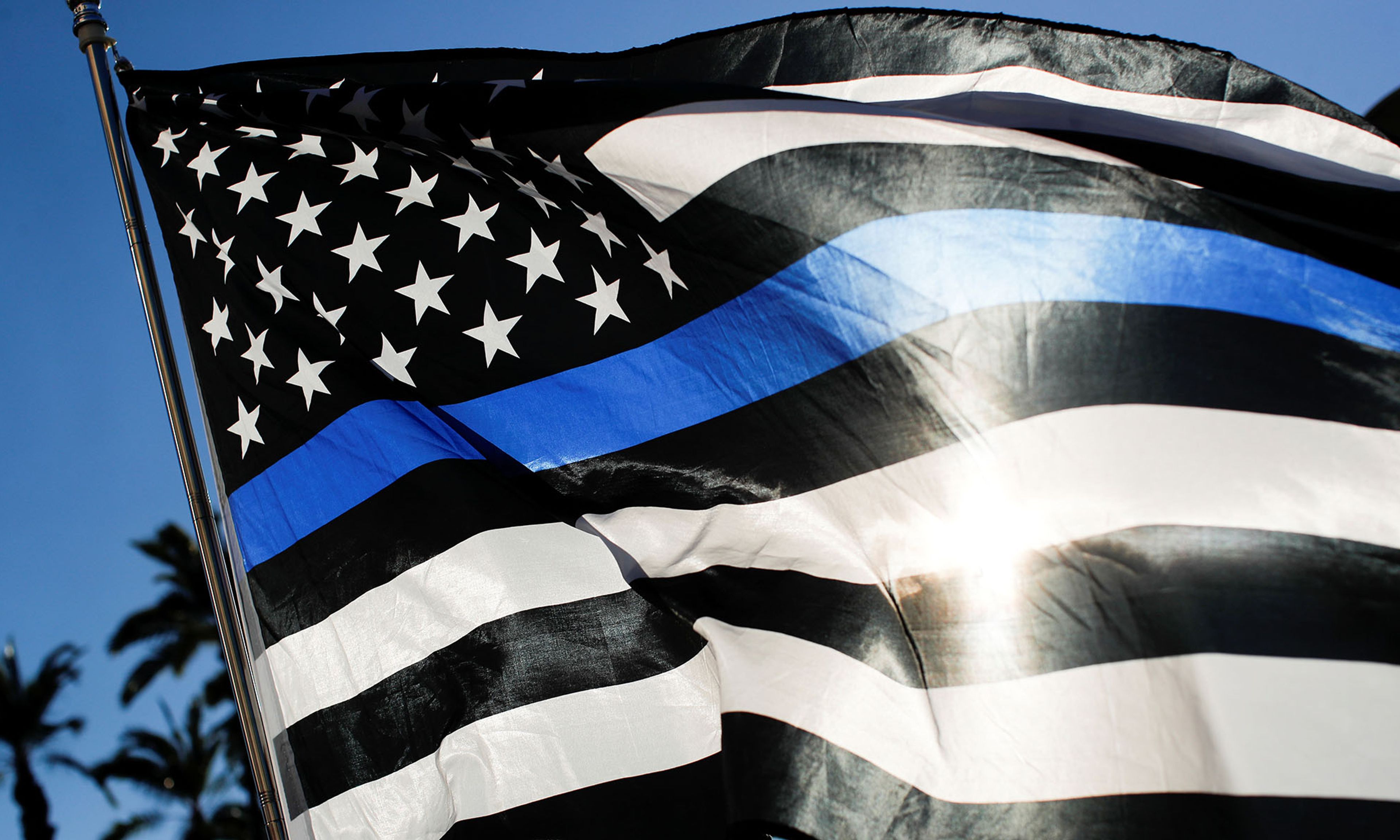
Politics is also the new patriotism, which must be why so many American flags seem wrongly hung — out in the rain; unilluminated at night. That’s all right, my flag has a blue stripe or a peace sign on it. It had that at Antietam, right?












Comments