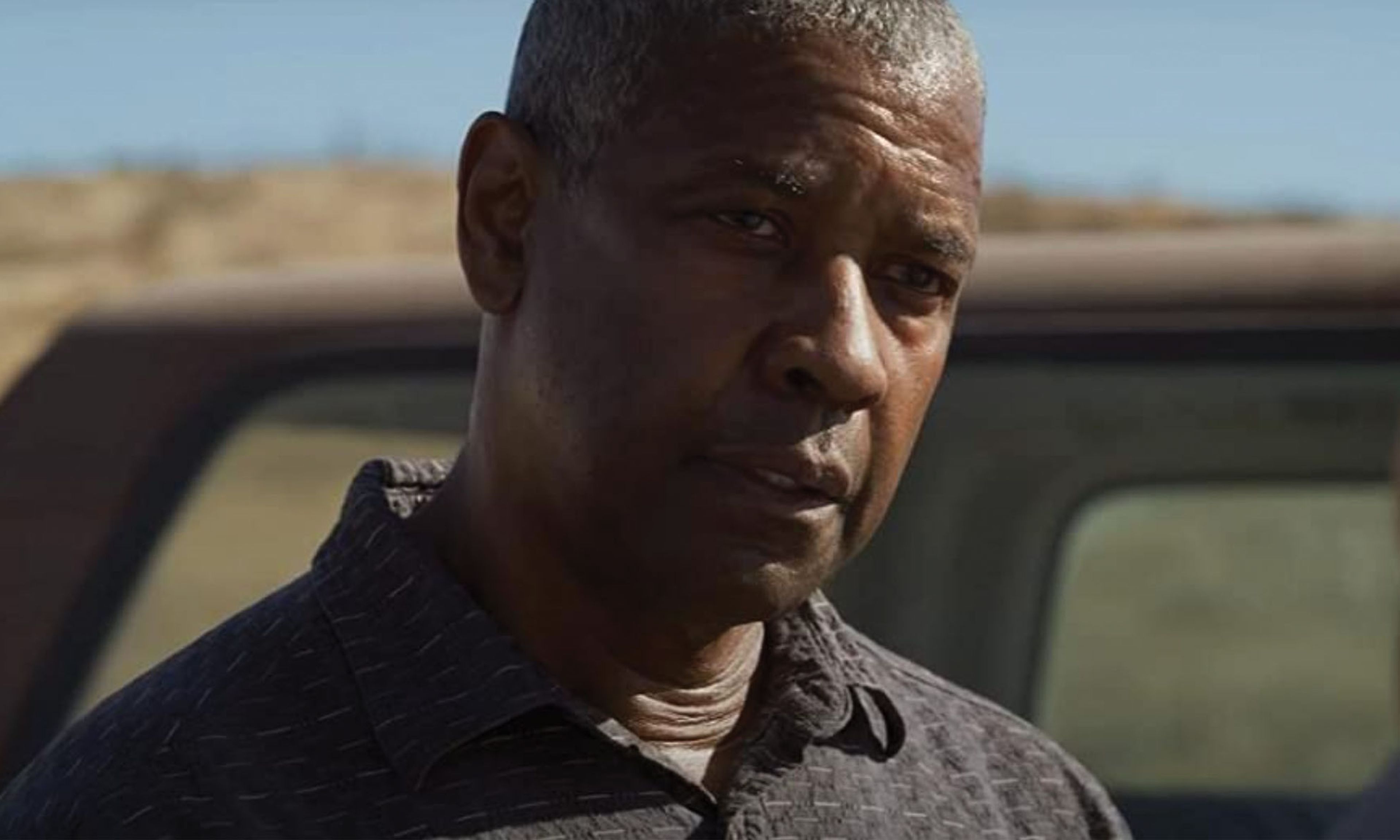
The Little Things, which puts a heavy, weary-looking Denzel Washington on the trail of a serial murderer in sunny California, is the kind of medium-sized star vehicle that I’ve missed seeing since the pandemic changed moviegoing for the worse. You can still get plenty of intimate, artsy dramas beamed to your laptop and TV; you can’t get as many of the superhero spectaculars, but then again I don’t miss them very much. But the midcult commercial movie with a workhorse plot and a bunch of big-name stars doing their old familiar things was growing rarer even before the pandemic, and it’s nice to see proof that it isn’t gone forever.
In this case the workhorse plot can be distilled two ways. In terms of genre, this is a “cops chase serial killer” movie, with hints of Zodiac and Se7en (to say nothing of all the lesser examples), but the casting at the top means that fundamentally it’s a “Denzel plays a detective” movie, part of an expansive list (Inside Man, Out of Time, The Taking of Pelham 123, Virtuosity, Fallen, Ricochet, and even his Oscar winner, Training Day) going back decades into our shared moviegoing past.
The Little Things toys reasonably effectively with the expectations set by all those predecessors. It makes its star look schlumpy and old in the early scenes, where we watch him going through the motions as a sheriff’s deputy in small-town California. But we know, we just know, that the schlumpiness can’t be a permanent state — that we’re just killing time till his character, Joe Deacon, gets pulled back into his former life as a Los Angeles homicide detective and finally starts flashing the intelligence, the swagger, and the smile (that smile) that every Washington performance is contractually obligated to deliver.
The pull back to his old life comes from a series of unsolved murders of young women, which remind Deacon of a similar case at the tail end of his career, and also from the new case’s lead detective, the young and tightly wound Baxter, played by Rami Malek, who scorns Deacon at first but quickly realizes he needs the older man on his team. Baxter is written as a familiar archetype — the straight arrow who’s destined to get bent, the pillar of rectitude who’s going to tip over — but as played by Malek, with his protuberant upper lip and gaunt fanatic’s face, he comes across as a man for whom the Joe Friday stuff is all performance from the start, who pretty much knows he’s headed to dark places, not just the DA’s chair.
The darkness takes form and shape as Sparma, their main suspect, an appliance repairman with a Charles Manson beard, a fanboy’s interest in true crime, and some circumstantial links to the killings. Jared Leto, a frustrating actor in some parts, is terrific in this one: His Sparma has a preternatural calm and a gentle malignancy that leaves you torn, like the detectives, between the obvious conclusion that he’s the killer and the also plausible, in some ways creepier possibility that he’s basically playing a part, doing an homage to his grisly heroes, even though he himself hasn’t hurt a fly.
That ambiguity means that the movie, at the two-thirds point, has the audience set up for a big twist ending, either something unexpectedly horrifying as with Se7en (the camera lingers suggestively on Baxter’s wife, who looks like the most recent girl to go missing) or some Usual Suspects switcheroo in which it turns out that much of what we’ve been seeing is actually misdirection.
There are certainly surprises in the movie’s homestretch, but as the ending looms you begin to realize that The Little Things — directed by John Lee Hancock, who wrote the script himself almost three decades ago — mostly aspires to tell us something interesting and troubling about the psychology and morality of high-stress police work, with questions like Who killed all the girls? distinctly secondary.
Which unfortunately means that I have to rate the movie a little lower than I would like, because its strengths are the strengths of an actual meat-and-potatoes whodunit — including the decision to set the story in the time when Hancock first wrote it, the early 1990s, those golden years before the cellphone came along to ruin a lot of the basic rules of Hollywood suspense. That’s a plot-driven decision, and The Little Things needed a few more of them: I’ll watch Denzel play a detective any day of the week, but this installment in the genre doesn’t quite have the subtlety or the director’s touch required to make the audience feel satisfied with its deliberately unsatisfying ending.











Comments