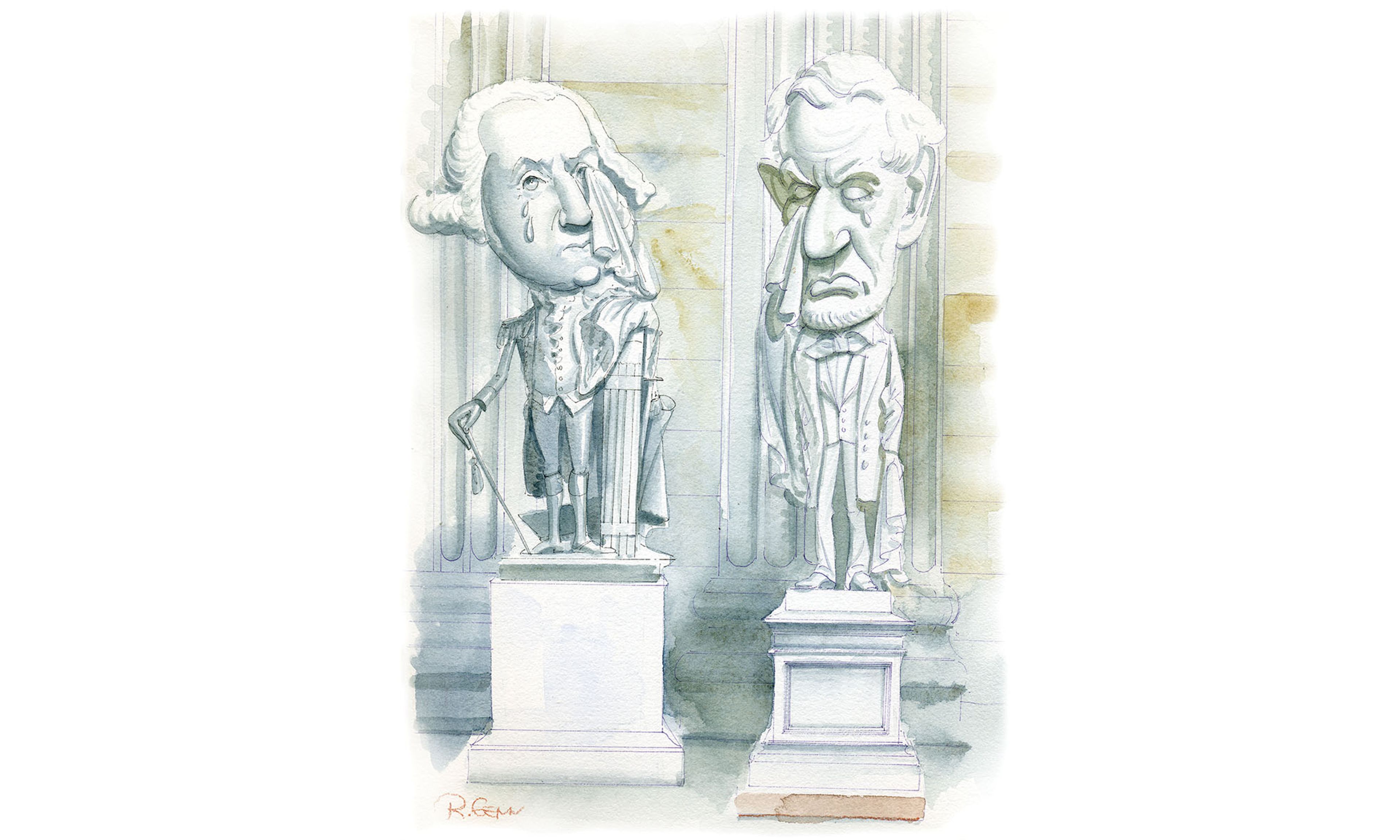
• Close and attentive viewers may have noticed that for some reason the mood at CNN seems to have picked up.
• While the riot of January 6 has prompted scrutiny of the Capitol Police, provoked criticism of its leadership, and led to the suspension of three officers and to the investigation of 17 others, a fair account of the afternoon must include recognition of the many in their ranks who performed with professionalism and courage. Thomas M. Loyd, commander of the department’s Capitol Division, was cited by members for working “shoulder to shoulder” with them to quell the mayhem. Officer Eugene Goodman single-handedly faced off against an advancing mob. Pretending to retreat down hallways and up a staircase, he shrewdly diverted them from the Senate chambers. They followed him into a space where a contingent of police stood ready to stop them. His skillful maneuver, a combination of exceptional valor and presence of mind, was captured on video that soon went viral. Vice President Pence reached out to thank him. Three House members have introduced a measure to award Goodman a Congressional Gold Medal. One Capitol Police officer, Brian Sicknick, 42, a veteran of the Air National Guard, died the following evening, after being beaten by rioters and hit in the head with a fire extinguisher. We honor his memory.
• Donald Trump passed on attending his successor’s inauguration, becoming the fourth president to do so. John Adams was the first no-show, taking the early stage out of Washington on the morning of Thomas Jefferson’s inaugural in 1801. There was hardly a tradition then: Adams’s own inauguration four years before had been the first transfer of presidential power, and Jefferson’s was the first across party lines. But Adams was prickly and self-pitying (besides being a great man): qualities shared by his son and fellow president John Quincy Adams, as shown when he skipped Andrew Jackson’s inauguration in 1829. Andrew Johnson had an Adams-like temperament without their good traits, and was MIA when Ulysses Grant was sworn in in 1869. But for a century and a half after that, presidents swallowed pride, anger, and hurt to come and go in a ceremony of civic continuity. Badly done, Mr. Trump.
• Ted Cruz and Josh Hawley have come under severe criticism — some people even say they should be expelled from Congress — for leading the Senate fight against certifying several states’ electoral votes. The conservative senators walked a fine line for weeks: They were careful not to say that Biden had stolen the election or that Trump had won it, but they didn’t clear up either falsehood. Instead they raised technical points that appeared to back Trump. Hawley insisted, for example, that he was merely protesting the way Pennsylvania’s (Republican) legislature had changed election laws in 2019. Some of the Capitol Hill rioters have said that they felt the senators were rooting for them. The senators emphatically, and credibly, deny it. What also cannot be denied, we are sorry to say, is that their behavior was cynical and reckless.
• Liz Cheney voted to impeach President Trump with a statement meant to leave a mark. She said of Trump’s behavior before and after the riot that “there has never been a greater betrayal by a President of the United States of his office and his oath to the Constitution.” The No. 3 in the House GOP leadership, Cheney did this knowing that it would put a political target on her back, and indeed the backlash was instantaneous, with calls to boot her from leadership and threats of a primary challenge. Cheney’s rejoinder is that hers was a vote of conscience, a word and concept that some of her critics need to reacquaint themselves with. Reasonable people can disagree on the advisability of impeachment, but there shouldn’t be disagreement that the Republican Party needs more officeholders like Cheney who take their responsibilities seriously and are willing to go their own way when they believe it is right. Brava.
• America is choking in a cloud of noxious rhetoric. Why not stifle it? Twitter banned Donald Trump after the Capitol riot. Amazon denied Parler, an unmoderated alternative favored by the most pro-Trump portions of the Right, their platforms. Simon & Schuster dropped Josh Hawley’s book, The Tyranny of Big Tech. Macaulay Culkin endorsed the idea of clipping a Donald Trump cameo out of Home Alone 2. These social-media, publishing, and movie companies (Home Alone 2 was made by 20th Century Fox) are private and may therefore post, print, film, or edit what they like. But since their product is expression, a duty to free expression clings to them, the more so since, unlike forthrightly ideological outlets, they claim no partisan affiliation. That doesn’t mean they have a duty to publish anyone who walks through their door, but it ought to make them leery of disinviting people once they have been welcomed. If Trump or Parler posters incite violence, let them be prosecuted; if they libel people, let them be sued. Scotching Hawley’s book makes his point about the partisanship and censoriousness of our cultural arbiters.
• What is a bitter-end Trump supporter to do in the wake of the Capitol riot? Shame is uncomfortable, fear of blowback unsettling. There is a way out: Maybe the riot was really the work of Antifa or BLM. This is the argument advanced by Representative Mo Brooks and Rudy Giuliani. A peg has appeared on which to hang it: John Sullivan, a Utah agitator, who filmed the shooting death of rioter Ashli Babbitt. Sullivan claims to be a BLM sympathizer who blended in with the protest to document it. His hour-long video of the event shows him blending in very thoroughly indeed, cheering on destruction. Left-wing acquaintances from Utah meanwhile spurn him as a loose-cannon violence groupie. Wherever Sullivan comes down on the spectrum, he was heavily outnumbered by known far-right figures, who documented their allegiance to what they understood to be Trump’s call to action. “Antifa made me do it” is a daydream of the weak-minded. Conservatives should drop it.
• In 2004, according to the left-wing fever swamps, the George W. Bush presidential campaign somehow used Diebold voting machines to steal Ohio from Democrats and win the election. In 2020, the machines of Dominion Voting Systems filled this role for many Trump enthusiasts. The company has not taken slander lying down. On January 8, it filed a $1.3 billion defamation lawsuit against erstwhile Trump lawyer Sidney Powell, who it says launched a “viral disinformation campaign . . . to financially enrich herself, to raise her public profile, and to ingratiate herself to Donald Trump.” It is yet to be seen how Powell will respond. But Fox, One America, Newsmax, and the website American Thinker have all publicly repudiated content on their platforms that accused Dominion of various nefarious doings. They did the right thing, if only belatedly and under duress.
• History nerds note that we have had a part-Indian veep before Kamala Harris: part–American Indian. That was Charles Curtis, who held the job during the presidency of Herbert Hoover, 1929–33. Curtis was born in 1860 in Kansas when it was still a territory. His father was a Brit, but his mother was equal parts Kaw, Osage, Potawatomi, and French. His first languages were Kaw and French; his boyhood nickname was “Indian Charley.” He assimilated to mainstream American life early, going to high school and practicing law in Topeka, and as an adult he believed assimilation was the proper path for American Indians. But he was proud of his roots, decorating his D.C. office with native regalia and being photographed in feathered headdresses. Harris, whose father came to America from Jamaica, and her mother from southern India, should be proud to follow in this multiracial American story.
• Mike Madigan has come to the end of a sorry road. An old-style party-machine boss, Madigan has been in the Illinois legislature for 50 years, and he has served as speaker of the house since 1983. A great deal has changed since 1983, but not Mike Madigan, who has plodded along through the mire of corruption and incompetence that is Illinois state government as though it were his natural habitat, which it is. Madigan may be justly characterized as the politician who has done the most to make Illinois what it is today. That would be reason enough to drive him from office, if not into Siberian exile, but Madigan has other problems as well, prominent among them a bribery case involving a major utility operator and several of his close associates (Madigan himself has not been charged with a crime) and a mutinous Democratic caucus whose members (take note, Joe Biden) have limited interest in traditional, dealmaking, old white men of Madigan’s kind. Madigan lost the speaker’s gavel to challenger Chris Welch, who becomes the first black speaker of the house in the “Land of Lincoln.” The history books will not be kind to Mike Madigan, and he did not enter them nearly soon enough.
• With the end of the pandemic in sight, the trajectory of the U.S. economy now hinges on the ability of policy-makers to facilitate rapid distribution of vaccines. President-elect Biden has not gotten the memo. His $1.9 trillion stimulus proposal looks almost exactly like the CARES Act passed by Congress at the outset of the pandemic. It includes $400 unemployment-insurance supplements and adds an additional $1,400 to December’s $600 checks. Designed to keep Americans sheltered at home, these measures are the last thing we need during the COVID-19 recovery. As if that weren’t enough, Biden hopes to launder a national minimum wage of $15 an hour through his so-called emergency-relief bill, and $540 billion in state and local aid for good measure. The inclusion of these partisan gimmes all but ensures a delay in the passage of the public-health measures required to get us to the finish line. Biden may have campaigned during a recession, but he is taking office during a recovery. He should govern accordingly.
• The Biden administration plans to kick things off with a boneheaded act of economic self-sabotage on Day One by unilaterally canceling the Keystone XL pipeline, which would have fed Canadian oil to Gulf Coast refineries. A thriving energy sector is a blessing for American consumers (energy and transportation factor into the price of almost everything), for the American workers who benefit from the well-paid blue-collar jobs in the energy business, for national security (another convenient source of oil from a nearby friendly country is a hedge against global instability), and for related economic sectors ranging from manufacturing to chemicals. The war on Keystone is part of a scorched-earth environmentalist campaign against energy infrastructure per se, with left-wing activists opposing every well, every refinery, every pipeline, every rail-shipping terminal, every export depot, etc. This is a jihad, not a program for environmental mitigation. A responsible approach to greenhouse-gas emissions would begin by recognizing that the most important driver of reduced emissions in the United States has been a fossil fuel, with cheap, abundant, and relatively clean-burning natural gas displacing coal in electricity generation. Blocking Keystone will do nothing for the environment, and it may even have negative environmental consequences — those refineries in Texas and Louisiana are not going to stop taking in crude, but will simply be forced to rely more heavily on oil delivered from abroad by tanker than on oil delivered by pipe from Canada via Nebraska. Joe Biden is worried about his left flank. We are worried about Joe Biden’s left flank, too.
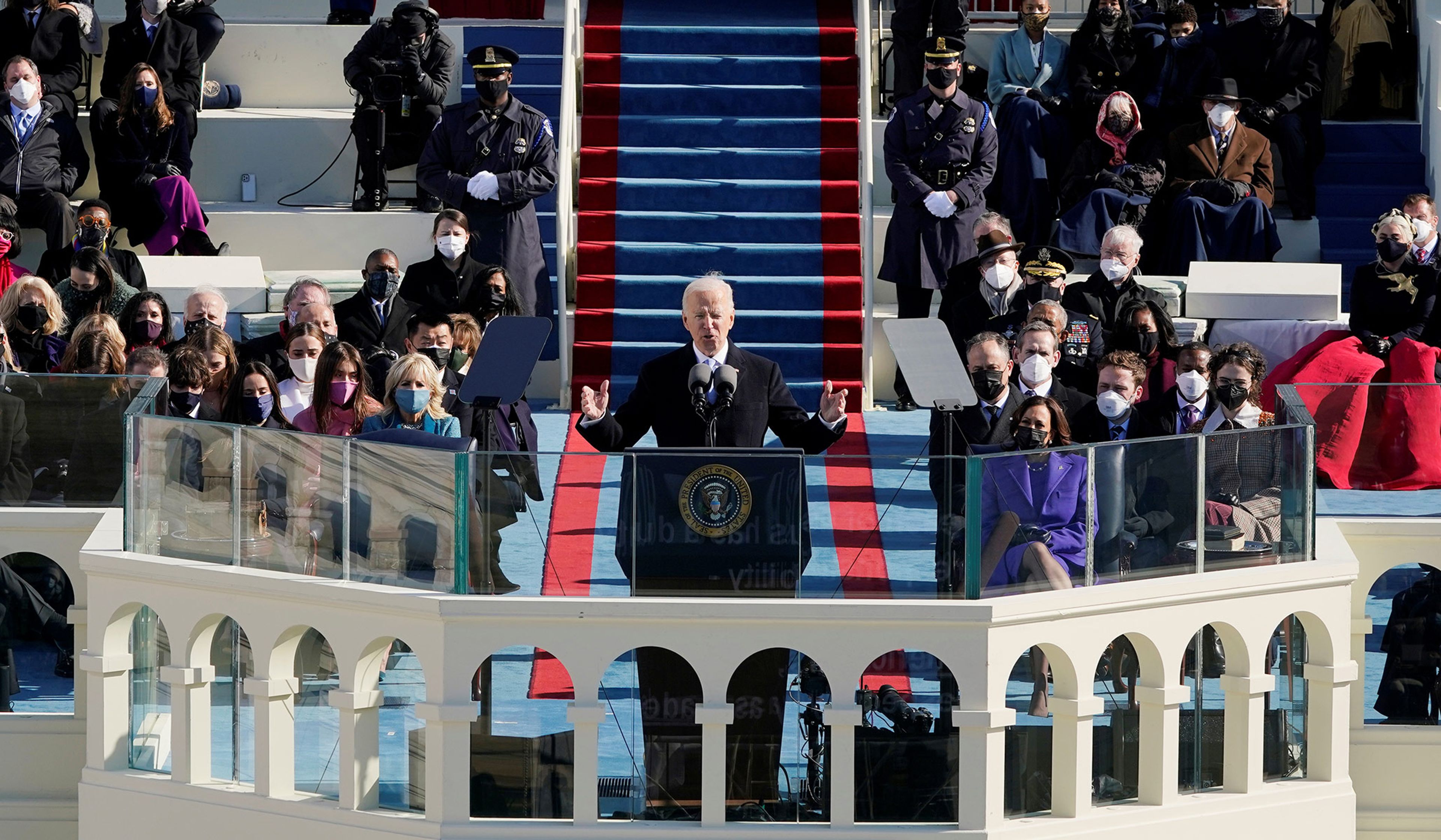
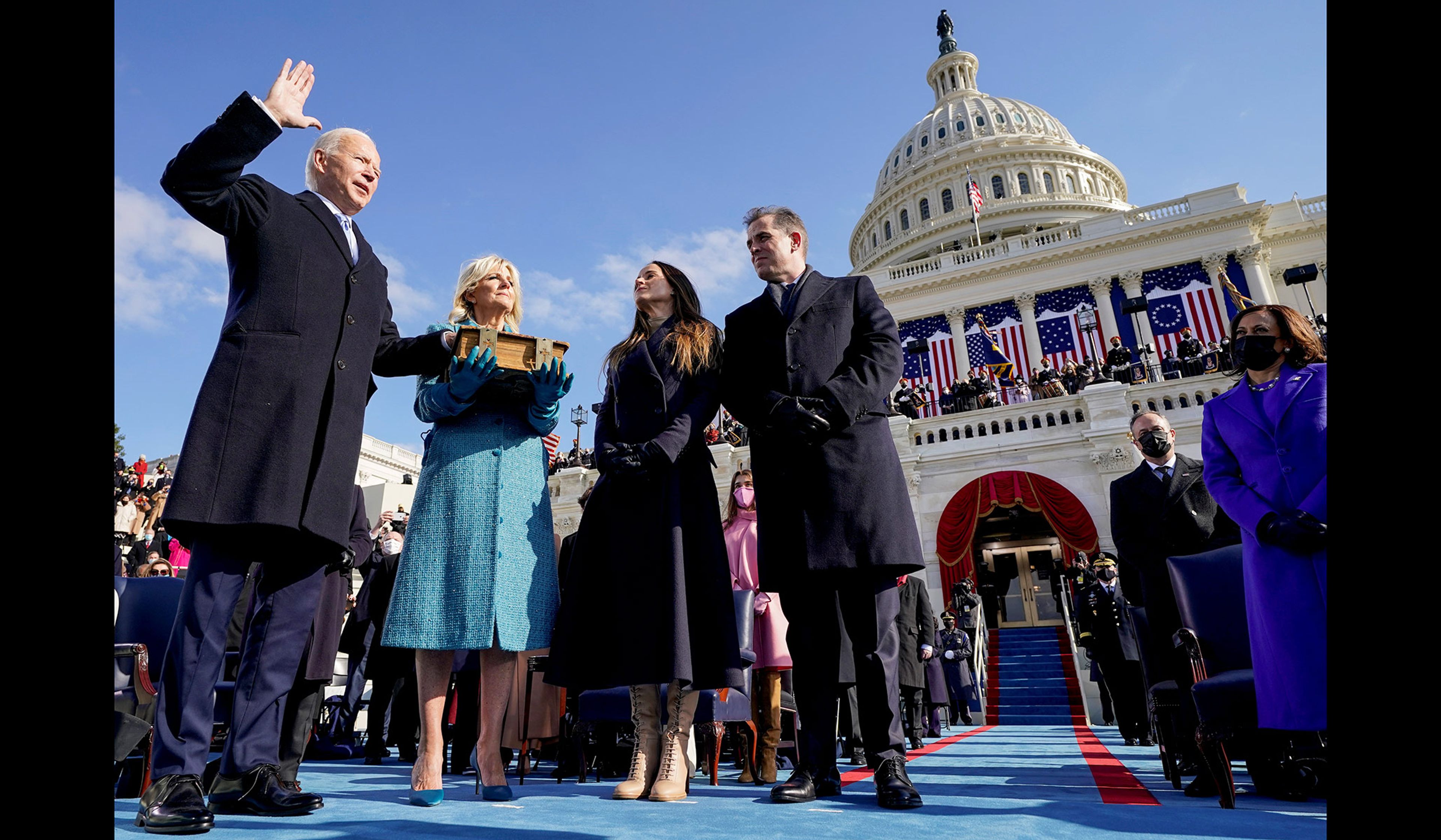
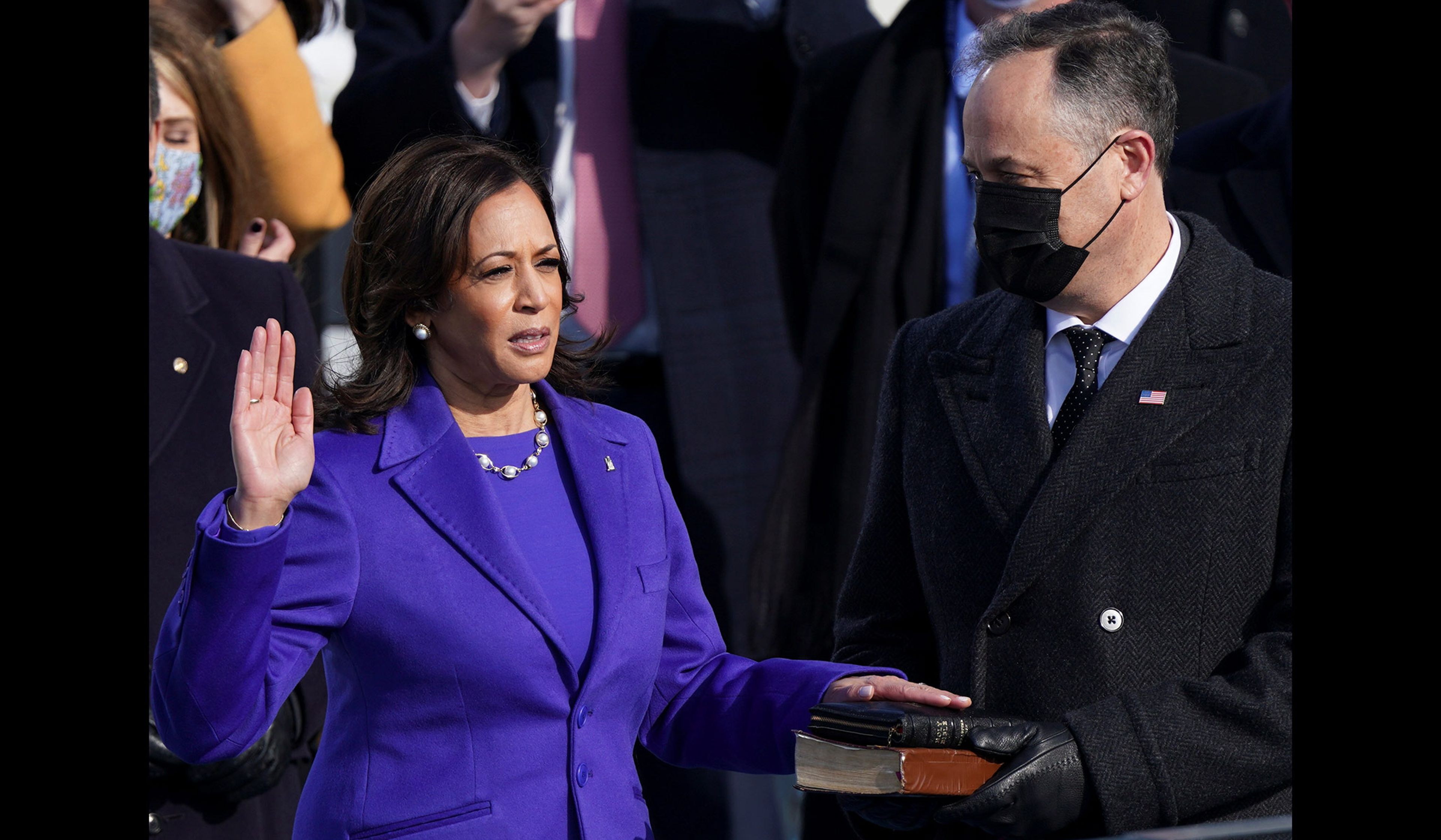
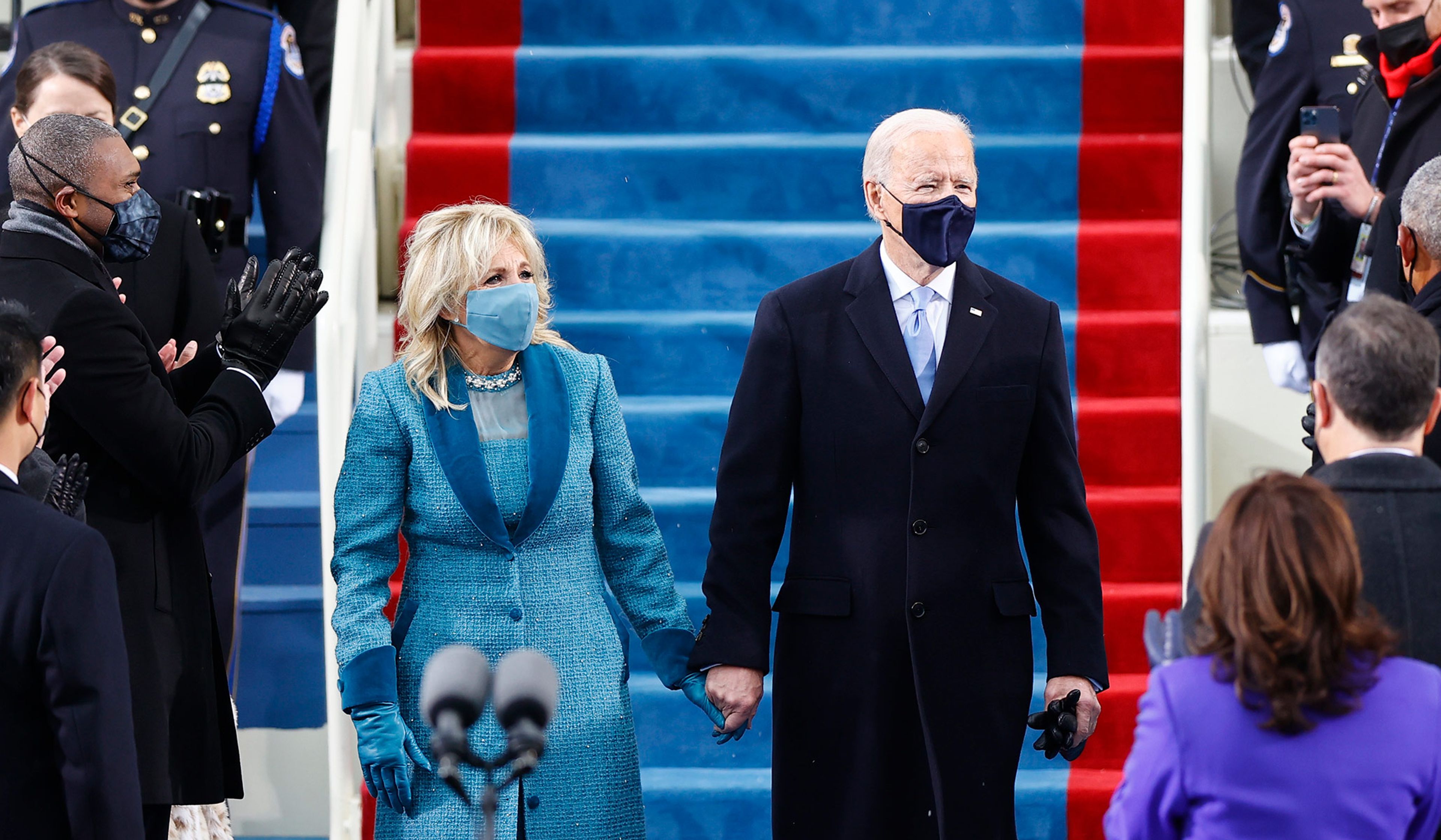
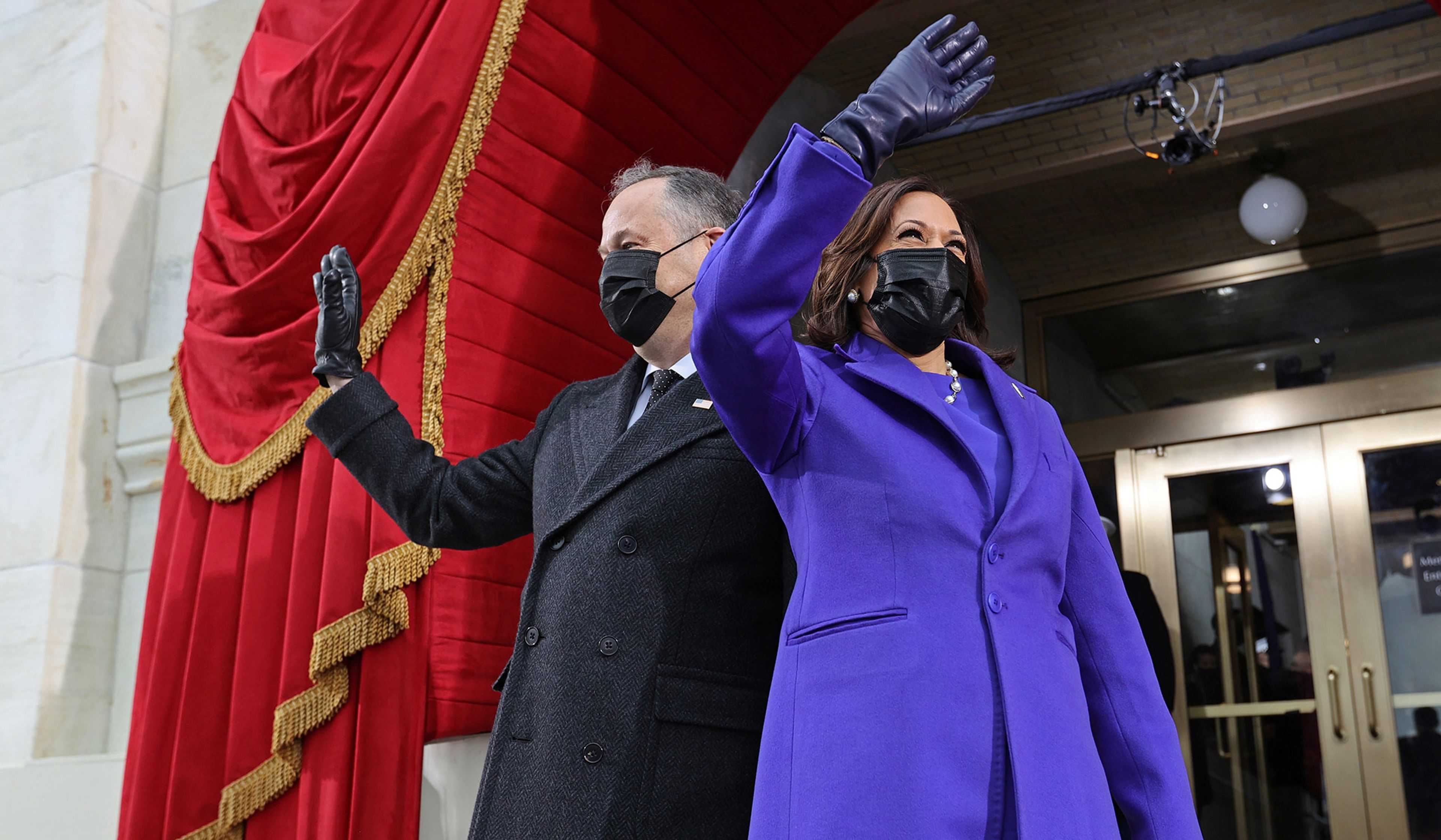
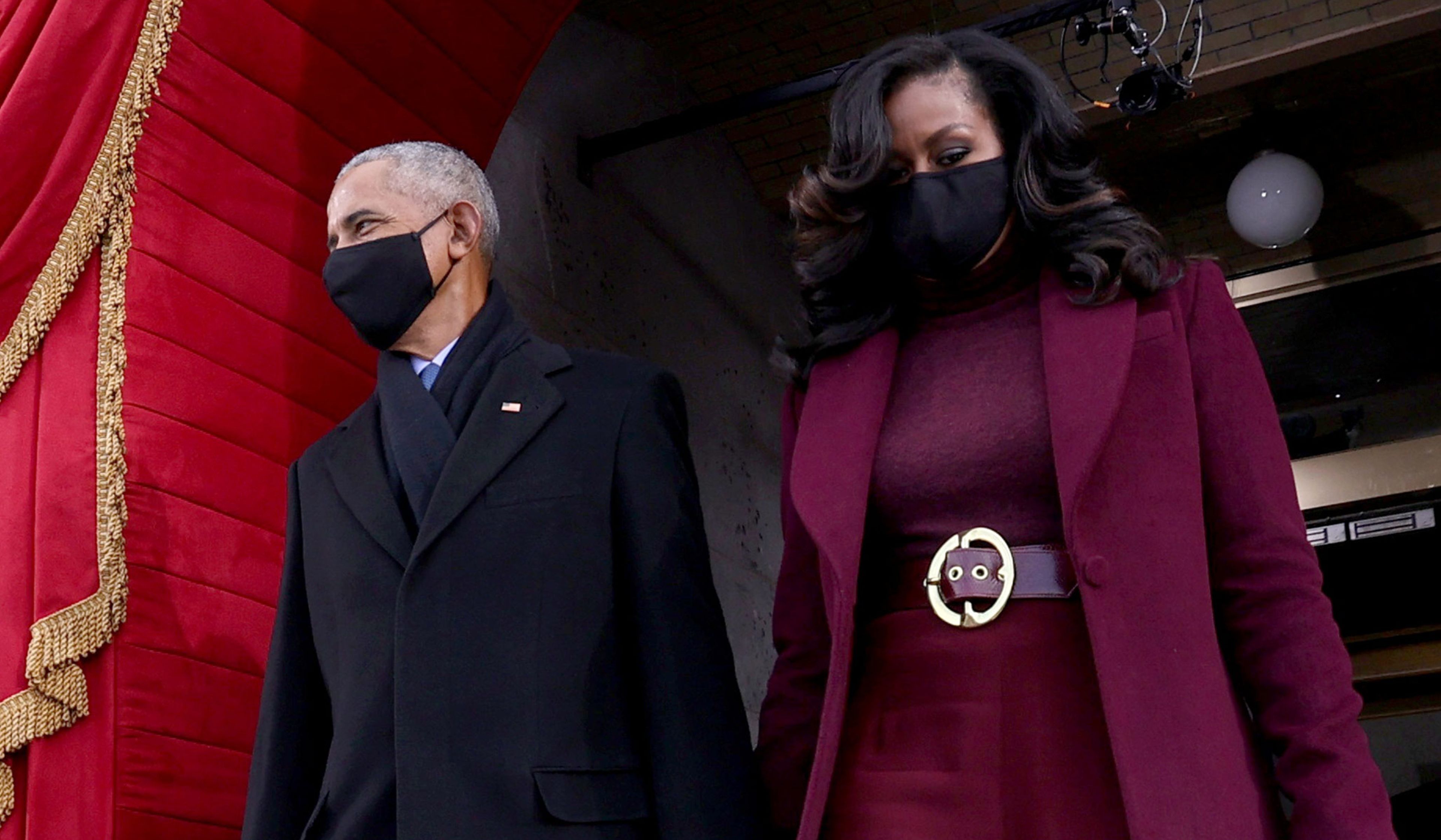
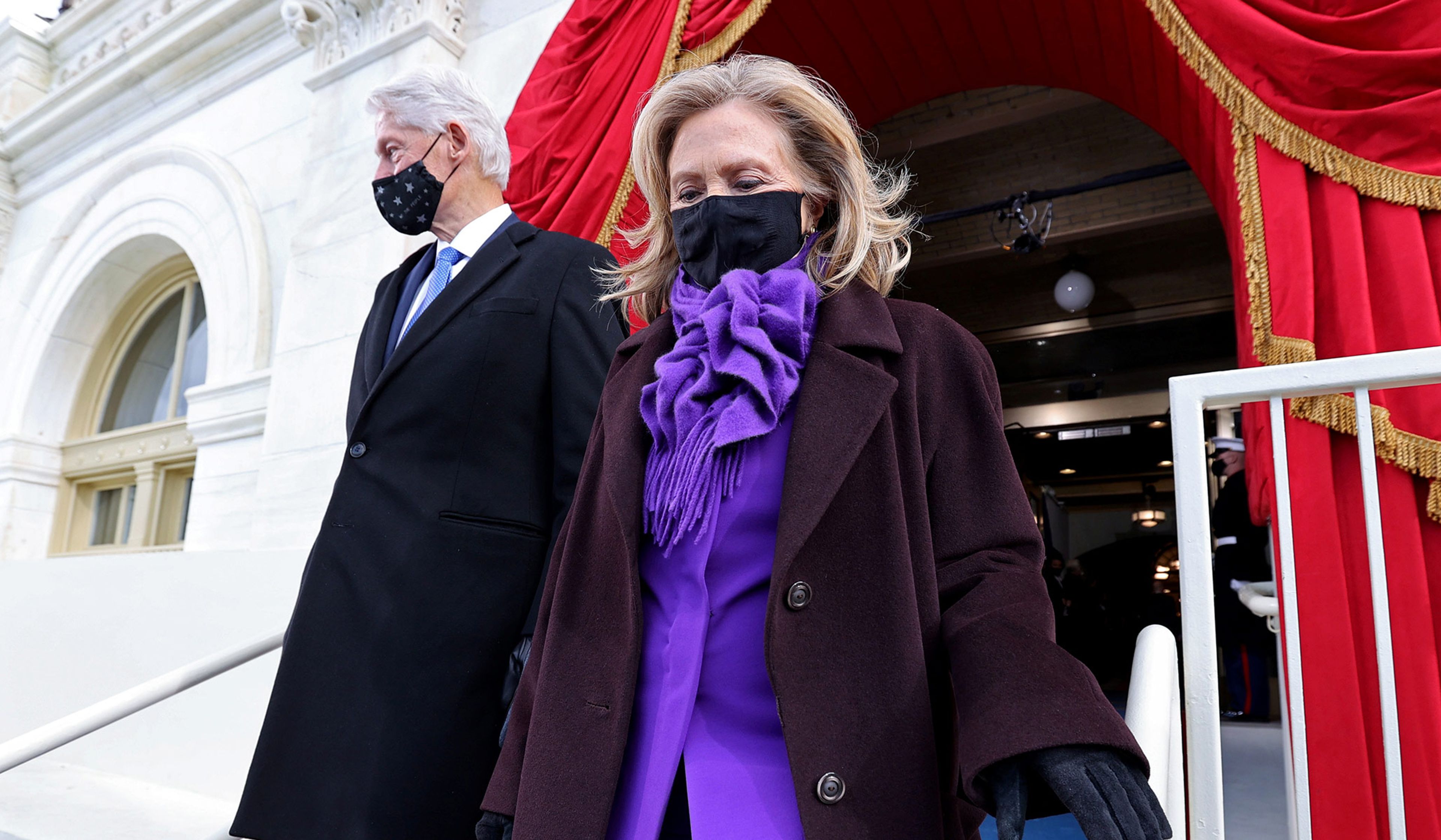
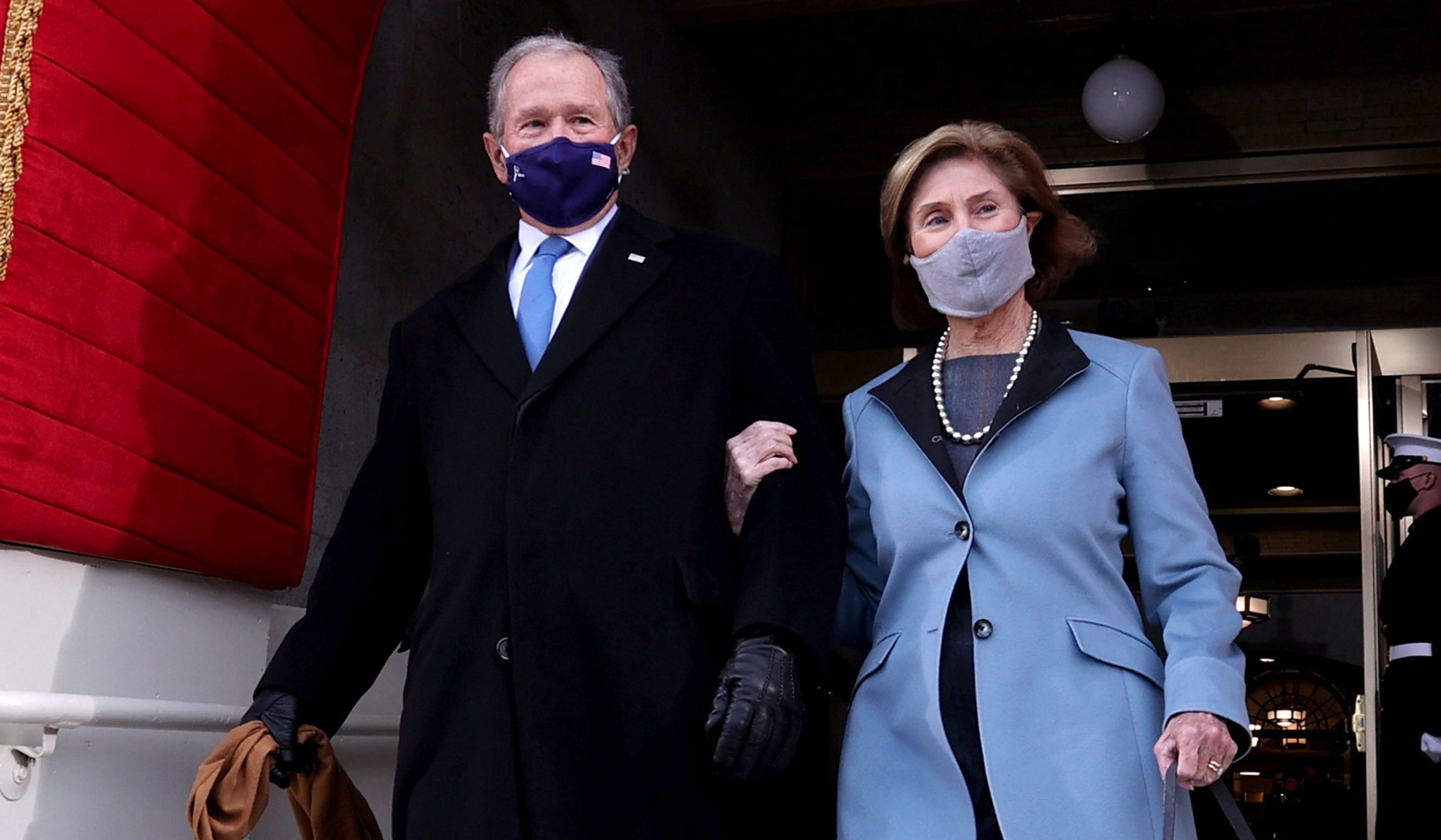
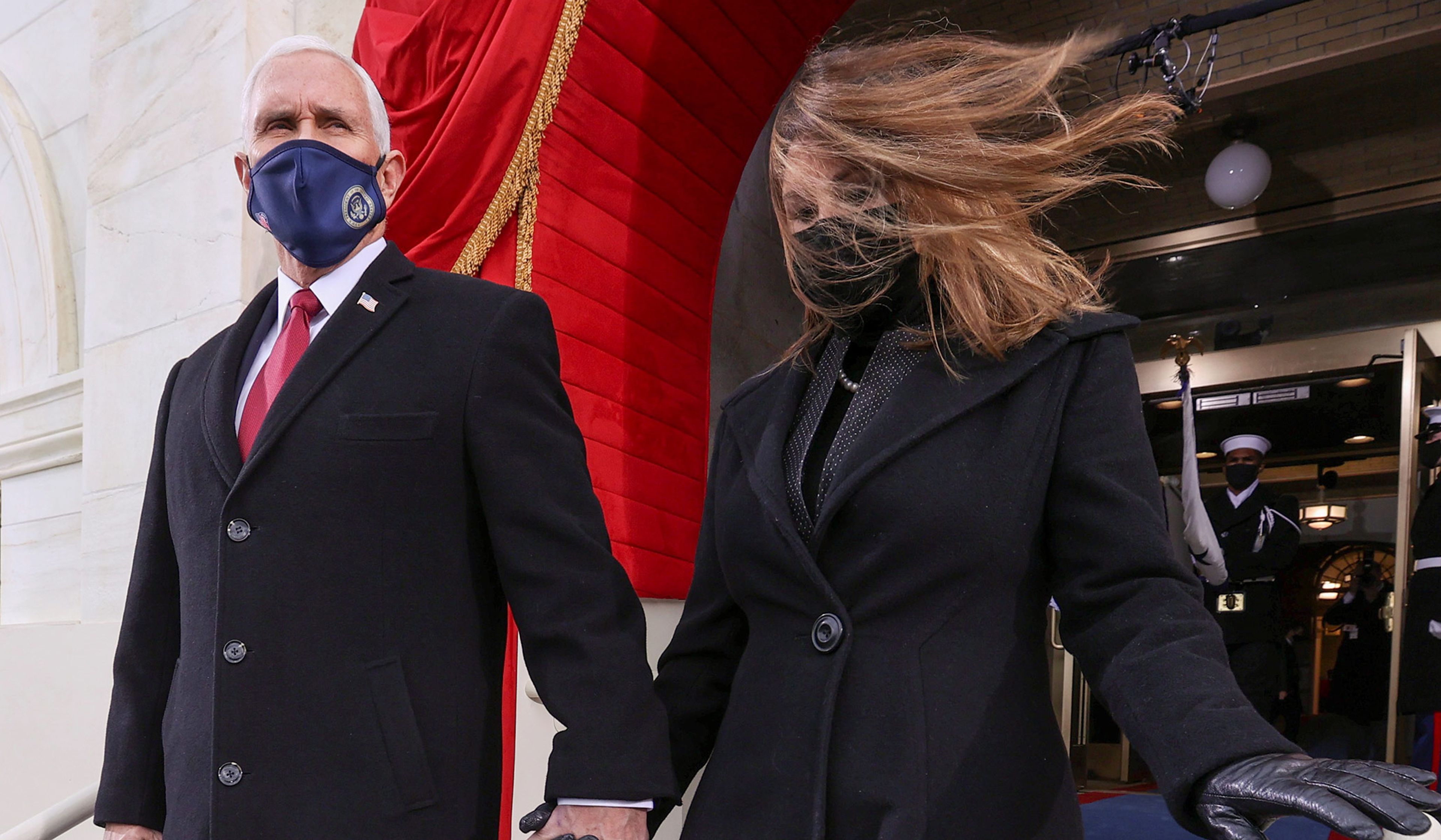
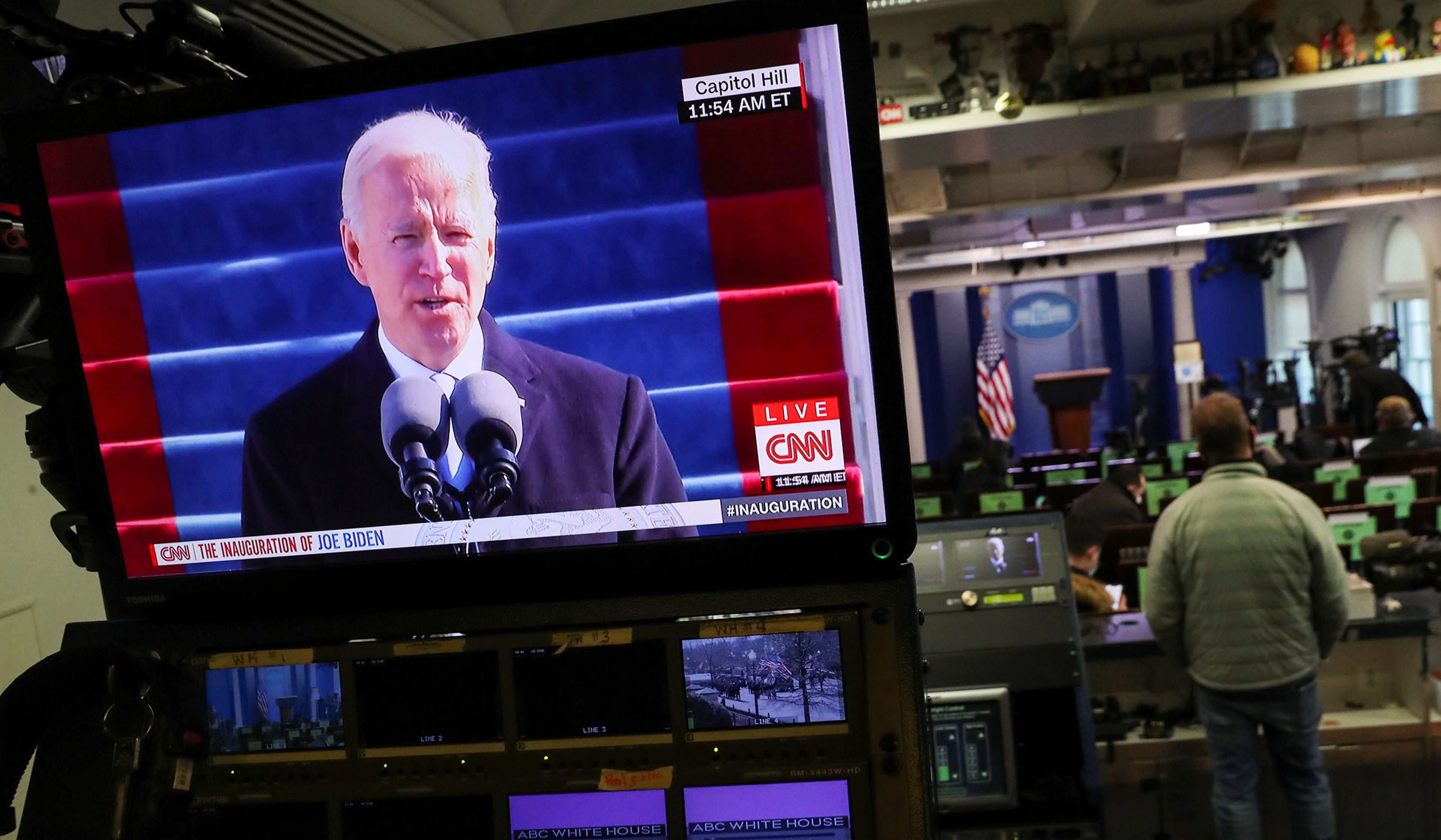
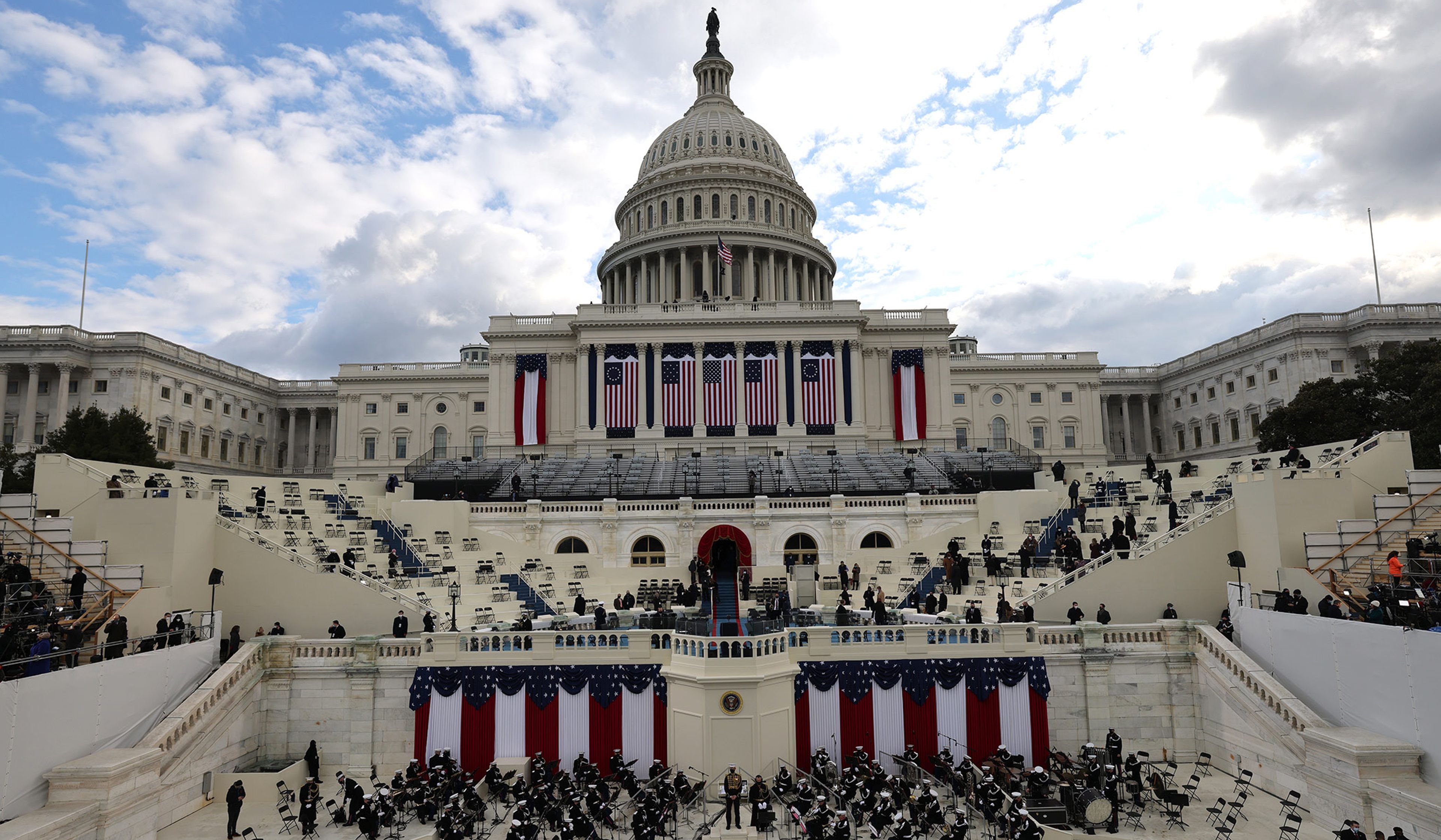
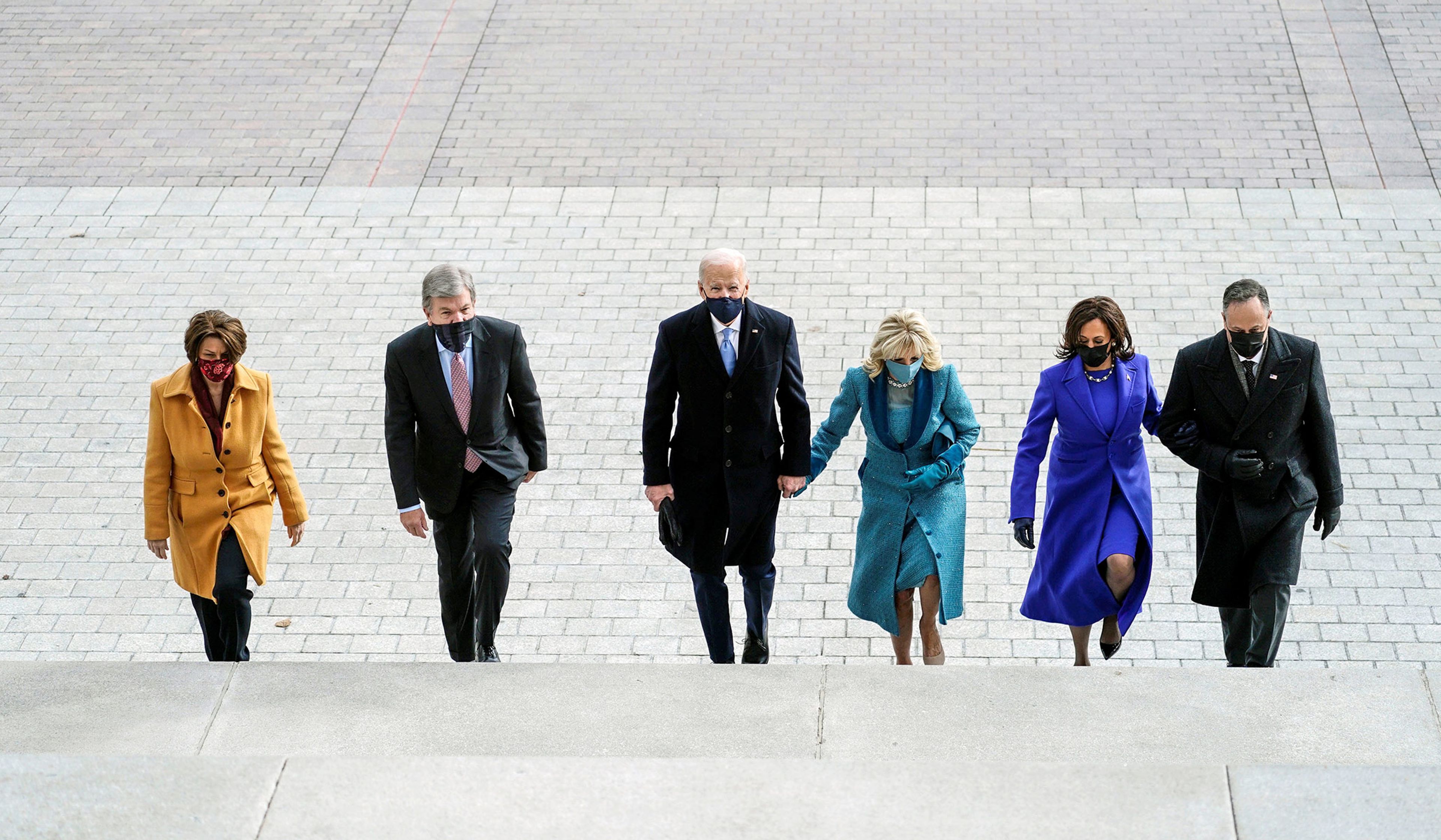
President Joe Biden delivers his inaugural address at the U.S. Capitol in Washington, D.C., January 20, 2021.
Patrick Semansky /Pool via Reuters
• By the time you read this, the U.S. will have rejoined the Paris climate agreement via executive order, as it joined it in the first place under Obama. Biden’s move, just a couple of months after the U.S. formally (and finally) completed the withdrawal set in motion by President Trump in 2017, means that we will, it seems, always have Paris. In theory, the agreement imposes little by way of legal obligation other than a duty to file periodic reports on member states’ climate progress. But these reports are designed to underpin a name-and-shame regime that, in democracies, will be used by activists, regulators, politicians, and quite possibly lawyers to force through a domestic climate-change agenda. The leaders of less respectable polities will play along, politely but insincerely. The more brazen, such as China, the world’s largest emitter of CO2, will issue carefully worded “pledges” targeting some conveniently distant date in the future, while extracting every conceivable economic and strategic advantage over a West still naïve enough to believe that its display of economic self-harm will set an example that the rest of the world will wish to emulate rather than avoid. Biden’s decision to rejoin the Paris Agreement is yet another sign that his policies will owe more to ideological orthodoxy than to intelligence.
• Last year, Trump announced a plan to subtract illegal immigrants from the census numbers used for “apportionment” — meaning that states with more illegal immigrants would get less representation in the House. It was always a long shot: Estimating how many illegal immigrants live in a state is a daunting task, as the census doesn’t ask about legal status directly; COVID-19 slowed the workings of the Census Bureau, meaning Trump could have been out of office before the numbers were ready; and the plan was legally fraught, as the Constitution says that apportionment is to be based on “the whole number of persons in each State.” On top of that, the career staff at the Census Bureau were, shall we say, not particularly thrilled about or dedicated to the assignment. The idea collapsed in the final days of the Trump administration, with the bureau simply abandoning the project amid lawsuits and whistleblower allegations of political pressure to rush the release of unsound numbers. Score one for the deep state, but don’t shed a tear for this dubious endeavor.
• The new head of Radio Free Asia, Stephen J. Yates, is no doubt well qualified, in many ways. But he has recently been a registered lobbyist for Taiwan. Anti-American governments in Asia are always trying to discredit RFA, saying that it is not really independent or objective. This will be a gift to them, unfortunately. At Voice of America, Mike Pompeo, in his last days as secretary of state, addressed the staff. He said that their job was to tell America’s story as “the greatest nation in the history of the world.” Afterward, VOA’s White House reporter, Patsy Widakuswara, tried to ask Pompeo about America’s image abroad, in light of the riot that had just taken place on Capitol Hill. Widakuswara was quickly demoted. In a letter, her colleagues said, “Let us be clear: It is not out of order for VOA journalists to ask questions of U.S. government officials. It is our job.” In a joint statement of their own, the leading Democrat and the leading Republican on the House Foreign Affairs Committee, Gregory Meeks (D., N.J.) and Michael McCaul (R., Texas), said, “This is the United States of America — we do not punish our journalists for seeking answers to their questions.” The credibility of our “radios” is a priceless thing.
• The National Rifle Association has declared bankruptcy. That’s the headline, at least. The story is more complex. The most accurate way of putting it is that the National Rifle Association has been badgered out of New York by a corrupt attorney general, Letitia James, who, as she promised to do while running for the position, has attempted to use her office to destroy an organization with which she ideologically disagrees. James’s public contention is that the NRA has been using its members’ dues irresponsibly and that this constitutes “fraud.” Certainly the NRA’s members should be bothered by some of the accounts of profligacy that have surfaced. But there is a world of difference between a private institution’s behaving irresponsibly with its own money and the commission of a crime, and James knows this, which is why she has never brought a similar case against anyone else. In response, the NRA has decided to decamp to Texas and, to ease along the move, is trying to sever all ties with New York by dissolving itself as part of a bankruptcy proceeding it would not otherwise have initiated. For the sake of America’s institutions, this is a precedent that we should all hope is not repeated.
• Justice Sonia Sotomayor used her dissenting opinion in the death-penalty-appeal case of Dustin Higgs — who was convicted of capital murder for driving three young women, aged 19, 21, and 23, to a national wildlife refuge and, instead of taking them home as promised, leaving their corpses there — to list the names of the twelve other convicts put to death by the federal government since last July. All that was missing was the demand that we “say their names.” Missing altogether were the names of any of the murderers’ victims. If we must have judges set policy according to their own moral compasses, we may need better ones than Justice Sotomayor’s.
• Federal prosecutors charged an MIT professor working on nanotechnology research for hiding his professional relationships with Chinese-government entities. The government says that Gang Chen, the professor, conspired with Chinese nationals to advance research projects backed by Beijing. Chen is not the first professor who has been charged this way: The DOJ’s China Initiative has for the past year or so shined a spotlight on illicit connections between American researchers and the Chinese party-state. Criticism of these prosecutions tends to devolve into histrionics about a new red scare and Sinophobia. But it’s not a phobia when the fear is warranted.
• Hikvision, the Chinese manufacturer of video cameras that has helped the Chinese Communist Party build its high-tech surveillance state in Xinjiang, was added to a U.S.-government blacklist in 2019 for its complicity in human-rights abuses. It could use a few high-profile Americans to help it navigate the federal bureaucracy — which is where Barbara Boxer comes in. According to a Department of Justice filing unearthed by Axios, the former senator from California registered as a foreign agent for the company, agreeing to provide it with “strategic advice.” Soon after the news broke, Boxer, a lobbyist for Mercury Public Affairs, deregistered. Boxer is not the only influential former lawmaker to lobby for Chinese tech. Ed Royce, another former member of Congress from California, registered in September to represent the Chinese tech company Tencent. There are many others like them. But the incentives seem to have shifted: The Chinese regime is beginning to be too much of a scarlet letter even for former lawmakers turned lobbyists.
• When outgoing secretary of state Mike Pompeo announced that the U.S. was dropping all restrictions governing the interactions of U.S. officials with their Taiwanese counterparts, a chorus of criticism erupted. These rules prevented Taiwanese officials from meeting diplomats at the department’s headquarters and at U.S. embassies around the world — a shameful way to treat a key ally in Asia, even one with which the U.S. government maintains only unofficial ties per the one-China policy. The change is a welcome show of support as the Taiwanese face a growing military pressure campaign from the mainland, and pushes back against the tired old idea that it’s acceptable to avoid taking a stance just because doing so might irk Beijing. The main flaw in lifting the guidelines is that it wasn’t done sooner.
• On January 4, New York magazine surprised the world with a cover story by Nicholson Baker that concluded that the coronavirus pandemic could well be the result of a laboratory accident in Wuhan, China. On January 15, the U.S. State Department released a fact sheet about the virus’s origin that drew no conclusions but added one curious new detail: “The U.S. government has reason to believe that several researchers inside the [Wuhan Institute of Virology] became sick in autumn 2019, before the first identified case of the outbreak, with symptoms consistent with both COVID-19 and common seasonal illnesses. This raises questions about the credibility of WIV senior researcher Shi Zhengli’s public claim that there was ‘zero infection’ among the WIV’s staff and students of SARS-CoV-2 or SARS-related viruses.” From the first days of the pandemic, the Chinese government arrested doctors, suppressed warnings, and denied that the virus could spread from one person to another. Chinese officials have dragged their feet with the World Health Organization for more than a year now and are still stonewalling. Xi Jinping and China’s rulers clearly do not want a full and thorough investigation of the virus’s origins, which is all the more reason to insist on one.
• Central planners never learn from their mistakes. The EU’s Lisbon Agenda (to establish Europe as “the most . . . dynamic knowledge-based economy in the world” by 2010) was a fiasco, the single currency created a financial disaster, and now the decision to centralize the bloc’s COVID-19 vaccine procurement has led to a human catastrophe. The European Commission (the EU’s administration) failed to put in enough orders for vaccines and then made matters worse with an approval process more prolonged than in the U.S. or, awkwardly, post-Brexit Britain. Brussels then insisted that, even after the first approval had been given (for the Pfizer-BioNTech vaccine), there should be a grand coordinated rollout: It would be a “touching moment of unity,” explained the Commission’s president. Recognizing that the virus would be unimpressed by such gestures, Hungary, Slovakia, and Germany started administering vaccines as soon as they arrived. Interestingly, it now appears that Germany may have cut a side deal with Pfizer-BioNTech for extra doses. This may or may not have broken EU law, but it certainly went against the principle, pushed hard by . . . Berlin, that the EU should negotiate with the vaccine companies as a bloc. What is more, Germany appears to have cut the side deal at the same time that the EU was negotiating with those companies. As EU stories go, this combination of central planning, bungling, grandiloquence, and cheating is a classic. But it is a classic that will cost lives. As of January 18, the vaccination rate in the EU was 1.29 per 100 people, compared with 4.48 in the U.S. and 6.76 in the U.K.
• In early January, Iran announced its intention to enrich uranium to 20 percent, far beyond what’s needed for nuclear fuel and within reach of weapons-grade levels. It is not a coincidence that the Iranian regime made this move — not seen since before the Obama administration negotiated its nuclear deal with Iran in 2015 — right before Joe Biden assumed office. In fact, the Iranians openly admit they’re trying to pressure Biden to rejoin the nuclear deal. The news comes amid increasing tensions at the one-year anniversary of the airstrikes that killed terrorist and Revolutionary Guards general Qasem Soleimani in Baghdad and after November’s assassination of Mohsen Fakhrizadeh, Iran’s top nuclear scientist. Iran’s campaign is cynical and brazen, and might well work.
• It’s amazing that Alexei Navalny is not dead yet. He is a Russian anti-corruption activist, the leading political opponent of Vladimir Putin. Life expectancy for such a person is not long. Last August, government agents poisoned Navalny nearly to death. Rushed to Berlin, he survived. He has now returned to his homeland, and was arrested and imprisoned upon landing. Why did he go back, to this near-certain fate? Russian leaders belong on Russian soil, goes the thinking. Otherwise, individual Russians will not respect you. Putin is obviously scared of Navalny. That’s why Putin has imprisoned him. A confident leader does not censor the press, rig elections, or jail, maim, or kill his opponents. Even in prison, oppositionists have power. It is part of what Václav Havel meant in his famous phrase, “the power of the powerless.” Navalny has guts, and Putin has the cowardice of the tyrant.
• According to Twitter users, 2021 is the “year of the sea shanty.” The surprising announcement came after a Scottish postman for the Royal Mail soared to TikTok fame for resuscitating the 19th-century maritime tradition. Sea shanties were rhythmically accented, unaccompanied songs sung during repetitive manual labor, such as loading and unloading vessels. Nathan Evans, a 26-year-old from Airdrie in the Scottish county of North Lanarkshire, has gained millions of views since December, when he began uploading renditions of these songs. The simple melodies about drunken sailors and tonguing whale carcasses soon caught on as other TikTokers recorded themselves singing and playing along. Evans told the BBC that the trend had “gone much further” than he ever thought and that he hopes the success will help kick-start his music career.
• A Utah man could face up to twelve years in prison after he was caught digging for buried treasure in a Yellowstone National Park cemetery. Rodrick Dow Craythorn, 52, was searching for a chest containing an estimated $1 million worth of valuables, buried by the art and antiquities dealer Forrest Fenn, who published a book of poems containing clues about the treasure’s location some decades ago. Craythorn has pled guilty to illegal excavation or trafficking in archaeological resources and to damaging federal property. His fate will now be decided by the justice system. Compounding Craythorn’s unhappy predicament is the fact that the Fenn treasure has been found while he’s been making his way through the courts. Jonathan Stuef, a medical student from Michigan, discovered it earlier this year, and managed to do so without incurring the wrath of the feds.
• Sheldon Adelson was an American original. The cliché can hardly be avoided. He grew up rough — very rough — in Boston (Dorchester). He started working when he was a boy and had a clear entrepreneurial bent. He built a casino empire and became one of the richest people in the United States. Is gambling a curse on humanity? We can save that subject for another time. Adelson was one of the biggest political donors in the country — to Republicans, most prominently Donald J. Trump. He supported causes in Israel as well, devotedly. He has now died at 87. R.I.P. And may America still be a place where the Shelly Adelsons can rise.
• The newly minted Ph.D. in engineering taught thermodynamics at MIT while moonlighting as a law student a few blocks north. Or was it the other way around? He served as editor of the Harvard Law Review and clerked for Supreme Court justices Sandra Day O’Connor and Ruth Bader Ginsburg. A man of parts, Peter W. Huber also wrote hundreds of articles and more than ten books, including, with his Manhattan Institute colleague Mark P. Mills, The Bottomless Well, a lucid refutation of energy-policy pieties and received wisdom. Huber exposed junk science (popularizing the term in the process) and sought to save the environment from the business of environmentalism. He was a conservationist. Somewhere along the way he helped found a D.C. law firm. He tipped wait staff lavishly but quietly and spent most of a Christmas party talking with a distressed woman who was uncomfortable mingling, Mills recounts. Huber was “a very brilliant man,” Bill Kristol noted on Twitter, “but also, it always seemed to me, a very kind one. Two qualities that don’t always go together.” After a long illness, Huber, 68, died in January. R.I.P.
• James Bolin served in the Union Army in the Civil War. Helen Viola Jackson, a neighbor, helped him with chores when he was an old man in Niangua, Mo., during the Great Depression. To repay her kindness, he proposed a marriage of convenience. It would enable her to inherit his Union pension. In 1936, they married in a simple ceremony outside his house. The bride was 17; the groom, 93. He died not three years later. She had kept her last name. Both of them had kept the arrangement discreet. “I had great respect for Mr. Bolin,” she said, “and I did not want him to be hurt by the scorn of wagging tongues.” She declined to apply for the pension after one of his daughters threatened to spread word about their secret wedlock. “All a woman had in 1939 was her reputation,” she explained many years later. “I didn’t want them all to think that I was a young woman who had married an old man to take advantage of him.” Dead at 101, the last known Civil War widow, a gracious woman with a remarkable life story. R.I.P.
This We Believe
High among the things American conservatism seeks to conserve is our country’s political inheritance from our founding, an inheritance that makes it possible for us to be a free, prosperous, decent, and self-governing society.
That work is unending and sometimes arduous — because the inheritance is complex and often misunderstood, because the threats to it are many and varied, and because conservation is rarely reducible to resisting change. Our claim is not that the Founders were perfect but that they were wise, and that we need to fit the times to the Constitution more than the other way around.
Constitutional government is betrayed when the public is asked not to consult with experts but to submit to them. Or when courts deny our system’s foundational premise that all men are created equal in their basic rights. Or, as we have recently seen, when a mob seeks to intimidate legislators into forgetting their duties.
Our political debates are often necessarily contentious, but they must remain only metaphorically battles. Different stripes of conservatives can have productive arguments with one another about how to help families flourish, what the proper bounds of government are, and who should lead the Republican Party. But that debate must not partake of conspiratorial fantasies, and lawless violence must never be on the table. We must strive, against all demagogues, to make our reason the master and not the servant of our passions.
The spirit of republican deliberation is already too frail in our times. Our fellow citizens doubt one another’s good intent and capacity for self-government. Even conservatives are tempted to give up the defense of the Constitution, which would leave it friendless and dying. Nothing, at such a moment, can sound more naïve than a call for Americans to rededicate ourselves to our patrimony. Nothing is more essential.
Trying Trump
There is no doubt that Donald Trump committed an impeachable offense.
He urged a crowd to march on the U.S. Capitol and pressure his vice president and Congress to abuse their authority by overturning the results of a free and fair election that he happened to lose.
When the rabble forced its way into the Capitol and disrupted the counting of electoral votes, the president couldn’t bring himself to forthrightly tell the rioters to stop. He didn’t release a video telling them to go home until hours later and didn’t condemn the violence until the next day, reportedly only under pressure from his aides.
This mob action came in the context of the president’s lobbying to get Republican officials in states to throw the election to him (most infamously in his phone call with Georgia secretary of state Brad Raffensperger) and his ceaseless campaign of lies and conspiracy theories meant to delegitimize an American election.
All of this represents a serious offense against Congress in particular and our system of government in general. It is exactly the sort of gross misconduct that the impeachment clause was written to address, and it is understandable that the House impeached the president for a second time.
Speaker Pelosi chose to rush the proceeding. This might have made sense if Trump’s term plausibly could have been ended early. Since it couldn’t, Pelosi short-circuited every established procedure around impeachment — fact-finding, hearings, a report — for no good reason. The House also wrote a flawed article of impeachment that provides Trump’s defenders with easy rejoinders. The use of the word “incitement” invites factual and legalistic objections, and it’s not necessary to make the debatable claim that Trump encouraged and foresaw the lawlessness to capture what was so wrong about what he did.
As we went to press, the Senate looked set to take up the trial the week after Biden’s inauguration. Mitch McConnell has publicly said he’s undecided, raising the prospect that even Republicans who have worked well with Trump will vote to convict. But getting the 17 Republican votes needed seems unlikely (after a conviction by two-thirds of the Senate, a majority could vote to disqualify Trump from future federal office).
Republicans favoring acquittal will make a number of arguments. Some will object that it’s wrong to pursue Trump after he’s left office, either because they’d prefer — they hope — to let him fade away, or because they believe, wrongly, that a former official can’t be subject to an impeachment trial. Others will balk at the process in the House, including the deficiencies in the article, and wonder why the cleaner, faster option of censure wasn’t pursued. Senators will worry about primaries, or about creating an irreparable rift in the party.
These concerns can’t all be dismissed lightly, and there’s some chance that a post-presidency trial — with Senate Democrats trying to pursue regular business at the same time — will be a fizzle. But Trump’s offense is grave, and even Senate Republicans who didn’t want the House to go down this route should take the trial seriously and be open to invoking the Constitution’s ultimate sanction for presidential abuse of office.
Trump Out, Biden In
Historians of the Trump years will have to work harder than usual to disentangle their accounts of laws and policies from their evocation of the president’s personality and its effect on American life.
Much of the business of government went on under Trump as it would have under a generic conservative Republican. He gave a strong shot of prudence to the federal judiciary, particularly, by appointing three justices to the Supreme Court. His tax and regulatory policies helped extend a boom. His administration rolled back pernicious education mandates. In some areas he innovated, pursuing more protectionist measures than did predecessors and pressuring our southern neighbors to lessen the flow of illegal aliens, the latter policy more successful than the former.
His foreign policy was mixed. He brokered deals between Israel and Arab states as part of a strategy of containing Iran, and was friendly to Taiwan. He had grossly unrealistic views of the intentions of assorted strongmen and dictators, from Putin to Kim Jong Un to Xi Jinping (until turning on Xi over COVID-19).
All of his actions were inflected — tainted, mostly — by his personality and his governing style. Combative and suspicious; lazy, ignorant, and disorganized — he marked his years with rancor and chaos. The hidden-hand presidency (Fred Greenstein’s label for Eisenhower’s management style) was the farthest thing from his heart. The tabloid celeb and TV star had to leave his fingerprints everywhere, most conspicuously on the keypad from which he tweeted. There he flayed his many enemies and indulged grotesque conspiracy theories. The culmination of these behaviors, simultaneously ludicrous and vicious, was his attempt to overturn the 2020 presidential election, ending in the QAnon saturnalia of the Capitol riot.
Joe Biden won the presidency by not being this man. Old age smoothed him; decades in Washington made him familiar. His post-election rhetoric, lifted from civics textbooks, was what a frazzled country needed to hear: proving that the pieties, when tossed in the gutter, can be embraced by whoever cares to retrieve them.
His first task will be to marshal America through the pandemic. Vaccines exist; vaccinating will be the acid test. His second will be calming the waters. He has been urged to dream big, à la FDR, by those who forget that FDR’s attempts to cure the Depression failed. Biden’s political profile, so far, has been different. Always keen to be in the center of the Democratic Party, he moved left as his party did. Expect green energy policies, more regulation, higher taxes, and woke policies in the gender wars, without the sweeping transformations that the avowed socialists and identity radicals on his fringe want.
America rode out a storm. Biden will face squalls of his own, some whipped up by him, but they are distant yet.











Comments