Seneca Falls, N.Y.
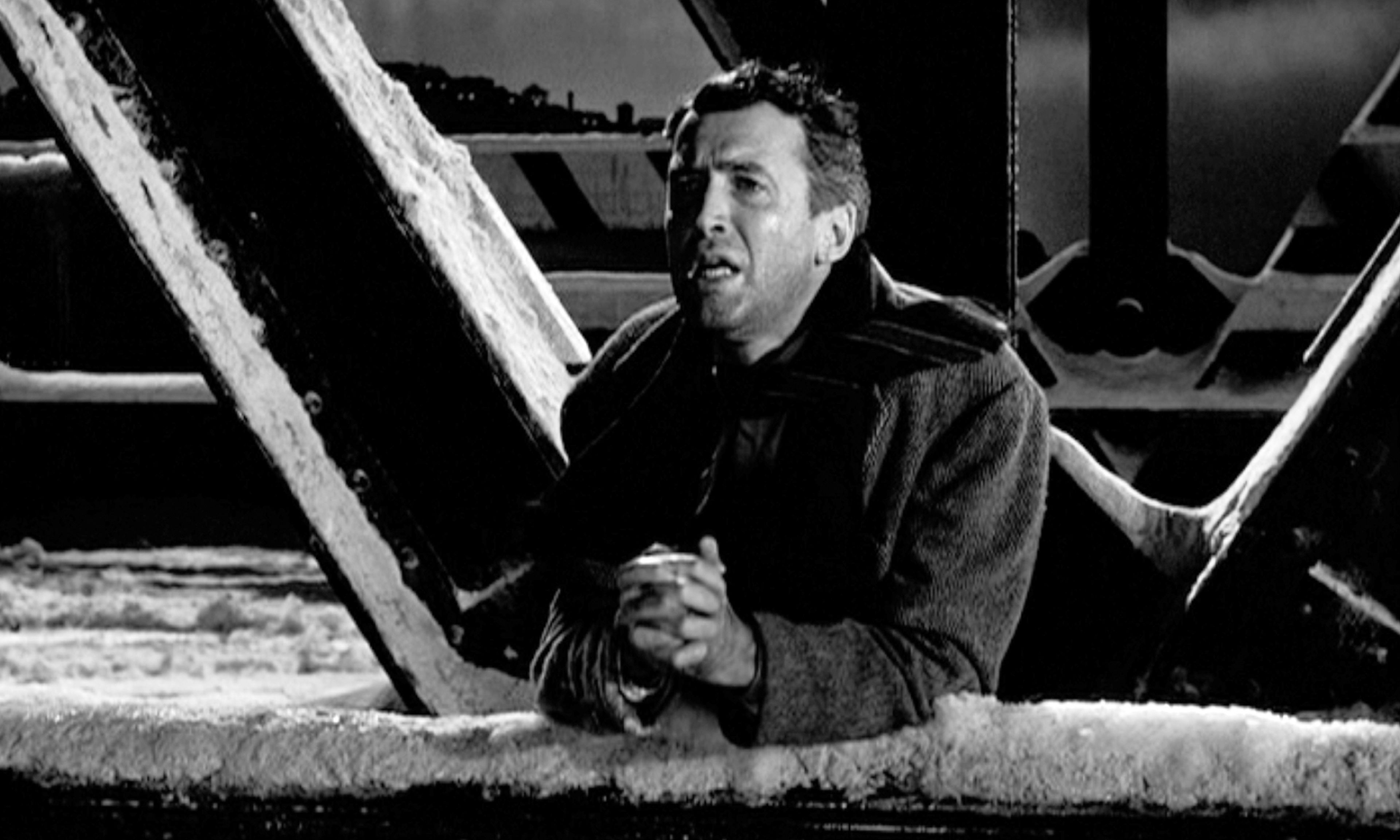
In the imagined hamlet of Bedford Falls, where Frank Capra’s 1946 film It’s a Wonderful Life is set, family banker George Bailey (Jimmy Stewart), in a moment of desperation after a life of seemingly thwarted dreams, wishes he’d never been born. Divine intervention, in the form of his guardian angel, Clarence (Henry Travers), shows him how important he has been to those around him — the very people who later help him out of his financial troubles.
The Christmas perennial is strongly hinted to take place somewhere in upstate New York, but the movie was filmed in and around Hollywood, with the requisite fake snow. The snow that began to fall late one December night as I drove into Seneca Falls was real. And when I neared the center of this small town in the Finger Lakes region of New York, I came upon a gently lit truss bridge over a flowing canal. It appeared to be the model for the bridge that George Bailey contemplates jumping from in Capra’s classic.
I came to town for the It’s a Wonderful Life Festival, a days-long celebration of the movie and its message, held annually on the second weekend in December. It was a good year to do so, as the movie turned 75 in 2021. Though the town, driven by the vision of former village planner Fran Caraccilo, had been celebrating its connection to the movie since at least the 1990s — an event was held for the film’s 50th anniversary in 1996 — these celebrations were mostly “lower-key,” says Anwei Law, a co-founder of the It’s a Wonderful Life Museum and also the president of its board. (The museum, which displays memorabilia associated with the film as well as quotes from Frank Capra explaining his inspirational worldview, officially opened during the 2010 festival.)
Karolyn Grimes, who plays the part of Bailey child Zuzu, is the one who really got the ball rolling when she came to the festival in 2002, and it’s been expanding ever since, with a 5K race added in 2008. Grimes herself first became aware of Seneca Falls through a friend who was a cameraman on The Oprah Winfrey Show and was in the region to see the autumn leaves. “And he called me up and said, ‘Karolyn, this is the town. This is it. This is it!’” When she visited, she was convinced: “I thought it was wonderful. I came into the town . . . and there’s so many similarities to Bedford Falls. And I just knew this was it.”
The connection to the movie is more than aesthetic. It’s historical, and moral. In 1917, a woman leaped from the bridge into the canal below in a suicide attempt. Antonio Varacalli, a teenager who was part of the large Italian-immigrant community in Seneca Falls at the time (another similarity between it and Bedford Falls), saw her in the water and jumped in to save her life — which he did, but at the cost of his own. Ruth Dunham went on to live a long and happy life, according to Buffalo News columnist Sean Kirst. And the bridge now bears a plaque in honor of Varacalli, which reads, in part, “He honored the community, the community honors him.”
Before It’s a Wonderful Life went into production, Frank Capra came through Seneca Falls, but without revealing his identity to anyone other than the village barber, Tom Bellissima, while stopping in for a haircut. Bellissima did not discuss his having met Capra until years later, when he revealed that he’d told the director the story of the bridge. Early versions of the script contain no reference to a bridge; nor does “The Greatest Gift,” the Philip Van Doren Stern short story on which the movie is based, involve a suicide leap and rescue. And though “Capra never mentioned Seneca Falls in his memoirs” and “nothing about the town is found in his archives,” according to this year’s festival brochure, residents and the festival organizers see the connection as obvious. They make a persuasive case. “People can kind of think, oh yeah, you know, Seneca Falls, Bedford Falls,” says Tina Rook, race director for the It’s a Wonderful Run 5K and a Seneca Falls native. “But I think once they see the bridge and they see the trusses and they kind of really look at it, a lot of people believe.”
During the festival, signs that welcome you into town are temporarily labeled “Bedford” instead of “Seneca” Falls. Storefronts along Fall Street, the main drag, get movie-themed decorations. In the Gould Hotel, where I stayed, the movie is shown constantly, projected behind the front desk. Hotel patrons can sample cocktails such as the Clarence (rum punch with a 151 floater) and the It’s a Wonderful Life (Irish cream, crème de menthe, milk). Festival attendees typically sport Bedford Falls High School football shirts and similar markers of movie affection, while others dress up as characters from the movie.
There are cynics in this world who call It’s a Wonderful Life “Capra-corn.” Or maybe “sentimental hogwash,” as the Scrooge-like Henry F. Potter (Lionel Barrymore) describes the common-man-friendly vision of the Bailey Bros. Building & Loan, George’s business (started by his father). And cynics might likewise see this festival as gimmicky, ginned up by a town trying to cash in on a connection to a movie that achieved prominence only as a by-product of its falling into the public domain. The devotion some attendees feel to the movie — their wearing of costumes, their obsession with extant props and random trivia, their adulation of the still-living actors — might seem excessive, another expression of nerd culture.
But the It’s a Wonderful Life Festival bears only a superficial resemblance to such geekfests as Comic-Con. Attendees here aren’t weird. They love the movie because of “the sentiment of it,” as Dina, from Texas, says. “The storyline — [George] thinking he’s not special, and he really is. So he actually means something to everybody.” Kim, from Massachusetts, cites the “message of hope.” And Karen, who drove up from Pittsburgh, says she finds solace in the movie’s assertion that “the kindness of people is kind of a universal thing,” adding that, “especially now with Covid, people seem to be more attracted to wanting to do good, and support each other and help each other.”
As for the town itself, residents have embraced not just the festival and the movie but the spirit embodied by both. “The community, I think, appreciates it,” says museum official Law. “There are a lot of people from the community who get involved.” Rook agrees: “You gotta see it to believe it. It’s incredible. Our town has rallied around us so amazingly.” I saw this myself when running the 5K, in which I was loudly cheered, and even offered a mid-race shot of alcohol. (I declined — and managed to finish fourth.) My fellow runners came from 41 states. The Seneca Falls Visitor Center guestbook that weekend recorded visitors from Illinois, Florida, New Jersey, South Dakota, Canada, and Wales — a sign of the event’s, and of course the movie’s, wide appeal.
Another way in which the town embraces the spirit of the movie is in bestowing the George Bailey Award, annually honoring the Seneca Falls resident who best embodies the selfless spirit of the movie’s main character. Civic pillar Larry Driscoll was the honoree at the 2021 festival.
Grimes, who began the 5K by reciting her famous line, “Every time a bell rings, an angel gets its wings,” describes herself as playing the role of “ambassador,” bringing the movie’s message to new generations. She sees it as her “calling”: “I think I was chosen for that, for some reason or other.” Other actors who played Bailey children join her in this, as do descendants of the cast and crew. Among them is Mary Owen, daughter of Donna Reed — who plays Mary (Hatch) Bailey, George’s wife — and a member of the board of the Donna Reed Foundation. “It’s got so much universality to it that it really just speaks to everyone on so many different levels,” she says. “And I guess you can’t really say that about a lot of movies. Especially ones that are 75 years old.” But for her, it’s also a way to remember her late mother. “I go around and I introduce the movie in theaters, . . . so it’s a way to connect with her in the holidays. Which is really nice.”
For Seneca Falls residents, the movie’s sense of place reflects the affection they feel for their hometown. “This is actually one of the nicest places I’ve ever lived,” says Sean Painter, a festival volunteer who moved to Seneca Falls a few years ago from Arizona. “There’s just a feeling about it. It’s just a very positive thing.” Because the movie so strongly emphasizes community, “people need a place to celebrate this movie,” Law says. “And it has to be a small town.”
During my weekend in Seneca Falls, it didn’t take long for me to be caught up in the festival spirit. Chatting freely with people I’d only just met, both locals and visitors like me, I couldn’t help but bask in the sense of community and conviviality. If this is all a gimmick, well . . . the world could use a few more of them. There may be no real Bedford Falls, even if Seneca Falls comes pretty close. But maybe there’s a bit of Bedford Falls in every community. And a bit of George Bailey in all of us.











Comments