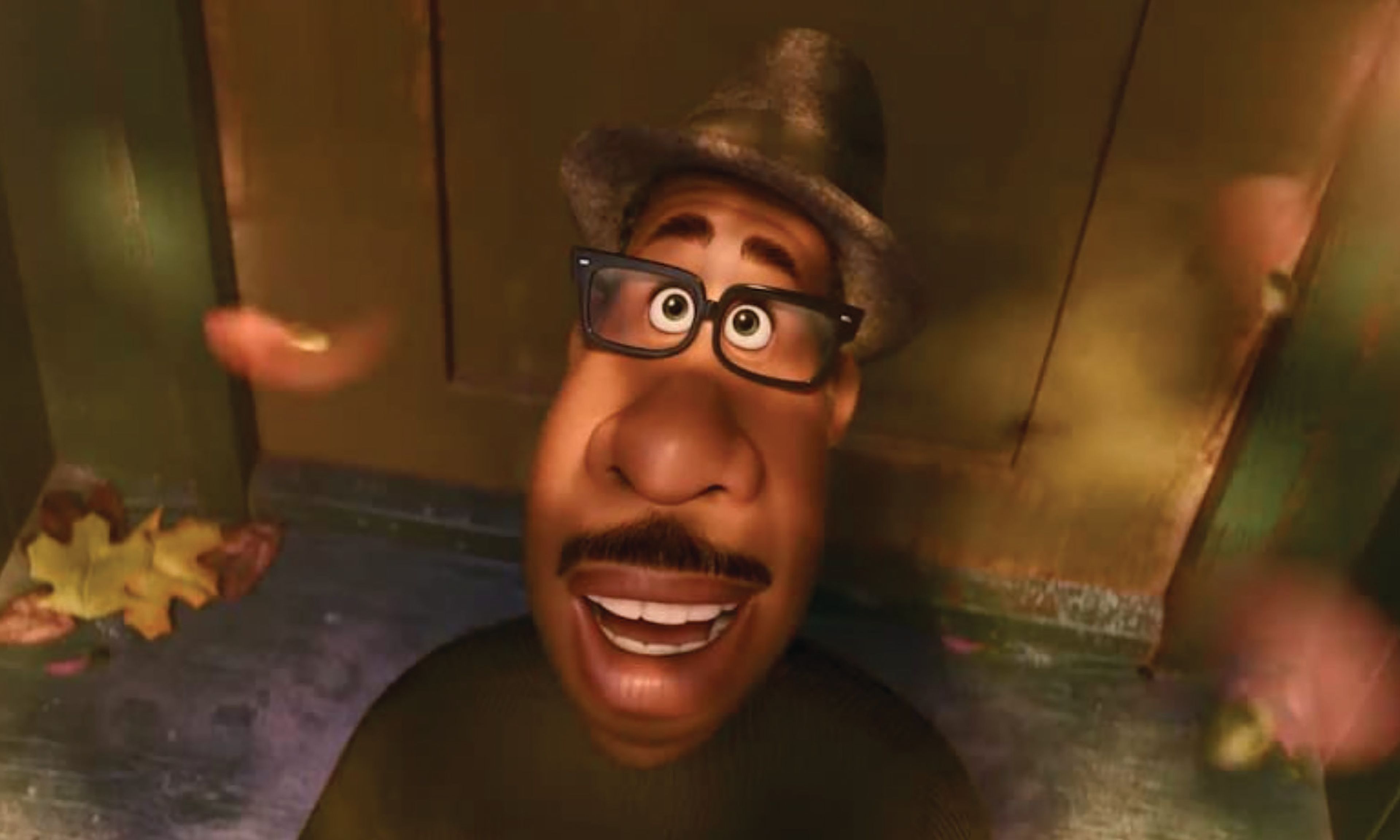
Soul, the latest exercise in midlife angst masquerading as a children’s flick from Pixar, has a back-from-the-afterlife plot that’s indebted to all sorts of predecessors, from Heaven Can Wait to Defending Your Life to Meet Joe Black. But the holiday timing of its release is particularly appropriate, because fundamentally Soul is a 21st-century answer to It’s a Wonderful Life, with the same basic idea — a disappointed middle-aged man confronting mortality and learning to appreciate the life he’s lived — expressed in a narrative that says a lot about how far our religious culture has traveled between Capra and the Pixar era.
Before we get to that comparison, let it be said that Soul is a remarkably accomplished film: The animation is beautiful, the evocation of a pre-pandemic New York City radiant, the jazz-infused score terrific, the script stuffed with small amusements, the voice work from Jamie Foxx and Tina Fey top-notch. Pixar has slumped a bit into sequel-itis, but the quality here evokes its golden years.
Foxx voices Joe Gardner, an unwilling music teacher and would-be jazz pianist who finally gets his big break — a chance to play with a famous saxophonist (Angela Bassett) — and ends up so filled with madcap glee that he accidentally falls down a manhole and ends up dead. In the Soul cosmology this places him on a slowly ascending escalator headed for a blinding light. But Joe isn’t ready to go gentle into that good night, so he hurls himself off the stairway to heaven and ends up, somehow, in the before-life — a meadowy landscape where giggling baby souls are gifted with personalities and shepherded by a group of benevolent modern-art abstractions toward their destiny on earth.
Thanks to some mistaken-identity business, Joe ends up assigned to mentor an incorrigible little soul known as 22 — Fey’s voice, which the protean 22 has chosen because it annoys people, she says — who has spent millennia refusing to go through pre-earth education, preferring a permanent limbo to the inconveniences of flesh and blood. With the help of a hippie named “Moonwind” (Graham Norton), who migrates between a New York street corner and the pre-embodied plane, Joe figures out a way to make the leap back earthside, and manages to pull 22 into embodiment with him — a leap that sets up both their souls for experiences that might just reconcile them to their respective lives, their obligations to move on and to move in.
Now let’s talk about what this reconciliation means in Pixar spirituality versus what it meant for Capra’s George Bailey 70 years ago. In It’s a Wonderful Life, the hero believes his life to have been a failure, and what he needs from heaven is instruction on the importance of everything he’s done: all the specific acts, small and large, that have saved lives and homes and souls, making his life manifestly worth living no matter whether he’s enjoying it or not, and even if he’s destined for a stint in jail.
In Soul, by contrast, Joe needs to recognize that what he wanted to merely do, become a great musician, was less important than what he should have been feeling — the delights of a fishing trip, the taste of a pizza slice, the simple pleasure of an autumn day. There’s a minor nod to the idea that he did good things for the kids in his music class, but the major theme is that the point of human existence is physical experience itself, that the enlightened soul is the one who really lives in the moment, embracing the sensory pleasures that are the fundamental graces of life.
There are certainly people who would stand to benefit from this stop-and-smell-the-roses message, but as a way of looking at human life sub specie aeternitatis it’s pretty shallow and low-stakes. For that, all those souls were sent into the world, to discover that food tastes great and it’s pretty swell to have a body?
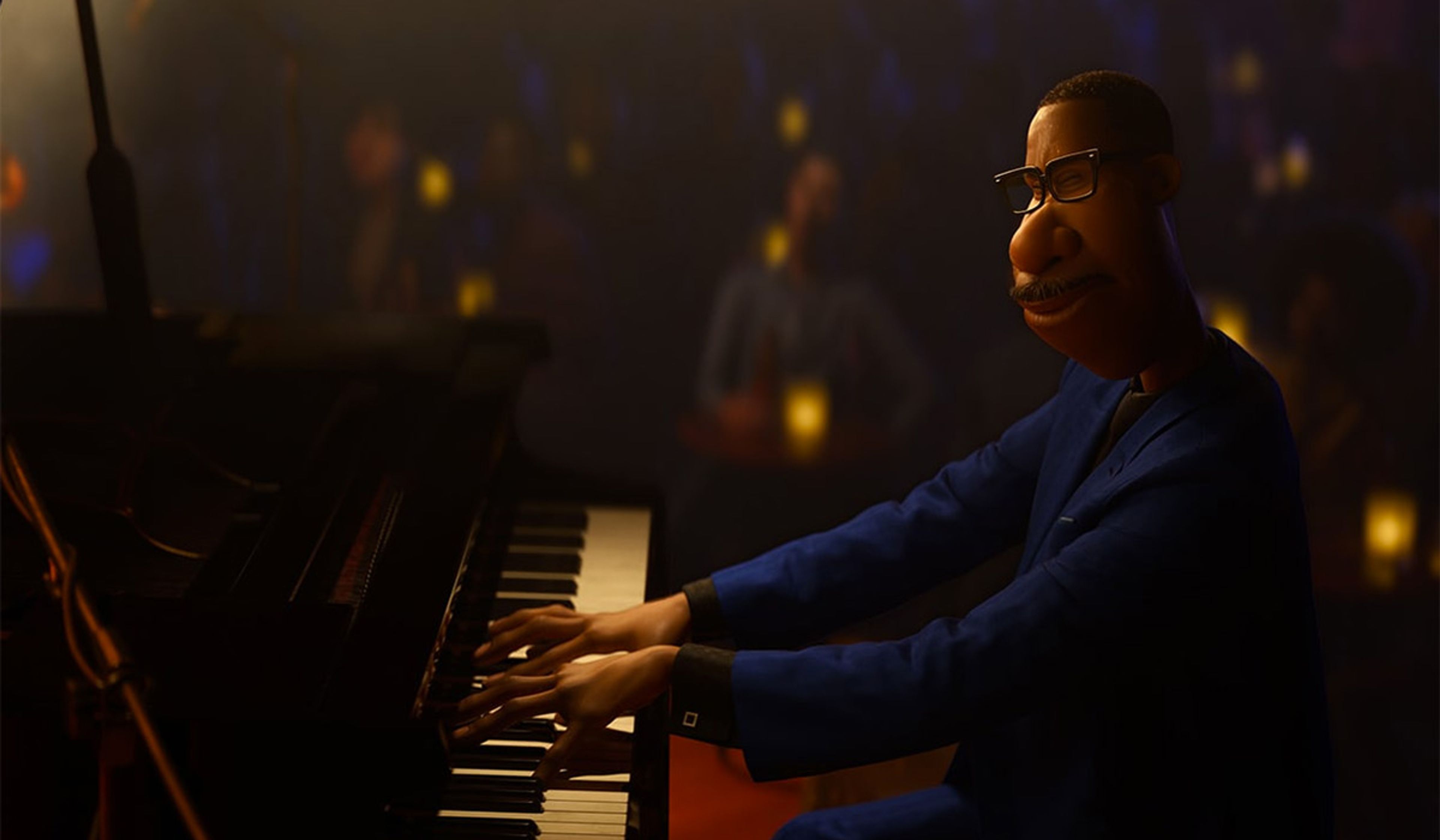
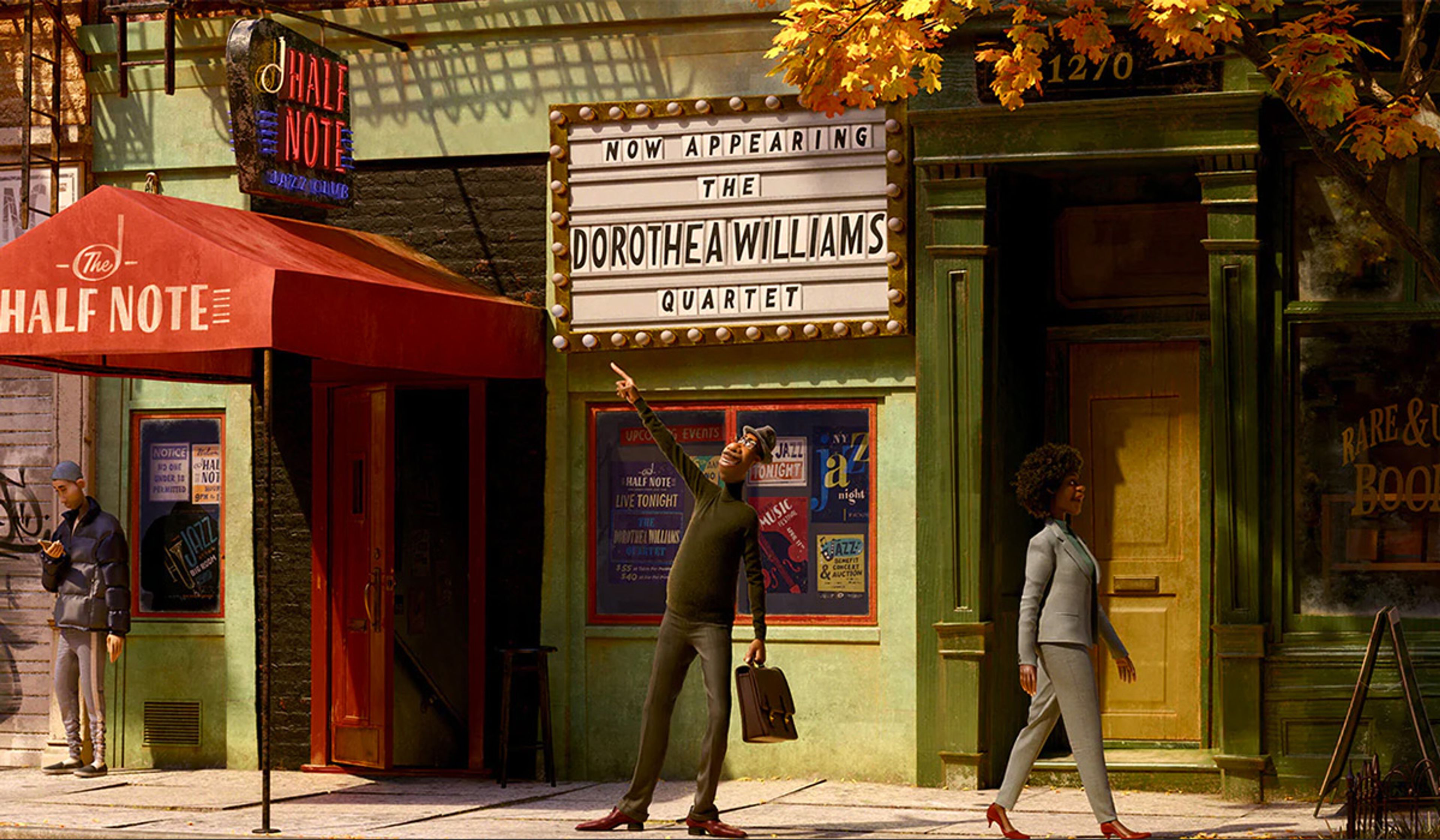
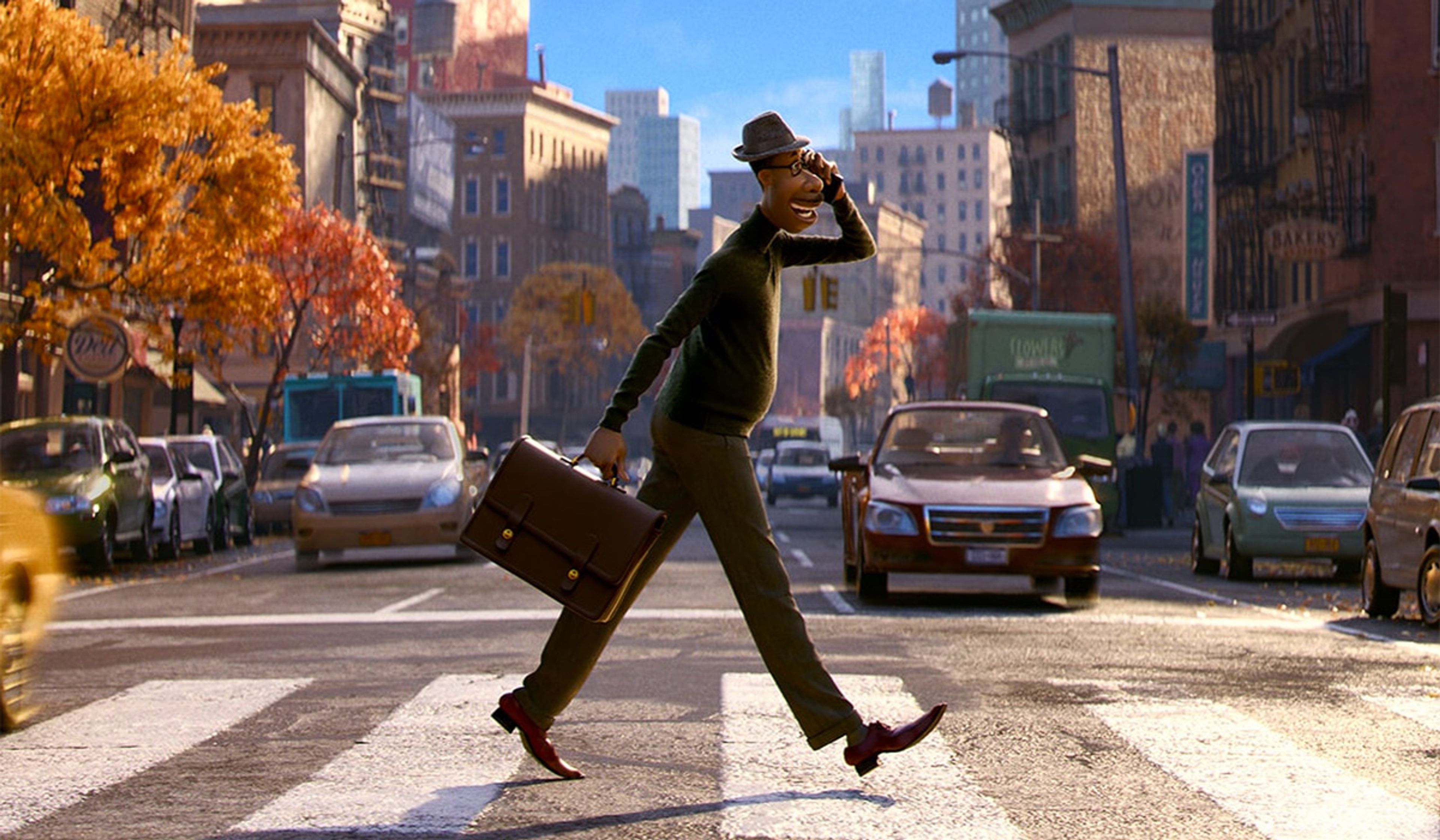
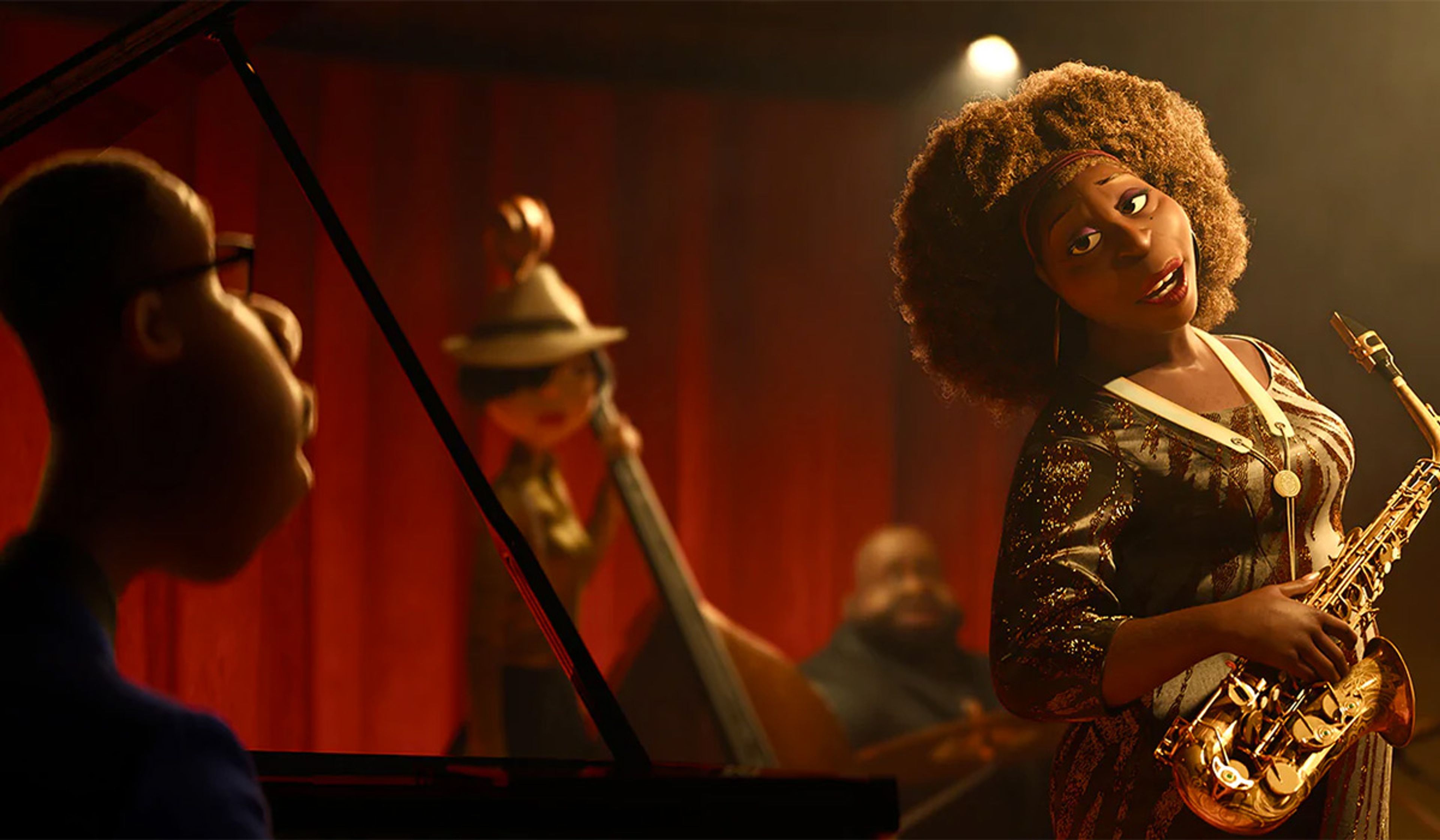
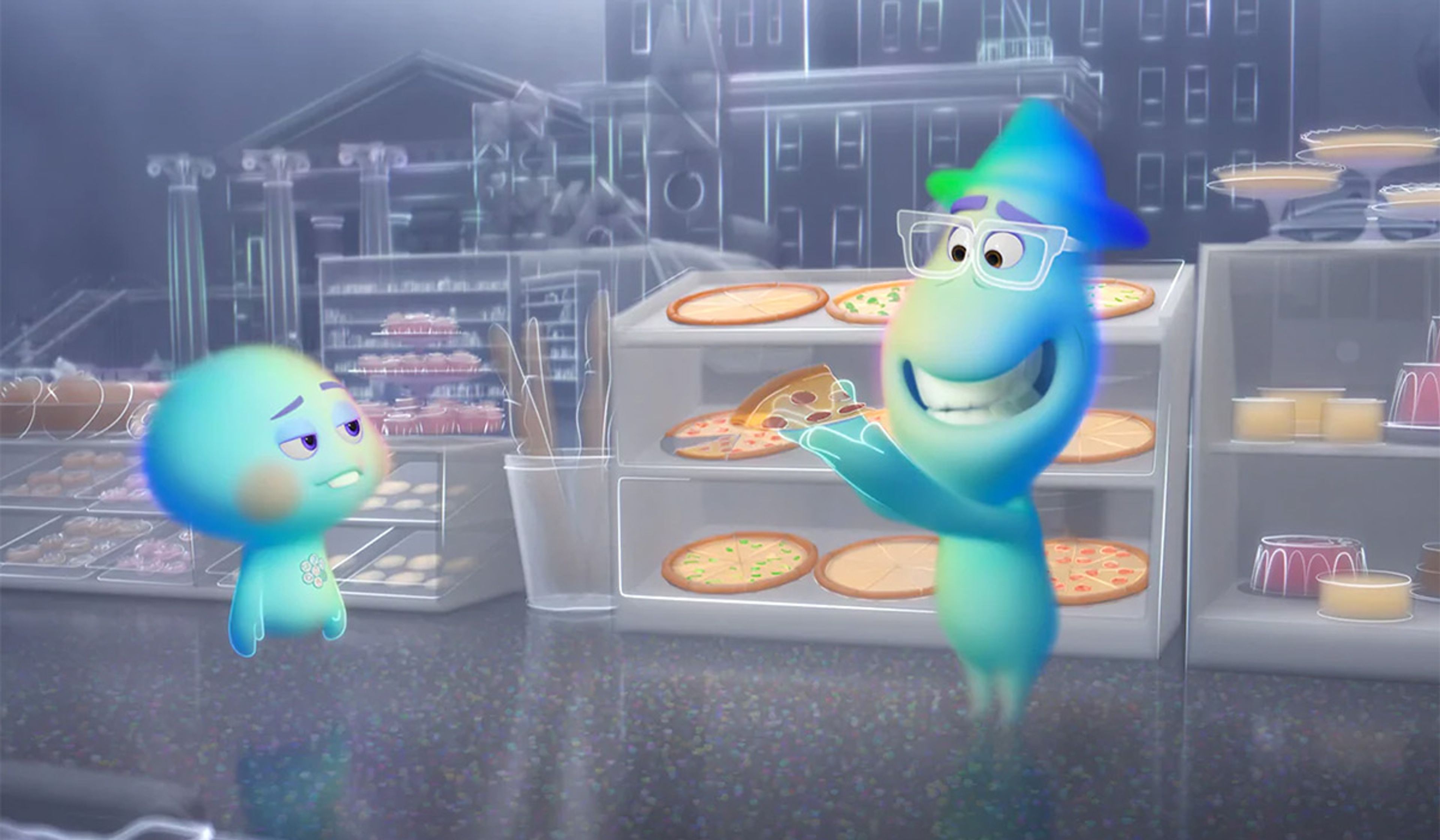

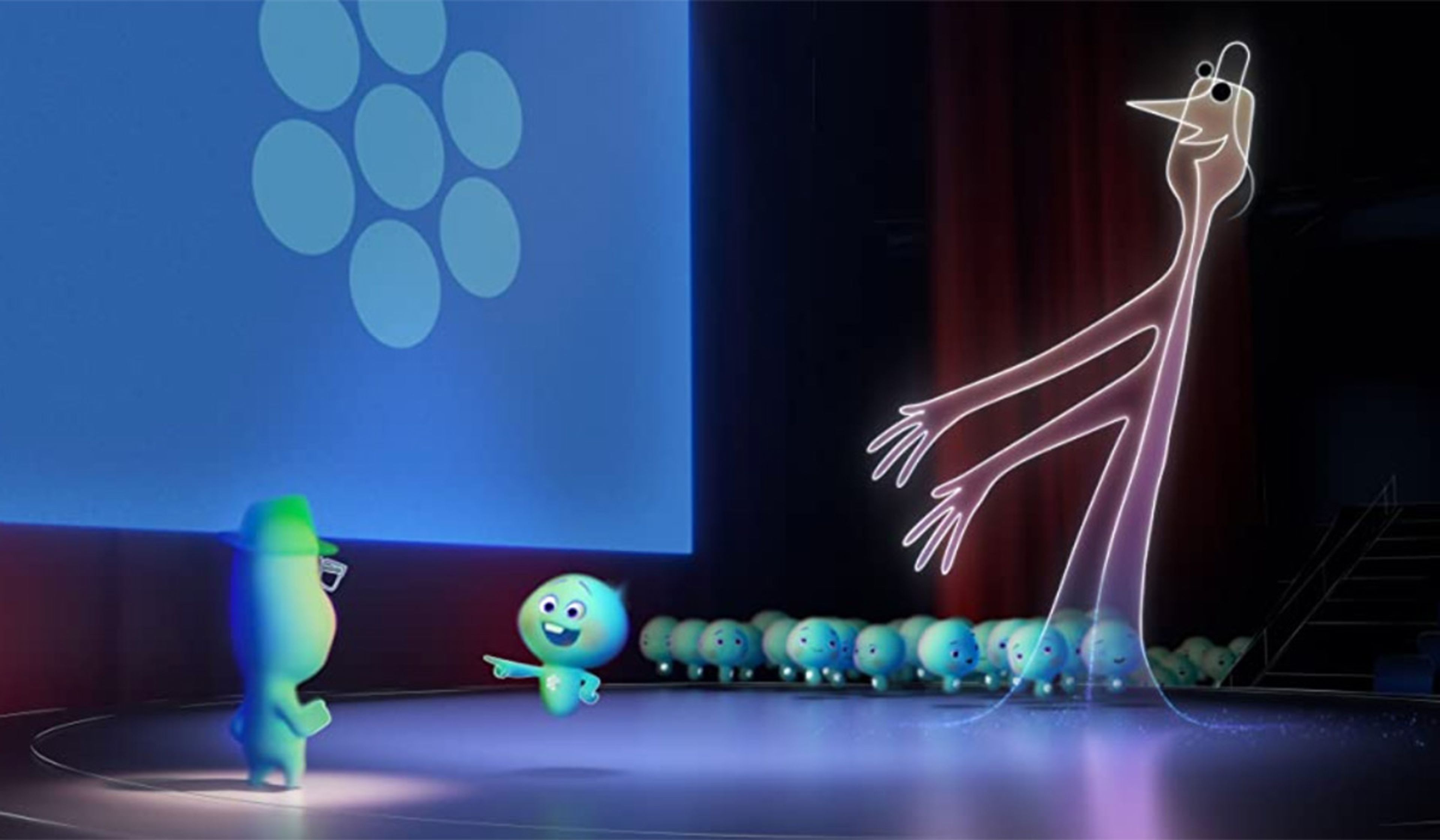
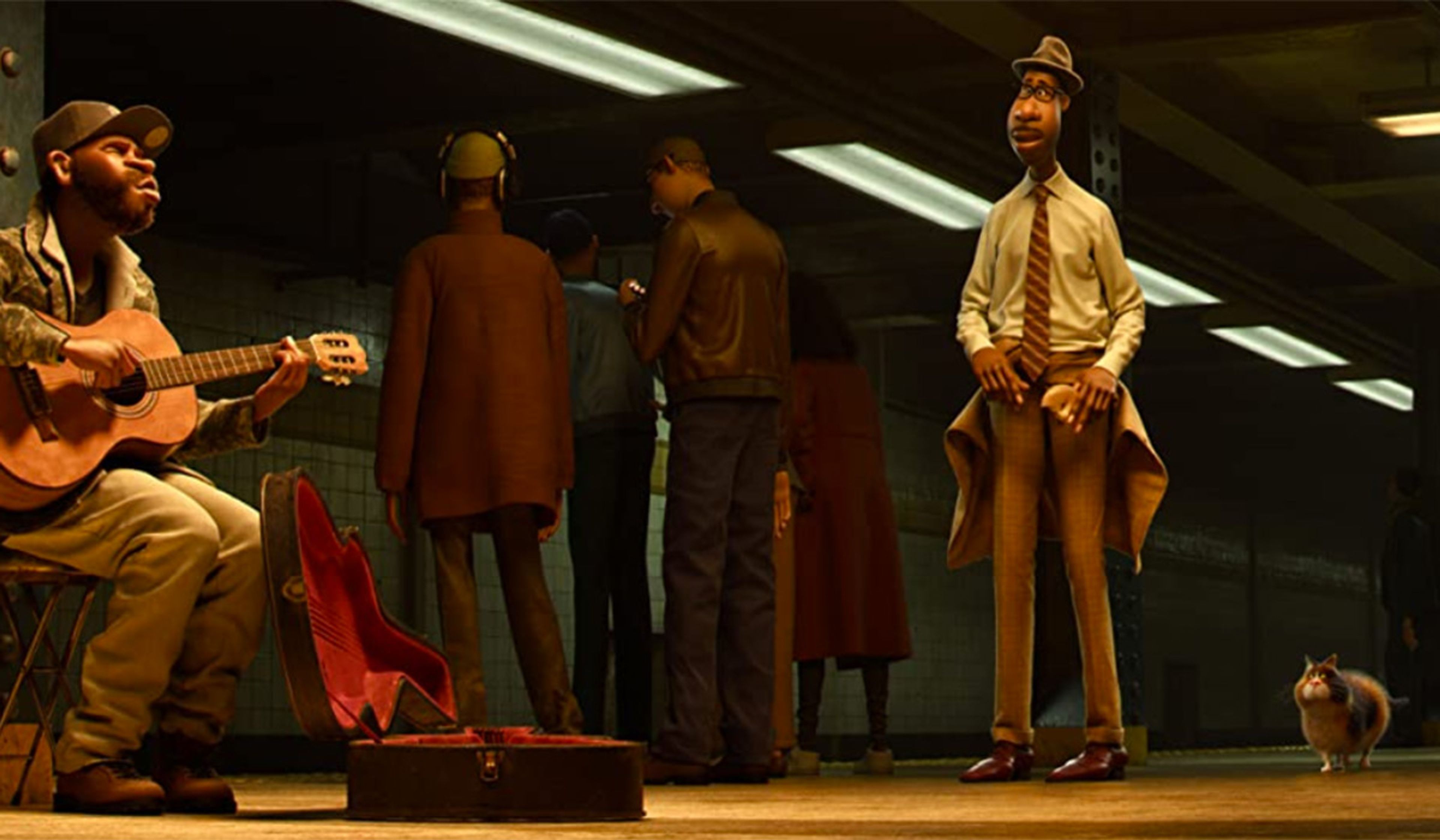


Joe (Jamie Foxx) in Soul.
Pixar
It’s a Wonderful Life was hardly a model of theological rigor (extremely pedantic voice: Being pure disembodied spirits, angels can’t earn wings . . .), but it still emphasized the traditional religious conception of life as a journey, a test, a place of trial and transformation, in which pleasure is a basic good but the higher goods are won by people who accept that mortal life is a school that’s supposed to point beyond itself. Whereas it’s appropriate that the spiritual guide in Soul is a hippie, a representative of the worldview that displaced those old traditions, offering in their place a more immanent cosmology, a more solipsistic moral vision, and a theology of, well, chilling out.
Behind this chill-out, though, is something less relaxed, which came through in Pixar’s last life-after-death story, Coco, and shows up again here. Despite the Mexican-Catholic accoutrements of its imagined afterlife, in Coco the dead survive only while someone on earth remembers them; after that, it appears, comes annihilation. In Soul, meanwhile, the dead may not survive their encounter with the blinding light: The souls who actually reach the top of the long escalator make a sound a bit like mosquitoes hitting a bug zapper on a summer night.
If that’s how we all go out, then it’s hard to blame our hero for making a beeline back to his mortal body. Eat, drink, and be merry, because tomorrow you burn out like an insect is the pessimism lurking beneath Pixar spirituality, the skull beneath the New Age skin. If the older tradition was somewhat grimmer about the journey but fundamentally optimistic about the destination, the newer one has a glib optimism on the surface — but its deeper message is despair.












Comments