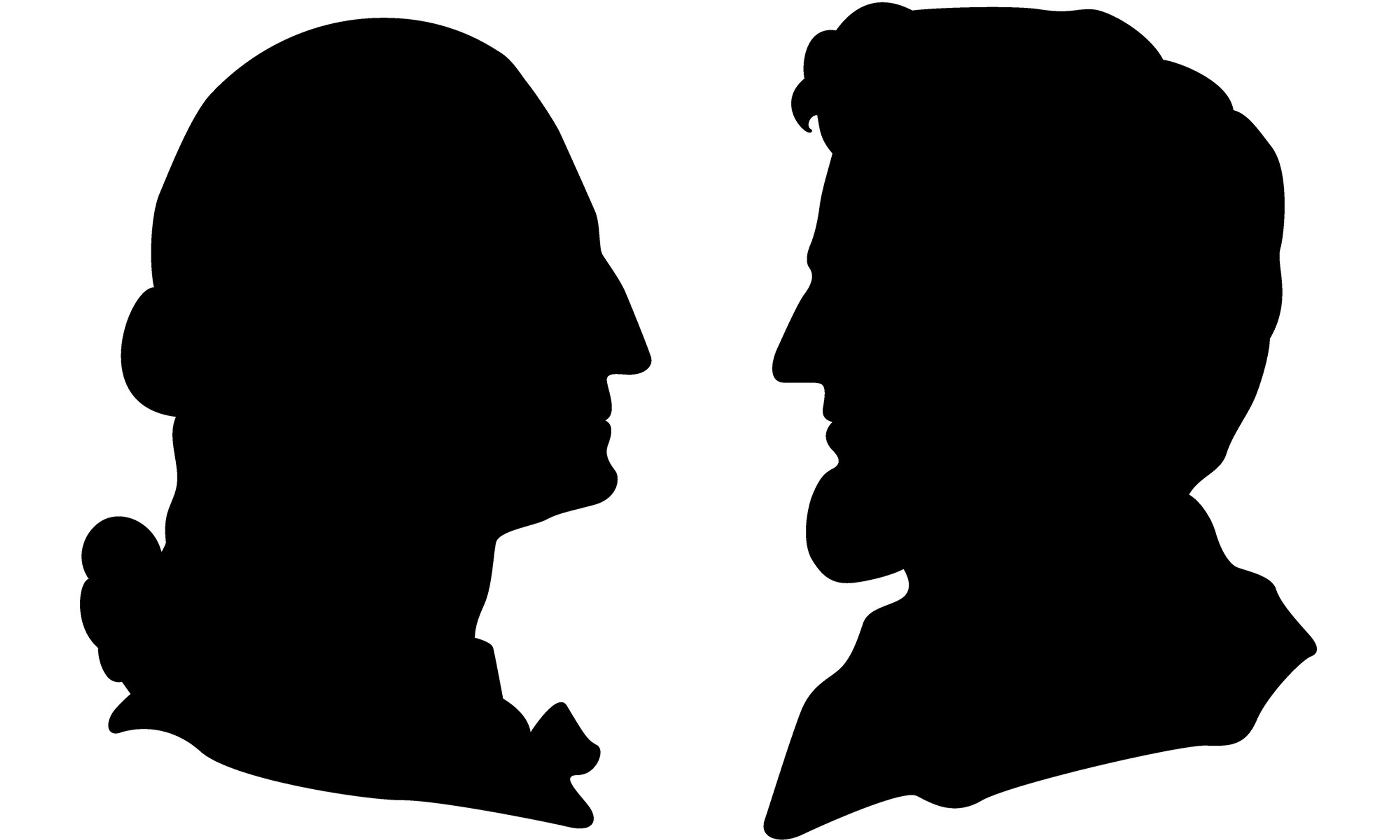
In the first and, thus far, only volume of his Chronicles to appear in print, Bob Dylan recalls an occasion on which, in a Greenwich Village apartment where he was being put up, he stumbled upon a copy of Thucydides’ History of the Peloponnesian War and read his description of the revolution at Corcyra. It was, he said,
a narrative which would give you chills. It was written four hundred years before Christ and it talks about how human nature is always the enemy of anything superior. Thucydides writes about how words in his time have changed from their ordinary meaning, how actions and opinions can be altered in the blink of an eye. It’s like nothing has changed from his time to mine.
Nowhere are the propensities identified by Dylan more powerful than in democracies — where envy is given full rein and where fashion, like a god, can govern linguistic usage and public opinion as imperiously and arbitrarily as it dictates the length of women’s skirts. In asking his compatriots to consider what it is that distinguishes those human beings who are truly superior from the ordinary run of women and men, and in doing so at a time when reputations are being vigorously besmirched and statues are being toppled, Daniel Mahoney is swimming against a powerful tide.
In the best of circumstances, democratic man is skeptical regarding greatness — and we are not living in the best of circumstances. There is a bias that affects modernity. We are incessantly told that the new is improved. In accord with this presumption, we tend to think that there is nothing that the past can teach us, that our elders are our inferiors, and that the reigning prejudices of our own time form the standard by which our predecessors should be judged and found wanting. It is this propensity that Mahoney challenges.
He asks that his readers set aside their unbridled egalitarianism and contemplate the obvious — that, while all human beings may be equal in their right to life, liberty, and the fruit of their own labors, they are by no means equal in their talents and character, and that, in every sphere of life, some human beings tower over others. He reminds them also that the great are not always good. He urges them to consider the possibility that, from time to time, human beings are in need of those who are both politically great and morally good. Then, by juxtaposing George Washington with Napoleon Bonaparte, he encourages them to reflect on what it is that separates those who are politically great and morally good from those who are undoubtedly great but in no way good. How, he asks, does the genuine statesman differ from the tyrant who masquerades as such?
In the first two chapters of this slim volume, Mahoney tries to answer this question. He begins with Aristotle and Cicero — who both insisted, as Plato did not, that man is a political animal; who both asserted, as Plato did not, the dignity and value of the political life; and who, with this fact in mind, sketched the character of the magnanimous man — the man of great soul. It is Mahoney’s contention that we have more to learn in this regard from the De officiis of Cicero, a statesman of the first rank who was also a philosopher, than from the Nicomachean Ethics of Aristotle and that Cicero’s understanding needs a supplement — which is supplied by Christianity. Classical virtue is, he asserts, insufficient. The greatness of the great man needs to be tempered not only by a moderation informed by political prudence but also by a generosity of spirit and a measure of humility. It is this mix of qualities, exemplified by Washington’s insistence on withdrawing from the fray and making way for others, that distinguished him from Napoleon — as the latter was painfully aware.
The heart of Mahoney’s book is not, however, this theoretical discussion. It is the portraiture designed to illustrate his claims, which is found in the subsequent chapters, where he introduces us to Edmund Burke, Alexis de Tocqueville, Abraham Lincoln, Winston Churchill, Charles de Gaulle, and, finally, Václav Havel. Here — except in the case of Tocqueville, who was, as he readily admitted himself, a flop as a statesman — we have Mahoney’s exemplars: all of them towering statesmen and all of them Christian or profoundly influenced by Christianity. I found the chapters on Burke, Lincoln, Churchill, de Gaulle, and Havel luminous — so much so that I got lost in the book and missed the first half of a committee meeting that I, in my guise as its chair, had called.
Mahoney chose these figures, in preference to, say, Ronald Reagan and Margaret Thatcher, because they were all profoundly reflective; and, in these chapters, he displays a gift not only for intellectual and political biography but also for exploring the interplay between principle and prudence that explained the great deeds performed by these five figures. In the process, he makes the claims regarding the qualities required for great statesmanship that he limns in his first two chapters both palpable and plausible.
In reading this book, one explores the towering ambition of these men. One watches each of them pursue justice and the common good within a framework he knows to be far from perfect. One looks on while each accepts limits on his freedom of action, knowing full well that to proceed prudently may require that he compromise with an existing evil. Edmund Burke, who hates slavery, chooses not to confront the slave trade head-on. Instead, he tries to regulate it to death. Lincoln does the like by means of the Emancipation Proclamation, which does not apply within the slave states that did not secede. Churchill, no friend to communism, reaches an accommodation with the Soviet Union. De Gaulle bows to necessity and accepts the loss of Algeria. Havel makes his peace with a Czech Republic focused on the most mundane pleasures and forgetful of the human soul.
These five men all know that the best can be the enemy of the good, and those who outlive their chief accomplishment all suffer and gracefully accept defeat. If they do not greedily seek to become tyrants or succumb to the temptation if and when it presents itself, it is in large part because they are not utopians. They accept men as they are. They are satisfied with doing what good they can do, and they are mindful that upsetting or subverting an established order might well eventuate in an evil greater than the one that they wish to remedy.
Today, all of these men can be tarred with the same brush. Burke, Churchill, and de Gaulle may have been hostile to colonial misgovernment, but they were not opposed to empire as such. However much Lincoln may have hated slavery, he was willing to live with it as long as it was contained and seemed on its way to extinction. All of these men were compromised by the compromises they made. They were impure. That is what is said, and it is true. For impurity of this sort is a necessary condition for true statesmanship. Only the tyrant, armed with absolute power, can be truly pure. Only he can refuse all compromise. The genuine statesman has to combine courage, prudence, and a willingness to see things as they are. He must have the wisdom to recognize what is the greater evil, the courage to confront it, and the prudence to embrace, when necessary, the lesser evil. It is this that Mahoney causes us to see.
And there is more. For he also forces us to recognize the solitude that the great statesman confronts. His superiority isolates him. He is sadly alone at the top, charting a course that no one else really understands. In this regard, the best chapter in The Statesman as Thinker is the one Mahoney devotes to de Gaulle, whom he regards as “perhaps the most impressive statesman-thinker of the twentieth century.” It is a subject on which he once wrote a book. It is a subject that he knows more intimately than any other that he addresses in this book. And it is de Gaulle who, in a work published in 1932, reflected at length on what he variously termed “the man of character” and “the good prince.”
The other chapter that stands out is the one devoted to Burke. Its chief aim is to show that he was anything but a relativist and to defend his consistency by showing that the grounds on which he, from October 1789, opposed the French Revolution and those on which he had earlier favored the American cause were consistent. If the latter revolution reached its completion with the establishment of a stable self-government and the former culminated in terror and tyranny, it was for reasons that Burke discerned from the beginning.
Mahoney also uses Burke to lay the groundwork for his discussion of Churchill, de Gaulle, and Havel. Like their forebear, they, too, were persuaded that man is “a religious animal; that atheism is against, not only our reason but our instincts; and that it cannot prevail long.” And they would have sadly nodded their heads had they had occasion to read the prediction that Burke vouchsafed in 1790 when he warned his contemporaries that, if “we should uncover our nakedness by throwing off that Christian religion which has hitherto been our boast and comfort, and one great source of civilization amongst us,” the odds were good “that some uncouth, pernicious, and degrading superstition” would take its place. In contemplating the rise of communism, fascism, and progressivism in the course of the last hundred years, we would do well to reflect on Burke’s claim and on the words and deeds of Churchill, de Gaulle, and Havel.












Comments