Anchors Aweigh
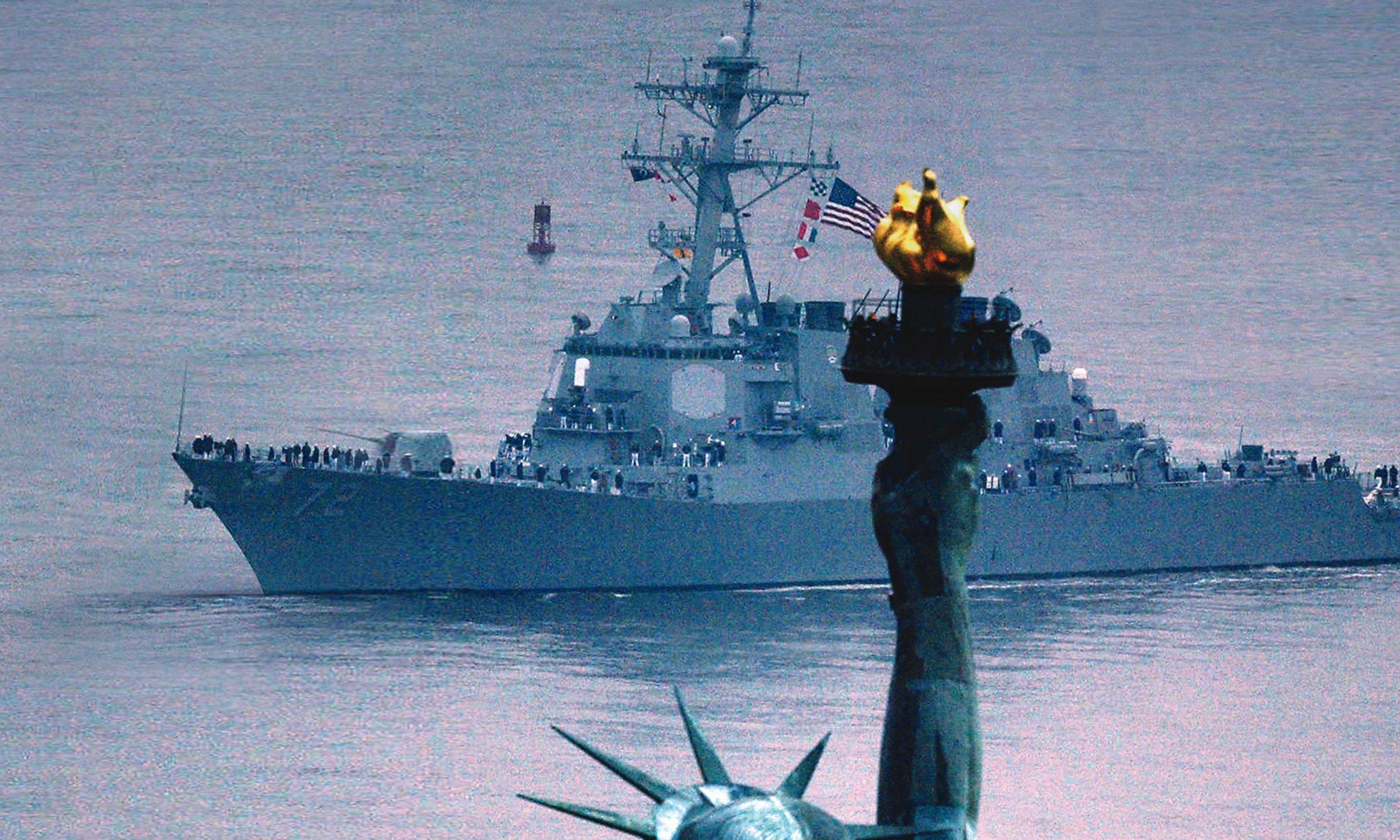
I agree wholeheartedly with Jerry Hendrix’s well-crafted argument in “To Rule the Waves” (June 1) that the United States should vastly expand its current naval capabilities. I am not so sure, however, that the Framers gave priority to the Navy over the Army by “requiring” the former and only “stipulating” for the latter when individual crises arise. Article I, Section 8, of the Constitution confers certain enumerated powers on Congress (“Congress shall have Power”), one of which is the power “to raise and support Armies,” and another, the power “to provide and maintain a Navy.” According to the Constitution, the exercise of neither of these powers is a mandate, and neither is prioritized. Both simply lie within congressional power. History, of course, has demonstrated the wisdom of maintaining a standing navy, army, air force, marine corps, coast guard, and merchant marine. At the moment, there is an urgent need to invest in the Navy, for all of the reasons articulated by Mr. Hendrix. Washington, in his farewell address, told us that America’s strength and security depend on the cultivation of peace, but he recognized that “timely disbursements to prepare for danger frequently prevent much greater disbursements to repel it.”
Vincent C. Alexander Emeritus Professor of Law St. John’s University School of Law
Jerry Hendrix responds: Professor Alexander, I appreciate your endorsement of the argument for a naval-centered national-security strategy presented recently in the pages of National Review, and I agree that we have long had a standing Army as well as a Navy and their subsidiary or daughter services in the Air Force and the Marine Corps. However, on the point of the relative support for both services within Article I of the Constitution, I believe it is incorrect to gloss over the genuine concern the Framers had coming out of the Revolution that a large standing army would become an instrument of government tyranny, a concern that is reflected and revealed in both the Federalist essays and the Bill of Rights. Standing armies were a point of domestic political concern, whereas navies were viewed as “shields of the republic” (to quote John Adams) and guarantors of free trade and commerce.












Comments