• Dr. Fauci says attacks on him are attacks on Science, and come to think of it Science has been getting pretty full of itself too.
• Texas has joined Idaho, Iowa, Oklahoma, and Tennessee in passing laws to keep critical race theory out of public-school curricula. Other states, such as Florida, have done so through executive rulemaking. This is a first step toward reclaiming American education from anti-American pedagogy. CRT started as a school of legal thought drawn from Marxist-influenced critical studies. It has metastasized into the pop psychology of best sellers such as Ibram X. Kendi’s How to Be an Antiracist and Robin DiAngelo’s White Fragility, as well as pseudohistory such as the New York Times’ 1619 Project. CRT in this form teaches that American ideals and institutions are mere fronts for white supremacy. It instructs its devotees to see everything through the lens of racial group identity and inherited guilt rather than treat individuals as individuals. Along with related critical gender and sexuality theories, it has increasingly colonized workplace training, journalism, and campus culture, and more recently entered the curricula of K–12 schools. The latter is where it has finally hit a popular backlash among American parents of all colors who do not want their children indoctrinated in racial animosity and grievance, self-hatred, and crackpot history. State legislation is a blunt instrument; the long game should be more grassroots involvement in ensuring that schools teach American history and values with fairness and accuracy. That instruction should include the many racial injustices in our history that have deviated from our founding ideals. But there is nothing improper, censorious, or unconstitutional in the people’s deciding, through their elected representatives, what should be taught to children by government employees in government schools on government property.
• H.R. 1, the Democrats’ “For the People Act,” is a terrible bill full of sweeping federal overreach — some of it unconstitutional — on voting, elections, redistricting, political speech, and even executive and judicial ethics. Senator Joe Manchin, the West Virginia Democrat, to his credit opposes it. His opposition precludes, at least until 2023, the Democratic plan to use Republican opposition as an excuse to eliminate the filibuster. The John Lewis Voting Rights Act, which would require states to get Department of Justice approval for changes to voting practices, is in a similar fix. Manchin has introduced his own compromise bill, combining elements of the other two. Manchin’s substitute is a slight improvement, but Republicans are still right to oppose it. He adds a national voter-ID requirement, albeit one that is watered down from many states’ laws. He would make Election Day a federal holiday but undermine the purpose of the holiday by mandating two weeks of early voting. He would address some concerns with the John Lewis Act by narrowing the grounds on which a jurisdiction could be found to require preclearance. He has the support of Stacey Abrams and other Democrats vocal on these issues — which tells you something about their oft-stated view that voter ID is a Jim Crow measure. But the bill still contains most of the original problems with H.R. 1. Even if Republicans are inclined to consider a deal, they should hold out for a better one.
• Texas, like other Republican-run states, is revising its election law. As usual, proposed changes have been a mixed bag of good ideas with some pandering to the conspiracy-minded, but the legislative process has generally done its work in shaking out bad proposals. Texas Democrats have reacted with wild hyperbole, lies, and denunciation of things that they supported until the day before yesterday. They have also discovered the righteousness of a legislative minority obstructing reforms, walking out of the chamber to force Governor Greg Abbott to revisit the bill in a special summer session. Their filibuster-bashing Washington colleagues could take a lesson. Much of the controversy in Texas, as elsewhere, revolves around partial rollbacks of “emergency” voting procedures rushed through during the pandemic, some of them by local executive fiat. Democrats take a Brezhnev Doctrine approach: Any expansion of any kind (hours, locations, methods of balloting) must be permanent or any rollback will be deemed “voter suppression” — no matter how recently the expansion was created, no matter what it costs, no matter its impact on the security of the ballot or the speed and certainty of vote counts. The goal of Republicans should not be to inconvenience or discourage voters. Rather it should be to secure the ballot, count quickly and transparently, and make it harder to sow uncertainty and drawn-out post-election challenges.
• A score of senators from both parties is pushing a compromise on infrastructure. Details are being worked out: The senators want to raise the gas tax, while Biden doesn’t. They want to spend $1.2 trillion rather than the $1.7 trillion Biden seeks. The talks take for granted that it is urgent to pass a big federal infrastructure bill, and that the way to proceed is to identify how much to spend and then figure out which specific projects should get funding. Neither assumption makes sense. The public, while supporting the idea of improving roads and bridges, isn’t clamoring for a bill. Too many Republicans are talking themselves into raising taxes for a bill we don’t need.
• Newly available documents confirm that after the election last November, President Trump and his aides pressured Department of Justice officials to pursue baseless claims of election fraud. Mark Meadows, Trump’s chief of staff, forwarded to Jeffrey Rosen, the acting attorney general, bizarre allegations that facilities in Italy had altered U.S. election data. Rosen then forwarded the allegations to his deputy, Richard Donoghue, who replied, “Pure insanity.” Yet this was insanity at high levels. A Reuters report, meanwhile, publicizes the hair-raising threats faced by election officials who have not gone along with conspiracy theories. Brad and Tricia Raffensperger — Georgia’s secretary of state and his wife — are particular targets. Over and over, they are threatened with murder and rape. On Thanksgiving Day last year, President Trump declared of Raffensperger, “He’s an enemy of the people.” Too many of Trump’s fans are taking that literally.
• Tucker Carlson amplified a conspiracy theory that the FBI choreographed the Capitol riot. The tale is based on misconceptions about conspiracy law and criminal due process. Speculation at the pro-Trump Revolver News site notes that the indictment of the Oath Keepers, a militia organization central to the riot, features a number of unindicted co-conspirators (UCCs) who have not been identified and surmises that they must be government operatives — undercover cops or confidential informants — who steered events and entrapped Trump sympathizers. But there are many good reasons why UCCs are not named. They may be charged in other cases (as the Oath Keepers’ founder is) or not yet arrested. By definition, a government operative cannot be a conspiracy member because the operative does not actually join the criminal agreement (the essence of a conspiracy crime). The operative feigns willful participation to help the FBI gather evidence. Prosecutors, moreover, must identify the UCCs to the defense prior to trial, so the FBI could not secretly entrap people by using the UCC designation to conceal the identities of covert government agents. That Democrats may be exaggerating the riot into an existential threat to democracy is not a good reason to pretend January 6 was a deep-state fabrication.
• Mike Pence, vice president to Donald Trump, spoke at the Faith and Freedom Coalition conference in Florida. During his address, some angry audience members booed, and a couple even went so far as to shout “Traitor!” at him — no doubt referencing his refusal to participate in Trump’s lawless attempt to reverse the result of the 2020 election. While Pence was not “drowned out” by these uncouth protesters, as some in the media have suggested, it is disturbing that his reputation among Republicans has taken such a hit. For four and a half years, he was among the most loyal and effective of Trump’s surrogates, standing by his boss in even the most turbulent of times. But on January 6 he chose to fulfill his constitutional duty and accept the political consequences. That decision not only speaks to the difference between his character and Trump’s, it reminds us that the most important question we should ask of our leaders is not whether they are loyal, but where their loyalties lie.
• The steel tariffs being maintained by the Biden administration are a dumb policy. They were a dumb policy when the Trump administration employed them, a dumb policy of the George W. Bush administration, and a dumb policy of the Reagan administration. We are all for bipartisanship, provided that it does not take the form of a burdensome sales tax on American manufacturers and American factory workers, who currently are laboring under the disadvantage of record prices for steel and aluminum, which are critical inputs in everything from jetliners to pickup trucks to cans of beer. Tariffs are put forward as an aid to U.S. manufacturing and a protection of U.S. manufacturing jobs, but their actual effect is closer to the opposite. This is especially true of manufacturers of industrial steel products and machine parts, which are among the largest U.S. exporters. Rather than encourage U.S. manufacturers to choose U.S.-sourced steel, these tariffs make steel-consuming U.S. manufacturers less competitive. If we want a thriving U.S. manufacturing sector, we should work to ensure ready access to raw materials and other inputs, encourage the production of abundant and affordable energy, and provide employers with a better-prepared industrial workforce. Instead, we are making it harder for manufacturers to do business, while engaging in unprofitable favoritism for a handful of politically connected steel firms. It’s time to repeal the tax on factory jobs.
• Lina Khan, Biden’s choice to chair the Federal Trade Commission, rose to prominence after authoring a 2017 note in the Yale Law Journal titled “Amazon’s Antitrust Paradox.” In the essay, then-law-student Khan argues against the consumer-welfare standard that has governed antitrust law since the 1970s. She concedes that digital platforms have reduced prices for consumers but argues that they possess “bargaining power against consumers, suppliers, and workers, which enables them to hike prices and degrade service and quality while maintaining profits.” Cast as a revolutionary thinker, Khan has merely repackaged the mid-century Brandeisian approach to antitrust law in the language of a TED Talk. Amazon’s “bargaining power” against consumers has everywhere decreased prices, and its leverage against workers has led to a firm-wide minimum wage of $15 an hour. Is this the monopoly Khan warned of?
• The House has taken up Khan’s cause, introducing five antitrust bills on a single Friday in June. Running the gamut from mandated data portability to outright bans on mergers and acquisitions, the bills underscore the challenge posed by Big Tech regulation. Data protections, for instance, often come at the expense of competition: Apple could try to squelch Facebook’s iPhone app under the guise of protecting user privacy. Attempts to police “self-preferencing,” meanwhile, need to distinguish between the harmless (Apple’s automatic installation of its maps app at the expense of Google Maps) and the more suspect (Apple’s 30 percent fee on Spotify subscriptions, which reduce the relative price of Apple Music). Big Tech has itself to blame for having so few friends in Washington. Unfortunately, careful lawmaking has fewer.
• Biden’s Department of Education has declared that Title IX’s prohibition on sex discrimination also prohibits discrimination — loosely defined — on the basis of sexual orientation or gender identity. The Obama administration used the same tactic to make federally funded schools use students’ preferred pronouns and permit students to use bathrooms, locker rooms, and accommodations, and participate in athletics, on the basis of self-identified gender rather than biological sex. The move has troubling implications not only for fairness in girls’ sports but also for the privacy of young women. When sex is redefined, women’s rights can become their opposite.
• The Department of Veterans Affairs announced that it plans to begin paying for former servicemembers to undergo sex-change surgeries if they desire them. VA secretary Denis McDonough cast the change as part of an effort to reverse a “dark history” of discrimination. Presumably included in that history was the Obama administration’s 2013 policy, which prohibited the VA from providing or funding such surgery because it was not medically necessary. The basis for that policy has not changed: There is no medical consensus that surgically modifying or removing healthy sexual organs is an effective treatment for the mental-health issues suffered by individuals with gender dysphoria. There is, however, a growing consensus in Biden’s party that acknowledging as much constitutes bigotry.
• Thomas Harker, the acting secretary of the Navy, has identified his top priorities for the fleet: sexual-assault prevention and mental-health wellness. Combat readiness, modernization, and countering Chinese and Russian aggression across the world’s maritime commons are apparently an afterthought. Harker, the fifth man to lead the Navy Department in just three years, clearly has a firm grasp — too firm a grasp — on the Biden administration’s domestic political shibboleths.
• “We need to get [the mentally ill] off our streets and our subways, into a better environment,” said Andrew Yang, when asked about how he would confront the issue of mental health in New York City. “We owe our people and our families better than this. . . . Yes, mentally ill people have rights, but you know who else have rights? We do. We have the right to walk the street and not fear for our safety because a mentally ill person is going to lash out at us.” Yang is, of course, absolutely right — both in identifying a problem and in proffering a sensible solution. He has, nevertheless, faced considerable pushback. Eric Adams, the Brooklyn borough president and Yang’s fellow mayoral hopeful, said that he was “really disturbed” by the remarks and claimed that Yang was trying to “demonize” those with mental-health problems. Others suggested that Yang lacked empathy and understanding. But it isn’t as though letting the severely mentally ill live on the streets is kind to them.
• We may never know who leaked the “tax returns of thousands of the nation’s wealthiest people” to ProPublica, “an independent, nonprofit newsroom that produces investigative journalism with moral force.” Given the amount of data involved, it is unlikely to have been the work of one person (insert your theory here). What we do know is that the first article published by ProPublica, which made use of this information, was more propaganda than exposé. For the most part, it showed how various billionaires paid extremely low rates of tax when compared with the appreciation in their net worth over the same period. That’s because gains are taxable — and this should be news to no one — only when an asset is sold. There are plenty of reasons why that should be the case, from practicality to simple fairness. Paper gains can be wiped out overnight, but we suspect that those who had been taxed on them wouldn’t be offered a refund by the IRS. A second article looked more like a hit job on a candidate of whom ProPublica disapproved, a considerably more sinister use of stolen information and a valuable reminder of why such material should be kept confidential. Those who leaked these tax returns should be identified and prosecuted. Meanwhile, the articles have provided yet another good reason to reject the Biden administration’s plans to give the IRS yet more access to taxpayers’ personal data. For that — and only for that — ProPublica should be thanked.
• Juneteenth commemorates the date in 1865 when the victorious Union Army brought news of the two-and-a-half-year-old Emancipation Proclamation to Texas, last bastion of the Confederacy. It did not mark the end of American bondage: Slaves in the loyal states of Kentucky and Delaware, untouched by the Proclamation, were not freed until the 13th Amendment was ratified in December; slaves held by the Civilized Tribes of the future Oklahoma were freed only by treaties in 1866. Still, Juneteenth has long been celebrated as a black holiday, chiefly in Texas. With President Biden’s enthusiastic support, it is our newest federal holiday (Donald Trump floated the idea of making it so before him). The federal government now takes eleven holidays per year, twelve when a president is inaugurated. This is topping out. Let Juneteenth become part of our national story, not just a soapbox for progressive scolds.
• We have backed many challenges, both political and legal, to Obamacare, but always regarded the latest attempt to undo it in court as a longshot with weak merits. The Supreme Court just ruled against it, 7–2. Justice Samuel Alito (with Justice Neil Gorsuch’s support) got in some good points in dissent. He pointed out, for example, that the Court in this case denied that states have the legal standing to challenge Obamacare, but in other cases has let states with smaller interests at stake advance liberal causes. But the insuperable obstacle was that the challenged provision of the law, the individual mandate to buy health insurance, had already been rendered a near-nullity by Congress; and in eviscerating it while leaving the rest in place, Congress had shown that the provision could be considered in isolation. Since the Court did not have to strike down the whole law because of this inert item within it, it was right not to do it. Earlier decisions keeping Obamacare in place could fairly be said to have twisted the law. This one applied it properly.
• In a victory for vulnerable children in Philadelphia, the Supreme Court unanimously held, in Fulton v. Philadelphia, that the city government could not put a Catholic foster-care agency out of business because it believes in placing kids with a mother and a father who are married to each other. (Contrary to press reports, nobody has alleged that any same-sex couple ever approached the agency and got turned down.) Three justices would have gone further and overturned a 1990 precedent that limited the courts’ ability to require carve-outs from laws to protect religious groups they affect. Thus the ruling has some of the character of a reprieve. This was an easy case for the justices. The growing pretensions of governments will inevitably generate difficult ones in the future.
• In NCAA v. Alston, the Supreme Court used the Sherman Antitrust Act to unanimously strike down several NCAA rules limiting scholarships that can be given to football and basketball players. Alston’s immediate impact is modest, but the implications for the NCAA’s rules on paying players could be considerable. The Court rejected each of the NCAA’s arguments that it should be treated differently from any other price-fixing business. That left the NCAA to argue that limits to scholarships were important to the appeal of college sports to fans — an argument that nobody bought. Justice Brett Kavanaugh’s concurring opinion was blunter: “The NCAA’s business model would be flatly illegal in almost any other industry in America. . . . Price-fixing labor is price-fixing labor. . . . Nowhere else in America can businesses get away with agreeing not to pay their workers a fair market rate on the theory that their product is defined by not paying their workers a fair market rate.” Kavanaugh drew a road map for future legal challenges, but the justices would clearly prefer that the NCAA reform its own rules. It is past time for it to do so.
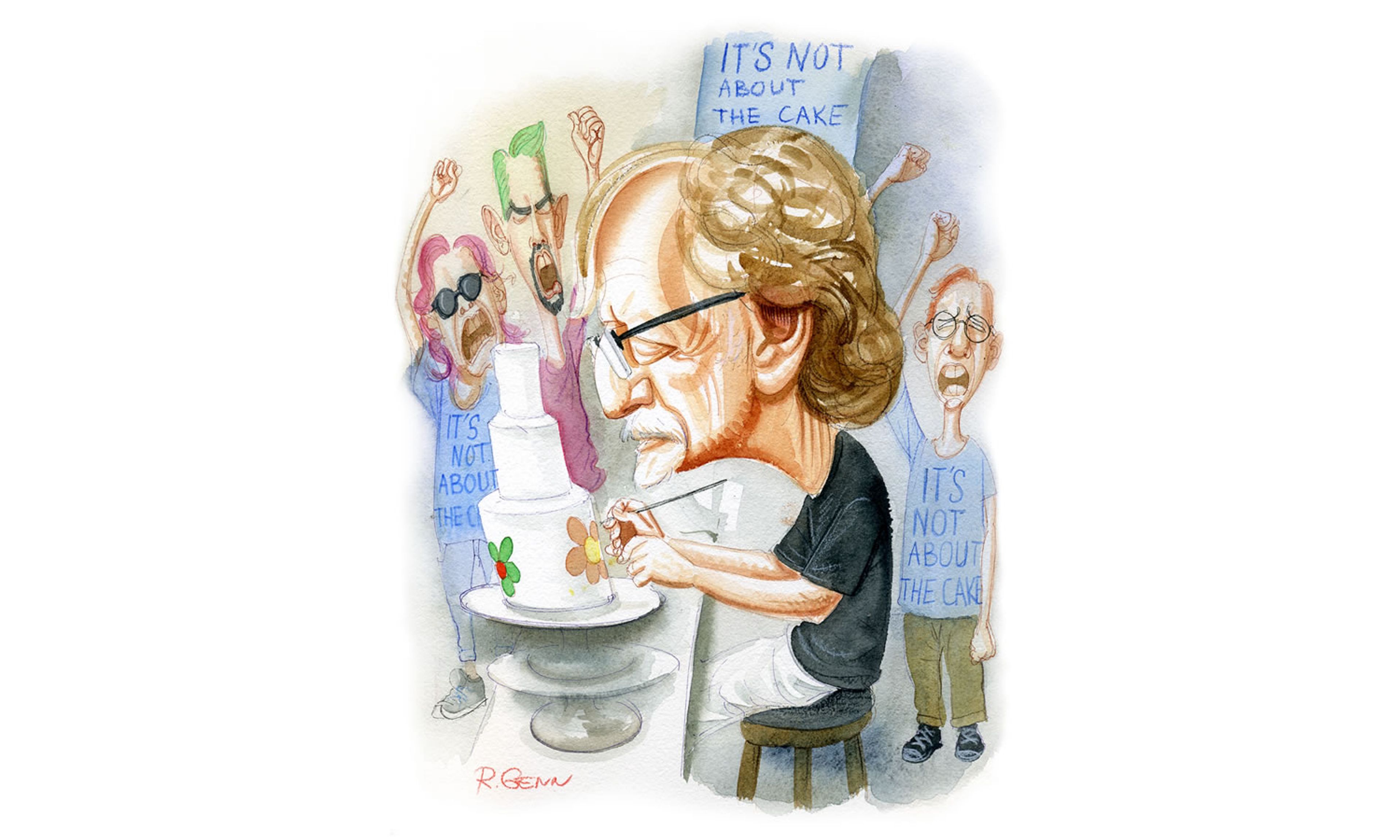
• Autumn Scardina is an attorney whose main work has been, for some years now, using Colorado’s anti-discrimination laws to torment Jack Phillips, a Christian baker who has been dragged into court on various pretexts. At one point, Scardina requested a Satan-themed confection featuring a sexual appliance. In the most recent case, Scardina requested a cake to celebrate a gender transition, and Phillips declined to make it. A Colorado judge has found that this puts Phillips in violation of Colorado law. We are willing to take the judge at his word — in which case the law should be repealed. Phillips has a right to free speech, which includes freedom from compelled speech and the right to exercise his conscience in the practice of his art. He ought to be allowed to enjoy the right to mind his own business, something of which Scardina is apparently incapable.
• A president’s first European trip is always an event. Biden’s swing saw him meeting with G-7 peers in Britain, with NATO in Brussels, and with Vladimir Putin in Geneva. It was good to see the world’s most prominent democracies self-identifying as such: There was no talk, as there was in the Trump years, of welcoming Russia back to an expanded G-8. Biden wrung a statement from NATO that China does not share its values, and a commitment from the G-7 to invest in infrastructure worldwide as a counter to China’s Belt and Road policy. The EU and the U.S. agreed to suspend for five years dueling tariffs on Boeing and Airbus, a good thing. The G-7 agreed to a global minimum corporate tax of 15 percent; though hailed by Treasury Secretary Janet Yellen, this is a bad thing, stifling competitive advantage and setting a floor that is certain to be raised. All in all, a business-as-usual vacation, and a small net plus.
• At his meeting with Putin, Biden called out Putin’s human-rights abuses in no uncertain terms and promised a U.S. response to the Kremlin’s tyranny. The Biden team also deserves credit for the smart decision not to hold a joint press conference; during Putin’s solo post-summit remarks, journalists from CNN and ABC cut straight through the dictator’s lies. But in meeting with the Russian leader at all, the president granted Putin the prestige he craves, without getting much of anything in return. Each side agreed to return its ambassador to the other’s capital and promised to begin a dialogue to achieve “strategic stability” in the bilateral relationship. These are objectives sought more by the Russian side than by the U.S. government, which should have demanded the release of political prisoners before offering the meeting. Meanwhile, Alexei Navalny remains jailed, Russian troops linger on the Ukraine border, and the cyberattacks continue. The strategic stability sought by Biden and his team will not come by granting one-sided concessions.
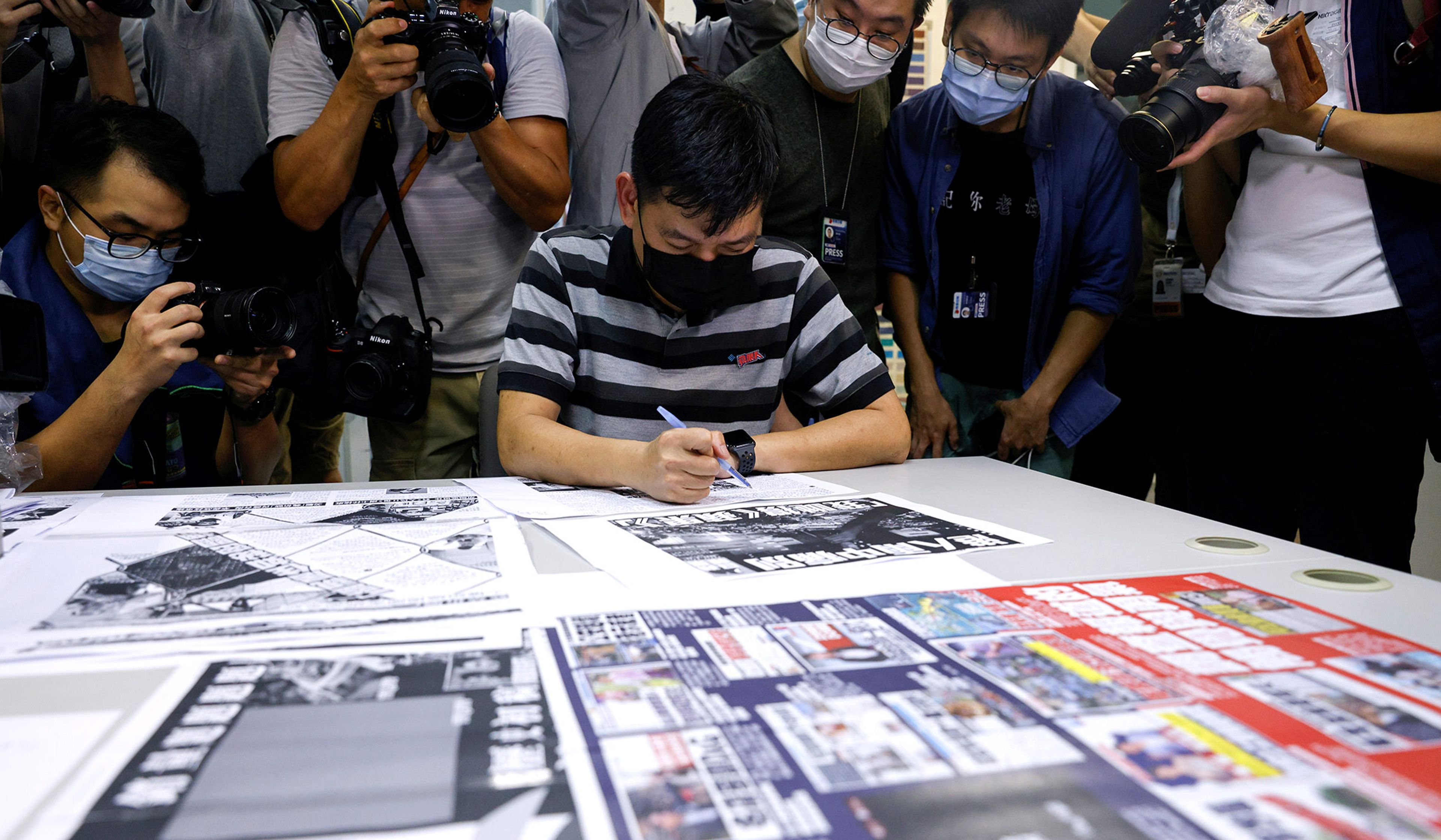
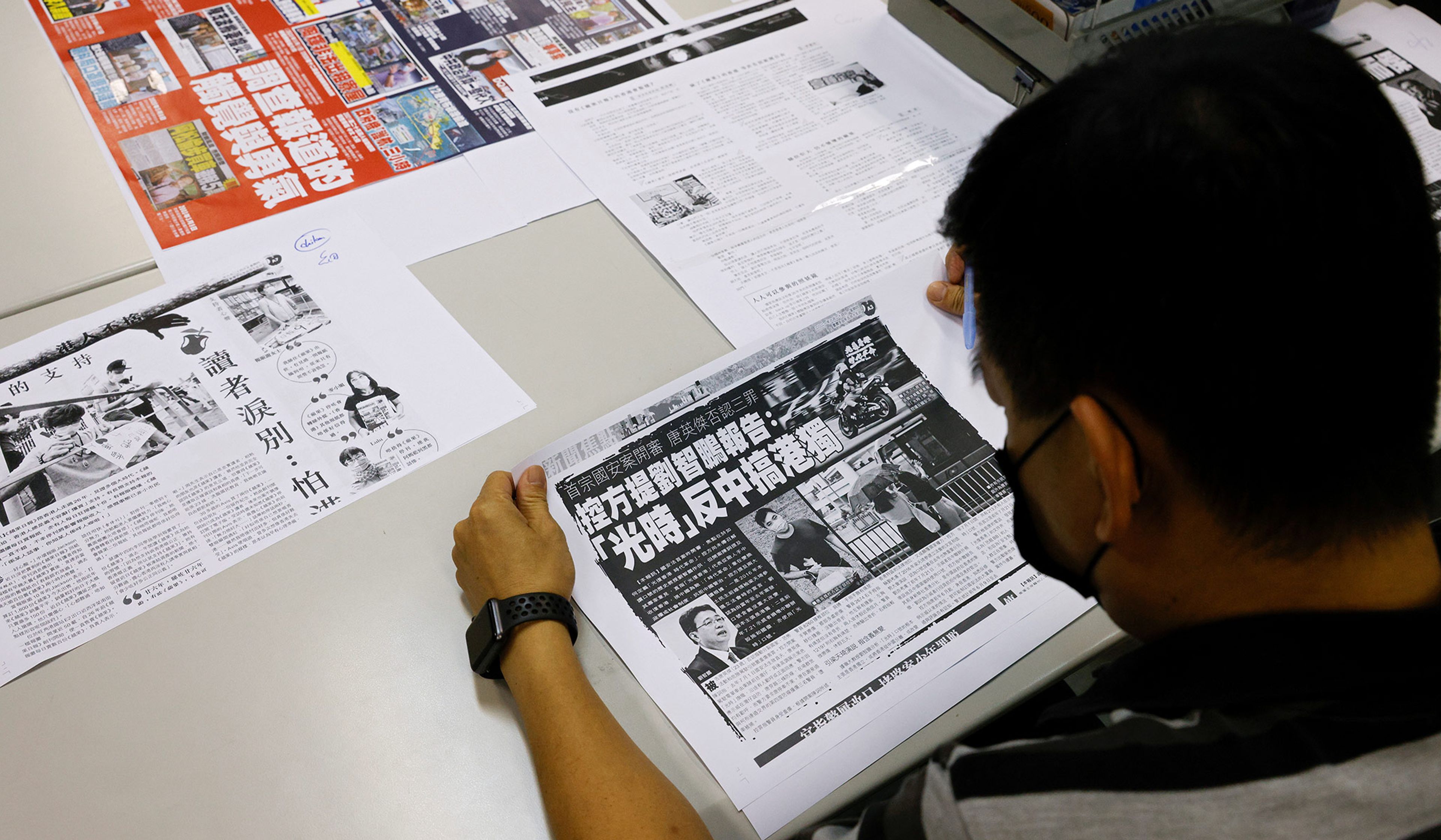
• Apple Daily is the Hong Kong newspaper founded by Jimmy Lai, the famed entrepreneur. Chinese authorities have imprisoned Mr. Lai. They have now raided the offices of Apple Daily, arresting its editor in chief, Ryan Law, and four other editors and business officials. Authorities also froze assets owned by the newspaper and warned citizens not to post or share articles from it. As we go to press, news comes that Apple Daily is shutting down. One light after another is snuffed out in Hong Kong, as the Chinese government flagrantly violates its agreement to preserve the city’s liberties.
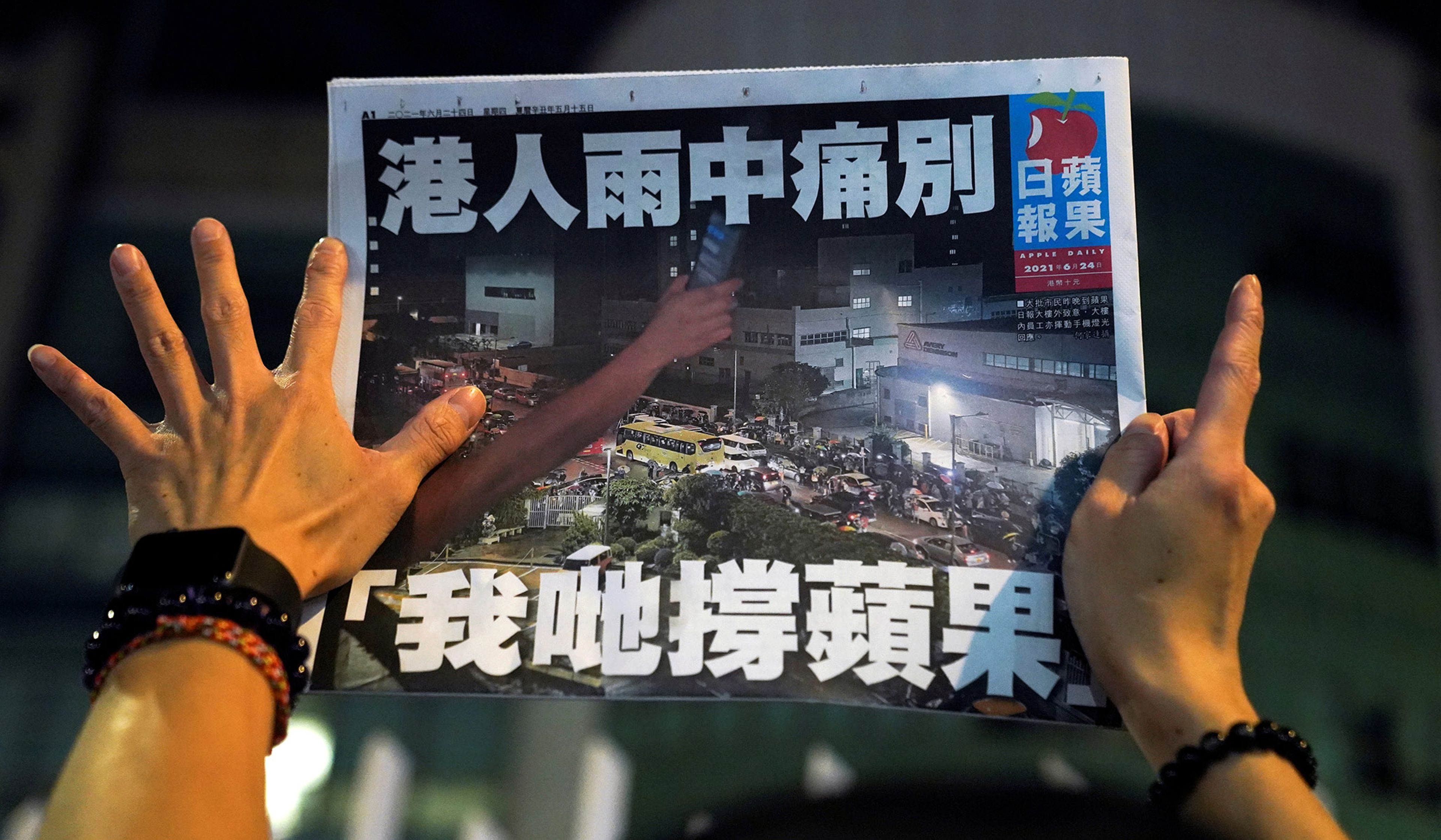
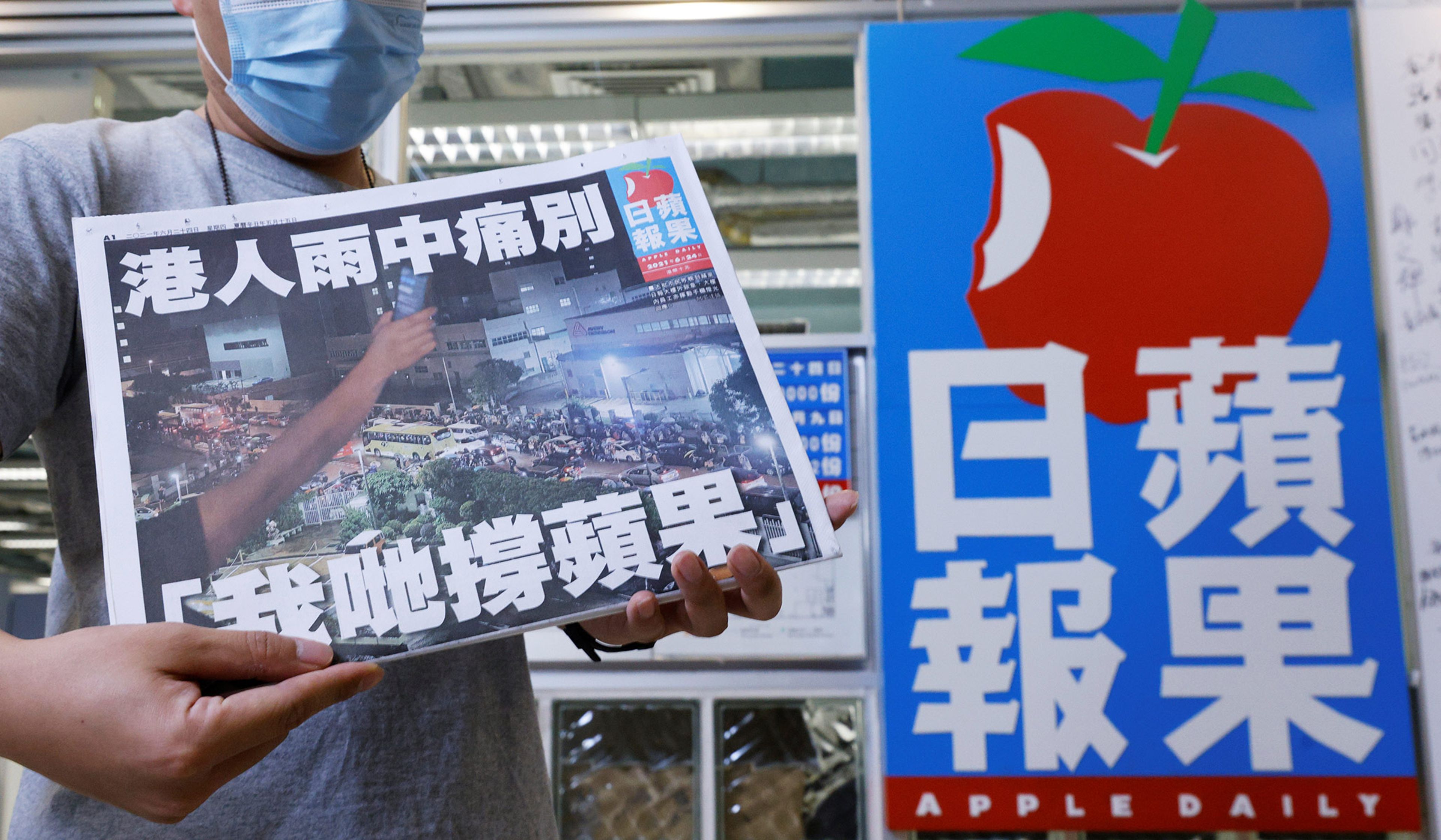
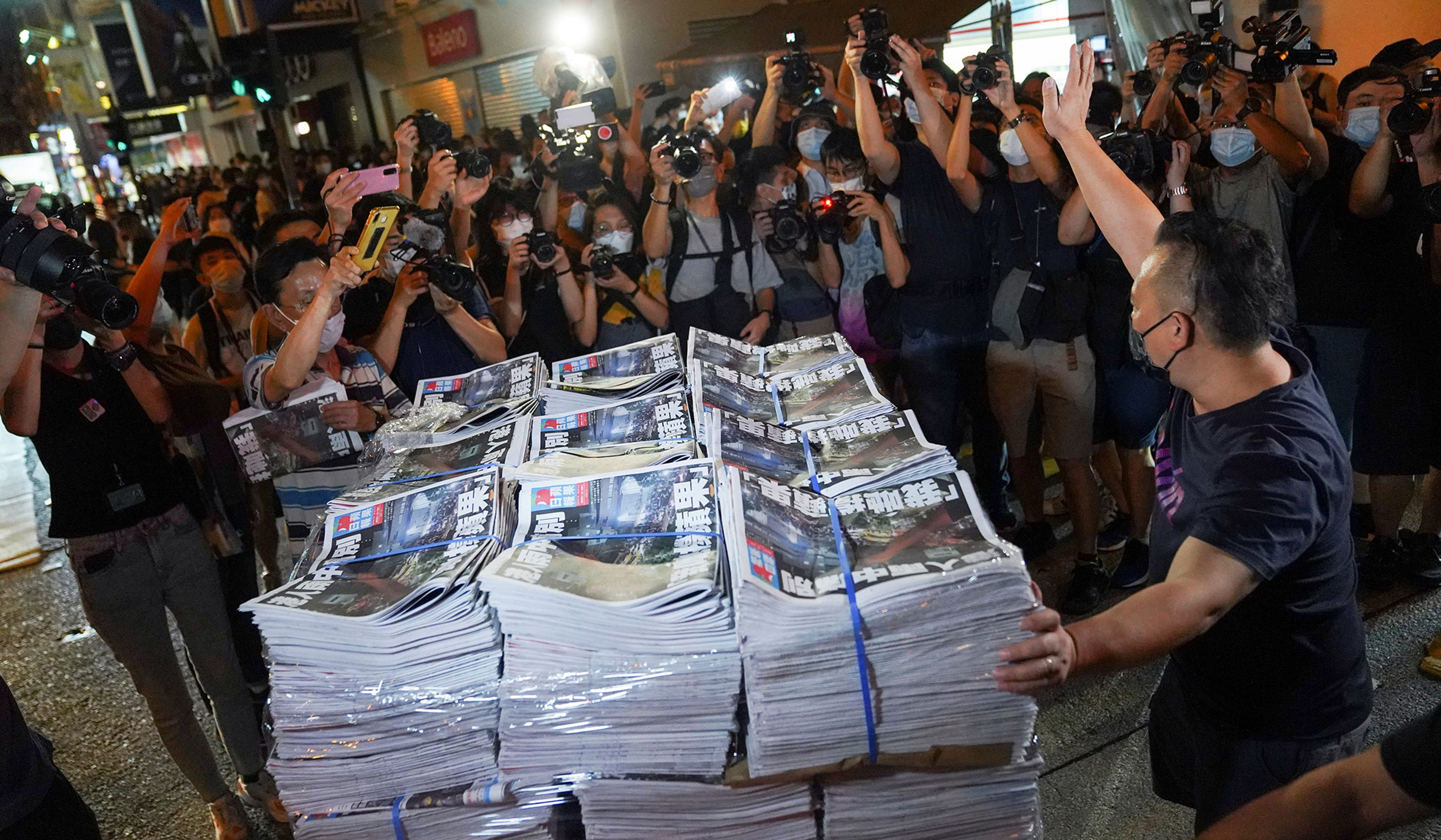
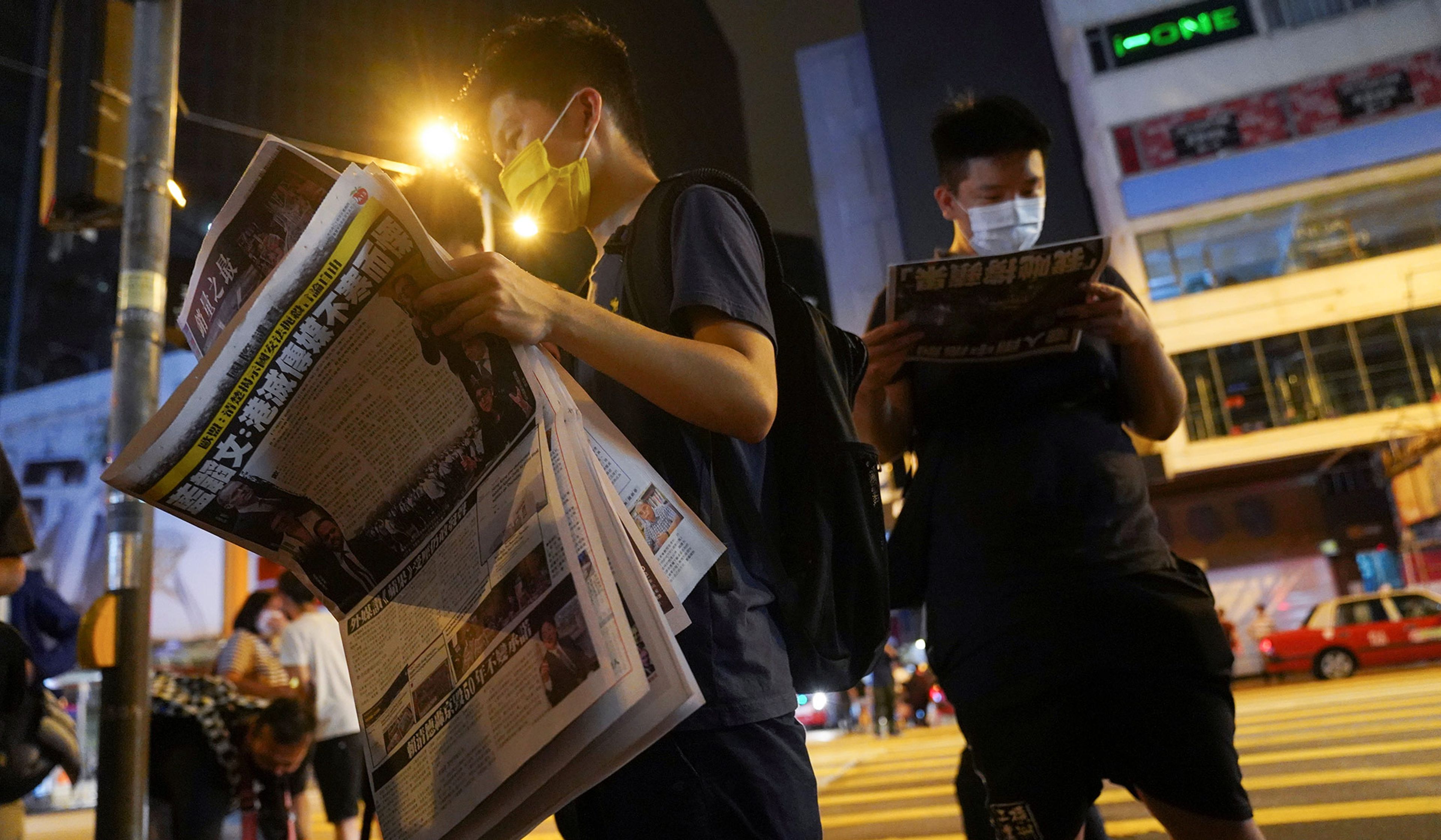
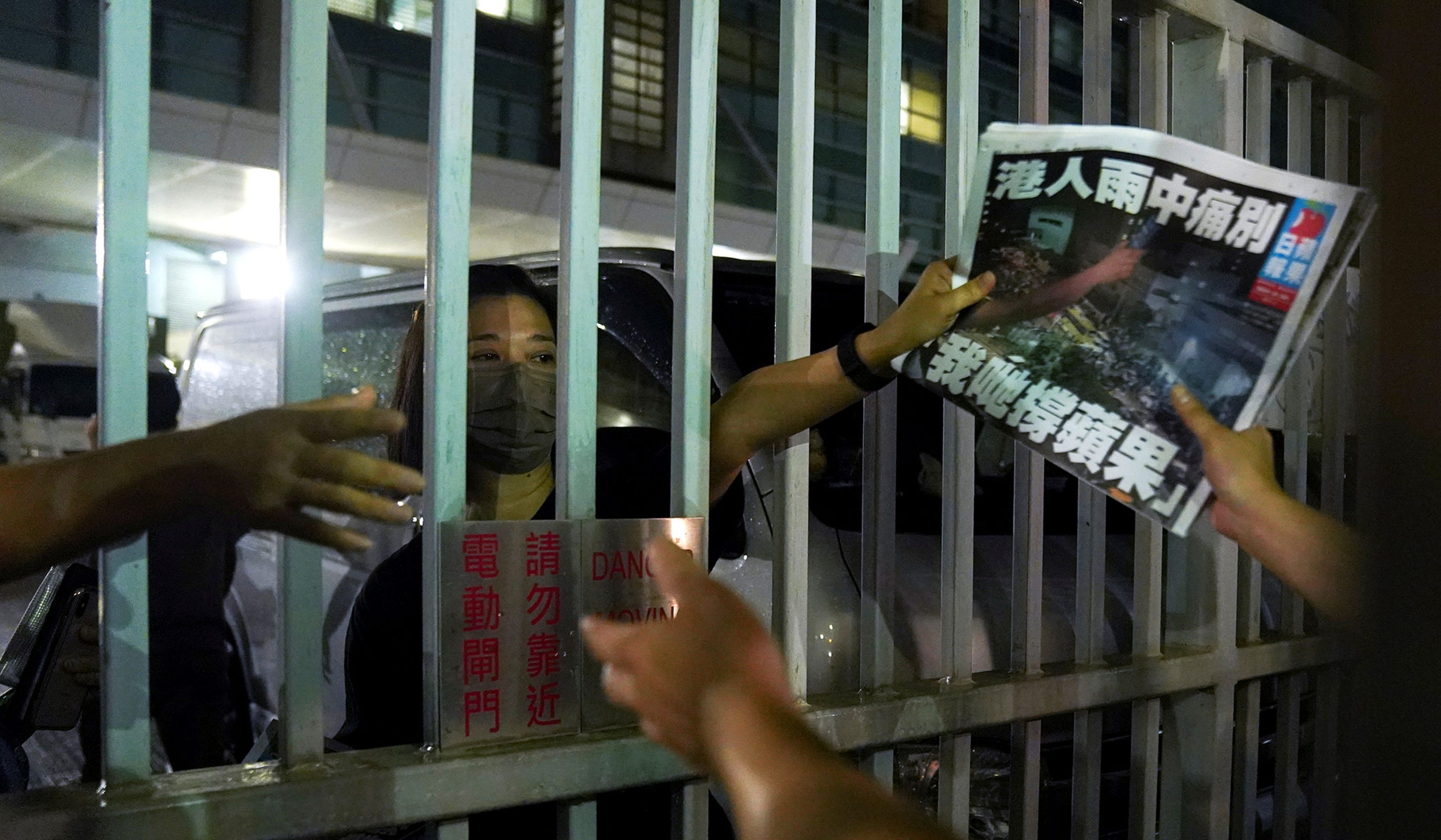
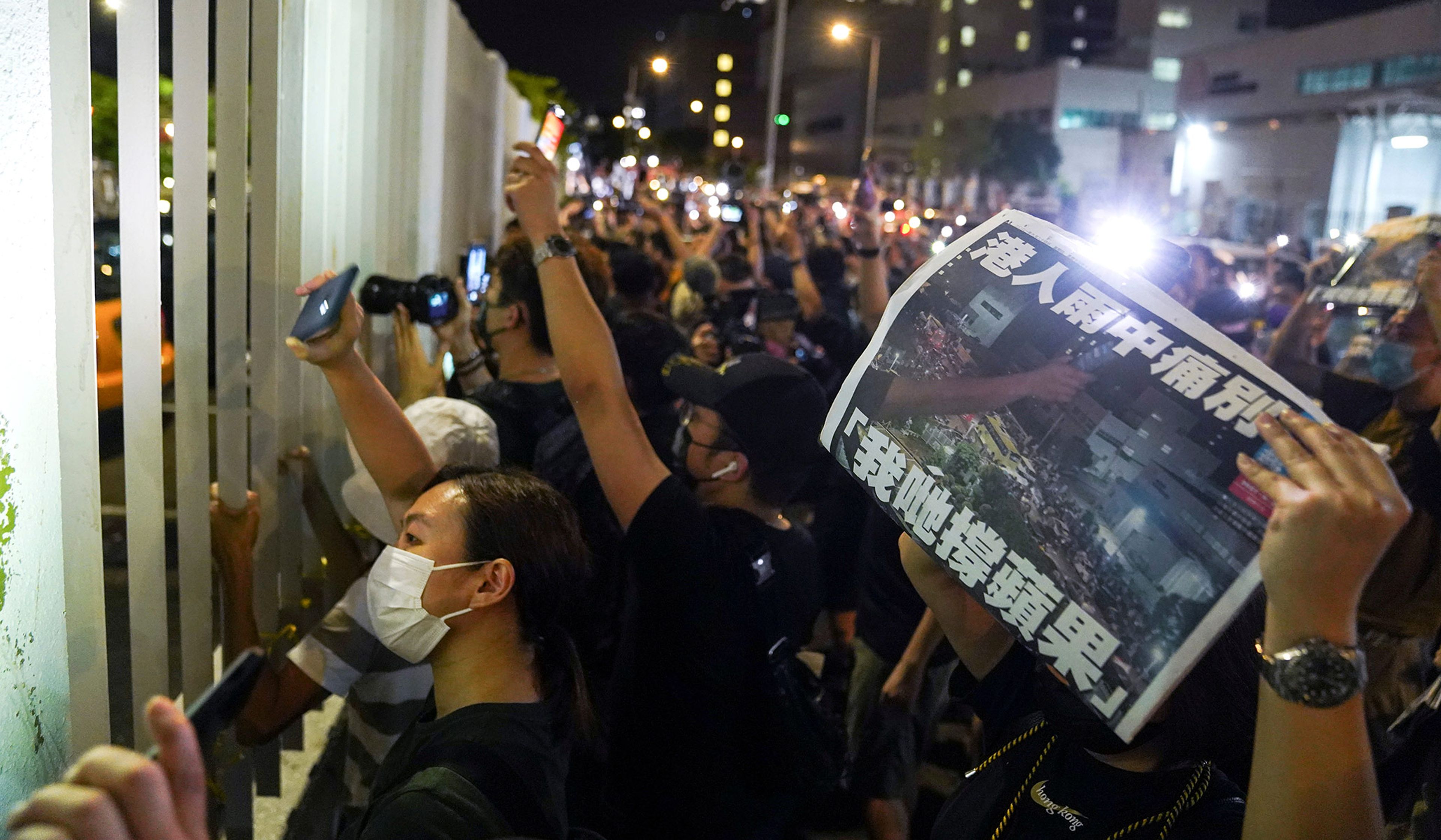
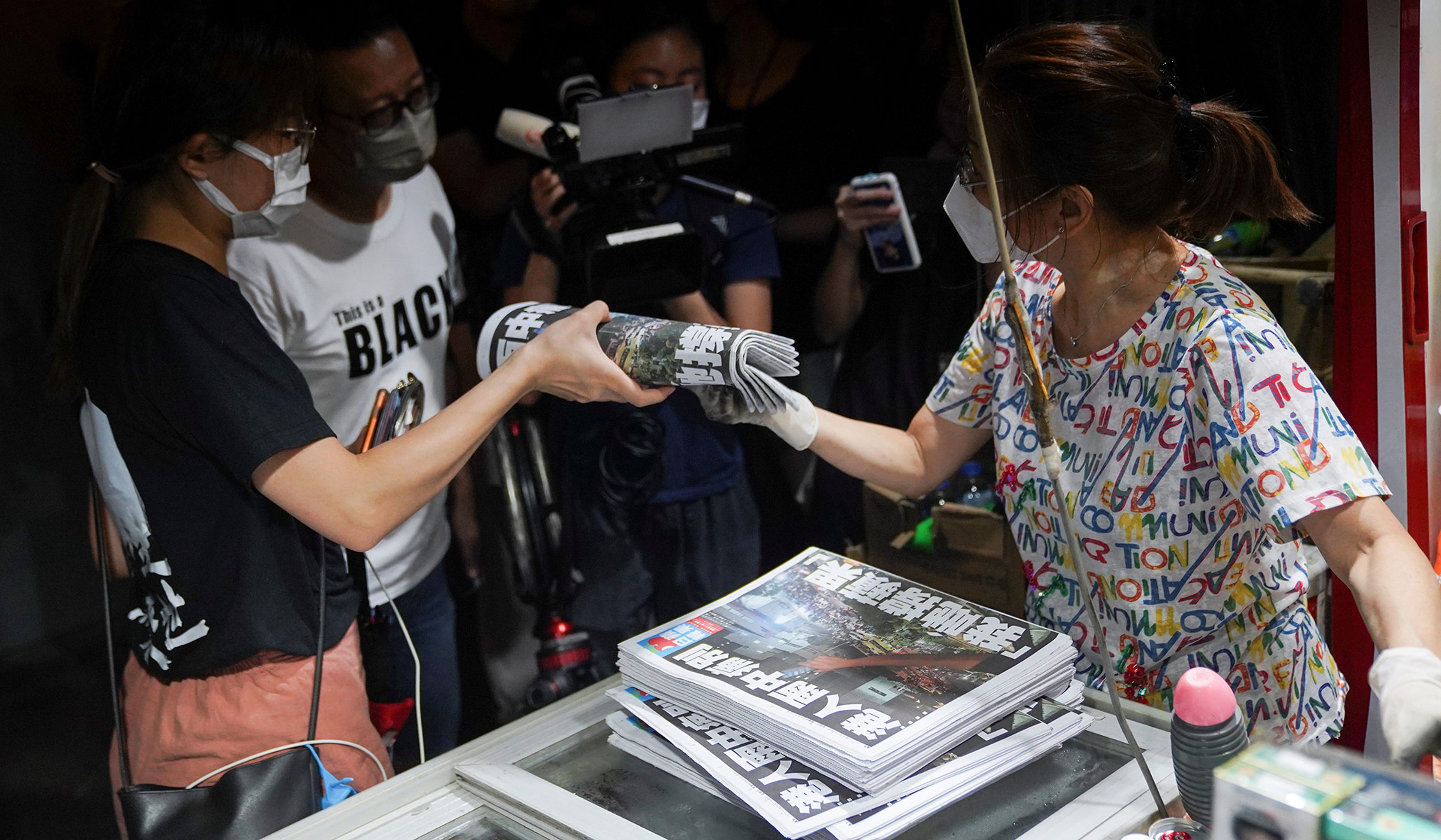
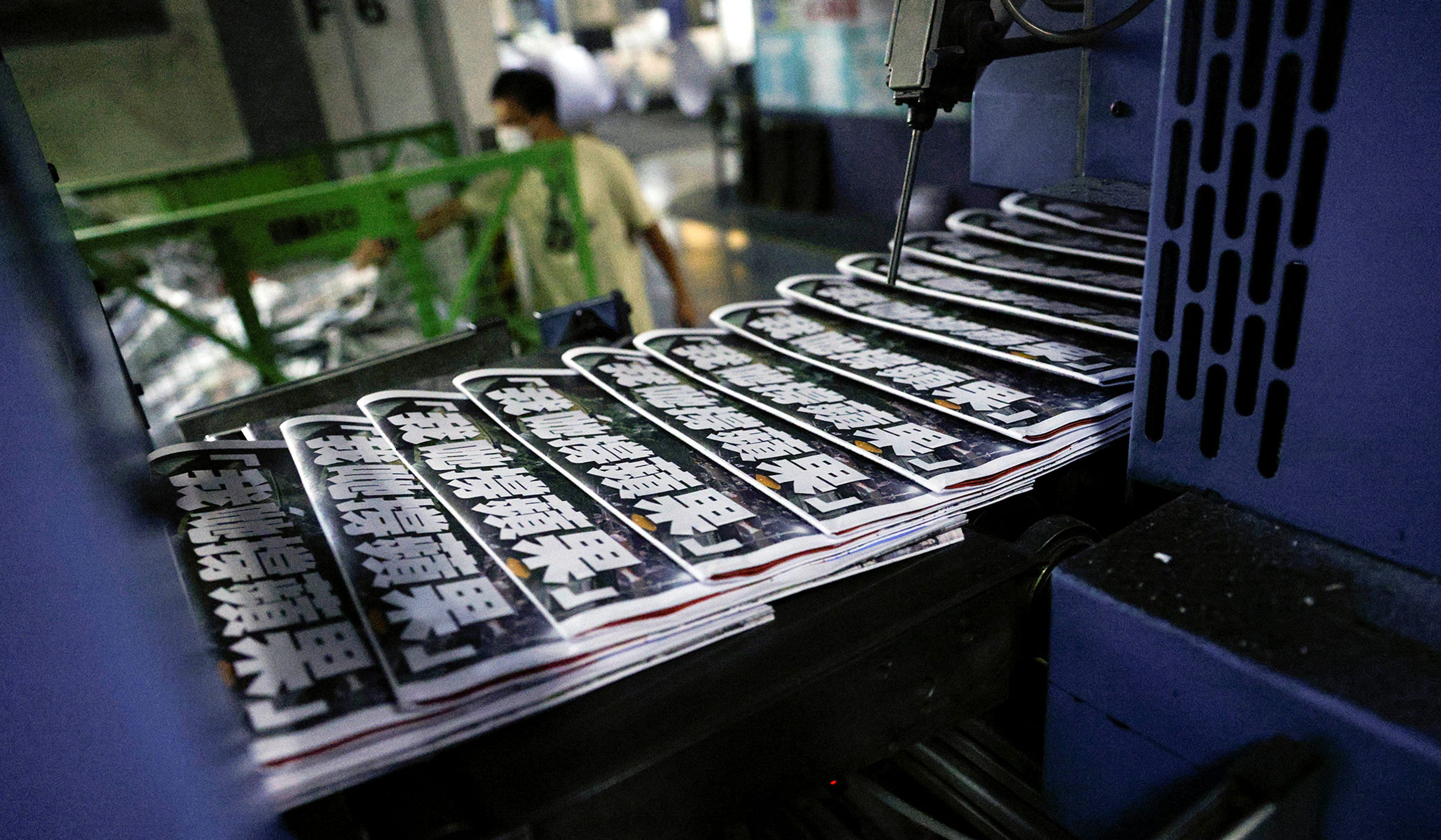
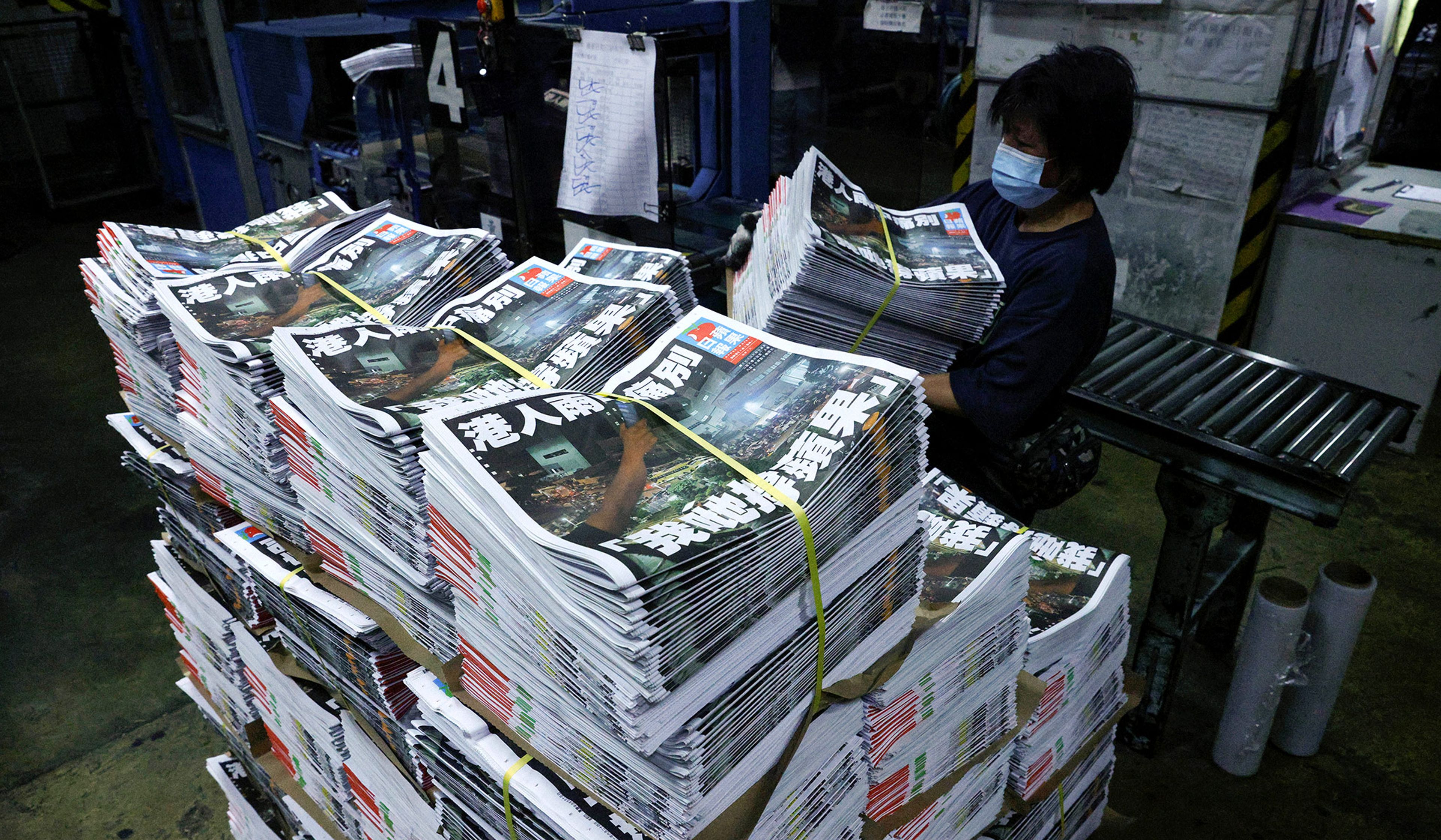
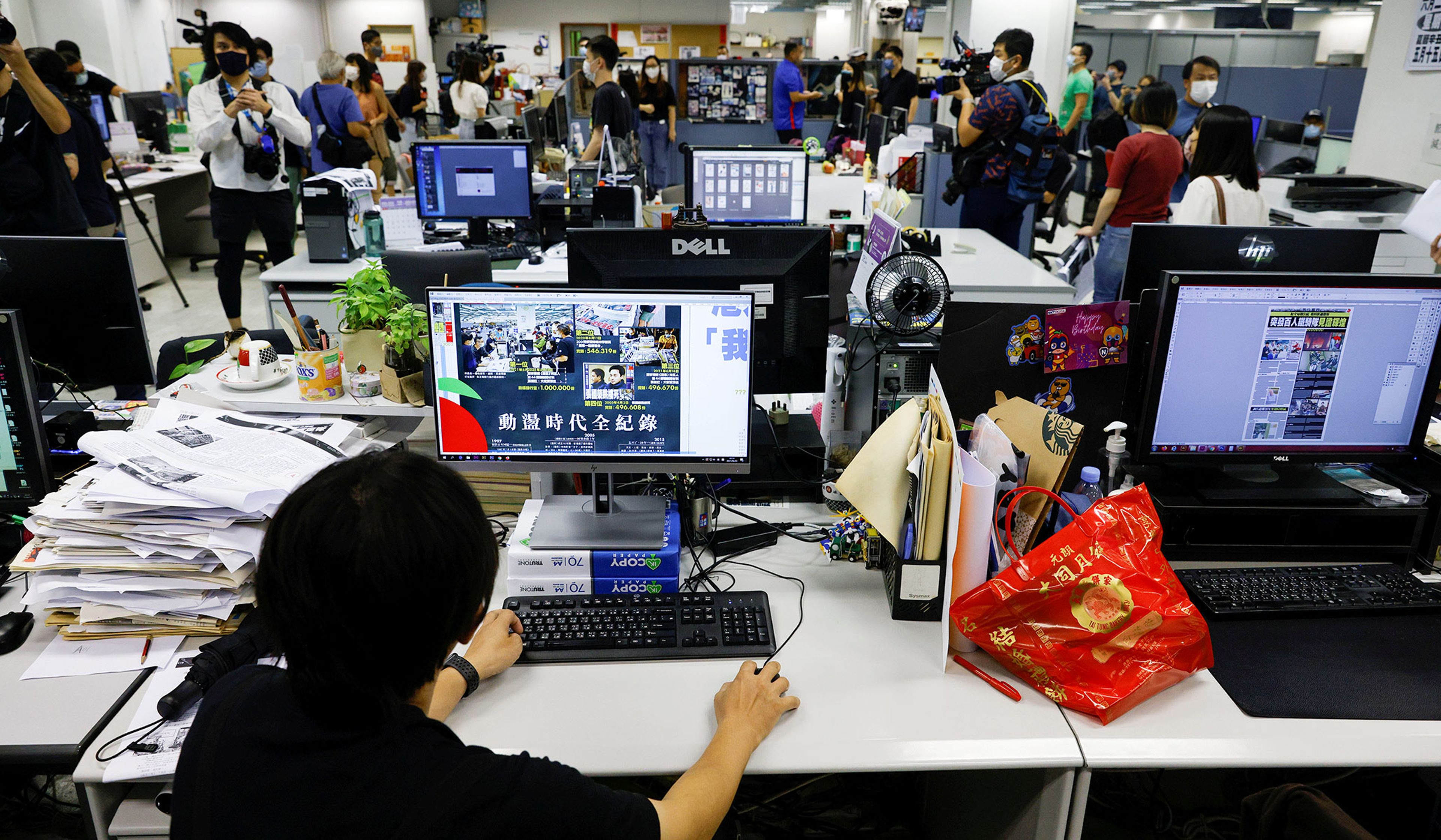
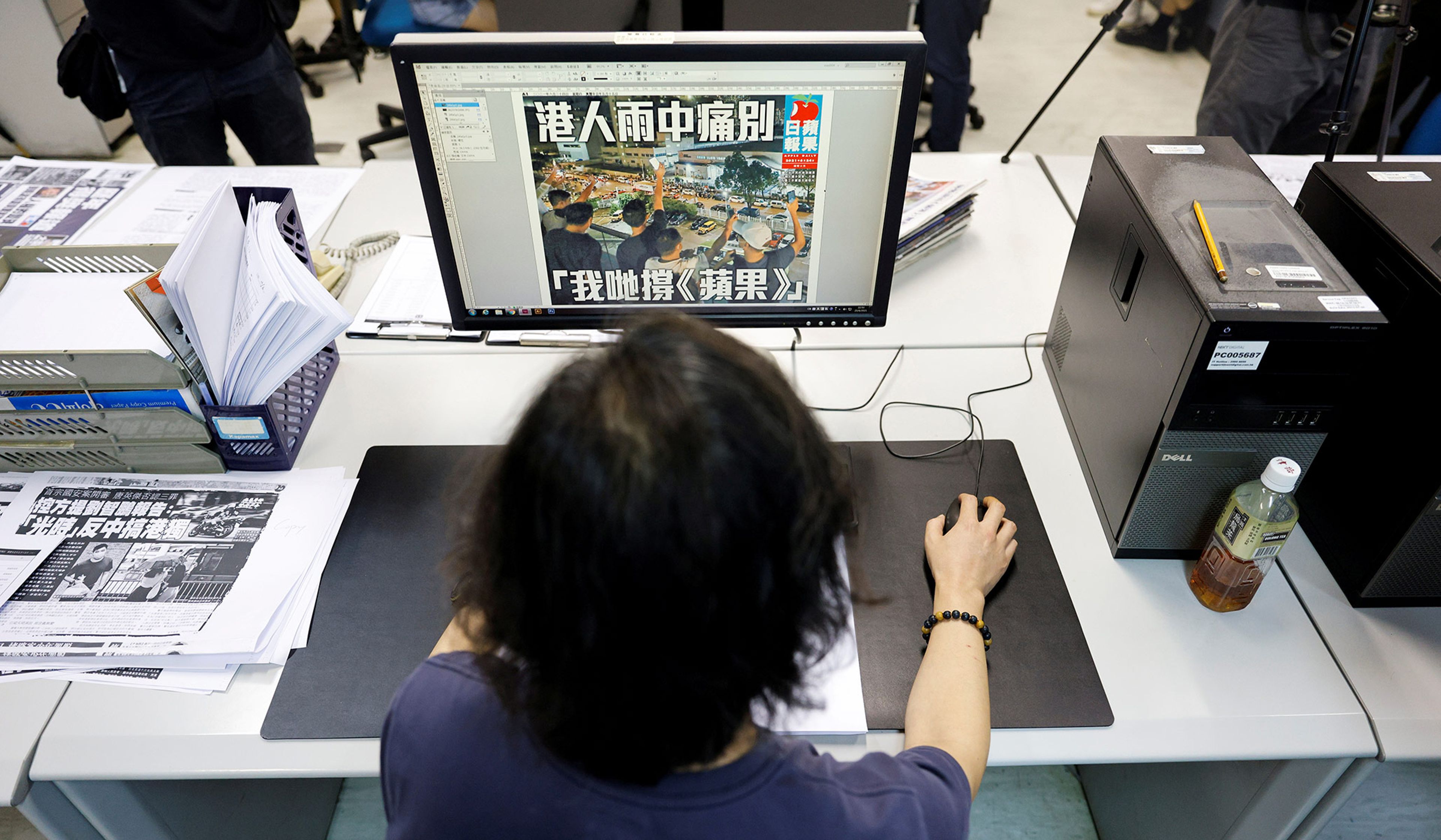
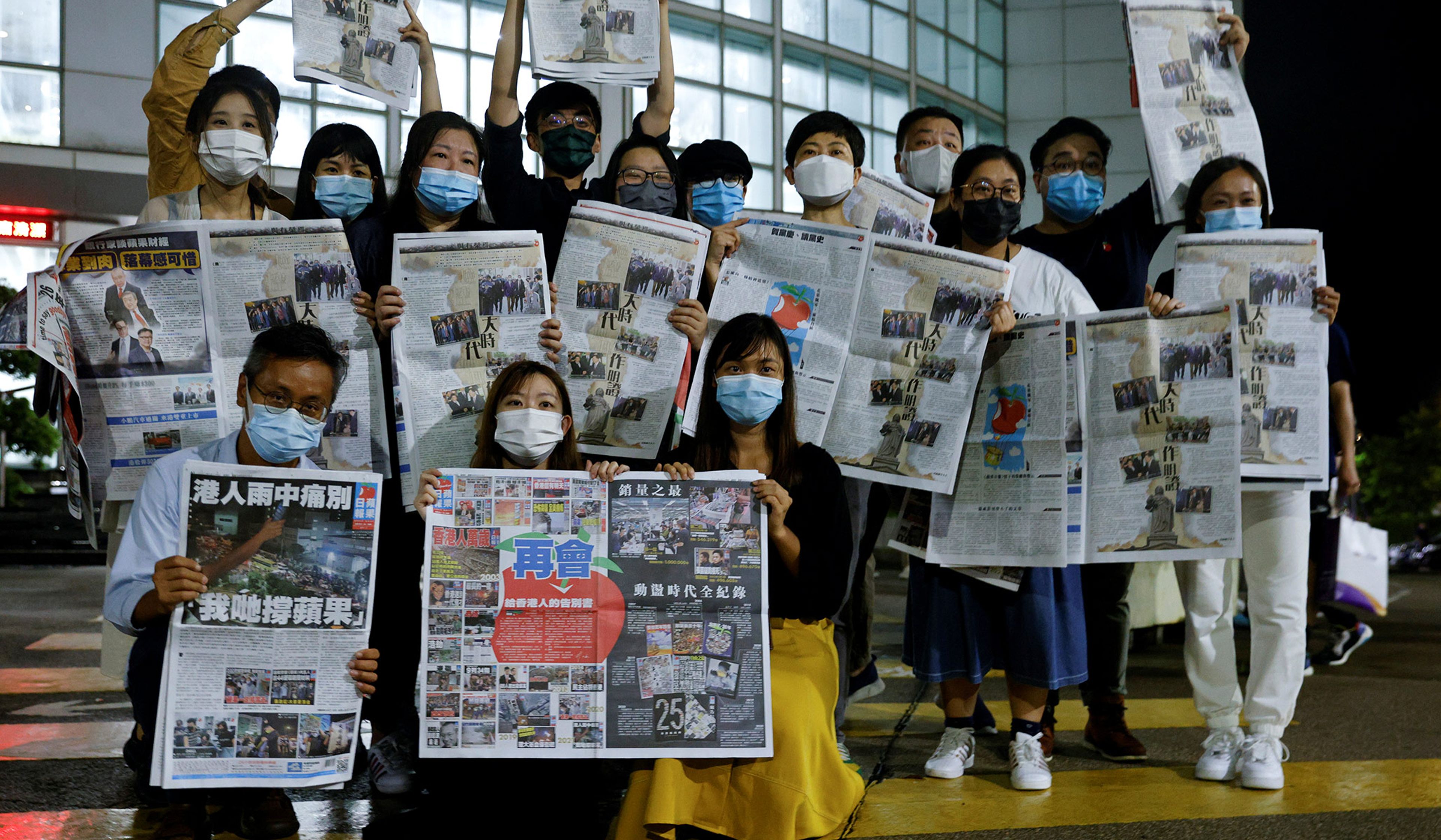
A supporter gestures while holding the final edition of Apple Daily in Hong Kong, China, June 24, 2021.
Lam Yik/Reuters
• In a recent CNBC interview, Brooklyn Nets owner Joseph Tsai once again proved that his woke-capitalist outlook does not extend to his views on China. CNBC’s Andrew Ross Sorkin used part of the interview to press the basketball executive and Alibaba co-founder on the Chinese Communist Party’s crackdowns in Hong Kong. Tsai surprised no one with his unwavering support of the Party’s continued absorption of the once-free city. The tune is a tired one for Tsai, who in 2019 condemned Houston Rockets general manager Daryl Morey’s support of the pro-democracy movement in Hong Kong. Tsai’s sycophancy continues to be motivated by his business interests in mainland China and represents a hypocrisy that no amount of donations to “social justice” causes in the U.S. can erase.
• There was a time, back in 1988, when a horrified world was shown photographs taken in Tehran and other Iranian cities of victims being hanged in public off cranes. An unlikely revolution had allowed Ayatollah Ruhollah Khomeini to appoint himself Supreme Leader, and now he was purging his country of anyone and everyone with the courage to oppose him, all told about 6,000 of them, though some estimates go much higher. A body with the ominous title of “Death Commission” took no more than two or three minutes to condemn each individual in this process of judicial murder. A prominent member of this commission was Ebrahim Raisi. Although he has no academic or religious credentials, Raisi has made a career in the judiciary, always supporting the present Supreme Leader, Ayatollah Ali Khamenei, sharing with him the hardest of hard lines. Khamenei has just rewarded him by holding elections for the presidency that hardly needed holding, as the outcome was fixed in advance. The turnout of 48.8 percent indicates that the Iranians know only too well what to expect.
• To the accompaniment of much misguided speculation in the media, the U.S. Catholic bishops in June voted to draft a document on the Eucharist. Anecdotal evidence that many American Catholics don’t know the Church’s teaching on the sacrament has accumulated in recent decades. Pew Research in 2019 corroborated a widespread impression in the Church, finding that only a third of Americans who identifed as Catholic both understood and believed in transubstantiation, the mystery whereby bread and wine consecrated by a priest become in fact, not just symbolically, the body and blood of Christ. “The document being drafted is not meant to be disciplinary in nature, nor is it targeted at any one individual or class of persons,” the bishops noted in a statement, although it was obviously on everyone’s mind whether they would ban President Biden from receiving Communion because of his support for legalized abortion. To most of the laity in 2021, the Church’s teaching on abortion may be clearer than its teaching on the Eucharist, “the source and summit of Christian life.” One of the bishops’ primary duties is to teach. We look forward to reading their elucidation of a beautiful but difficult doctrine.
• Lin-Manuel Miranda’s Hamilton was celebrated for its casting: In the musical, the Founding Fathers were played by black and Latino actors. The new film based on Miranda’s In the Heights also has a cast that is mostly Latino, but the grievance lobby is furious: These are the wrong kind of Latinos, apparently — too fair in comparison with the darker complexions of the Dominican Americans who live in Washington Heights. Miranda, a gifted writer but a political pushover, was bullied into making a groveling apology. At some point, slicing things ever more thinly with the proliferating specificity of “representation” requirements is going to make it impossible to cast a film — presumably, the light-skinned half-Gujarati Ben Kingsley must now be understood as a vicious insult to Mohandas K. Gandhi in Richard Attenborough’s film. The ethnic politics of Upper Manhattan can indeed be complicated, but we are thankful these carping little knuckleheads weren’t around when they were making West Side Story.
• If you did not know contemporary America, you would not believe it. But since you do, you say, “What else is new?” Daniel Elder is a classical composer in a country-western town: Nashville. To the extent he was political, he held progressive views. During protests and riots last summer, he wrote a post, condemning arson. “Enjoy burning it all down, you well-intentioned, blind people. I’m done.” He was done in a way he did not intend. As Robby Soave reports in Reason, Elder’s publisher drafted an abject apology for him. He refused to sign it. Hours later, the publisher denounced him. As Soave writes, “No one in the industry is willing to buy his work. His publisher has blackballed him. Local choral directors refuse to program his music for fear of provoking a backlash. They won’t even let him sing in the choir.” Our ongoing cultural revolution is bad for culture, bad for individuals, bad for all. Maybe the likes of that publisher — GIA Publications — will be ashamed in future years.
• Victoria’s Secret, the lingerie company, announced a pivot away from supermodels to more varied body types, including ripped athletes (Megan Rapinoe). The look of the catwalkers in the company’s (in)famous runway show was what Tom Wolfe called “boys with breasts,” if boys were pushing six feet tall, with legs a mile long. But that is hardly the eternal archetype of feminine allure: Consider Rubens’s women, to say nothing of the Venus of Willendorf. In the age of Me Too, allure itself is suspect, as the handmaiden of the male gaze: Puritanism, often a temptation for revolutionaries, and always for Americans, is having an inning. But the male gaze will return — as will the female gaze: The Rokeby Venus, perhaps the most luscious nude in the history of Western art, checks herself out in a mirror held by Cupid. On the other hand, she was painted by Diego Velázquez, an hombre. Let the dance of the sexes go on.
A Return to Realism
June 22’s New York mayoral primary was as frustrating as it was important. A baroque ranked-voting system, new and imperfectly understood, clouded the process, and a delayed count of absentee ballots, mandated by law, will postpone a final result, possibly for weeks. But the underlying issues were clear.
New York has always had outsized impact on urban affairs in America. The Seventies began an era of dirt, disorder, and dysfunction. The back-to-back mayoralties of Rudy Giuliani and Michael Bloomberg, law-and-order liberal Republicans, witnessed a remarkable renaissance, absorbing even the shock of 9/11. Eight years of Bill de Blasio ratcheted back the gains. Crime, held down for a time by police commissioner Bill Bratton, a Giuliani-era veteran, crept back up. De Blasio blew money on outlandish boondoggles, and wasted political capital feuding with Governor Andrew Cuomo and running quixotically for president. The George Floyd riots and COVID administered one–two body blows. Manhattan and Brooklyn DAs dropped prosecutions of looters; swaths of Midtown became a ghost town; ill-supervised homeless people dumped in West Side hotels plague the neighborhood. In the run-up to the primary, headline crimes punctuated the declinist narrative. A May shooting in Times Square injured two women and a four-year-old. By June, tony Washington Square Park in Greenwich Village had become an all-night drug souk and venue for unlicensed boxing matches. In the Bronx, two kids, ages five and ten, out to buy candy, were caught in an attempted hit of one gangbanger by another; miraculously, the kids were unscathed, but their bobbing-and-weaving as the bullets flew went viral.
Two Republicans contended to face these challenges: Fernando Mateo, a sometime spokesman for taxi drivers and bodega owners who boasted of his fealty to Donald Trump, and Curtis Sliwa, longtime radio host and self-appointed private crime-fighter. Sliwa won in a walk.
The drama, and the consequences to the city, were all in the crowded Democratic field. There was a surfeit of leftists. Dianne Morales checked two boxes as a self-defined “Afro-Latina.” Scott Stringer, an old hack, saw his early endorsements dwindle after he was hit with two charges of long-ago sexual harassment (he maintains his innocence). Kathryn Garcia and Maya Wiley had worked for de Blasio, as sanitation commissioner and counsel, respectively. Wiley burnished her résumé by proposing to cut $1 billion from the police budget.
The only realism came from two sometime leaders in the polls. Entrepreneur Andrew Yang defied orthodoxy by defending entry tests for New York’s elite public schools, and by urging that the mentally ill be taken off the streets and cared for responsibly. But his tyro status, refreshing at first, finally caught up with him. Early returns showed him running fourth, and he conceded on Election Night.
That left Eric Adams. Adams, who rose to the rank of captain in the NYPD, made his name as a critic of it from within in the Nineties. Eager for office, he dallied first with Louis Farrakhan, then with the GOP. Returning to the Democratic fold in the new millennium, he was elected state senator, then Brooklyn borough president. Running for mayor, he hit crime hard, proposing to bring back the plainclothes anti-crime unit, disbanded last year, and defending a limited use of stop-and-frisk.
His economic policies are, considered charitably, unformed. He says the rich, whose taxes are vital, will not live in a crime-ridden city, which is true, but they also won’t live in one that picks their pockets. Addressing the one problem without addressing the other will not stanch the exodus.
Votes cast ahead of time and on Election Day put Adams ahead, with 30 percent, trailed by Wiley at 21 and Garcia at 20. If Adams’s lead holds, New York must hope his sometimes sensible talk holds as well.











Comments