Commentators anticipating the end of Roe have tended to emphasize the enormous gap between the worldview of pro-lifers and that of pro-choicers. In the Atlantic, Ronald Brownstein argues that abortion politics expose Democrats as a party comfortable with modernity, a coalition in favor of “transformation,” while Republicans represent a “coalition of restoration.” Brownstein locates the heart of this restorationist coalition among white Evangelical Christians, who are assisted by “substantial minorities of white Catholics, Hispanic Catholics, and Hispanic Protestants.”
In Compact magazine, the Swedish thinker Malcom Kyeyune argues provocatively that the abortion debate is a harbinger of an oncoming religious war. American progressives, he argues, are possessed by a hyper-Protestant view of the world, one that rejects as backwards and superstitious the orthodox Christian belief in a personal God and the natural law, in the same way that orthodox Christians once rejected paganism. “Both sides consider their cause not merely philosophically and ethically just, but also holy, on a very basic metaphysical level,” he writes. Kyeyune’s argument mirrors in some way that of Brownstein. Progressives in this telling are the heirs of American Mainline Protestantism. The old American establishment, whether it has shed membership in those ecclesial bodies or not, continues its project of emancipation from superstition and authority inherited from Jerusalem and Rome.
And I have also argued in National Review and elsewhere that progressives are committed to abortion not just in a strict legal sense but as part of a way of life. I’ve argued that even if medicine advances to the point where the conceptus could be harmlessly exfiltrated from the mother’s womb, placed in an artificial womb, and seamlessly adopted by a waiting couple, progressives would still demand abortion as a right, because their aim is to extinguish not just the burdens and dangers of parenthood and pregnancy but any possible moral claim that another life could make on them. Therefore pro-lifers needed to help pro-choicers accept the entire concept of unchosen obligations, a difficult thing given the weight that informed consent plays in the moral calculus of liberals and progressives.
I was wrong. Or at least not entirely right. Watching the progress of the case Dobbs v. Jackson Women’s Health in the Supreme Court and the debates about it spill out into public, I realize that commentators like me, Kyeyune, and Brownstein have likely overstated the philosophical and worldview differences to account for the very real anger and passion in the American debate over this issue. Brownstein and I may be emphasizing the high stakes in the hopes of stiffening the resolve of our respective sides in the debate. Kyeyune, meanwhile, emphasizes the stakes and the irreconcilability of the two sides to bolster his overriding thesis about the doomed futility of American politics and the irrationality of progressivism.
In fact, pro-choicers understand all too well what a lack of abortion means and implies about life and our place in it. They largely share the premises of pro-lifers about duty and unchosen obligations; they fail to apply them only in one special set of circumstances. Understanding this can help make the social and legal protection of the unborn, a true human-rights revolution, seem like a more modest transformation.
You could see superficial evidence of a common worldview right after the leak of Justice Samuel Alito’s draft opinion in Dobbs overturning Roe v. Wade. Many pro-choicers went online and started to think out loud about the consequences of such a stunning ruling. In fact, they were starting to think a little bit more like pro-lifers. One TikTok user, @moneymollusk, received millions of views for saying, “In case you’re a man who doesn’t care about roe v wade just know that if abortion gets banned hookup culture will be absolutely decimated.”
So true!
The journalist Julia Ioffe tweeted, “If you are anti-choice and you want to make sure women carry every pregnancy to term, why not make the person who created the pregnancy contribute? Why not have men pay child support to the women they impregnate? Surely, it is not the woman’s responsibility alone.” To which many pro-life journalists responded: Yes, your terms are acceptable. Representative Chip Roy (R., Texas) saw Ioffe’s tweet and said he wished he’d brought up the idea of compelling child support just after conception with the Texas legislature earlier. “Don’t let dads walk — amen,” he said.
The fundamental commonality between the moral imagination of pro-lifers and pro-choicers struck me precisely at the moment during oral argument when the pro-choice lawyers offended pro-life sensibilities the most. In outlining the reasons that women seek abortions at a time when Mississippi’s law would not permit them, the counsel for Jackson Women’s Health inadvertently highlighted how much pro-choicers fundamentally agree with their opponents about the nature of parenthood.
Julie Rikelman, the litigation director for the Center for Reproductive Rights, had a very difficult job to do in defending Roe before the Court. She had to defend the original Roe decision, which was not grounded in any text or principle of the Constitution, as a matter of privacy. She had to partly defend the 1992 Casey decision, which reaffirmed the constitutional protection of abortion rights and partly replaced Roe’s logic. To fail to do that would be to give up on stare decisis, the preference of the Court not to overturn previous and well-established rulings, one of the strongest arguments available to her. At the same time, Rikelman desired to advance an argument, borrowed from the late Supreme Court justice Ruth Bader Ginsburg, that a right to abortion should be grounded in the 14th Amendment’s equal-protection clause. This had been Ginsburg’s view dating back at least to her confirmation hearings, when she affirmed before the Senate Judiciary Committee, “If you impose restraints that impede her choice, you are disadvantaging her because of her sex.”
During the oral arguments, the very well-prepared and practiced Rikelman would cycle between justifying abortion rights based on Roe’s privacy rationale, on Casey’s “liberty interests,” on America’s legal tradition since Roe, and on Ginsburg’s interpretation of the egalitarianism of the 14th Amendment. As best she could, Rikelman portrayed them as mutually reinforcing and not, as Alito found them to be in his draft opinion overturning Roe and Casey, fundamentally ad hoc and incomplete.
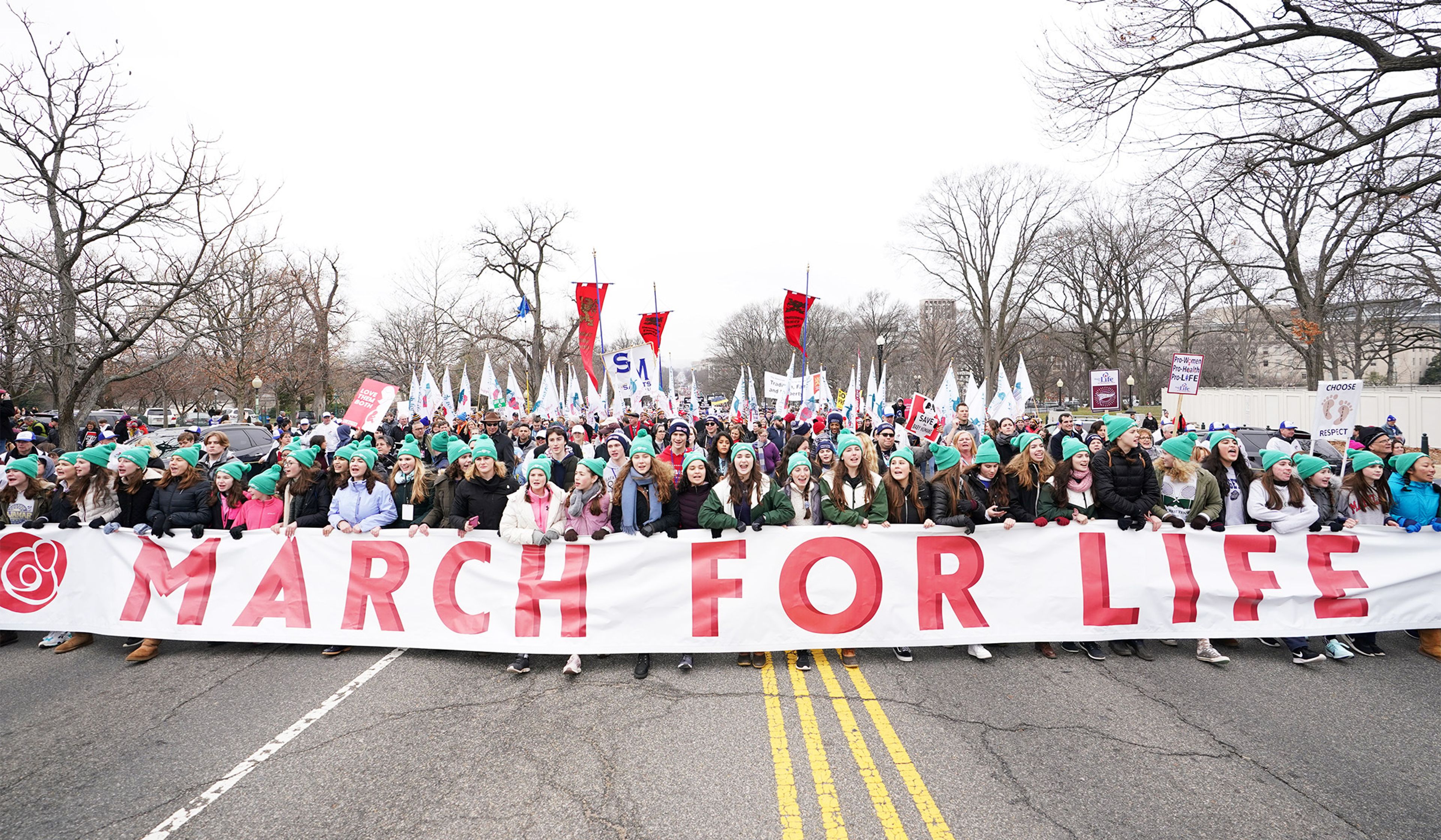
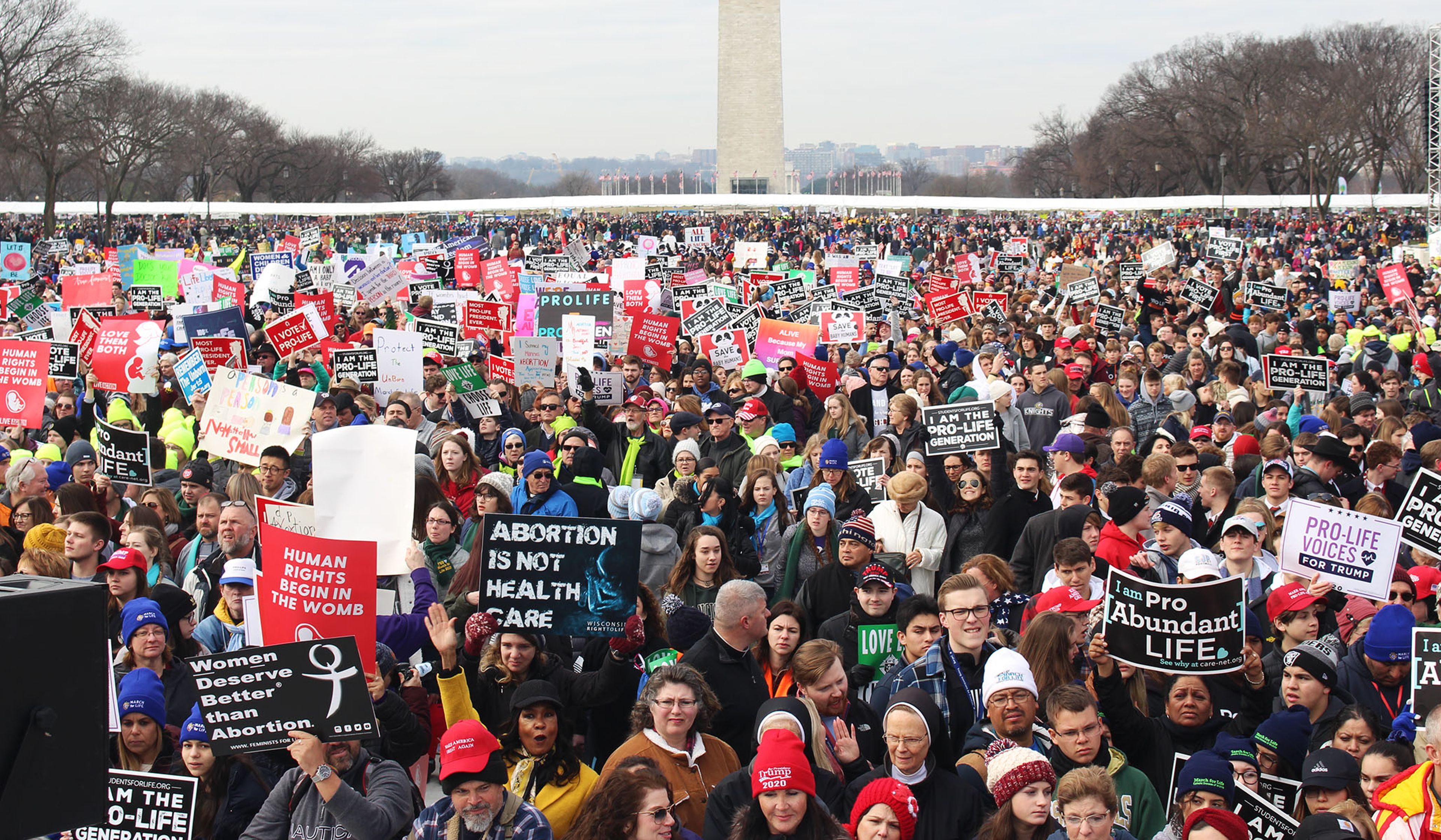

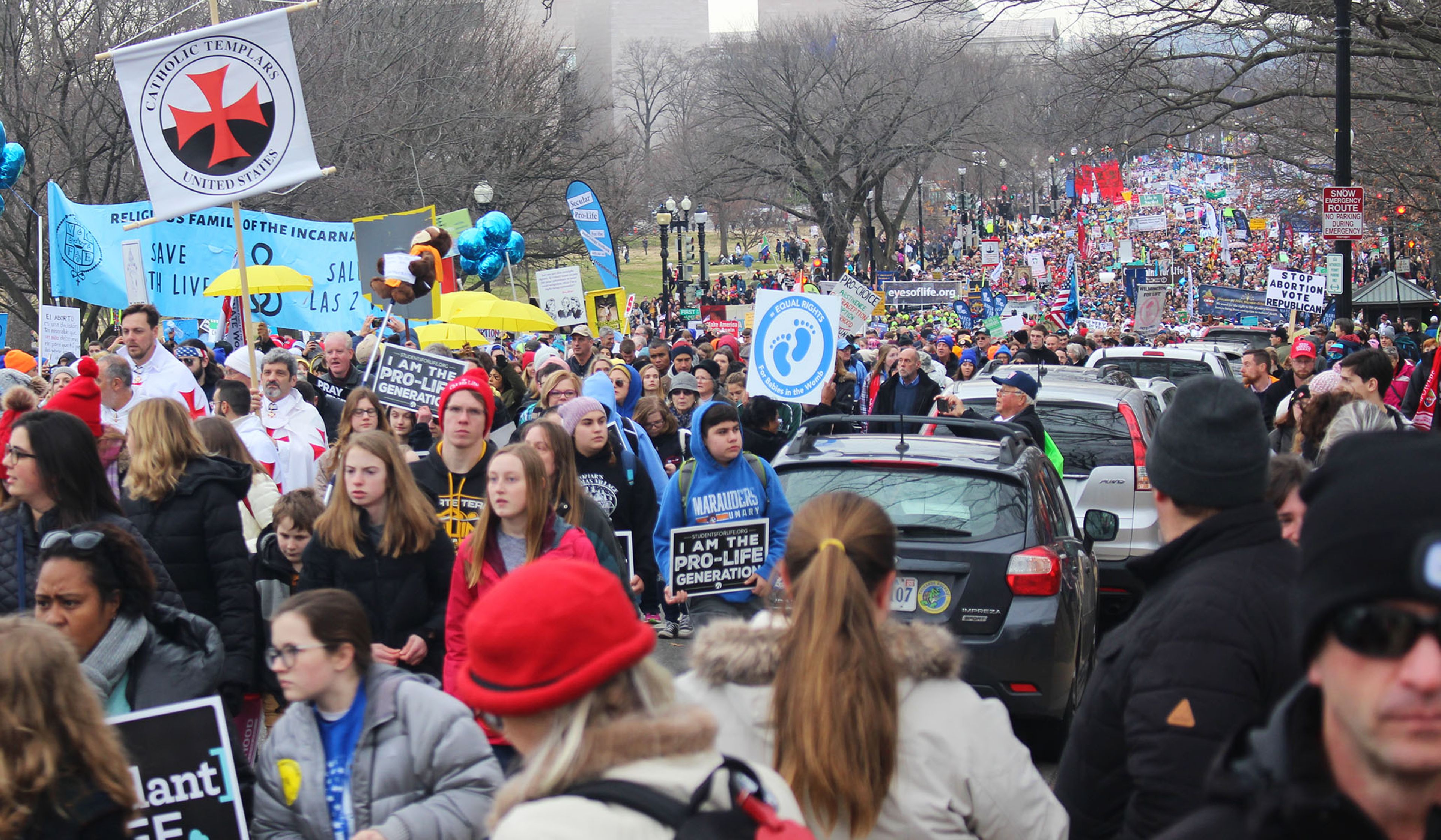
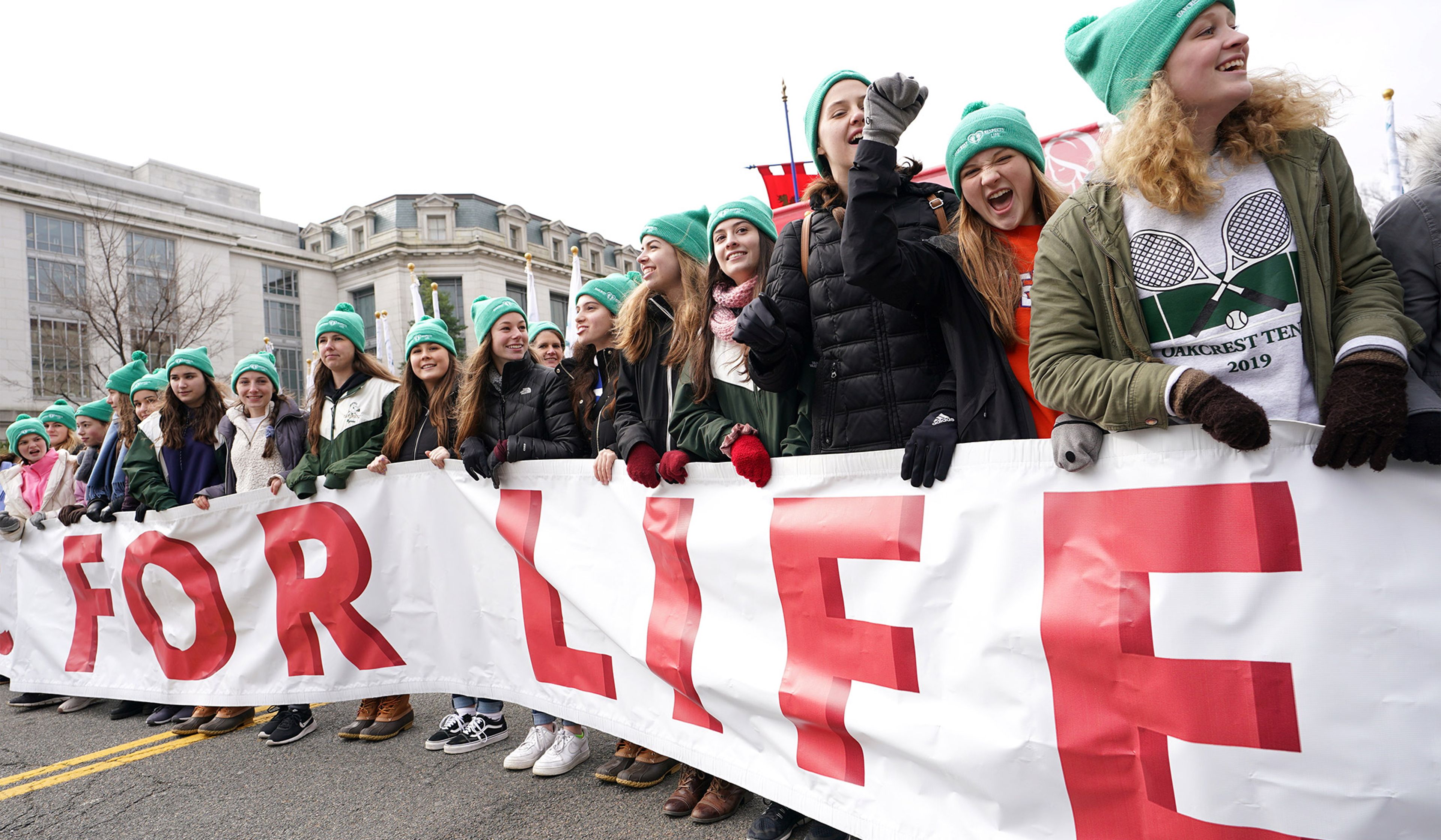
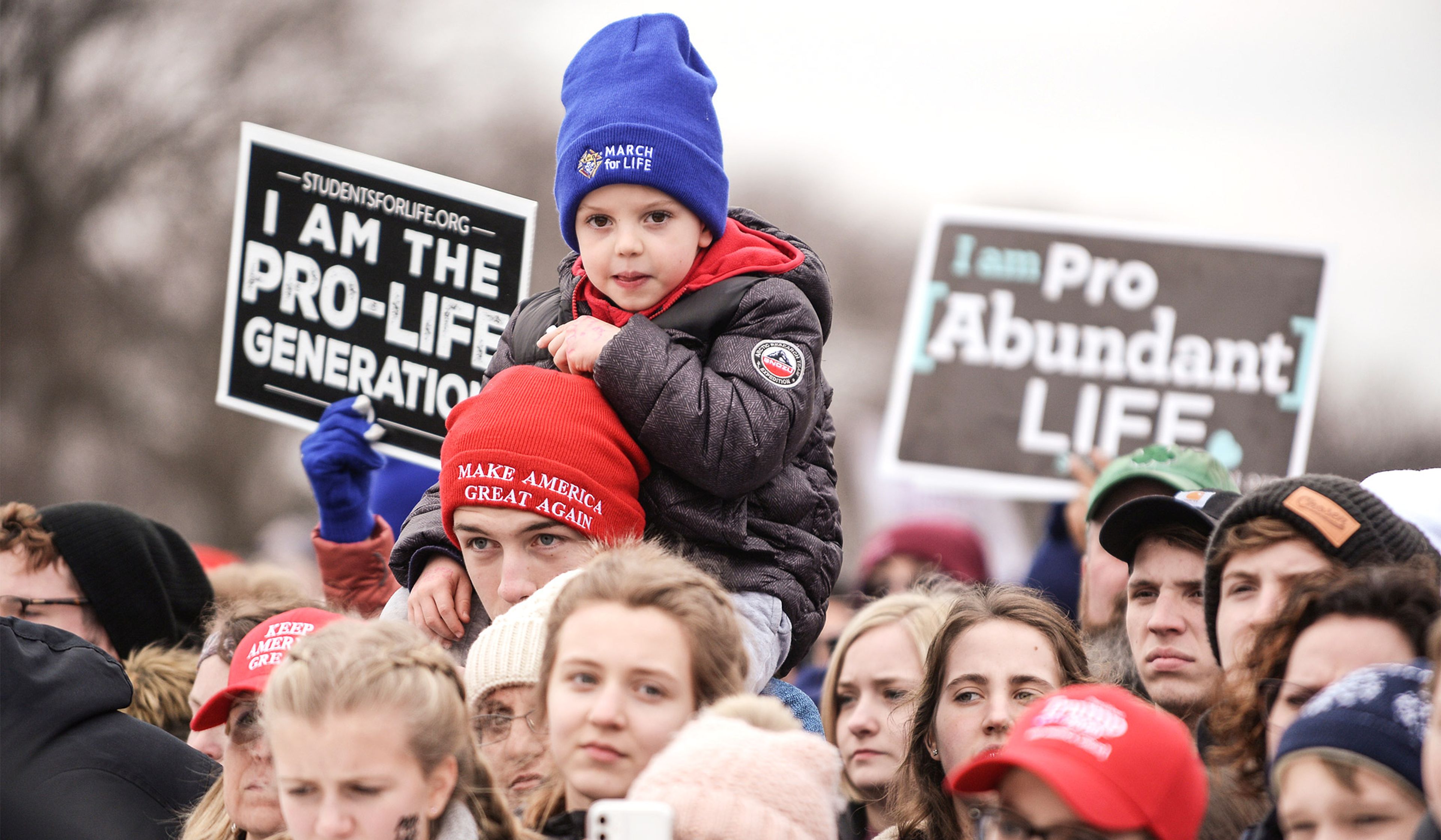
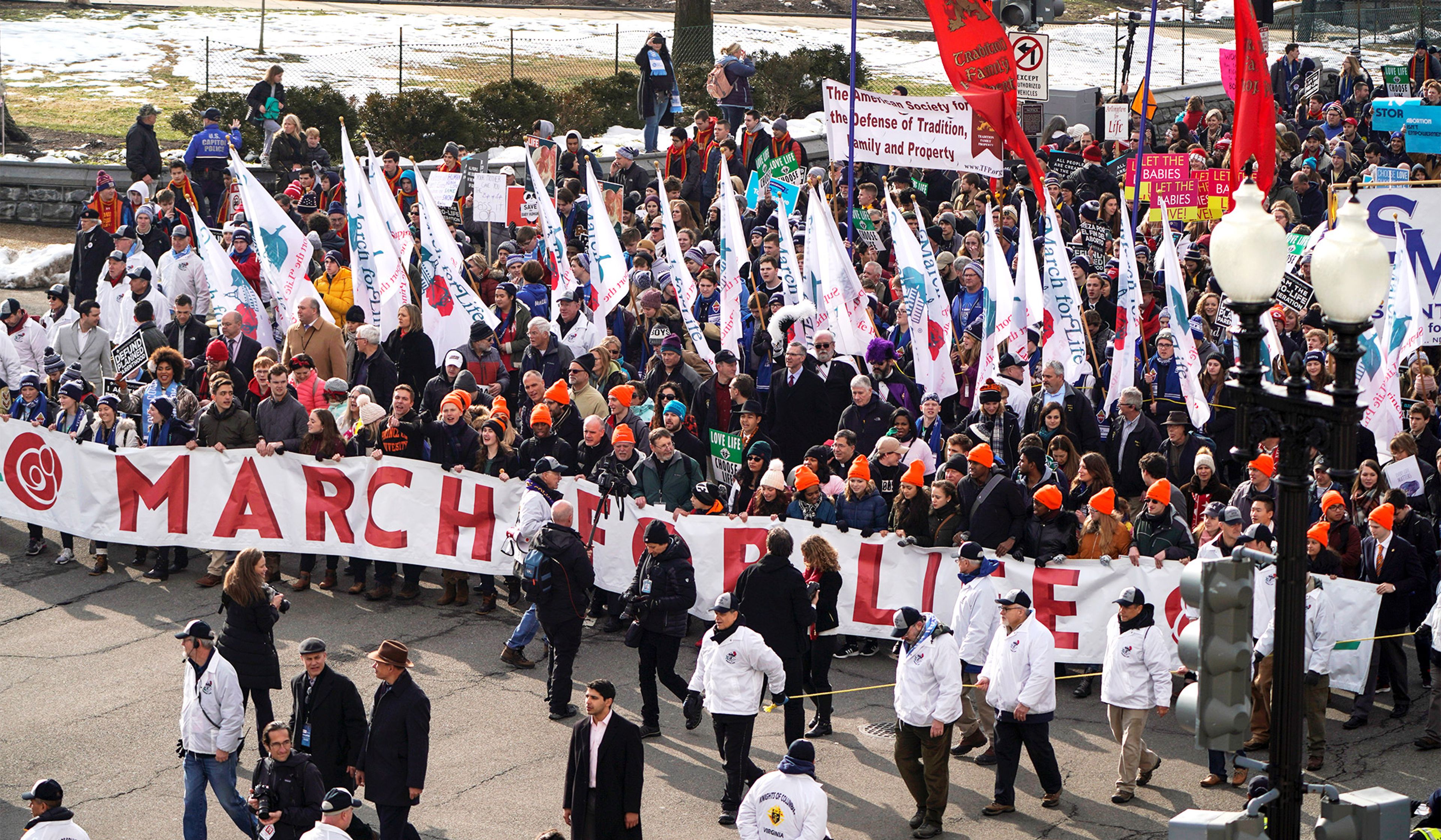
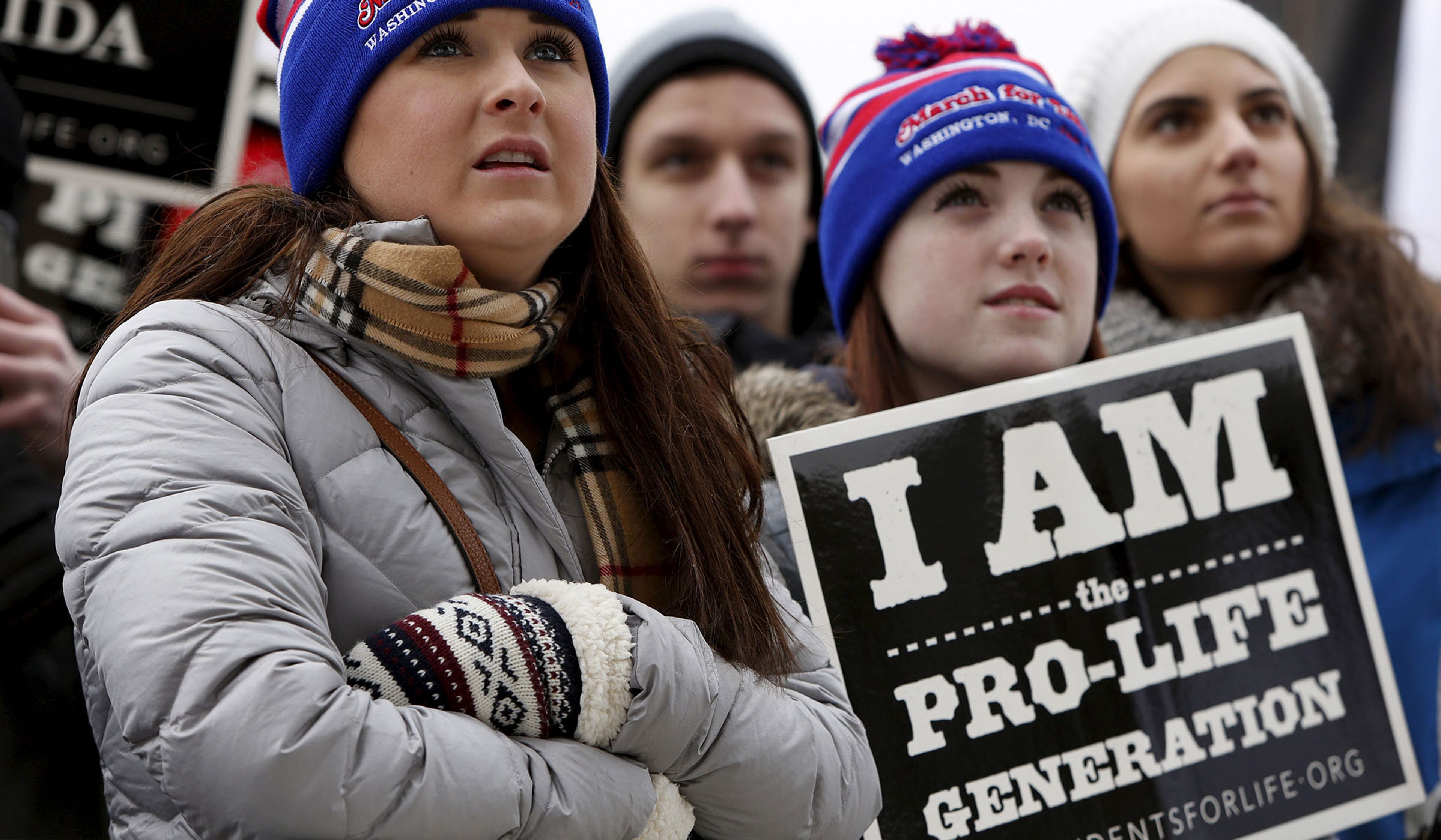
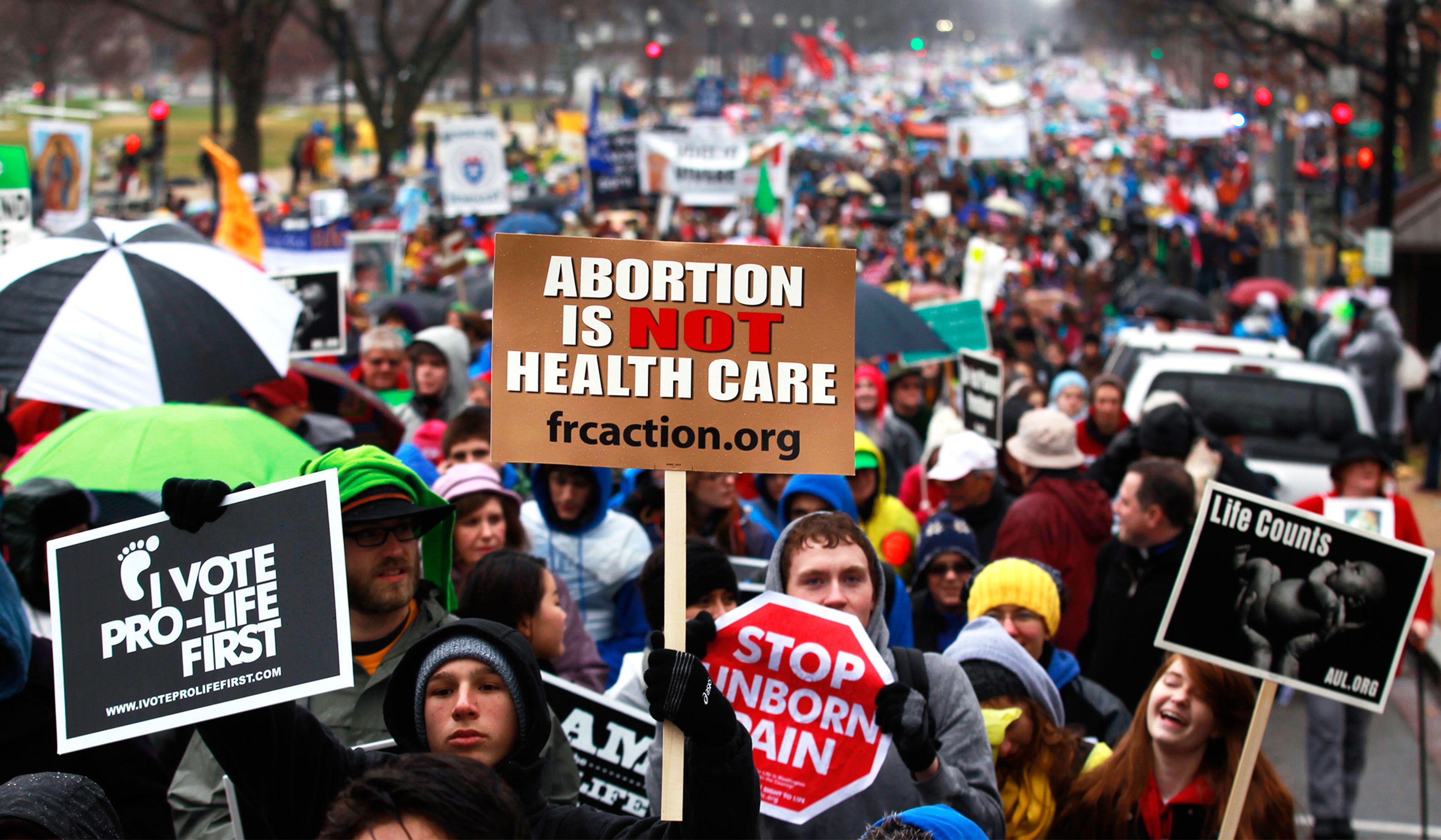
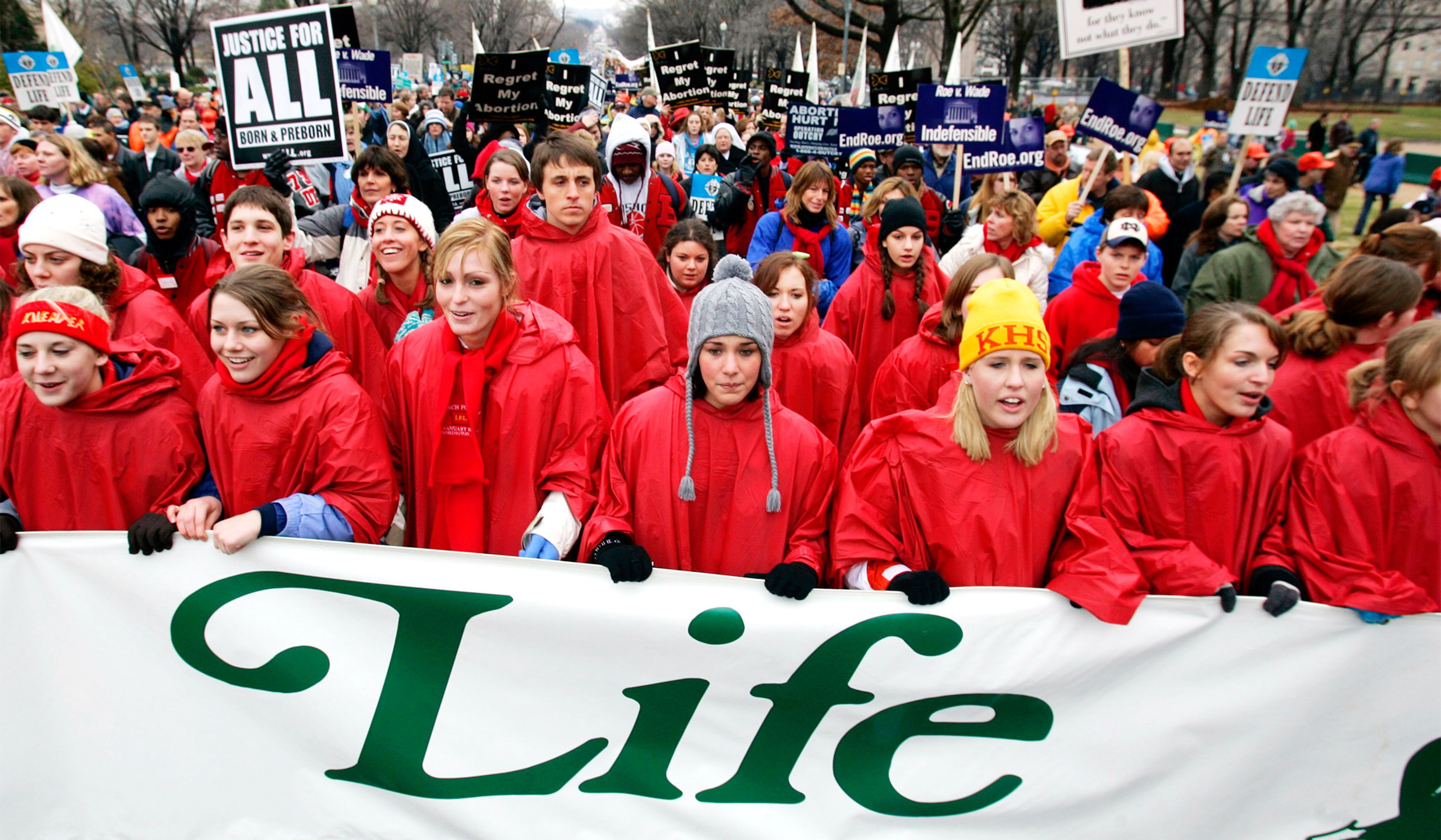
Pro-life demonstrators carry a banner during the the 47th annual March for Life in Washington, D.C., January 24, 2020.
Kevin Lamarque/Reuters
While admitting that Mississippi’s proposed law wouldn’t ban abortion outright, Rikelman had to argue that the state could not impose restrictions before viability without impinging on a woman’s liberty interests and her right to equal treatment.
Rikelman argued that “people who need abortion after 15 weeks are often in the most challenging circumstances.” She named a variety of rationales that might drive a post-15-weeks abortion: “They’re people who have made — perhaps had a major health or life change, a family illness, a job loss, a separation.” The one thing the state cannot do “is to take the decision completely away from the woman until viability that, until that point, it is her decision to make, given the unique physical demands of pregnancy and the life-altering consequences of pregnancy and having a child.”
Justice Amy Coney Barrett tried to clarify the argument: “You and many of your [amicus briefs] focus on the ways in which forced parenting, forced motherhood, would hinder women’s access to the workplace and to equal opportunities. It’s also focused on the consequences of parenting and the obligations of motherhood that flow from pregnancy.”
Job loss? Or a family illness? The pro-lifer almost instinctively chokes on this argument. Every day in America, parents of born children suffer these and other indignities or challenges, and they never bring into doubt the legal or social duties of fatherhood or motherhood. In fact, though they may be quite serious events, they seem trivial in the face of the reality of our family relations, a nothing compared to our sons and daughters.
The pro-choice argument, as framed by Ginsburg, views the individual as the decider of their own circumstances. The decision-maker looks forward and must plan for the future. An unplanned pregnancy, or new circumstances during the pregnancy, renders the unborn child or the pregnancy itself a legitimately vanquishable threat to a woman’s workplace opportunities. The pro-lifer sees in this a kind of amoral free-for-all, in which the mother and her doctor can decide and do as they please, whatever the effect on the child.
But then there is a corresponding period of moral free-for-all in the pro-choicer’s worldview. If it is wrong to be an impediment to an individual’s plans, or to their liberty and equality, that moral free-for-all is everything that greets parents after the birth of a child.
Because even the child that was best planned, most provided for, and healthiest can in the blink of an eye impose incalculable burdens that affect a parent’s “access to the workplace” or their liberty interests. A child may walk into a busy street or fall off a jungle gym and suffer an injury that has “life-altering consequences” for the parents, changing the way they work and live, not just for 18 years afterward but for decades longer. Parents expose themselves to innumerable hazards, dangers, and possibilities — including the possibility of grief over a child who dies, of pain over a child who resents or hates you. Even the very exotic possibility that, by bringing a child into this world, we have brought our murderer into the drama of our lives. Amastris, queen of Heraclea, was drowned by her sons.
More commonly, a parent who undergoes a separation may see legal obstacles and inducements hurled up by the state to prevent him or her from pursuing workplace opportunities in another state. Or see his wages garnished to pay for child support whatever his liberty interests.
Pro-choicers accept that the reality of human life and of our primordial relationships sometimes imposes on us social and even legal duties that impinge on our plans for our lives. That is, by and large they accept all the unchosen obligations that pro-lifers do, so long as they are in the context of raising children who are already born.
Perhaps even more encouraging, from a pro-life perspective, pro-choicers accept all the same unchosen obligations and our human subjection to circumstance during pregnancy. They do this so long as you are the father of the child. There is no serious pro-choice advocacy of the idea that men should be able to unilaterally decide to terminate a child in their lover’s body in order to protect their liberty interests, their earning potential, their freedom of movement across state lines, or their guarantee of equal treatment. No. For men, pro-choicers offer the pro-lifer’s argument that every biological, social, and legal consequence follows from the initial decision to have sex with a woman. All the rest was entailed. The reality of fatherhood takes precedence over the choice of the father.
In other words, the pro-life argument is not so revolutionary, so threatening, or so alien as many of the antagonists in our culture war have made it out to be. It is a simple truth or restatement, but it is the job of conservatives to champion simple truths that we try to forget. A culture of life is nothing more or less than the hazards, dangers, risks, and legal duties of parenthood that Americans accept as a matter of course, extended just nine months longer for women as well as for men. These impositions come with corresponding joys, hopes, consolations, and even honors. Yes, the pro-life cause is a human-rights revolution. But, looked at this way, it is the most modest one yet.












Comments