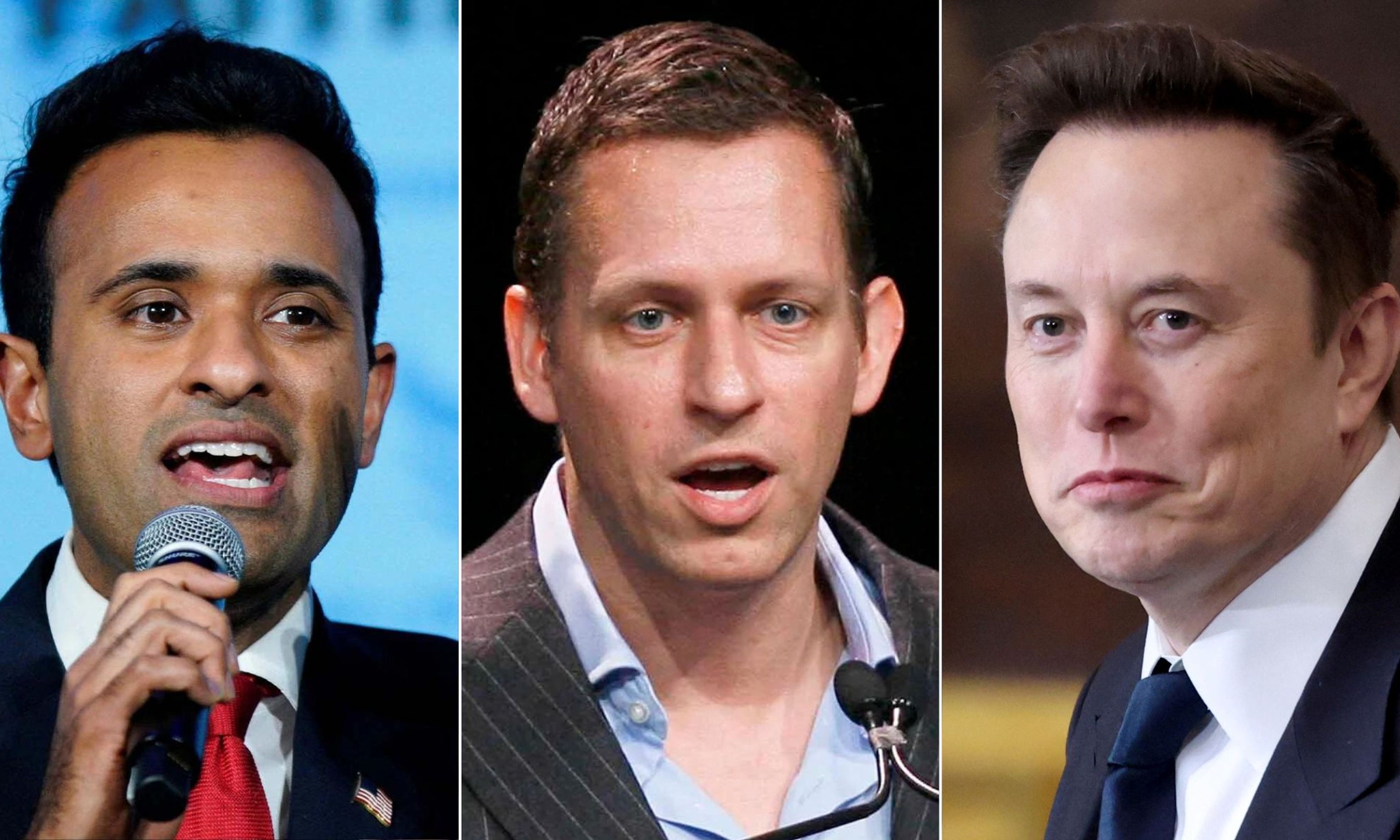
The recent fierce online debate over H-1B visas exposed the potentially vast chasm between the MAGA base and the so-called tech bros — Elon Musk, Vivek Ramaswamy, and others. While both factions have their place in the new conservative coalition, President Trump must ensure that he tilts heavily toward the base over the bros when the two sharply conflict.
Such a conflict is likely given the stark differences in worldview between the two factions.
Those who make up the MAGA base tend to be pessimistic about America and look longingly back to a country that was friendlier to their outlook. They see the dramatic rise in immigration, and not just illegal immigration, as a problem. They long for an America where working- and middle-class families who just want to live quiet lives can get ahead. They tend to be Christians and want to feel they can practice their faith and raise their children in the moral code they abide by.
Musk and Ramaswamy, and others such as Marc Andreessen and Peter Thiel who could also fit in the “tech bro” camp, share none of these views. They are optimistic about America and are future-oriented. They look favorably on legal immigration and have faith in technology’s ability to expand human flourishing. They do not share the fears of more traditionalist Christians.
Perhaps most important, they are entrepreneurs who have built thriving businesses and garnered great wealth through their enterprise. Like most entrepreneurs, they place themselves at the center of economic life. They believe that they, not the labor of their employees, are what make economies grow. In this respect, they have more in common with Mitt Romney than with the people who put Trump in office.
That’s why Trump needs to be careful in embracing their worldview. Each of the elements of his majority coalition has priorities and beliefs that conflict with this top-down, secular, neo-libertarian vision.
We can see why this is so if we examine the coalition’s composition. It consists of roughly five parts: MAGA diehards, religious conservatives, regular Republicans, disaffected moderates, and the new, non-white, working-class supporters.
It’s impossible to assign numerical proportions to each group’s share of the coalition. But we can approximate their importance by reference to primary- and general-election exit polls, along with county-level election results.
Trump crushed Nikki Haley in the Republican primaries because he was the overwhelming choice of the first two groups. He won those who said they were part of the MAGA movement with between 86 and 98 percent of the vote. Evangelical Christians made up roughly half of all GOP primary voters, and up to 88 percent of them backed Trump.
Trump can disappoint these people on some concerns in order to keep the coalition together, as he has on pro-life issues. But he cannot directly oppose their priorities. In addition to limitations on abortion, they want strict controls on immigration and a return to a more traditional, Christian way of life.
Musk and Ramaswamy hold some views that overlap with these, including Musk’s avid pronatalism and both men’s opposition to illegal immigration. But neither has nostalgic views of an old America that they want to see come back.
Regular Republicans are also a significant part of Trump’s general-election coalition. These include some who backed him in the primaries, especially after Ron DeSantis dropped out, and others who voted for Haley but preferred Trump to Biden or Harris.
These voters tend to hold mildly conservative views but include many who are pro-immigration and pro–abortion rights. This group might be the most open to many of the tech-bro views. But they also tend to shy away from techno-futurism. Newt Gingrich lost his nomination bid in 2012 largely because they preferred the more sober Romney over someone who proclaimed his support for colonies on the moon.
Musk’s fascination with colonizing Mars and Thiel’s belief in the promise of cryonics — the practice of freezing one’s dead body in the hope that subsequent medical advances may bring one back to life — are simply too weird for ordinary GOP voters.
Disaffected moderates and blue-collar, non-white voters are decidedly out of step with the tech bros’ “we built that” mentality. They voted for Obama, Clinton, and Biden in part because they disagree with that view. They don’t want to create great companies and often feel pushed around by those who do.
These voters tend to support the welfare state and would like to raise taxes on the rich to pay for those programs. A poll of 2020 Trump voters found that those who voted for Obama in 2012 but Trump in 2020 were much likelier to favor keeping Medicare benefits steady regardless of cost than Romney-Trump voters. They also were less likely to believe that cutting taxes on business would drive economic growth.
One can only imagine what views Trump voters who backed Obama in 2012 and Biden in 2020 would hold. They are certainly not more conservative, and they are the people who propelled Trump to his popular-vote win.
This makes Musk’s Department of Government Efficiency project potentially troubling. (As we went to press, it was reported that Ramaswamy, his co-leader, intended to depart in order to launch a bid for governor of Ohio.) It’s one thing to focus on government waste or efficiency. No one in Trump’s coalition is likely to be too upset if increasing technological capacity at the Department of Health and Human Services allows Trump to fire thousands of now-unneeded bureaucrats.
Musk’s enthusiasm for cutting trillions of dollars from the annual budget, though, suggests that the DOGE might become a vehicle for proposing libertarian-inspired slashing of spending on government programs. That’s what the libertarian Cato Institute proposes. Its report for the DOGE commission includes Paul Ryan–esque ideas such as cutting Social Security benefits and raising the retirement age and cutting Medicare spending by one-third.
Neither man has openly endorsed these ideas. Ramaswamy’s high-profile promotion of “national libertarianism,” however, shows he leaned strongly in that direction. But that’s not what Trump’s coalition wants.
The AP VoteCast survey makes that crystal clear. Trump voters want to impose tariffs on imports. Roughly one-third of them want government to increase its efforts to ensure that Americans have health care coverage, and over 60 percent want government more involved in lowering the price of prescription drugs. If large numbers of Trump voters want more government involvement in these realms, they surely would vocally oppose the types of dramatic cuts that Cato and libertarians envision.
The tech bros would stand on stronger ground if they brought a large number of voters with them. But there’s no evidence that a significant number of libertarian-inclined tech workers joined them in supporting Trump.
These considerations mean that Trump should treat the tech bros in a way that matches what they bring to the table. They have considerable personal skills and knowledge of the tech industry that could prove quite valuable in formulating policy. They have access to wealth, personal and indirect, that can help fuel the insatiable need for campaign cash. Musk’s control of X makes him a formidable figure, more akin to a great newspaper publisher like William Randolph Hearst than to Steve Jobs.
It’s in Trump’s interest to keep all these assets on his side of the political ledger. But he cannot compromise his core commitments to keep them on board.
He was elected by a new political coalition that wants a number of different things. They are sometimes in conflict, as is true of all political coalitions. Good politicians manage these conflicts to keep everyone satisfied, if not happy. Great ones create a new source of unity that all can enthusiastically buy into, submerging their less important differences in their work for the whole.
Trump cannot allow one faction, or one powerful personality, to disrupt these larger goals. He cannot allow, for example, business-oriented Republicans to dissuade him from creating the tight labor market that immigration restrictions would bring, or from rebuilding the American manufacturing powerhouse, which alone can guarantee our national security and our national economic harmony. Nor can he let libertarian small-government adherents, with their ideological fixations, drive the new working-class Republicans out.
That imperative also applies to the tech bros. Musk is the world’s richest man, with the globe’s biggest megaphone, but Trump as president dwarfs him. Trump was hired to make America great again, as defined by his voters. If that goal comes into conflict with what his advisers want, even those as prominent as the tech bros, Trump must choose his voters.











Comments