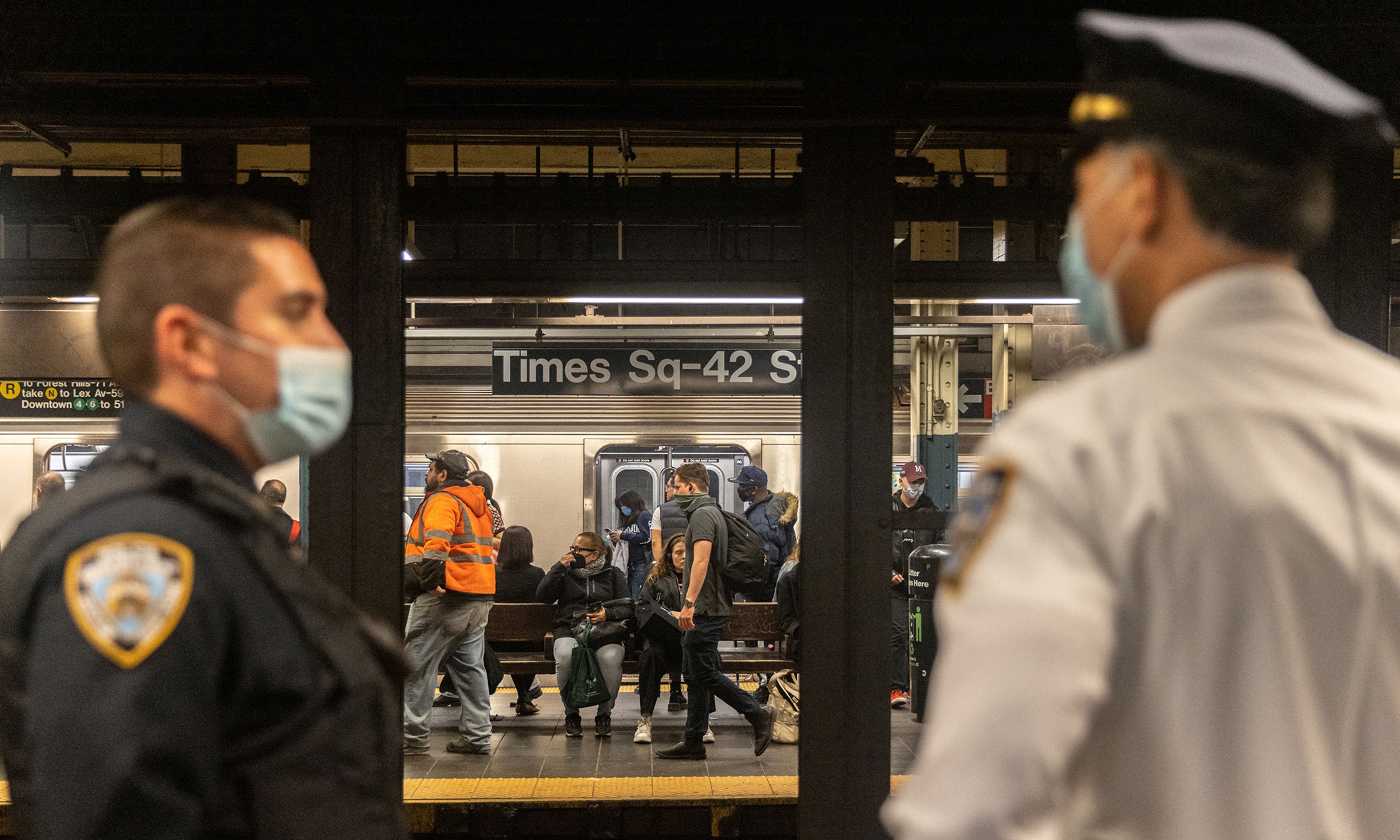
The city, the song explained, is a wonderful town, . . . The people ride in a hole in the groun’. If you think about it for a moment, and ask yourself why anyone would willingly do this, wonderful stops being the airhead’s exclamation of praise, and assumes its older, more literal meaning of marvelous, astonishing — with a hint of unbelievable.
What creatures live in holes in the ground? Many burrow there, but they come out. Who’s for keeps? Mole rats. A thousand kinds of insects and other crawlies. Deep-cave salamanders and fish, blind and blanched white because the sun never sees them. The dead; we put them there so they won’t bother us. And of course commuters. Yes, like badgers they come out, but in the city they can spend an awful lot of time down there.
Our subway system is one of the oldest in the world. London’s prototype beat ours by a few years, and its system has a more evocative name, the Underground. Beyond that, I’ll take ours. The Internet will give you the stats on length of routes and pre-virus ridership. My favorite little fact is that there is only one price for any fare. You can use it to hop from one Midtown hub to another, if you are in a rush at midday or it is raining like the Flood, or you can use it to go from the North American mainland to the long Atlantic sandbar, across two islands and under two rivers. The democracy of distance: one man, one vote, one ride.
In my youth, entry to the system, the tangible equivalent of Open sesame or Speak friend and enter, was a metal token. A clerk in a box slipped out one and change after you slipped him a wrinkled bill. They were about the color and size of Chinese cash coins, and like them they often had holes in the middle, the shape of which varied, from circles to capital “Y”s to pentagons, as the fare changed. Two decades ago they and most of the clerks who dispensed them were replaced by swipe cards, spit out of touch-screen terminals. So the frenzied moment of standing behind a hard-of-hearing oldster, asking as he clutched his token where the express stops, has been replaced by the same moment standing behind a 20th-century person raised on human contact trying to navigate a glowing silent surface. Tokens meanwhile have become jewelry items, taking their place on necklaces alongside fertility symbols and charms against the evil eye.
A confession: The city’s system is not all underground; a lot of the subway is super. Elevated lines run over busy streets, industrial nowhere, and open water. But the essence of the system I like to think is chthonic. (N.B.: The lyric above is the movie version; the Broadway original was helluva town.)
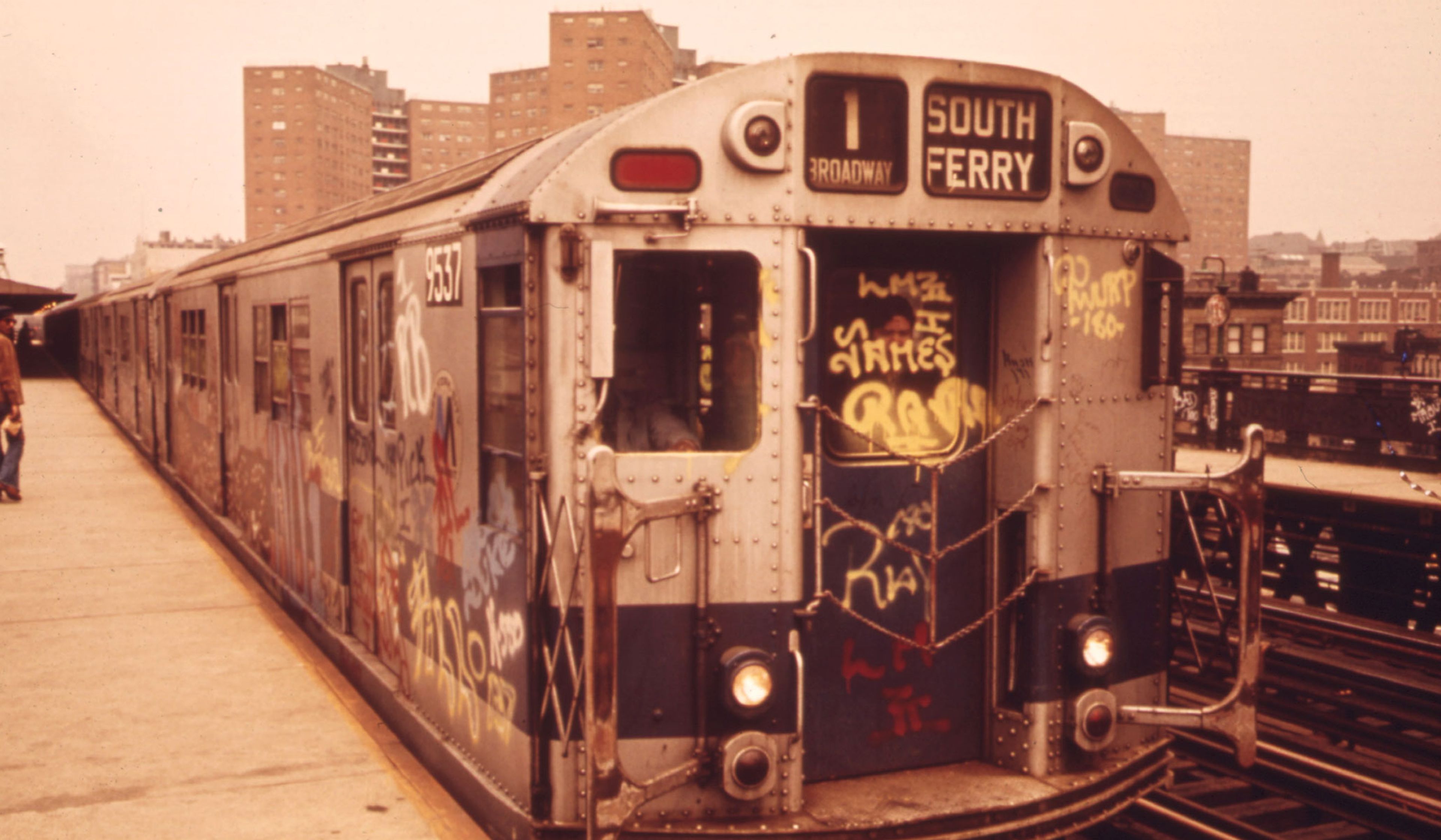
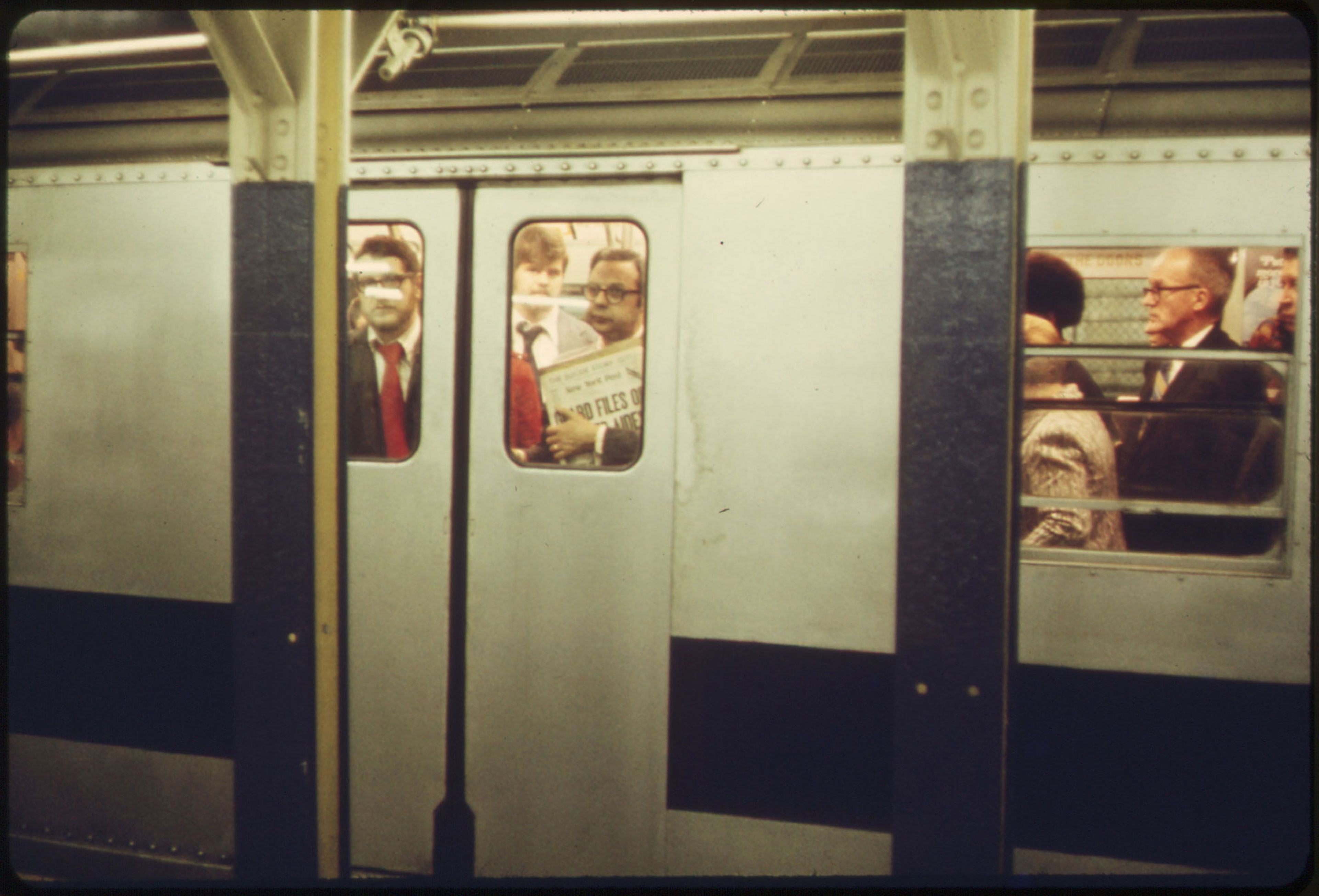
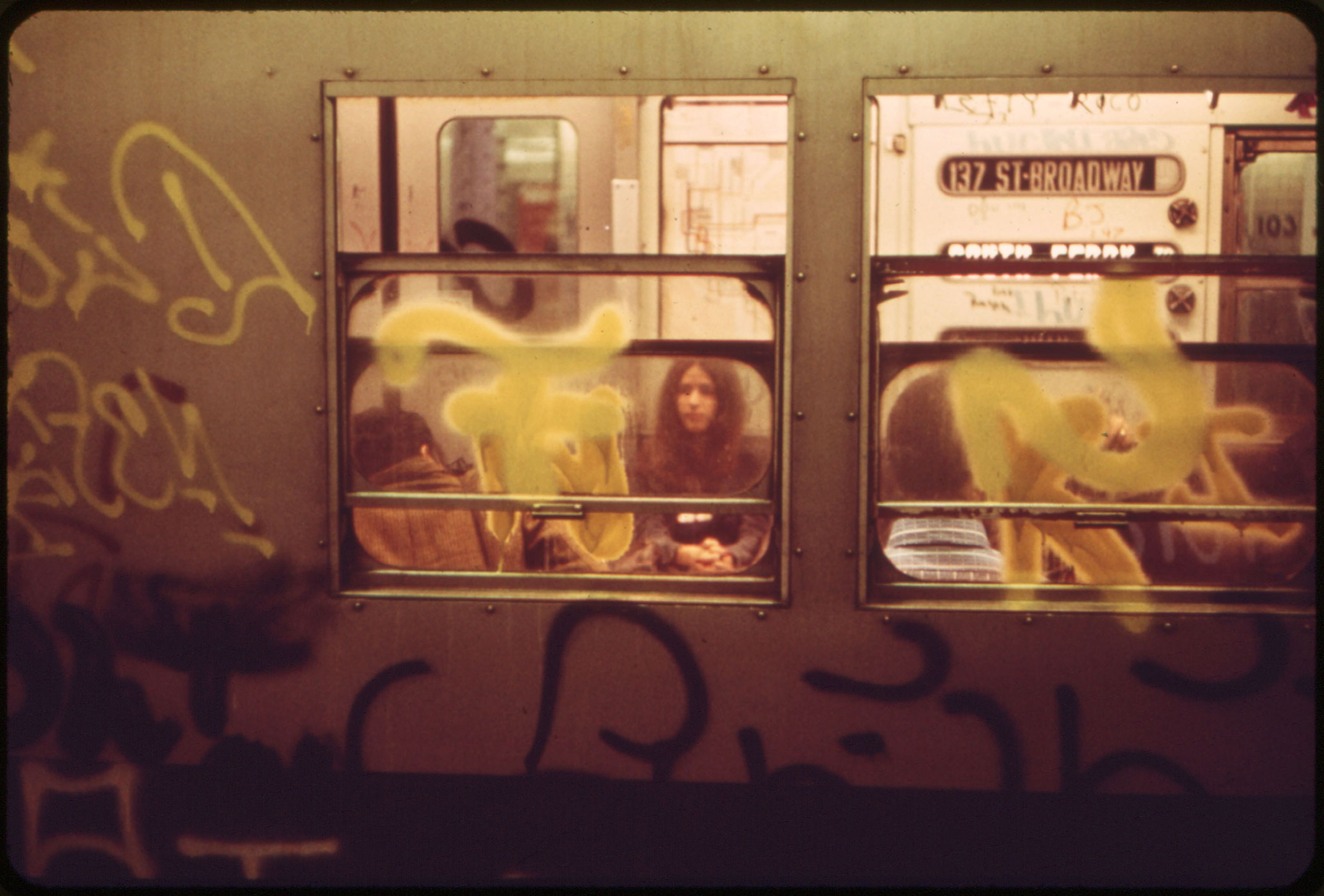
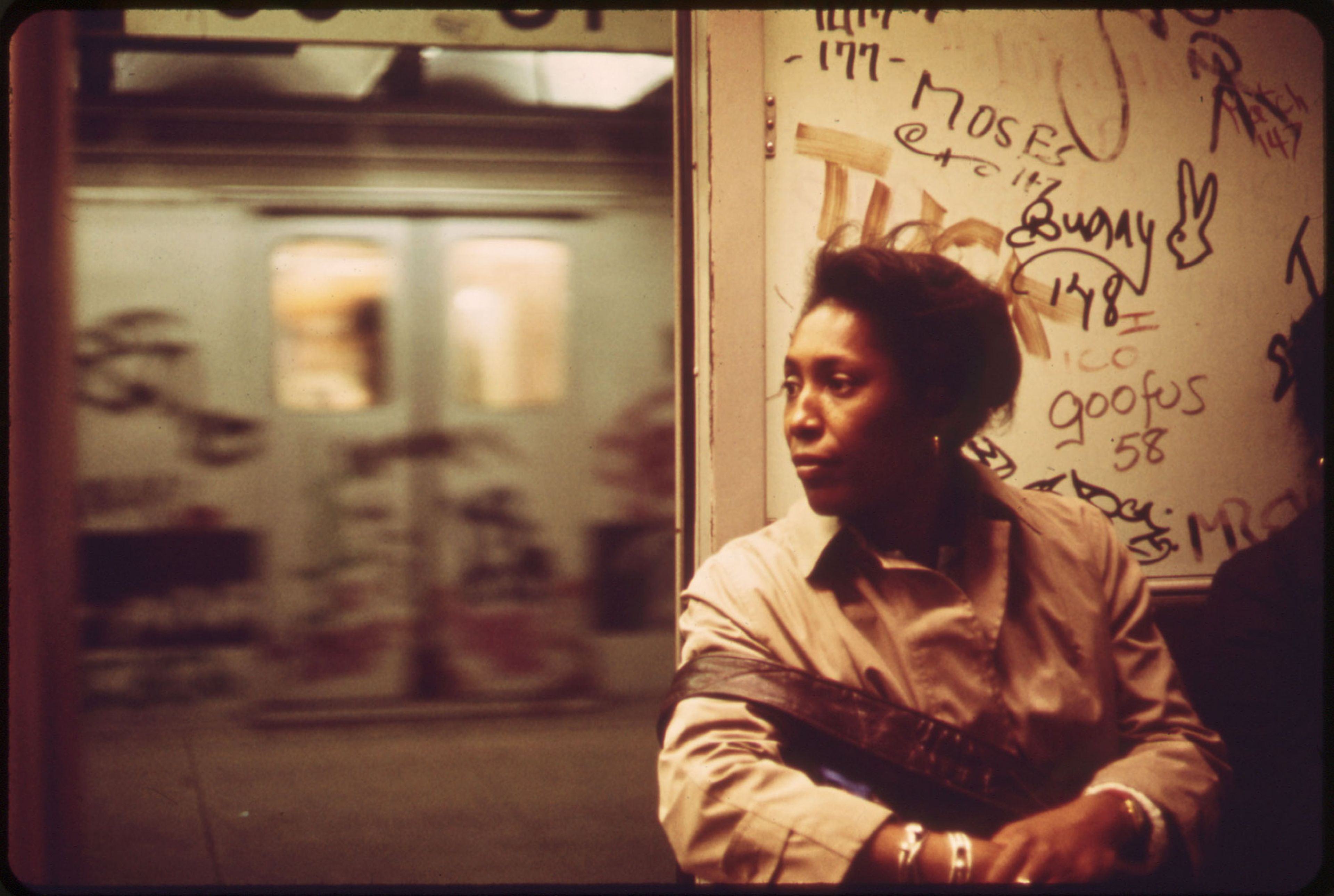
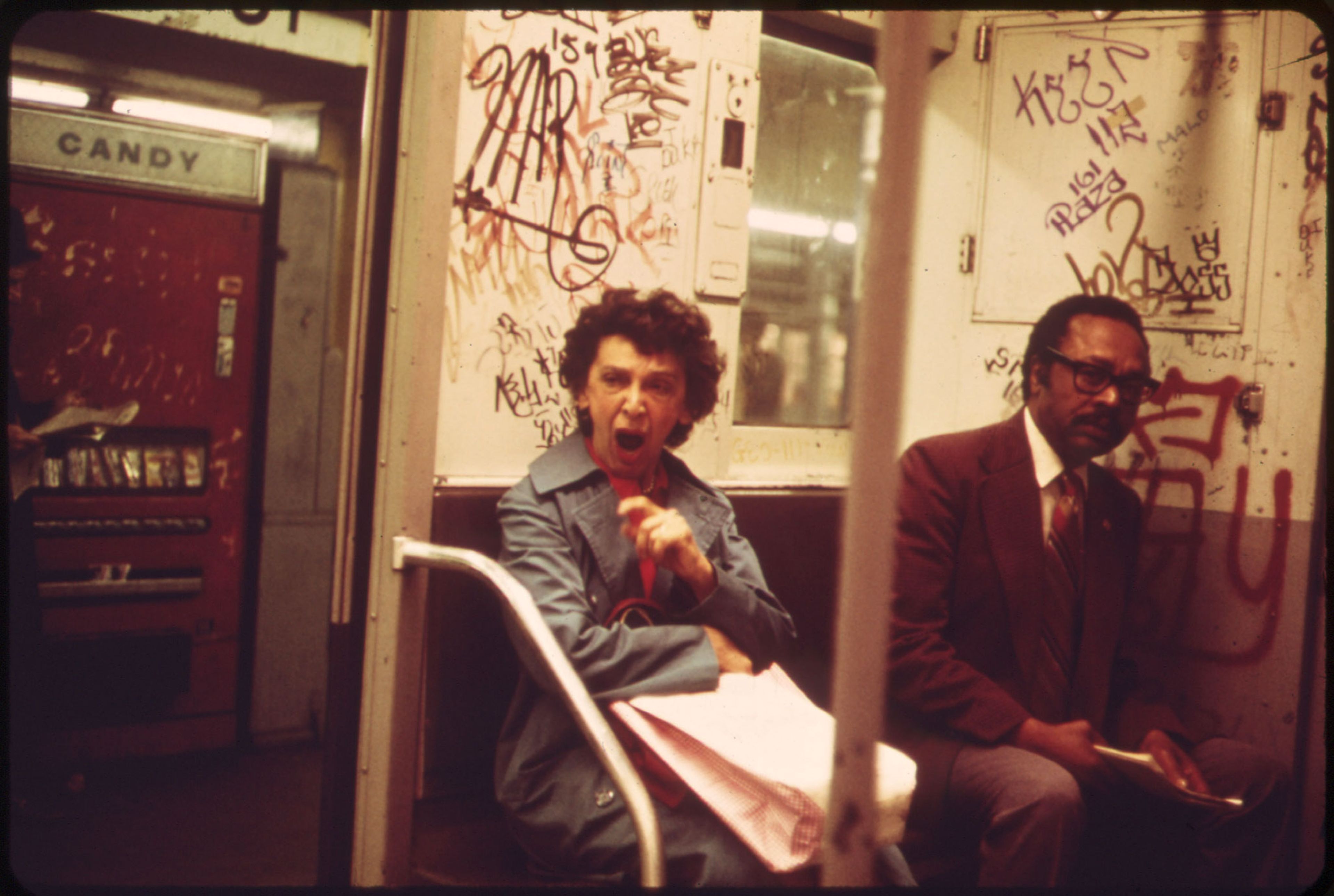
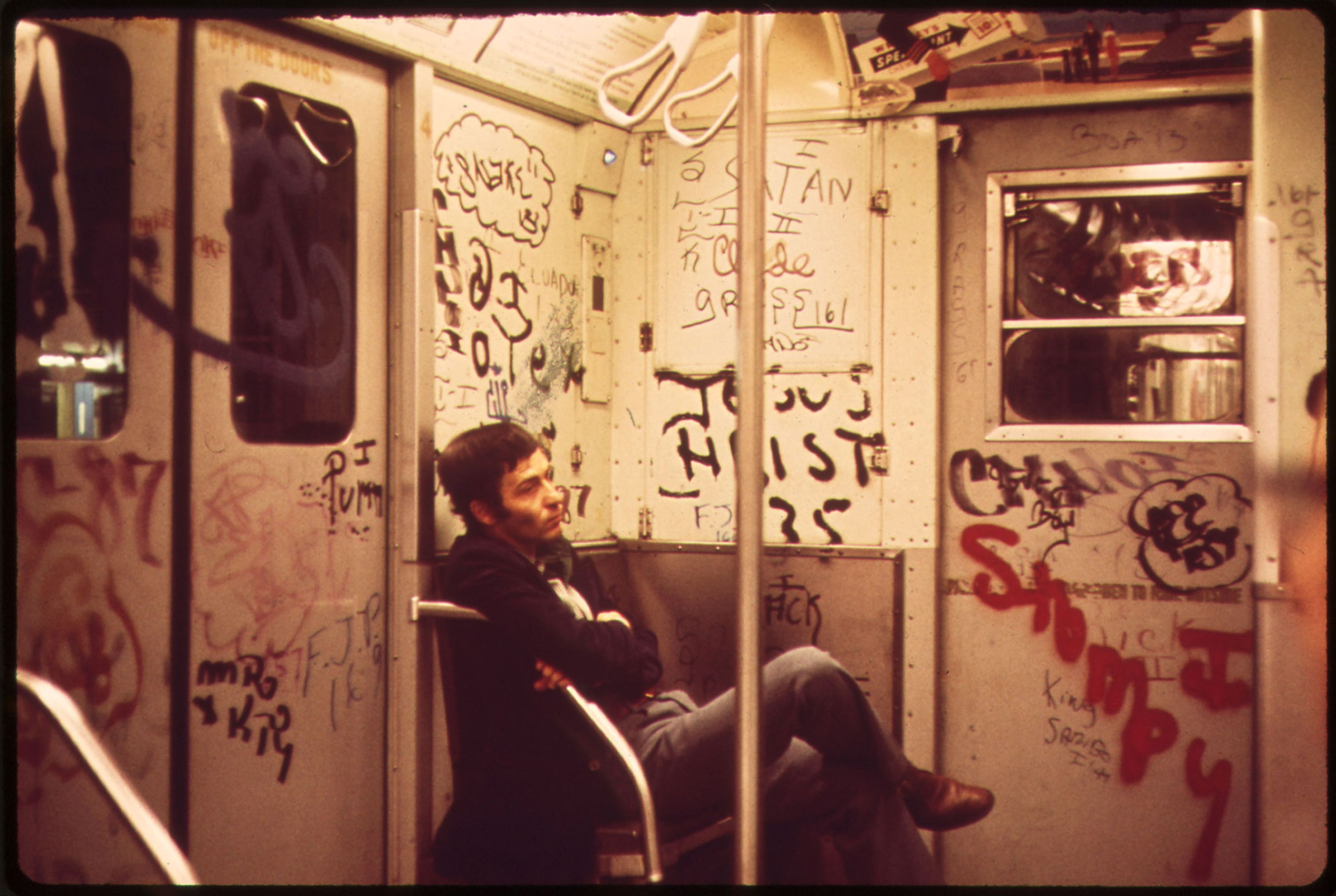
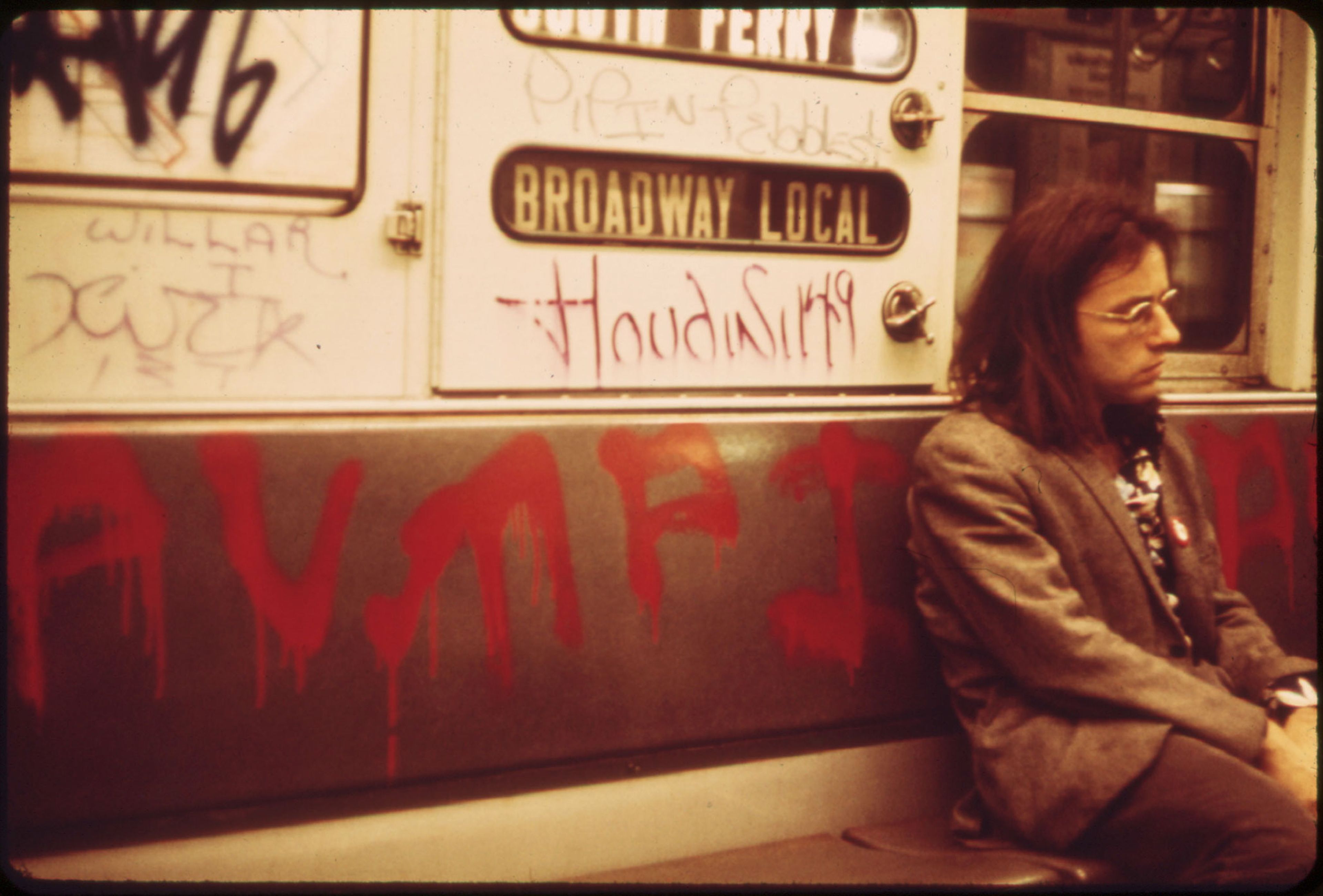
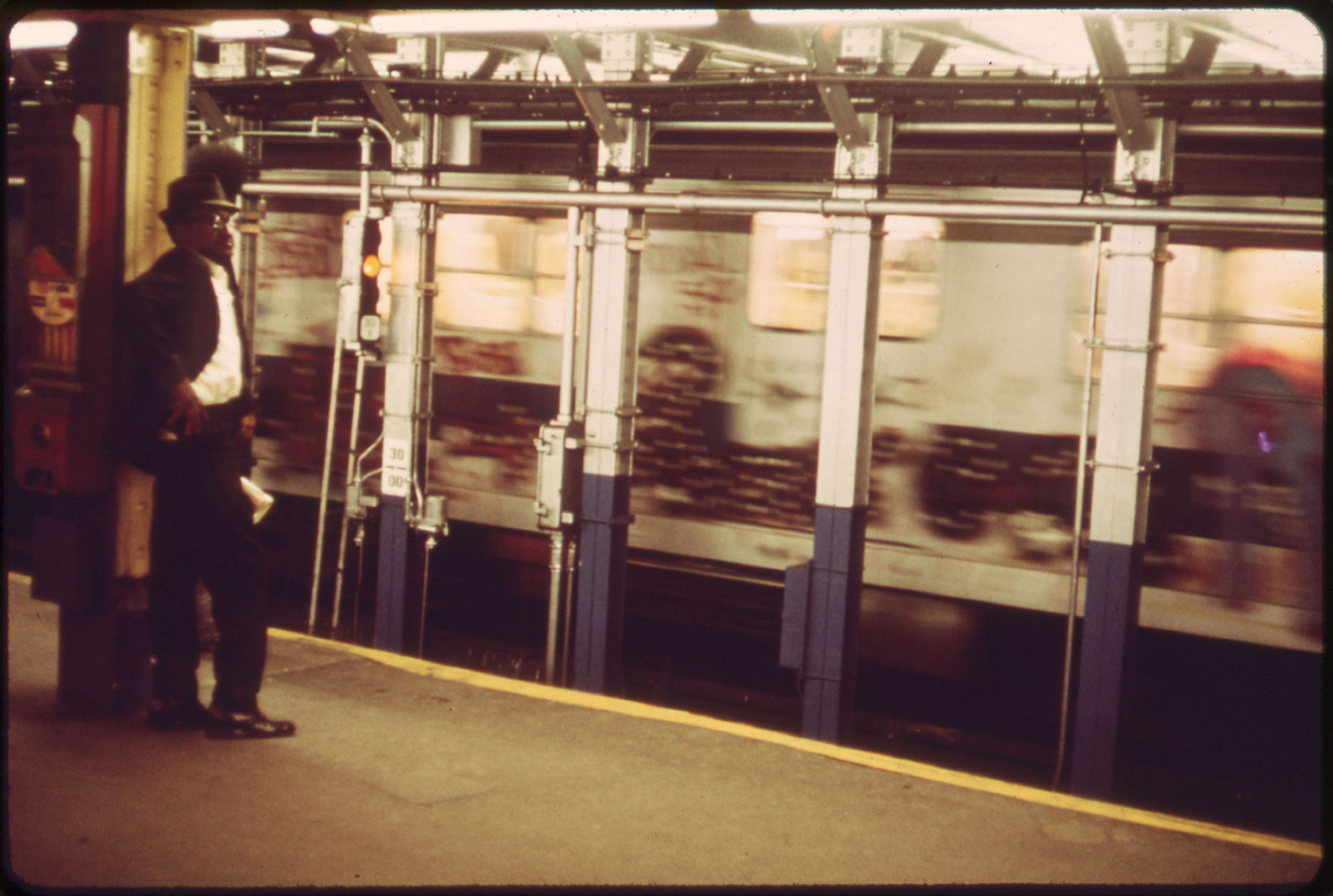
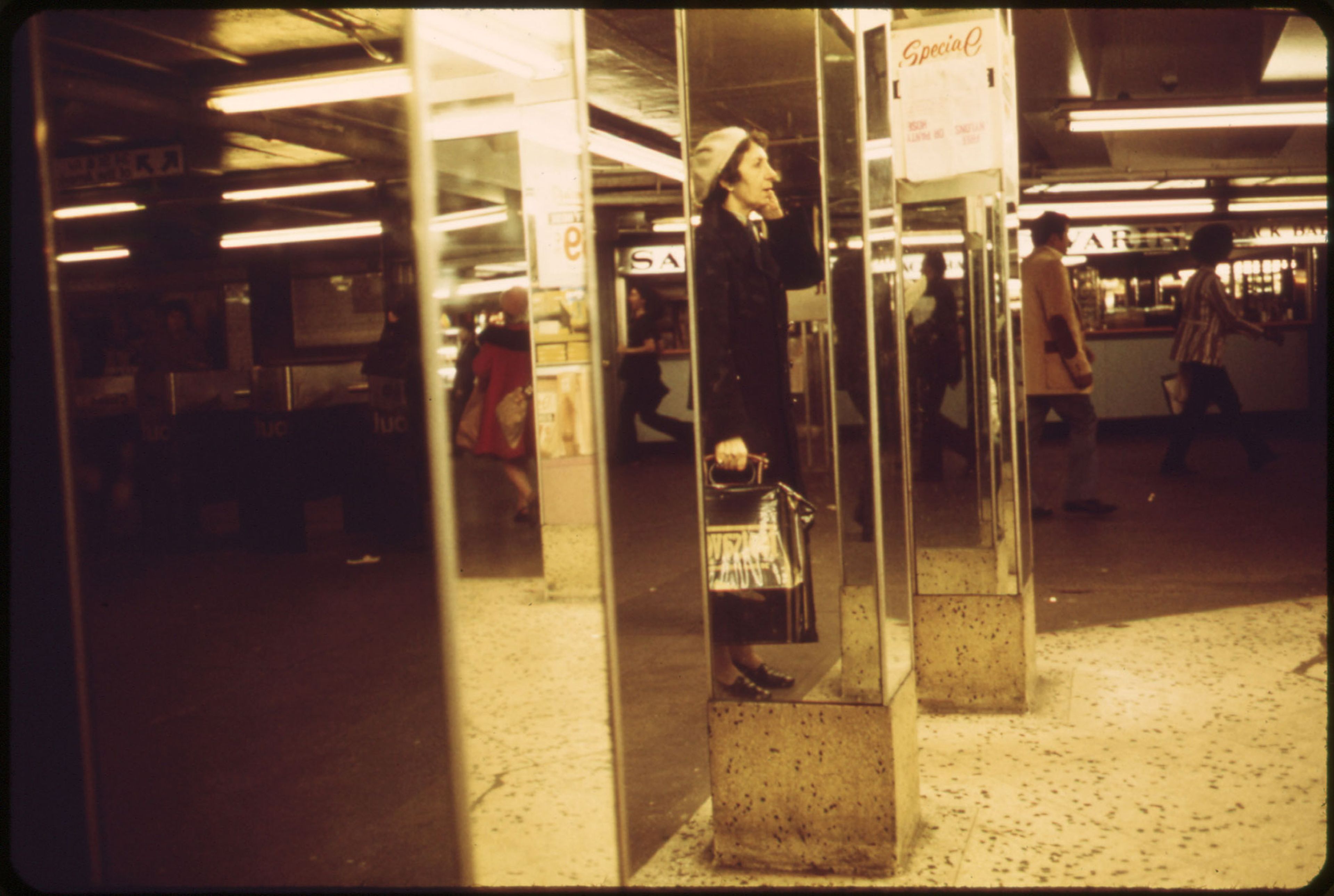
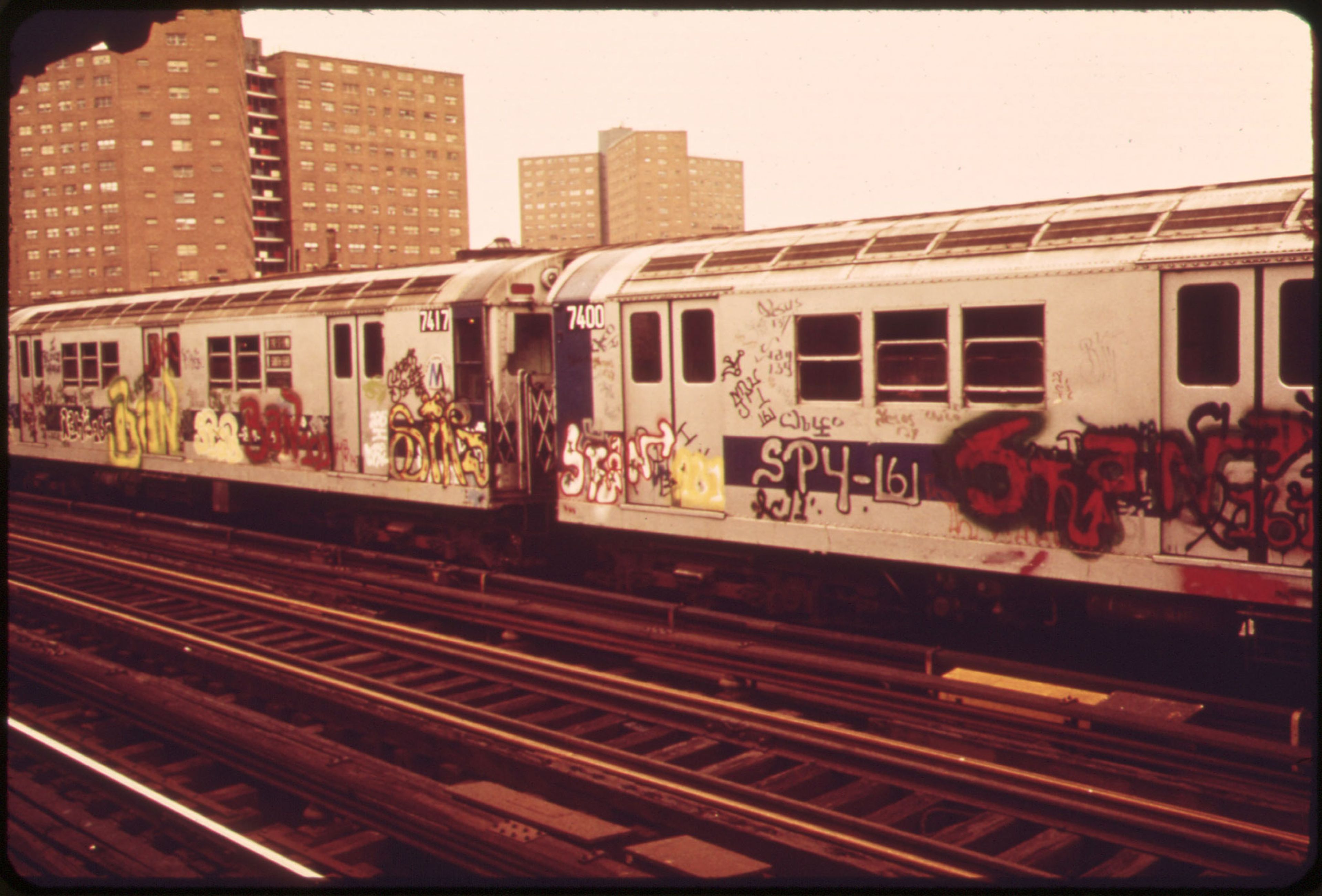
A New York City subway car spray-painted with graffiti, May 1973.
Erik Calonius/DOCUMERICA/National Archives
My first impressions were formed at a low point. The system when I began using it regularly boomed and bustled. There were newsstands down there (read all about it), and flower stands (date night; wife’s forgotten birthday). In some stations there were ghosts of older businesses — men’s clothing. (Forgot you had a job interview?) The crowds, pouring at rush hour out of stuffed trains or towards strategic platforms, were like the pack start of a marathon. But it was dirty dirty dirty. The platforms looked as if they had been bathed in truck exhaust. The cars were bright with spray-painted logos. Prehistoric cavemen drew animals or made handprints; modern gangsta men wrote “D4G,” or whatever. Beggars begged, blind or pretending to be. Pop culture caught the mood. One movie showed a posse of criminals seizing a car and holding it for ransom. (How in the world would they escape? They had a plan, though it didn’t quite work.) Another movie showed a youth gang pursued by every other youth gang in the metropolis as they made their way home across an endless night. Despite the motion of the cars and the hustle of the riders, life underground had an air of claustrophobia (I’m here with all of this) or, late at night, of anxiety (I’m alone with all of this).
At century’s end, it all changed. The revival of the city, those who witnessed it may remember, began underground. The very confinement of the subways meant that strategic changes in policing could be most easily tested there. Cops began arresting minor offenders, and maintaining order. Hosanna. Fans of anarchy said such methods would never work above ground, and yet they did.
Cars gleamed, platforms were clean. What remained constant? Subway music. As a veteran of a group that sang sacred music of the Renaissance in the subway, I am not opposed in principle. Musicians had to get permission, and did so; as a result one still heard the musical-saw lady and the dancing Andean indigenes. Jehovah’s Witnesses still kept vigil, dignified at their tables on which they displayed copies of the Watchtower (never hawking it — the reprobate must choose salvation). And down in the trough of the tracks, you could still see rats — fewer perhaps than in the past, but they are clever as crows, loyal as dogs.
Then, boom. A terrible mayor, a pandemic. Under the mayor, everything the city had learned seemed to be unlearned. The subways became havens for the mad. Street people became below-the-street people. During the pandemic, 24/7 service, the most democratic feature of the system, next to its universal fare, was curtailed. The cars had to be disinfected every night. Ghost cars, staffed by subway personnel, made the rounds because there is not space enough to park all of them at once.
Now a black-nationalist lunatic (with a YouTube channel, natch) has shot up a train car, wounding ten, none fatally, no thanks to him. He was nabbed the following day after a veritable U.N. of immigrants spotted him on the street.
I have not taken the subway in two years.












Comments