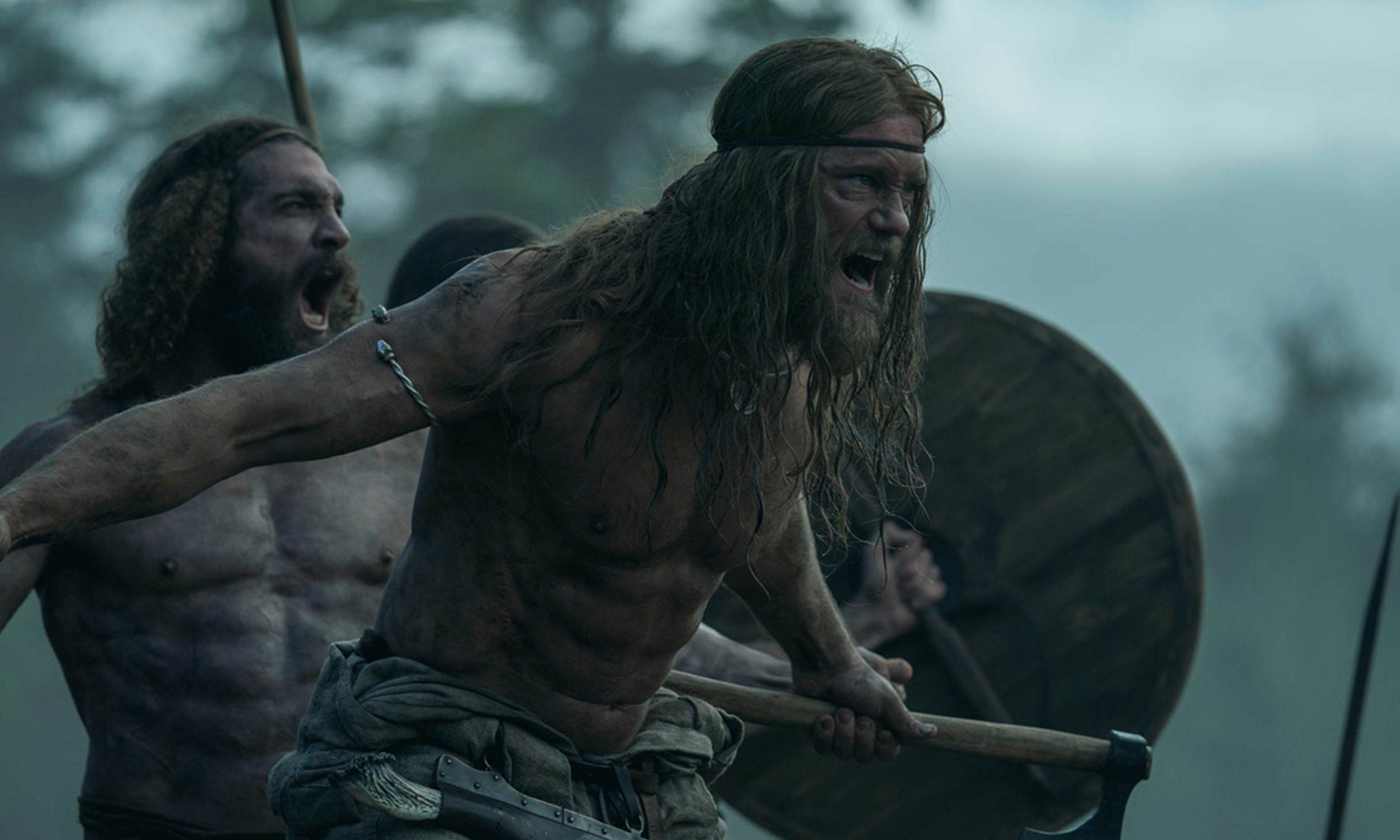
The scene that makes it clear what Robert Eggers is up to with The Northman, his lavish and intricate and absolutely testosterone-soaked Viking epic, arrives about 30 minutes into the film. At this point we’ve watched an opening that’s culturally exotic but narratively familiar, in which a Norse ruler played by Ethan Hawke returns from war, initiates his son Amleth into the mystic rites of Viking manhood, and then gets himself killed by his jealous half-brother Fjolnir (Claes Bang), who takes his crown and his wife (Nicole Kidman) and tries, unsuccessfully, to kill off the murdered ruler’s heir.
Escaping into the shrouded waters of the northern seas, Amleth grows up to be a berserker, a massive tree of muscle and beard played by Alexander Skarsgård, who ravages the future Russia, the lands of Rus, with a party of skin-wearing raiders who are whipped up or drugged or both into believing themselves to be wolves or bears in battle. We watch these warriors seize a Slavic village, killing its defenders with their spears and axes and even with their teeth, and then dispose of its inhabitants: The able-bodied will be sold as slaves, while everyone else, especially children, is herded into the largest building, locked inside, and burned alive.
In a familiar sort of historical epic, this massacre of innocents would be a moment of moral test or transformation for our hero. Maybe he would halt the massacre outright, thus establishing himself as a worthy surrogate for a modern audience’s sympathy. Maybe he would unsuccessfully object but be sufficiently disgusted to turn aside from the berserker’s path and back toward the restitution of wrongs awaiting him at his uncle’s court. Or maybe he would save a few of the innocents — a love interest, a plucky child — whose influence would slowly change his stony heart.
In The Northman nothing like this happens. The raid is a narrative turning point: Amleth has a mystic vision in the ruined Slavic temple and then hears news of his uncle, who has been defeated in war and has fled to a smaller fief in Iceland, which sets in motion the revenge plot that occupies the remainder of the movie. And one of the enslaved Slavs, a white-blond witch-woman played by the witchy-looking Anya Taylor-Joy, does eventually become his lover, after he disguises himself as a slave and contrives to be shipped and sold with her to the rustic court of his unknowing uncle.
But the mass murder itself makes barely a ripple in the plot. It has no significance for any character arc, inspires no revulsion or regret, and even Taylor-Joy’s character, who lost kith and kin in the blaze, carries no special animus against Amleth for his role in the destruction.
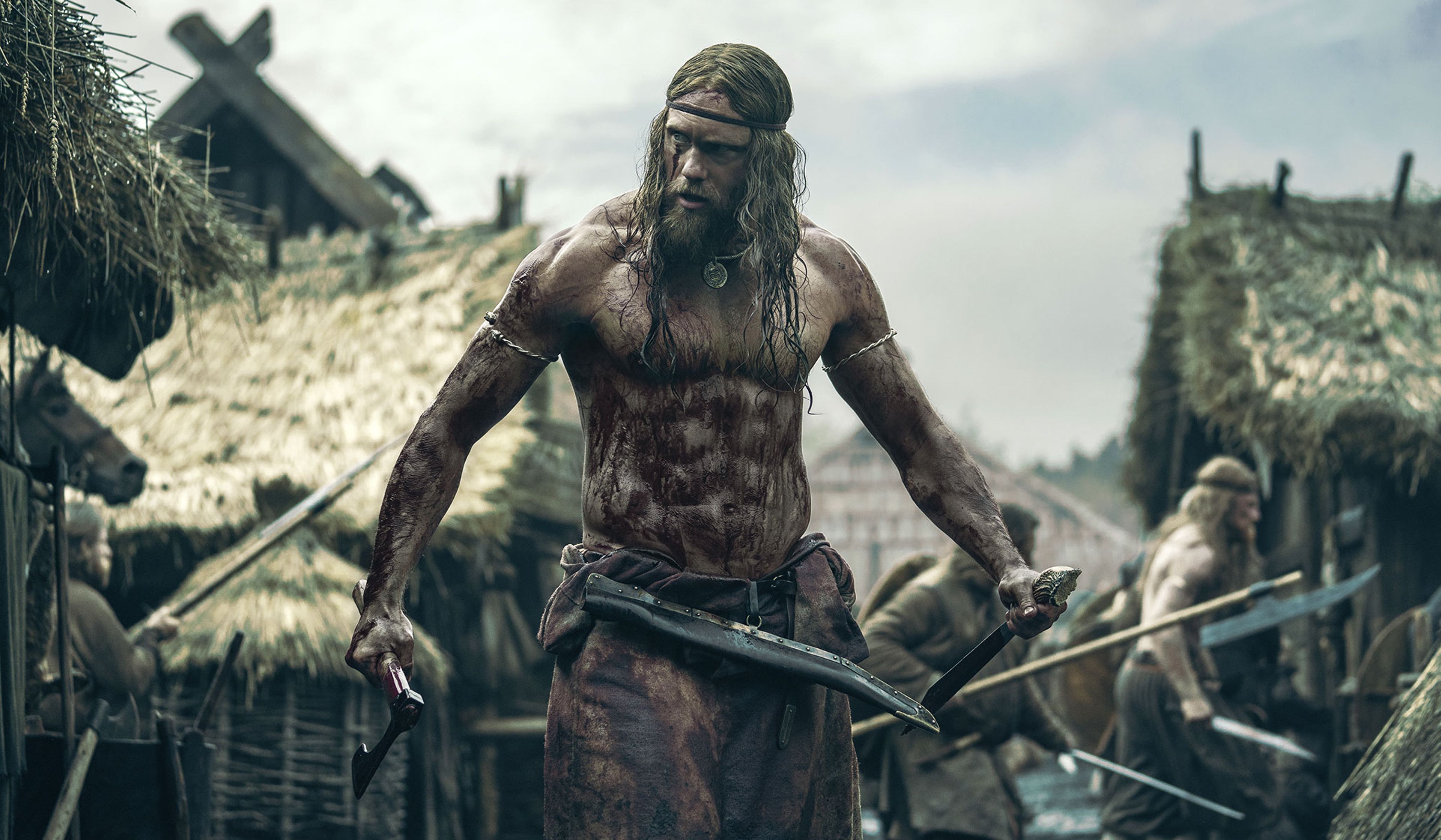
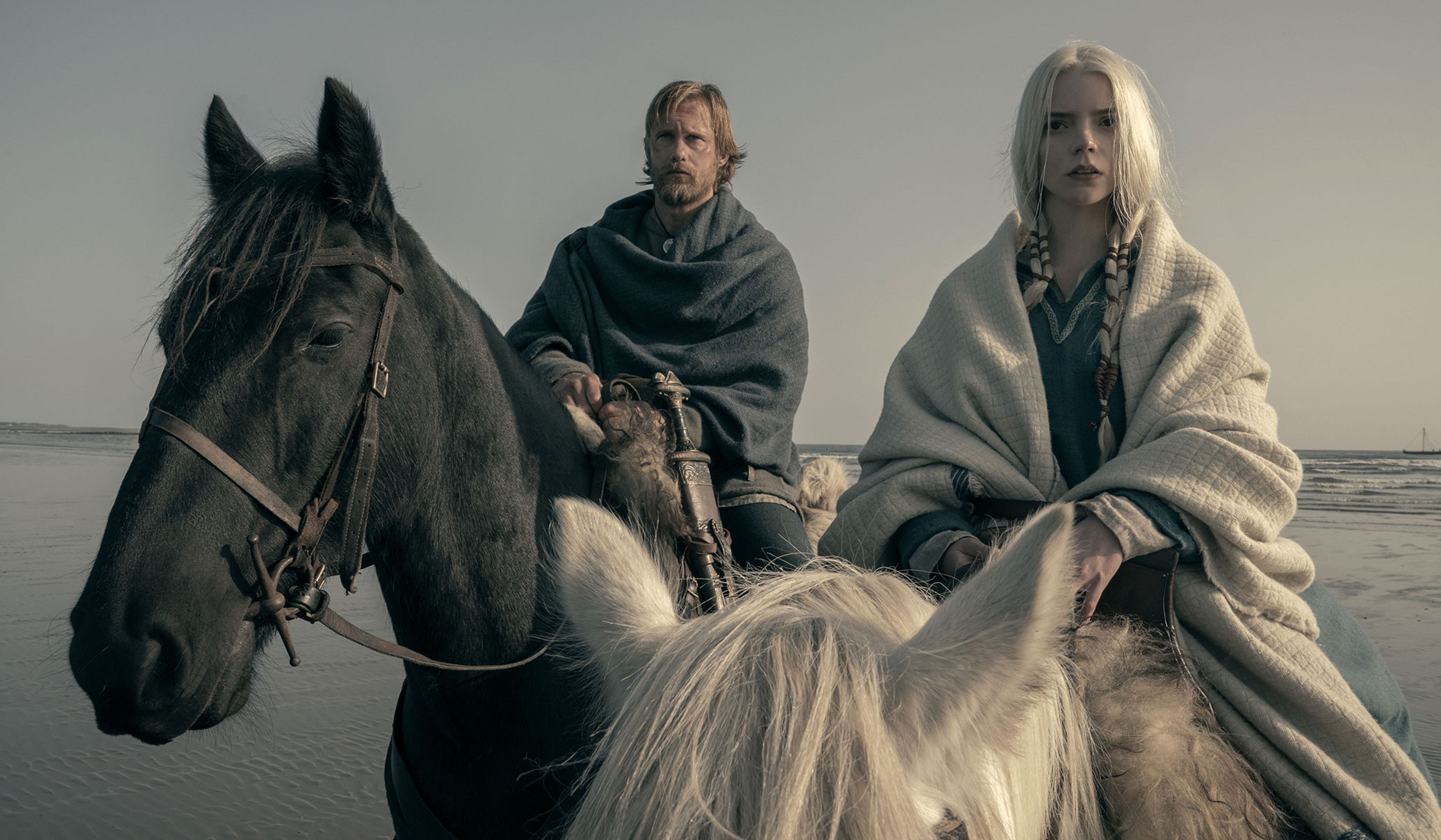
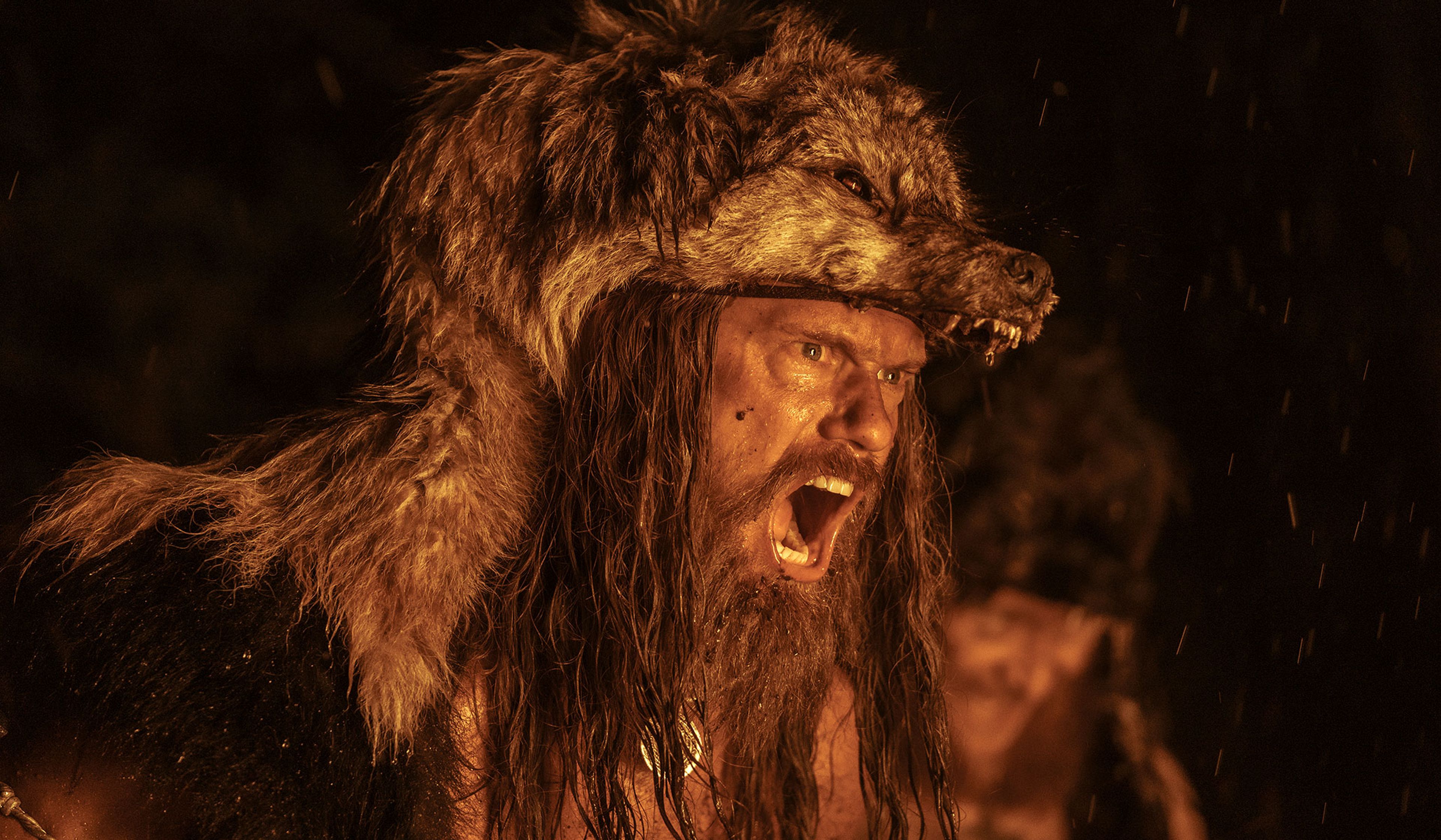
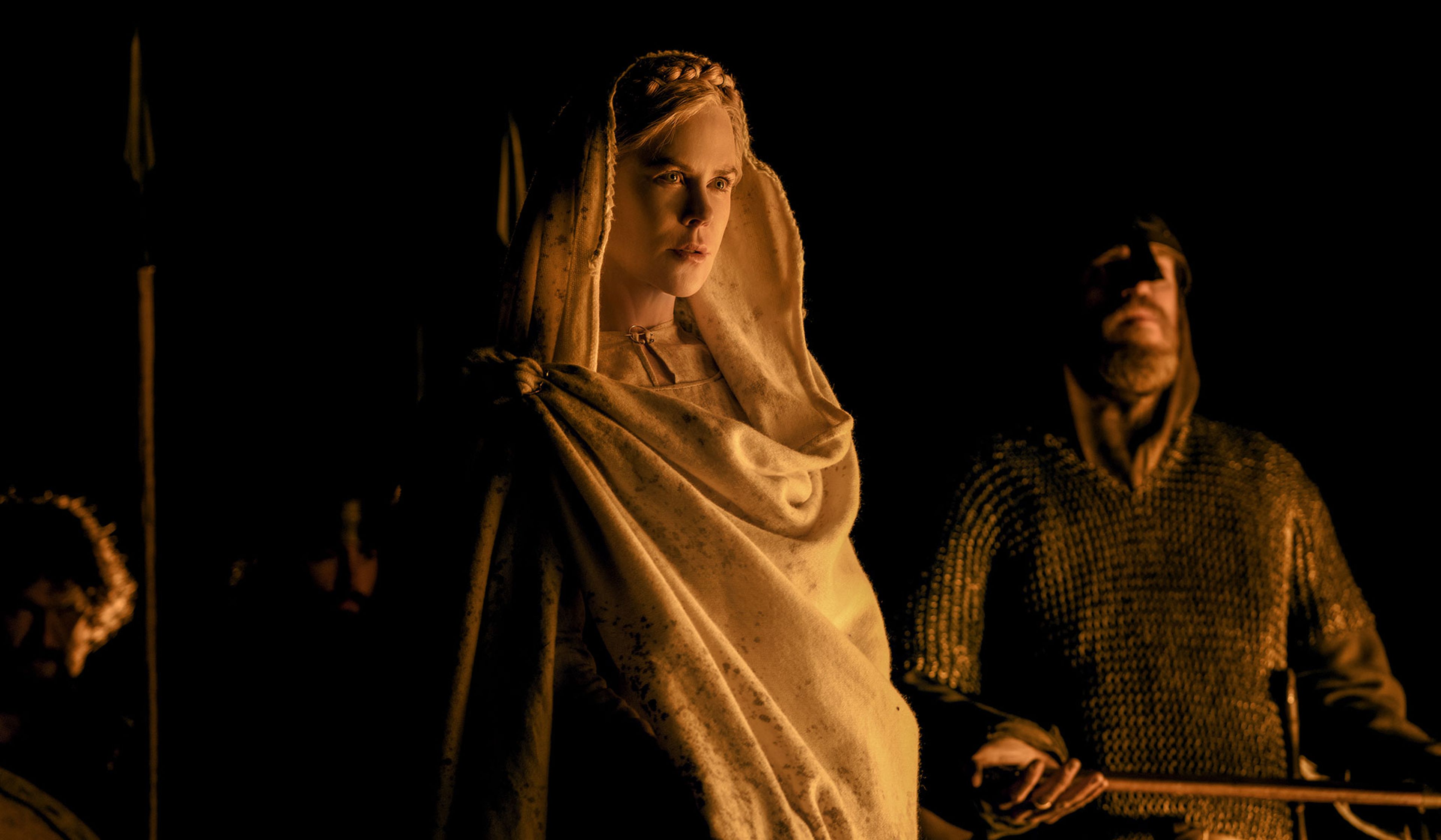
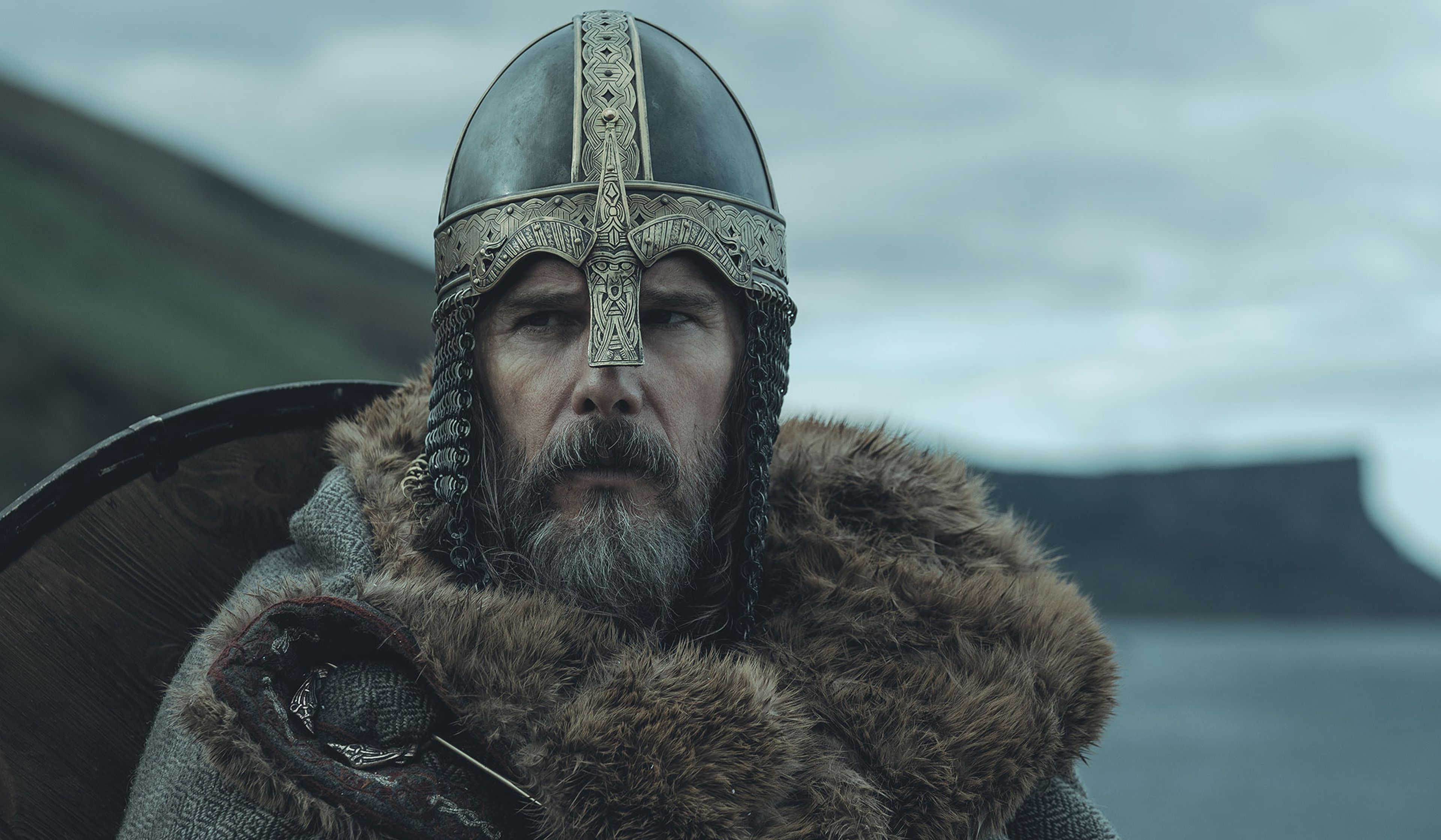
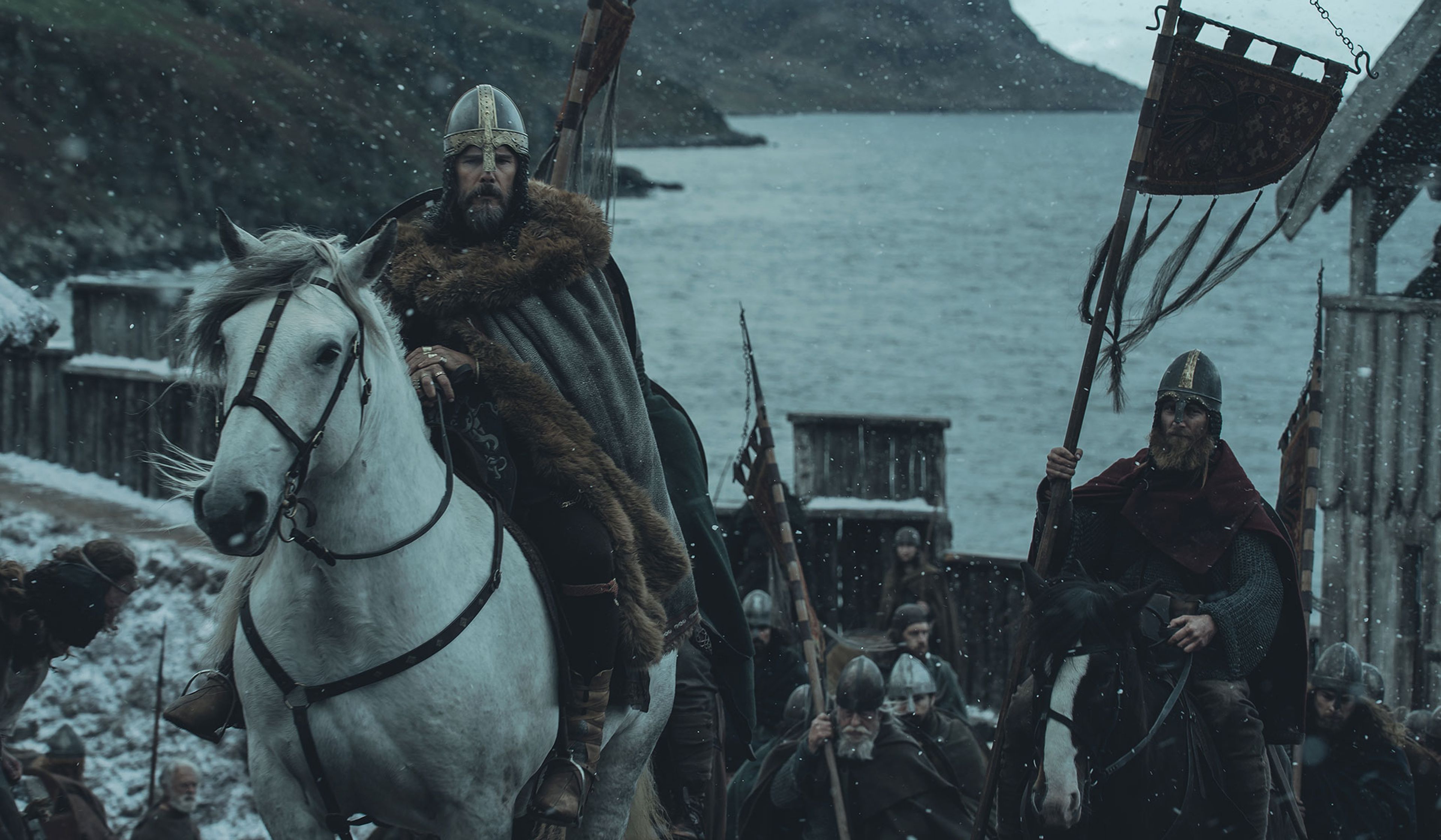
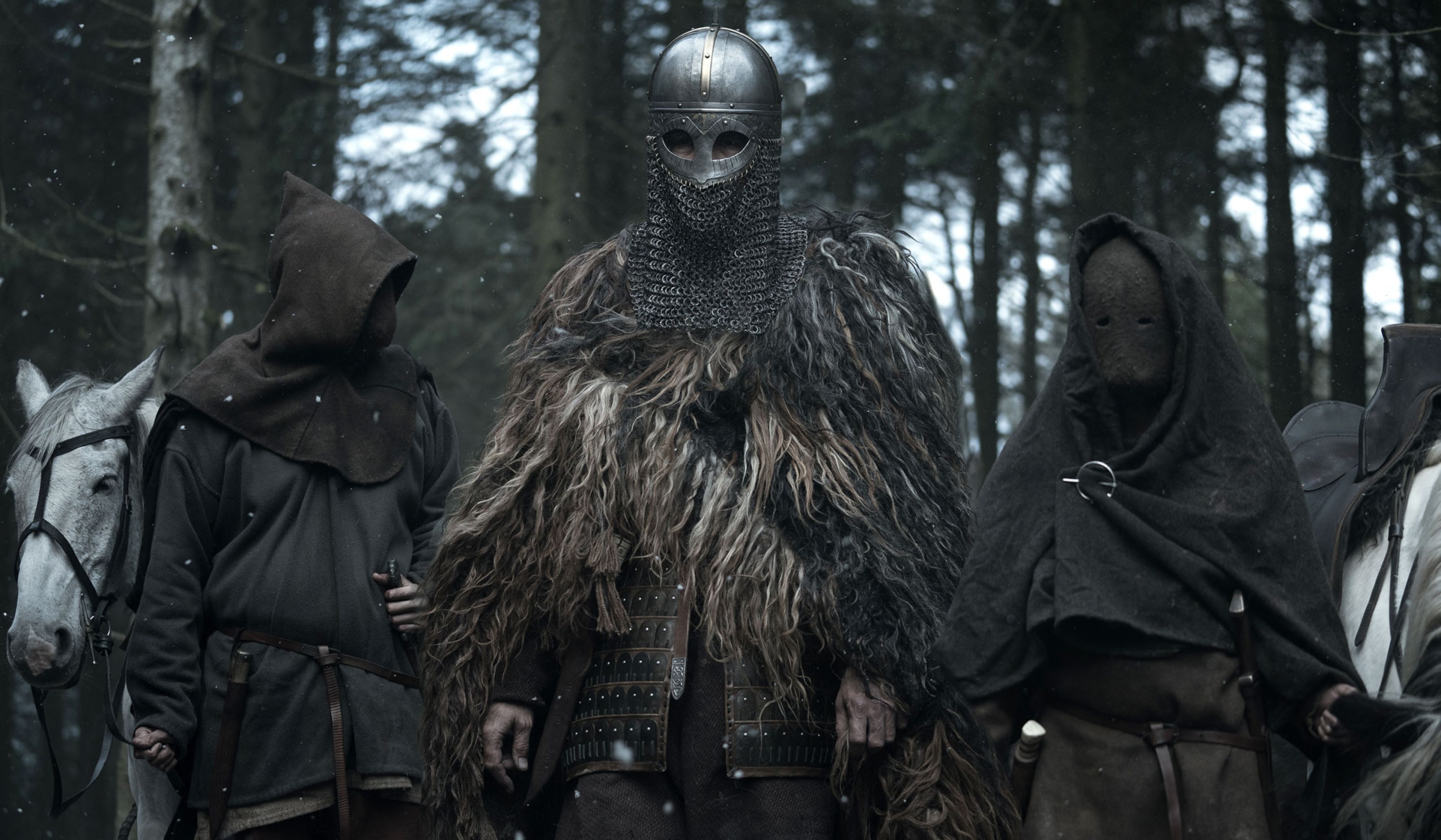
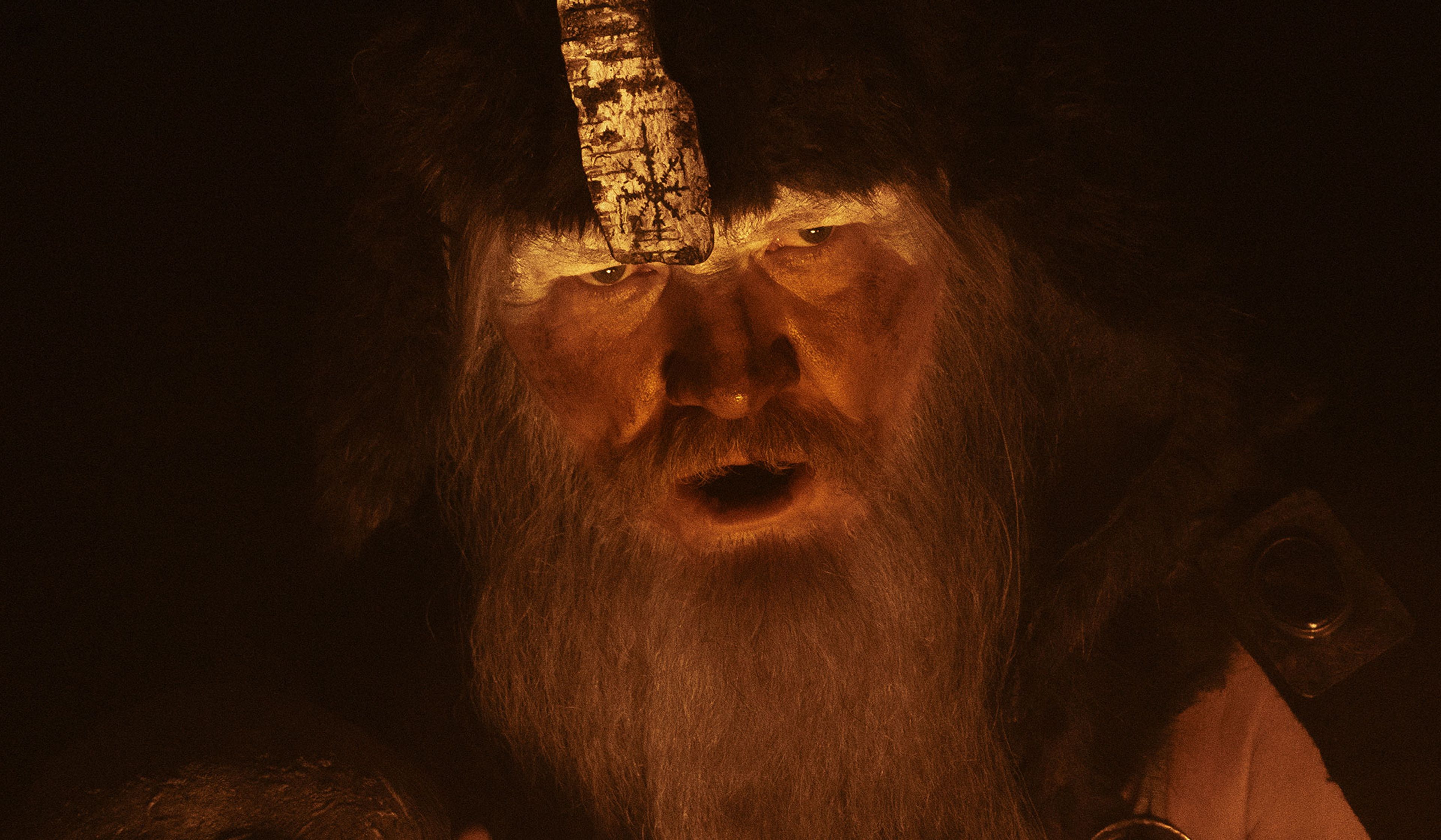

Alexander Skarsgård in The Northman.
Aidan Monaghan/Focus Features
From the perspective of audience identification, this is an alienating decision, placing Amleth somewhat outside the circle of our sympathies no matter how justified we may find his hunger for revenge. But from the perspective of historical accuracy, it’s an entirely reasonable move, since a figure like Amleth would have had little reason to suddenly develop a Christian or modern-liberal conscience in the face of violence that his own worldview accepted as a norm.
And that’s the method to Eggers’s movie. He isn’t just trying to make an epic that’s historically “accurate” in the sense of getting the costumes and architecture right. He’s refusing the concessions to modern sensibilities that almost every historical picture makes. Of Eggers’s debut feature, the New England horror movie The Witch, Noah Millman wrote that it resembled a movie “that seventeenth-century Puritans might have made if they somehow had access to contemporary film technology.” His new epic has that same energy, but on a larger scale and with a still more culturally alien subject. It aspires to be not a modern movie about the Vikings, but a movie that the Vikings could have made.
That doesn’t mean that every tie to our own world is severed. The careful reader will have already realized, for instance, that Eggers is working with the originating story for a rather famous early-modern play about a Danish prince, in which the revenging is conducted with somewhat more self-doubt than Amleth’s. There are passing references to Christianity’s cross-nailed god to foreshadow the change that will eventually come over this strange world, and the justified rage of slaves and women against the brutal reign of warrior kings is given furious third-act voice from an unexpected quarter. The modern viewer will inevitably draw non-Viking readings from the story — the liberal will see an implicit critique of the futility of cyclical violence and toxic masculinity, the Christian will experience a sense of relief that the faith of the crucified triumphed over Thor and Odin.
But Eggers is scrupulous in denying those readings to the characters in the story. Even if we, the moderns, will see hints of other possibilities, Amleth and family remain fully inside the Viking cosmos, taking both its natural and its supernatural elements as given, and follow their fated roles to the end, refusing every opportunity to choose the way of mercy, a solution other than the sword, an aspiration other than Valhalla. And it’s a testament to the success of his experiment, whatever its inevitable limits, that the modern viewer will walk out of The Northman feeling a storm of mixed emotions — attraction and revulsion, identification and rejection — after this uniquely immersive sojourn in the ever-so-foreign country of the past.











Comments