‘There are no solutions,” the celebrated economist Thomas Sowell once wrote, “only trade-offs.”
Nowhere is this wise maxim truer these days than in the realm of green energy, where the headlong quest for a carbon-free economy has collided with other cultural, social, and environmental forces.
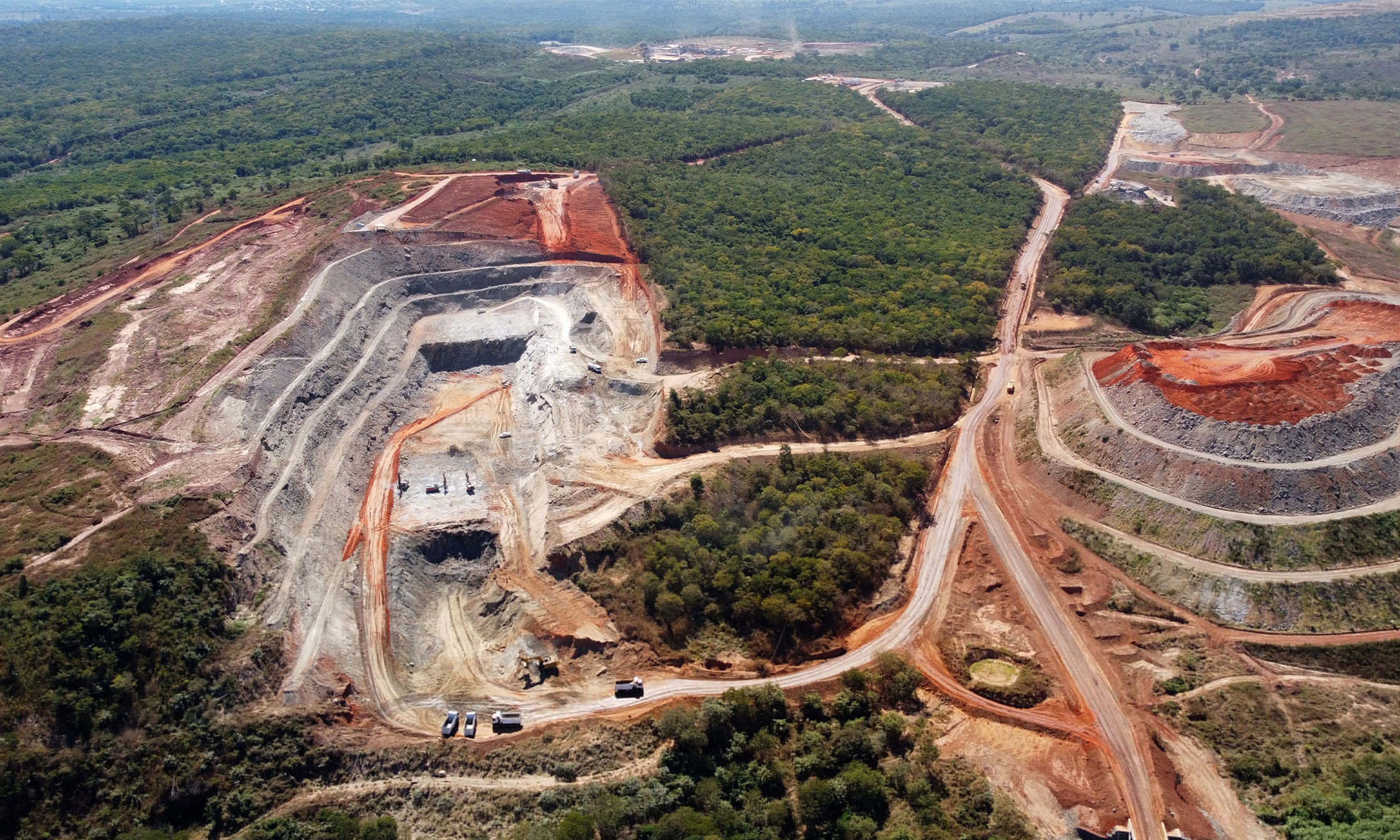
Want to extract lithium, a critical component of the batteries that run electric cars? Watch out for that sacred Native American burial site.
Looking for cobalt to power smartphones? Careful you’re not exploiting child labor in the developing world.
Eager to dig up the rare earth metals necessary for modern weapons systems? Make sure you’re not despoiling an otherwise pristine recreation area.
Oh, and are you trying to onshore all of these resource-generation activities to enhance national security and deprive the Chinese Communist Party of its global stranglehold on extraction of minerals? Better cut through the red tape of dozens of federal, state, and local agencies.
Such are the trade-offs and obstacles skillfully detailed by the journalist Ernest Scheyder in The War Below, his balanced and troubling chronicle of the difficulties we’ve encountered in hunting for the minerals required to transition to the much ballyhooed “clean economy.”
“This is a story,” Scheyder explains, about the choices facing “regions across the United States and the world replete with lithium or copper, nickel, rare earths, or cobalt — metals critical to the construction of solar panels, electric vehicles, batteries, wind turbines, and an array of other products heralded as key to electrifying the world’s economy and easing carbon emissions.”
Consider, for example, a typical Tesla Model 3 battery, which contains six kilograms of lithium, eight kilograms of cobalt, eight kilograms of aluminum, 17 kilograms of copper, 42 kilograms of nickel, and 55 kilograms of graphite. All of these materials come from somewhere, and that somewhere is underground — often, far beneath the surface.
As a rule, underground mines make for very uncongenial neighbors. Their sites are dirty and dusty, loud, crowded with vehicular traffic, liable to pollute aquifers and generate toxic waste, and demanding of enormous quantities of water. Underground extraction can also conflict with deeply rooted cultural, historical, and social norms and practices.
Scheyder cites the case of Rio Tinto, a multinational mining conglomerate. In a frantic search for lithium lodes across the globe, the outfit at one point in 2022 found itself quarreling with the San Carlos Apache over a mine in Oak Flat, Ariz.; with the Puutu Kunti Kurrama and Pinikura aboriginal peoples in Australia over the Juukan Gorge caves; and with the Serbian government over extraction of a rare, lithium-rich mineral called jadarite. Scheyder documents how the Biden administration ultimately canceled the Oak Flat project, apparently as a reward to the Apache for throwing their support behind the 2020 Biden-Harris ticket in Arizona, where Biden’s victory was extremely narrow.
Scheyder documents the extreme vacillation — bordering on schizophrenia — evinced by the Biden administration regarding domestic mining. On one hand, the White House has championed a transition to a green economy driven by manufacturing and sourcing material in the United States. “We need to end our long-term reliance on China and other countries for inputs that will power the future,” Biden proclaimed in March 2022.
On the other hand, the administration has repeatedly thwarted domestic exploration of the very metals critical to the green-energy switchover. In 2022, the agriculture and interior departments canceled mining leases in Minnesota’s Boundary Waters, which are rich both in natural beauty and in subterranean copper and nickel. “If Democrats were serious about developing renewable energy sources and breaking China’s stranglehold on the global market,” fumed Representative Pete Stauber, a Minnesota Republican, “they would be flinging open the doors to responsible mineral development here in the U.S.”
(It’s worth noting that it’s not just Biden: After years of waffling, President Trump scrapped the Pebble Mine copper project in Alaska when his son Don Jr. and Tucker Carlson announced their opposition because they liked hunting and fishing in the Bristol Bay area, where the extraction would have taken place.)
Another area of concern: rare earth metals, which comprise 17 distinct and expensive elements that are unsubstitutable and employed in a wide range of technologies, including F-35 fighter jets, iPhones, wind turbines, televisions, and night-vision goggles. While American firms have struggled to extract these resources domestically, China has nearly cornered the global market, deploying them as a lever to exert economic and geopolitical pressure, as when it suspended their export to Japan during a recent diplomatic spat. In 2017, a Chinese-backed venture even managed to buy out of bankruptcy a troubled California-based rare earths mine that was the only viable domestic source of these materials. Meanwhile, in 2020, Russia announced its plans to become the world’s second-largest rare earths producer within five years.
When the federal government itself hasn’t blocked projects, other groups have stepped in. A radical environmental outfit called Deep Green Resistance, which regards the clean-energy transition as “lies that allow us to maintain an unsustainable way of living while pretending that we are not killing the planet,” staunchly opposed the extraction of lithium from the Thacker Pass mine in northern Nevada. Max Wilbert, the group’s leader, told Scheyder that, far from adopting sensible measures that will reduce carbon emissions, “we need a planned contraction of the economy, planned negative economic growth,” and must “deliberately abandon industrialism.” Senator Catherine Cortez Masto (D., Nev.) straddled the issue, broadly approving of domestic lithium production but instructing an aide to ask Scheyder to delete a tweet that noted her support for the Thacker Pass mine. Ultimately, a federal judge allowed the project to move forward in early 2023.
Another group, called the Center for Biological Diversity, has worked for years to stymie a Nevada lithium-extraction project planned for Rhyolite Ridge. Patrick Donnelly, an activist with the organization, lodged FOIA request after whistleblower complaint after Bureau of Land Management protest in order to protect Tiehm’s buckwheat, a unique flower discovered at the site and threatened by the project. “There are many other lithium sources that won’t end up killing off a species,” Donnelly insisted. “Electric vehicles don’t need to come at the cost of extinction.”
Similarly, Sonya and Warren Snowdon resisted Piedmont Lithium’s efforts to develop a mine in Gaston County, N.C., near the homestead that had been in their family for centuries. Piedmont had signed a lucrative supply agreement with Tesla but had not obtained the necessary permits and planning approvals from state and local authorities, which the Snowdons and their neighbors, concerned about losing their bucolic lifestyle, successfully impeded. “We’re so much greener than most other people,” Warren Snowdon said. “And we’re not opposed to lithium, we just want it someplace else.”
And yet essentially every potential source of lithium and other important metals on earth entails some type of trade-off. Extraction in Africa and South America, whether under the aegis of American or foreign firms, has often entailed the use of child labor, environmentally devastating means of extraction, and unsavory alliances with autocratic regimes. When the company China Molybdenum purchased cobalt mines in the Democratic Republic of Congo from an American outfit, “its track record of safety and community relations started to pale in comparison to that of its predecessor,” Scheyder writes.
Some disputes have been amicably resolved, providing reason for hope that compromise is possible. For instance, the San Carlos Apache in Arizona agreed to supply water to Freeport, which runs a major copper operation in nearby Morenci. Coexistence between resource recovery and conservation is possible. “You’ll still be able to swim here, fish here, camp here when this mine opens,” Dean DeBeltz of Twin Metals said of the Boundary Waters project.
Scheyder traveled to Bolivia to document how an Austin-based company, EnergyX, led by a brash American lithium entrepreneur named Teague Egan, has been working to persuade provincial authorities to authorize his mining project. Bolivia — the largest lithium holder in the world, possessing more than 20 million tons of it — has for centuries eyed with suspicion any foreigners seeking to exploit its abundant natural resources. EnergyX’s strategy has been to promise to fund education and other local community programs, and it remains hopeful its blandishments will succeed.
Then, too, innovative recycling efforts can both prevent ecological degradation and furnish new supplies of old materials. At its facility in Rochester, N.Y., the lithium-battery-recycling firm Li-Cycle generates what by the end of 2024 will be 8,500 tons of lithium carbonate, according to Scheyder, making it the largest single lithium producer in North America. And technologies exist that mitigate environmental harms. Direct lithium extraction, for example, which Berkshire Hathaway has sought to apply in California’s Salton Sea and which EnergyX aims to implement in Bolivia’s Salar de Uyuni, filters lithium from salty brine reservoirs without resorting to the use of harmful evaporation pools.
In some cases, then, compromise and technology may help us avoid the most painful trade-offs. But ultimately, to secure an overall cleaner future, we will have to sacrifice something and not reflexively reject projects that may be discomfiting. As Idaho mining executive Mckinsey Lyon remarked to Scheyder, “if you want to change the climate, industry has to be part of the solution.”











Comments