Do Americans have minds?
Of course not. “The greater part of the public, and a greater part even of the intelligent and alert public, is simply non-intellectual,” declared Richard Hofstadter in his bluntly titled Anti-intellectualism in American Life in 1963. Of course not, agreed Daniel Boorstin, Hofstadter’s contemporary and (in many ways) nemesis. “When,” Boorstin asked, “has a culture owed so little to its few ‘great’ minds or its few hereditarily fortunate men and women?” Of course not, chortled Henry Louis Mencken, the king of the debunkers, in the 1920s. Precisely because America was the great engine of democracy, it was also the ruthless engine of populism, the land of what Mencken snarlingly called “the booboisie,” “boobus Americanus,” or the “boobocracy.”
We could, in fact, create quite a long list of testimonies about American mindlessness, and it would include Ralph Waldo Emerson, Frederick Jackson Turner, James Fenimore Cooper, and Alexis de Tocqueville (who was dismayed to find that “there is no country in the civilized world” with “fewer great artists, illustrious poets, and celebrated writers”).
But American conservatives have never been quite sure about whether to endorse these bleak declarations. On one hand, the populist strain of American conservatism has always believed that Americans are doers more than thinkers; practical problem-solvers, not reckless theorists. And the “long march” of the Left through American colleges and universities since the 1960s has only reinforced the populists’ conviction that the genius of America lies somewhere else than in the minds of those who think for a living. The populists’ majority is not so much silent, or even moral, but proudly inarticulate, because (like Billy Budd) virtue itself is simple and self-evident.
But for many other conservatives, populism is a dance with the devil, and American mindlessness is precisely what makes us prey to demagogues and pundits. They argue that it was ideas, not personalities, that fueled the Reagan Revolution, and the future must lie in developing a new constellation of ideas to replace the used-up ones of the 1980s. But they are not optimistic. They are not NASCAR dads or hockey moms; they sit alone at the ballet, and listen guiltily and angrily to NPR. They are the party, not of Lincoln, but of Cassandra, convinced even before they speak that, in America, they probably won’t be listened to anyway.
They are also wrong. As are the populists. America has always been the nation of theory, not practice; it was built around ideas (even upon a “proposition”) from the moment the first idea-haunted Pilgrim stepped off onto Plymouth Rock. And it is the stupendous conceit of the Left, not of conservatism, to believe otherwise, or to despair otherwise.
“When foreigners accuse us of extraordinary love for gain, and of practical materialism, they fail to see how largely we are a nation of idealists,” complained the Harvard philosopher Josiah Royce in 1897. We wouldn’t know this, however, if we judged by the way the history of American ideas is usually taught. Take, as a recent instance, William Goetzmann’s new Beyond the Revolution: A History of American Thought from Paine to Pragmatism (Basic, 480 pp., $35). The America of Tom Paine “was a country of diversity and vastness,” but also of “vagueness.” This “vagueness” Goetzmann assumes to be a virtue in its own right, since it permitted Americans “to constantly redefine themselves” for a century after Paine “in search of an ideal — freedom.” At last, in the 1890s, Americans invented Pragmatism, which turned this incessant reinvention into a philosophy of its own, whose chief accomplishment was to abolish any “moral guides” on reinvention. The chief accomplishment of American thought is thus to free itself — from thought.
This is not entirely Goetzmann’s fault, since Goetzmann is only following what I’ll call, for simplicity’s sake, the “Harvard Narrative” of American intellectual history, a pattern laid down since the 1920s by a quartet of great Harvardians — Perry Miller, Samuel Eliot Morison, Vernon Louis Parrington, and Ralph Barton Perry. The Harvard Narrative proceeds like this: Begin with the Puritans of Massachusetts Bay in the 1630s. Touch, if you like, on the fact that these Puritans possessed a university-trained leadership and organized themselves around a university-trained clergy, sunk deeply in theology and medieval scholasticism. But be sure to dismiss this as little more than some very dense holy-rolling, and simply note in passing that the Puritans founded Harvard College only six years after settling Boston.
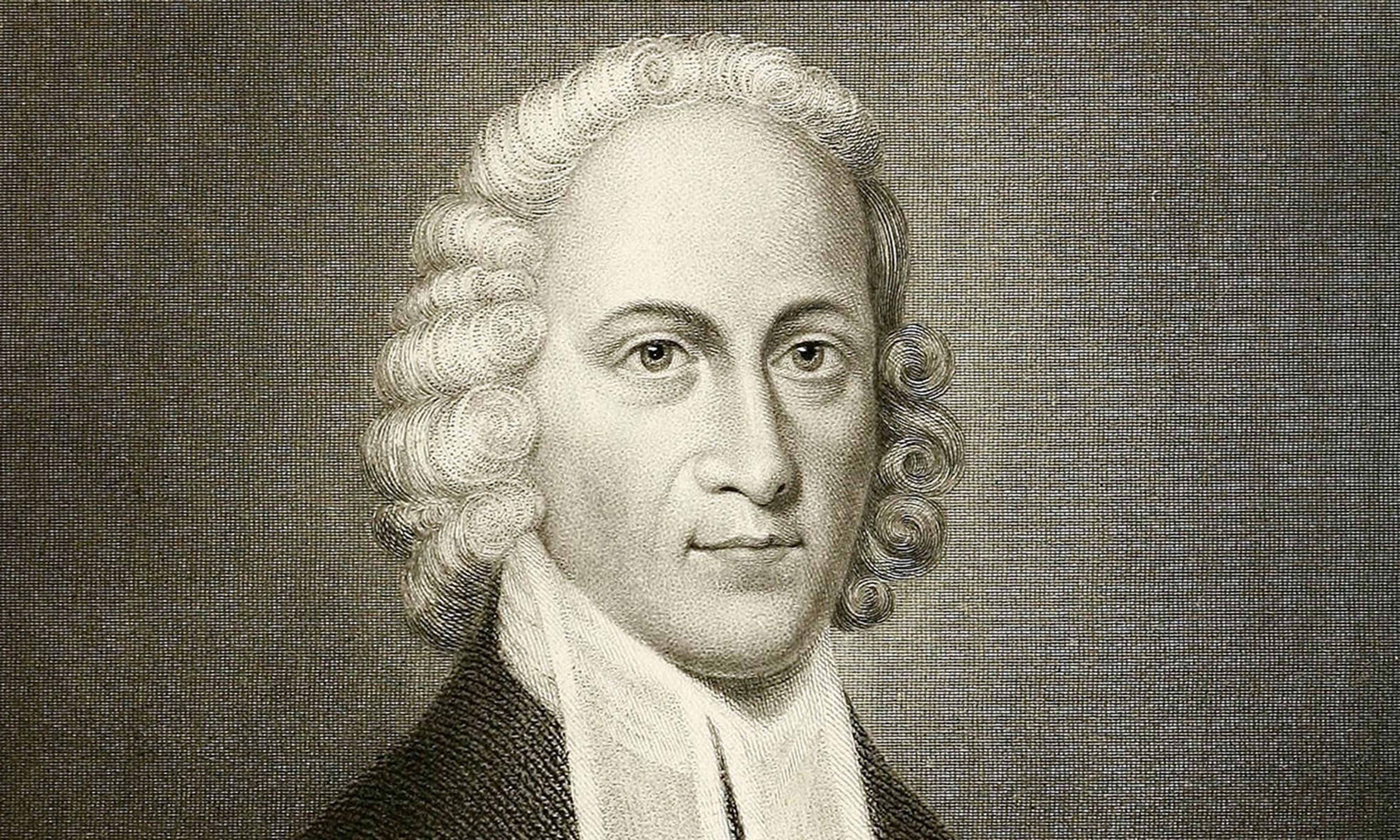
Move as quickly as decency permits to Jonathan Edwards. Not that Edwards is all that interesting as a thinker, but treat him as undoubtedly the last example of whatever thinking the Puritans did. Dwell at length on his role as a hell-fire preacher during the Great Awakening of the 1740s. But dwell even more on the fact that the Awakening died out by 1742, and that Edwards was fired from his job as pastor of his church in 1750 and died just as he was assuming the presidency of Princeton in 1758. Let him stand as a sign of how badly America treats its thinkers, but somehow simultaneously make him out to be not much of a thinker at all.
This is the last time you will actually need to worry about ideas in this history of American ideas, because you are now ready for an introduction to Benjamin Franklin, the model American and proto-Pragmatist — practical, commonsensical, businesslike, and born with an eye to the main chance. There is room, within the Harvard Narrative, to talk a little bit about the ideology of the American Revolutionaries — as articulated by another great Harvardian, Bernard Bailyn, in his Ideological Origins of the American Revolution (1967) — but let Franklin stay at front stage. Jump from there to Ralph Waldo Emerson and the Transcendentalists, a few New England Renaissance novelists (Melville, Hawthorne), and then you’re prepared to herald the arrival of William James and John Dewey, and the triumph of Pragmatism as the first, true, and only American philosophy — precisely because it is a philosophy that sees no intrinsic use for ideas, and uses them only as instruments for obtaining results. Goetzmann’s Beyond the Revolution is actually content to end with Pragmatism, as though Game Over had popped up on the screen sometime in the mid-1890s. The rest, we can assume, is just details. Within this narrative, there are really only two messages: how we escaped the influence of religion, and why all American intellectual roads lead to Pragmatism.
There is, however, a difficulty with the Harvard Narrative — or rather, there are three difficulties. The first is that, the more you look at it, the more apples and oranges get packed into the same crate. Notice that these writers represent different and largely incompatible genres. Edwards’s collected writings, in the modern Yale edition, run to 26 volumes, and span everything from parish sermons to full-fledged treatises on ethics. Franklin’s only philosophical work was a youthful essay on free will; it was his Experiments and Observations on Electricity in 1751 that made him world-famous. Emerson never wrote a book longer than 45 pages. He was an essayist who specialized in the miniature (at a time when writing miniatures for literary reviews still paid pretty handsomely), and earned most of his celebrity as a popular lecturer.
The second problem is that a lot of the narrative is suspiciously concentrated around one location: Cambridge. That is a product, in large measure, of the dominance of Harvard and Harvard-trained academics among the historians of American philosophy. (For decades, the mainstay Harvard history-department course in American ideas was taught in Emerson Hall, beneath a group portrait featuring James and Royce.) True, Harvard has played a major role in American intellectual life. But the Narrative’s preoccupation with Great Harvardians is a little like an attempt to write the history of music in America as though it were the story of the Metropolitan Opera.
The third and most serious problem that the Harvard Narrative presents is the tidy way it tucks everyone in its grasp into a single seamless account, like one of those charts showing the development of Homo sapiens from a cringing monkey to an upright man. Like those charts, this master narrative must pretend not to know of any missing links. It must not know, or seem to know, that between the day the Puritans founded Harvard and the day Edwards began preaching stretches an entire century in which New Englanders wrestled mightily with the impact on the intellectual world of Cartesian epistemology and Newtonian science; that Edwards shaped the creation of two generations of independent preachers and theological thinkers who applied his creative adaptations of Descartes and Newton to questions of personal identity, knowledge, and religion; that Franklin’s adopted home of Philadelphia belonged — at least intellectually — not to Franklin but to the Enlightenment; and that this latter movement, instead of standing aloof from the religious concerns of evangelical Awakeners like Edwards, actually incorporated them, and produced a generous flowering of writing on what 18th-century philosophes called “moral philosophy,” with its roots in the Scottish Enlightenment and its headquarters in Philadelphia.
The moral-philosophy tradition was a speculative mix of natural-law ethics with overtones of Christian orthodoxy minimal enough to prevent any Jeffersonian vigilantes from decrying it as a stalking horse for public religion. It found formidable academic evangelists in Harvard’s Francis Bowen, Yale’s Noah Porter, Williams College’s Mark Hopkins, Oberlin College’s Charles G. Finney (also a hell-fire preacher on the Edwards model), Princeton College’s James McCosh, and Princeton Theological Seminary’s Archibald Alexander and Charles Hodge. And it produced a counterpart in political theory in the ideology of the American Whig party, represented by Henry Carey, Francis Wayland, and Abraham Lincoln. Wayland’s Elements of Moral Science (1835) sold 40,000 copies in its first 15 years and 100,000 during its life in print. By contrast with Wayland, Emerson and the Transcendentalists were Romantic lightweights.
I mean “Romantic” in a very specific sense, too. Puritanism, and its renewal by Edwards in the 1740s, opposed much of what the Enlightenment stood for. Puritans and Edwardseans were people of religious faith, and accepted certain truths about God and the world as they were described in the Bible; and many of those truths were sorted out and shaped by the theology of John Calvin, and by the experience of religious individualism and moral rigor laid down by the first Puritan generation. But Puritanism had more flex in it than we often think, and even Edwards’s fiery evangelicalism had an overlap with the Enlightenment in its respect for reason and universal moral principles. Puritanism and the Enlightenment represent the “two souls” of American intellectual history, but they were souls that could inhabit the same body without always inducing schizophrenia.
Romanticism was another matter. The Enlightenment’s dedication to reason, nature, and science paled on succeeding European generations, and during the “long 19th century” between the French Revolution and World War I, a massive counter-movement against the Enlightenment appeared, which denounced reason as stale and tedious, and exalted feeling; which looked for nature, not in order to control it, but to adore it; and which saw science as a mean, groveling pursuit compared with the search after the experience of the sublime (and sometimes the neurotic). The Enlightenment believed that all real questions had real answers, and that these answers were knowable and universally compatible with one another. The Romantics disagreed: Reason was a limited and broken tool and did not reveal half of what it claimed to reveal about the world; people wanted to be guided by passion rather than reason; and what appeared true to some people was not necessarily true for others or other cultures. Consequently, Emerson is really linked not to Franklin or to Pragmatism, but to the European Romantics — to the later Kant, to Hegel and Chateaubriand. (In fact, Emerson and the Transcendentalists were not even the best representatives of the transition of Romanticism to America. That laurel belongs instead to the Romantic theologians — John Williamson Nevin at the Mercersburg theological seminary, and the Connecticut Congregationalist Horace Bushnell — and the Romantic politicians who flew the banner of southern agrarianism, John Randolph of Roanoke and John C. Calhoun.)
However, the Harvard Narrative is right on at least one point, and that is the revolutionary upthrust of Pragmatism at Harvard after the Civil War. Nothing could represent a more dramatic intellectual break with the moral philosophers’ pursuit of truth, hard-wired into the natural order of things, than Pragmatism. The architects of Pragmatism — Charles Sanders Peirce, William James, and (to a lesser degree) Oliver Wendell Holmes Jr. — shrank in horror from the carnage of the Civil War, convinced that the pursuit of truth was what turned men into absolutists and sent them into battle with each other. Peirce and James rejected the idea that truth was a set of beliefs or propositions that corresponded to an eternal natural order of right and wrong. Truth, by their reckoning, was what gave people satisfaction, irrespective of what form it took. (James did insist, in his proper and genteel fashion, that such satisfaction should not arise from the unnecessarily irrational; Peirce was not so discriminating, and found his satisfactions in wine, women, and prodigal spending.) Truth was, to borrow a term from Kant, pragmatic. And nothing was worth calling truth, James announced, unless it offered “a doctrine of relief.”
It was John Dewey, however, who transformed Pragmatism from a sort of philosophical therapy into a grand scheme of educational and social reconstruction. Dewey’s demand for “Reconstruction in Society” had no use for religion or any other form of absolute truth. What mattered was the creation of a pragmatic society in which everyone enjoyed fairness, worried only about solving immediate problems by generally agreed means, and got along happily — like a gigantic but carefully managed school recess. Not intellectual questions, but social solutions, were of genuine interest to Pragmatism. Dewey’s social Pragmatism, in turn, appealed deeply to a new industrial class of white-collar managers and bureaucrats, from Woodrow Wilson to Frederick Winslow Taylor (the first industrial “efficiency expert”). These were the unsmiling, untheoretical problem-solvers who formed the backbone of turn-of-the-century Progressive politics, and they became the grandfathers of the New Deal and the Great Society.
Grant the fundamental premises of Pragmatism — that no truth exists apart from satisfaction, that no nation or principle is worth dying for, and that all human inequities are merely problems awaiting the application of intelligence — and they will burn a swath of anti-intellectualism so wide no American mind worth noticing will ever seem to have existed.
Thus began the “Pragmatic Captivity” of American ideas, for not only were the reigning American philosophers of the 20th century mostly a set of variations on Pragmatism (think here of Willard Quine, C. I. Lewis, and Richard Rorty), but the remainder faded from the public sphere, more and more concerned with the analysis of language than with questions of ethics or knowledge. In the heyday of the moral-philosophy tradition, a professional politician like Abraham Lincoln (according to William Herndon) “ate up, digested, and assimilated” Wayland’s Elements of Political Economy. Today it would be difficult to imagine any modern president’s committing himself to reading Saul Kripke or Hilary Putnam with the same ardor. Philosophers who took James seriously — and it was hard not to — discovered from this that they had signed the death warrant for their own importance. Pragmatism is, so to speak, the anti-intellectualism of the philosophers, and those who swallowed it were unwittingly but effectively drinking their own hemlock.
In the process, Progressives and Pragmatists alike missed the boat on two developments in the later 20th century that none of the Pragmatists could have foreseen: 1) the rise of a neo-orthodox religious critique (especially as championed by Reinhold Niebuhr in the 1950s) and the persistence of the seriousness with which theology was conducted as an intellectual enterprise in America; and 2) the emergence, in violent fashion, of the New Left in the 1960s. Both were a puzzle to Pragmatists, because there was no reason they could see for the dogmatic outlook behind both even to exist.
These two survivals, desperately unalike in all respects except the single conviction that there is an unmistakable pattern written into human experience and history, suggest that the moral philosophers’ instinct was truer than Pragmatism ever imagined, and that Americans want more from ideas than the Pragmatic reassurance that ideas are merely tools for experimentation. Nor has the natural-law core of the moral-philosophy tradition ever faded entirely from the American intellectual scene. How could it? When Jefferson asserted that “we hold these truths to be self-evident,” he assumed that not only were there truths, but that everyone was compelled to acknowledge their existence. Lincoln believed that the American order was founded on a “proposition” — not an experience, and certainly not on race, blood, ethnicity, or any of the other Romantic irrationalities. (Lincoln is frequently described as a “pragmatist”; but using the term this way makes it into little more than a synonym for “practical.” Strictly speaking, Lincoln was anything but a Pragmatist. He denounced slavery as ethically wrong, as a violation of natural law and natural theology — and would admit to no compromise with, and no scaling back of, his Emancipation Proclamation.)
The master narrative of Pragmatism would have us believe that all Americans are Pragmatists, and always have been; the history of American ideas — the real history — tells us something very different. And that’s why the history of America in the Age of Obama, and beyond, will continue to be a clash of ideas.










Comments