Vengeance, the Italians say, is a dish best served cold. The recipe, surely, was handed down from the Romans, who combined a strong taste for vengeance with the patience to allow it to cool and be served up well below room temperature. The Last Assassin, Peter Stothard’s account of Gaius Octavian Caesar’s rounding up of the men who assassinated Julius Caesar (who in his will adopted Octavian as his son), to the last of whom he dispensed vengeance fully 13 years after the event, is a richly complicated case in point.
The first complication has to do with our not really knowing how many Roman senators, on that fateful day of March 15, 44 b.c.e., in the theater that Pompey had built, participated in the assassination. By some estimates as many as 60 were actively in on the plot and possibly 20 more knew about it beforehand. The number of stab wounds Caesar suffered is generally given as 23, the most surprising, at least to Caesar himself, being that of Marcus Brutus, whom Caesar had earlier forgiven for his fighting on the losing side against him with Pompey Magnus in the Battle of Pharsalus. Caesar was said always to have favored Brutus, and some believed he was Caesar’s son by his lover Servilia. Et tu, Brute — Shakespeare has set in stone those dying words of Caesar when he recognized Brutus as among his killers. But Peter Stothard and others hold that Caesar’s last cry was not in Latin, but in Greek, and that it has been variously interpreted as “Even you, my son,” “Up yours,” or “See you in hell.”
The ostensible motive for the assassination of Julius Caesar was to end the career of a man the assassins thought a tyrant. Much of Roman history was about the counterbalancing of senate and monarch on the one hand, and people and senate on the other. From the killing of the early Roman kings, through the brothers Gracchi, through Marius and Sulla, to the assassination of Julius Caesar, Romans struggled to free themselves from what they believed to be the threat of tyranny. Brutus himself claimed descent from Lucius Junius Brutus (545–509 b.c.e.), who was responsible for the expulsion from Rome of his own uncle, King Tarquinius Superbus. The assassination of Julius Caesar, one might say, was business as usual.
A classicist by training, a journalist by trade (from 2002 to 2016 he was editor of the London Times Literary Supplement), Peter Stothard recounts the rounding up of 19 of Caesar’s actual assassins and the killing of Cicero and Sextus Pompey (son of Pompey Magnus), whom he terms “honorary assassins,” or men who approved the killing of Caesar but were not themselves present on that day at Pompey’s theater with daggers drawn. Much of this material — the assassination itself, the later civil war fought between Octavian and Mark Antony — is ground long and well plowed by Plutarch, the historians Appian and Cassius Dio, and others. What Stothard brings to it is a skeptical point of view and a style that volleys between the aphoristic and the poetic. While this style has its charms, its author has perhaps too great a fondness for what one might call atmospherics. Thus of a meeting of Cicero and some of the assassins, he writes:
Thick, dark clouds gathered. Dust choked the air. To the south in Sicily Mount Etna had erupted but in Rome it was possible only to see the brutal sky as a portent. Opinions differed of what the gods might be saying. Thunderous rain fell. Lightning lit the political stage below.
Of the Battle of Actium, Stothard writes, “Pale-faced vultures flapped like sails in the sky” and “Ambracia Bay was left to its flamingoes.” He can also occasionally lapse into obscurity, for instance writing: Cleopatra’s “sailors were slavish, looking more closely for a raised royal flag, as though it were an eyebrow, than at the ships of the enemy.” Both my own eyebrows went up in attempting to figure out that sentence.
The eponymous assassin of Peter Stothard’s title is one Gaius Cassius Parmensis, whose ancestors played a part in the founding of the town of Parma, in the northwest corner of Italy. A politician without great expectations, Parmensis was an excellent sailor and a writer, none of whose works (tragedies, satires, epigrams) have survived, though in his lifetime some of these were well spoken of by Horace. One of the problems of Peter Stothard’s book is that not enough is known about Parmensis for him to bear the weight of the book’s title.
The Last Assassin is in fact a split-screen performance. On one screen is the pursuit and ultimate fate of Julius Caesar’s assassins, actual and honorary; on the other is the disintegration of the triumvirate of Mark Antony, Octavian, and Marcus Aemilius Lepidus that formed after the death of Caesar. The pursuit of many of the assassins ends in suicides and beheadings, with beheadings often following hard upon the suicides. This is a story with no happy endings, except for that of the young Octavian, its most vengeful character. When the dust clears and the blood is mopped up, he emerges as Augustus, who ruled as emperor from 27 b.c.e. to 14 c.e., never calling himself that but instead primus inter pares, first among equals, yet in reality beginning a chain of dynastic reigns that put permanent paid to the revered Roman republic.
The one death of an assassin taken up in any detail by Peter Stothard is that of Gaius Trebonius, a former consul, by a professional torturer called the Samarian, an armorer who “knew about heating knives, sharpening whips and hauling a human body on the rack of wood and iron that the Romans called a horse.” This Samarian, in the employ of another former consul, Publius Cornelius Dolabella, a man described by Stothard as “a slug, a sot, a charmer and a shameless changer of sides,” put Trebonius through two full days of torture before finally beheading him. “He knew,” Stothard writes of the Samarian, “how to challenge deniers of the fear of death.”
By “deniers of the fear of death” Stothard means Epicureans, followers of the Athenian philosopher Epicurus (341–270 b.c.e.), many of whom roam through the pages of The Last Assassins, Cassius and Gaius Parmensis among them. In what today we might call a four-point program, Epicurus taught the insignificance of death and hence relief from its terrors. The points are: (1) There is no God or gods, and even if there were it is preposterous to think he or they are watching over you and keeping an account of your behavior. (2) Don’t worry about death, which is little more than oblivion, for there is no afterlife but only the same blank condition that existed before you were born. (3) As for pain, not to worry, it will either soon disappear or grow worse, and if the latter, then death will follow, which as we have seen presents no problem. And finally (4) striving after luxury, money, fame, power is a game not worth the candle.
The assassin of Julius Caesar of greatest interest is of course Marcus Brutus. In the assassination itself, Brutus supplied the virtue, Cassius, who held personal grudges against Caesar, the rancor. Plutarch provides characters of both men, much favoring Brutus. He writes: “Many heard Antony himself say that Brutus was the only man that conspired against Caesar out of a sense of glory and the apparent justice of the action, but that all the rest rose up against the man himself, from private envy and malice of their own.” Brutus’s most recent biographer, Kathryn Tempest, despite her title of “Brutus: The Noble Conspirator,” nonetheless allows that Brutus was not without flaws as a military leader and a self-promoter (“self-fashioning” is the term she uses) who was shady in some of his business transactions, arrogant, and humorless. “In all,” she writes, “Brutus emerges as a human being possessing some of the most admirable virtues, and a concomitant share of the corresponding vices, of his day.”
Whether Brutus is best remembered as the would-be liberator of his country or the betrayer of his friend remains an unanswered question. Plutarch, who stresses Brutus’s virtues, nonetheless allows that these virtues, in the instance of the assassination of Caesar, were badly misaimed, for he, Plutarch, holds that “in the malady of the time and the need of a monarchical government, [Julius Caesar] might be thought to have been sent as the gentlest physician, by no other than a divine intervention. And thus the common people instantly regretted Caesar, and grew implacable against those who killed him.” Julius Caesar, the harsh truth may well be, did not deserve to die by assassination. But, then, in Rome power was itself a hazardous possession: In the 500-year history of the Roman Empire, roughly half the emperors were assassinated, and another nearly 10 percent took their own lives.
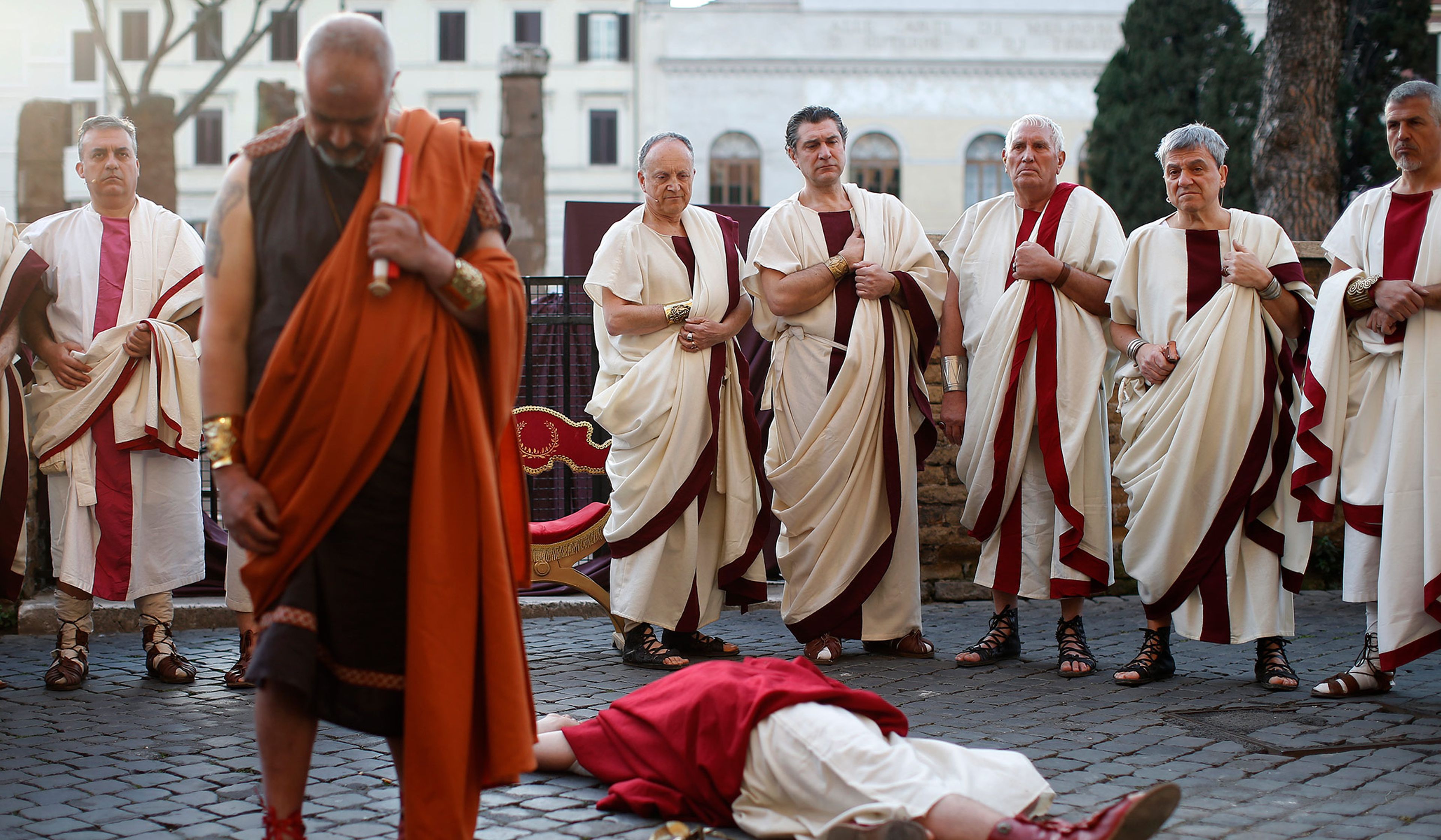
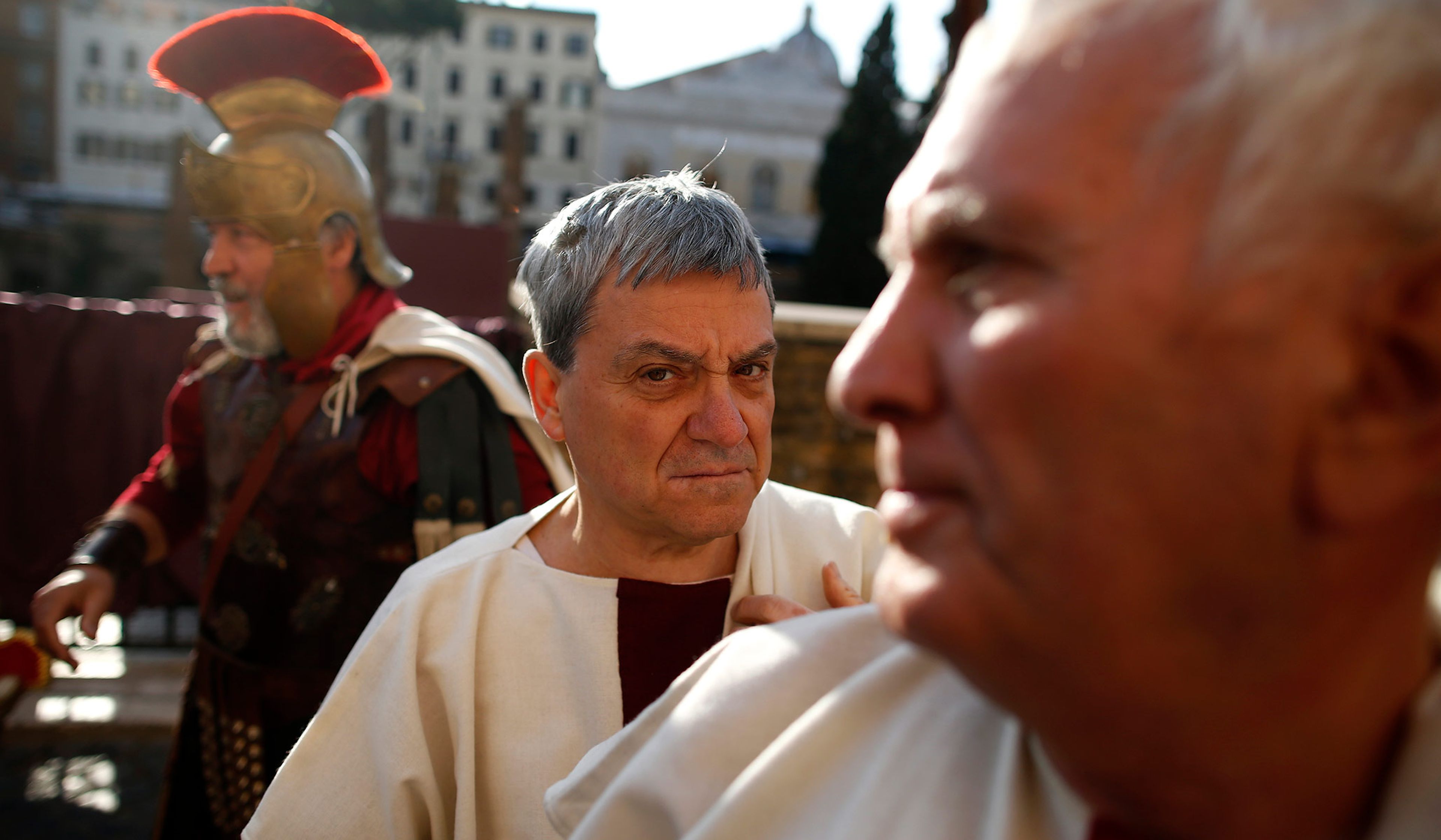
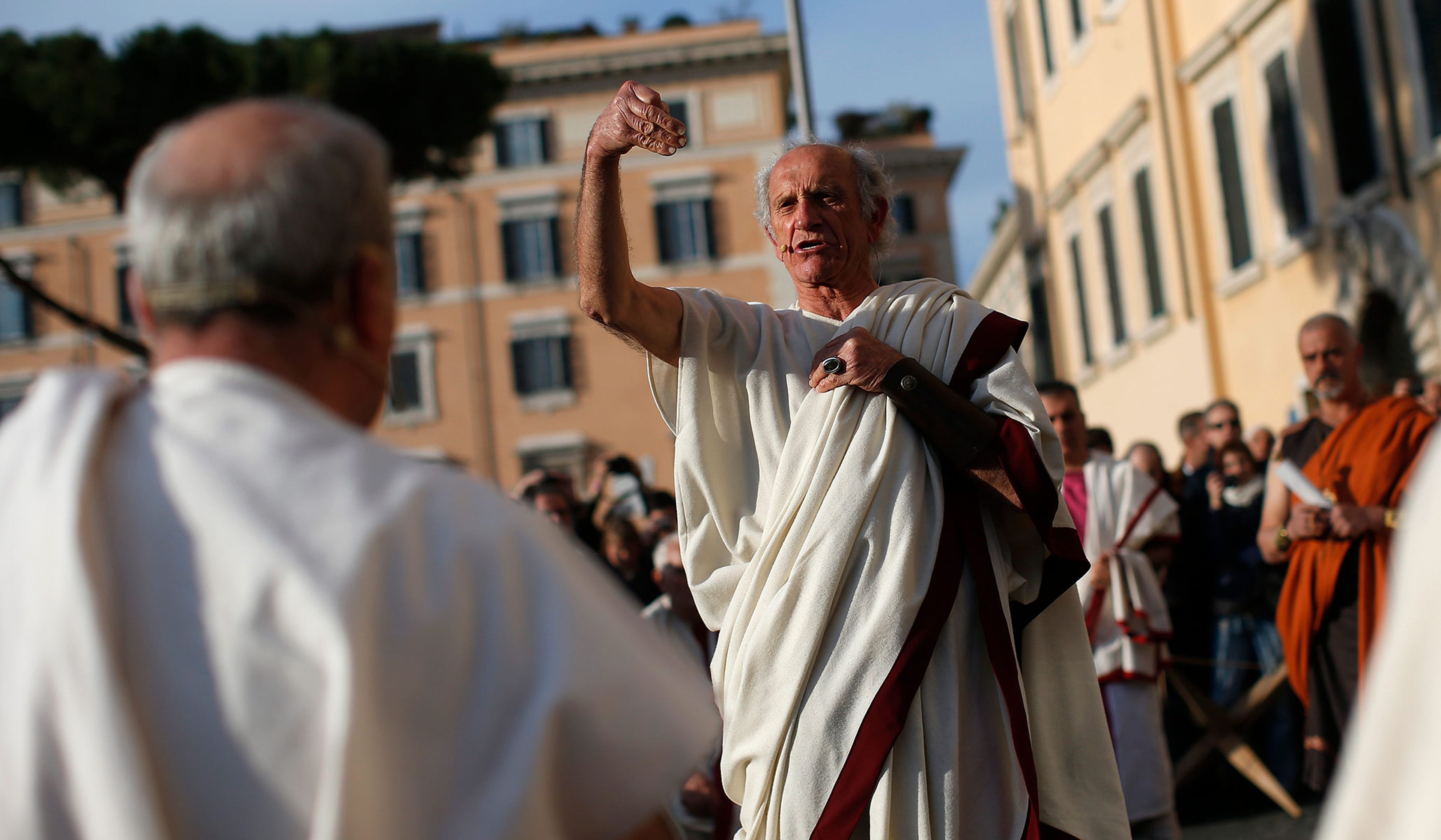
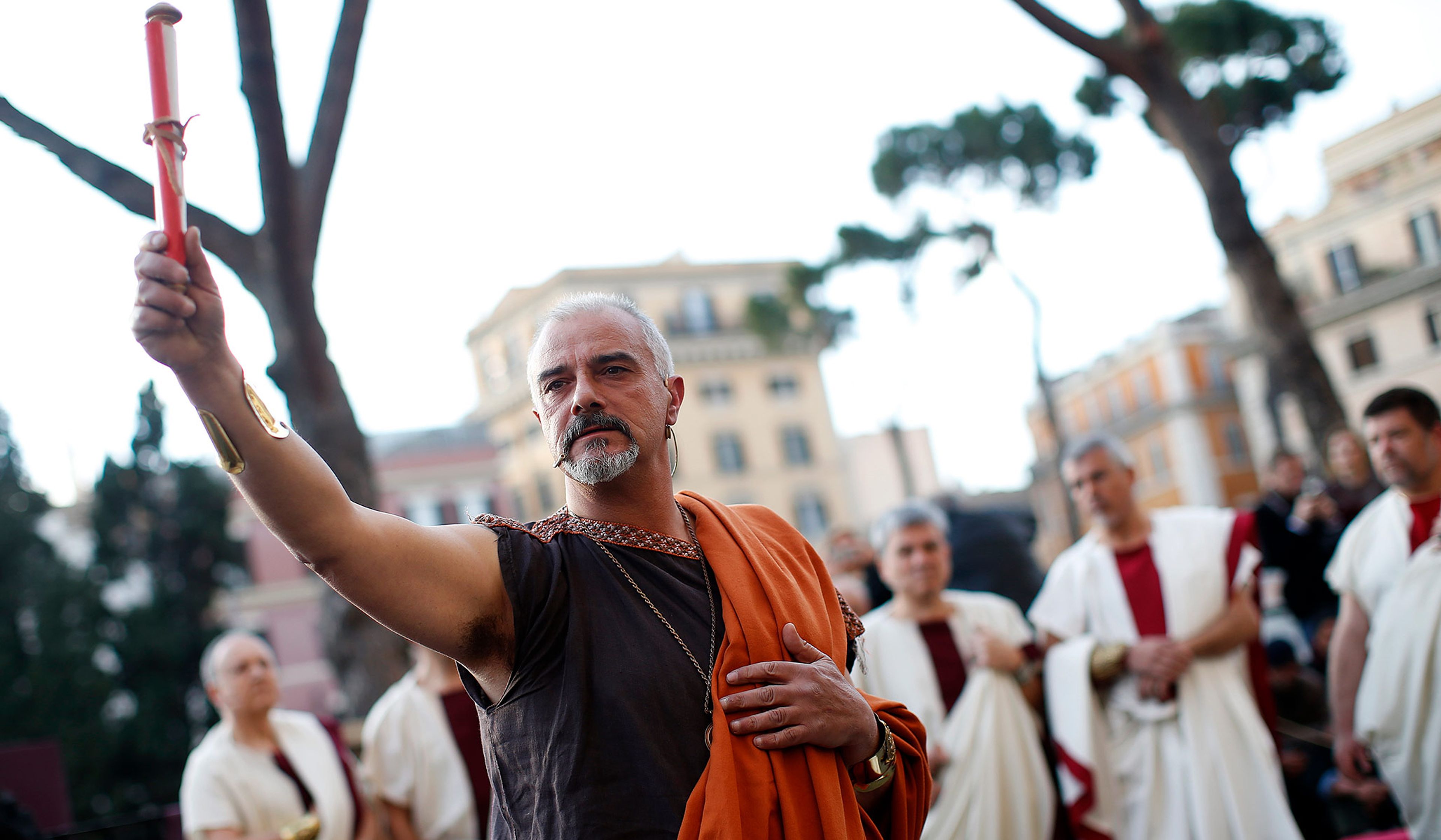
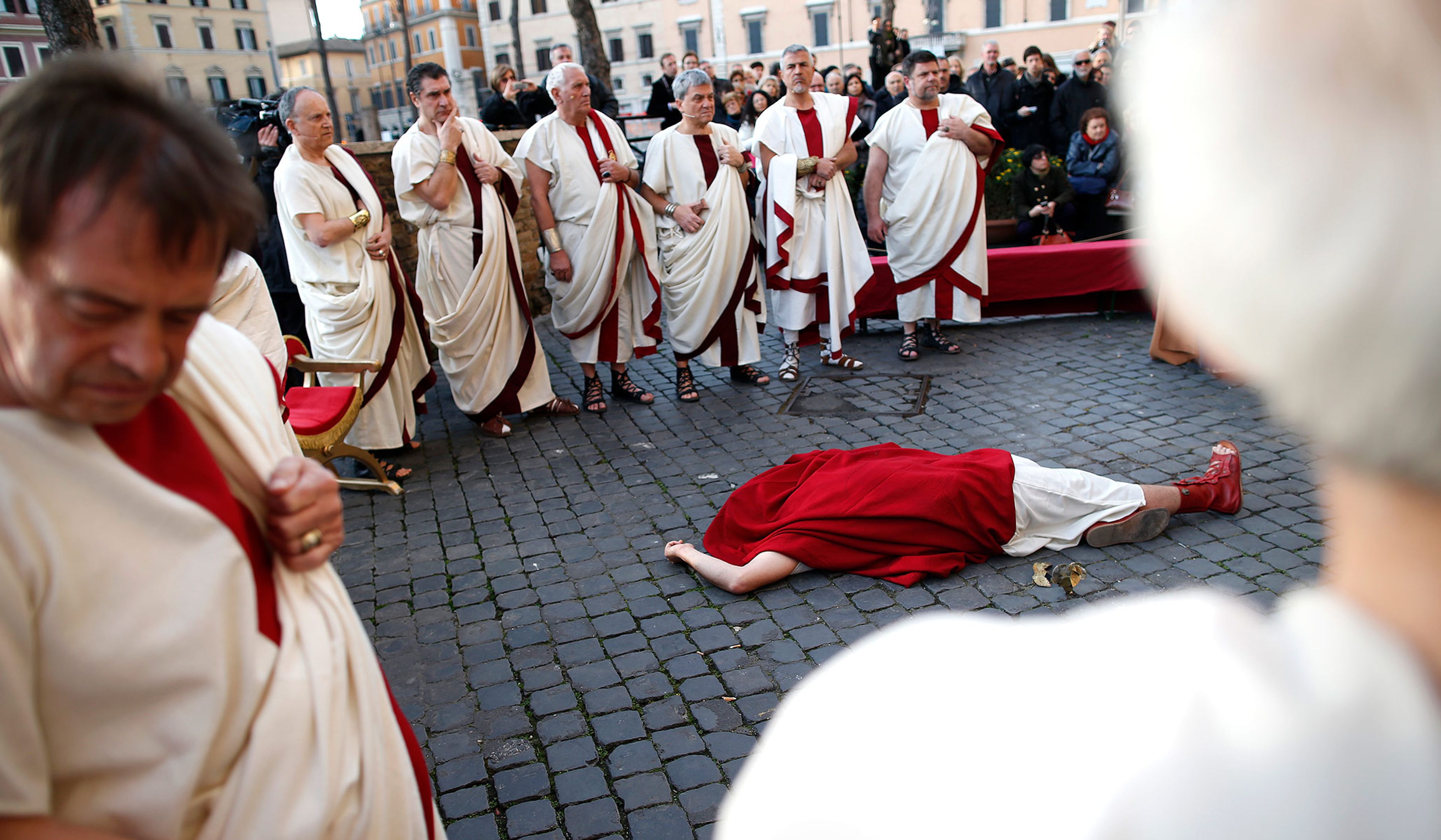
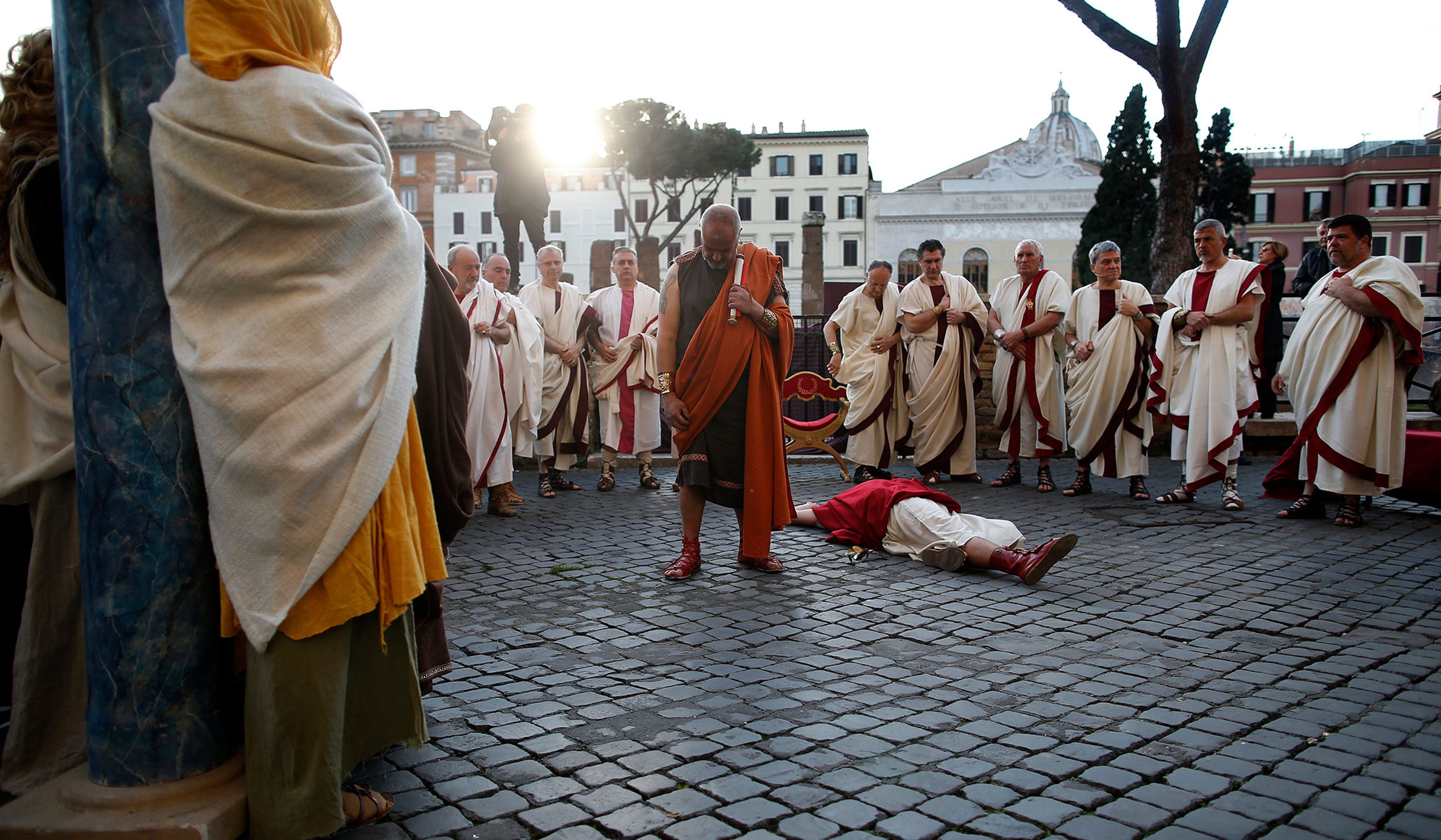
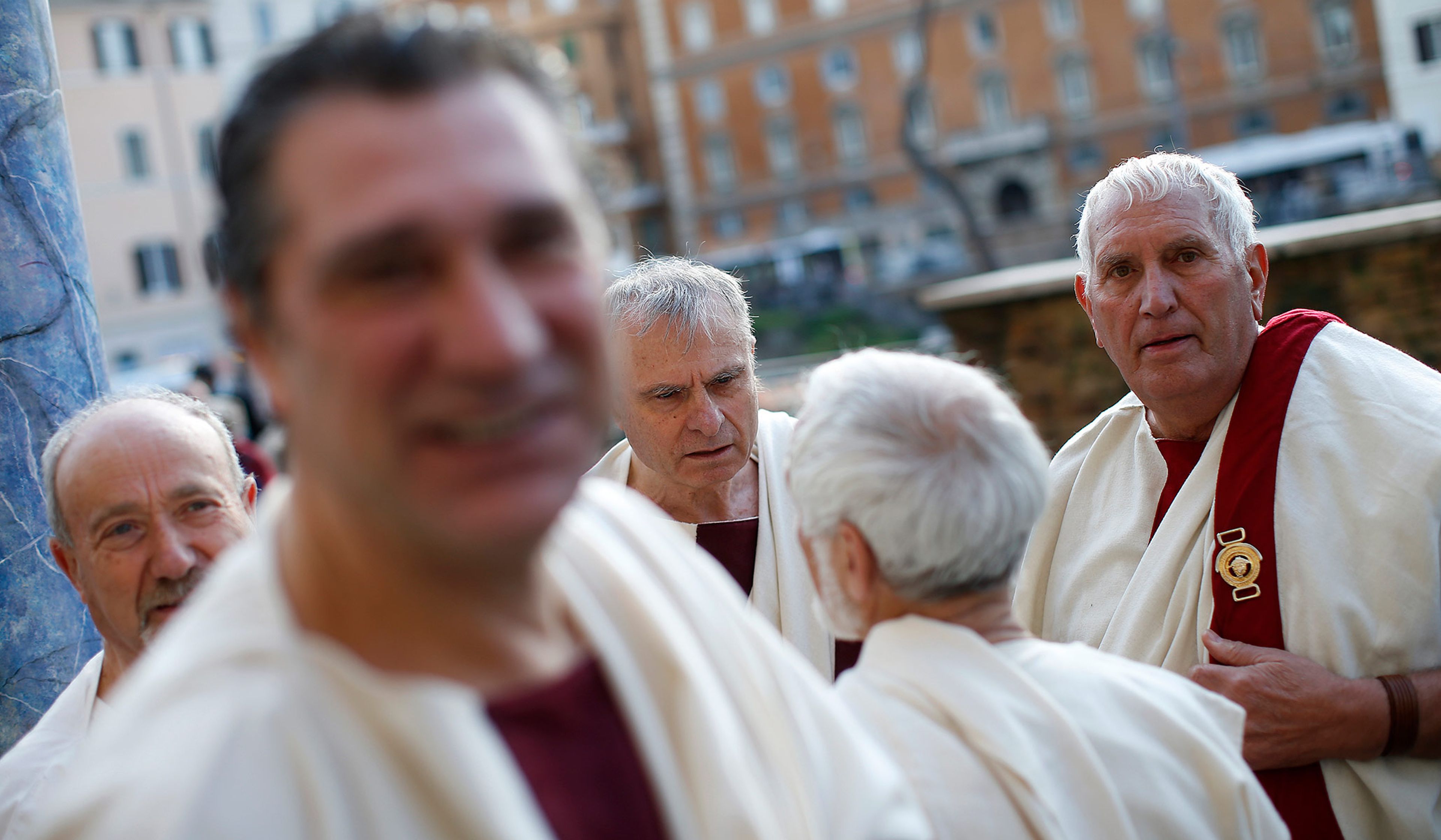
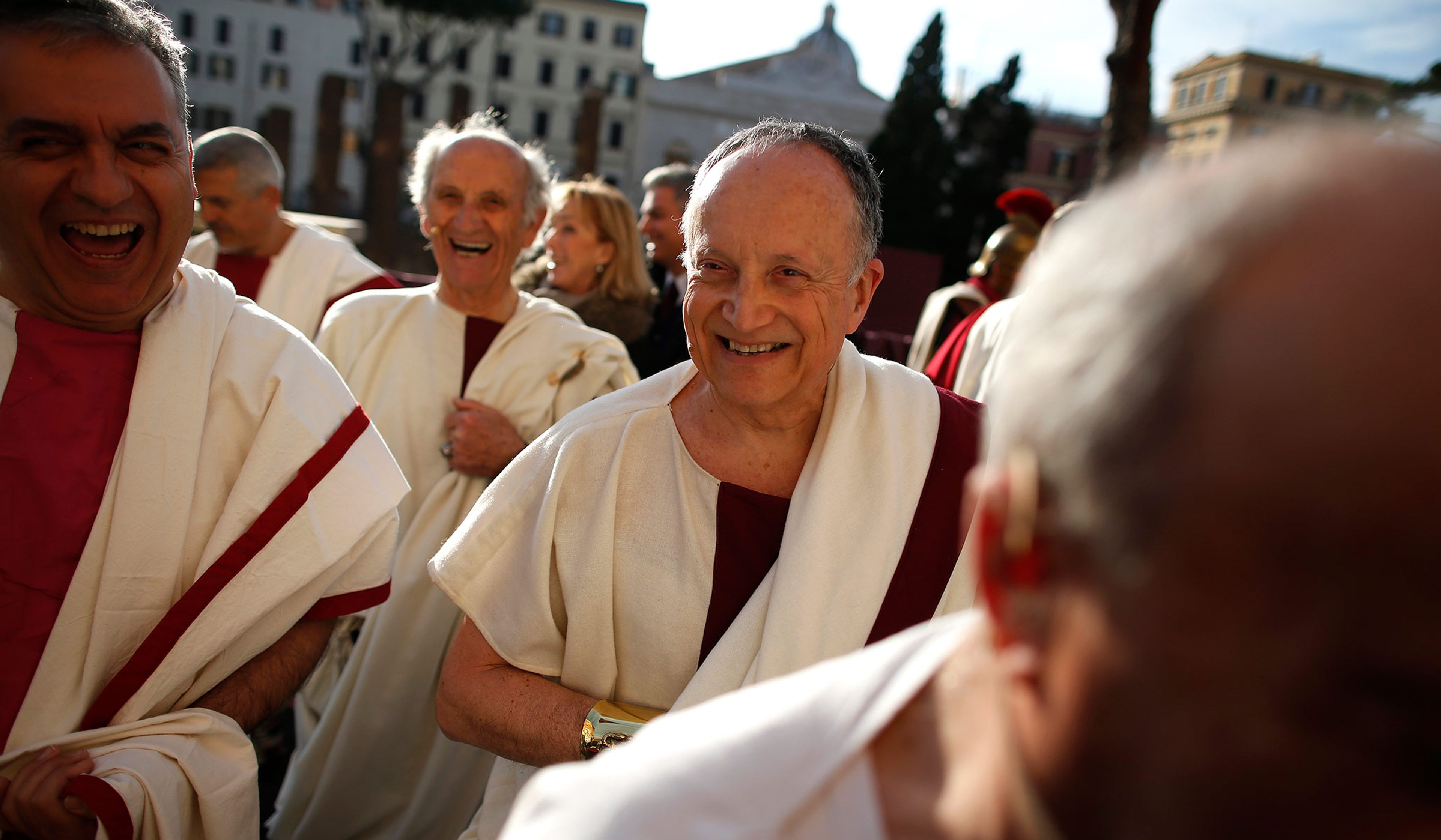
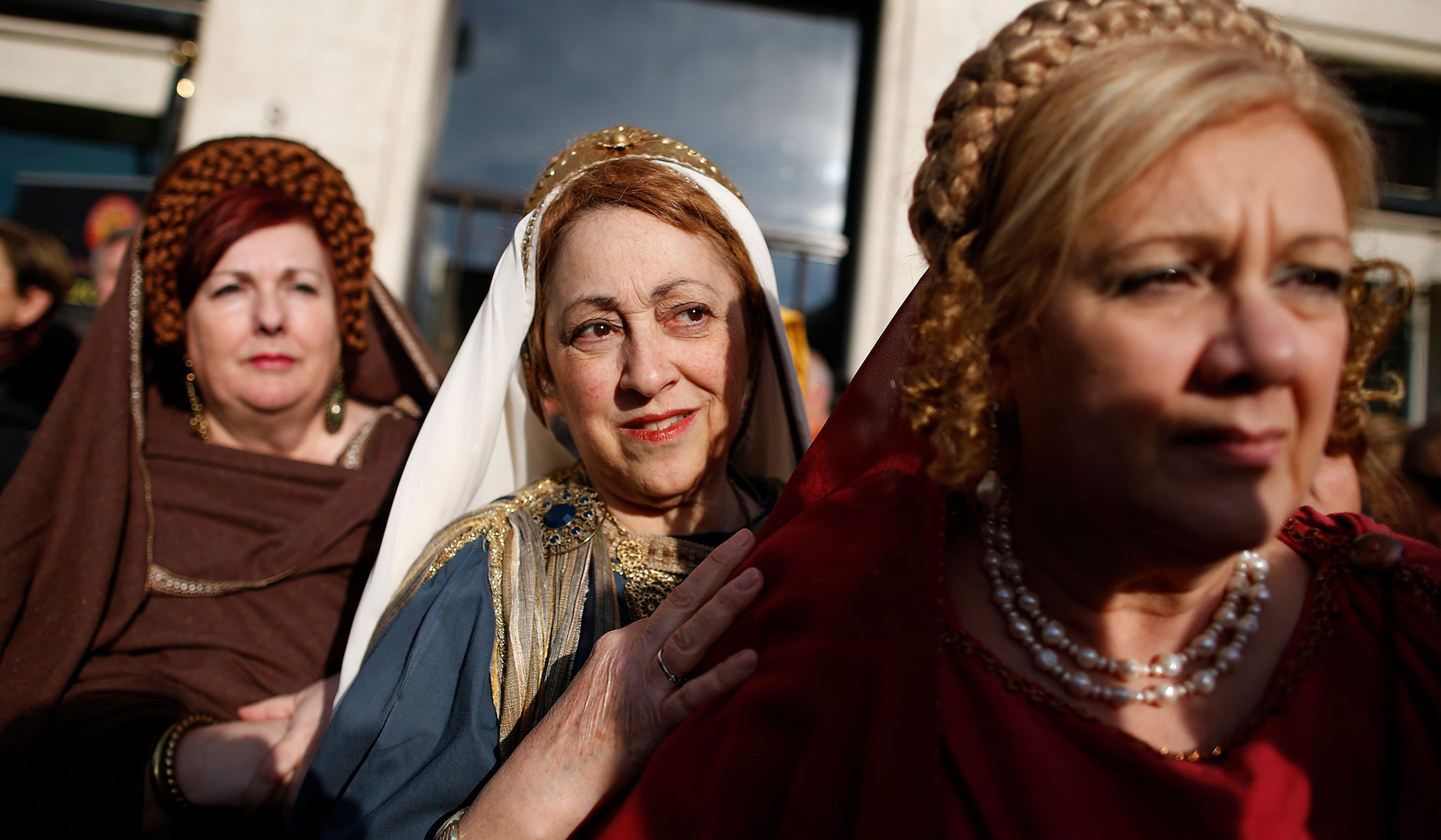
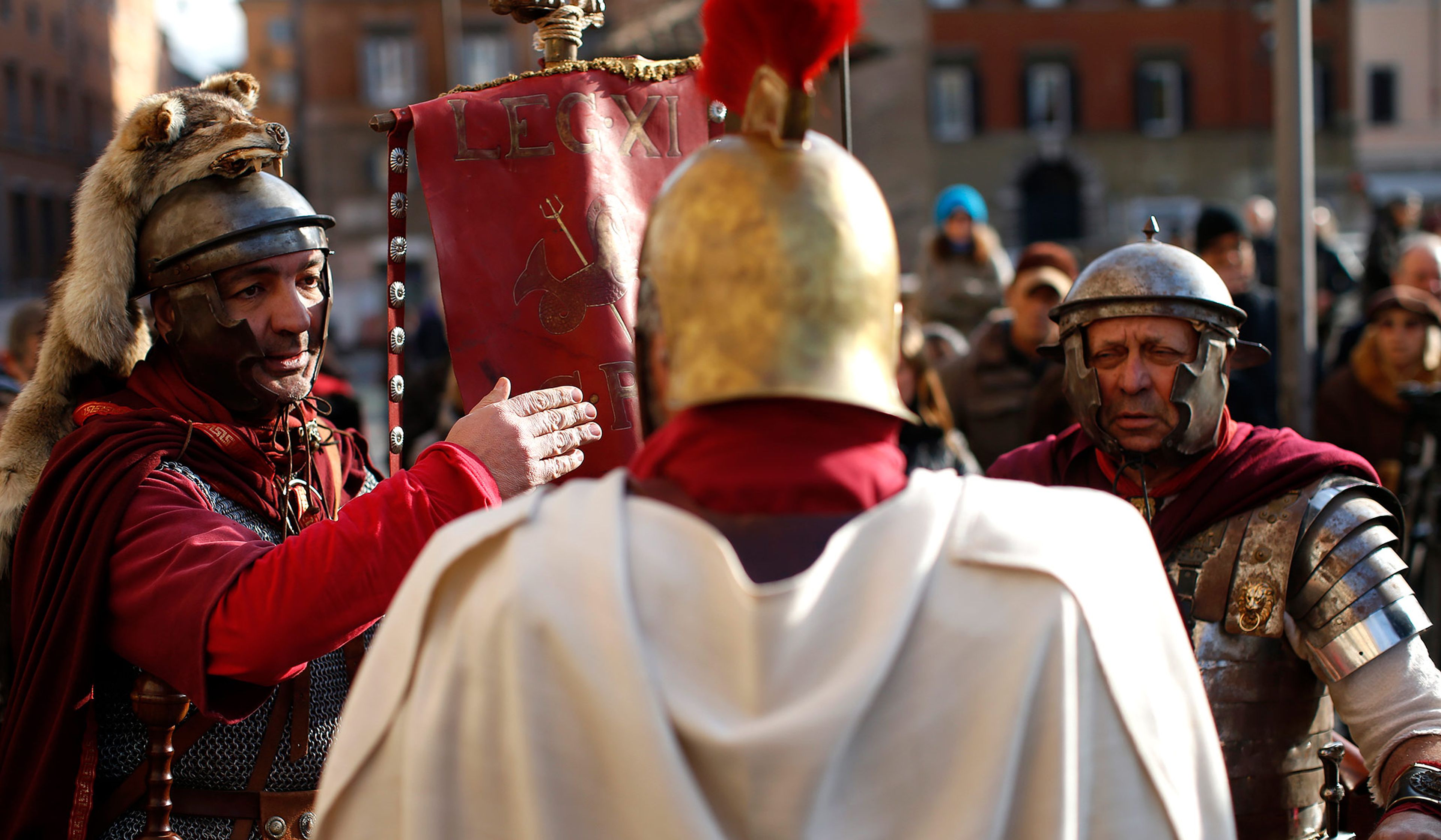
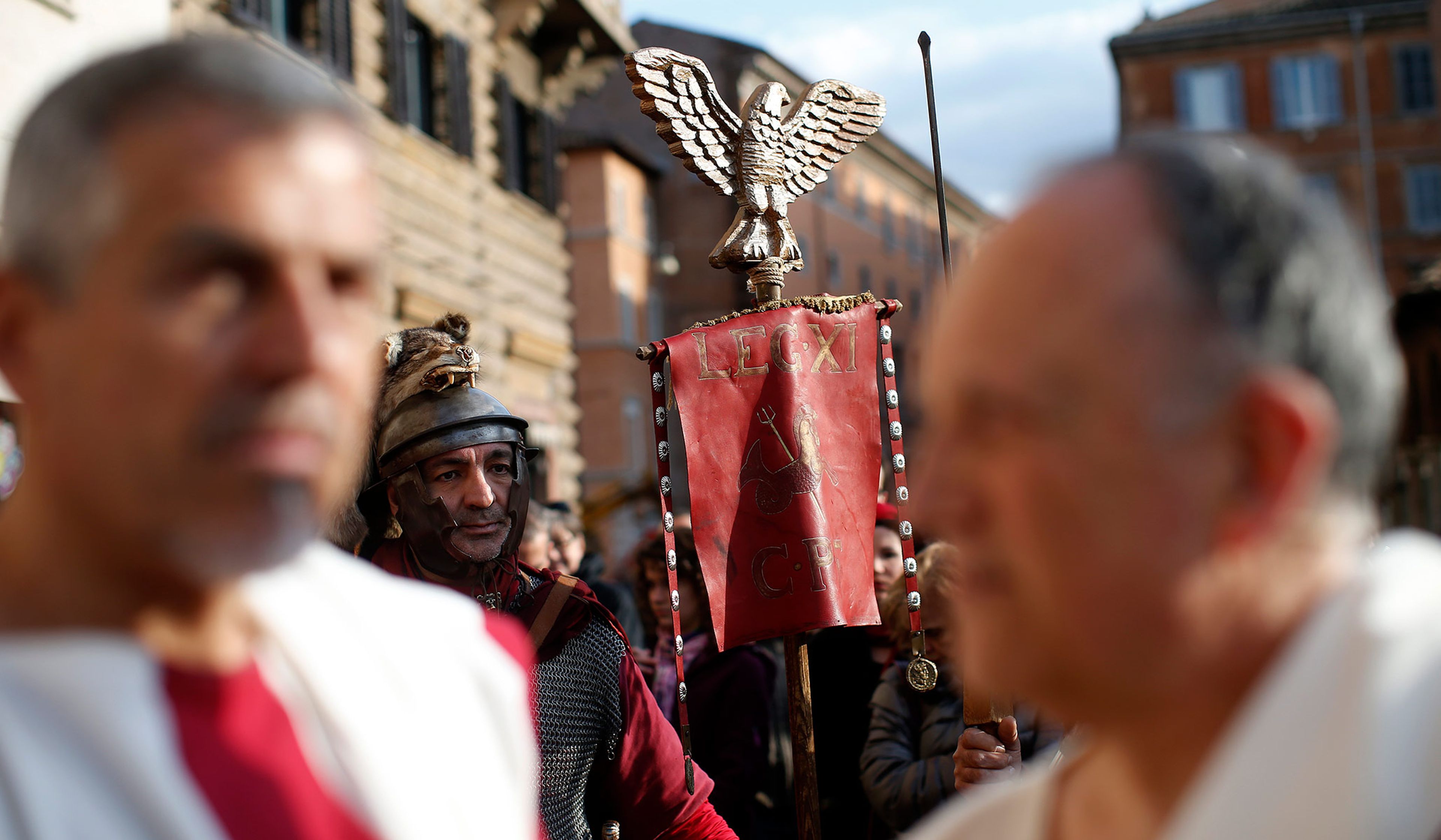
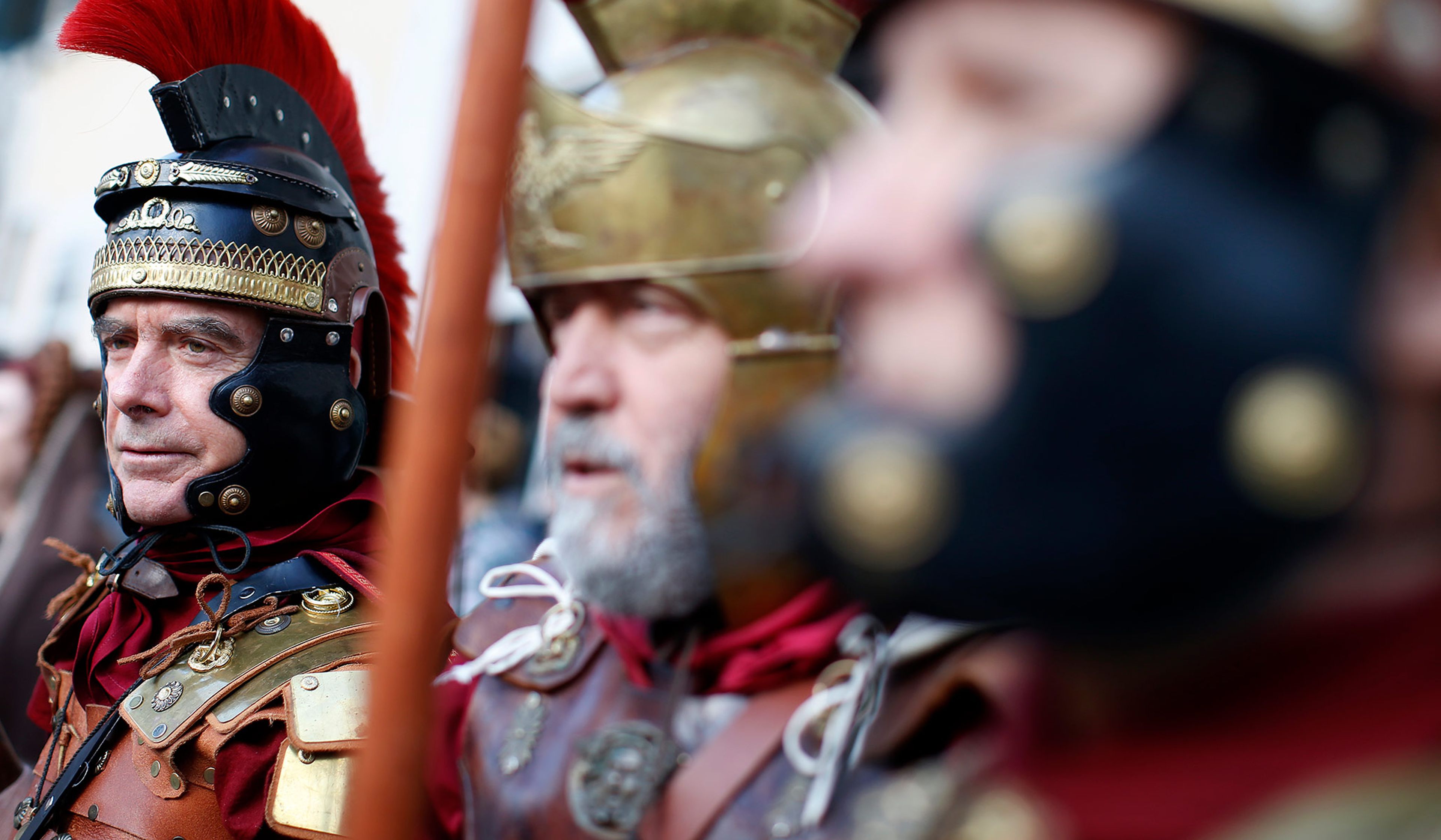
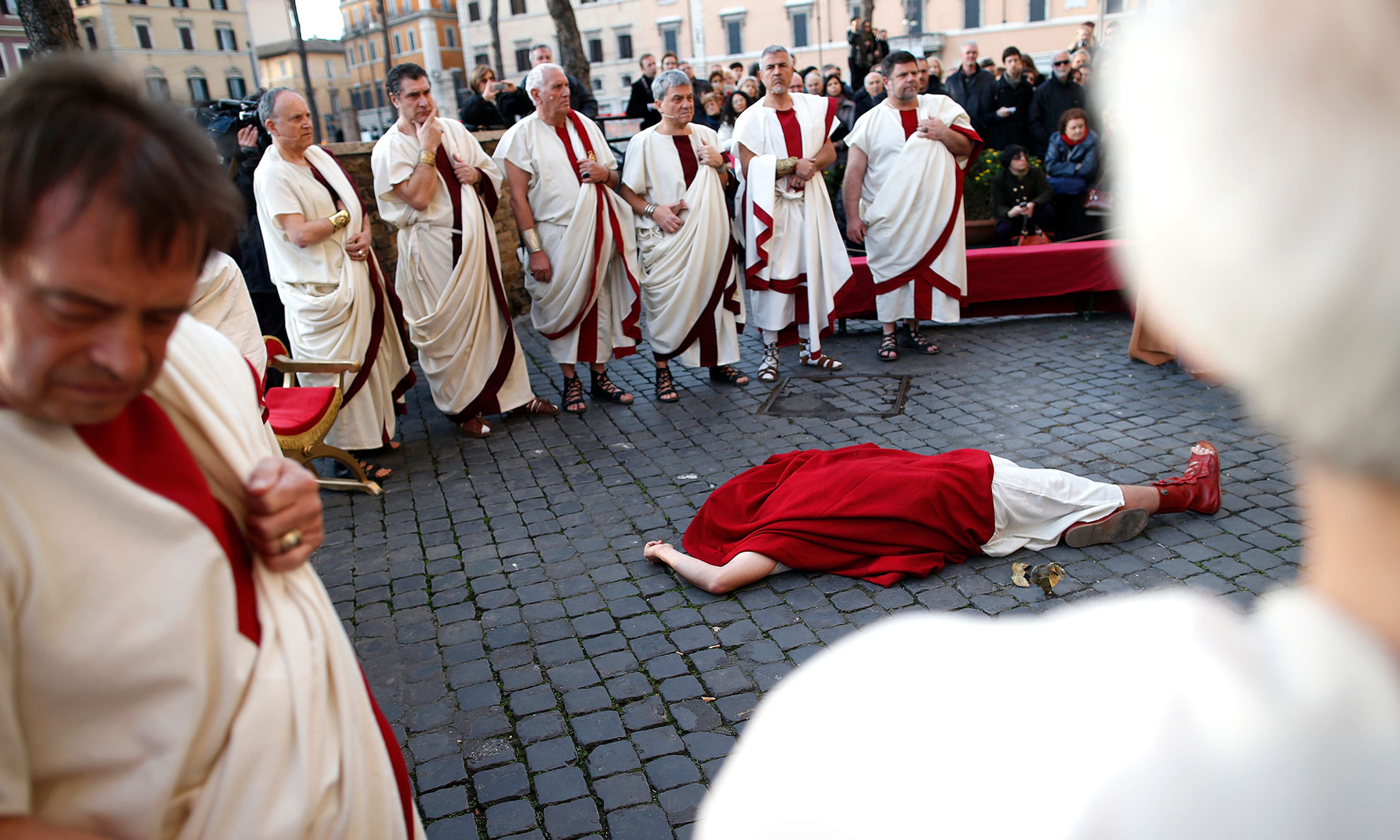
Members of the Roman historical society Gruppo Storico Romano take part in a re-enactment of the “Ides of March,” the date on which Julius Caesar was assassinated in 44 B.C., in downtown Rome, Italy, March 15, 2013.
Tony Gentile/Reuters
Of those who gained by the assassination of Julius Caesar, Mark Antony and the then-18-year-old Octavian were foremost. A falling-out between them, however, was certain. Brutus himself predicted as much. In the Roman Empire, examples of power amicably shared are rare. In the case of Antony and Octavian, now calling himself Octavian Caesar, it was never for a moment really in the cards.
Octavian was cunning, Antony a brute. When they made their list of proscriptions, setting out the names of those marked for exile or death, their fortunes to be expropriated, Antony made certain that Cicero was prominently on it, for Cicero had long been wary of Antony and attacked him in his writing. When Antony’s thugs captured and beheaded Cicero, they had instructions to cut off the hands that had written against him. Antony had Cicero’s head and hands nailed above the rostra, or speaker’s platform, in the Forum.
Of the triumvirate, Lepidus soon dropped out, retiring to a town near where Cicero had been murdered that was famous for its oysters. In the new alignment of power, Parmensis, Peter Stothard’s last assassin, sided with Antony, now openly at war with Octavian. The sea Battle of Actium (31 b.c.e.) — “the battle that never happened,” Stothard calls it, so quickly was it over — did for Antony, and for Parmensis, too. Antony and Cleopatra of course committed suicide, much to the later benefit of Shakespeare. Parmensis fled to Athens, where he was later discovered and by Octavian’s order killed by Quintus Attius Varus, who brought the last assassin’s head back to Octavian in Rome.
Distinctly not a game, assassination, for those who tend to be a touch nervous or are planning on a long life.












Comments