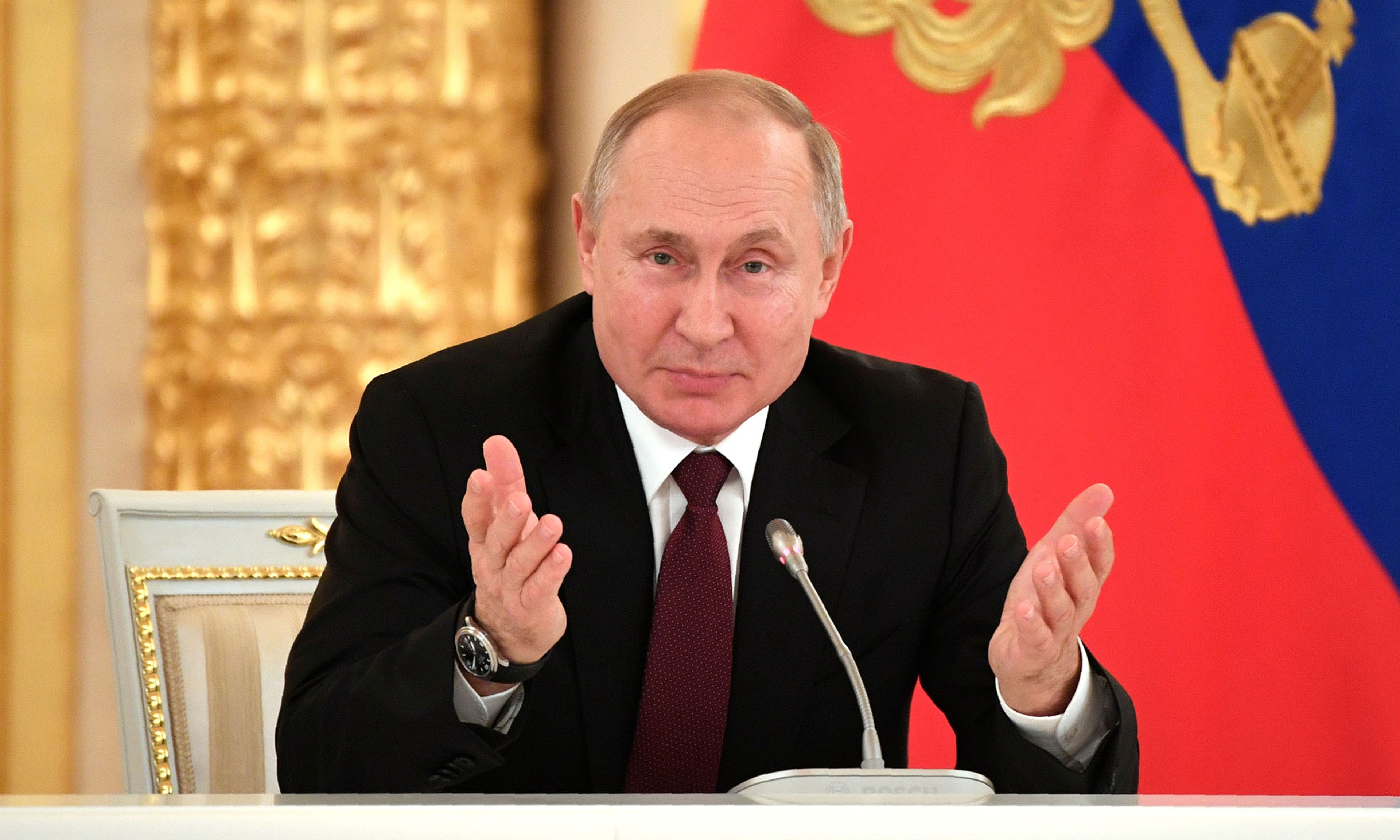
If asked to name the moment when hopes for post-Soviet Russian democracy died, the typical Western observer will usually point to something that occurred under Vladimir Putin’s tenure. He might single out the 2003 arrest and imprisonment of anti-Putin oil-and-gas magnate Mikhail Khodorkovsky on trumped-up charges, a punishment meant as a warning to the rest of Russia’s oligarch class not to get involved in opposition politics. Or he might point to one of the many government raids on or seizures of various independent media outlets during Putin’s first term as president. He might even choose the strange series of apartment bombings that took place across Russia in September 1999, just weeks after Putin had been named prime minister by an ailing President Boris Yeltsin. The Russian government blamed the attacks on Chechen terrorists and used them as a pretext to start a second Chechen war, a move that greatly boosted the popularity of Putin, who was still little known. Yet an overwhelming amount of evidence suggests that the FSB, the successor agency of the KGB, itself orchestrated the bombings as a provocation.
All these events feature in David Satter’s Never Speak to Strangers, an anthology of the journalist’s writings on Russia and the Soviet Union from the mid 1970s, when he began as the Moscow correspondent for the Financial Times, to the present. For Satter, however, the moment when the country’s fate to remain mired in authoritarianism was sealed came long before Putin ever entered onto the national stage. In fact, it came at a time when the West was still celebrating the collapse of the Iron Curtain, and it was a decision greeted with applause by Washington.
By fall 1993, many were already wondering how bright Russia’s post-Communist future would turn out to be. The “shock therapy” reforms that the Yeltsin administration applied to bring capitalism to Russia had been devastating, leading to hyperinflation that destroyed most citizens’ life savings. As the economic suffering of the masses reached new heights, the parliament began to push back against the Yeltsin economic agenda, culminating in a standoff over the country’s budget. As tensions increased, Yeltsin announced he was dissolving the parliament as it announced that it was impeaching him. Demonstrations turned violent, and the standoff ended with Yeltsin calling in the tanks to shell the White House, Russia’s parliament building, forcing the surrender of parliamentarians who had barricaded themselves there in protest. A few weeks later, U.S. secretary of state Warren Christopher visited Moscow in a show of support for Yeltsin, saying that although Washington did “not easily support the suspension of parliaments,” “these are extraordinary times.”
In the months that followed, Russia adopted a new constitution that gave the presidency near-dictatorial powers, radically weakened parliament, and provided no mechanism for real checks and balances. Writing at the time, Satter could already see that Yeltsin’s actions came at a steep cost for the country’s future, as they “strengthened the Russian tradition of contempt for compromise and reliance on force which in the long run can only be antithetical to the progress of all democratic forces.” Putin may have cracked down on the last remnants of these forces years later, but Yeltsin made it easy for him to do so.
This sobering contemporaneous assessment of Yeltsin’s legacy is one of many instances in the book that show Satter able to glean insights or communicate uncomfortable truths about Russia at a time when too many others either could not or would not. Several qualities explain this ability.
First, Satter’s analysis of Soviet and Russian politics and society rests on a bedrock knowledge — of Russian history, literature, and culture — that too many Western correspondents lack. One of the pleasures of flipping through the volume is stumbling on the occasional book review or cultural article that does not deal directly with current events. Reading his short appreciations of works by Varlam Shalamov, whose descriptions of life in the Soviet Gulag are second only to Solzhenitsyn’s, or Nikolai Berdyaev, one of the great religious philosophers of the early 20th century and a keen observer who accurately foresaw what Soviet totalitarianism would look like, the reader discerns how a deep love for Russia and its people animates Satter’s writings against the tyranny that has plagued them for so long. “Russia is too great a country to live forever under the yoke of falsehood,” as he put it in a piece during the run-up to Putin’s 2012 reelection.
Satter also has a fluent command of the Russian language, a quality one might think was universal among Moscow correspondents but was (and probably still is) not. In a piece from the 1980s reflecting on the unreliability of the foreign press in the Soviet Union, he notes that at certain points during his tenure at the Financial Times, 90 percent of his American journalist counterparts based in Moscow could not speak the language. With such a deficit, was it any surprise that so much Western reportage consisted of uncritical restatements of whatever official line the Kremlin put out?
Understanding the true nature of a totalitarian regime means seeking out those who know it best. In the Soviet Union’s case, that meant contact with dissidents, who feature prominently in the early part of Never Speak to Strangers. There the reader encounters the heroic founders of the Moscow Helsinki Group, persecuted by their government for daring it to live up to the human-rights commitment it had signed on to. We see workers and academics who, for protesting horrifying conditions, were subject to psychiatric imprisonment, loss of livelihood, and denial of medical treatment, a measure too often tantamount to murder by neglect. The last practice has reared its ugly head again in recent years, most notably in the case of Sergei Magnitsky, the corruption-exposing tax adviser whose death after months in official custody spurred Western countries to pass a law bearing his name, to sanction Russian human-rights abusers.
The truth the reader will glean from the pieces on dissidents is the truth that Satter spent much of his career emphasizing: namely, that Communism’s ultimate failure was not economic or political, but spiritual. This conviction animates his poignant response to Francis Fukuyama’s essay “The End of History?” (on which his subsequent book was based): “The bizarre cultism of totalitarian regimes, their ritual and collective incantations, all betray the vacuum of faith they seek to fill and which called them forth to begin with. It is premature to speak of the final victory of liberalism as long as that vacuum continues to exist.”
What makes Russian history especially tragic is the way this spiritual impulse in communism dovetailed with the czarist conception of the Russian state as a divine vessel on a holy mission to redeem the world. Under both ideologies, the individual was expendable. And if the push to ram through market reforms at any cost in the 1990s and the brutality of today’s Putinist kleptocracy are anything to judge by, he never ceased to be.
Never Speak to Strangers is not a perfect volume. It includes a few pieces on Islamic extremism and the U.S. response to it that feel out of place, and there are one too many typos for the reader not to notice. Yet a bit of extraneous material and the lack of a good proofer are small complaints given the breadth and depth of insight in this book.
If David Satter’s career has shown anything, it is that even in times when it seems impossible, a true understanding of what is happening in Russia is within reach, provided one has the right moral framework and the courage to see reality as it is. If not for these qualities and the people who live by them, Russia would be destined to remain a riddle wrapped in a mystery inside an enigma.












Comments