No one would call Sofia Coppola a failure, but it’s fair to say that her career over the last decade has been a mild disappointment, relative to the expectations set by The Virgin Suicides and then Lost in Translation, her first two major films. Her polarizing Marie Antoinette is underrated, the little-seen Somewhere won the Golden Lion at the Venice Film Festival, The Beguiled had its admirers even as it fell afoul of woke critiques, and The Bling Ring — no, The Bling Ring was just a movie heiress’s cold sneer at celebrity culture, devoid of sympathy for the not-as-classy-as-the-Coppolas regions of Hollywood. But in the aggregate her movies haven’t been exactly bad; they just haven’t dazzled, or lodged in the culture’s mind the way Bill Murray and Scarlett Johansson doing karaoke did, once upon a time.
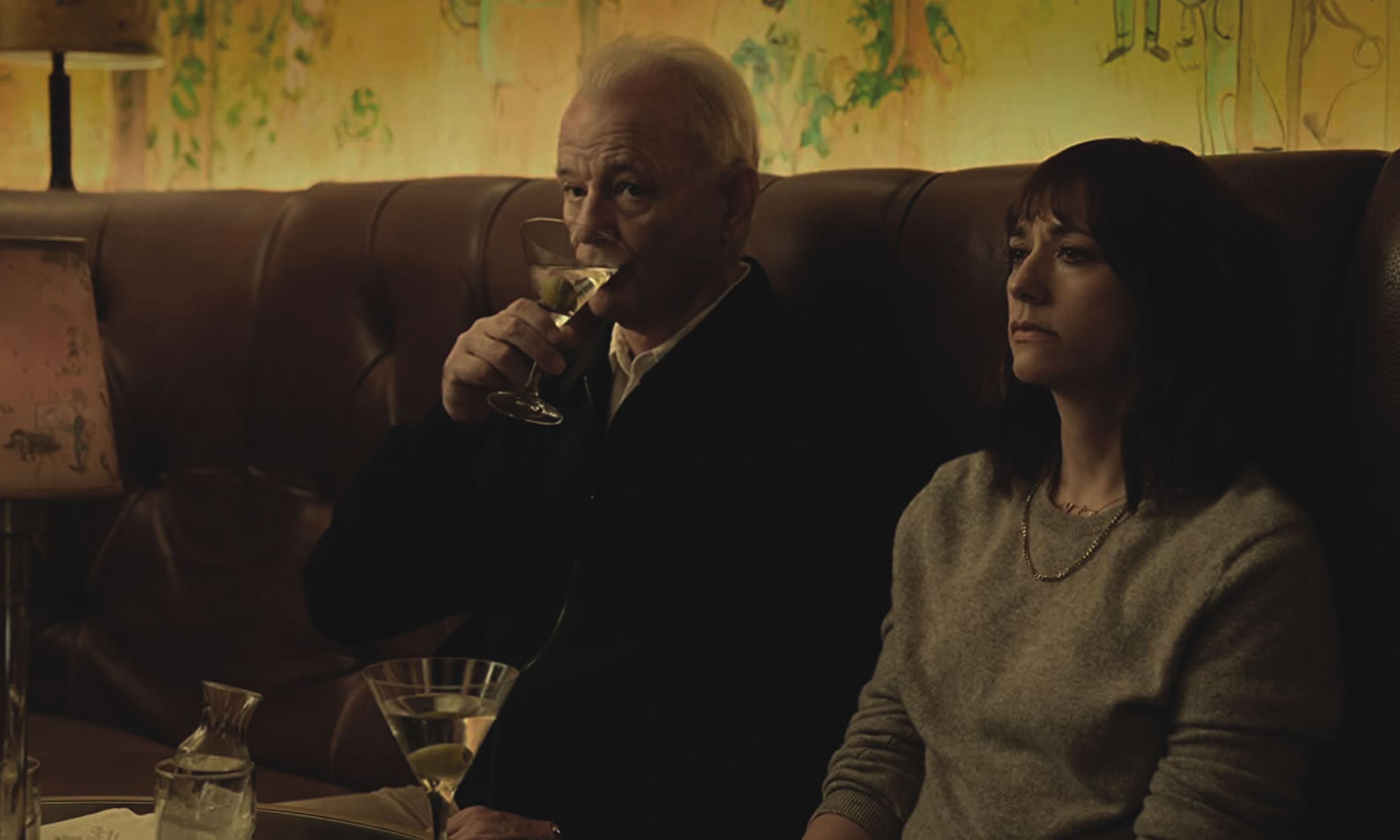
That sense of mild disappointment infuses the experience of watching On the Rocks, Coppola’s latest movie, which is a pleasant, slight reworking of the themes of Lost in Translation, with Murray once more dominating the production, albeit in a very different part.
In the earlier movie, Johansson’s unhappy wife was trailing a celebrity-photographer husband who didn’t give her the attention she deserved, and she found in the mournful character played by Murray a possible soulmate, but more likely a temporary idyll that gave her permission to seek her own happiness again. Given that Coppola’s marriage to the then more famous director Spike Jonze was breaking up at the time (doing promotional interviews for her latest film, she called it her “practice marriage”), it was hard not to see autobiography in that story — and then hard not to see the same in On the Rocks.
This time, Rashida Jones plays Laura, a successful author of unspecified highbrow books who has two young children, no mental space in which to write, and a husband, Dean (Marlon Wayans), whose unspecified startup is taking off, putting him on the road a lot and making Laura worry that he might be cheating on her. Meanwhile, Murray plays her father, Felix, a bon vivant art dealer with an evolutionary psychologist’s jaded view of men and women and monogamy — a theory of the world adopted, it’s clear, to justify his own philandering and his long-ago abandonment of Laura’s mother.
When a few incidents and encounters deepen her wifely suspicion (Dean seems to mistake her for someone else in bed, he makes strange purchases, his main female underling is hot), Laura allows her dad to sweep her up into a world of marital quasi-espionage. They gallivant around the city, intermittently spying on her husband while Felix drags her along to art deals and meals in darkened clubs. But the stakes throughout their capers feel resolutely low: At least some of the evidence for Dean’s adultery is so glaring as to make the audience suspect the strewing of red herrings, and the major issues for Laura — as, perhaps, for the now more happily married, mother-of-two Coppola — seem to be more about her mixed roles as a mother and writer and her thorny relationship with Dad.
These subjects can be as rich in drama as marital unhappiness, but the movie never digs particularly deep beneath its lightweight plot. Murray is tremendously watchable: I will outsource my description of his performance to my fellow NR film scribe Kyle Smith, who writes that Murray’s “Bill Murray impression is priceless, . . . the way John Wayne did a fantastic John Wayne parody in True Grit and Al Pacino found a new level of Pacino-ness in Scent of a Woman.” His almost self-parodying mix of coolness, absurdity, and absurd coolness keeps the movie interesting; at the same time, it’s a smooth surface that the script and camera slide around and off, revealing little underneath save a faint trace of regret.
Jones, meanwhile, is a sitcom actress, which is not a slur — it takes real gifts to occupy the center of a half-hour comedy week in and week out — but a description of the starting point from which her director and her script need to push her, to make this movie more than just a trifle. And she doesn’t quite get pushed enough: Her Laura is an effective foil to Murray’s cool but not enough of a creation in her own right. (Though in fairness, On the Rocks could actually use a little more sitcom business in its final act, a little more farce and chaos and histrionics when Felix’s antics finally lead to confrontation, instead of the rather pat resolution that we get.)
Coppola creates a cinema of privilege, which likewise is not a slur: The rich are human beings too, their loves and lives and losses are often dramatically heightened by their social positions and the stakes involved in the disposal of their power and their wealth. But in the low-stakes coziness that defines this revisitation of Lost in Translation’s parts and themes, she’s letting the privilege overwhelm the drama. What she needs is a little more tragedy, a little more mess. Her instincts in Marie Antoinette were correct, whatever that movie’s flaws: The next great movie that she makes will feature not just mild dissatisfactions, but the shadow of the guillotine.











Comments