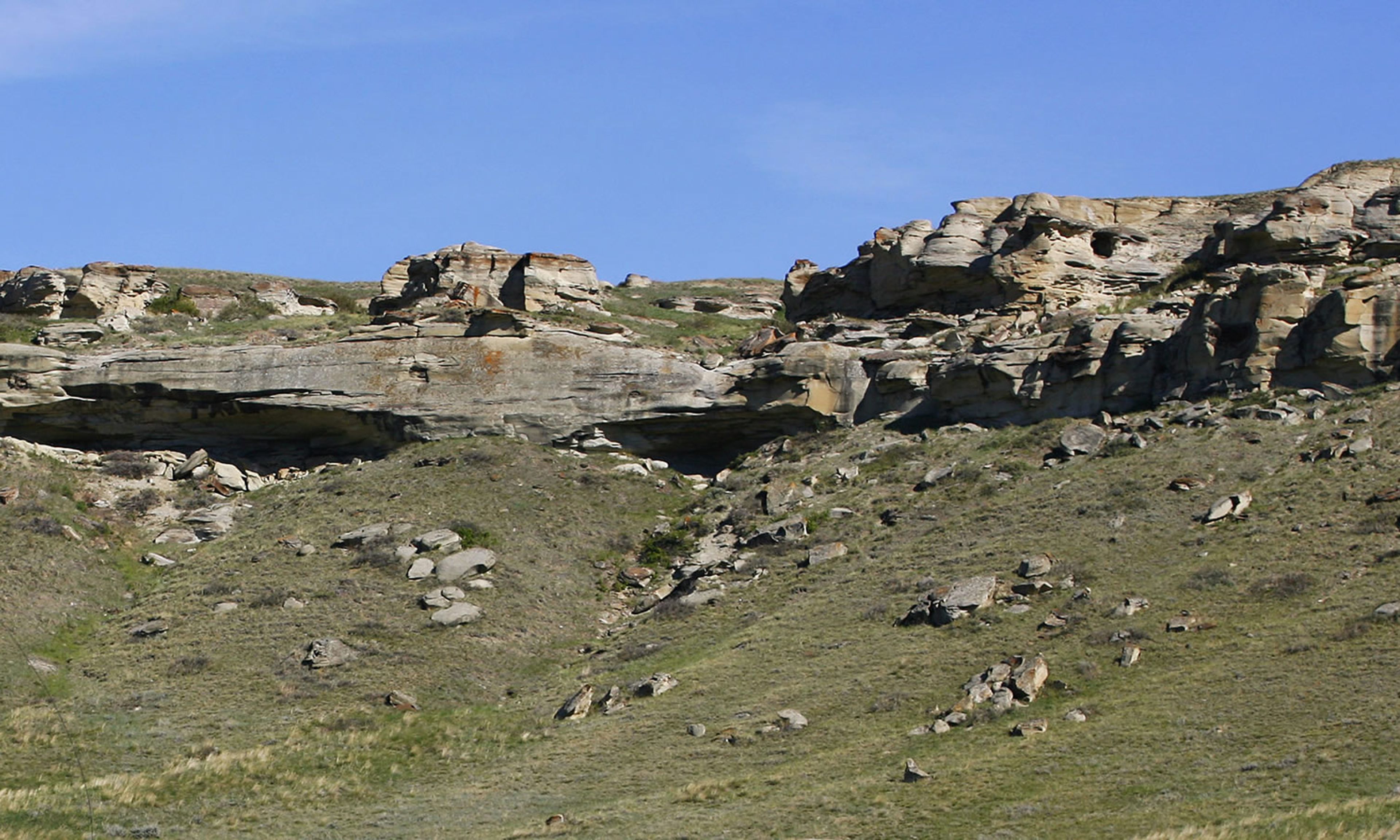
Great Falls, Mont.
Long has Montana been enthusiastic on the subject of guns, but the Montana Firearms Freedom Act takes the cake.
Passed this spring by the state legislature, a group of folks who meet for 90 days every other year, the law declares that any weapon or round of ammunition made in Montana and remaining within state borders “is not subject to federal law or federal regulation, including registration, under the authority of Congress to regulate interstate commerce.” This bold declaration of independence became law October 1, though even before then the Bureau of Alcohol, Tobacco, and Firearms had sent out a memorandum to gun dealers, the summary of which was: Don’t even think about it. A lawsuit is pending.
A nearly identical piece of legislation had been defeated in the 2005 and 2007 sessions of the legislature, but this year a groundswell of public anxiety about federal regulation of guns led to votes that were not even close. The act won passage 85–14 in the house and 29–21 in the senate, with many Democrats — most of them town-dwelling folk — lining up behind their country brothers and voting “yea.”
This bit of classically Montanan orneriness comes in the wake of a surge in gun sales throughout the United States. Whatever havoc the recession may be wreaking on other parts of the economy, the guns-and-ammo business is not just unfazed, but prospering. In the immediate aftermath of Barack Obama’s election, gun sales spiked everywhere. CNN reported a run on the market, with one dealer describing a single Saturday of sales that equaled an average week’s receipts.
In recent months, gun sales have tapered off, but it remains difficult to find handgun ammunition. Demand far outstrips supply. At sporting-goods stores in Great Falls, this centrally located town of 56,000 surrounded by farms and ranch land, the popular .38- and .44-caliber ammo is regularly sold out.
Last month, the largest gun show in Montana convened here. It was a sea of hundreds of display tables whose 3,850 linear feet teemed with guns, ammunition, and related paraphernalia. In one corner, a Republican county commissioner handed out popcorn to constituents. Although he’s not up for reelection until November 2010, he considers this a must-do event. Attendance at the spring gun show topped 7,000 and declined slightly, to 5,500, this fall. I arrived on a Friday afternoon, before the official opening, and found a line of two dozen men waiting to gain admission. By Saturday afternoon, most handgun ammunition had sold out. Mike Balko, who organizes the show on behalf of the Weapons Collectors Society of Montana, says that many dealers reported their best show in decades.
It is one of the weirder and more disconcerting sociological occurrences of our time that the sale of weaponry would spike so dramatically after the election of the first black president. Much has been made of this in the news media and throughout the liberal blogosphere. CNN and MSNBC famously showed middle-aged, vaguely disgruntled-looking white dudes packing heat outside Obama rallies in New Hampshire and Arizona. After these incidents and others during this summer’s outraged populist bonanza, Nancy Pelosi put herself before the cameras to imply and hint and all but utter the unspoken word, “assassination,” imputing to the protesters a violent character.
The smear enraged the West’s gun owners, seemingly every one of whom genuinely believes a better-armed society is a safer one. They view themselves not as renegades but as hunters and hobbyists, law-abiding guys exercising what is, after all, a right protected by the U.S. and Montana constitutions.
Gun enthusiasts will inform skeptics that, yes, you can use a handgun for deer hunting, and that it is in fact more challenging and sporting to do so. In any case, it is none of these Californians’ business. (Montanans often take California, especially in the Era of Pelosi, as the epitome of the West Gone Soft.) Guns, anyway, are not just for shooting and killing. They are integral to many Montanans’ investment and retirement portfolios. Just as an antique porcelain teacup is not for drinking and a Louis XV chair not for reclining, many serious gun collectors fire their weapons only to see if they work and then retire them to their cases and safes.
“Guns and real estate are the only things which always go up in value,” a collector once told me, and, at least for guns, the maxim is holding true. Balko, the gun-show organizer, says he bought a Thompson sub-machine gun for $7,000 from a man who’d only ever fired six rounds through it (this in just over a second). A Tommy gun now retails for $21,000. These enthusiasts have profit in mind, not Freemen-style standoffs, and buying guns when a Democratic president takes office makes business sense to watchful collectors.
Far from begrudging the many hoops he was forced to jump through, Balko seems vaguely proud to have navigated the obstacle course of federal gun law, which required him to obtain a letter of good behavior from the sheriff along with a lengthy application and a $200 stamp from the federal government. A veteran, Balko says that the background check the feds did on him was “more thorough than the military’s secret clearance I went through years ago. They interviewed my neighbors and various people I’d given as character references.”
Across the United States, gun rights are gaining traction. Congressional Republicans amended an appropriations bill this year to allow visitors to national parks to carry firearms. (Montanans joke that the Park Service–recommended pepper spray just means a spicier meal for the grizzlies.) At the U.S. Supreme Court, the District of Columbia’s near-total ban on sidearms was invalidated; last year’s ruling marked the first time the Court acknowledged an individual right to bear arms. Chicago’s restrictive gun laws appear to be next on the Court’s chopping block.
But there is little question that it is state governments, particularly in the West, that have been on the front lines of making guns easier to own and carry. Arizona, as Jay Nordlinger pointed out in the last issue of NR, recently rescinded its ban on guns in bars.
In Montana, the antipathy toward federal regulation runs deep. “This is not just about guns, but about state rights,” says Wendy Warburton, a freshman Republican legislator from Havre and one of the sponsors of the made-in-Montana firearms law. “We are tired of the federal government shoving things down our throats, everything from No Child Left Behind to highway-funding restrictions.”
Throughout the 1990s, the state clung to its rowdy heritage, refusing to adopt an open-containers law (you could drink and drive so long as you weren’t drunk) and keeping the blood-alcohol content level at which one was considered impaired at .10, rather than the now-familiar .08. Lately, however, it seemed that Montana had become a bit purple, suburbanized, tamed of its bad-boy behavior. Drinking laws were stiffened in the last decade. And this year, on the same day the declaration of gun independence took effect, so did a blanket smoking ban in bars. Montana is now the 18th state to disallow smoking in every indoor area open to the public.
Montana has yielded in some ways to the social legislation more common in urban areas or populous states. But on the issues of guns and self-defense, Montanans have remained resolute. In addition to the attempt to nullify the interstate-commerce clause’s application to Montana-made firearms, the legislature passed a law codifying the “Castle Doctrine,” which holds that someone who is attacked or threatened with serious force need not attempt a retreat before defending himself with force of arms.
The statute recently saw its first test when two Wal-Mart employees in Billings got into a quarrel near the loading docks. One employee, weighing over 300 pounds, knocked to the ground a male co-worker half his size. The latter, still menaced by this hulking figure, drew his sidearm and fired, grazing his fellow employee’s cheek but not seriously injuring him. After reviewing the new law, Yellowstone County prosecutors declined to charge the man who fired the gun. The gunplay at Wal-Mart apparently did not shake the convictions of the Castle Doctrine’s legislative sponsor, a rural Republican who told the Billings Gazette after the incident that the law seemed to be doing just what it was designed to do.
“We have the most conservative house we have ever seen,” Warburton says, adding that it was freshman legislators who pushed through many of the bills aimed at curtailing federal and state interventions into the lives of Montanans. “Anyone who thinks the leave-us-alone, tea-party people don’t matter should be watching what’s happening right now in Montana.”












Comments