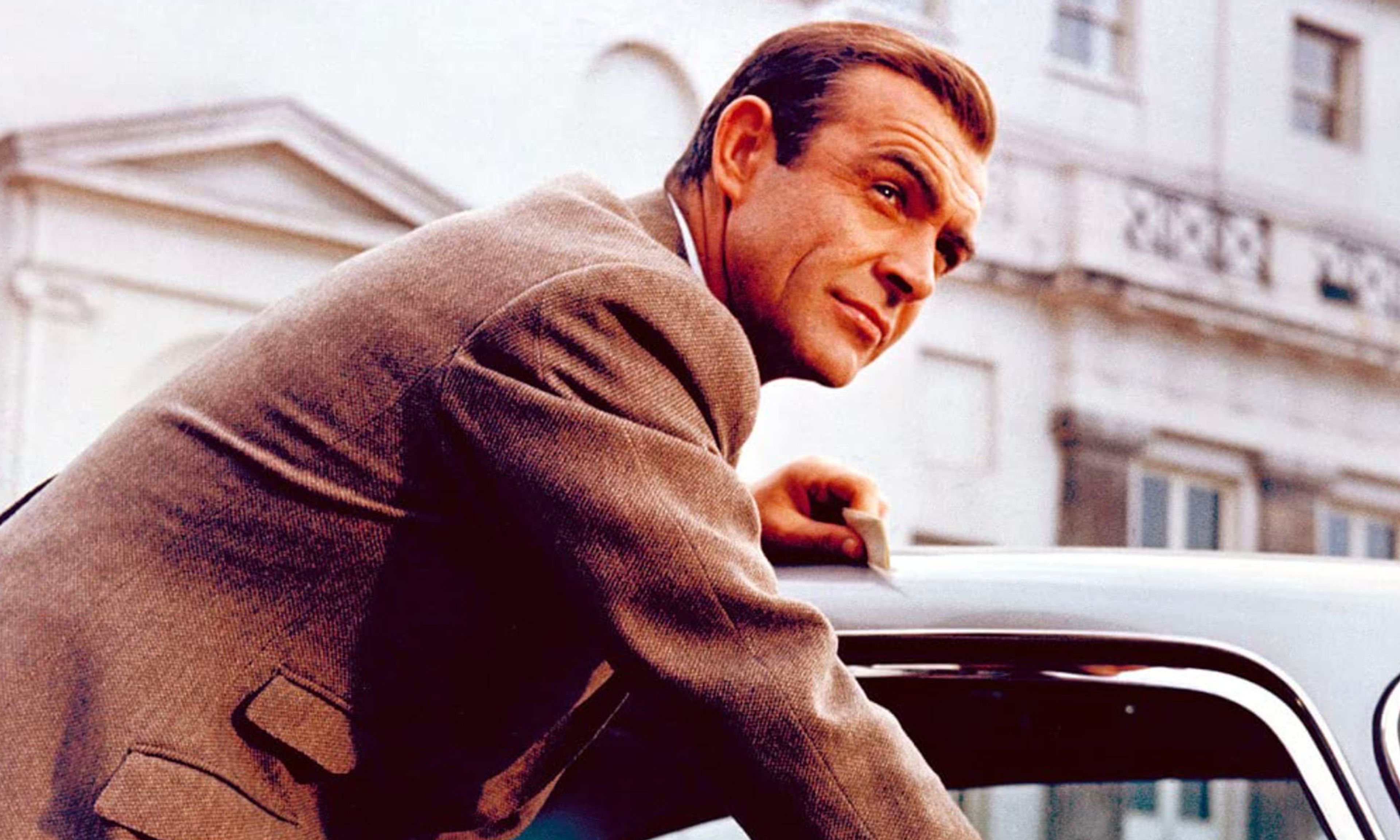
Midway through Steven Spielberg’s effervescent 1960s-era comedy-drama Catch Me If You Can, a young and ambitious conman called Frank Abagnale (Leonardo DiCaprio) treats himself to a gray three-piece suit. It’s not just any suit, but a close copy of the suit Sean Connery wore as James Bond in the 1964 movie Goldfinger. “Now you’re sure this is the suit, right?” Frank anxiously asks the tailor. “This is the exact suit he wore in the movie,” the man replies, adding, “Now all you need is one of those little foreign sports cars that he drives.” Then, in a magical moment, Spielberg shows Frank peeling through a city street in an Aston Martin, the wheels forever identified with British author Ian Fleming’s fictional member of the Secret Intelligence Service, or MI6.
In a gloriously simple, offhand scene, Spielberg evoked the appeal of James Bond as action hero, fashion plate, and representative of a certain kind of aloof, imperturbable mid-century masculinity. Spielberg understood that DiCaprio’s character would have been among the first generation to grow to manhood with Bond, whose ongoing escapades as both steely-hearted spy and eager seducer were energetically described by Fleming in twelve novels starting with 1953’s Casino Royale. In 1961, Life magazine identified Fleming’s fifth Bond novel, From Russia with Love (1957), as being among the ten favorite books of President John F. Kennedy, a rare concession to popular taste on a list dominated by high-flown titles such as Winston S. Churchill’s Marlborough and Margaret L. Coit’s John C. Calhoun: American Portrait, but also an expression of just how widely the public, the president included, responded to Bond.
As tempting as it is to imagine that Kennedy’s enthusiasm for Bond flowed from a kind of now-vanished muscular liberalism, it’s far likelier that the president simply enjoyed the same things about the character that the rest of America did. Foremost among Bond’s virtues is the calm efficiency with which he dispatches enemies, which Fleming sketched in the opening of the novel Goldfinger (1959): “As a secret agent who held the rare double-0 prefix — the licence to kill in the Secret Service — it was his duty to be as cool about death as a surgeon. If it happened, it happened. Regret was unprofessional — worse, it was death-watch beetle in the soul.”
Yet Bond was not the sort of glum workaholic later conjured by John le Carré in the form of George Smiley in Tinker Tailor Soldier Spy. He refused to let his job interfere with his romantic life, and then there was the matter of that suit and that car. Not that Bond suffered from an unmanly preoccupation with appearances. In a famous passage in From Russia with Love, Fleming writes of Bond’s assessment of a man wearing a Windsor-knotted tie: “Bond mistrusted anyone who tied his tie with a Windsor knot. It showed too much vanity. It was often the mark of a cad.”
Upon Fleming’s death in 1964, subsequent authors, including Kingsley Amis, furthered the adventures of Bond, but it took the character’s transition from literature to cinema, thanks to the efforts of enterprising producers Albert “Cubby” Broccoli and Harry Saltzman, to turn him into the action idol of choice of males in the English-speaking world. The cinematic Bond — embodied, in the first five films in the series and then two thereafter, by Connery, the recently deceased Scotsman who so credibly projected the twin threats of violence and seduction — gradually overtook the literary Bond. As was supposed to have been said of Cary Grant, women wanted to be with Bond, and men wanted to be him.
Ayn Rand, who praised both the Fleming novels and the first Bond film, Dr. No (1962), argued that Bond as a character appealed to audiences who, eager for hero identification, substituted his fantastical adventures for their own workaday worries. “In the privacy of his own soul, nobody identifies himself with the folks next door, unless he has given up,” Rand wrote in her essay “Bootleg Romanticism.” “But the generalized abstraction of a hero permits every man to identify himself with James Bond, each supplying his own concretes which are illuminated and supported by that abstraction.” Fleming, in a 1964 interview with the Canadian Broadcasting Corporation, put it more simply: “Spying has always been regarded as a very romantic, one-man job — one man against a whole police force or an army.”
Of course, the world has undergone multiple revolutions since Fleming spoke those words. The novels’ Cold War political setting long ago receded, and Bond’s unapologetic remaking of the world in the image of a triumphant England — his peremptory dispensing of bad guys threatening Queen and Country — could be wrongly perceived by some poor graduate-degree types as reeking of musty colonialism. When it comes to sexual manners and mores, Bond surely can’t win with the current crowd either: Whatever gallantry the character displays — say, toward the kindly, just-past-her-prime MI6 secretary Miss Moneypenny — would be resented, while his more outré dalliances with, and conquests of, “Bond girls” would be judged completely unacceptable.
Despite so many features that might render the character objectionable to cancel-culture types, however, Bond’s winning ways with moviegoers remain one of the surest things in Hollywood: The most recent films in the series — Skyfall (2012) and Spectre (2015), both starring Daniel Craig as Bond — were gigantic commercial successes, and part of the reason that United Artists has continually kicked down the release date of the latest, pandemic-delayed installment, No Time to Die, also starring Craig, is surely that the studio is confident in its blockbuster status when audiences can actually march into theaters again in large numbers. Why waste a likely megahit on unenthusiastic, mask-wearing audiences who can only partly fill capacity-restricted theaters? (The film, once promised for the spring of 2020, is currently set to open on April 2, 2021.)
Why has Bond remained resilient in the face of Anglo-American withdrawal from the world and a climate of political correctness at home? Perhaps it is because the films provide an outlet for our residual affection for a certain harmless, offhand machismo that has almost disappeared from popular culture.
Just look at Connery in Dr. No when, seated at a gaming table, he snaps open his silver cigarette case, click-clicks his lighter (a box of matches would have been too stodgy, too old-fashioned), and offers up his name to one Miss Sylvia Trench: “Bond. James Bond.” The character, judiciously made less brutish and chauvinistic by the actors who succeeded Connery, is as much a boy’s dream of adult solidness as Nick Adams’s father in Hemingway’s “Indian Camp.” Shown in various films to be an elegant dresser, a proficient baccarat player, a top-rate skier, and a man sure of his preference in martinis, Bond nonetheless never shrinks from the grungier aspects of his job: chasing assorted villains on foot, tussling with a man with teeth formed from steel, and enduring a beating while buckled to a chair. The films show us that it is possible to be at once cultivated and fierce.
That is not to say that the films were tone-deaf to their times. Connery’s tightly wound insolence — his seeming disregard for his female co-stars — was first replaced by Australian George Lazenby’s rangy nonchalance in the consistently underrated On Her Majesty’s Secret Service (1969), a film that opens with the actor, the replacement Bond, telling the audience, after a particularly chaotic mêlée, “This never happened to the other fellow.” In fact, so much in that film would never happen to another Bond: In the conclusion, after having become newly and unexpectedly hitched to the most sophisticated of all Bond girls, Tracy (Diana Rigg, who died in September), Bond is rendered a widower. The ending has a weird but potent mix of naked emotionalism and shocking violence.
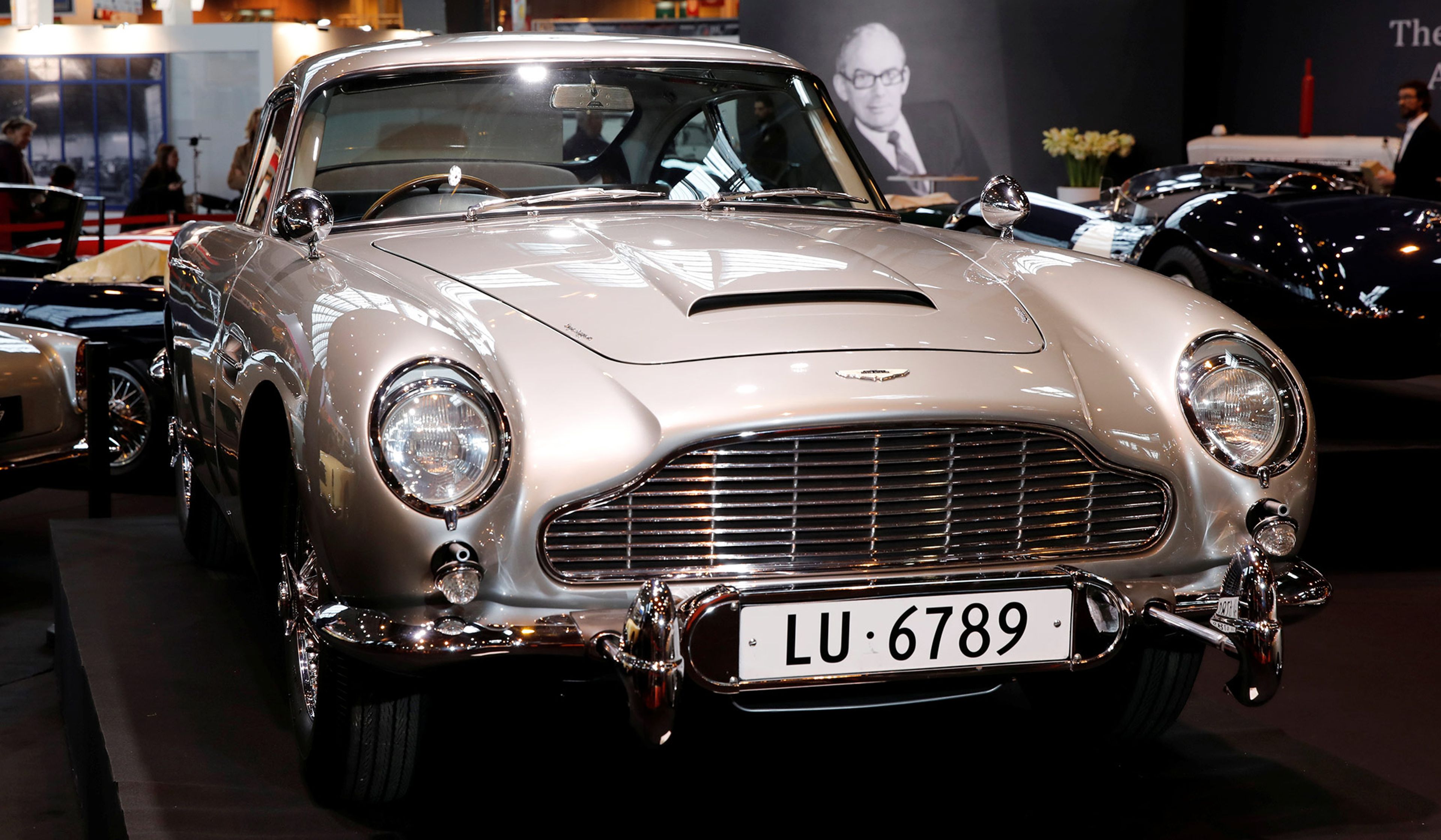
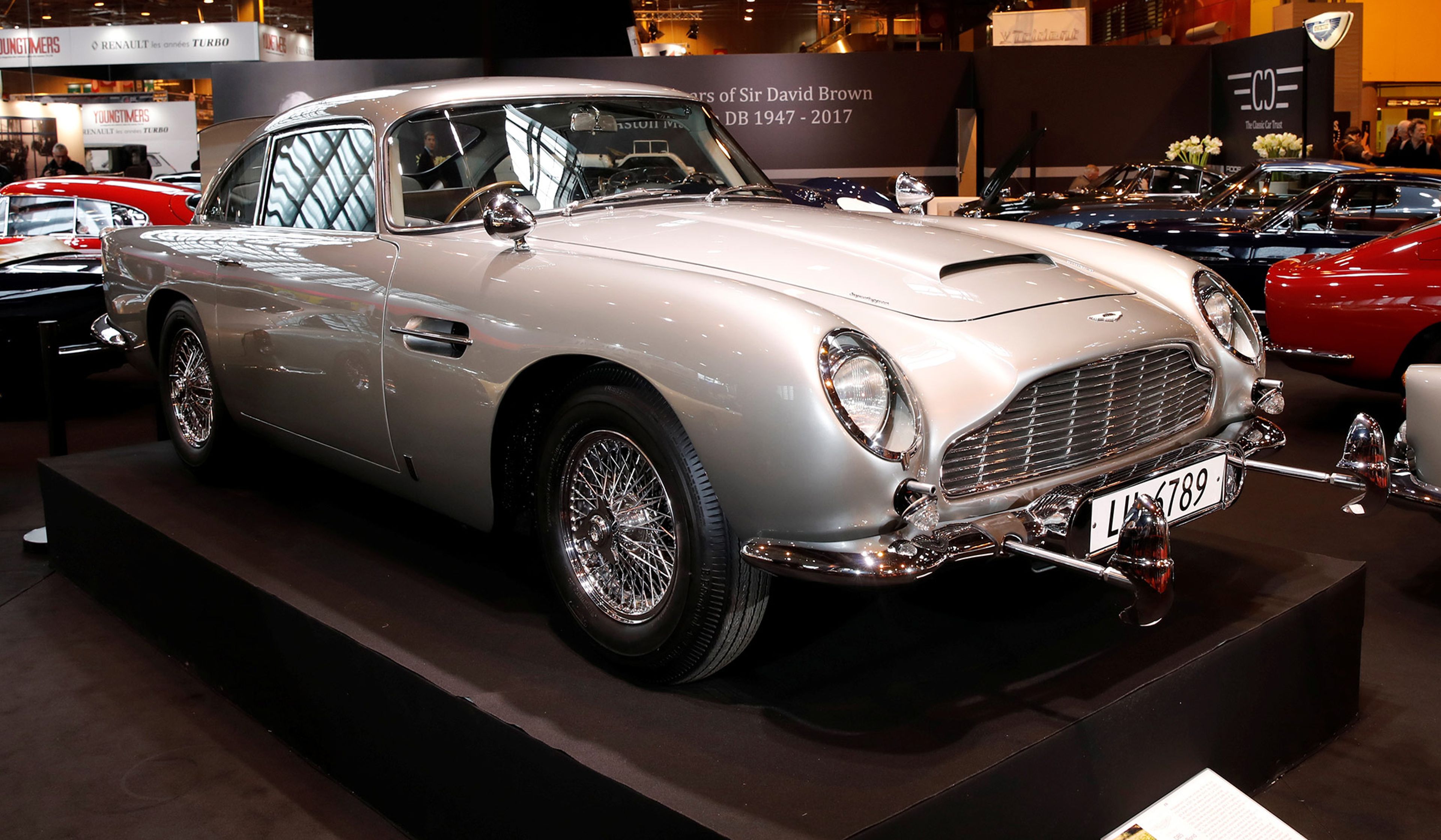
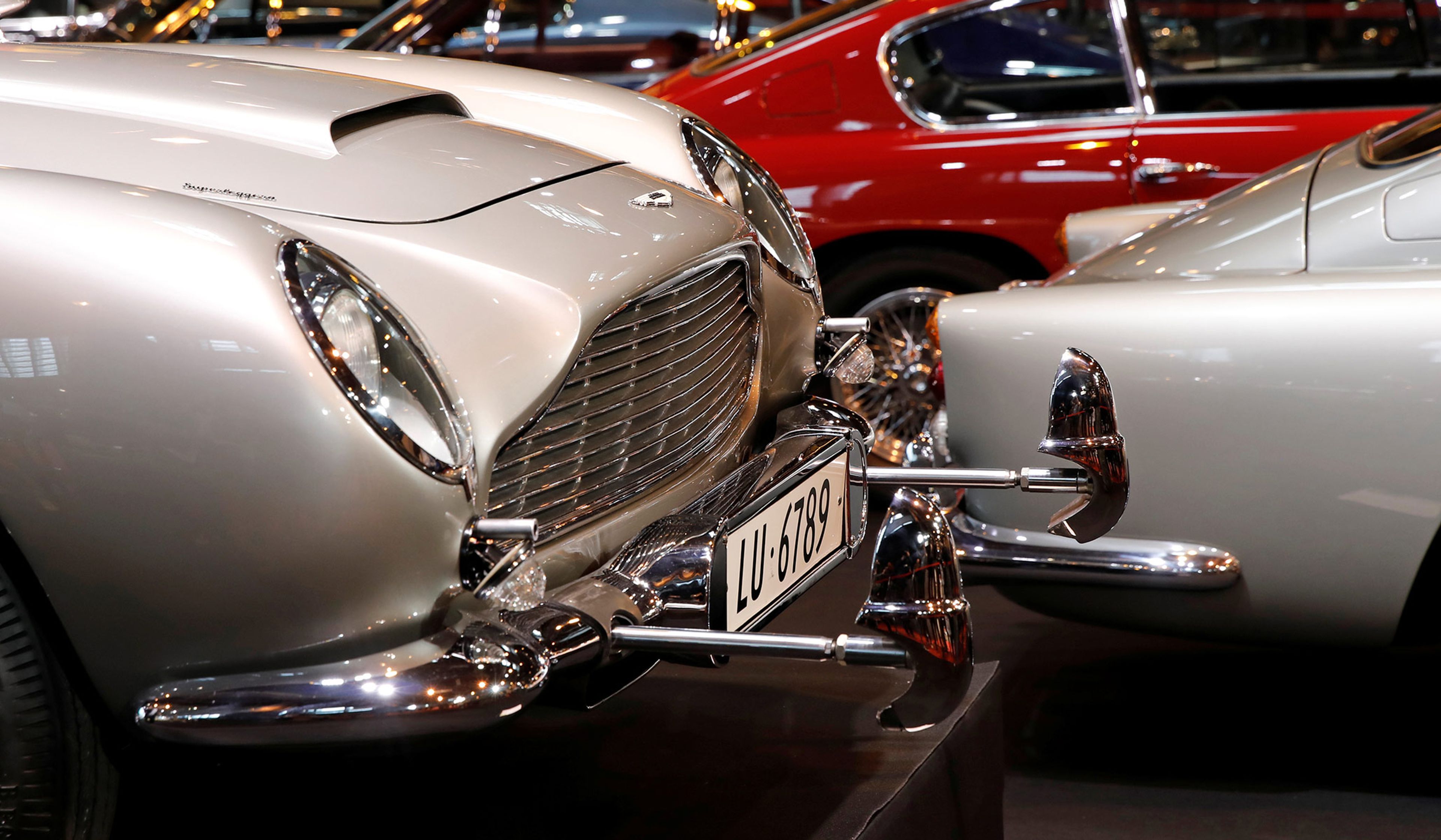

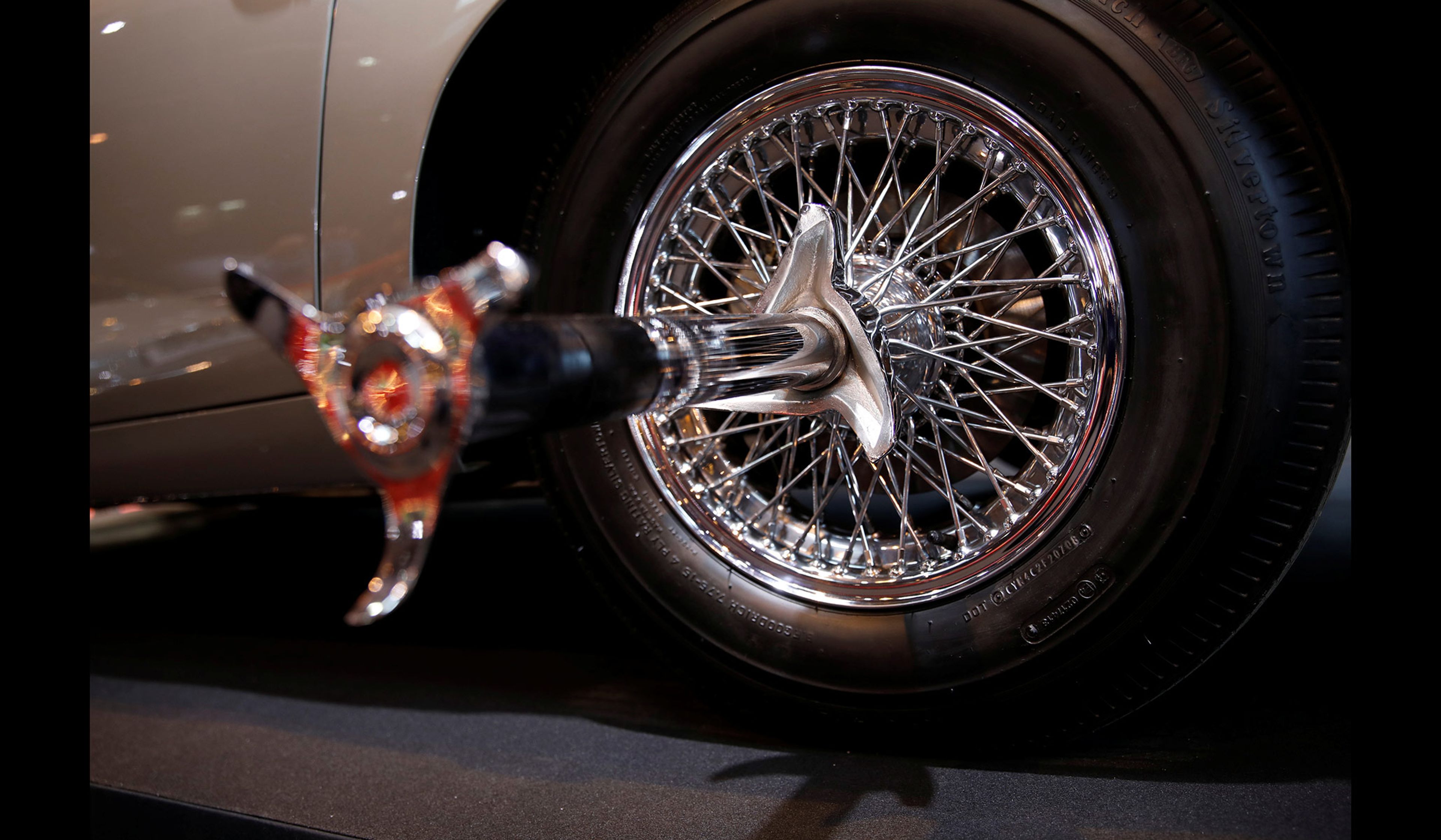

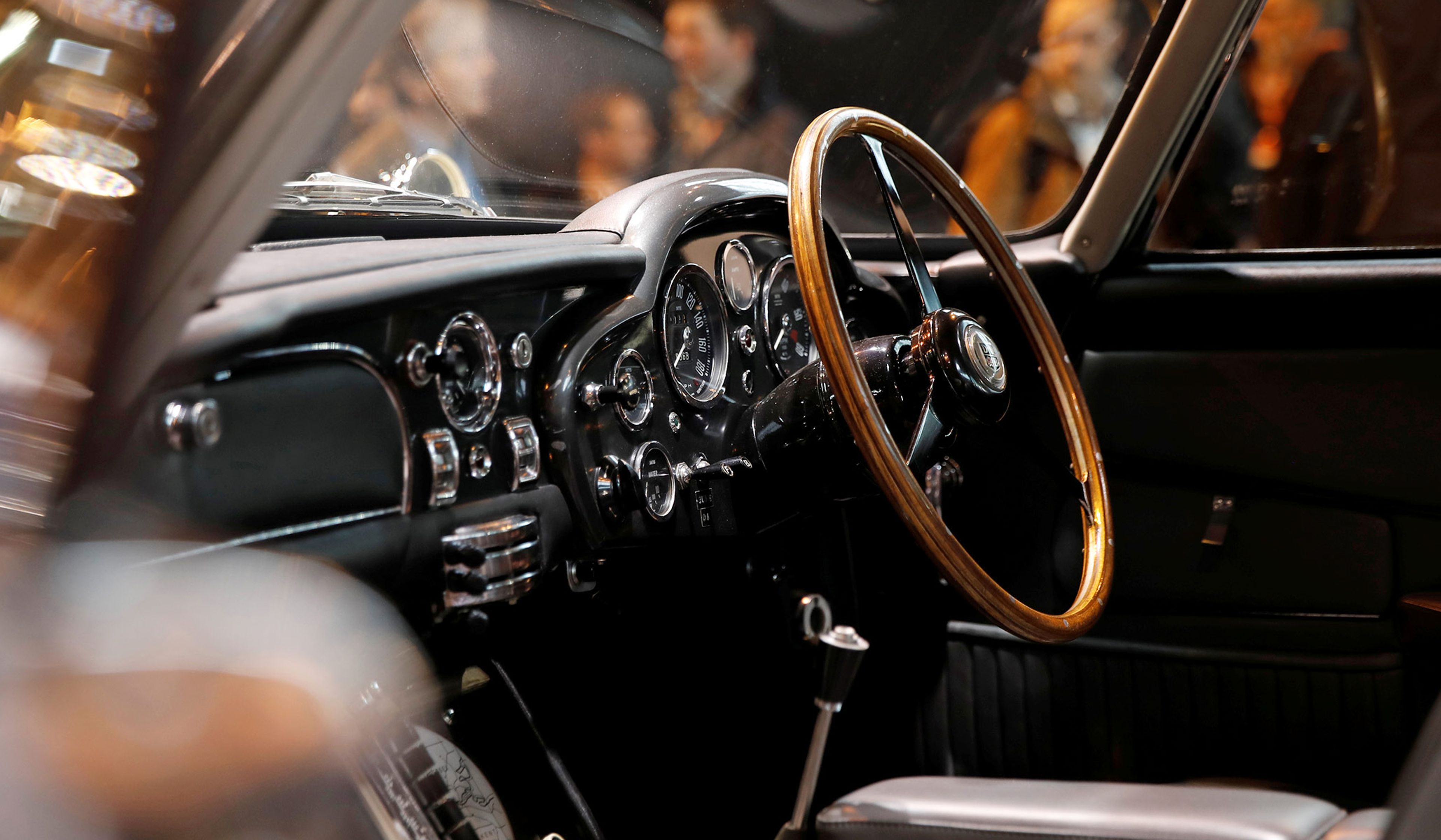
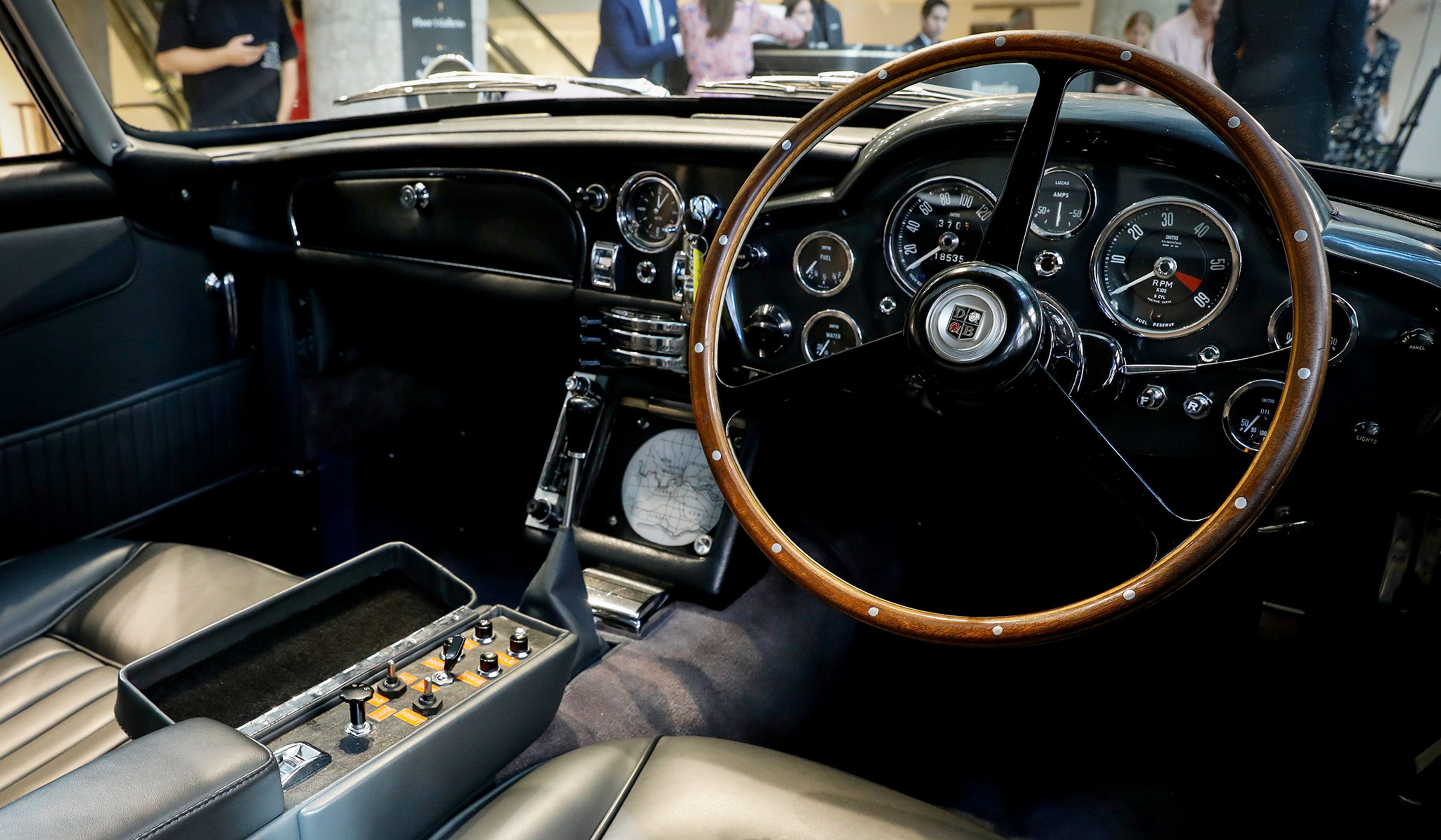
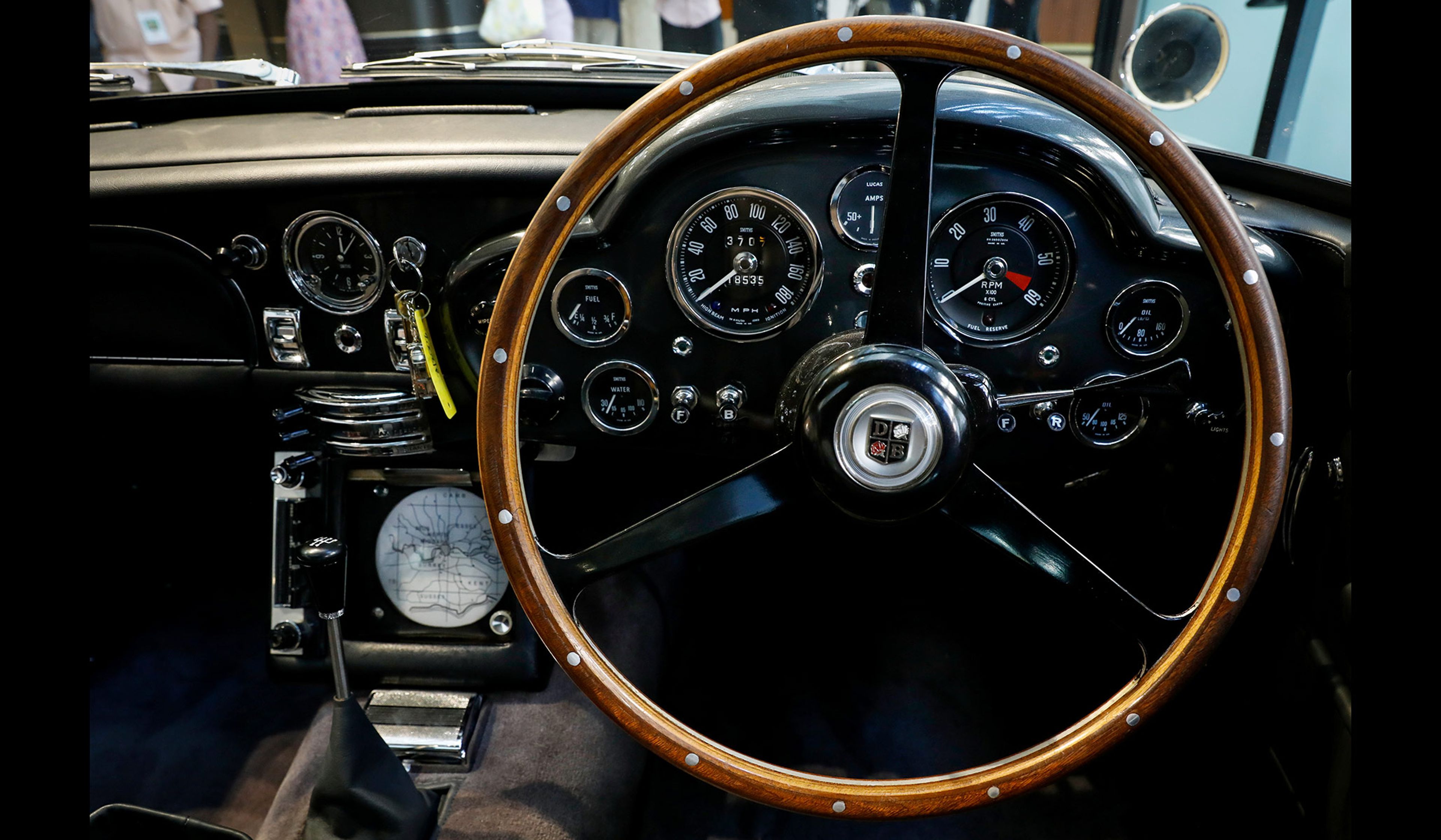


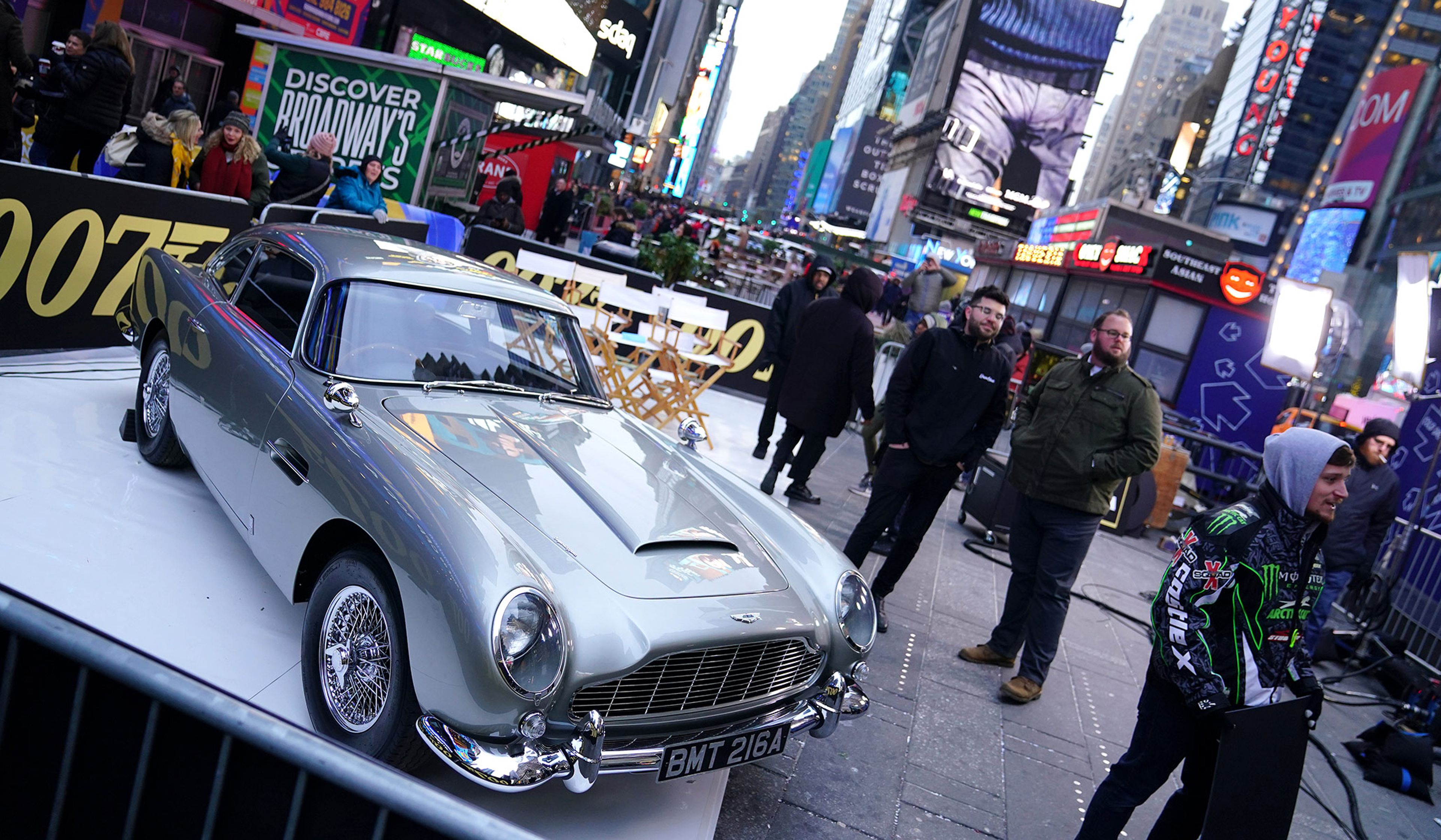
The 1964 Aston Martin DB5 driven by actor Sean Connery as James Bond in Goldfinger and Thunderball at the Paris Retromobile fair in Paris, France, February 8, 2017.
Benoit Tessier/Reuters
By the 1970s, however, the film’s producers revived a more by-the-books iteration of Bond in the form of Roger Moore, who eschewed both Connery’s sense of threat and Lazenby’s hippie-era openness. The Man with the Golden Gun (1974), The Spy Who Loved Me (1977), and Moonraker (1979) were the McDonald’s cheeseburgers of the series: easily digestible entertainments in which the hero’s triumph was preordained. During these years, the Bond girls edged closer to Playboy playmates — that is, male fantasy figures — than the more intimidating characters played by Ursula Andress in Dr. No and Honor Blackman in Goldfinger. Yet, in going in this direction, the producers likely recognized the same deficiency in popular culture that led William F. Buckley Jr. to pen his James Bond–style Blackford Oakes series: Buckley, disgusted with the anti-CIA thriller Three Days of the Condor, decided to, as he said, “write a book in which it would never be left in doubt that the CIA is, when all is said and done, not persuasively compared to the KGB.”
Moore, increasingly mush-mouthed and stodgy-looking, was supplanted first by Timothy Dalton, who injected a welcome lack of kidding around in The Living Daylights (1987) and Licence to Kill (1989), and then by the dashing Pierce Brosnan, who had perhaps too wide a grin and too full a head of hair to fully convince as a character Fleming once likened to “a sort of blunt instrument, wielded by a government department, who would get into bizarre and fantastic situations and more or less shoot his way out of them.” By then, concessions had been made to shifts in cultural attitudes, with the re-gendering of Bond’s boss M: The stiff-upper-lip types Bernard Lee and Robert Brown were replaced with Dame Judi Dench, which, in a country that gave us Margaret Thatcher, counted as an eminently justifiable change. (Ralph Fiennes has of late assumed the part.) Far more frustrating has been the recasting of that sovereign of high-tech gadgetry, Q: World War II veteran (and POW) Desmond Llewelyn, who died in 1999, was led offstage to be replaced first by that ultimate object of Baby Boomer adulation, John Cleese, and now by Ben Whishaw.
Yet all is not lost: In our era’s run of Bond films — Casino Royale (2006), Quantum of Solace (2008), Skyfall, and Spectre — Daniel Craig has channeled Connery’s brusque intensity, and, particularly in the latter two films, the series has picked at wounds in the character’s psyche in a way unseen since On Her Majesty’s Secret Service. These films are muscular, even harsh, far removed from the juvenilia of comparably long-lasting film franchises, from Star Wars to Indiana Jones. Above all, Bond has come through the decades with his personality more or less intact: He has seen the sexual revolution, the enfeeblement of global communism, and the indignity of being dressed down by his superior for his supposedly outmoded ways (“I think you’re a sexist, misogynist dinosaur — a relic of the Cold War,” Judi Dench’s M tells Bond in 1995’s GoldenEye) — and yet there he is, careering through city streets in fancy cars and still wearing, on occasion, a three-piece suit.
With age, most of us move on to nobler heroes than Bond — say, Patrick O’Brian’s Aubrey and Maturin — but the endurance of Fleming’s creation attests to our deep-seated affection for men who behave like men. We don’t say such things in public, but, as moviegoers, we vote at the box office, and there has never been a Bond film that wasn’t at least moderately popular. What is it they say about 007? Nobody does it better.












Comments