The late-career revival of Paul Schrader has been one of the pleasures of the last few years of cinema. In the first 15 years of the 21st century, Martin Scorsese’s longtime screenwriter essentially fell off the map of Hollywood: Fired in 2003 from a prequel to The Exorcist because the studios hated the initial cut so much (though the version refilmed and recut by Renny Harlin was ultimately much worse), he made a few forgettable movies and then found himself unable to get funding for any of his projects. This led to the notorious yet tedious case of The Canyons, an erotic thriller starring Lindsay Lohan and a male porn star, which he crowdfunded and released to jeers in 2013 — and then the even lower point of directing a Nicolas Cage B-movie and having the final cut stripped from him again.
But then, miraculously, Schrader directed Ethan Hawke in 2017’s First Reformed, the best movie ever made about climate change and the collapse of mainline Protestantism (I mean that sincerely), which earned money and critical plaudits and even his first-ever Oscar nomination . . . itself an amazing thing, given that the man wrote Taxi Driver and Raging Bull.
Now he’s back, at age 75, with another story about a man carrying too much weight on his shoulders — this time the weight of personal sin rather than the burdens of being the Last Protestant and staring at the apocalypse. The burdened man in The Card Counter is William Tell (not his real name, but close), a former convict who now travels the country as an under-the-radar gambler, using the card-counting skills he gained through years of incarcerated practice to take just a little from every casino he visits — enough to live on and keep moving, not enough to attract attention.
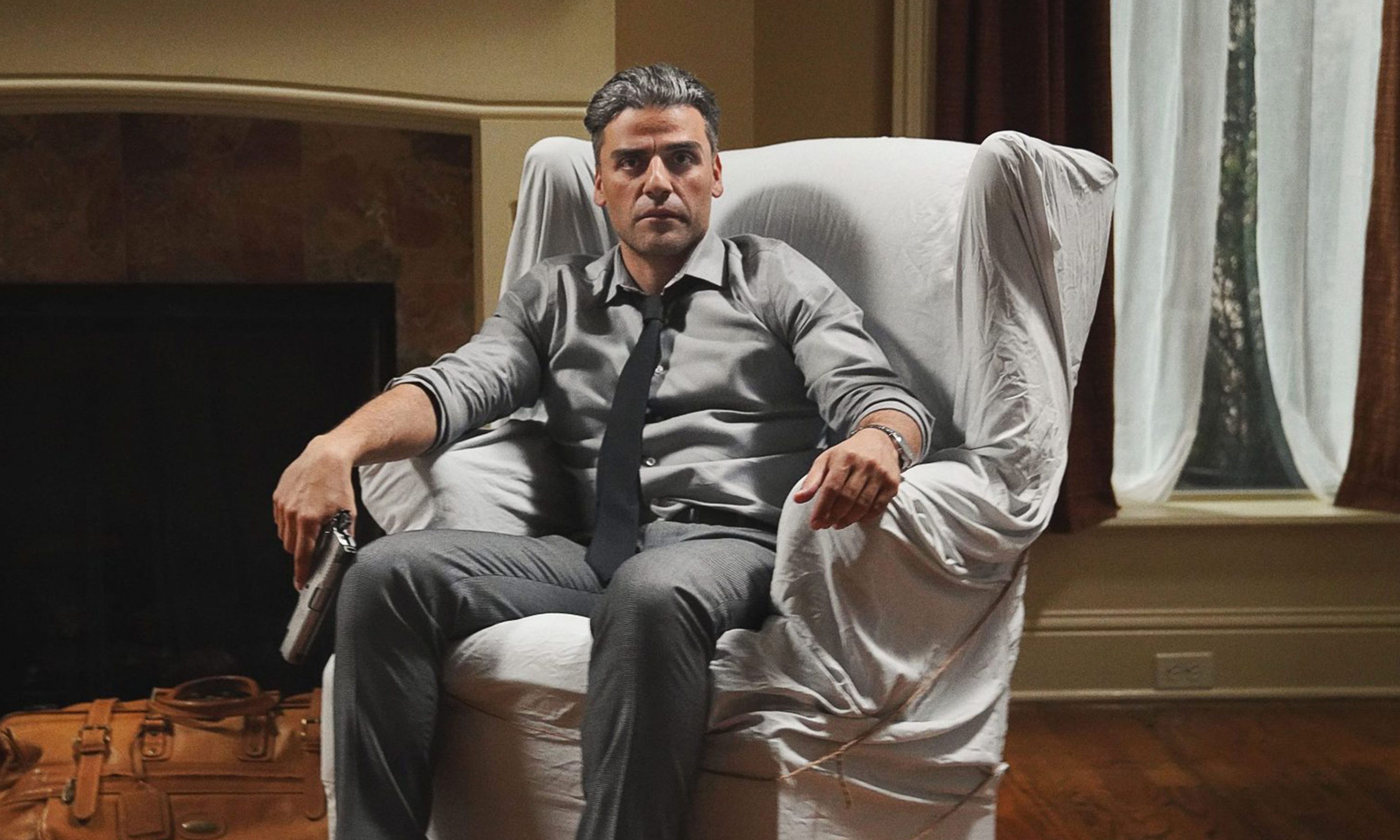
Played with slicked-back-hair repose by Oscar Isaac, Tell is clearly carrying some serious baggage; in every motel room he occupies we watch him drape and bind every stick of furniture in white sheets, re-creating the sterility of prison and softening any glare or color. But he also seems to have a certain contentment in his solitary life, to the point that he dismisses a friendly advance from the gregarious La Linda (Tiffany Haddish, seemingly miscast at first but better as the movie goes along) to stake him on the high-stakes poker circuit.
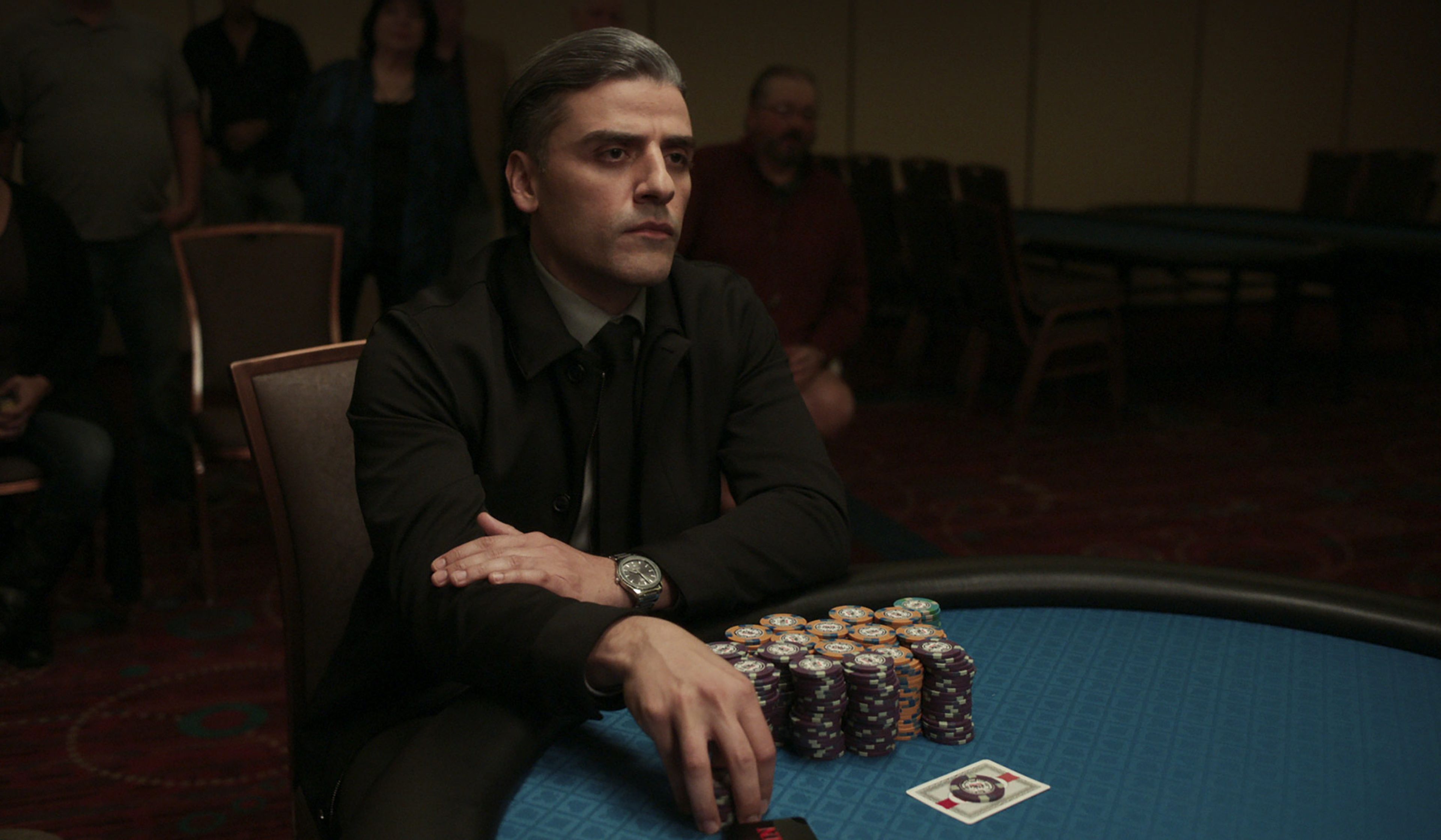
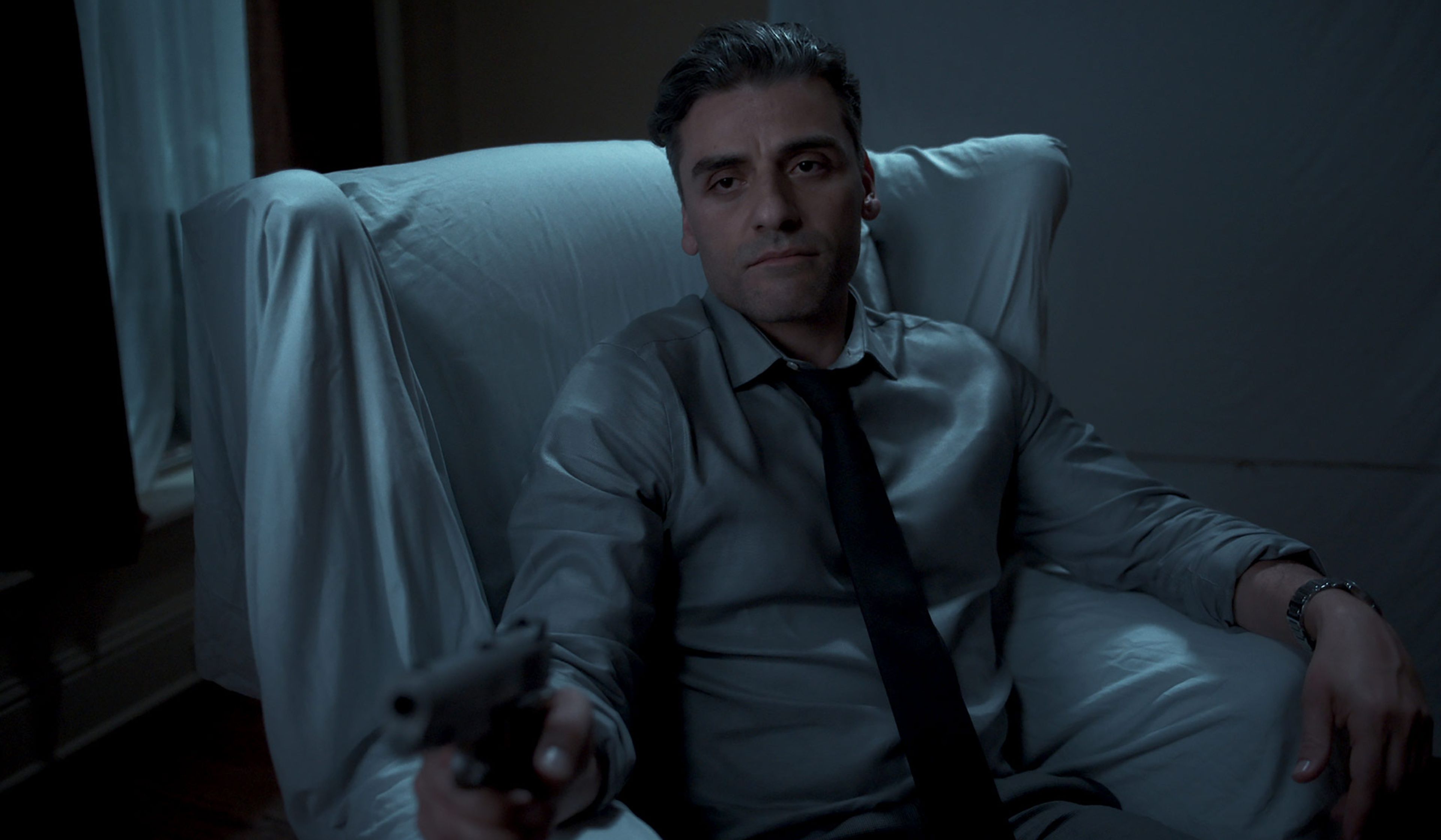
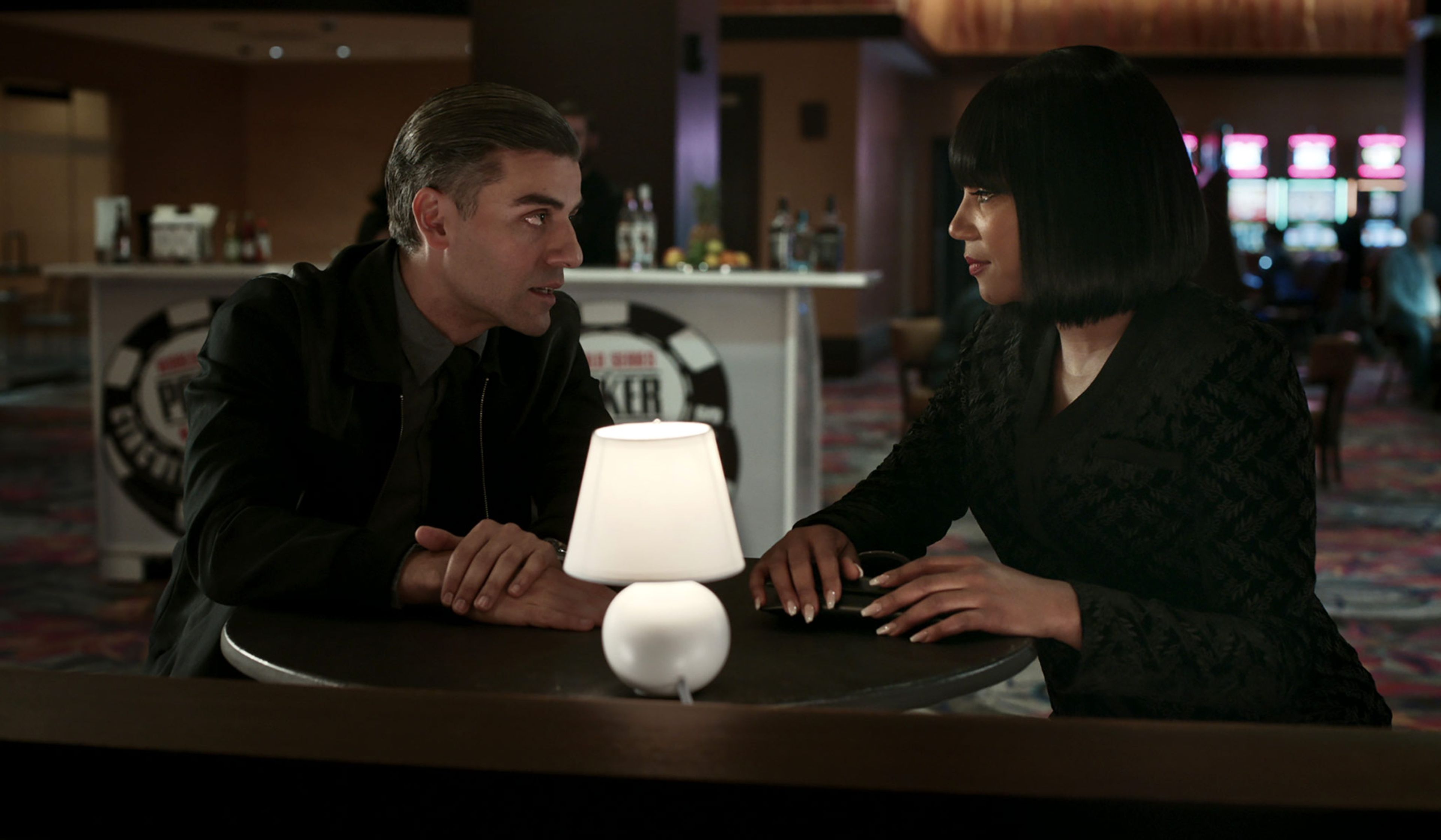

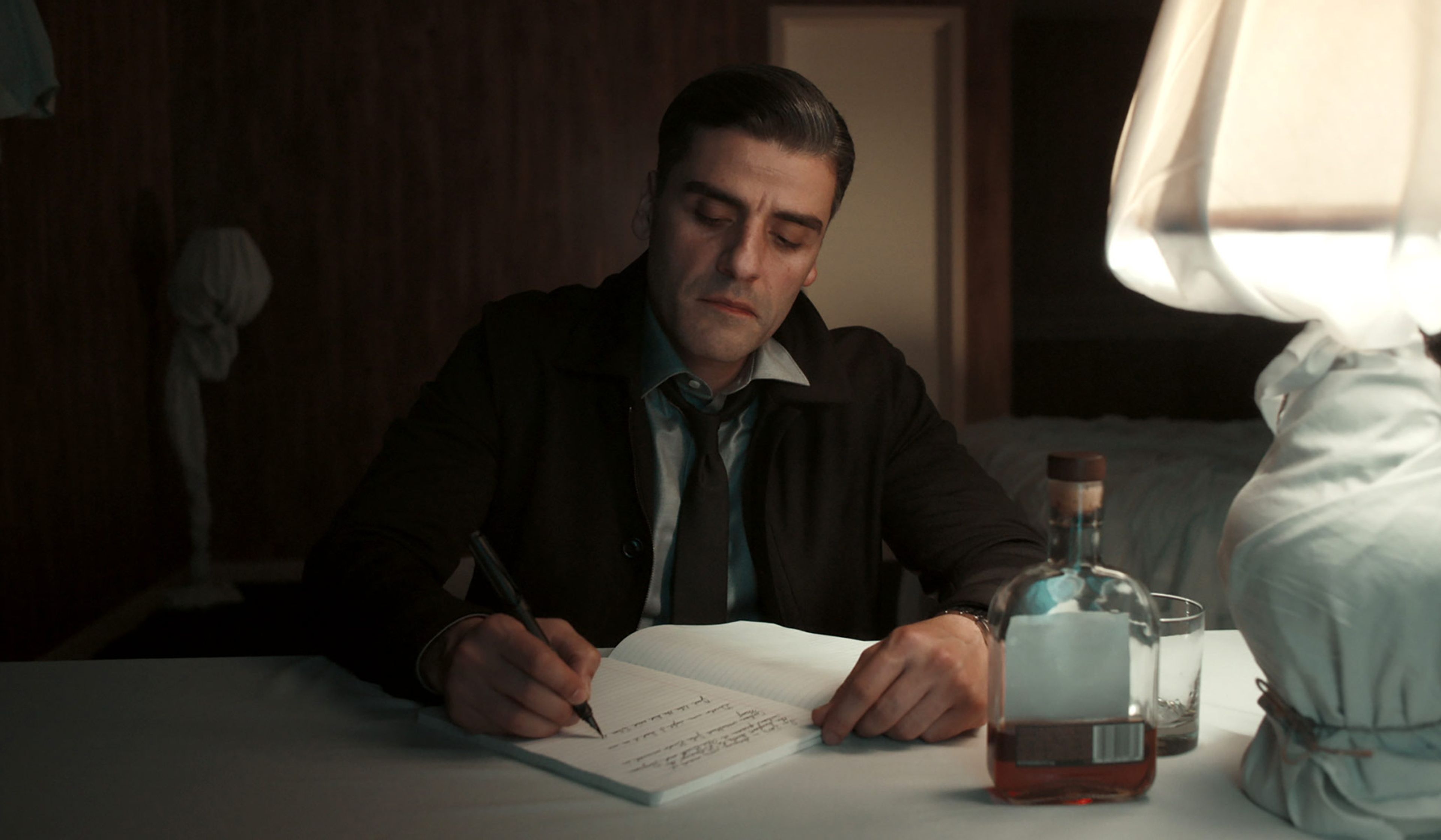
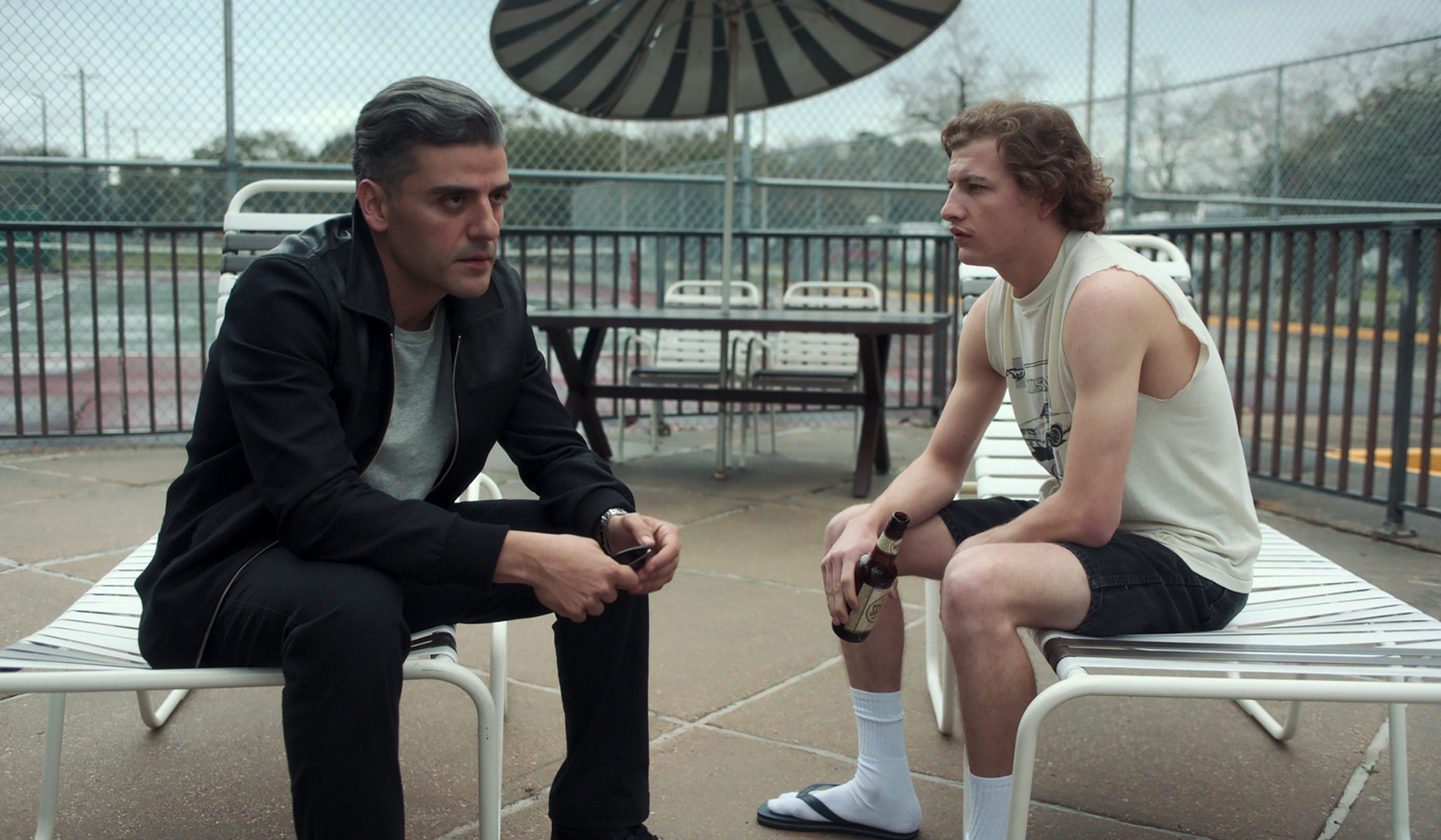
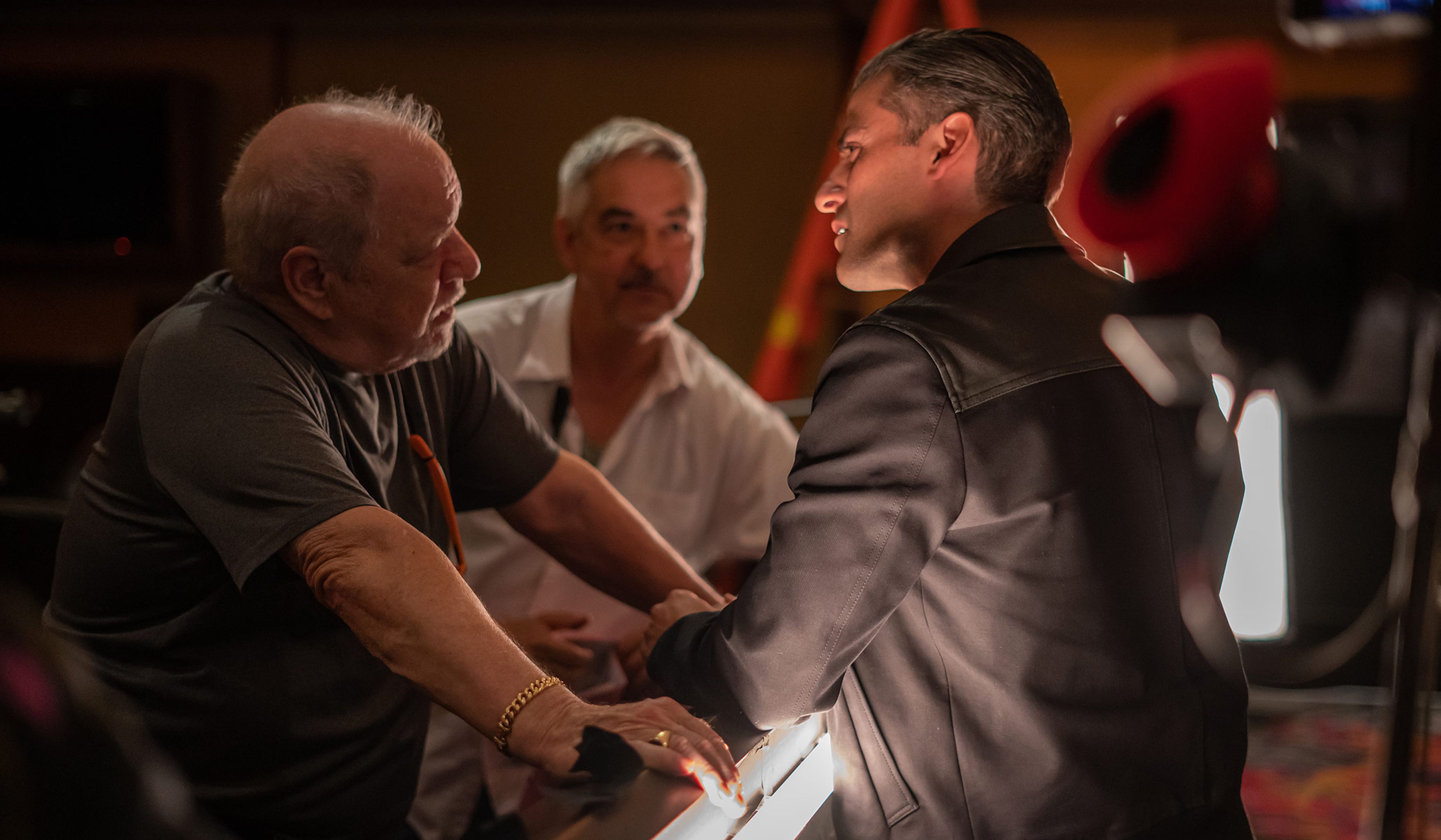
Oscar Isaac in The Card Counter.
Focus Features
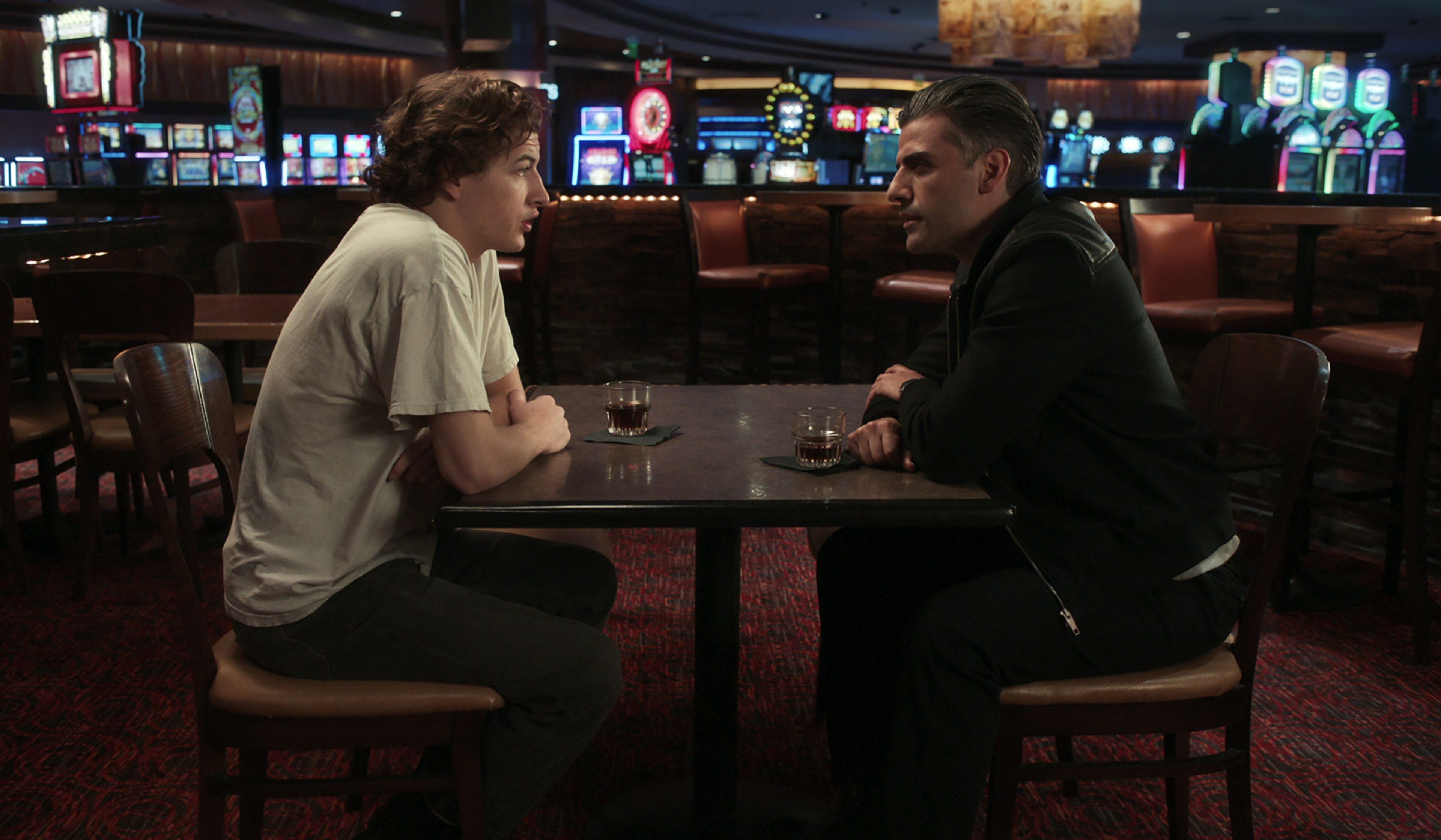
Then comes the interruption: At a police-hardware convention in one of his interchangeable hotels he recognizes the name of a speaker, a Major Gordo (played by Willem Dafoe, so you know he’s important to the story), and wanders into Gordo’s presentation. And there he’s recognized in turn, by a kid (played by Tye Sheridan) named Cirk — with a C, he tells everyone — who knows all about Tell and meets up with him afterward to tell him how they’re connected.
The short version is that Tell was a guard at Abu Ghraib — revisited in harrowing, fisheye-lens dream sequences — and so was Cirk’s dad, and they both got military jail time while Gordo, the contractor who came up with the interrogation strategies, walked away scot-free. Afterward Cirk’s family fell apart — his dad was abusive, his mom fled, his dad killed himself — and he blames Gordo and wants to enlist Tell for a brutal and murderous revenge.
What happens next is an interesting war of genres. Cirk clearly wants to be the star of a certain kind of movie, a pitch-black retribution drama, and Tell sets out to save him from his revenge obsession by trying to enmesh them in a different kind of flick — the gambling caper, The Sting meets Ocean’s Eleven.
To that end he reconnects with La Linda, lets her stake him while flirting with him, and sets out on the poker circuit with Cirk in tow, working his way through smaller tournaments toward a potential showdown with a flag-clad player, originally from the Balkans, who goes by “Mr. USA.” (This is the heaviest-pen moment in the script.) Except that instead of trying to win the big money for his own sake, Tell’s plan is to win enough cash to send Cirk back to college, push him back into his mother’s life and away from his futile fantasy, and then return to the anonymous blackjack playing he prefers.
The final third of the movie is a clash of these two ambitions, as if Cirk and Tell are co-directors battling to decide what kind of movie The Card Counter will ultimately become. I’m not sure Schrader makes the right choice between them, as I wasn’t sure about the ending of First Reformed. But he’s earned the right to messy endings with these two taut existential grappling sessions — and I sincerely hope that there’s more money standing ready to help him keep making movies through however much autumn his career has left.












Comments