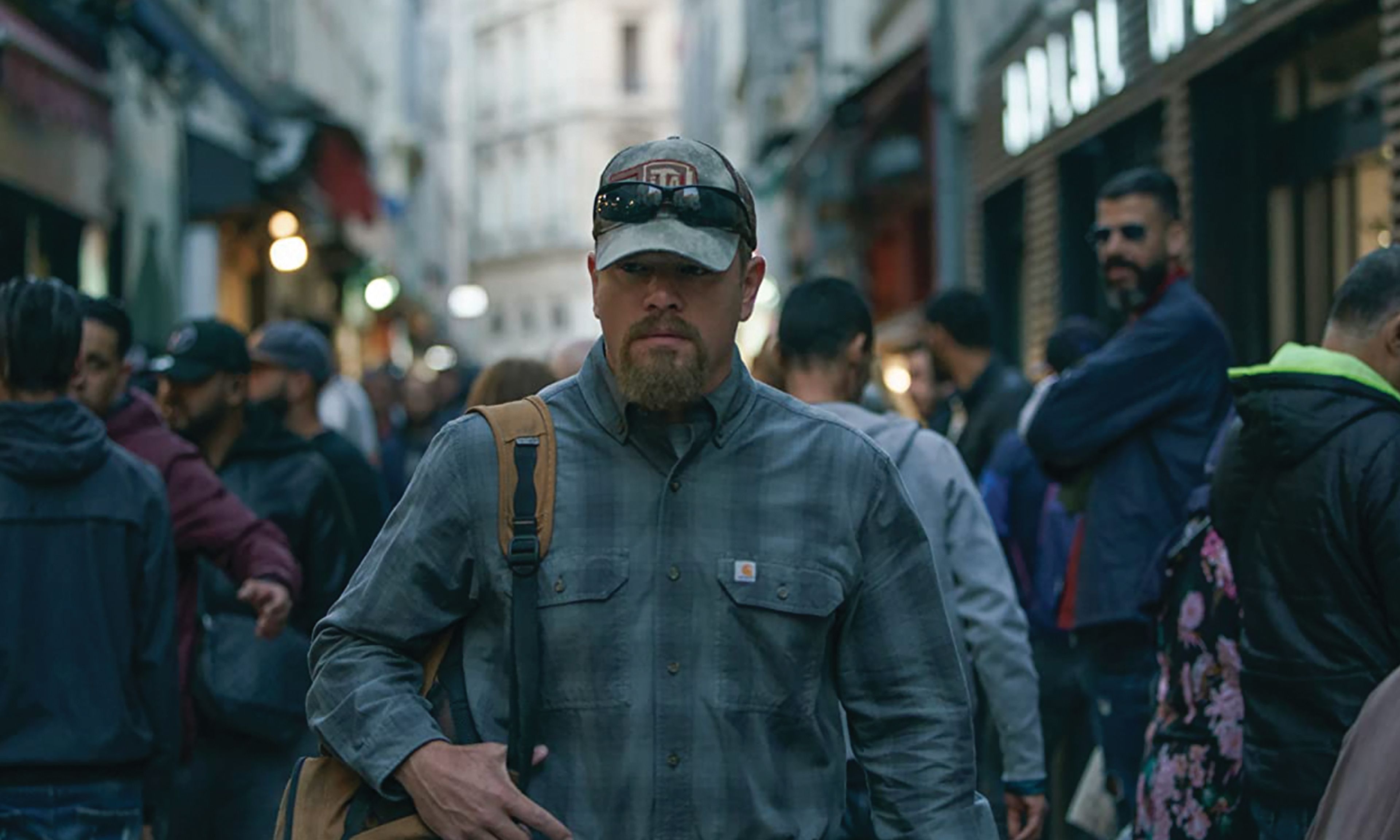
Stillwater, starring Matt Damon as an Oklahoman father trying to free his probably wrongly convicted daughter from a French prison, deserves better than its meager box office to date. In an era when most movies are made either for adolescents or for a microtargeted art-house market, and when Hollywood’s engagement with the West’s roiling politics is either deeply partisan or entirely superficial, Stillwater stands out for its ambition and complexity, its attempt to weave together several very different kinds of contemporary stories into a single work of art.
The swing for the fences doesn’t yield a home run of a great movie; it’s more of a two-bagger with the runner thrown out stretching for a triple. But there’s a lot to admire in the swing and the hustle, a lot to respect in the attempt.
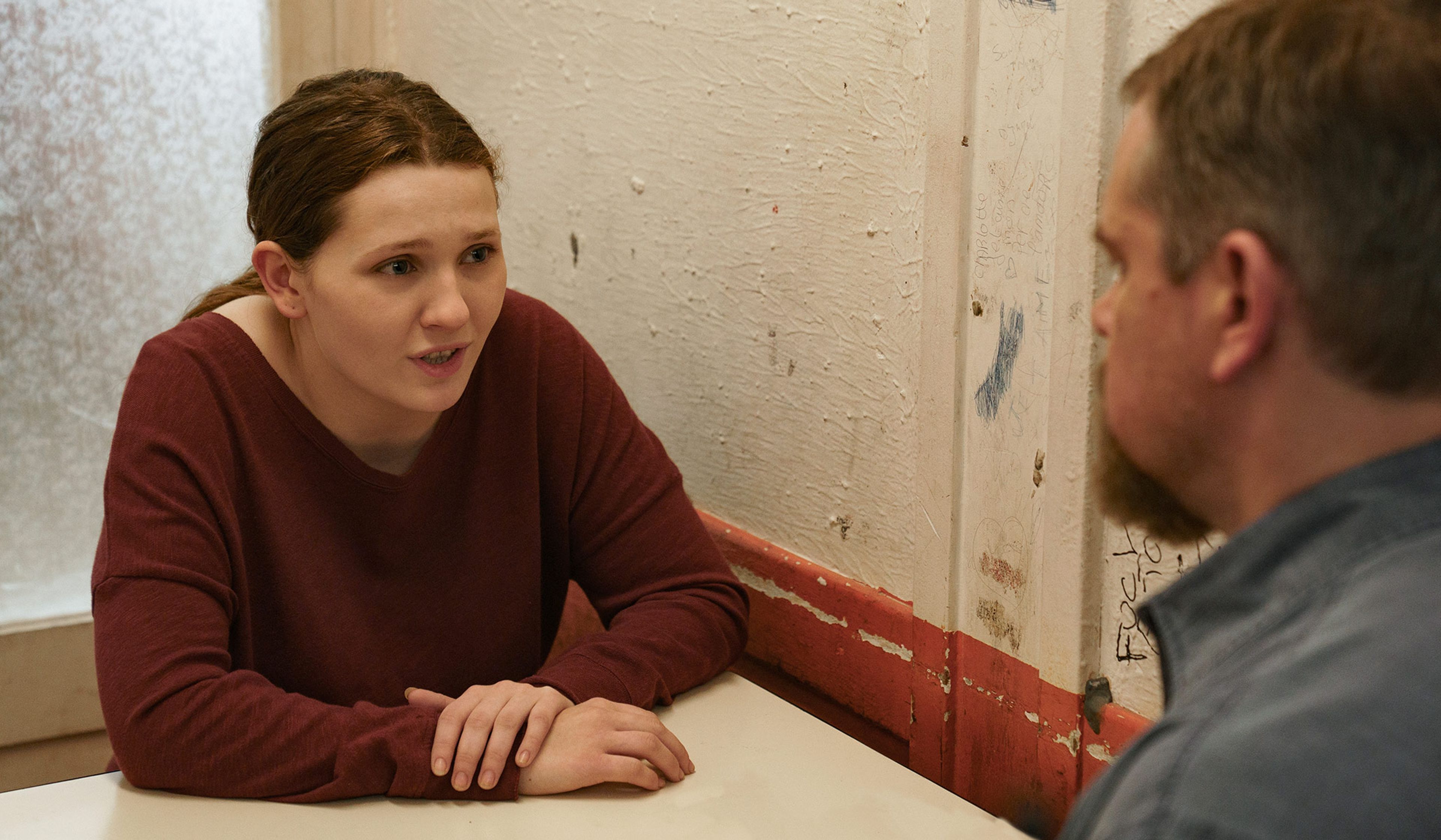
The director is the former actor Tom McCarthy, in his first big film after 2015’s Best Picture–winning Spotlight. That was a straightforward docudrama, following the Boston Globe’s unraveling of the Bostonian parts of the Catholic Church’s sex-abuse cover-up — effective, serious, but also somewhat stolid and forgettable. Stillwater starts from the same kind of based-on-a-true-story place: Unless you slept through tabloid news for the last ten years, you’ll realize that Allison (Abigail Breslin), the daughter of Damon’s Bill Baker, is in the same situation as Amanda Knox, the U.S. exchange student wrongly imprisoned for the murder of her roommate amid a media frenzy in Italy.
But in transposing the European setting from Perugia to Marseille, and the exchange student’s American point of origin from upper-middle-class Seattle to blue-collar Oklahoma, Stillwater embeds the urgency of its false-imprisonment narrative in a meditation on the deeper dynamics of contemporary America and Europe.
Thus Damon’s character isn’t just an American dad, but the East Coast media’s beau ideal of a Trump voter: the blue-collar white male in all his faded splendor, an oil-rig roughneck struggling to find steady work, with a history of alcoholism, a broken family, a lifetime’s worth of repressed emotions, and a habit of saying grace at every meal. That he’s not actually a Trump voter, because a stint in jail cost him the right to vote, is a slightly too clever card the movie eventually and unnecessarily decides to play. Maybe he got drunk and slept through the 2016 election, maybe he accidentally voted for Jill Stein; who cares? The whole point of Bill — Beel, they call him in Marseille — is that he’s an avatar of Trump Country, of working-class and now deep-red white America, turned loose not in Paris, Texas, but in honest-to-God France.
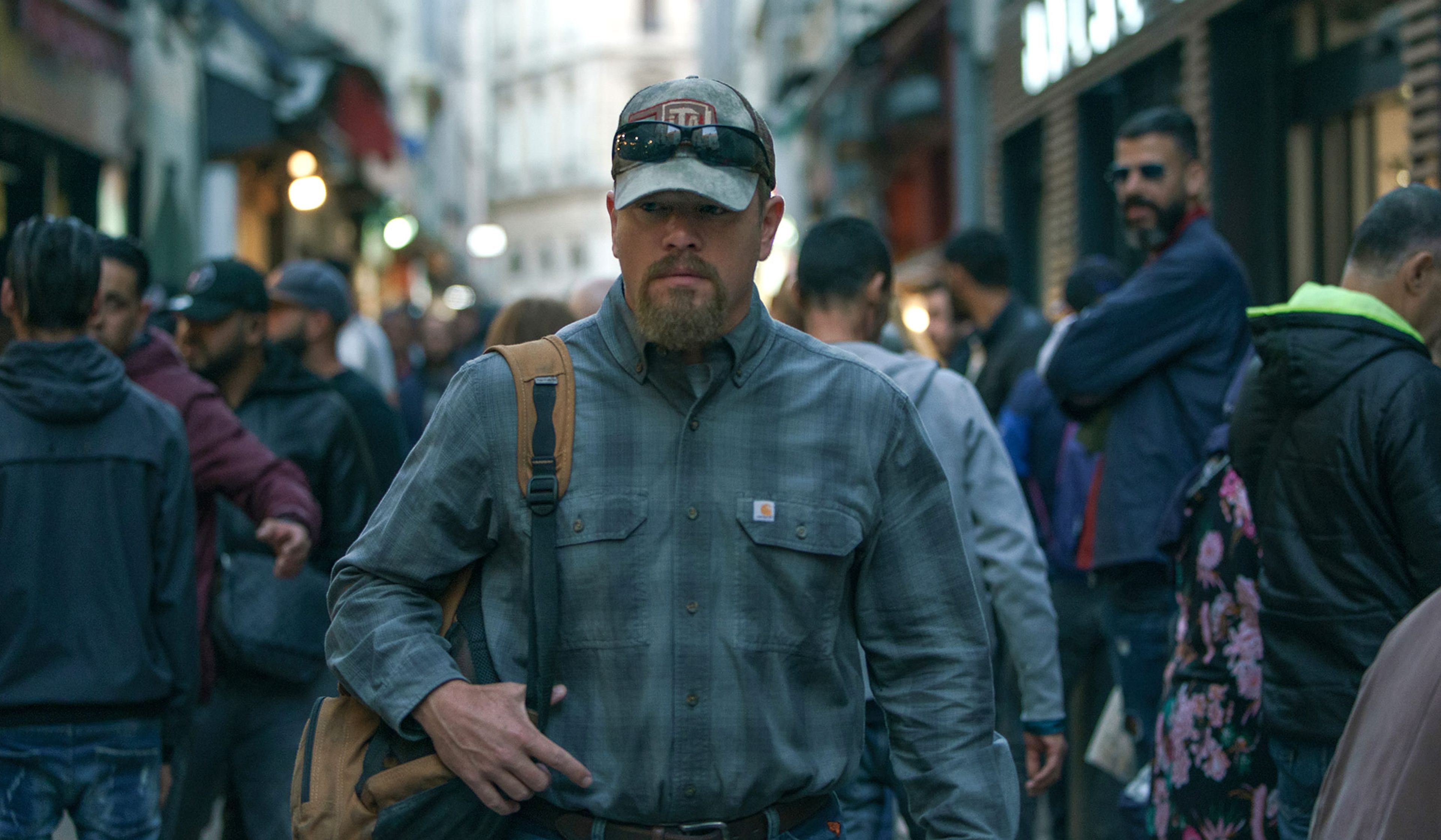





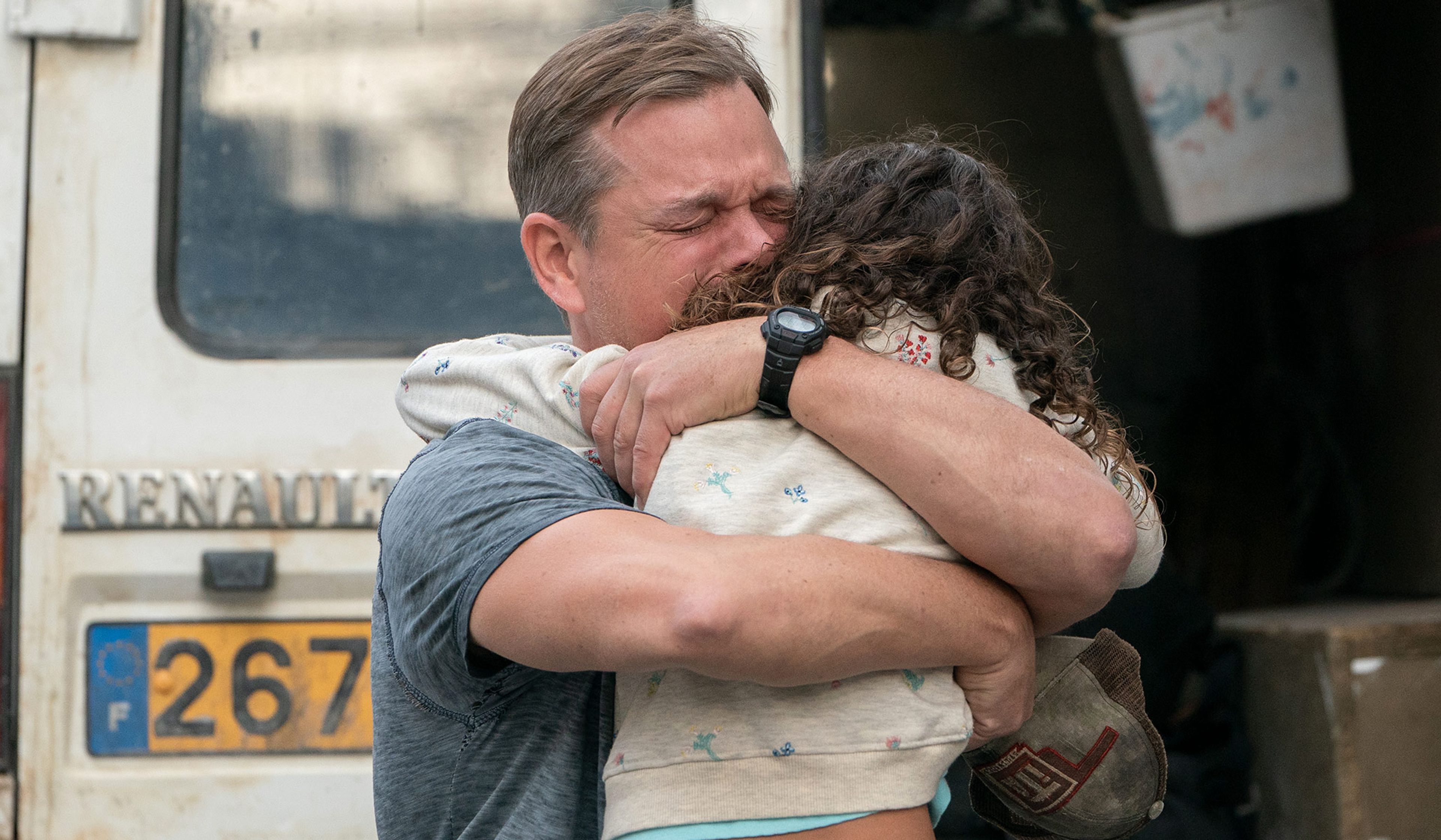
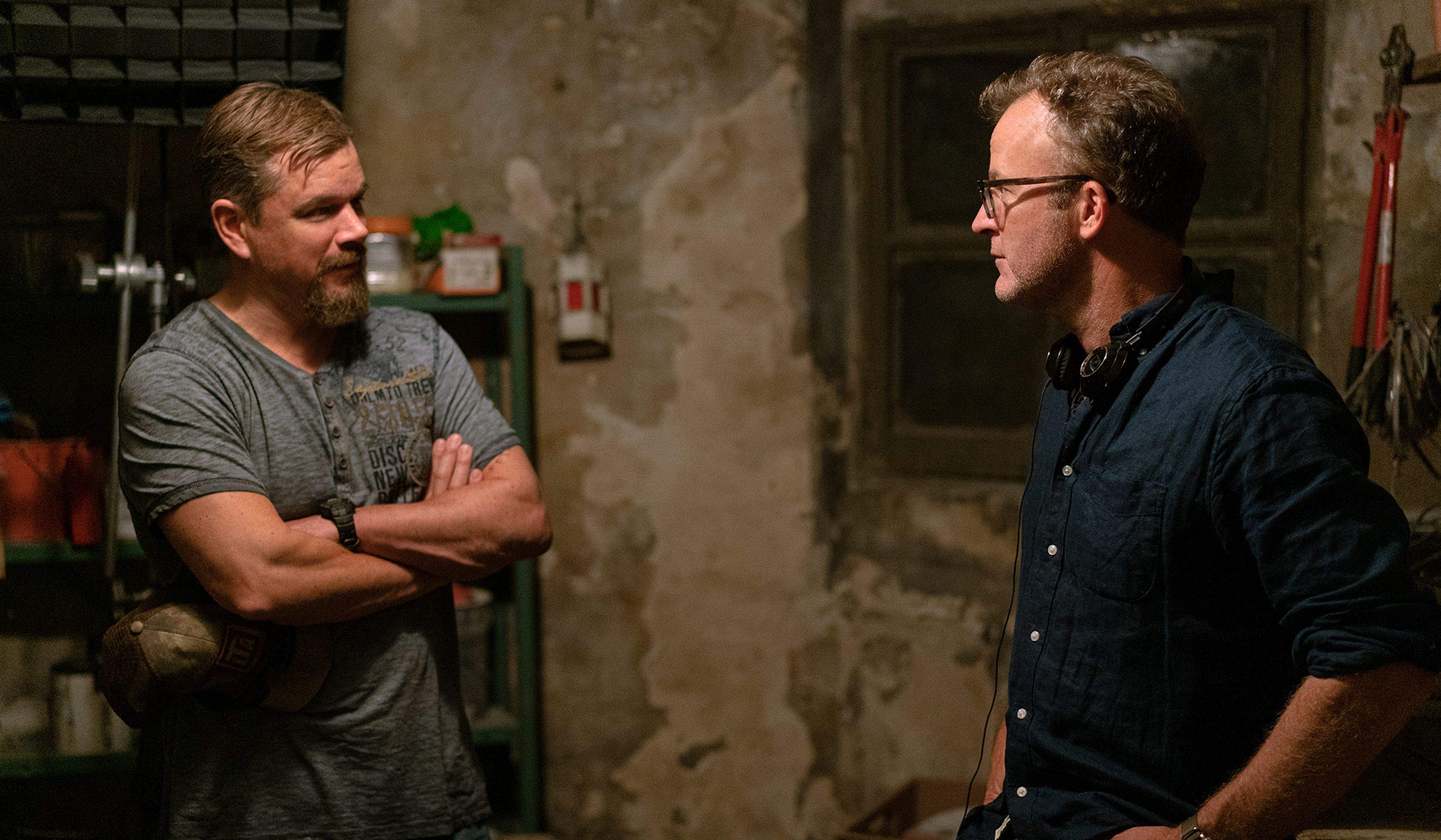
Matt Damon in Stillwater.
Jessica Forde/Focus Features
And turned loose into France’s cracked-mirror version of America’s cultural and political divides — because Marseille is a splintered and segregated city, part French and part immigrant Arab, and his daughter’s roommate Lina, who was also her lover, was an immigrant, and so was the teenage boy who Allison claims killed Lina but whom nobody can find. So Bill, given a lead that his daughter’s attorney won’t take up, tries to bulldoze his way across France’s great ethno-religious divide, ending up waving a photo around a dangerous high-rise where the native French fear to tread and reaping the predictable comeuppance.
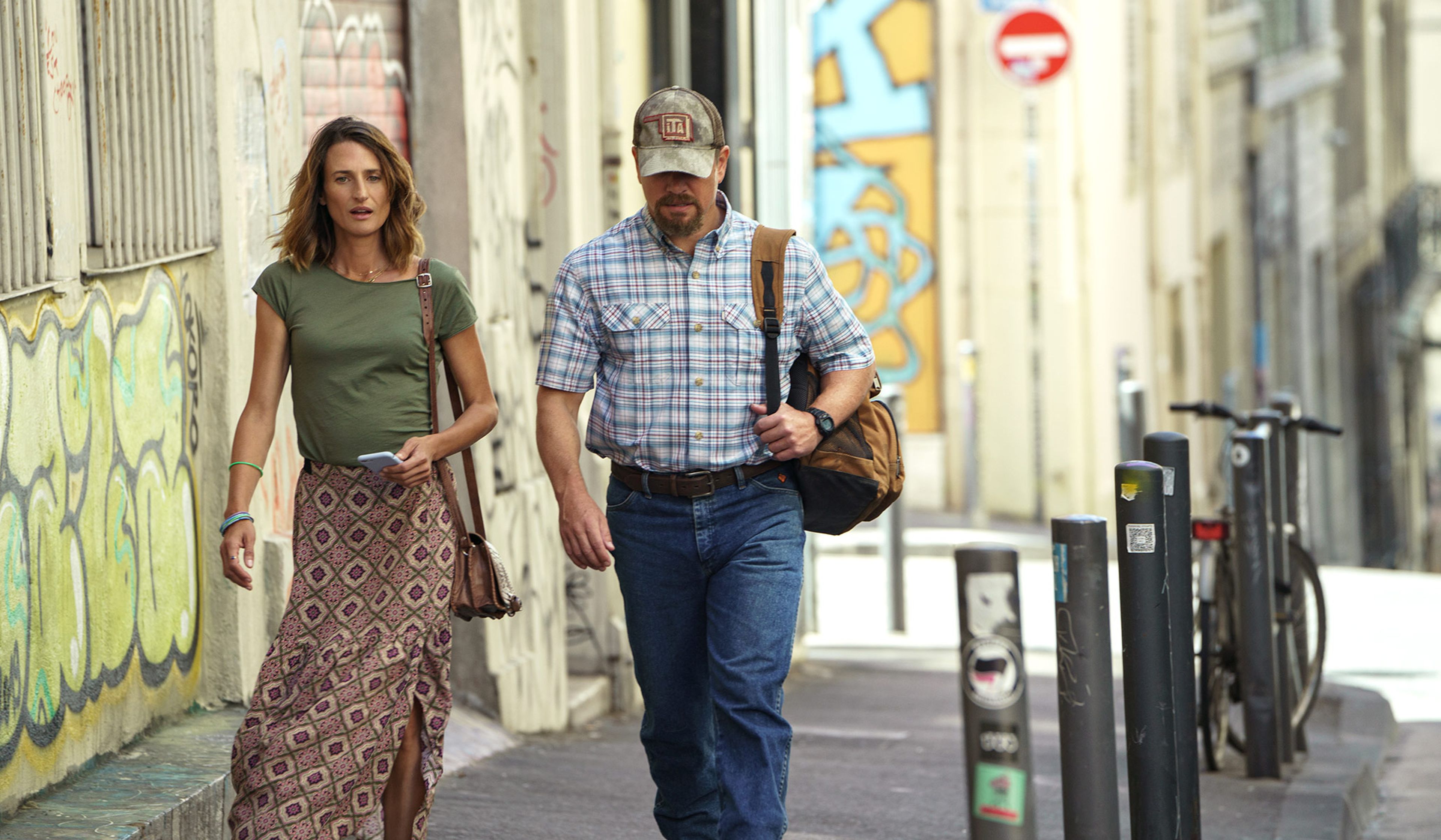
His savior is Virginie (Camille Cottin), an actress and single mother who starts helping Bill with translation after he helps out her daughter, Maya (Lilou Siauvaud, radiant). They fall gradually into a domestic arrangement with him that should be totally implausible but that Cottin’s lively performance and Damon’s coiled charisma somehow sell as inevitable. There’s a touch of right-wing-American fantasy to this phase of the movie: Damon’s taciturn tough-guy Oklahoman seducing a sophisticated Frenchwoman — one with a female lover when he meets her — with his carpentry skills and paternal kindness to her kid, even as he tries to rescue a daughter victimized by both indifferent French bureaucracy and Arab-immigrant violence.
This fantasy can’t hold, for good dramatic reasons and not just political ones — but the story isn’t quite sure where to segue after that. There’s a great sequence when Allison gets furloughed for a day and we get to watch her interact with Virginie and Maya, with the beauty of Marseille and the Mediterranean, entering her father’s unlikely American-abroad fantasy and complicating it just enough, with her memories of his paternal failures and evident misery at going back to prison, to keep the domestic idyll grounded, the tragic element in play.
But thereafter Stillwater can’t figure out how to integrate its different parts. The murder suspect resurfaces, we get some implausible dad-on-villain action — this is the second straight movie I’ve reviewed, after last issue’s Pig, that owes a debt to Liam Neeson’s Taken — and then some implausibly grim stuff so you don’t feel too good about the Neeson homage. Then there’s a twist that I think is supposed to complicate the Arab suspect’s guilt but mostly just seems calibrated to anger Amanda Knox herself, who penned an op-ed attacking the movie for imputing to Allison motivations and actions that bear no resemblance to anything she herself felt or did.
Knox’s feelings are understandable but not really a fair judgment on Stillwater, which is using her life the way artists always use reality, refashioning as they see fit. The problem is that the final turns just aren’t artful enough, and having pulled so many different of-the-moment characters and themes together, the movie doesn’t know exactly what it wants to say. Or maybe that’s deliberate, and the alternative to ideologically predictable morality plays is a resigned bafflement about the world, in which the confusion in Damon’s eyes in the back-in-America conclusion is supposed to be our own.












Comments