Honesdale, Pa.
If you want to understand better why President Obama’s heath-care agenda has foundered, consider the story of Rep. Christopher Carney, a Democrat who represents the district that includes this northeastern Pennsylvania town. Political prognosticators considered the Penn State professor an underdog when he decided to run in 2006 against incumbent Republican Don Sherwood, but his campaign got an unexpected boost when Sherwood’s mistress came forward and accused him of choking her. Carney took a right-leaning position on nearly every issue except for the war in Iraq and became the first Democrat in nearly 50 years to be elected in Pennsylvania’s Tenth.
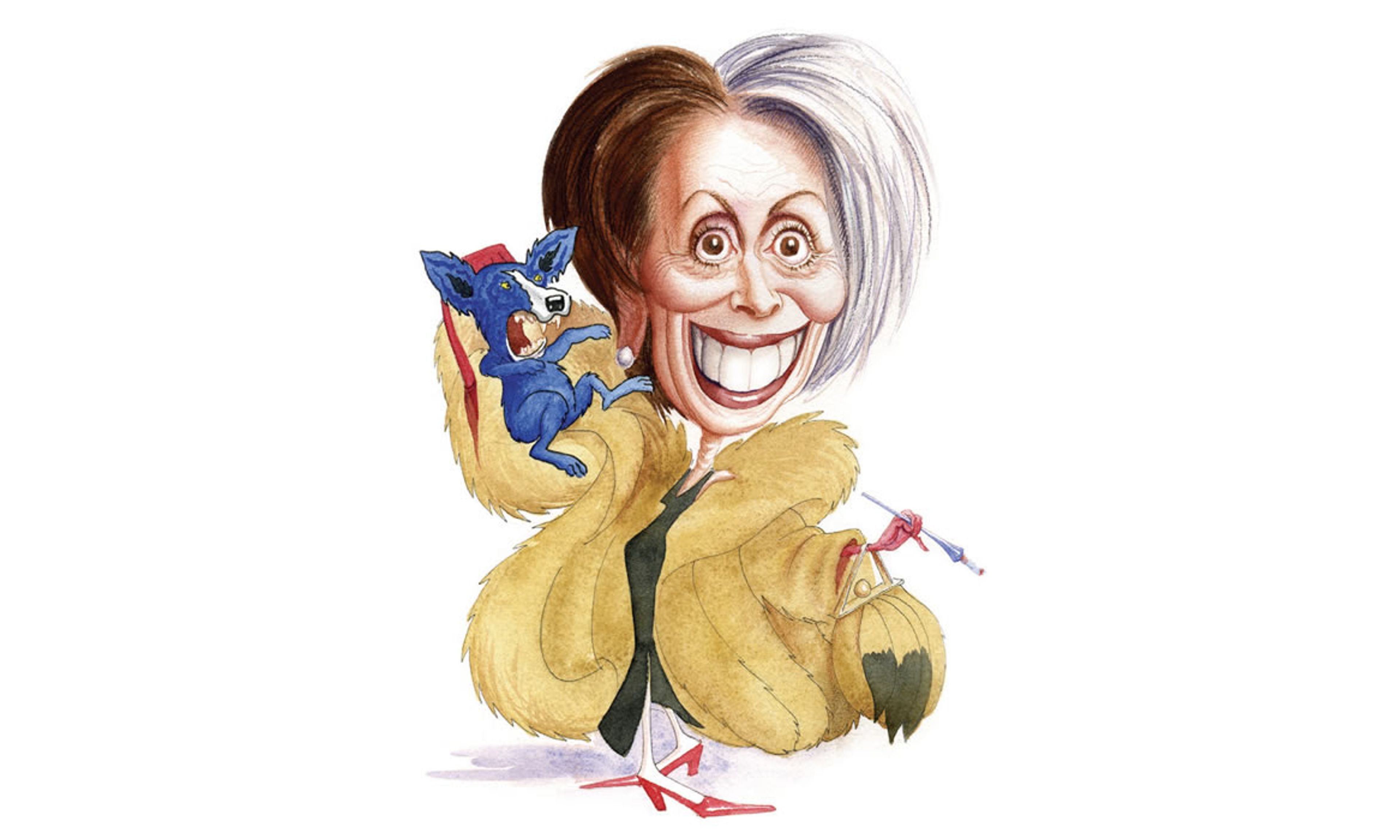
Carney is the kind of Democrat who helped the party recapture Congress that year and build on its lead in 2008. The blue-collar, socially conservative, pro-military voters in his district were disgusted by Republican scandals and dissatisfied with Republicans’ handling of the war. In order to win (and keep) their votes, Carney has broken with his party on a number of issues. He is a member of the Blue Dog coalition, which has recently gained notoriety for nipping at Speaker Nancy Pelosi’s heels as she tries to ram the party’s ambitious health-care bill through the House. The Blue Dogs are the reason Pelosi was not able to pass a bill before the August recess, setting the stage for a month of contentious town-hall meetings that have moved public opinion against the legislation.
Carney held one such meeting here at the Wayne County Courthouse on an uncomfortably hot morning in the middle of August. The estimated 300-plus turnout exemplified the level of interest this debate has generated. Voters packed a steamy second-floor courtroom to ask Carney questions on topics ranging from the bill’s overall cost to its inclusion of taxpayer funding for abortions. Dozens more milled about outside, conversing with reporters and one another on the sprawling courthouse square. A majority of the attendees voiced a desire for some sort of health-care reform, but most were also critical of various aspects of the Democrats’ bill.
Even constituents who disagreed with Carney gave him credit for slowing down the bill. Barbara Yanchek, a resident of Jermyn, Pa., who attended the town-hall meeting, says, “I’m glad he was one of the Blue Dogs who stopped it, but there are so many changes that need to be made to this bill, honestly, they might need to scrap it.” Herein lies the Blue Dogs’ dilemma: When they get back to Congress in September, they will still have to vote for a very bad piece of legislation. “If he votes against it, he’ll find support in this district,” Yanchek says, “but not from his own party.”
The Blue Dogs were formed in 1995 as a group of conservative Democrats who blamed the party’s losses on its lack of fiscal discipline. The 2006 and 2008 elections contributed to the group’s importance by adding 19 lawmakers to its membership, bringing the total to 52. They call themselves “Blue Dogs” because their position between the Republicans and the left wing of their own party leaves them squeezed until they turn blue — and because one of the group’s founders, Louisiana congressman Billy Tauzin, was fond of paintings of blue hounds. (Tauzin, who later switched parties, is ironically now the CEO of the nation’s largest pharmaceutical lobby, PhRMA, which is spending heavily to support the Democrats’ plan.)
Many Blue Dogs infuriated liberals with their votes on the 2007 Iraq War supplemental, which provided the funds for the surge, and the 2007 and 2008 Foreign Intelligence Surveillance Act modernizations, which protected from lawsuits the telecommunications companies that had cooperated with the Bush administration’s terrorist-surveillance programs. These votes led left-wing bloggers to rename them “Bush Dogs,” and liberal officeholders are no less scornful. Most Blue Dogs went along with the party’s budget-busting stimulus bill, and enough of them voted for Rep. Henry Waxman’s energy-rationing climate-change bill to secure its passage. But their stalling tactics on health care have set a number of prominent Democrats to whining about their influence in the party.
Rep. Maxine Waters, the liberal lawmaker from California, said that Rahm Emanuel’s “chickens have come home to roost,” because Emanuel, when he was chair of the Democratic Congressional Campaign Committee, recruited conservative Democrats to run in right-leaning districts. And former DNC head Howard Dean has warned of primary challenges for Blue Dogs who won’t support a government-run insurance plan as part of the overall reform. But the most petulant voice belonged to Waxman. After the Blue Dogs on the House Energy and Commerce Committee refused to vote the bill out of committee unless he addressed their concerns, Waxman accused them of trying to “eviscerate” the bill and said, “I won’t allow them to hand over control of our committee to Republicans.”
A few days later, Waxman backtracked and struck a deal with the Blue Dogs, making concessions such as: an agreement that any government-run insurance plan would have to negotiate rates with health-care providers rather than use the Medicare fee schedule, putting the “public option” on a more even footing with private plans; a decrease in the amount of subsidies that the government would provide for the purchase of private health insurance; and an exemption for businesses with payrolls under $500,000 from the mandate requiring all employers to either offer insurance coverage or pay higher taxes.
But the most important concession the Blue Dogs won was time. Rep. Mike Ross of Arkansas, who leads the Blue Dogs’ health-care task force, told the Washington Post, “We were able to reach an agreement that ensures that every member of Congress will have the entire month of August and the first week in September to read the bill and to visit with their constituents about it.”
The more cynical view is that the Blue Dogs’ motive for stalling had nothing to do with listening to their constituents’ concerns and everything to do with preventing a repeat of the climate-change vote. In June, Pelosi forced them to vote for a very liberal piece of legislation, the Waxman-Markey bill, which now appears to be dead in the Senate. The Blue Dogs want to proceed more cautiously this time. They want to see the contours of what is possible in the Senate before they vote for another one of Pelosi’s creations.
Thus, Pelosi’s bullying has come back to haunt her. If she had been able to pass a health-care bill before the August recess, Senate Democrats would have had something substantial to work with in September. They could have given up very little and still claimed to have cut a lot of objectionable provisions from the House bill. Instead, the House bill is still in play, and the protests of August have moved the mercury of public opinion against the Democrats’ most audacious plans. Several polls have indicated that voters are more sympathetic to the protesters now than they were before, and that they would prefer no health-care bill to the one the Democrats want to pass.
Because most of their districts are conservative, it hasn’t been an easy month for Blue Dogs, and the protests at the town halls have caused some of them to lose their cool. Rep. Baron Hill of Indiana, the Blue Dogs’ co-chair for policy, recently used the phrase “political terrorists” to describe the protesters. Carney hasn’t used this kind of inflammatory language, though in interviews he has called some groups “obstructive and chaotic.”
The only organized demonstration I see at Carney’s town-hall meeting here takes the form of a small pavilion erected by the people from Health Care for America Now, a group that supports Obama’s agenda. The people I talk to who oppose the Democrats’ plan say they don’t belong to any organized group. One of them, Mary Ann Haas of Scranton, lauds Carney for his willingness to meet with constituents, even though she opposes the Democrats’ health-care bill. “Sen. Robert Casey has not had one town-hall meeting,” she says. “[Sen. Arlen] Specter at least had the courage to face people and explain himself, and Carney has done the same.” Her main complaint is that Carney dodged the question of how he would vote if the bill came to the House floor today.
That’s going to be a tough call for any Blue Dog to make. While some have said they won’t support the bill even with the compromises won in the Energy and Commerce Committee, others appear ready to support what is still a terrible piece of legislation in watered-down form. For conservatives, it is a familiar story. When Sens. Olympia Snowe, Susan Collins, and then-Republican Arlen Specter voted with the Democrats on the stimulus package, the spending cuts they won were insignificant and served no purpose other than to provide them with political cover.
It wasn’t enough cover, however, to save Specter from a primary challenge that scared him into switching parties. Most Blue Dogs are probably safe from this kind of primary threat — running to Carney’s left won’t work in this district — but they are vulnerable to challenges from the right. Carney won reelection in 2008, but he benefited from the same dynamic that helped a lot of Blue Dogs — he didn’t have to take many tough votes during his first term because, with a Republican in the White House, many of the Left’s domestic priorities were not on the table.
That’s not the case this time, and Blue Dogs are feeling the squeeze as the likes of Pelosi and Waxman force them to take one tough vote after another. Their revolt is probably temporary — liberals like to say that a Blue Dog is just a dog that’s holding its breath until it gets more pork — but even if they cave in the end, they’ve done conservatives a favor: They’ve kept the House bill in play, slowed the Democrats’ momentum, and given opponents of the slow march to socialized medicine more time to make their case.











Comments