‘It’s No Big Secret Why Helen Hunt Isn’t Around Anymore,” read a headline I came across recently. It was accompanied by a not-so-great photo of the actress. It seems that middle-school mockery is an acceptable professional marketing strategy. “Shiloh Jolie-Pitt’s Transformation Has Been Simply Stunning,” declares another headline, apparently exploiting readers’ curiosity about the beauty of a 16-year-old girl to get clicks. “The Tragedy of Ashley Judd Is Simply Agonizing,” reads another, pitching a woman’s pain for entertainment value. We’ve all seen headlines like these — and we all probably agree they’re cringeworthy — but their omnipresence on the internet attests to an old and ugly truth: Objectifying and degrading women and girls sells.
Internet searches for porn make up a significant percentage of all searches online. In 2014, Statista reported that “87 percent of U.S. adult males 18–35 watch porn at least weekly.” And Pornhub, in its 2018 year in review, boasted, “Pornhub’s daily visits now exceed 100 million. To put that into perspective, that’s as if the combined populations of Canada, Poland and Australia all visited Pornhub every day!” Even children now have easy access to online porn, much of which educates viewers to think that women in pain either are enjoying it or deserve it.
What’s ugliest to me, as an editor of a women’s magazine, is to see how many women’s publications have participated in degrading women for profit. Consider some headlines I’ve noticed in social-media feeds over the past few months that objectify women as either eye candy to ogle or clowns to mock: “Julia Fox Takes Low-Rise Pants to All New Lows in New York City,” a Glamour title reads. “Despite Wardrobe Mishap, Queen J. Lo Keeps Dancing for TikTok,” reads another in Cosmopolitan. “Kim Kardashian Just Wore the Shortest Crop Top We’ve Ever Seen,” writes Cosmo. And “Katy Perry, 37, Flashes Her Washboard Abs as She Rocks a Crop Top” draws readers to an article at — this isn’t an error — Good Housekeeping.
Even if the articles are true (only sometimes), surely, for many women, they’re not relatable. “Emma Watson just proved that a tiny crop top can be workwear appropriate,” exclaimed Harper’s Bazaar UK. Yeah, I don’t think so.
But it gets worse. As an editor, I’ve spent a fair share of time learning best practices for “search engine optimization” (SEO) — that is, the best ways to make sure your content gets picked up and prioritized by search engines. And I can tell you: These women’s publications are using SEO keywords such as “nude,” “sheer,” “bikini,” and “topless” to get clicks from porn users, most of whom are probably men (though we don’t have reliable data on this). Women’s Health writes, “Jennifer Lopez, 52, Flaunts Her Strong Arms in a Nude Corset Wedding Dress.” InStyle announces, “Kim Kardashian Paired Her Leather Bikini Top with a Motorcycle Helmet and No Bottoms: ‘Always ready!’”
Cosmopolitan UK joins the chorus: “Khloé Kardashian shares topless photo on Instagram,” and Good Housekeeping finds it important to note that “Kate Beckinsale’s Legs Are Legendary in a Sheer Minidress.”
If you’re still not convinced that these outlets are choosing porno keywords for clicks, consider the stories that strain to include the word “butt” in headlines: “Zendaya Wore a Plunging, Side Boob-Baring Spider Web Dress with Butt-length Braids,” from InStyle; “Julianne Hough’s Sculpted Legs and Butt Shine as She Shimmies in the Studio on Instagram,” from Good Housekeeping; “Halle Berry Just Posted a New Swimsuit Photo and Her Butt Looks So Toned,” from Country Living.
It’s worth noting that Good Housekeeping, Women’s Health, Cosmo, Elle, and Country Living are all owned by Hearst Communications, which might explain some of the repetitive messaging. But Glamour is owned by Condé Nast, and Dotdash Meredith owns InStyle. So this isn’t just one corporation’s marketing strategy. It’s an industry problem. It would appear that, while straining for survival in a male-centered business climate, in which ad profits are the priority, many women’s magazines are resorting to clickbait and in doing so are betraying their own demographic. Male consumers may not be sought after as subscribers, but they may be likelier than women to click on salacious Web headlines and ad copy. Instead of serving women, too many women’s magazines are serving up women as objects for male consumption.
The counterargument to this objection is that the objectification of women by women’s media is, in fact, a form of empowerment. But it’s not. Peggy Orenstein offers some clarity on this matter in her best-selling 2016 book Girls & Sex. Orenstein observes that female artists and celebrities who present sexualized images of themselves are often favorably portrayed as “taking control . . . of a hypersexualized industry that too often exploits women.” But, as she notes, all we know is that they “are being marketed as taking control” (my emphasis).
Orenstein continues, “Those performers still work within a system that, for the most part, demands women look and present their bodies in a particular way in order to be heard, in order to be seen, in order to work.” These women are “spinning commodified sexuality as a choice, one that may be profitable but is no less constraining.”
As for reality stars such as Kim Kardashian who have mastered the “body product” and make lots of money from it, Orenstein says that “this can be read as empowerment — if your definition includes perpetuating shopworn stereotypes about women.” But, she adds, “it’s difficult to see how Kardashian’s success expands options for anyone but herself.”
Nobody’s perfect, and I wouldn’t shame any woman in the entertainment industry for trying to make a living and perhaps making missteps along the way. Certainly fault — indeed the lion’s share of the blame — belongs with those pressuring women in these situations.
Along the way, it seems the traditional women’s mags have sold out to the same pressures. They may rationalize that this is how to help women move forward in a male-dominated world; and for a long time, many have seemed to smile through it and pretend it’s nothing. But in our post–Me Too world, more and more women may be realizing they don’t have to put up with this.
It’s no wonder that one study, the “Global Girls Beauty and Confidence Report” commissioned by Dove in 2017, found that most women feel worse about themselves after flipping through a typical women’s magazine. Which may be why the Washington Post in 2019 posed this question: “Women’s Magazines Are Dying. Will We Miss Them When They’re Gone?”
It should be quite clear for the mission-driven women’s publications that still remain that the way not to go is to compete for Web clicks by objectifying women. The magazine I edit, Verily, started as the first no-Photoshop women’s magazine in 2012, employing a policy to never alter women’s bodies or faces, and we’ve maintained style guidelines that permit no objectifying visual or editorial content.
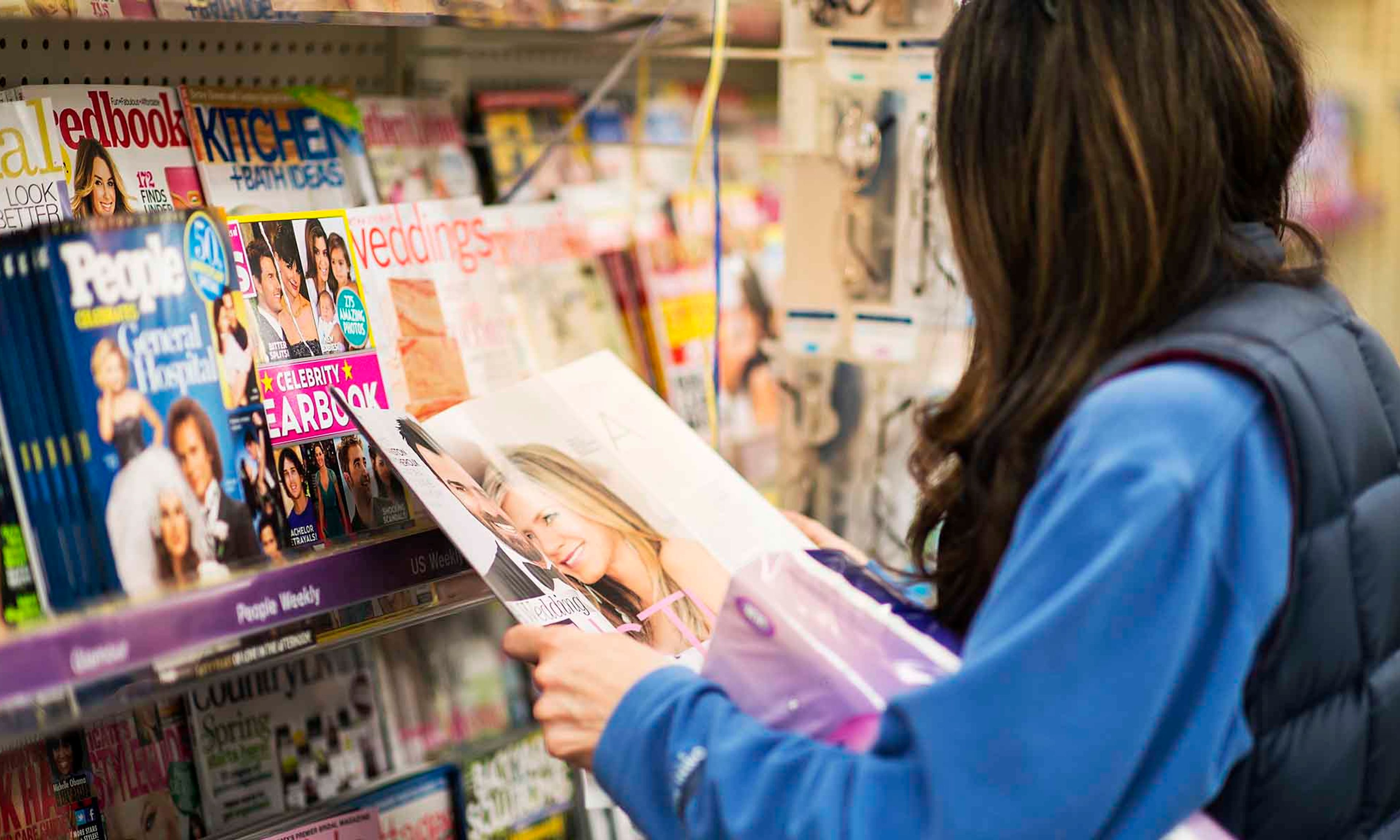
In fact, the way forward for all women’s mags might be to disentangle ourselves from the Web. Many women are already unplugging. While Glamour shuttered its print mag and Cosmo peddles porn for clicks in its relationship section online, many women are turning back to newsstands to find head-clearing content. There you’ll see a whole new genre of women’s publications aimed at freeing our minds of all the stress we women deal with on a daily basis. Magazines such as Experience Life and Breathe are filled with pages of personal goal-setting, coloring-book designs, and other features that respond to readers’ desire to slow down and re-evaluate things. Many women are growing tired of how the media objectify women. They’re picking up self-care mags instead, trying to quiet the noise and get back in touch with their internal voice.
Is the women’s fashion-and-lifestyle magazine dead? I don’t think so. Many women love picking up a magazine and flipping through it to read content written for them, and women’s outlets play an important role in advancing women’s ideas in society. There should be a women’s magazine that one can read without contributing to a culture that sets women back.
At their origins, women’s magazines provided women with articles on fashion and with lifestyle tips aimed at making life easier and less cluttered. I think we can still do that. We can do it while still creating gorgeous, moving content, because seeing and hearing women as we truly are is so much more powerful and valuable than being momentarily distracted by counterfeits.











Comments