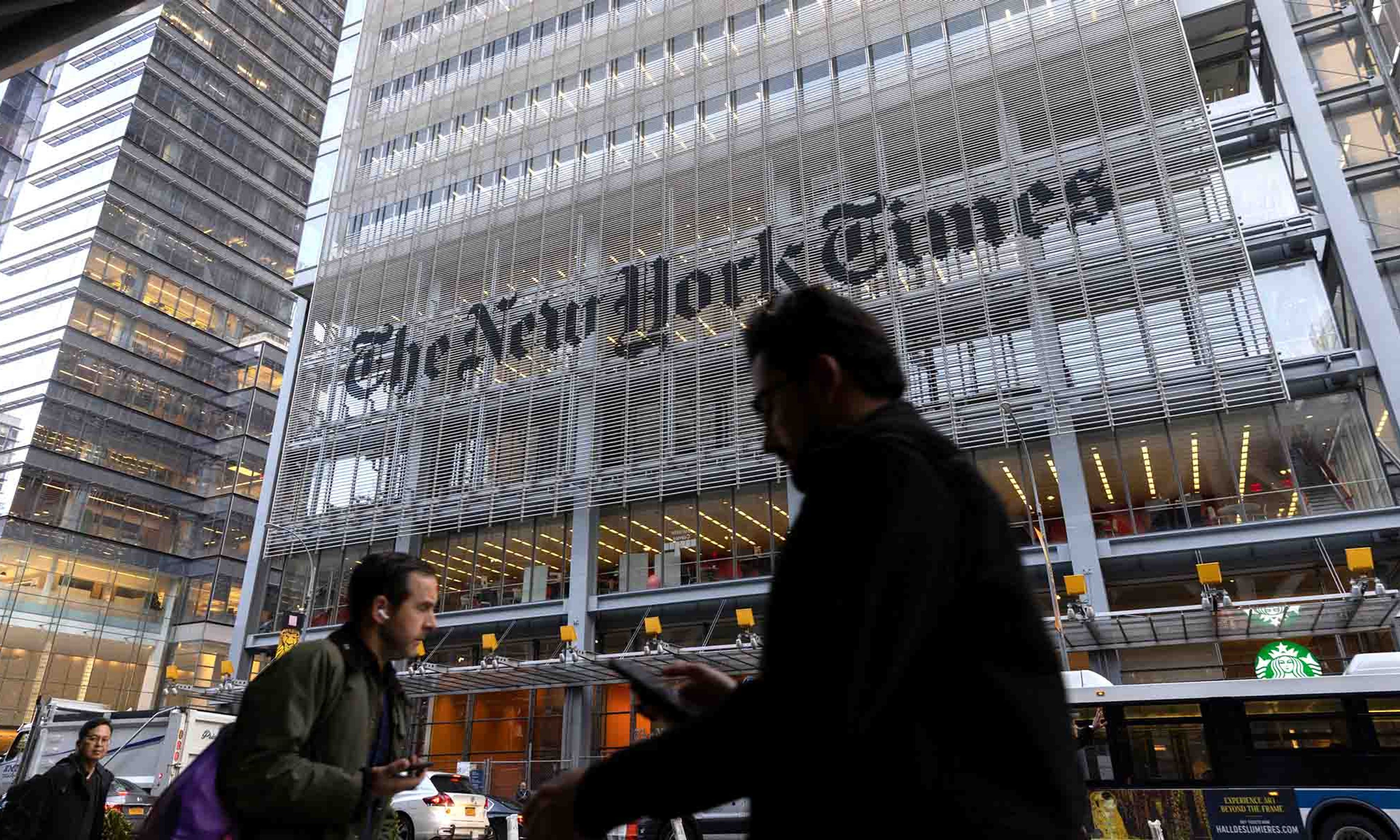
Flicking through the New York Times with any regularity between 2018 and 2021, you would have discovered that sex is not binary, that only bigots dispute gender identity, and that if you don’t affirm the identity of people with gender dysphoria, they may very well kill themselves. You would also have learned that social contagion as an explanation for the rising levels of transgender identification is “anti-trans propaganda,” that hormone suppression can reverse the physical advantages that puberty bestows on the male body, and that there is a medical consensus on all things trans that just happens to align perfectly with the policy preferences of the Human Rights Campaign.
I began covering the transgender issue for National Review in the summer of 2018, almost immediately after my arrival at this magazine. Back then, my liberal sources — doctors, parents, women’s-rights campaigners, detransitioners, etc. — would often lament that only conservative outlets were interested in what they had to say. I wondered why this was, given that the transgender issue seemed to overlap with several obvious left-liberal causes.
Feminism, for instance: the blatant assault on women’s rights and spaces. Or gay rights, since many of the children being ushered down the path of irreversible “transition” would, if they completed puberty, be gay more likely than trans. Then there was the anti-capitalist angle: the ways in which, as with so many medical scandals in the United States, an unregulated health-care system enables bad actors to exploit vulnerable patients for profit.
Liberal journalists in Europe, such as those at the Times of London, have made these and other arguments over the past five years. And following whistleblower reports, independent government reviews, and a relentless public debate, health-care authorities in certain countries have put the brakes on so-called gender-affirming care. You might say that the reaction against transgender ideology in the United Kingdom has made such a splash that its ripples have reached the shores of the United States. But only recently.
For a long time, the New York Times — source of “all the news that’s fit to print” — remained unroused by the controversy. As late in the debate as the fall of 2021, the Times declined to run what would later prove to be a bombshell op-ed by Erica Anderson, a trans-identifying gender clinician alarmed by just how reckless gender-affirming clinical practice had gotten in the U.S. According to Anderson, the Times explained that the proposed op-ed fell “outside our coverage priorities right now” — though, oddly, several activist-friendly pieces on trans issues at the time did not. Anderson and Marci Bowers, a trans-identifying vaginoplasty specialist, relayed their concerns about clinical practice in an interview with Abigail Shrier instead. This interview was published on Substack, platformed by Bari Weiss, a former Times columnist who left over the paper’s hostility towards staff members with heterodox views.
Weiss wasn’t the only one who struggled with the Times’ workplace culture. James Bennet, the paper’s opinion editor since 2016, resigned in 2020 after his decision to publish an op-ed by Senator Tom Cotton sparked a Twitter storm. (Senator Cotton’s piece argued that the military should be used to handle George Floyd rioters.) Bennet was replaced by Kathleen Kingsbury. In June 2022, Joe Kahn succeeded Dean Baquet as the Times’ executive editor. Perhaps it was in part a change of leadership that led to the slow trickle of the once-ignored side of the transgender debate onto the paper’s pages.
In April 2022, Ross Douthat was permitted to publish a lay-of-the-land piece on the LGBT culture war. Written in what Douthat described as a “studiously cautious style,” it explained each camp’s view accurately and impartially. A few months later, in June, the Times published a lengthy and painstakingly balanced report on the “battle over gender therapy.” The report documented the international medical profession’s debate around best practices for the treatment of gender dysphoria — acknowledging the legitimacy of some critics’ concerns. In November of that year, the paper published a report on some of the potential downsides of puberty blockers.
Naturally, trans activists, who had gotten so used to the paper’s incuriosity about their opponents’ views, were appalled by the Times’ sudden interest in a different opinion. Their outrage culminated in the coordinated publishing of two open letters that appeared online on February 25. One was signed by LGBT organizations, the other by Times contributors. “We have tried to educate you and your colleagues,” stated the LGBT advocates’ letter. “We have sent emails, made calls, tried to help reporters source stories,” but alas to no avail. Among their list of demands was for the Times to “stop questioning” what constitutes best medical practice, to “stop questioning science that is SETTLED.”
The contributors’ letter, though less belligerent, was similarly insistent that there was nothing to see (or say) on the subject beyond what they approve: “All of us daresay our stance is unremarkable, even common, and certainly not deserving of the Times’ intense scrutiny.”
The response by the Times’ editorial leadership was commendable. In an internal email sent on February 16 and later leaked, Kahn and Kingsbury made clear their refusal to submit to intimidation tactics: “We do not welcome, and will not tolerate, participation by Times journalists in protests organized by advocacy groups or attacks on colleagues on social media and other public forums.”
In response to Kingsbury and Kahn’s email, the president of the NewsGuild of New York journalists’ union, Susan DeCarava, wrote in a public letter that “employees are protected in collectively raising concerns that conditions of their employment constitute a hostile working environment.” On February 21, various senior Times journalists wrote a letter — leaked to Vanity Fair — in response to DeCarava’s, stating that “factual, accurate journalism that is written, edited, and published in accordance with Times standards does not create a hostile workplace.”
Amid the back-and-forth, the paper again signaled its commitment to publishing multiple sides of the transgender issue. On February 16, the Times published a piece by Pamela Paul that called the trans-activist campaign against J. K. Rowling “dangerous” and “absurd” and defended the legitimacy of her views that some spaces should be for “biological women” only and that, “when it comes to determining a person’s legal gender status, self-declared gender identity is insufficient.” Then, on February 18, it published a piece in which Megan K. Stack detailed the supposed nationwide conspiracy to “weaken the rights of transgender Americans, shunning and humiliating them in the process,” and alleged that withholding puberty blockers, cross-sex hormones, and surgeries puts “transgender kids at risk of despair and suicide.”
Stack’s piece occasioned another protest from the contributors who had written one of the first letters. On February 24, they wrote again to say that coverage of trans issues “is too often overwhelmed by the deluge of biased reporting” and that Stack’s piece “should not bear the burden of being the Times’ only in-depth examination of recent bans on gender-affirming care.” The authors also complained about recent Times stories “about European nations contending with laws that would allow citizens to legally transition without first having received a formal gender dysphoria diagnosis.” Spain recently passed a law allowing citizens as young as 16 to change their legal gender based on self-identification alone. But not without backlash from feminists and socialists. The Times had reported that “similar proposals have divided public opinion elsewhere.” For instance, the U.K. government sided with Scottish public opinion in vetoing the Scottish parliament’s legislation that would have allowed gender self-ID for citizens as young as 16.
In the Twitter bubble, the demand to ignore liberal backlash may have seemed like a noble objection from the letters’ writers, but its authors are underestimating the degree of interest, on both sides of the Atlantic, in an open debate on transgender issues. Moreover, the demand for censorship only intensifies this interest. From my browsing of the Times’ comment section, it seems that the paper’s aggrieved journalists may even be out of step with the Times’ liberal readership. One self-described “transgender woman who works in healthcare and transitioned as a young adult” described Emily Bazelon’s piece “The Battle Over Gender Therapy” as “the best and most nuanced article I have ever read on this incredibly complex and hot-button topic.” Under an article exploring the risks and potential harms of puberty blockers, a self-described “long-time Democrat and an atheist,” who opposes transition treatments on minors, commented: “I’m stunned and encouraged that the Times was allowed to publish this article.”
For too long, liberal journalists have allowed transgender activists to be the gatekeepers and standard-setters in this debate. The activist strategy depends on the dominance of narrative over fact, soundbite over reasoned argument, quick moral certitude over science and study. Above all, it has depended on the assumption that to challenge activist orthodoxy on transgenderism must be immoral. This assumption is entrenched by invocations of previous, successful rights-based causes.
But the strategy collapses under scrutiny. In the contributors’ letter, for instance, the authors refer to the Times’ coverage of the AIDS epidemic. They complain, “The New York Times managing editor and executive editor A. M. Rosenthal neglected to put AIDS on the front page until 1983, by which time the virus had already killed 500 New Yorkers.” But this — namely, the decision not to print crucial health information disproportionately affecting a minority — is precisely what they suggest the Times do now by refusing to publicize negative effects of gender-affirming treatment.
The threat of being “on the wrong side of history” is perhaps more potent in an age when history is constantly being judged and rewritten. But it is also designed to appeal to journalistic vanity. Whereas the adage “It’s fish wrap by Friday” once reminded journalists that most of what they wrote would be forgotten by the end of the week, journalists now often seem worried about their legacy a century from now. Many who are busy trying to bend the arc of history towards justice would be better served writing about, as Orwell put it, what’s in front of their noses.












Comments