The Christian calendar is terse, a tweet with a hundred-character limit. Christmas falls in the depth of December, Good Friday and Easter come at the start of spring. Birth and death (and resurrection) span no more than a single season. These are the bullet points of any biography or gravestone, but in between comes life, where we do stuff.
Gardeners inhabit the living portion of the calendar. The time beforehand is passed scanning catalogues. These offer images of hope — descriptions of heirloom varieties, pictures of children holding produce as big as their heads. Gardens never actually come up quite that luxuriantly, but if a man’s reach does not exceed his grasp, what’s a seed catalogue for?
The traditional date for planting peas is St. Patrick’s Day, though if you followed tradition in this part of the country you would be disappointed. Last spring there was one snow day each month in March, April, and, yes, May. But peas are the first to go in whenever the time of safety finally arrives. They like mild days, don’t mind chill nights. The drill for putting them in the ground is always the same. Our garden has two inner beds and a wraparound bed, pierced by two doors and fenced. Pea plants climb, so the seeds must hug the fence. Pick two of the outer rectangle’s four sides, don pads, and kneel. Whether the seed packets come from Maine or Missouri, the instructions are the same — ease itself, only repetitious. Plant one inch deep, two inches apart. The peas-become-seeds are dry, smooth, hard, slightly dented, like the heads of tiny old men. With the insecurity of someone who took gardening up only in middle age, I shake three in each hole. No tools are necessary — you poke with a finger, cover with a patting hand. The odd stone or wood chip gets tossed aside. Your feet curled under your backside leave toe marks all along the garden path. Fetch two watering cans — the iron rule of gardening is, you always forget to bring something with you when you first go out — and give your handiwork a drink.
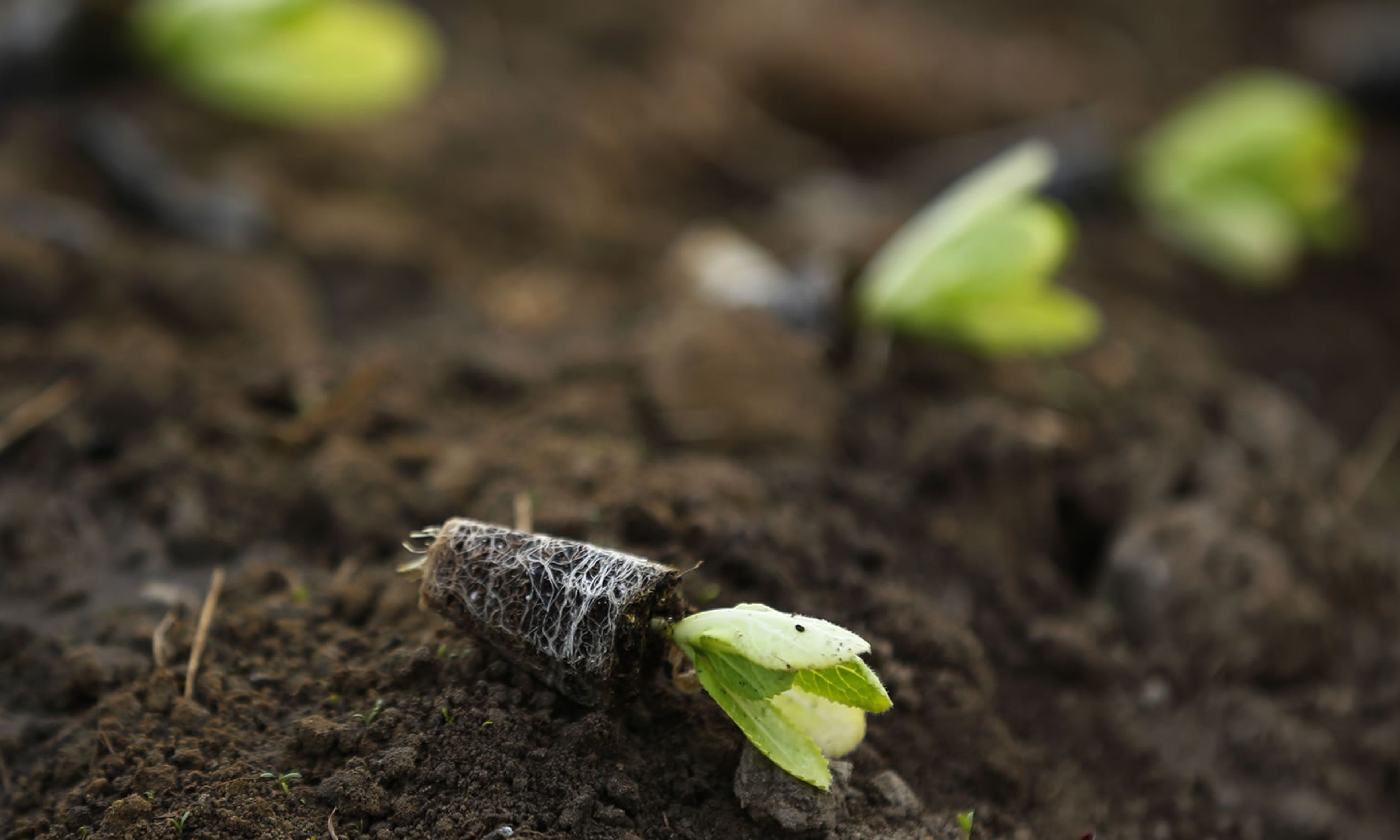
We also buy plants that are already growing. They come in hard plastic pots or soft plastic trays; the detritus accumulates until at year’s end it will fill a contractor bag. Our most distant supplier has a barn and a greenhouse in the next county, past broken-down resorts and shuttered strip clubs, the race track and the dairy farms, almost in the next state. Our closest suppliers are a couple who live just over the hill. Besides plants they also sell garden sculptures, Buddhas, Saint Francises, Venuses of Willendorf. Every religion has to eat. Buying plants in infancy speeds up the growth cycle. Raising tomatoes or melons from seed would be impossible in this latitude. A garden is like a movie; each character’s entrance is keyed to the climate, and to how much screen time he takes.
After planting comes worry. About droughts, when spring rains are a memory, and which can visit even in spring. About the irrigation system whose drip hoses, unscrewed to prevent freezing and bursting, I laboriously reattach, and whose push-button control box I activate in the power room but whose operation I understand no more than tribesmen do the will of the gods they worship with such indifferent success. About creatures great and small — against woodchucks we call a sharpshooter; against slugs we put out beer; against insects we only pray, since we do not use pesticides. After disease we ask the suppliers of plants and statues to tell us what happened, though they cannot restore health.
A garden is predictable. The melody has already been written, or at least the chord progression. Now it is as flat as a map, except for a clump of sorrel that wintered over, and clown-colored johnny-jump-ups that post themselves in the middle of the front gate. In a month there will be patches of lettuce, pea strands winding up the fences, asparagus heads poking up, purple, green, and rude. In four months it will be a bower. Toads will scramble in the corners, birds will sing from the fence posts. Vines and leaves will drape not only the fence but the props erected like outsider art to support them — tomato cages, metal poles, broom handles, tree branches. In six months it will be a ruined bower, fit for poems and regret. In seven months the last tough-leaved survivors will still be contributing handfuls to Thanksgiving salads. All these changes, however dramatic, are predetermined. We are fated to sameness. Before every foray we will suit up identically, smearing anti-tick cream on ankles, wrists, and necks, putting on the same pants, shirts, and brimmed hats, pulling on the same gloves.
From a long enough distance, life is sameness. This can be comforting. Theme-and-variations is a popular musical form, and the best examples bring the theme back unadorned for the finale. New friends are silver, old friends are gold, says the old saw. But other old saws express an opposite, irksome truth. Same old, same old. Been there, done that (believers in reincarnation add, been that). Nature, give or take the occasional pandemic, is the model of sameness. Farmers’ almanacs boast about predicting next year’s weather. What’s there to boast about? They can be off only by a few days or degrees. When grass, freed from frost, first turns green, it is thrilling; then you think, I got this to look at for half a year. The seemingly eternal recurrence may explain the allure of catastrophic visions: the Apocalypse in ages of faith, climate change in our own. That will wake them up in the box seats.
So we need the right distance. Retrospect and anticipation have to be leavened by close-ups. Days and everything in them were before I was made and will be after I am forgotten, but today and these things, not so much.











Comments