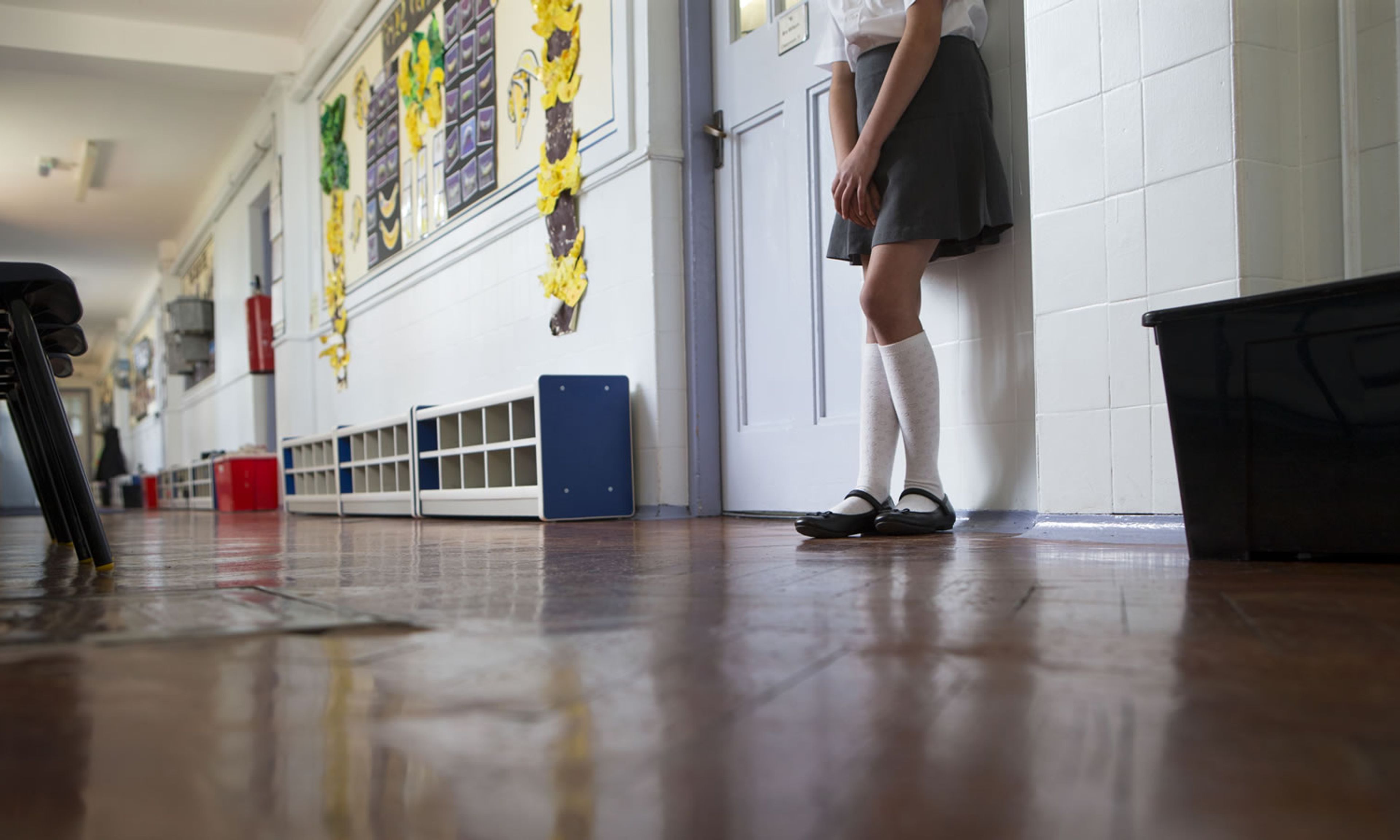
Most of us carry through life the trauma of being humiliated by a teacher.
The late preoccupation with “bullying” was, in hindsight, a fairly benign beginning to the cultural cancer of obsession with championship of “the oppressed.” The Left could not distinctly describe either bullying or the oppressed, and, so, unlocked the candy store, till we, to utilize the full conceit, gorged ourselves sick on the treats.
Bullying can mean having one’s feelings hurt. This is as unavoidable as our hurting the feelings of others; and, today, we have a populace bankrupt and willing to enslave itself rather than risk the application of common sense to trying social interactions.
Bullying can also mean actual physical and verbal abuse. It exists in our schools, of course, as it exists everywhere. I am a parent of four kids, and I found this bullying rare, as from one student to another — in fact I can’t think of an instance. But I (and you) recall more than one instance of student abuse (verbal and physical) by teachers.
The physical abuse was not that of the Victorian novels: the ruler and the hickory stick; it was that — latent and overt — pedophilia which has always been found in schools. For schools do attract some who love to teach (or they did until the recent unpleasantness). They also attract pedophiles, just as the practice of surgery appeals not only to those who do not mind but to those, perhaps, who enjoy the sight of blood.
Children get their feelings hurt at school, for it is their first half-step interaction with an unmediated world. We will get our feelings hurt all through our lives, and wisdom, should we obtain it, is the accretion, through pain, of the ability to understand and control our own emotions and reactions; just as tyranny is the ability to control those of others.1
In the schoolyard the healthy child learns to differentiate between happenstance, bad manners, and outright aggression. This is a daunting task, and he might come to his parents for comfort and wisdom.
In the old days this was found on the spectrum of “Come here and get a hug” through “That was terrible of him”; but rarely did it require appeal to the school or, as we see today, to the police.
In that far-off time it was not in fact unknown for the father or uncle, just returned from thrashing the Axis, to respond, “Well, hit him back.”
The child had to learn to assess his or her own feelings, part of which was to suppress them sufficiently to allow diagnosis of the offender’s intention.
Was the aggressor: brash, unfeeling, awkward, inappropriate, or actually intent upon harm? Could we thus determine an appropriate response, that is, one that would restore to us that autonomy we had lost in automatic response to an affront?
If not, we, you and I, were consigned to a world where our equilibrium was in the control of every last person on earth — excluding ourselves. The current Statist Hysteria insists that this lack of control, rather than being an imbecile puerility, is a heroic sensitivity to Social Justice.
But passivity attracts aggression in the schoolyard, and in the culture, just as it does in geopolitics. It awakens aggression. As we will see in China’s reaction to a Biden foreign policy in distinction to that of Trump; and jihadist glee over America’s abandonment of Israel.
From time to time we may recall the humiliations of the schoolyard. But we do not dream about them. Our dream life is reserved for those dilemmas and difficulties beyond the ability of the conscious mind. The dream is a myth the repetition of which can address otherwise unassimilable trauma: It is the meeting-after-the-meeting of the Bedtime Story. As such it is like the Old Testament: stunning, perplexing, upsetting, and repeated, through the biblical generations.
We do not dream about aggression in the playground, but we all dream about the bully in front of the class. Everyone has had the dream of the Upcoming Test, for which we forgot to prepare, of the Paper carefully placed in the backpack, which is missing when we get to school.
Goldilocks is a comforting myth about a traumatic event: the arrival of the new baby. This vile intruder of, indeed, a different species wrecks everything that was going well. The Baby Bear (ourselves) alone has the wisdom to identify (and, so, solve) the problem that has perplexed the parents: “There she is now!” the last sane person says.
Here the Hero, ourselves, is reassured, through repetition of the story, that he is not powerless, and that he can and will correct the situation, the horror of which his parents are somehow unaware. Goldilocks is an anodyne. It soothes as common sense prevails.
The school dream, on the other hand, is a nightmare. The mind, here, attempts to deal with trauma through counter-irritation, that is, through repetition of the dream.
This dream is related to Goldilocks as both address the child’s concerns with his parents. For the parents have abandoned the child to the school, which is to say, to the world. This difficult transition has been noted and addressed, over the last century, through the novelty of introductory steps, first of kindergarten and then of preschool, postponing the transition through entrusting him to Daytime Authority as Entertainment Director.
But as the child ages he will find, among his teachers (as in any other group), those who abuse their authority — that authority delegated by his parents. The teacher may be awkward, unfeeling, uncaring, preoccupied, and so hurt the child’s feelings (the child may also misinterpret neutral or, in fact, benign behavior); or the teacher may be cruel, or abusive. But the young child, already challenged to respond to trauma in the schoolyard, is completely unfit to assess that of the master or mistress assigned him by his parents.
We spend much of our dream life dealing with the atrocities (both real and imagined) of the Minotaur into whose cave our parents have sold us. The school and the teacher, we are told, must demand discipline in the classroom. This is, granted, a fallback position for those incapable of creating an atmosphere conducive to learning, let alone attractive to those interested and eager to learn.
William Hazlitt said that it’s easy to get the mob to agree with you, all you have to do is agree with the mob.
But, unable to inspire, and unwilling to control, the unfit and co-opted teacher spends agreeable days in redefinition. He may fascinate by redefining patriotism as ethnocentrism, self-control as selfishness, assessment of another by the content of his character as racism, and he may make up happy myths about the children’s genitals. This is money-for-jam to the young, who have no idea how to jump into maturity. They are thrilled to be taught (by those their parents hired to do it) not only that they need not mature, but that that state to which they needlessly aspire is a social sin — a delusion clothing racism and hate.
Why not? That was the wisdom imbibed by both their teachers and their parents, who were rewarded with the various perquisites and comforts of an angry docility.
For the inventive, there is not only amusement but power in passivity. Who does not know the hypochondriac, the passive-aggressive, the pearl-clutching tyrant? The fainting couch of the Victorian novel has reemerged on a global scale; the obsession with “bullying” has grown into a culture of denunciation for the invented wrongs of “microaggression” and “systemic racism.”
Perhaps, with the hegemony of the Left, the school dream will disappear from Western consciousness.
The teachers who have inspired its conquest would be those who, had they been found, of yore, encouraging treason, sexual obsession, male menstruation, the derogation of religion, race-shaming, and the reinvention of language, would have been most certainly dismissed, and not improbably prosecuted or institutionally confined.
But in numbers there is strength. And there is power in the invitation to submerge reason and conscience, the development of which was once the province of the home.
Shame, of course, has its use. The fear of shame may restrain us in the failure of conscience; or it may legitimately instruct us in humility when we have sinned — certainly one of life’s more terrible experiences.
Shame functions, when legitimate, to ensure the individual’s compliance with the norms of the group to which he himself has concluded he owes allegiance.
The school dream is the horror of shame.
But of what will the child dream when there is no more possibility of being shamed by the group, only terror of exclusion from the group?
The mechanism of shame will have been replaced by the fear of abandonment, which, to the liberal, as to the infant, is the fear of death.
1 We’ve often heard, “I’m a fiscal conservative but a social liberal”; but everyone is a “fiscal conservative.” So the phrase can be most usefully translated: “I’m perfectly capable of controlling my own finances. Now I intend to control yours.”












Comments