In 2016, Senator Rand Paul warned that the GOP was at risk of becoming “the old white man’s party.”
“I’ve said we need to be a party that has, you know, [people] with earrings, without earrings, with tattoos, without tattoos, black, white, brown, rich [and] poor,” Paul explained. “If anything, one of the faults of the Republican Party is we’re not diverse enough.”
The Kentucky lawmaker’s admonition referred to a growing vulnerability for the GOP. For years, the conservative movement had been saddled with a reputation for homogeneity. Democrats claimed a monopoly on the multicultural vote, which Republicans struggled to court. Democrats also boasted superiority in getting members of minority groups elected to major public office.
In the 2012 presidential race, Republican nominee Mitt Romney lost women by eleven percentage points, Hispanics by 44 points, African Americans by 87 points, and Asians by 47 points. Democratic incumbent Barack Obama won their allegiance instead. The story was similar for GOP minority representation in Congress that year. There were two black Republicans — Senator Tim Scott and Representative Allen West — nine Hispanic Republicans, and only one Asian-American Republican on the Hill. A mere 29 Republican women served in the House and Senate, compared with 65 Democratic women.
Donald Trump’s arrival triggered a recalibration of many things, including party recruitment and outreach. Despite his alleged racial insensitivity and inflammatory immigration rhetoric, Trump in 2016 picked up 2 percent more Latino and black votes than Romney had in 2012. After 2016, the GOP’s makeup included many more non-whites. In 2020, Trump secured the support of about one in three Latino voters nationwide, surpassing his performance in 2016. Overall, the Republican candidate received fewer votes in 2020 from minority groups than George W. Bush did in 2004, the hundred-year high, but the trend since 2012 has been positive. This year, the GOP’s demographic insecurity all but evaporated. Apparently, racial consciousness and identity politics are not selling points for Democrats when inflation and crime are skyrocketing on their watch.
The slate of GOP midterm candidates for the Senate, the House of Representatives, and the governorships included a wide variety of racial, ethnic, and other backgrounds. Eighty female, 28 black, 33 Hispanic, 13 Asian, and three Native American Republican candidates ran for office. From an original pool of nearly 200 Hispanic and black Republican-primary contenders, 30 Hispanic and 24 black Republicans were on ballots for House races. Most were compelling and competitive. Defying stereotypes, the GOP has fashioned a melting pot in its fight to reclaim the majority.
As they’ve done with black Americans, Democrats have long lumped Hispanics together and considered them a guaranteed bloc. When Latinos vote red, Democrats blame misinformation, implying that these individuals lack the ability to decide for themselves which candidates hold their values and advance their interests. Fashion magazines such as Vanity Fair, Vogue, and Elle have highlighted Democrats such as Alexandria Ocasio-Cortez, but they have not covered the Republican Latina “triple threat” that demonstrated the new political headwinds blowing in the longtime Democratic-dominated Rio Grande Valley in South Texas.
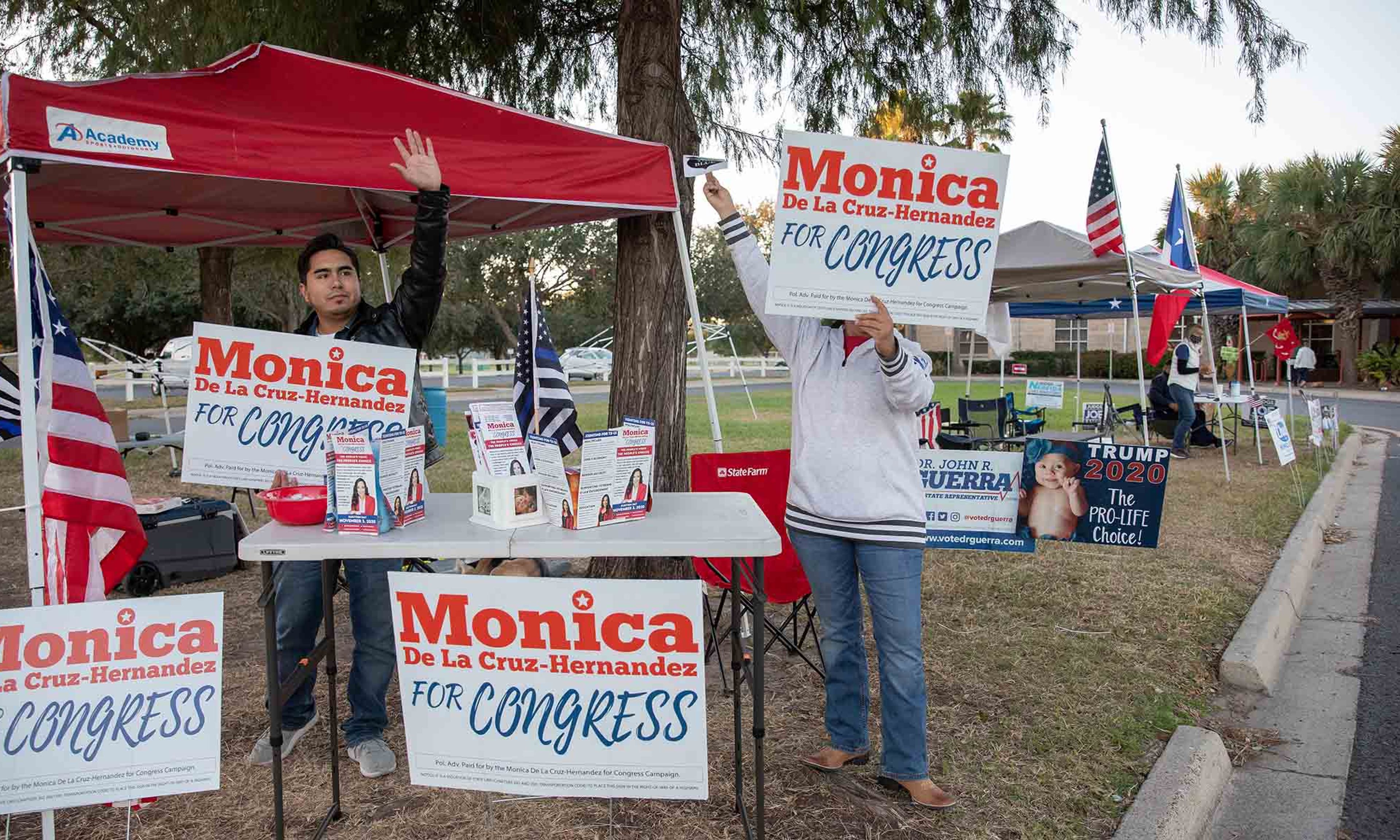
The candidacies of firebrands Monica De La Cruz, Cassy Garcia, and Mayra Flores were evidence of a realignment of Latinos toward the GOP. Like most candidates, they had some baggage. De La Cruz, Trump-endorsed, has been embroiled in a marital dispute involving accusations of “cruel and aggressive conduct” toward her husband’s daughter. But she espoused sensible positions on immigration, sounding the alarm on the border crisis — and promising to push for stricter immigration enforcement if elected — while holding that Congress should nonetheless accommodate “Dreamers” (individuals who were brought to the United States as minors by family members entering illegally) in some way. In October, De La Cruz told National Review about the horrifying phenomenon of “rape trees” on ranches in the region, on which cartel thugs display feminine undergarments as “trophies” of their exploits. “Nobody wants that in our district,” she said.
Married to a Border Patrol agent, Garcia agreed that the lawless border is a pressing issue. On abortion, she struck a moderate, realist tone, hoping to limit the procedure while allowing exceptions for rape, incest, and the preservation of the mother’s life. Especially after Democrats vowed to “codify abortion rights” into federal law, her position resonated in the socially conservative Laredo region, where about nine out of ten residents are Catholic. Her opponent, Henry Cuellar, claimed she’s a hypocrite on health care, accusing her of flip-flopping on the Affordable Care Act, which she once called a “train wreck” but supports in its current form.
The GOP Hispanic contingent has used Democrats’ refusal to acknowledge the racial diversity of Republicans to its advantage. The Hispanic Republican Alexis Martinez Johnson, who ran for a House seat in New Mexico, accused her Democratic opponent of “whitewashing” her name in a campaign ad that referred to her only as “Alexis Johnson.” And the South Texas trio had a field day with First Lady Jill Biden’s comparison of the Latino community to “breakfast tacos.” De La Cruz retweeted the comment: “#TacoTuesday is coming up. . . . go get ’em ladies!”
The slate of black candidates may take the cake for most interesting backstories.
Politico got into hot water in October after it published Jennifer-Ruth Green’s personnel records, which included details of her sexual assault, without her permission. (Politico said it had filed a public-records request.) Green, who ran in Indiana, is African American and Asian. She served in the military for twelve years, in Iraq and elsewhere, before joining the Air Force Reserve. She’s a trailblazer in the armed forces, being the first black woman to command the communications flight of the 122nd Fighter Wing.
In the battleground of Georgia, the GOP Senate nomination of former NFL player Herschel Walker was a complicated case. While on paper he’s a pro-life, pro-family conservative guy, scandals in his private life suggest otherwise. Besides being a MAGA dittohead, Walker was accused last month by two presumably former girlfriends of having paid for abortions of children he had fathered with them out of wedlock. While the evidence is not conclusive, this “October surprise” raised serious questions about Walker’s character.
But many conservatives viewed voting for Walker as playing the long game. They supported a morally compromised man for the sake of the greater pro-life cause, which can be advanced federally only with the GOP in control of Congress. The Democratic alternative, the Reverend Raphael Warnock, also appears to be no saint, having previously faced allegations from his ex-wife that he angrily drove his car over her foot and failed to pay child support after a nasty divorce and custody dispute. This year there are also new claims that his church evicted low-income tenants over measly overdue rent payments.
In the Senate, Tim Scott, the African-American Republican from South Carolina and chairman of the School Choice Caucus, has fought to liberate children from zip-code constraints on the schools they may attend.
The GOP is particularly enthused about Wesley Hunt, a black West Point graduate and an Army veteran who was the nominee for a new congressional seat in the Houston area. Like Jennifer-Ruth Green, he has the credential of being former military and a member of a minority group. Hunt has starred in a few Dan Crenshaw campaign ads titled “Texas Reloaded,” including one that features him on an Apache helicopter and another in which he performs weighted pull-ups.
Black conservative commentator Joe Pinion challenged Democratic Senate majority leader Chuck Schumer in New York. Pinion polled, on average, more than ten points above the vote share garnered by Schumer’s 2016 opponent, Wendy Long. On the day before the election, Pinion was projected to secure 38 percent of the vote, to Schumer’s 55.7 percent. Like New York gubernatorial candidate Lee Zeldin, who quickly gained ground against Democrat Kathy Hochul, Pinion hammered home the decline of law and order in the state.
Democrats can no longer depend on the loyalties of women and people of color by default. Floundering on the economy, the cost of living, public safety, and even abortion, Democrats this cycle offered little more than woke identity politics. As the diverse cast of GOP candidates has shown, that is no longer enough.











Comments