Once a year my insurance company sends me a new ID card (“your key to better health”). It comes with a page listing language services to help cardholders who do not know English (“to access language services at no cost to you, call the number on your ID card”).
This sentence then reappears, translated into 65 tongues, from Albanian to Yoruba. Politics makes no difference, slaughter no problem. Burmese and Karen, Catalan and Spanish, Russian and Ukrainian, all take their places in peaceful alphabetical order. There is a blizzard of fonts to accommodate different systems of writing: round letters, square-cut characters, cursive flow; left to right, right to left. Squiggly Amharic looks like the secret code in “The Adventure of the Dancing Men.” I wonder at the omissions: Armenian, but no Georgian? (There is a Georgian restaurant across from my apartment building.) No Czech? Is Andy Warhol’s family uninsured?
In the thick of this cosmopolitanism, Berlitz meets Emma Lazarus, I look for languages with old American roots. I recognize Pennsylvania Dutch — German, of course, as spoken by the pacifist sects recruited for settlement in his proprietary colony by William Penn. There are three Native American languages, Navajo, Choctaw, and Cherokee, the last written not in an alphabet but in a syllabary: a system, devised by Sequoyah, a Cherokee black- and silversmith, of 85 signs representing all the syllables in the language. Westward the course of empire took its way all the way to the Pacific, where Protestant missionaries developed a cut-down Latin alphabet with seven consonants, so that their Hawaiian converts might read the Bible. Since “s” was not one of the indigenous sounds, the letter had to be imported to render the name of Christ.
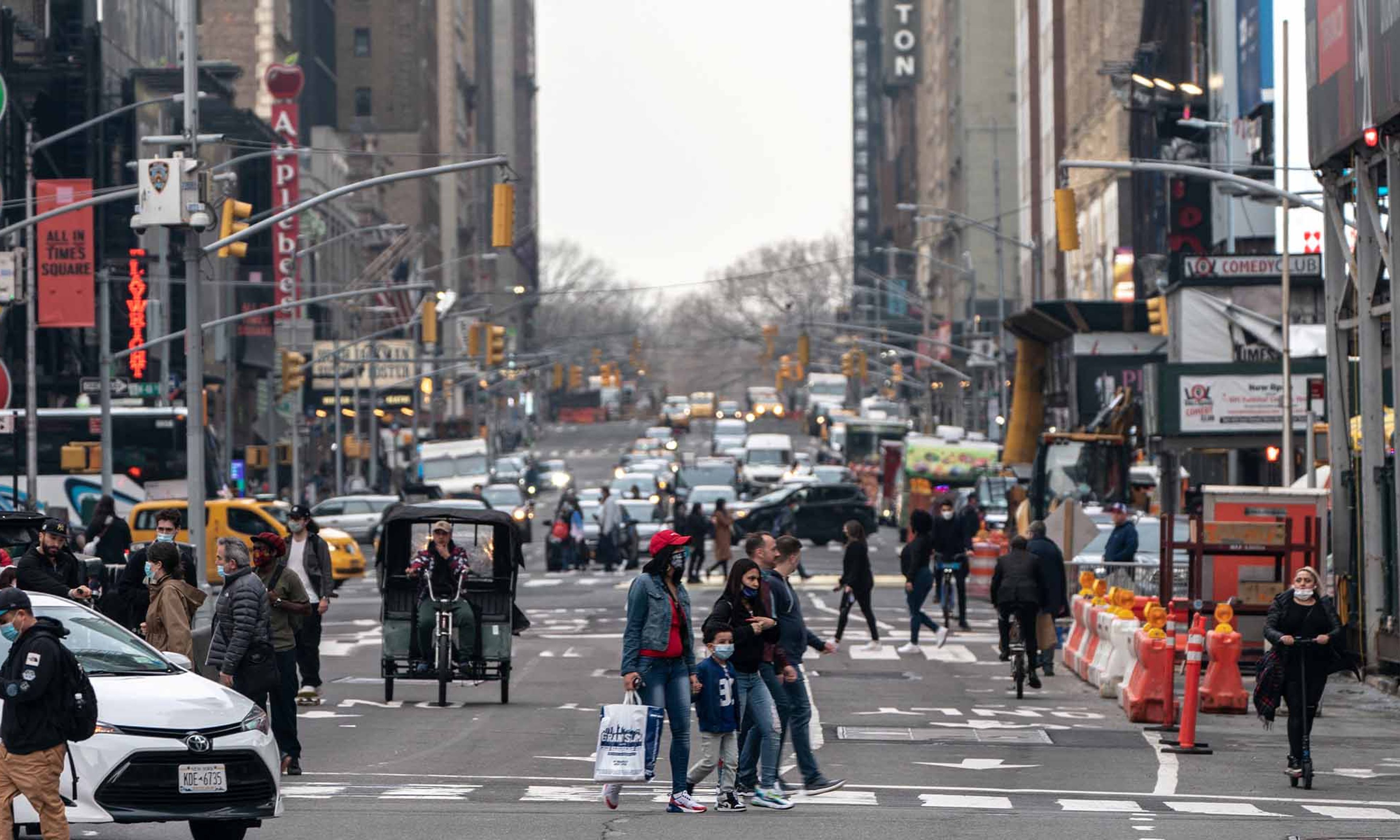
The language list is a document generated in a corporate headquarters (the return address says El Paso). What are people saying at my address? I already mentioned the Georgian restaurant. In an upper-middle-middle-class neighborhood in the city, what other languages are within earshot?
Spanish of course. Spain lost its continental holdings early in the 19th century and its islands at the end of it; in mid century the United States cut Mexico down to size. But Spanish is playing a long game as its speakers flow steadily north. Half our doormen and porters speak it, as does our shoemaker, who took over the business from his one-time employer, a Greek; a framed Spanish prayer hanging on his wall invokes a blessing on his enterprise.
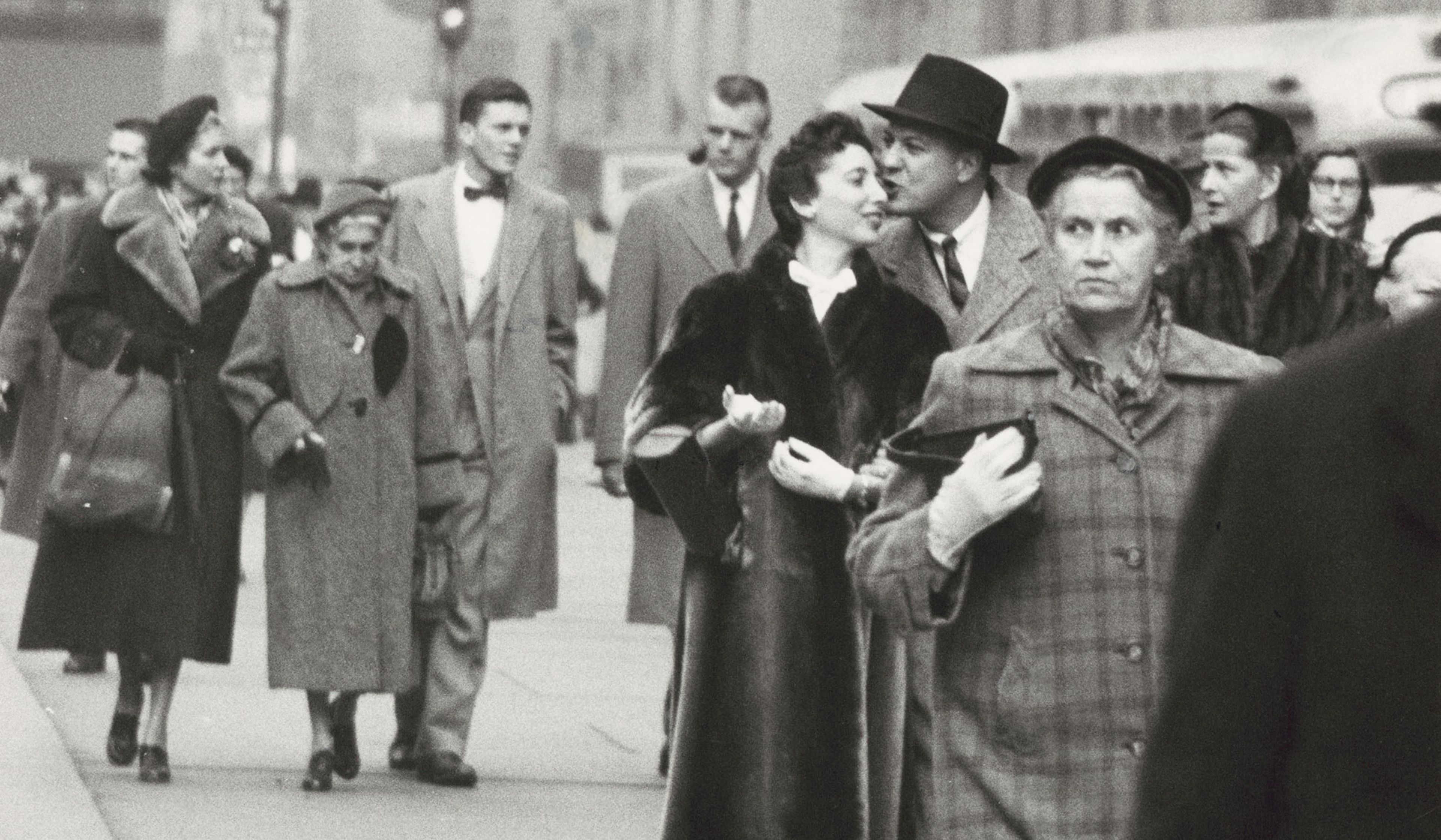
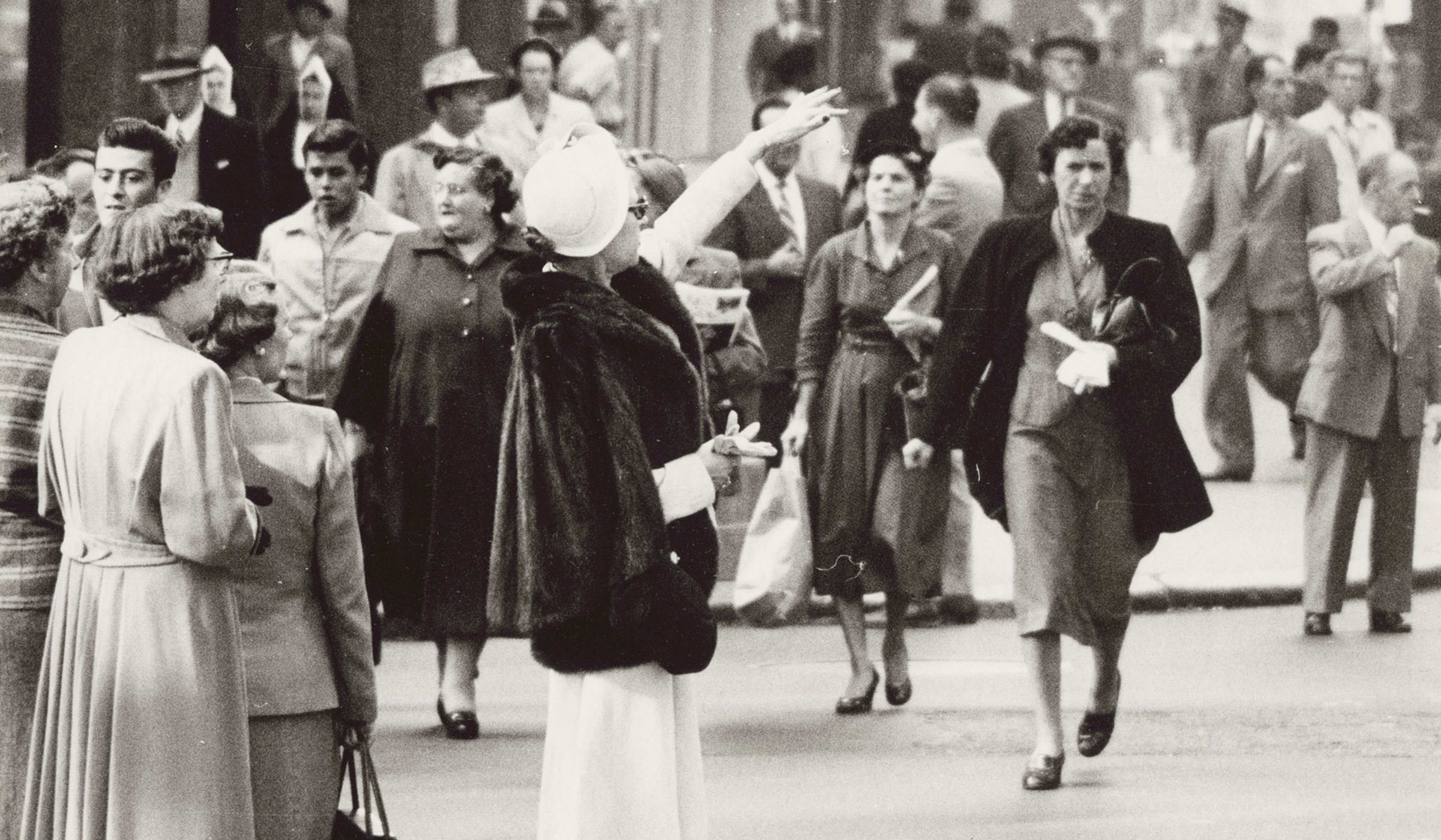
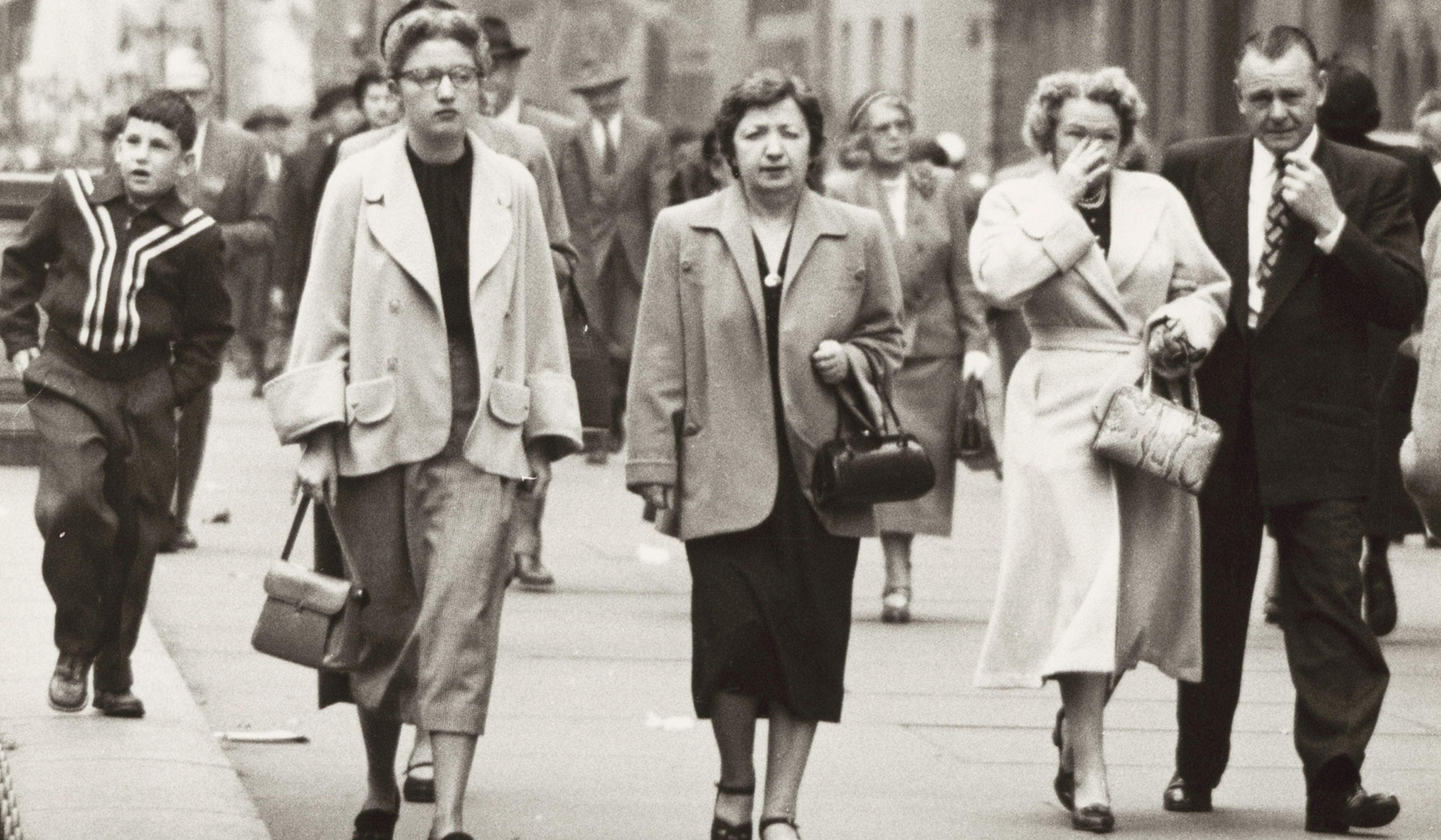
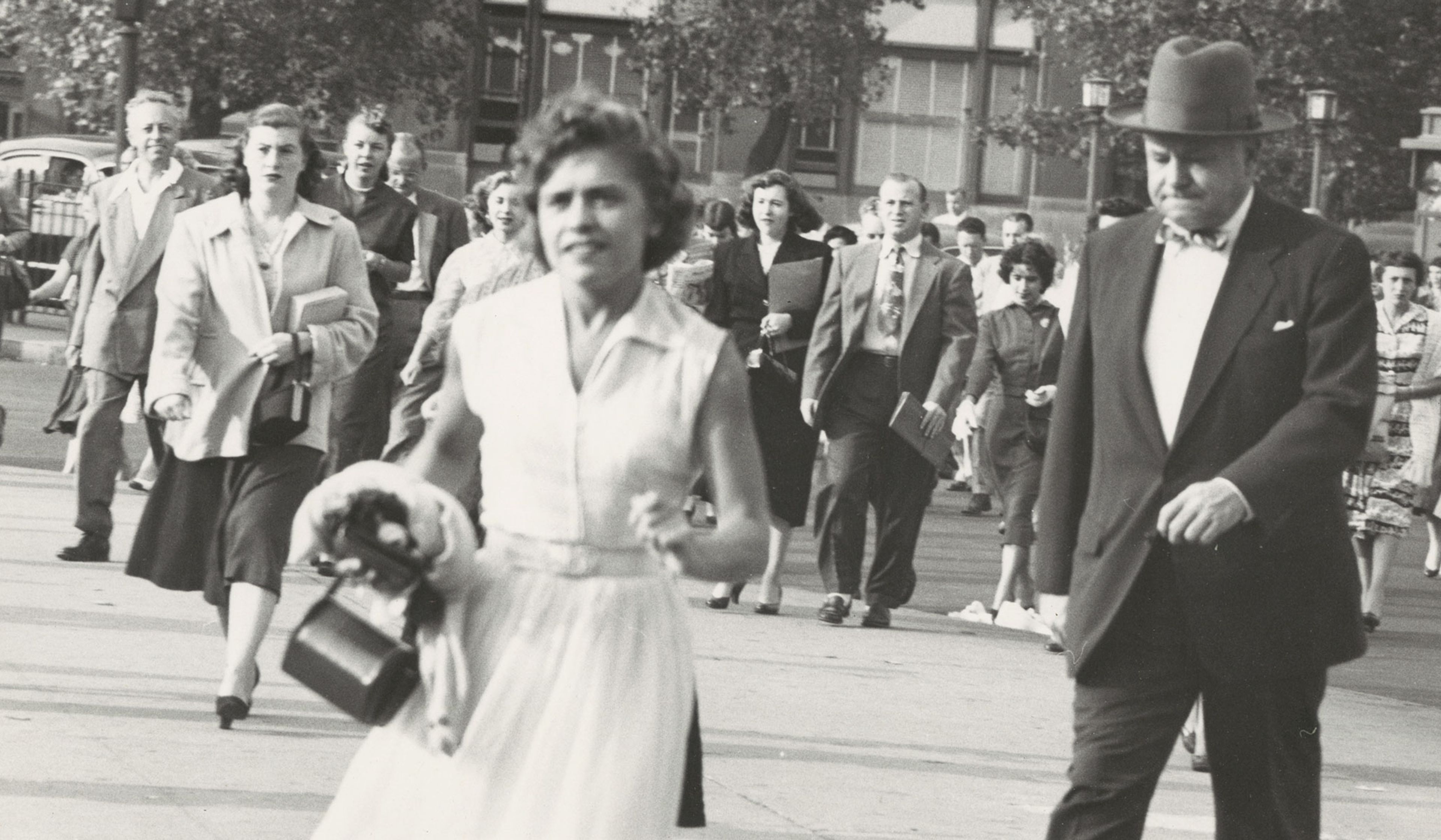
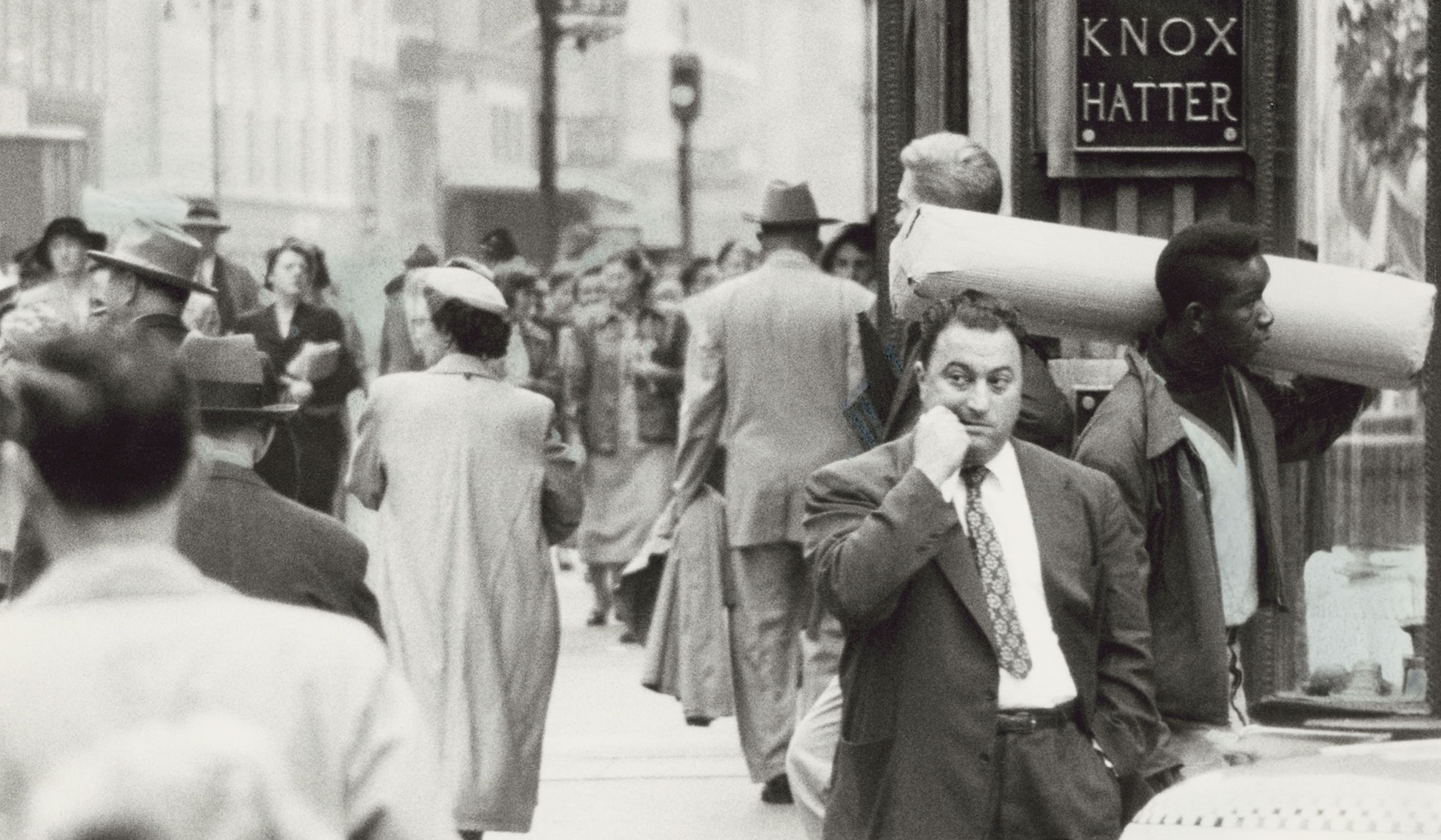
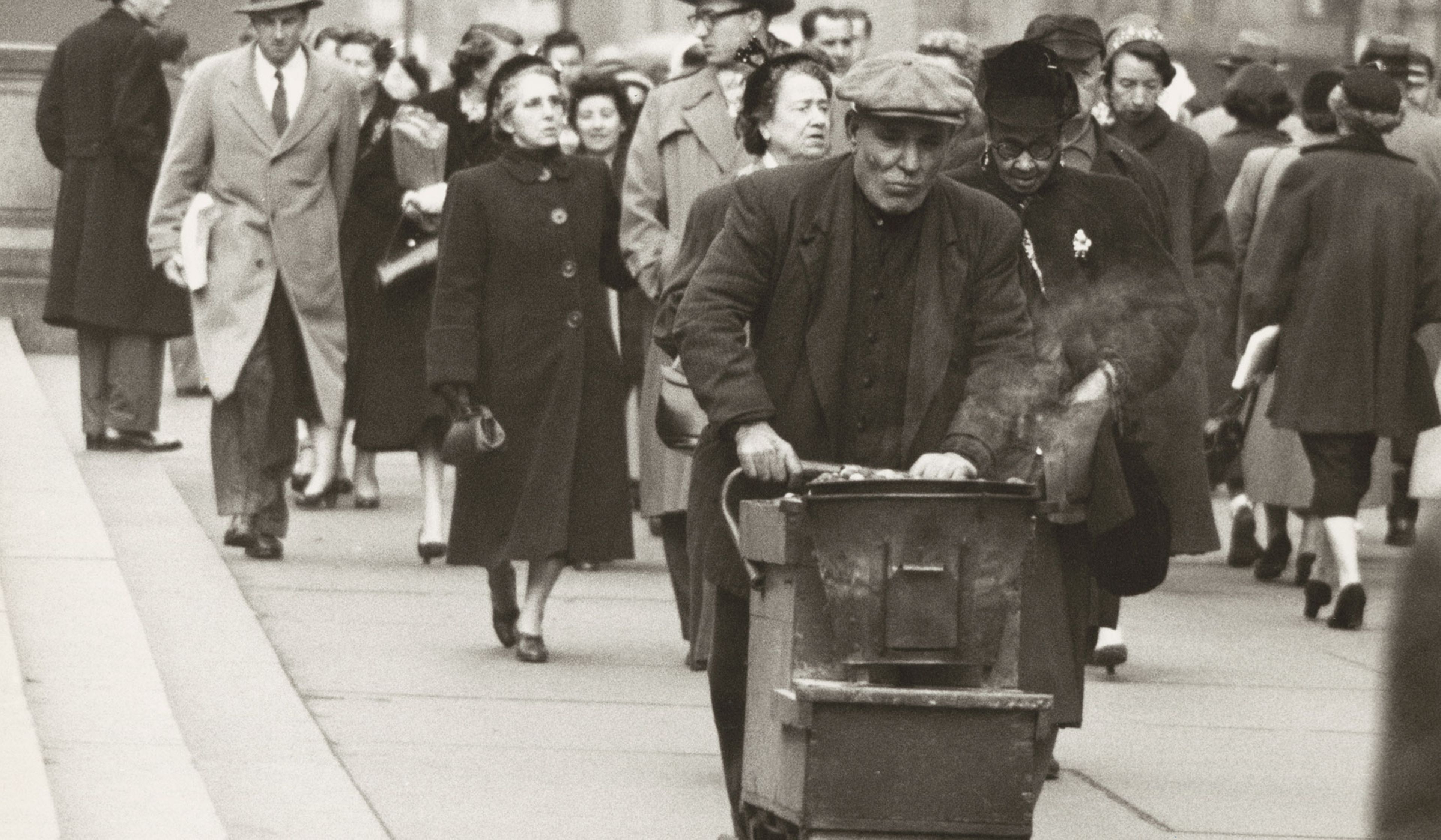
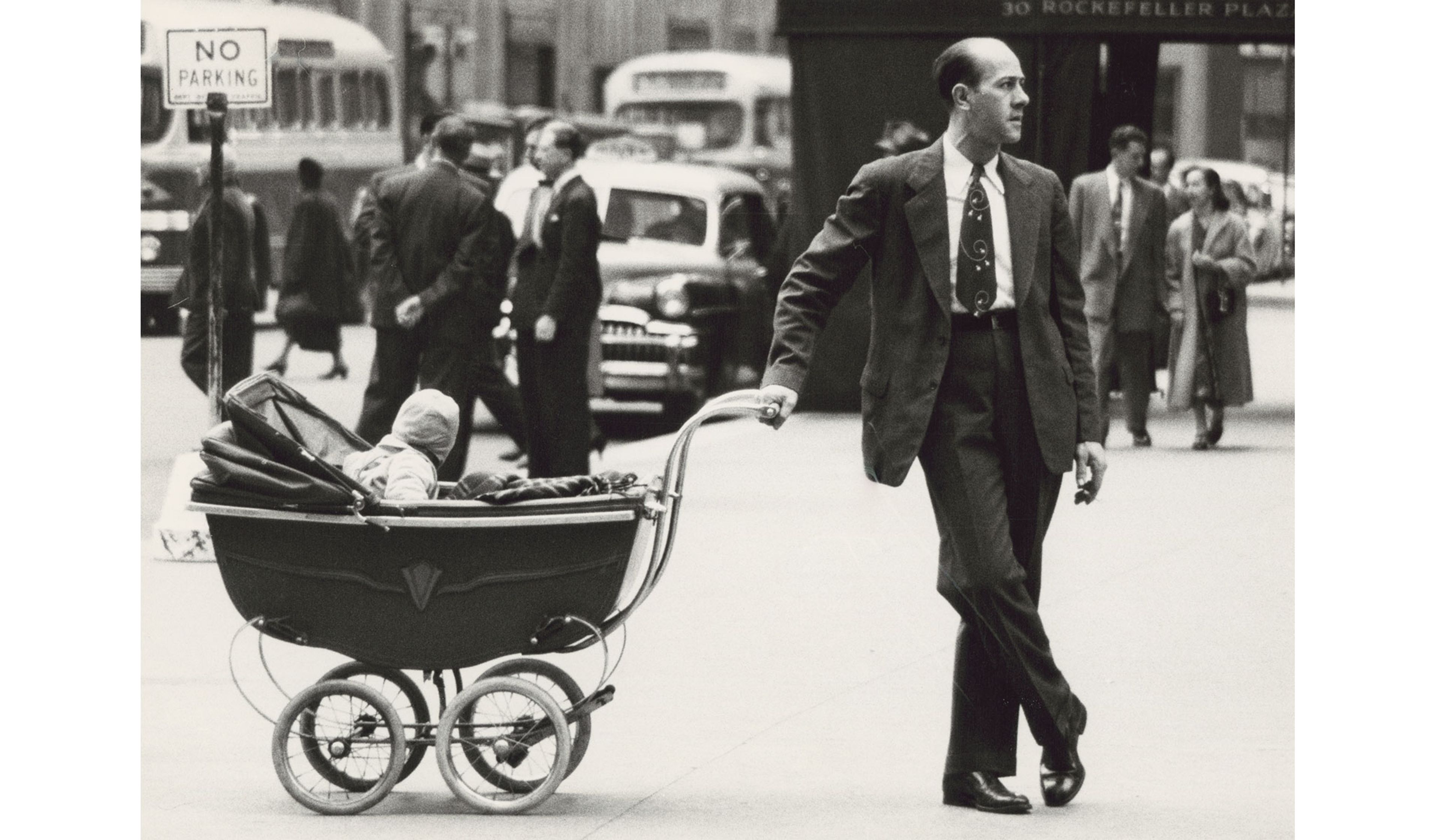
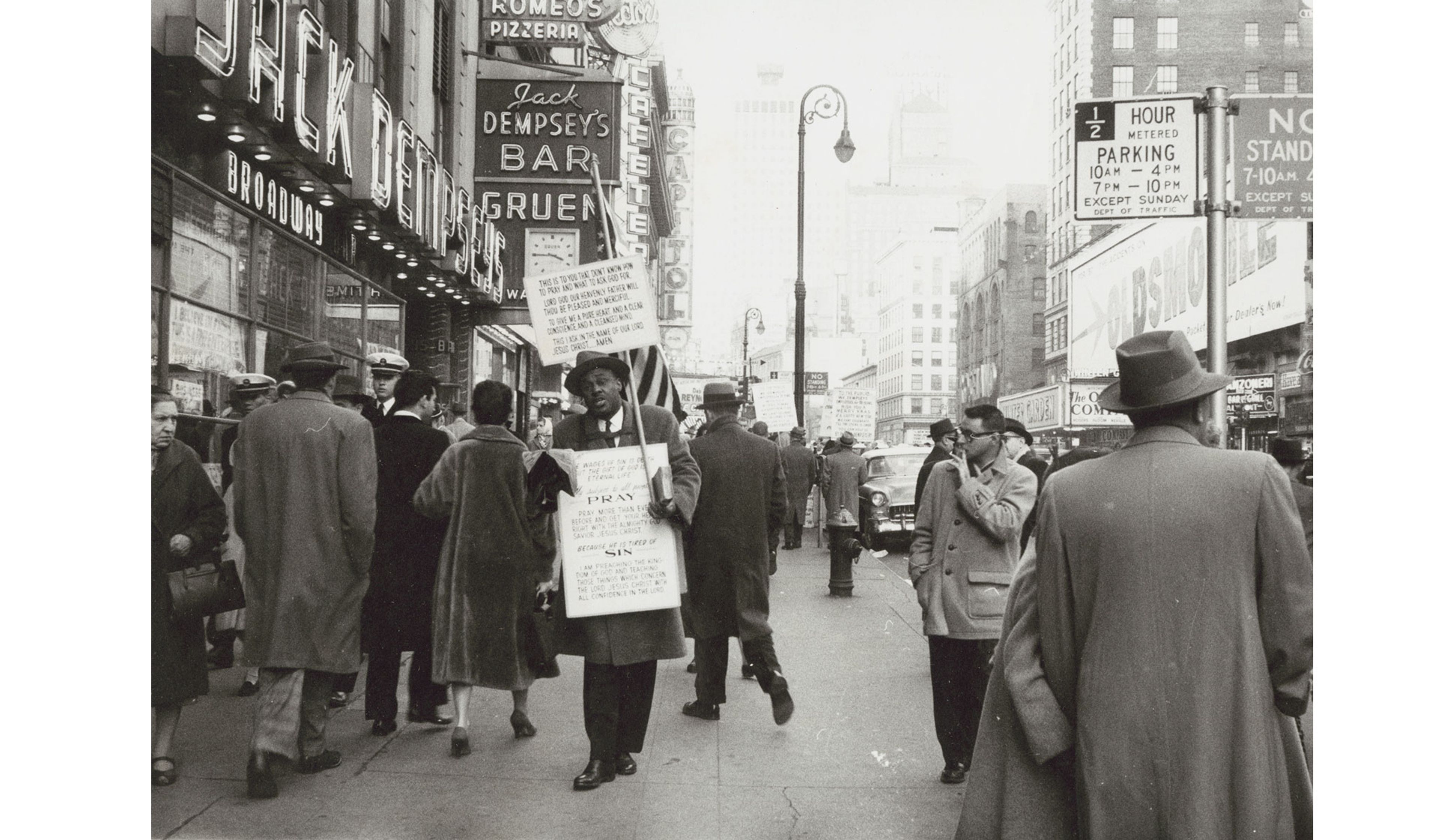
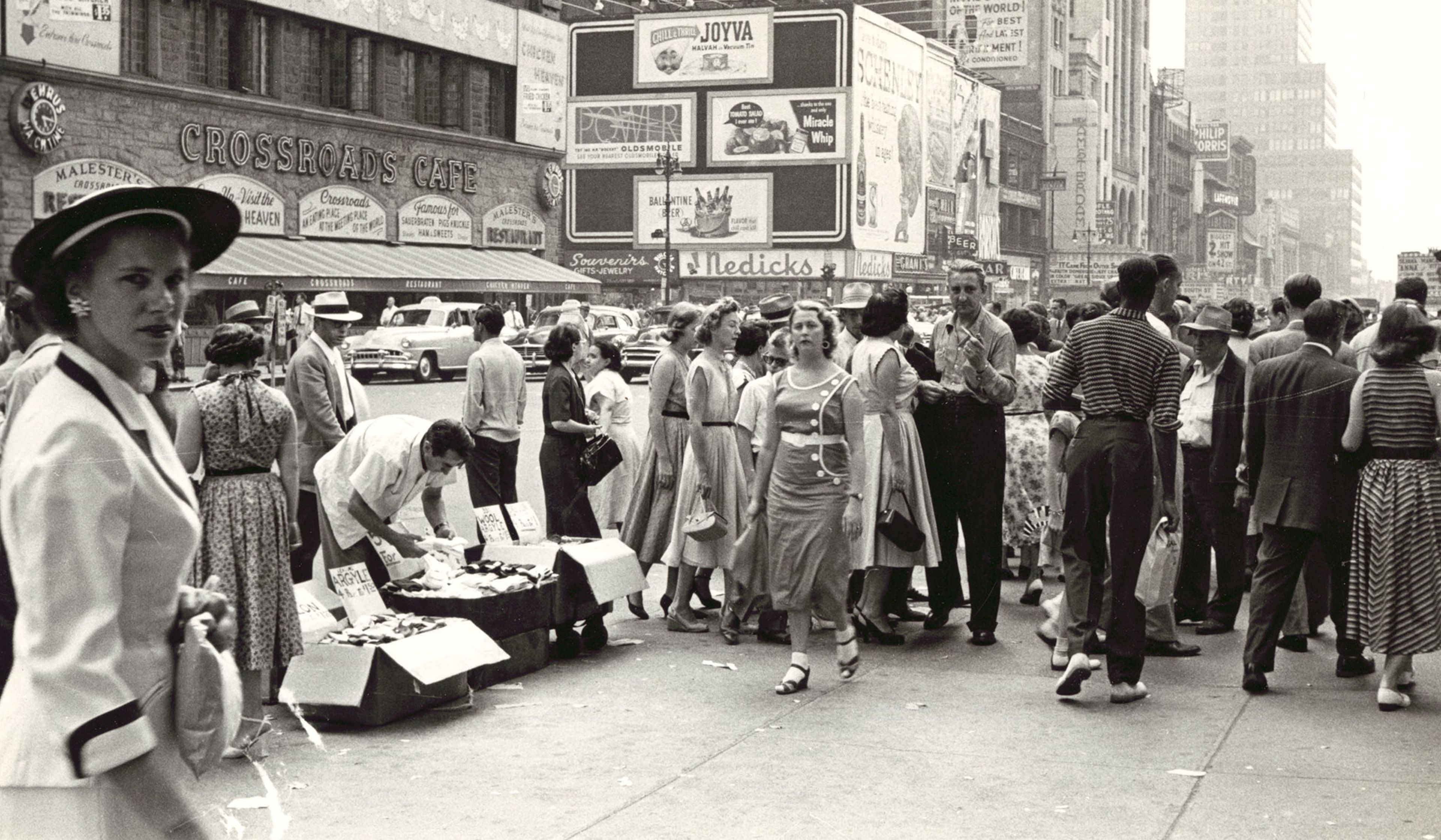
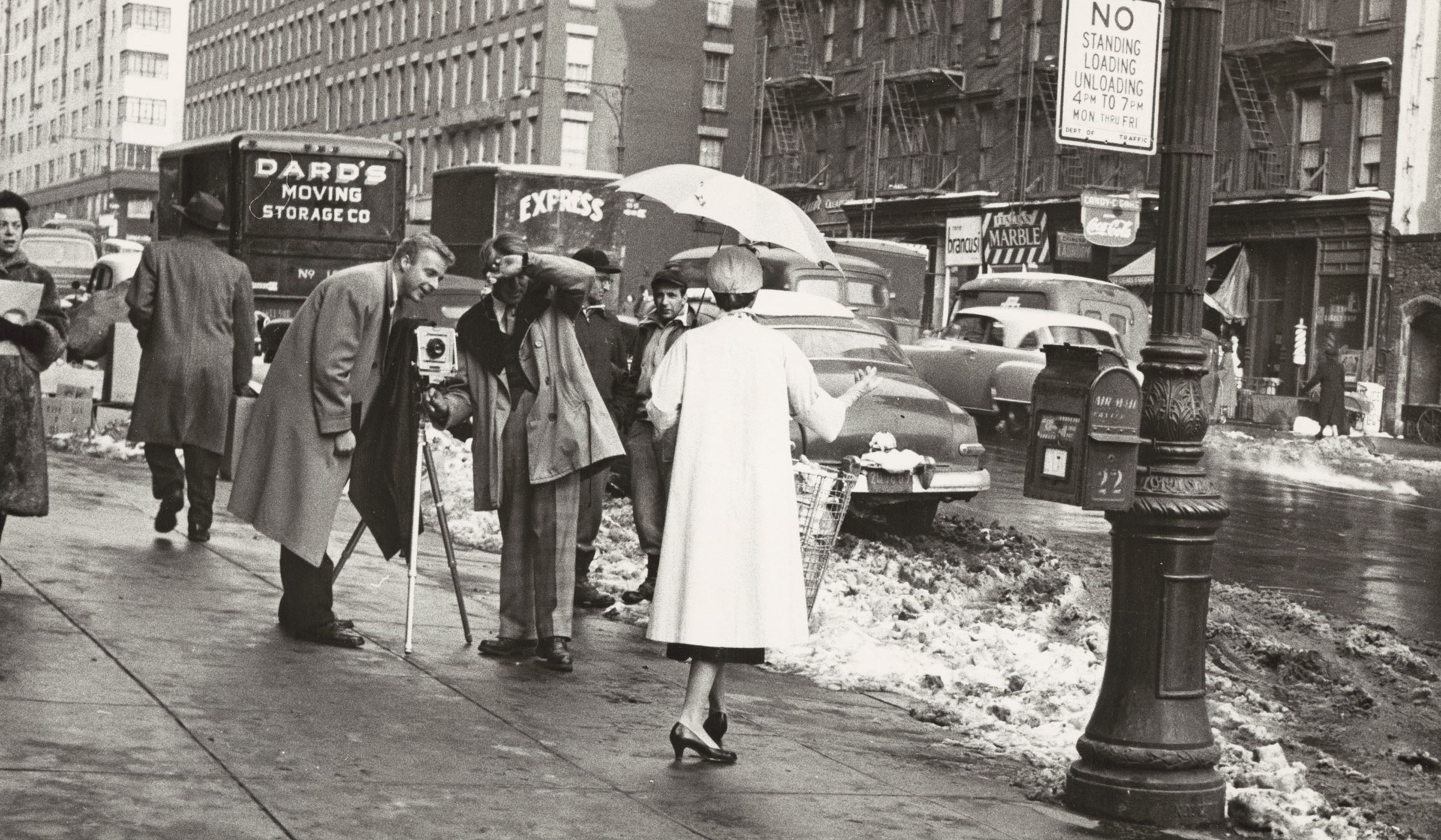
December 1953.
Angelo Rizzuto/Anthony Angel Collection/Library of Congress
The space next door to him used to be occupied by the Rosicrucians; one caught glimpses of Egyptian art and solemn, well-dressed black people going in and out. Now it is an institute for propagating the German language (echt, not Pennsylvania), named after the famous philosopher and man of letters (not Nietzsche, not Marx).
Going back to my building, to finish there, the night doorman is from Albania, with a sprinkling of Turkish, he told me, making a gesture as of spreading spices. His predecessor was from Montenegro; keeping it in the neighborhood. The morning doorman is French Arab. We discuss international affairs. He wanted to shoot down Putin’s airplane. “He is thug, Richard. He is thug.”
Around the corner is a bicycle shop, which services the mounts and the electric batteries of the deliverymen, ubiquitous since Covid, their hands in this season protected from chill by thick rubber mitts. By size and inflection they appear to be the Guatemalan legislature. They would probably run the country as well as the incumbents. Alongside them is the dry cleaner’s, staffed by East Asians — apologies for not being more definite. Although the young woman who handles the counter speaks to the seamstress (mother? aunt?) in their native tongue, unrecognizable by me, all the books she reads between customers are in English. One of the recent titles asked if God would still protect America in the end times. Across the street is a tiny Greek Orthodox church. On holidays they hold street fairs, and on Good Friday they march around the block with a small band playing Chopin’s funeral march. The last priest was a regular at the corner diner, grave and impressive in silver hair, silver beard, and black cassock. Sight of him made me think of Dostoyevsky and the fall of Constantinople, until I overheard him taking a call on his phone in pure Queens (the borough, not Theodora). My trainer hails from the Bahamas, so his language is the same as mine. His accent is too, since he taught himself, after moving here, by emulating Ed Bradley on the evening news. The islands survive only in a few words: pears and bears, which he pronounces like noblemen and drinks.
One more and I have done (or I could cover the whole city): Two blocks from my building sits an actual landmark, a 160-year-old saloon. Its boast is that the formerly famous writer wrote his most famous short story, formerly ubiquitous in middle school, in one of their booths. Given its age and its stock in trade, it was of course originally Irish, although the menu is solidly Italian-American — both ethnic groups now as vestigial and legendary in the city as the last of the Mohicans.
The endless, indeed literally witless, influx of newcomers, shoved aside in turn by newer ones, is not cost free. They have come bearing, besides hard work and hope, assorted social influenzas: Marxism, the Mob, machine politics. Assimilation has sometimes been ugly (the Draft Riots, anyone?). Yet hard work and hope prevail overall, as does English. Old languages become family keepsakes, then get dumped at the thrift shop. A case from my own apartment. My wife’s grandparents came here from Odessa, when it had two s’s (smart move). Her parents were fluent in Yiddish. But the only phrase of it she learned at home was Die kind ist du (the child is there) — meaning, say it in the old language, so she won’t understand. We certainly aren’t teaching her.











Comments