Trenton, Ga.
There are two pieces of white paper taped to the front door of Jeffrey Johnston’s sales office, which is draped in a Donald Trump banner. One sheet provides Johnston’s contact information for customers interested in buying one of the backyard storage sheds he sells in this northwest Georgia town near the borders of Alabama and Tennessee. The other declares, “Our Presidential Election Was Stolen!”
Nearly two years after Trump lost Georgia in the 2020 presidential election, Johnston is among a large faction of Republican voters who still believe that the vote was rigged. And Johnston is still miffed about it. He’s a full-on backer of the conspiracy theory according to which powerful political actors, including top Georgia GOP leaders, used rigged voting machines and the counting of fraudulent ballots to intentionally swing the election to Joe Biden. According to the sign on his door, Governor Brian Kemp “Sold Us Out,” and Johnston insists, “I will not ever vote for Kemp again.”
There’s a lot of that kind of politics in this part of the state. The most common political signs one sees, when driving the foothills of Appalachia, are for Marjorie Taylor Greene, the conspiratorial GOP congresswoman, and they urge voters to “flood the polls” to “stop communism.” While Kemp thumped former U.S. senator David Perdue in the May Republican primary for governor, winning 73.7 percent of the vote statewide, nearly half of the Republican voters in Dade County, which includes Trenton, cast their ballots for someone other than Kemp, the highest rate in the state.
Despite his animosity toward Kemp and his distrust of Georgia elections generally, Johnston said he still intends to cast a ballot in November. “I believe in going and casting your vote, whether it counts or not,” Johnston said.
While they may not endorse such conspiracy theories, Republicans on the ballot this fall need voters like Johnston to show up at the polls. Two years ago, hundreds of thousands of those Republican voters stayed home in Georgia’s runoff elections, allowing Democrats to flip both of the state’s Senate seats and take control of Congress. Many of those absent Republicans, hearing Trump’s allegations that the 2020 general election was rigged, may have concluded that their votes didn’t count.
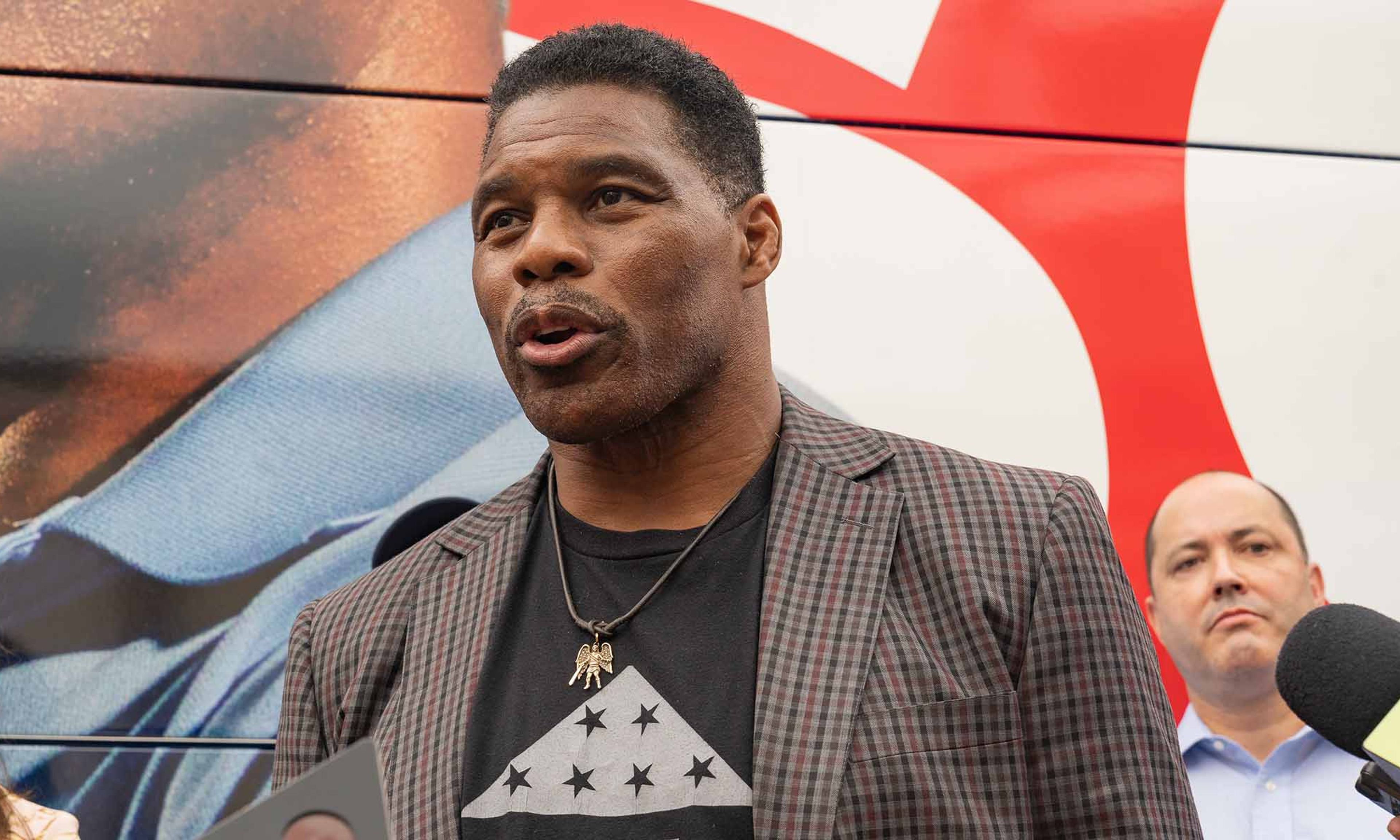
This year, Senate control could once again hinge on Georgia. Republicans in the state are pinning their hopes on Herschel Walker, a former NFL star and a University of Georgia football legend who has Trump’s endorsement. Polls show a tight race between him and the incumbent Democrat, Raphael Warnock.
To win in November, Walker, a political novice, must run up the vote in rural Georgia and along the coast. He needs to win over some black Evangelicals and Hispanics and claw back some of the suburban women who’ve drifted left. And having mostly tried to wiggle around stolen-election talk, he has to turn out Republicans who share Johnston’s outlook but who might opt to stay home.
In an interview with National Review after a mid-September rally in Augusta, Walker said getting those voters to the polls would be “easy” because of the importance of the election.
“That’s what the people that didn’t vote in the last go-round need to realize right now, that if we don’t get this right, you won’t recognize this country,” Walker said.
Johnston said he intends to vote for Walker because, as a Republican and a Trump supporter, “I’ll vote for whoever Trump tells me to.”
“I don’t know if he was the right candidate or not,” Johnston said of Walker. “I’ve seen some negative stuff about him. But, you know, I’m going to vote for him. I like him. He was a good football player.”
Walker is certainly an unconventional candidate. On the plus side for Republicans, he is charismatic and affable in person. He sprinkles his speeches with amusing stories, jokes, and Bible talk. At 60, he still has a square jaw and the muscular physique of a top athlete. He’s a black conservative who accuses Democrats of purposely dividing Americans with charges of racism, an issue he downplays — “Everybody in the United States of America can get out and succeed if they’re willing to work,” he told the mostly white Augusta rally-goers.
Walker has an inspiring personal story: He grew up poor and was bullied as a child because he was overweight and had a stutter. He turned himself into a football hero and, after retiring from the NFL, helped launch a poultry business and other ventures. Supporters who spoke with National Review appreciated his rural roots, his Christian faith, and his reputation as a hard worker. The reputational value of being a Georgia Bulldogs national champion and Heisman Trophy–winner shouldn’t be underestimated.
But Walker’s inexperience has often shown on the campaign trail, where he’s made several missteps, particularly early in the campaign — he was caught inflating his business and academic achievements and has made seemingly strange statements about climate change and pollution. Over the summer, in an effort to right the ship, he beefed up his staff.
Walker has focused his campaign on rising inflation, the worsening crime and border crises, and wokeness. He doesn’t offer much in policy prescriptions in his speeches, and his website is equally vague: He wants “more free-market capitalism,” and “he will fight to keep the American dream alive for you and your kids too.”
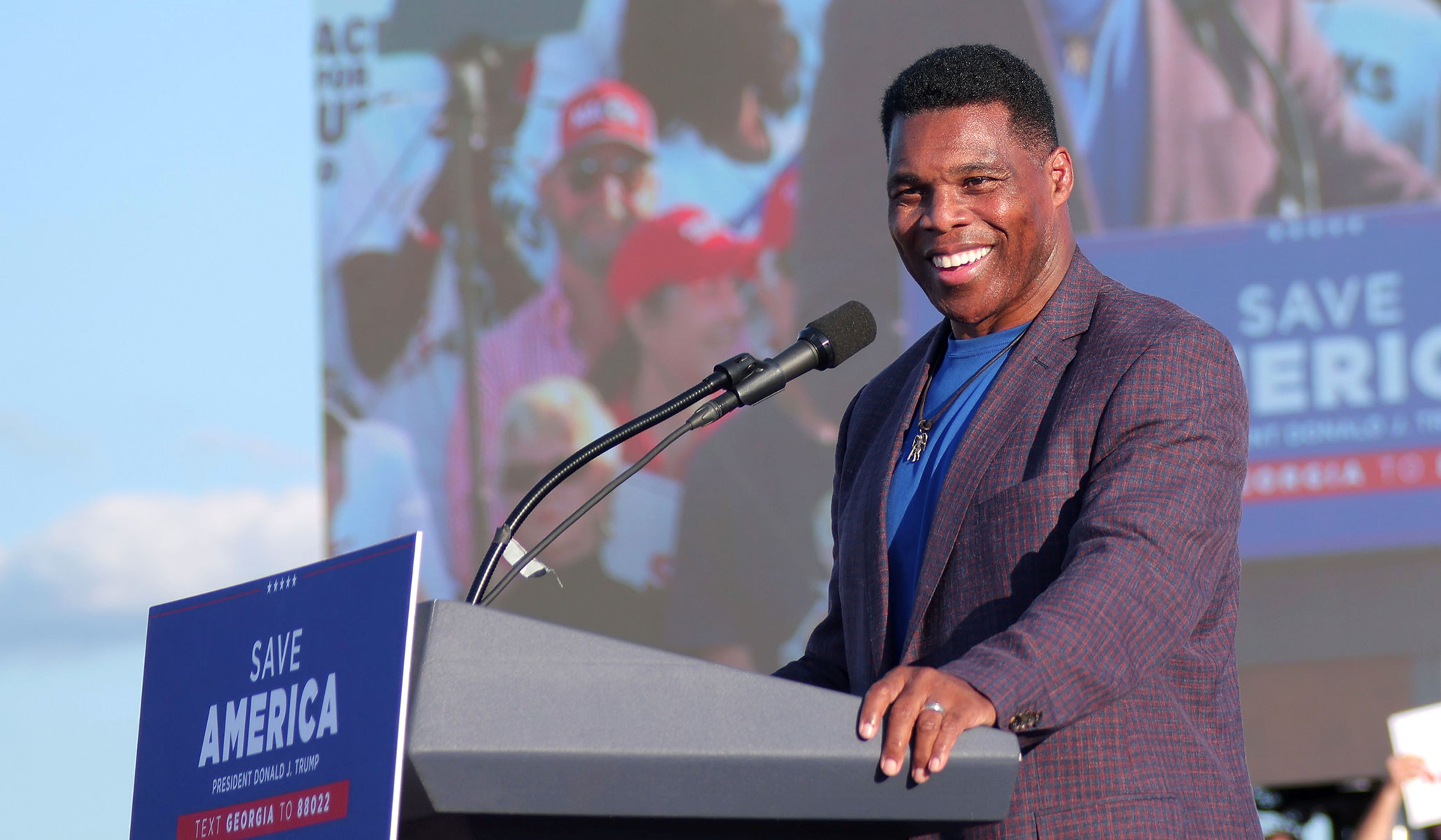
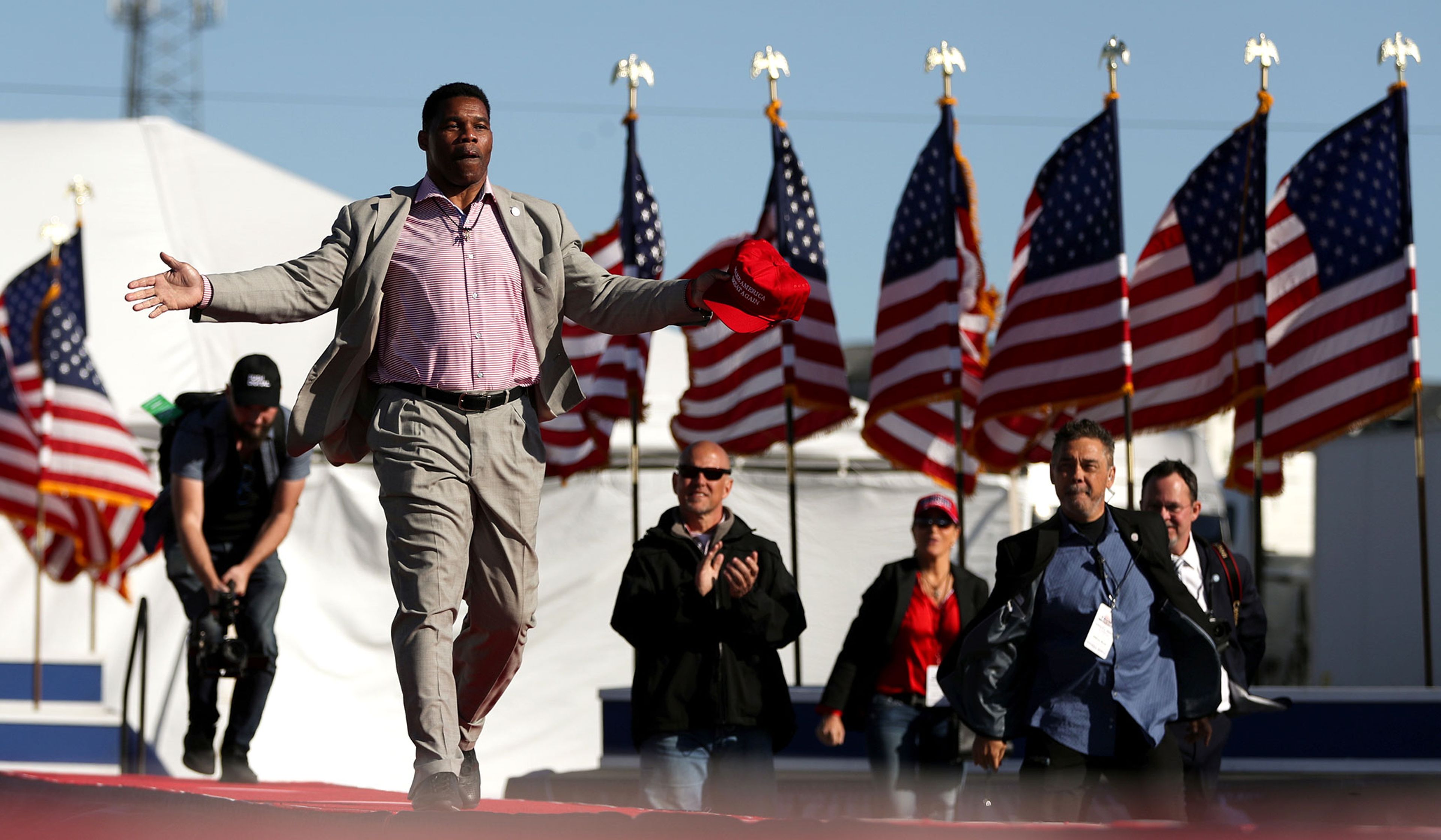
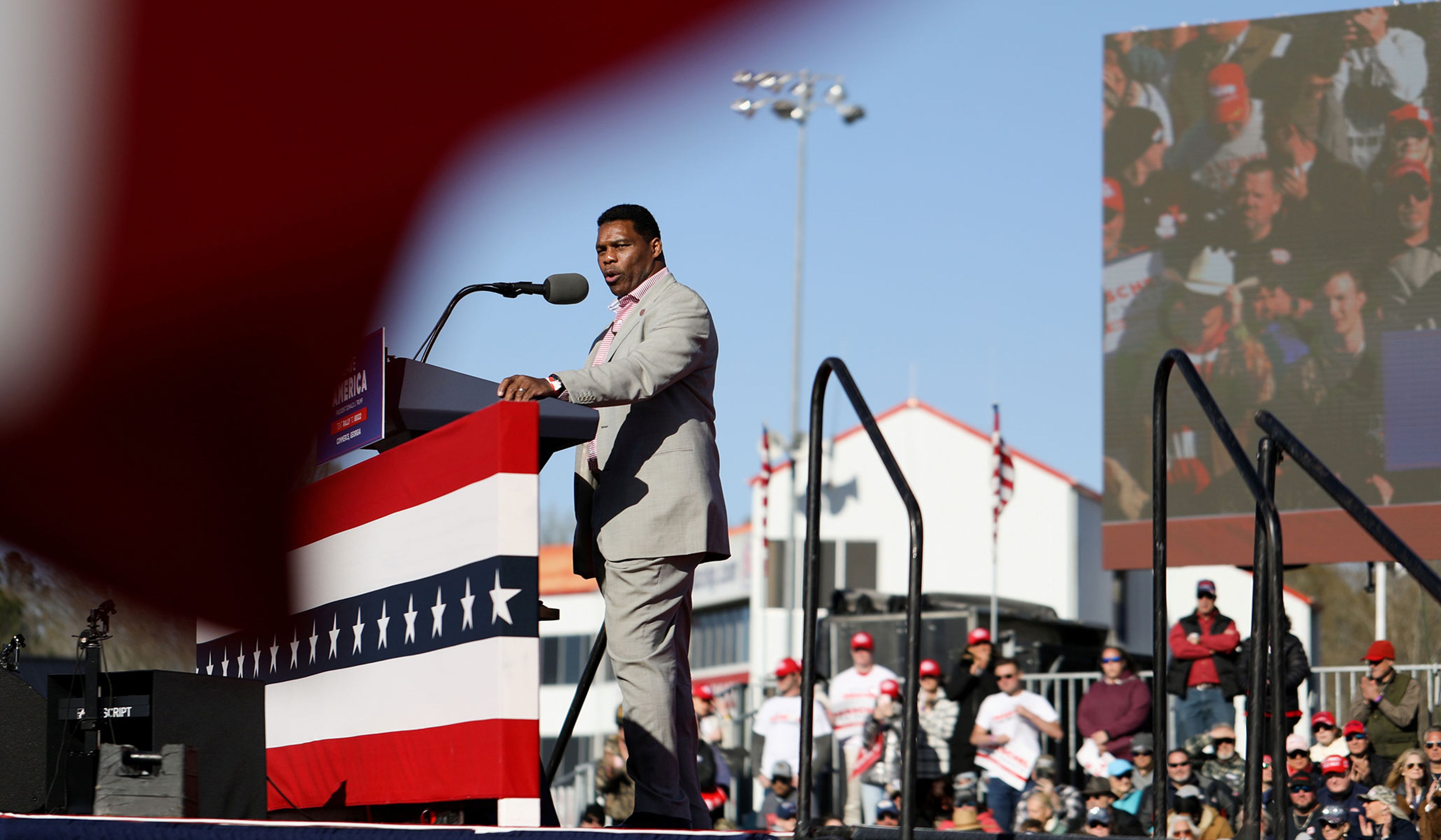
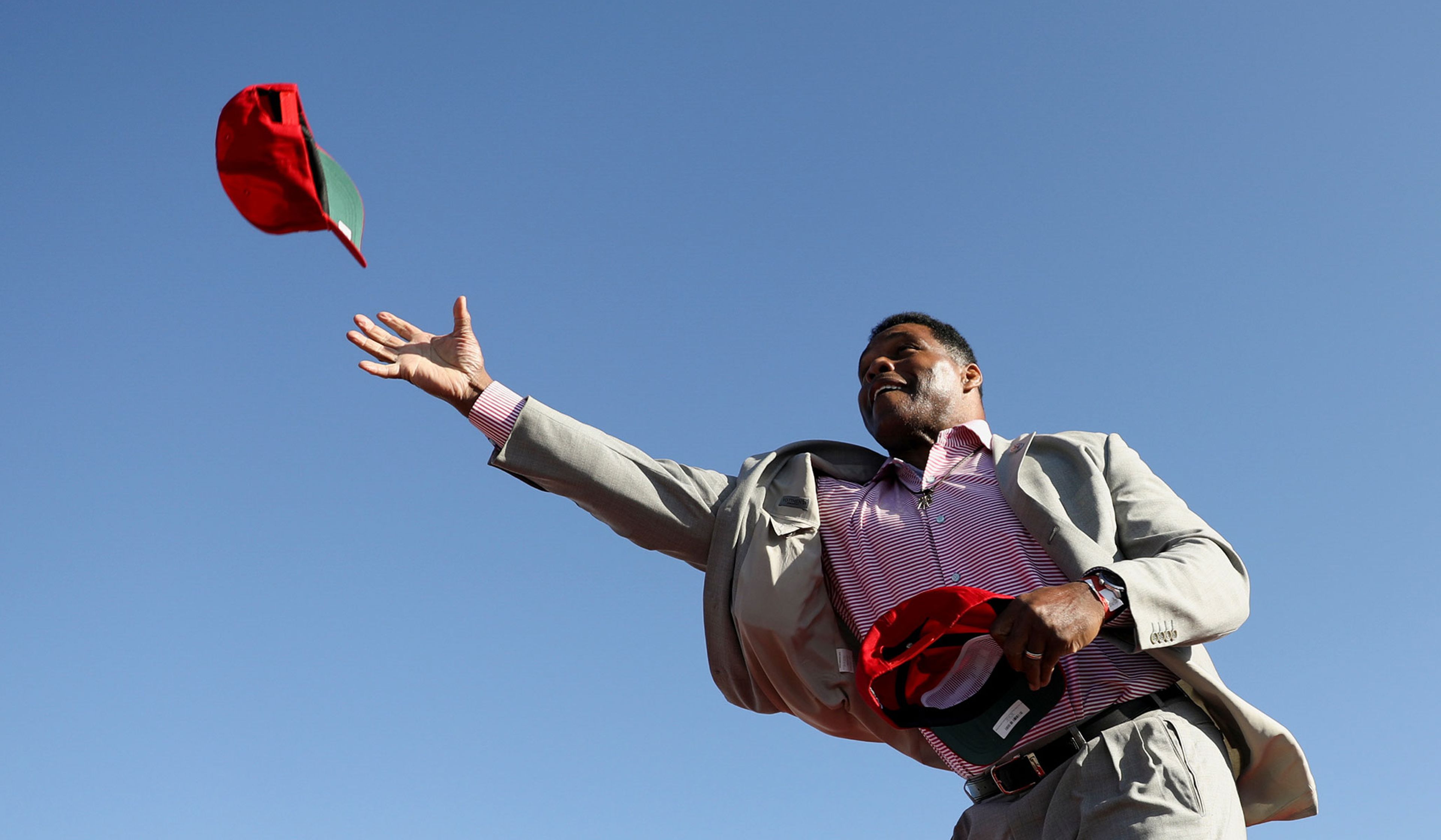
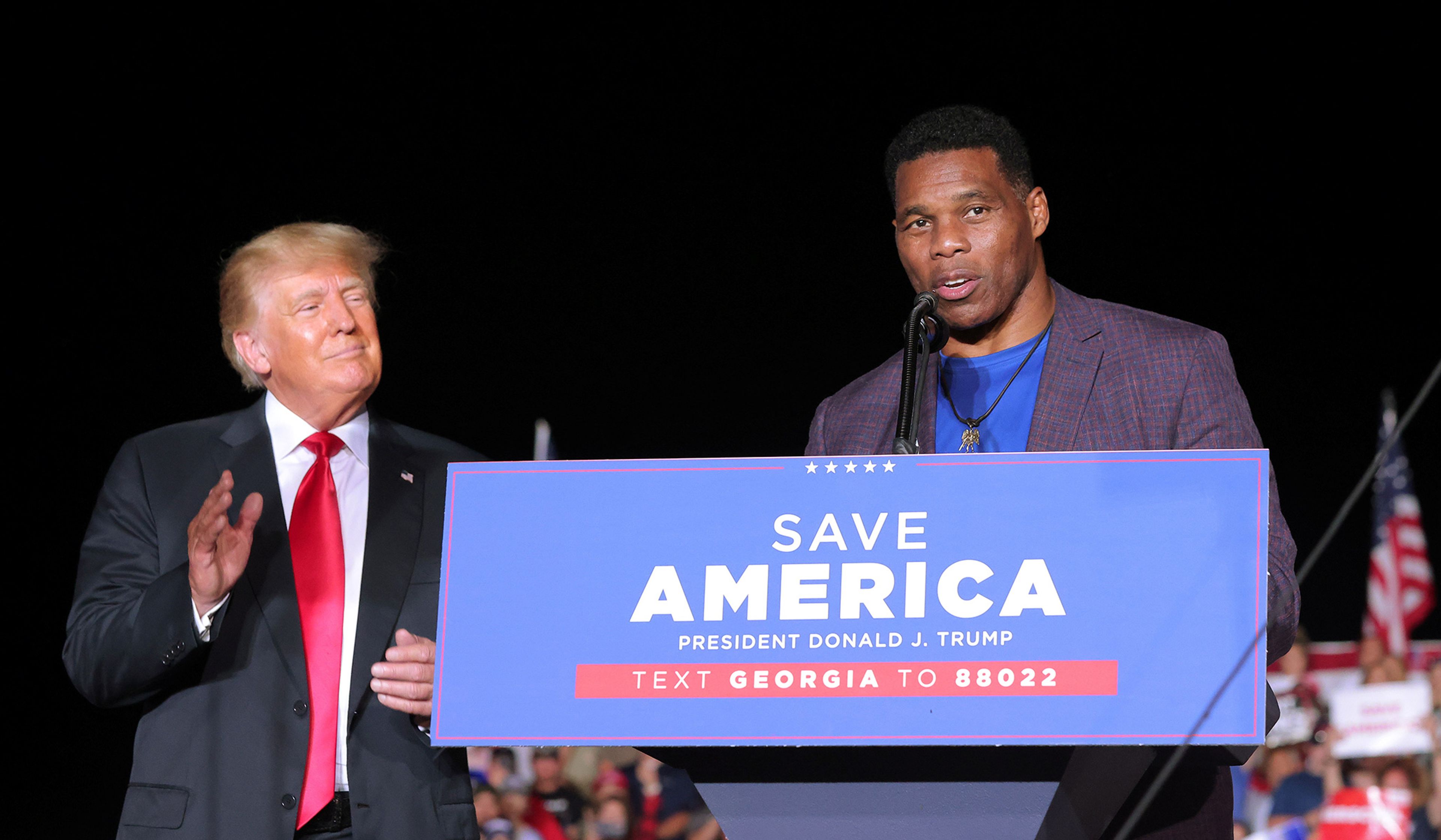
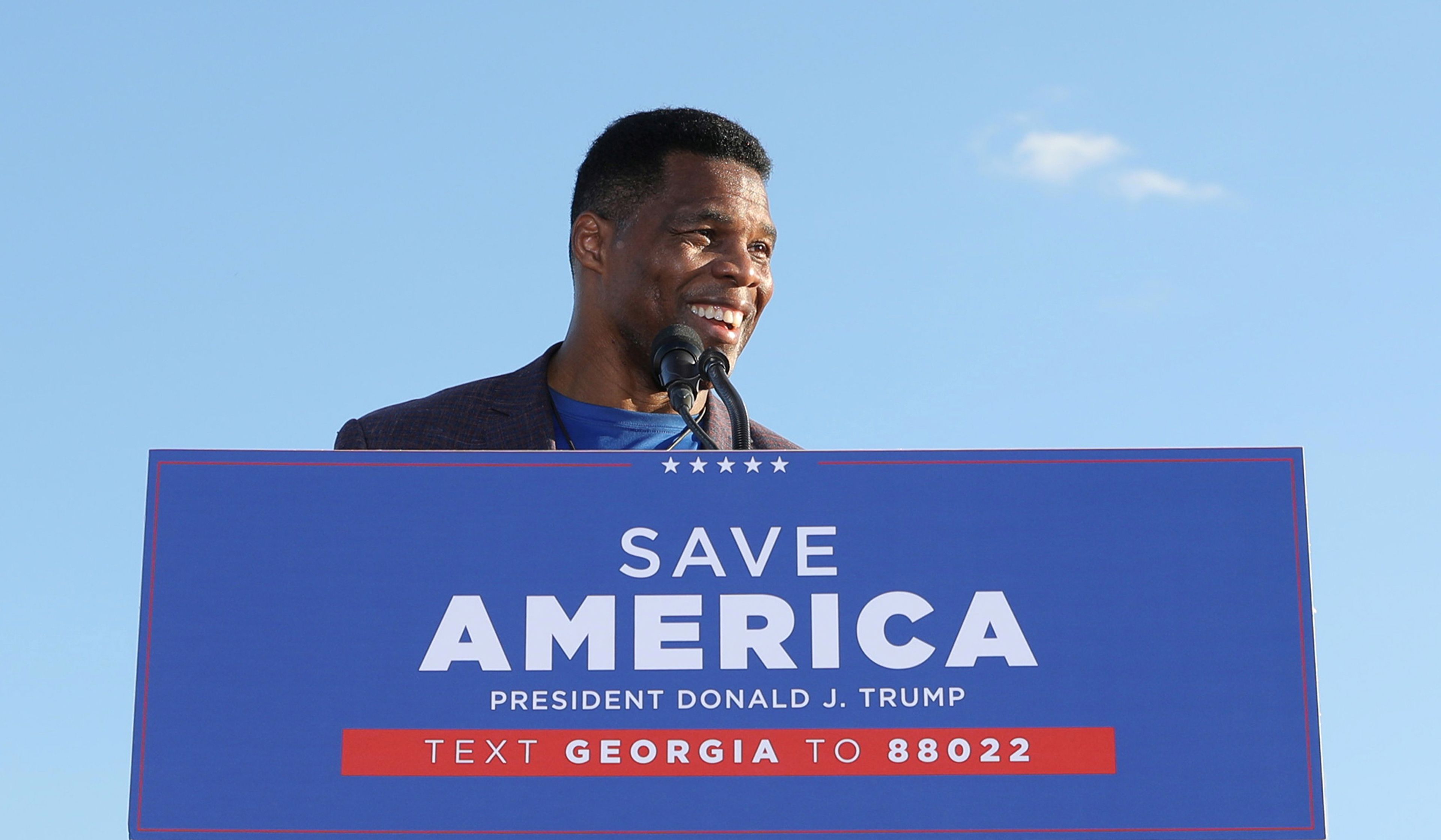
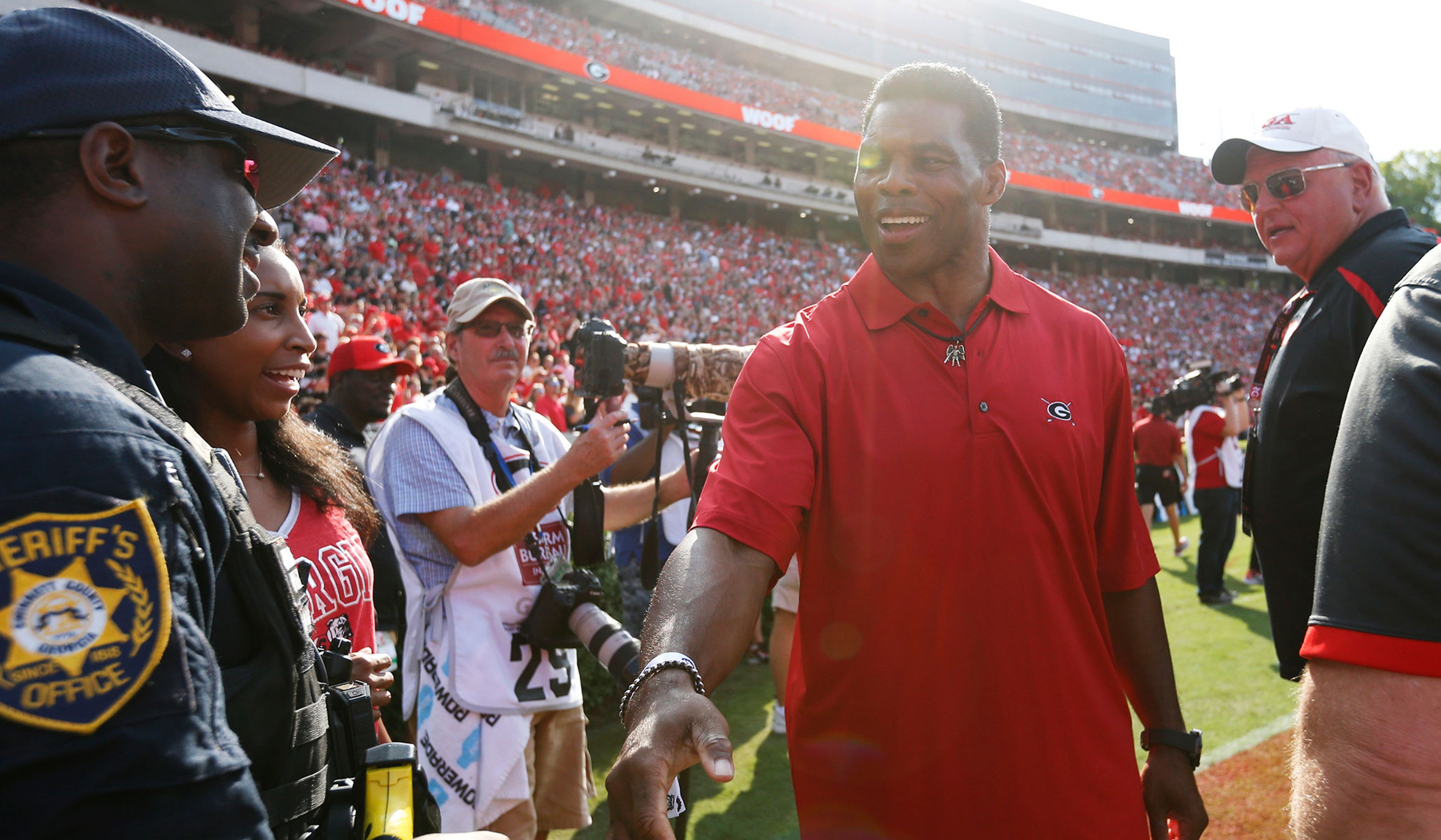
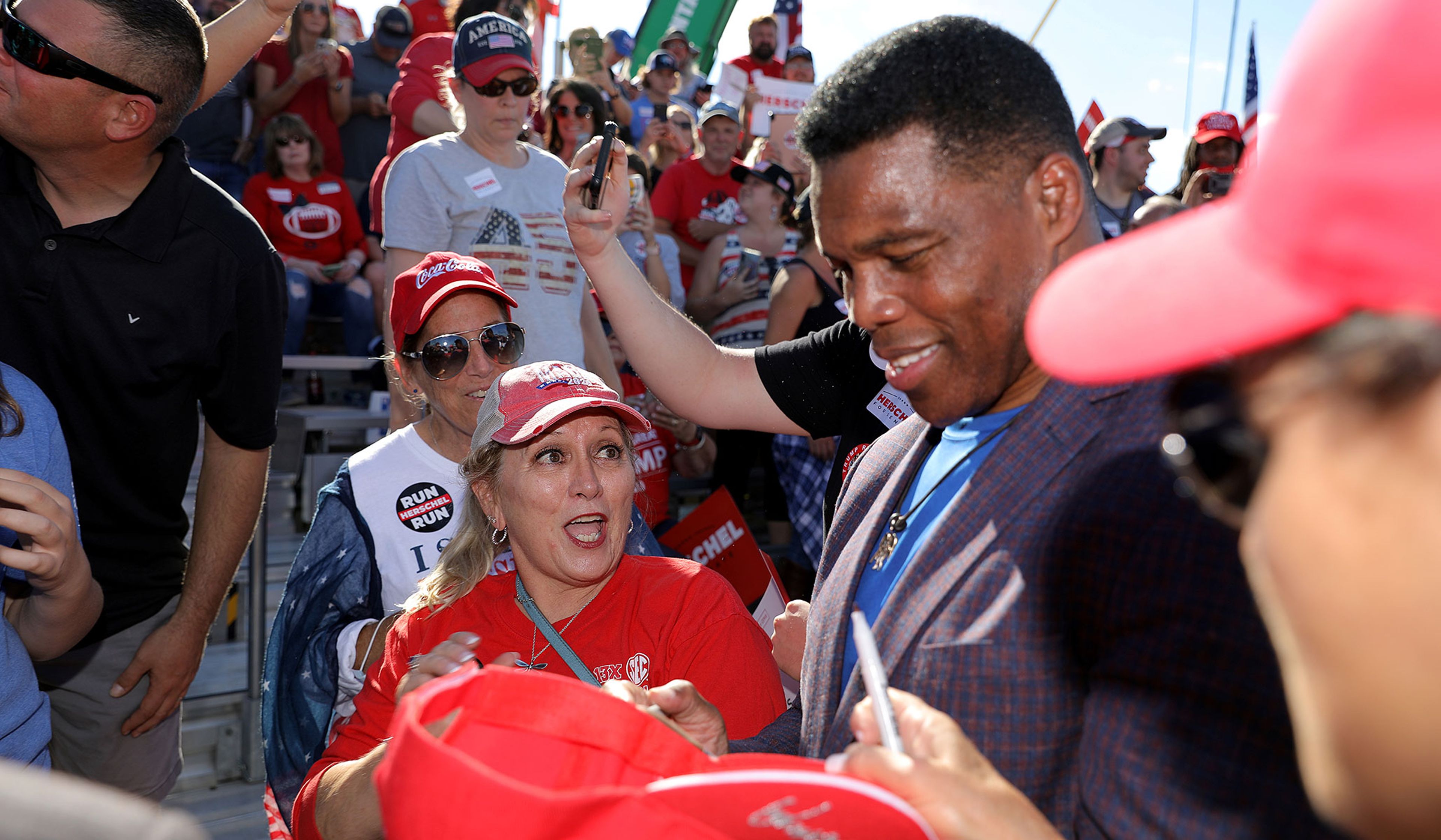
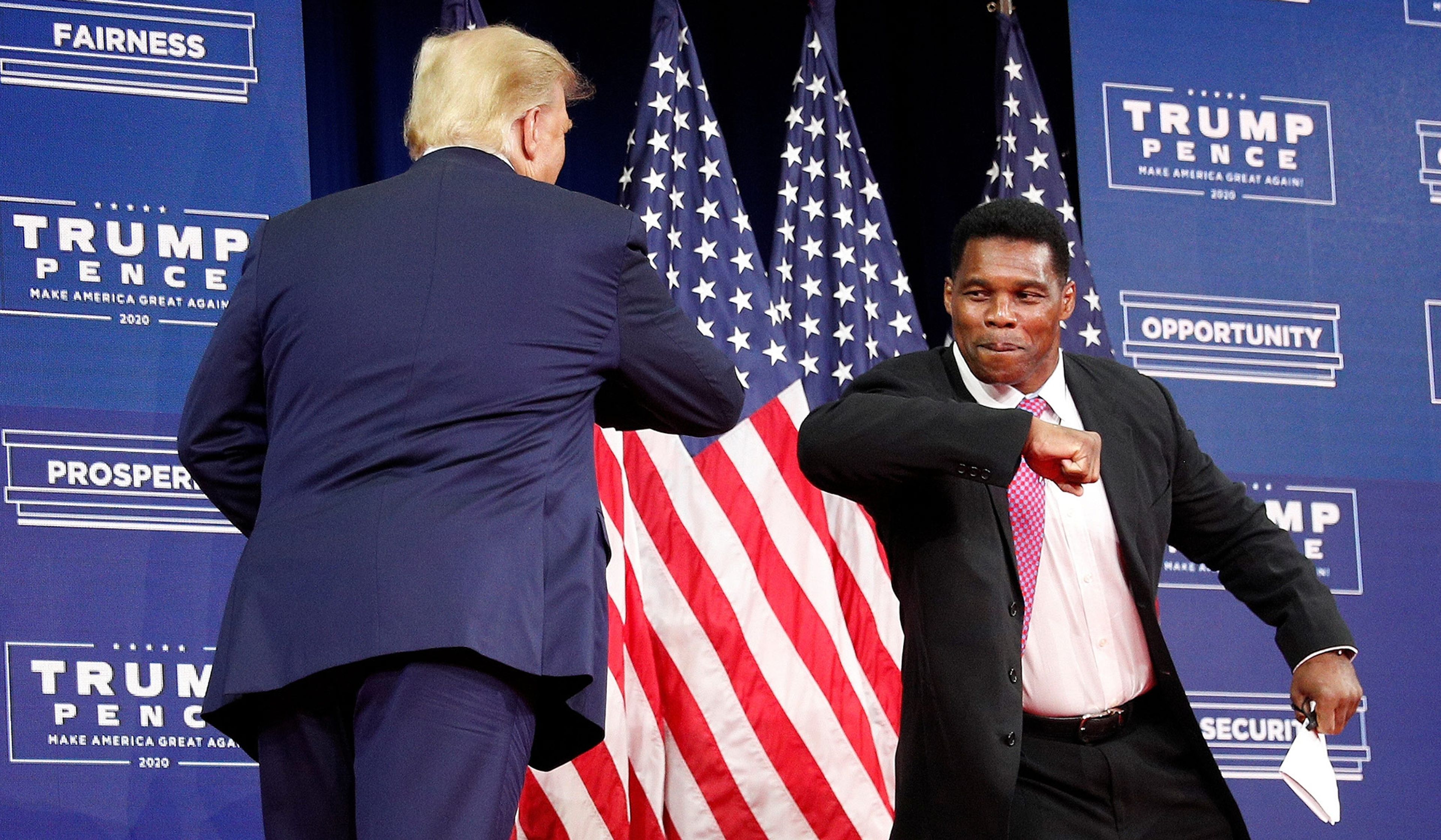
Senatorial candidate Herschel Walker speaks at a rally in Perry, Ga., September 25, 2021.
Dustin Chambers/Reuters
He also comes with baggage. For starters, while he was raised in Wrightsville, a small town halfway between Atlanta and Savannah, he hasn’t lived in Georgia for at least a decade. His primary residence has been in a gated Texas community.
A history of domestic violence dogs him as well. His ex-wife once said, “He held a gun to my temple and said he was gonna blow my brains out.” Walker acknowledges these allegations and says they stemmed from his well-publicized struggles with dissociative identity disorder. Other critics say that he threatened to kill a former girlfriend and once stalked a Dallas Cowboys cheerleader — charges that he says are false. He has tried to position himself as an advocate for people with mental-health challenges.
An outspoken critic of absent black fathers, he faced accusations of hypocrisy this summer after reports revealed three children that he either is not in contact with or has not mentioned publicly. Any suggestion that he has been hiding any of his children is “outrageous,” Walker told the Daily Beast, and he told the New York Times that he loves all his children and has never denied them.
Another challenge is that his answers in interviews can sometimes come across as word salads and off point. When NR asked Walker whether he worried that his strong pro-life views could turn off suburban women — he has backed a ban on abortion with “no exception in my mind” — he said, “That’s what’s great about America, you have a choice. Whereas Raphael Warnock don’t want to give you that choice. He wants to control your life.”
Jean McHugh, a 68-year-old independent who was with her niece in a Cobb County shopping center in mid September, said she couldn’t support Walker in part because of his abortion stance. She will vote for Warnock. “It’s not so much that I want to vote for him,” she said, as that “I don’t want to vote for Herschel Walker.”
Other anti-Walker voters who spoke with NR deemed him little more than a knucklehead football player and a Trump puppet. Ray Barton, 66, an independent from Rome, Ga., said that as a Georgia Bulldogs fan, he should be torn about the race, but he isn’t. He called Walker an incredible football player and a seemingly nice person, “but as a candidate for the United States Senate, it’s a joke.”
To many of his supporters, Walker is instead an everyman whose lack of political experience is a plus. “It’s obvious he’s not a polished politician, and he doesn’t pretend to be,” former governor Nathan Deal said of Walker after a recent North Georgia agriculture roundtable, part of Walker’s “Unite Georgia” bus tour.
“Donald Trump was not a politician, but he did a great job for the country,” said Jerry, 83, who declined to give his last name during an interview in downtown Rome.
“That’s what we need, somebody with no experience in politics,” echoed his wife, Midge.
Walker’s camp has tried to paint Warnock as a Joe Biden ally and a reckless spender who bears responsibility for the skyrocketing of inflation. But Bill Crane, a Georgia political analyst, credits Warnock for speaking to the political center, something he said Stacey Abrams, the Democratic nominee for governor, and most other Georgia candidates haven’t done.
“I think that might end up being one of the decisive factors in that race,” Crane said.
Daniel Franklin, professor emeritus of political science at Georgia State University in Atlanta, said there are few swing voters in the Senate race, so the two sides have blanketed the airwaves with negative ads to sideline supporters of their opposition. The race will probably hinge on voter turnout, he said, and Republicans could have a tougher time uniting their side. Democrats are angry about the overturning of Roe v. Wade and Georgia’s six-week abortion ban, Franklin said, and they’re still energized by their wins in 2020.
But while those issues and the lingering anti-Kemp sentiment and election-conspiracy theorizing could hurt Walker, Republican disdain for Abrams should help draw fence-sitters to the polls.
A possible complication is that the Libertarian Party candidate could draw enough votes that neither Walker nor Warnock receives a majority, which would send the contest to a runoff, as in 2020.
When speaking with NR, Walker expressed confidence in his ability to win. While he says he’s often dismissed as “this country boy from Wrightsville,” he described himself as a “champion all my life” and a “fighter.”
“I don’t ever say that I’ve always had success. I haven’t,” Walker told NR. “I’ve been knocked down, but I have gotten up. And when you see a guy that’s gotten up and continues to do what I’m doing, he’s the one that you want to vote for.”
He warned Democrats not to dismiss him in the one debate that he and Warnock have agreed to, slated for October 14, in Savannah. Walker told the Augusta crowd, “I will try my best to be ready” for it and said that Warnock had best put his “big-man pants on.” Warnock, he said, may dress well and be known as a great speaker, but “he’s got to stand behind what he voted on — 96 percent of the time with Joe Biden.”
Walker told NR he’s running to make a real difference, not to be an entertainer.
“I don’t want to run for office because I needed to have another feather in my cap. I don’t need that. I’ve got a bunch of them,” he said. “I’m running for office because I see that we need to change something. We’ve elected the wrong people to the table. Let’s be honest. We’ve elected the wrong people to the table over and over and over again.”









Comments