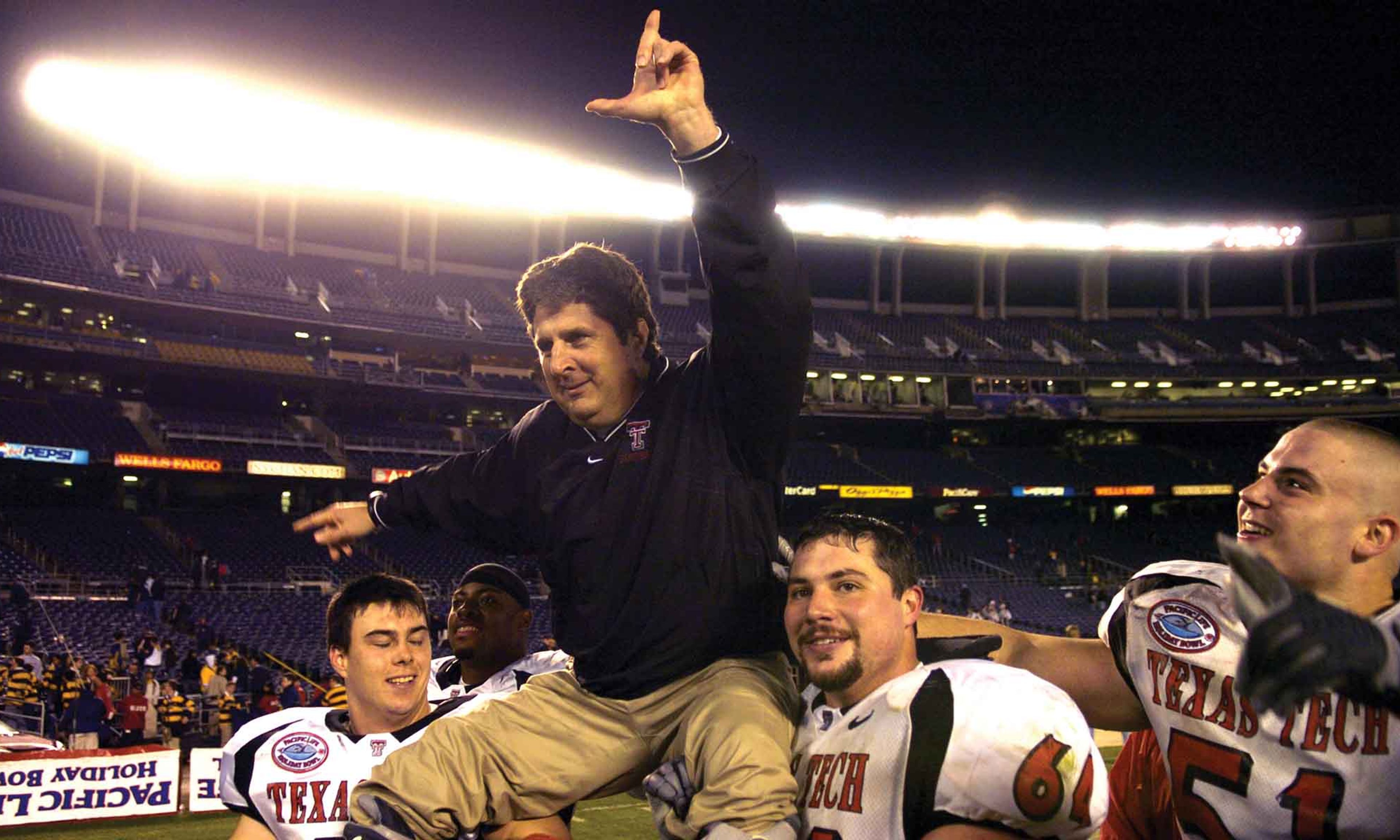
Sports interviews are often insipid, mind-numbing affairs. The questions are formulaic — “How did that make you feel?”; “What do you need to do in the second half?”; “Tell me about the home run” — and, in consequence, the answers are formulaic, too. If you watch enough sports, you can almost mouth the canned responses along with the television: “We need to execute better”; “We didn’t give up”; “The most important game is the next one”; and so on, and so forth. In England, I once witnessed a particularly excruciating press conference at which a none-too-intelligent soccer player was asked a dead-end question about the goal he had just scored and answered in such a hyper-literal fashion as to render the exchange entirely comical. “Well, the ball was kicked up into the air, and I was there, so I jumped, and I headed it toward the goal, and it went in — which was good, because we won. So I’m happy.”
Somewhere, Socrates must have sighed.
Mike Leach, the wildly eccentric college-football coach who died suddenly in December at the age of 61, seemed to have been sent to earth to buck this dismal habit. During his stints as head coach at Texas Tech, Washington State, and, finally, Mississippi State, Leach’s approach was to say whatever popped into his head, whenever he wished to say it, and to keep talking until everyone in the room was crying from laughter. He was a national treasure.
Among the topics on which Leach would happily harp were Daniel Boone, the art of Jackson Pollock, the behavior of wild chimpanzees, his enthusiasm for pet raccoons, the Native American leader Geronimo, and — a particular favorite toward the end of his life — the perils associated with planning a traditional wedding. When, in October of 2022, the SEC Network’s Alyssa Lang asked Leach for advice about her wedding live on air, he responded nonchalantly that she should probably “elope, ’cause basically every female in the family is gonna terrorize you guys until it’s over.” On Twitter, a few days later, her betrothed publicly thanked Leach for the heads-up.
At the slightest invitation, Leach would go off. He’d wonder aloud which of the mascots in the Pac-12 would prevail in a fight to the death (“The Trojan,” he once asked with mock gravity, “does he have a horse or is he on foot?”). He’d run through his reasons for believing that, unlike aliens, Bigfoot sadly doesn’t exist. He’d lambast candy corn and coffee (“awful” and “terrible,” respectively). He’d explain the best way to divine the weather without watching TV: “Get out of bed, go outside, then you know.”
Asked what went wrong in Mississippi State’s 30–6 loss to Alabama this season, Leach eschewed the usual clichés about work and discipline and there being another week, and delivered a memorably surreal rant about the supposed long-term risks that were associated with his receivers’ apparent inability to catch the football. “I think we need to use our hands better,” Leach said. “If you don’t use a certain part of your body, as time evolves over century upon century, in natural selection, that part of the body disappears and even that animal might disappear. . . . I’m genuinely fearful that on our team if me and the other coaches don’t get them right, that about a generation from now their kids and their grandkids won’t have hands. Because from a lack of use those hands just disappear, . . . I mean, and I don’t want, all of a sudden, guys driving across this country and then they get to Starkville, Mississippi, and all of a sudden there’s these athletic-looking friendly guys, because we have great guys, that don’t have any hands.”
Message: Received.
Of particular fascination to Leach were 18th-century pirates, whom he seemed to regard both as a personal inspiration and as an apt metaphor for a well-functioning football team. Before games, Leach would shout a favorite phrase at his players: “Swing your sword!” In the locker room, and elsewhere, he liked to elaborate on this theme. “There were a lot of castes and classes in England at the time,” he liked to explain. “But with pirates, it didn’t matter if you were black, white, rich, or poor. The object was to get a treasure. If the captain did a bad job, you could just overthrow him.”
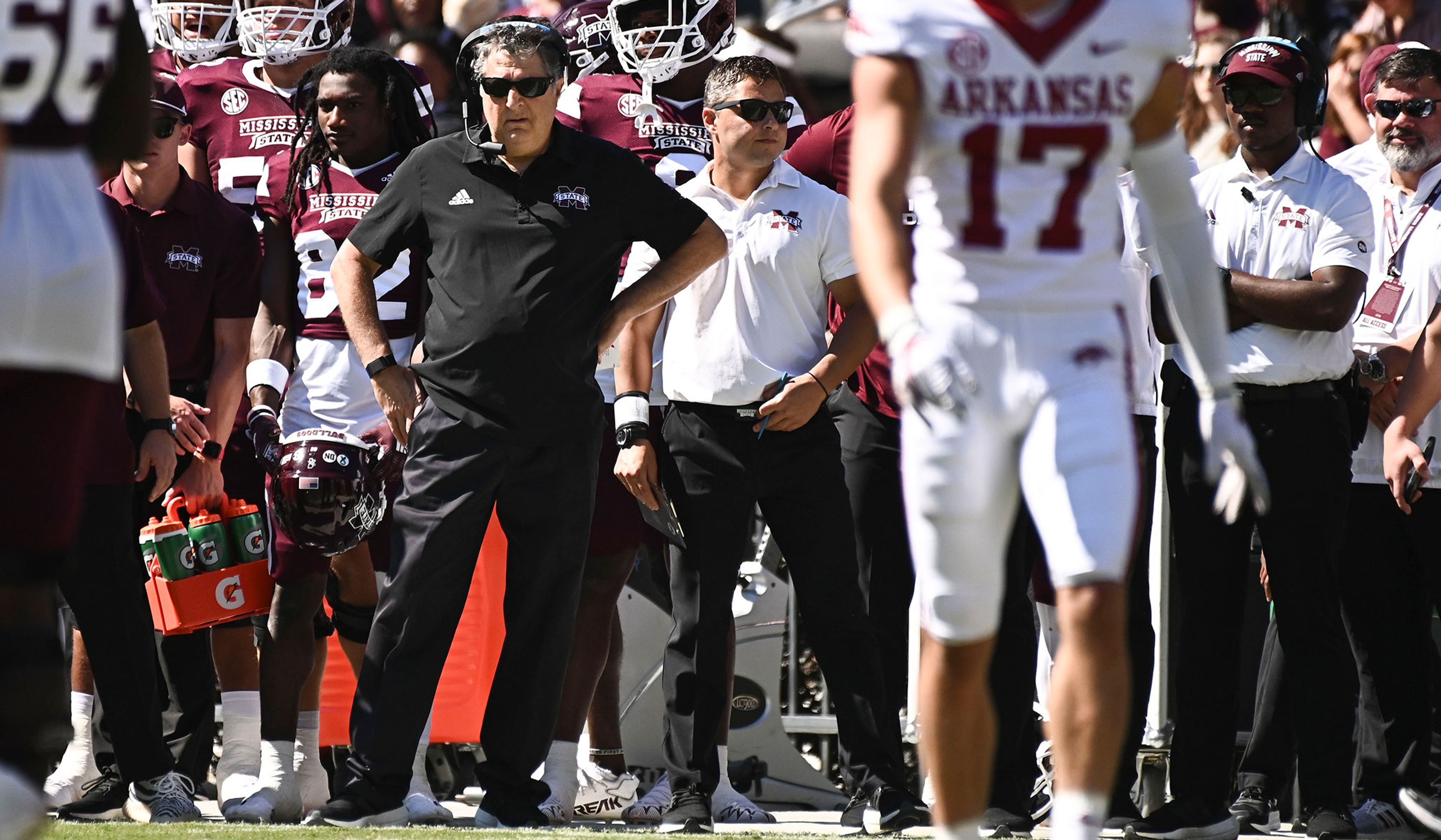
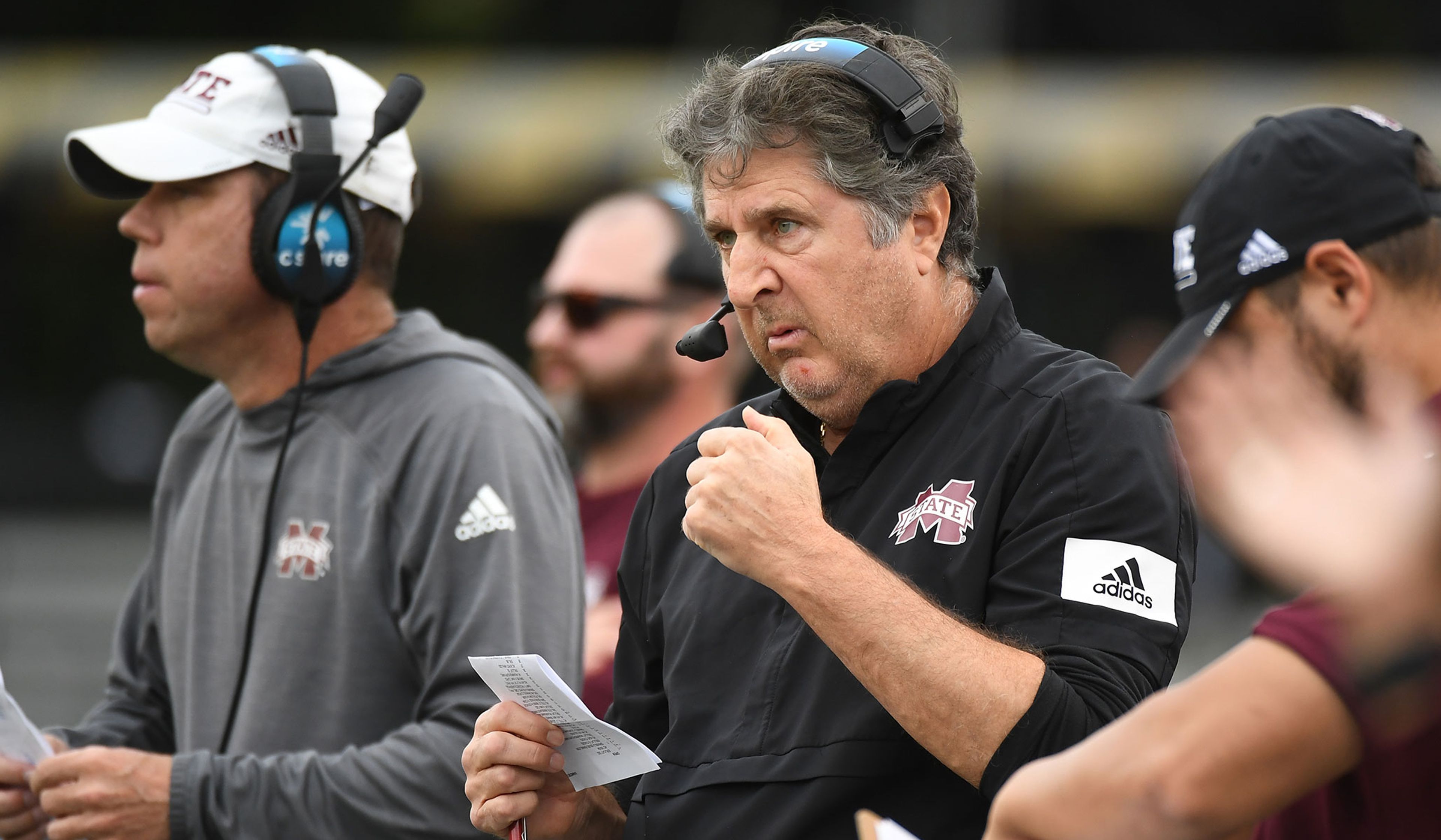
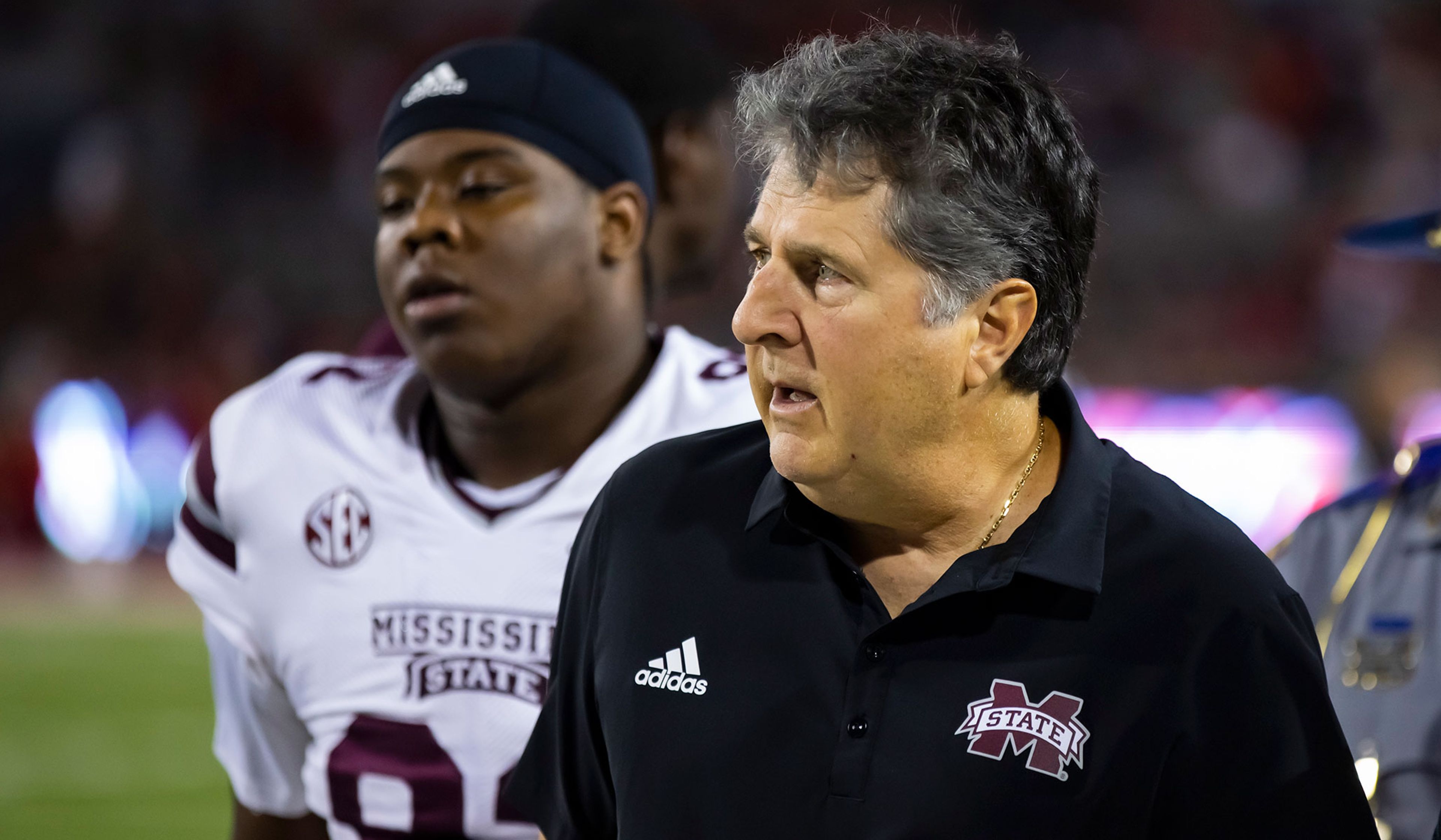
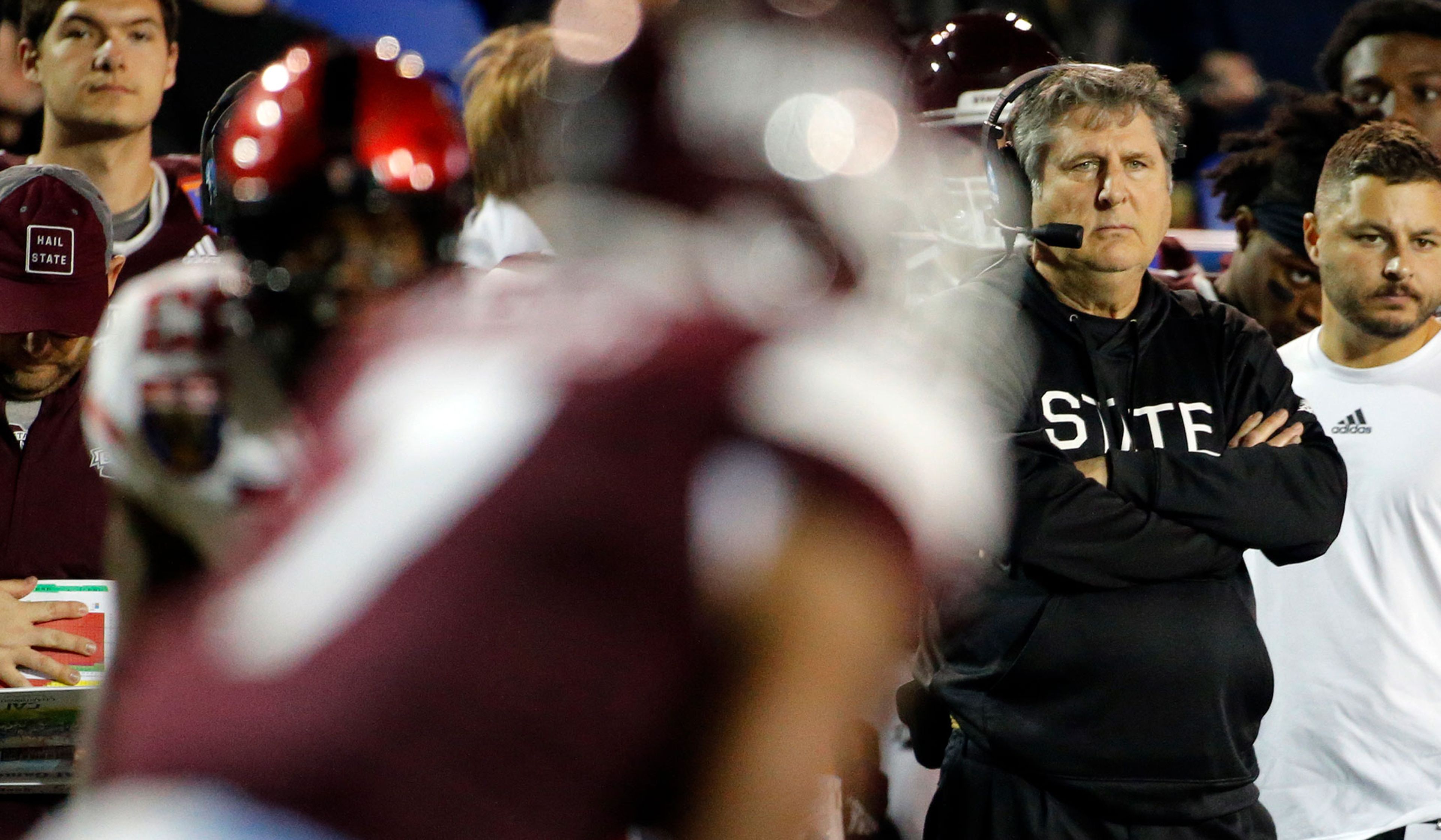
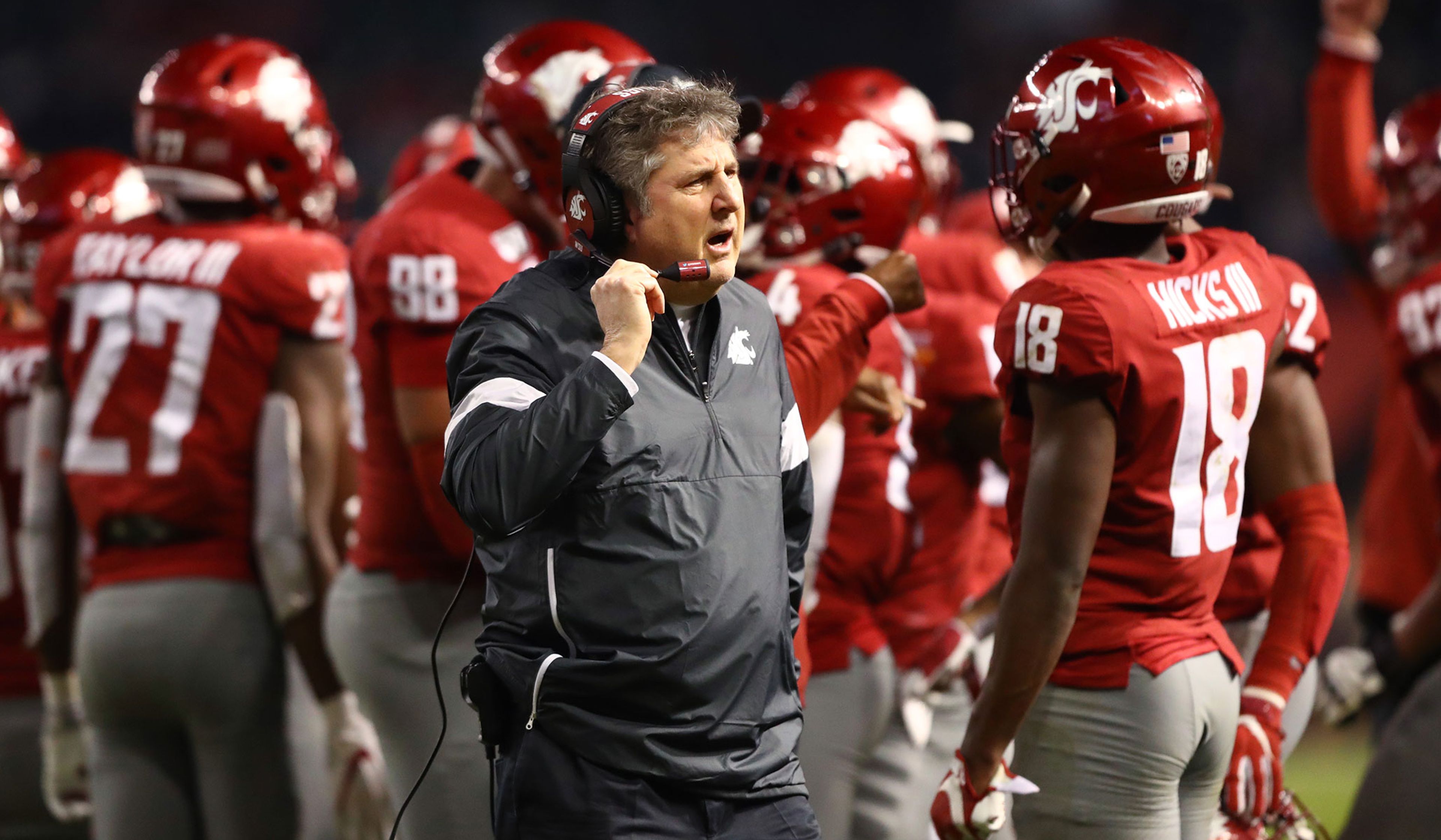
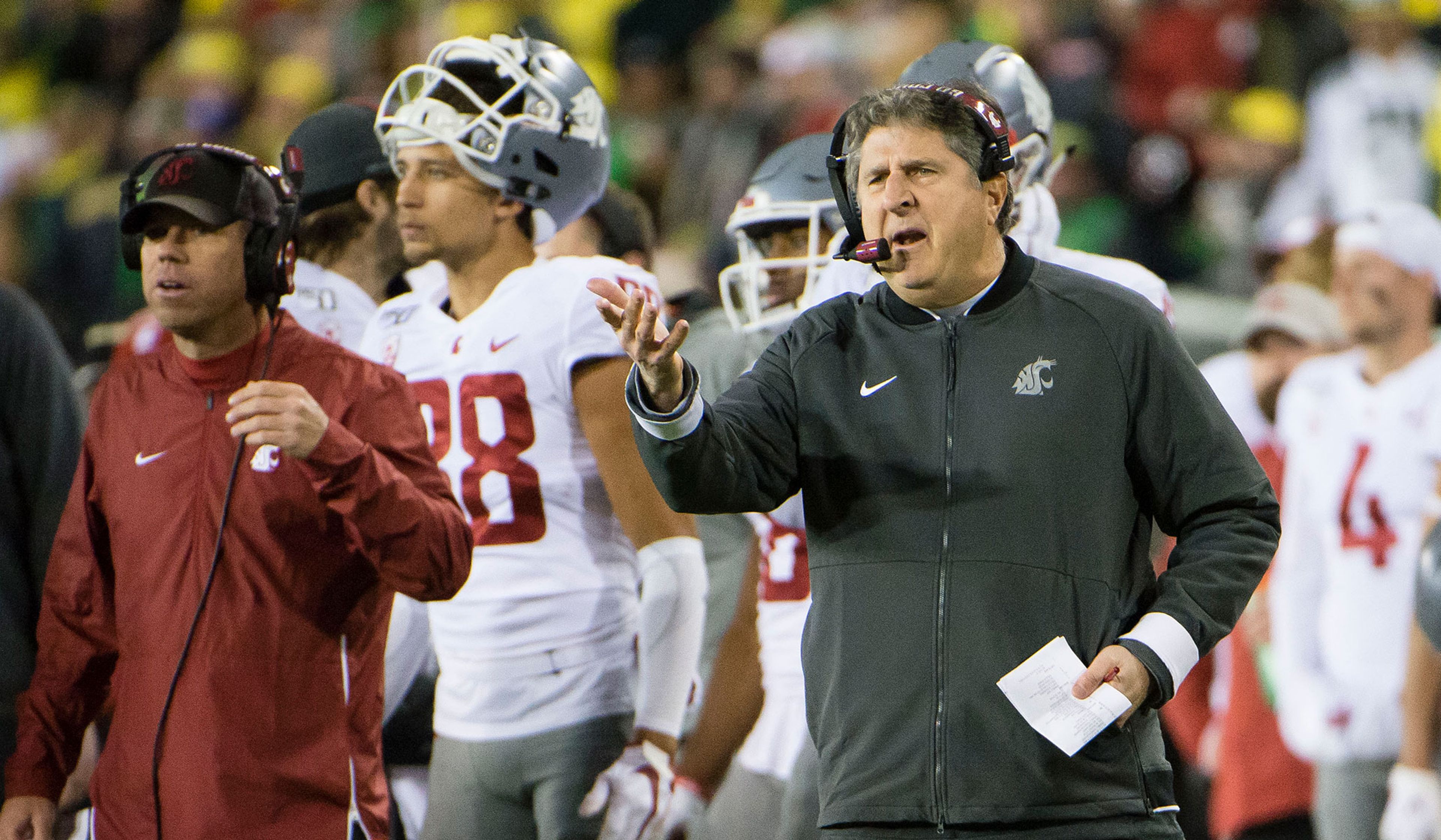
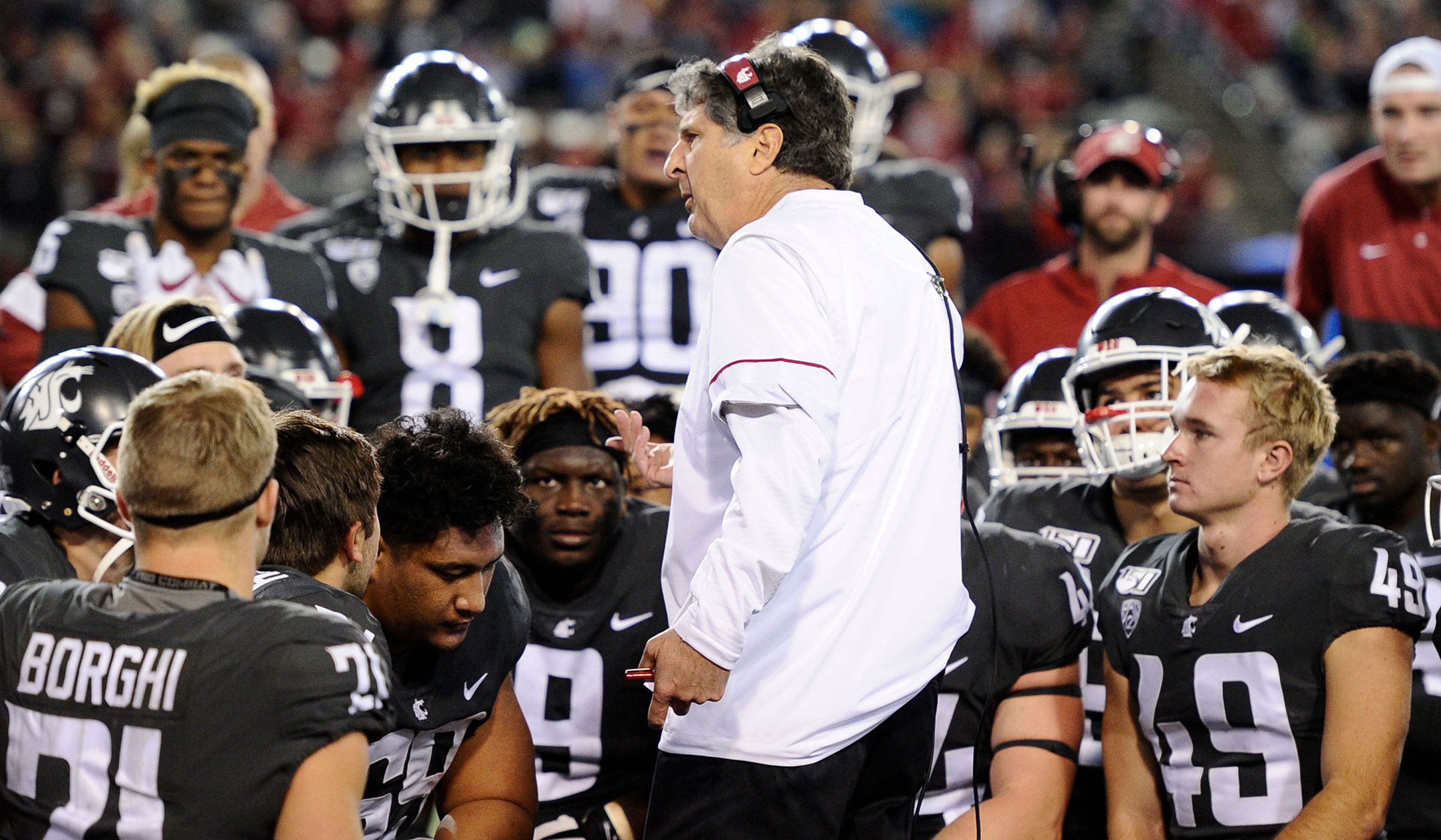
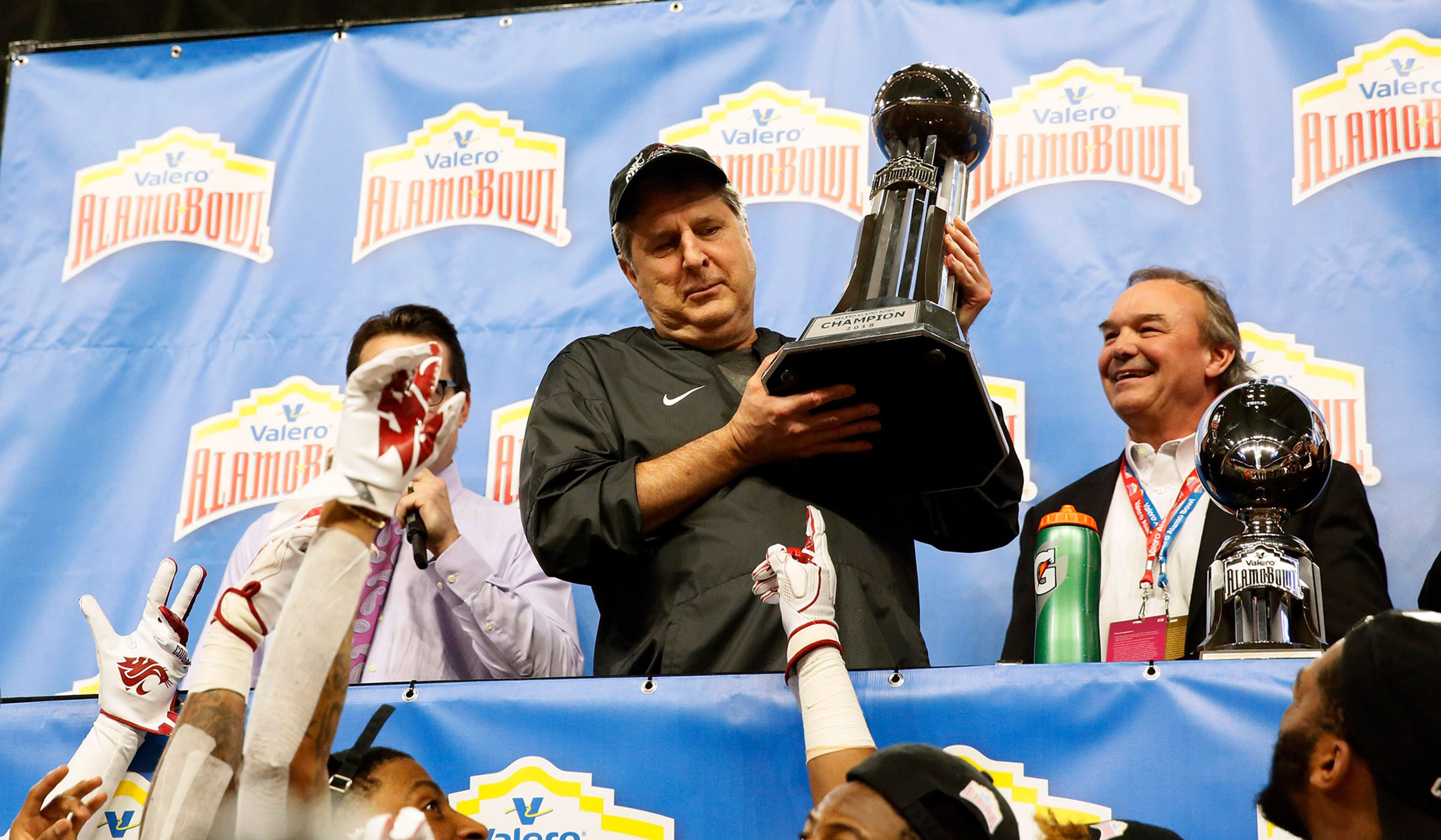
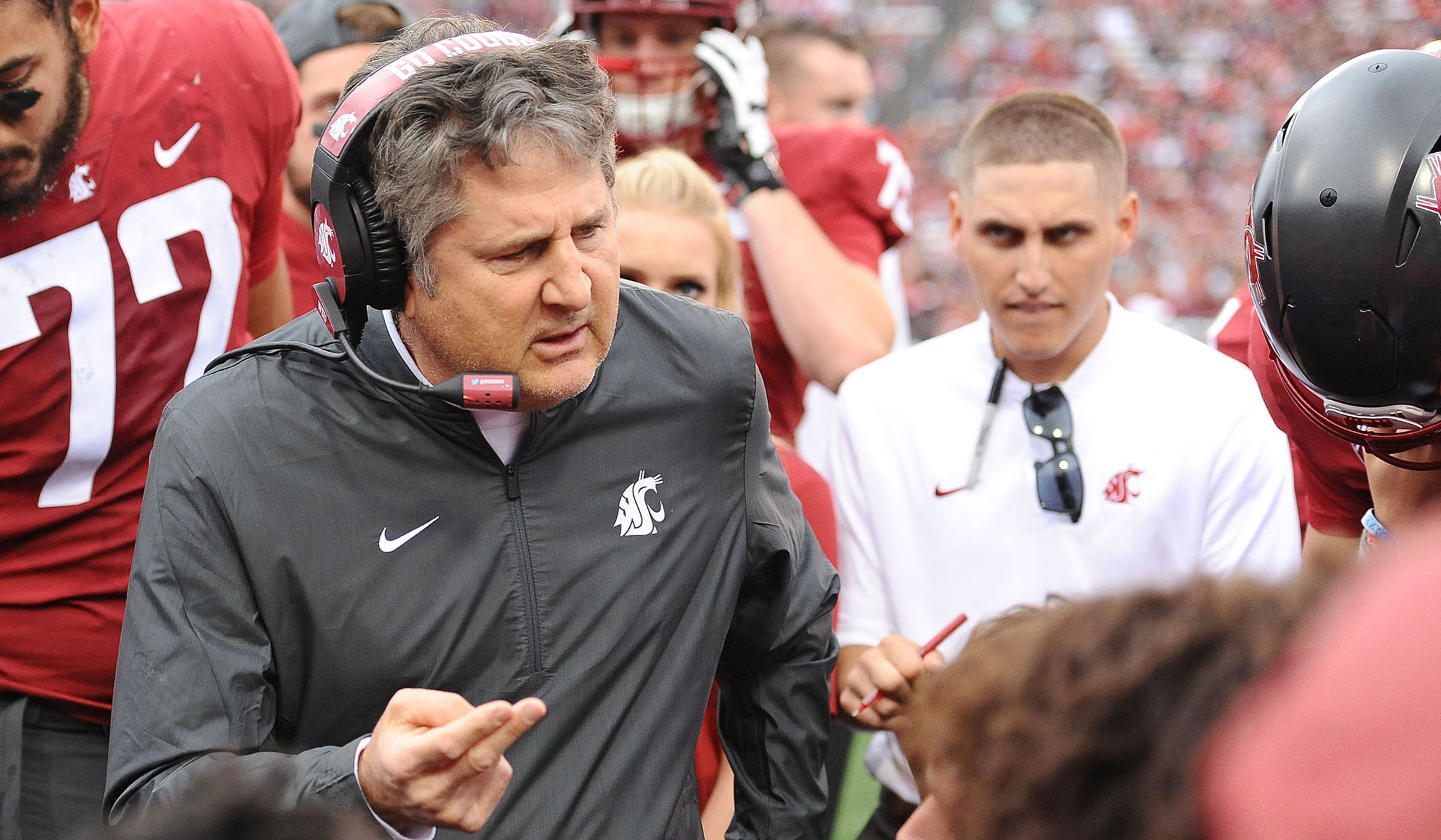
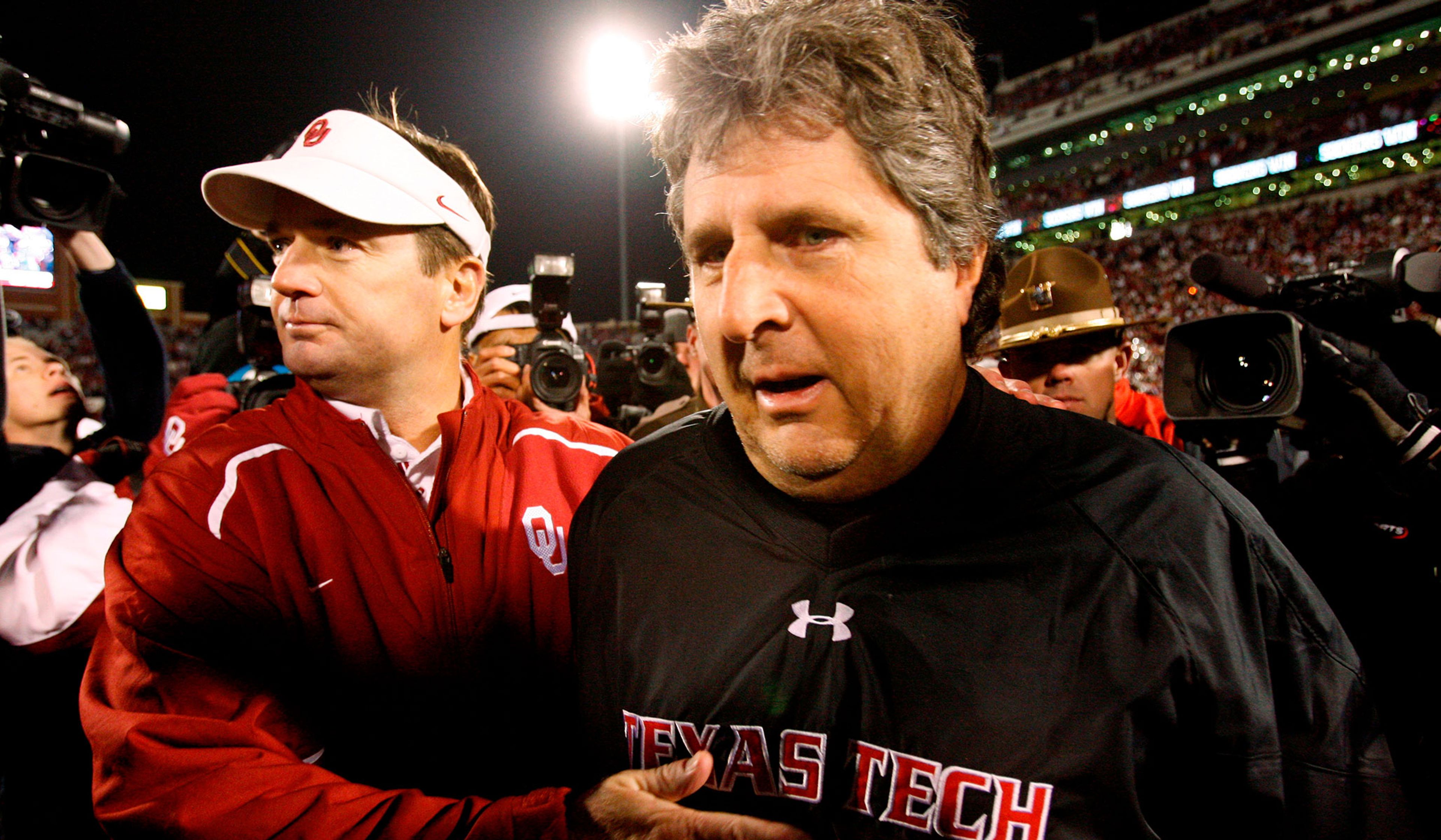
Mississippi State Bulldogs head coach Mike Leach stands on the sidelines during the second quarter of the game against the Arkansas Razorbacks at Davis Wade Stadium at Scott Field in Starkville, Miss., October 8, 2022.
Matt Bush-USA TODAY Sports
Eventually, Leach’s ability to riff without interruption grew so legendary that the first piece of advice his players would give to new recruits was to stay completely quiet during team meetings, lest their question lead to a two- or three-hour digression and keep the squad in the tape room until midnight. In 2019, Casey Brink, who played as a quarterback at Washington State from 2016 to 2018, told the Athletic that “our No. 1 rule was: never say or ask or do anything that would get him talking about anything besides the film.”
It rarely worked. Indeed, by all accounts, Leach seems to have preferred talking about tangential topics to talking about football. Many of his players were shocked by how straightforward his advice seemed. Asked what the opposing defense was likely to do, Leach would say, “They’ll be in man, or they’ll be in zone.” Asked by a quarterback what he should focus on, Leach would say, “Just throw it to the guy who’s f***ing open.” Asked by a wide receiver what he could do to improve his numbers, Leach would say, “Run into open space and catch the ball.”
This wasn’t purely affect. Leach had a keen mind, and, as one of the founding fathers of the “air-raid offense,” he was not afraid to innovate. But he did not consider football to be an especially complicated sport — and it showed. While other coaches were building up their playbooks, Leach was cutting his down. His list of plays was famously small — “If we adopt a new play,” he explained, “I’ve always tried to cut one that we have” — and he put a greater emphasis on accomplishing the few plans he had than on adding to their number. “There’s not a lot of Road Runner or Wile E. Coyote” in football, “where you ambush, fool the other guy, then you walk away laughing like Muttley after the rock fell on the guy,” Leach noted earlier this year. As for variation? If you’re better at passing than at rushing — as Leach’s teams invariably were — that could be an obstacle. Criticized for his “imbalanced” offense after a game in which Washington State put up zero rushing yards, Leach was unsparing in his justification. “There’s nothing balanced about the 50 percent run, 50 percent pass,” he told the press, “because that’s 50 percent stupid.”
Leach took an unusual path to his eventual role as a head coach. He played football in high school, and he was recruited by BYU to play at the college level. But, as bad luck would have it, an ankle injury kept him off the field for his entire college career and led him to decide to become a lawyer instead. Which he very nearly did. In 1986, Leach graduated from Pepperdine Law School with a J.D., but despite having been in the top third of his class throughout, he realized that he wasn’t especially interested in a career in the law. With a wife, a small child, and nearly $40,000 of student debt, he was, in his words, unable to “go to Europe to find myself for a year,” and so, hoping to avoid growing old “wishing that I had tried coaching for a while,” he abandoned the law and went to the United States Sports Academy, where he got a master’s degree in sports science.
From there, he worked his way up the ladder: first as an assistant coach at Cal Poly and College of the Desert, then as a head coach in Finland, and then, auspiciously, as the offensive coordinator at Iowa Wesleyan University, under Hal Mumme. For the next decade, Mumme and Leach proved to be a match made in heaven. First at Iowa Wesleyan, then at Valdosta State, and finally at Kentucky, the pair designed a swashbuckling new way of playing the game that prioritizes the passing game and avoids the huddle in favor of a relentless, often spontaneous, attack. By 2000, Leach had made such a name for himself that, after a year at Oklahoma, he was hired as the head coach of Texas Tech, where he stayed for ten seasons — all of them winning. At the time of his death, in December 2022, Leach had spent 21 seasons as a college-football head coach, and, in all but five of them, finished with a winning record. Across 265 games in charge of Texas Tech, Washington State, and Mississippi State, he racked up 158 wins and 107 losses, and won eight bowl games.
Which is pretty good, but, alas, not quite good enough for the College Football Hall of Fame. Per existing rules, candidates for induction must have been a head coach for at least ten years (which Leach was), have won at least 100 games (which Leach did), and have a .600 win rate — which Leach missed out on by just 0.4 percent.
Still reeling from his early death, many of Leach’s fans have reacted to this news by insisting that these rules are unjust, by proposing that the National Football Foundation ought to “round up” the percentage to .600, or even by demanding that Leach be treated as a special case and accorded a waiver. Respectfully, I disagree. In my estimation, there is something peculiarly appropriate about a unique figure such as Mike Leach missing out on an official honor by such a small, statistically meaningless margin. The guy was a pirate, a maverick, a nonconformist, an iconoclast. What greater tribute to him could there possibly be than for a career that speaks for itself to come into conflict with the establishment’s adamantine rules one last time?












Comments