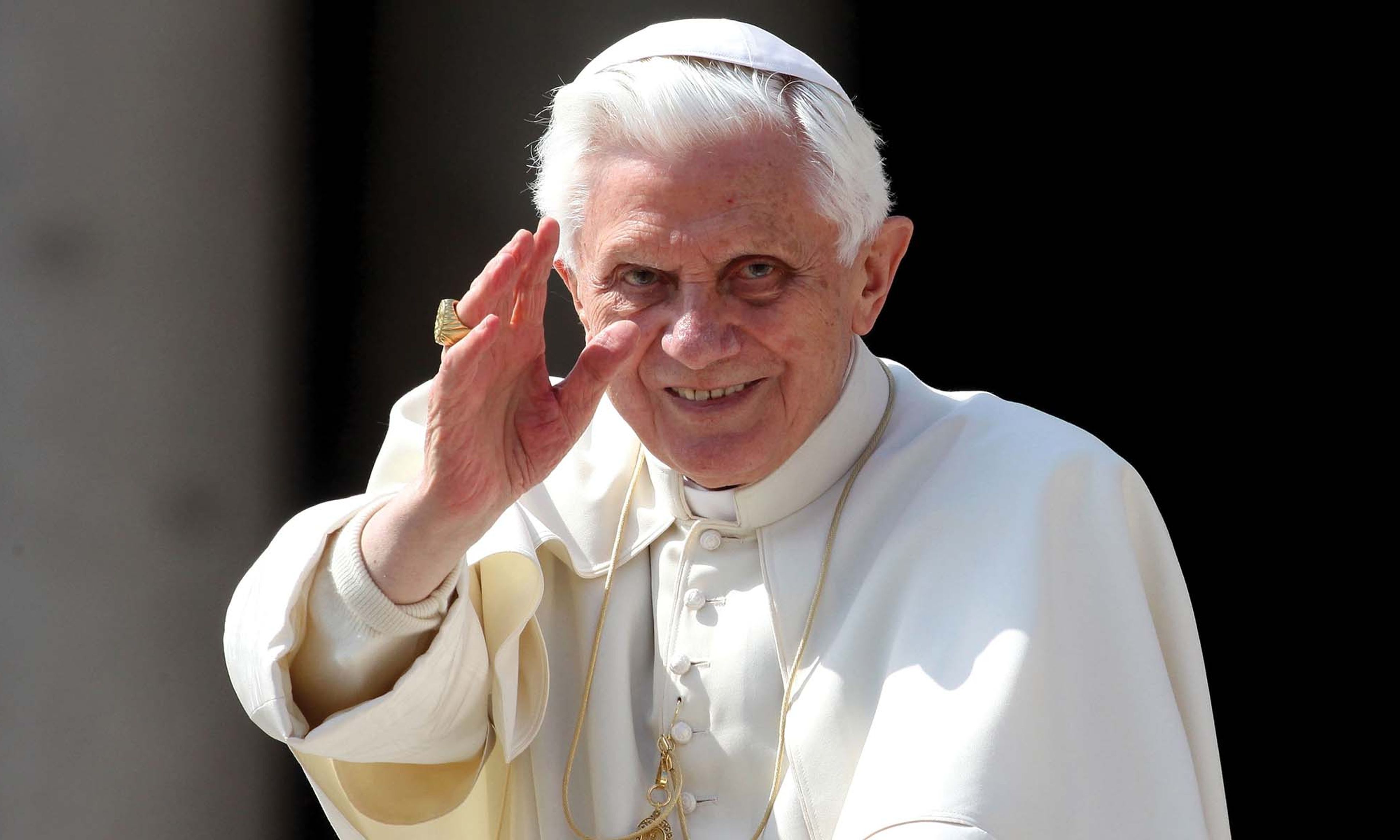
Pope Emeritus Benedict, the most consequential churchman and theologian of this and several preceding eras, died on December 31, 2022. We may predict confidently that he will be one of the only figures of his era to be remembered, celebrated, studied, and beloved in the future.
In the near term, Benedict will be misremembered as a tough-minded reactionary, the “panzer cardinal,” when in fact he was a pioneering liberal, a frequent innovator, and a gentle-souled cleric. He will be mislabeled as a man whose reputation was fatally compromised by the sexual-abuse crisis in the church, when he was perhaps the sole figure of his era at the top of the church who took on the treacherous responsibility of reform — centralizing the handling of priestly abuse cases in his office and dramatically speeding up the process of defrocking criminal priests, a project that has been thrown into reverse by his successor. Benedict will be hailed only for his resignation, the first papal resignation in six centuries and arguably a great precedent to set, but which was effected at the wrong time — many years before he lost his clarity of thought and long before his papacy’s work was complete or its legacy secured by worthy succession.
Joseph Ratzinger was born on Holy Saturday in 1927 in Marktl, Bavaria, Germany. His grand-uncle, Georg Ratzinger, was a priest-politician. Joseph’s elder brother, also Georg, became a priest. The devoutly Catholic family was deeply suspicious of the Nazi regime. The father of the family, a policeman, opposed Nazism, resulting in his demotion. In 1941, Joseph’s 14-year-old cousin, who suffered from Down syndrome, was euthanized as unfit by the Action T4 program of Nazi eugenics. Like all 14-year-old Germans who were deemed fit, Joseph Ratzinger was conscripted into the Hitler Youth, though his brother later testified that he was an unenthusiastic member who skipped out on his duties to the organization. Joseph soon joined the seminary. In 1943 he was conscripted into the anti-aircraft corps, which he deserted two years later, as Allied troops approached.
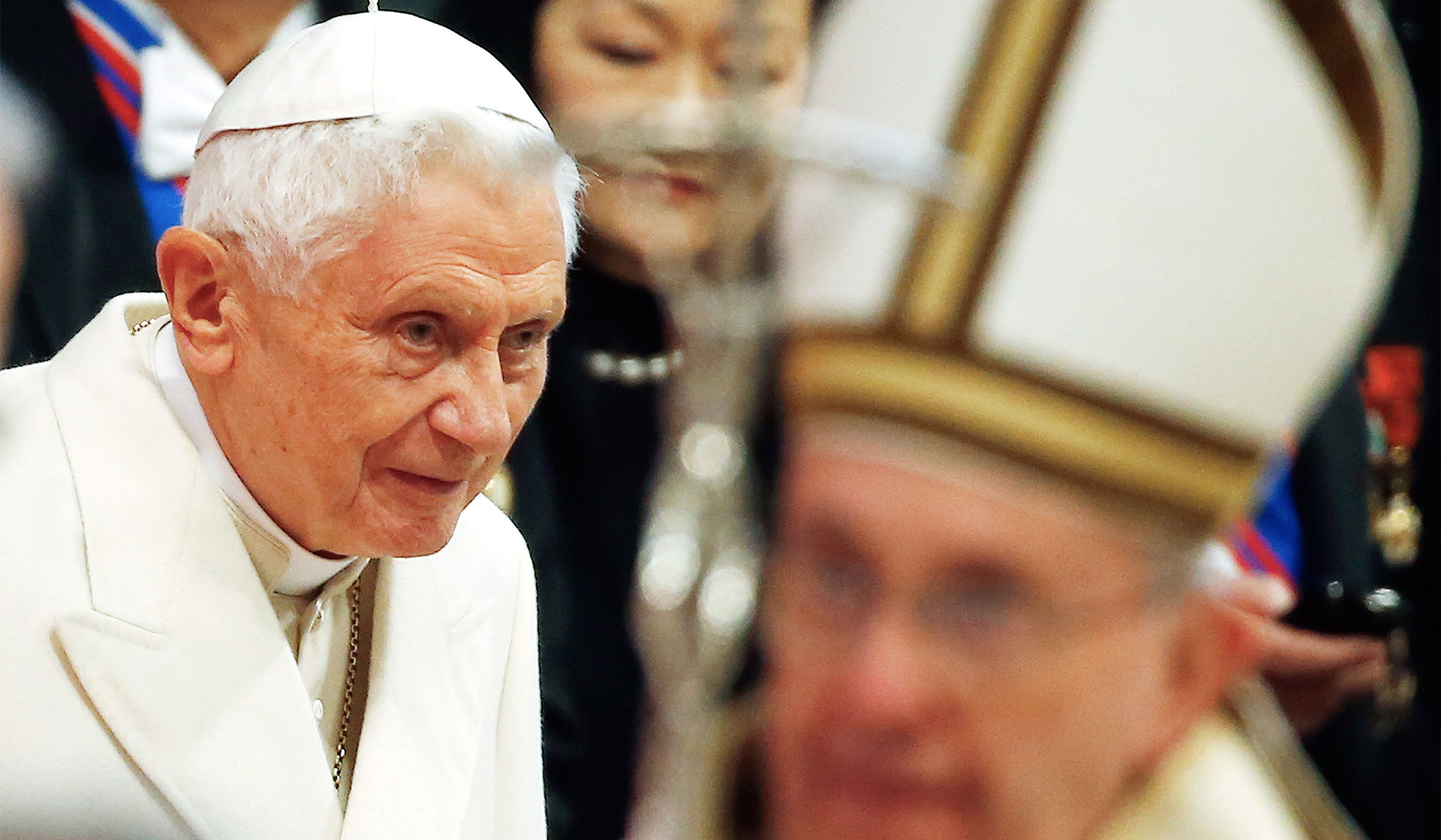
After the war and his studies, Ratzinger embarked on a distinguished church and academic career: chaplain at a parish in Munich and then, by 1959, a professor at the University of Bonn, and, in 1963, at the University of Münster. He participated in the Second Vatican Council as a “peritus,” a theological consultant, to Cardinal Frings of Cologne. Fifty years later, just before his resignation, he would claim that the council’s legacy had been divided between a “Council of the Fathers,” evidenced in documents, and a “council of the media” that excited popular misapprehension of the council’s work. But Ratzinger himself was inarguably part of this council of the media and was well known at the time for cutting a dashing reformist figure in a suit and tie rather than a clerical collar and for being in league with theological progressives such as Karl Rahner, Hans Küng, and Edward Schillebeeckx.
In 1968, he issued An Introduction to Christianity, which has become a theological classic and was clearly inspired by, and a continuation of, the work of the great Italo-German priest Romano Guardini. After the council, Ratzinger helped form a journal of Catholic theology, Communio, which stood implicitly against the more radical colleagues he had at the council who had begun pushing for the abandonment of priestly celibacy, the church’s moral teaching on human sexuality, and so on. In 1977, he was made the archbishop of Munich and Freising.
In 1981, the new pope, John Paul II, named Ratzinger as the prefect for the Congregation for the Doctrine of the Faith (CDF), formerly the Holy Office of the Inquisition. There he became, in the words of columnist Ross Douthat, a traitor to his class, condemning his former academic-theologian colleagues for their errors, sometimes implicitly and sometimes explicitly. In this office, he gave theological heft to the grand, spectacle-driven papacy of John Paul II. The crowning achievements were documents such as Veritatis Splendor (“The Splendor of the Truth,” 1993) and Dominus Iesus (“The Lord Jesus,” 2000).
The first championed the universal validity of the natural and divine law against the supposition that an individual conscience may morally license acts that the church understands to be sinful. “The commandments thus represent the basic condition for love of neighbour; at the same time they are the proof of that love,” he wrote. The second document reproved those theologians whose work pitted the mercy of God, or the saving operation of the Holy Spirit, or the church’s appreciation of some elements in other religious traditions, against the doctrine that Jesus Christ is the only mediator between God and man and that all who are saved are saved by him and through their incorporation into the church. Ratzinger’s work as chief doctrinal policeman under John Paul II preserved the heart of the Gospel against the humanistic and relativizing excesses of theologians after the council.
Contrary to much erroneous reporting, the vast majority of priestly sexual-abuse cases in the Catholic Church before 2001 were handled or mishandled entirely by local bishops and only rarely reached Rome, in the form of canonical trials or in the recommendations of the Congregation for the Clergy.
Firm and energetic Vatican action against the scourge of priestly sexual abuse began only when John Paul II transferred responsibility for these cases to Ratzinger’s CDF and Ratzinger issued a letter, De delictis gravioribus (“On more-serious crimes”). “Prior to that 2001 motu proprio and Ratzinger’s letter,” wrote Vatican reporter John Allen Jr. in 2010, “it wasn’t clear that anyone in Rome acknowledged responsibility for managing the crisis; from that moment for- ward, the Congregation for the Doctrine of the Faith would play the lead role.”
More than 3,000 cases would eventually be referred to the CDF. And Ratzinger’s office, reviewing the files, proceeded to the imposition of swift disciplinary actions, either laicization or being barred from public ministry in 60 percent of the cases, referring only a part of the remainder to the cumbersome and uncertain Vatican courts. That is, under Ratzinger, the protection of minors decidedly outweighed the traditional rights of priests to formal trials. Against considerable internal Vatican opposition, Ratzinger reopened the files on the Legion of Christ founder, Marcial Maciel. Among his first acts as pope was to punish high-profile abuser priests who had been protected by other offices at the Vatican.
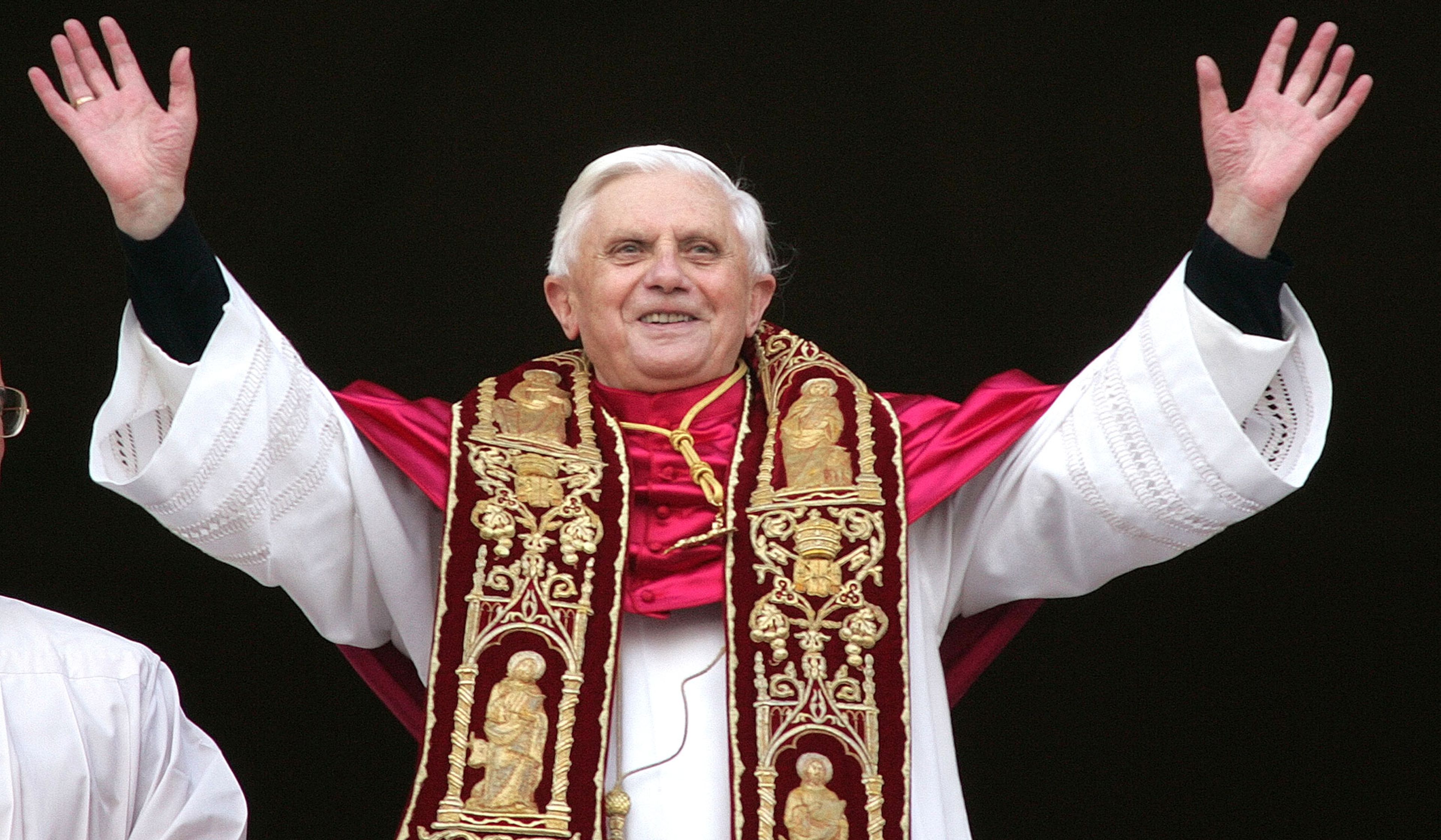
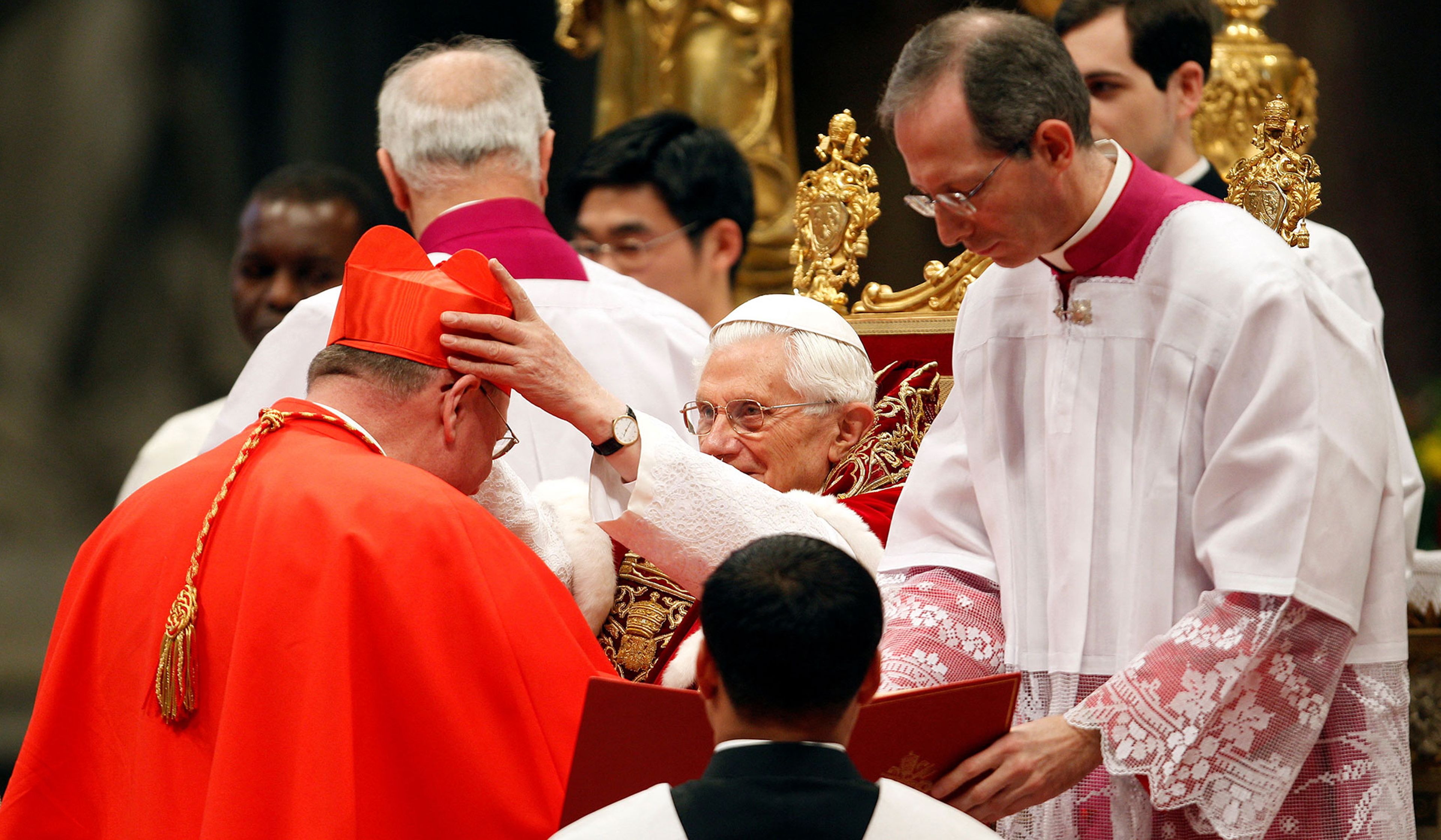
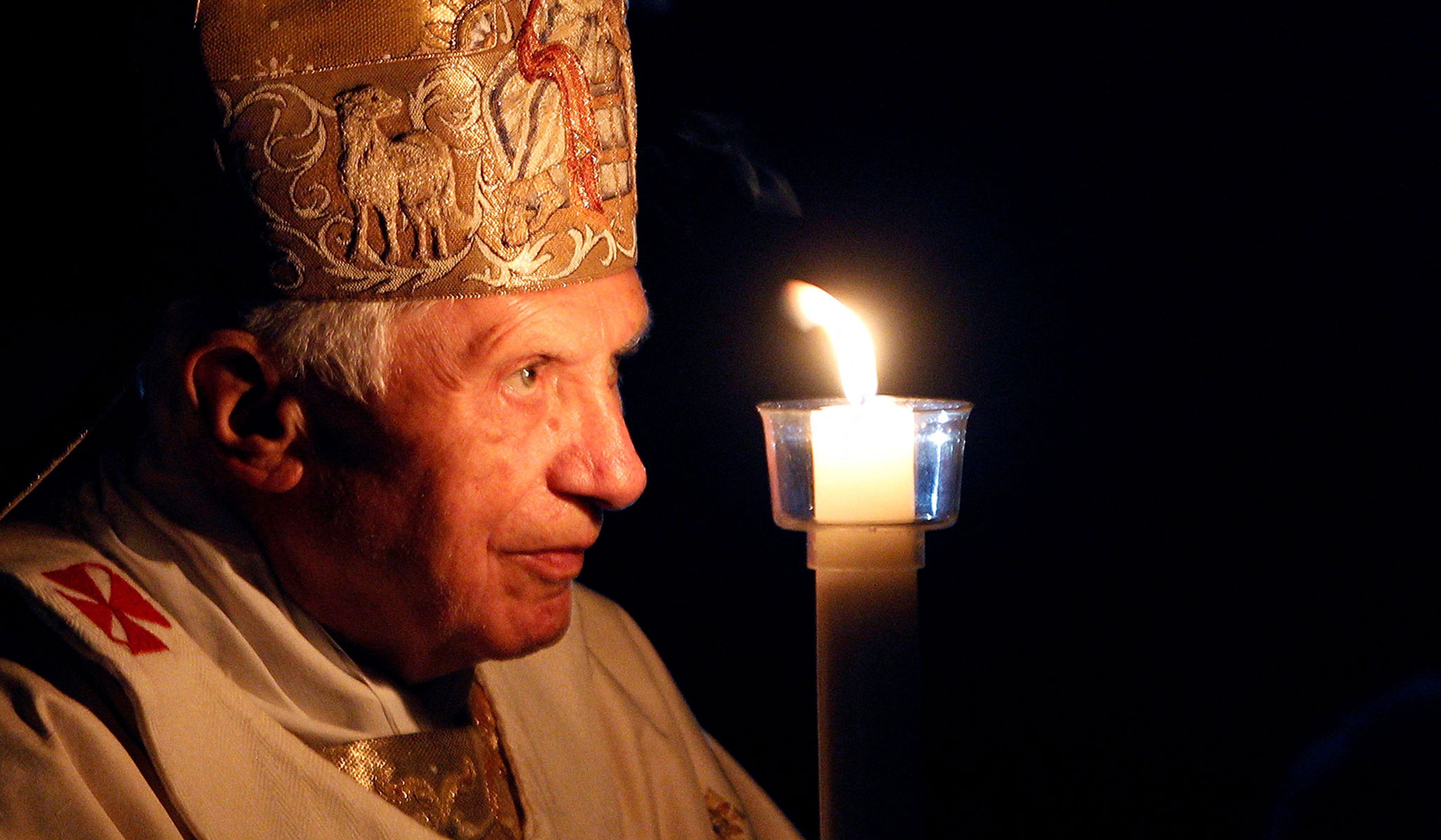
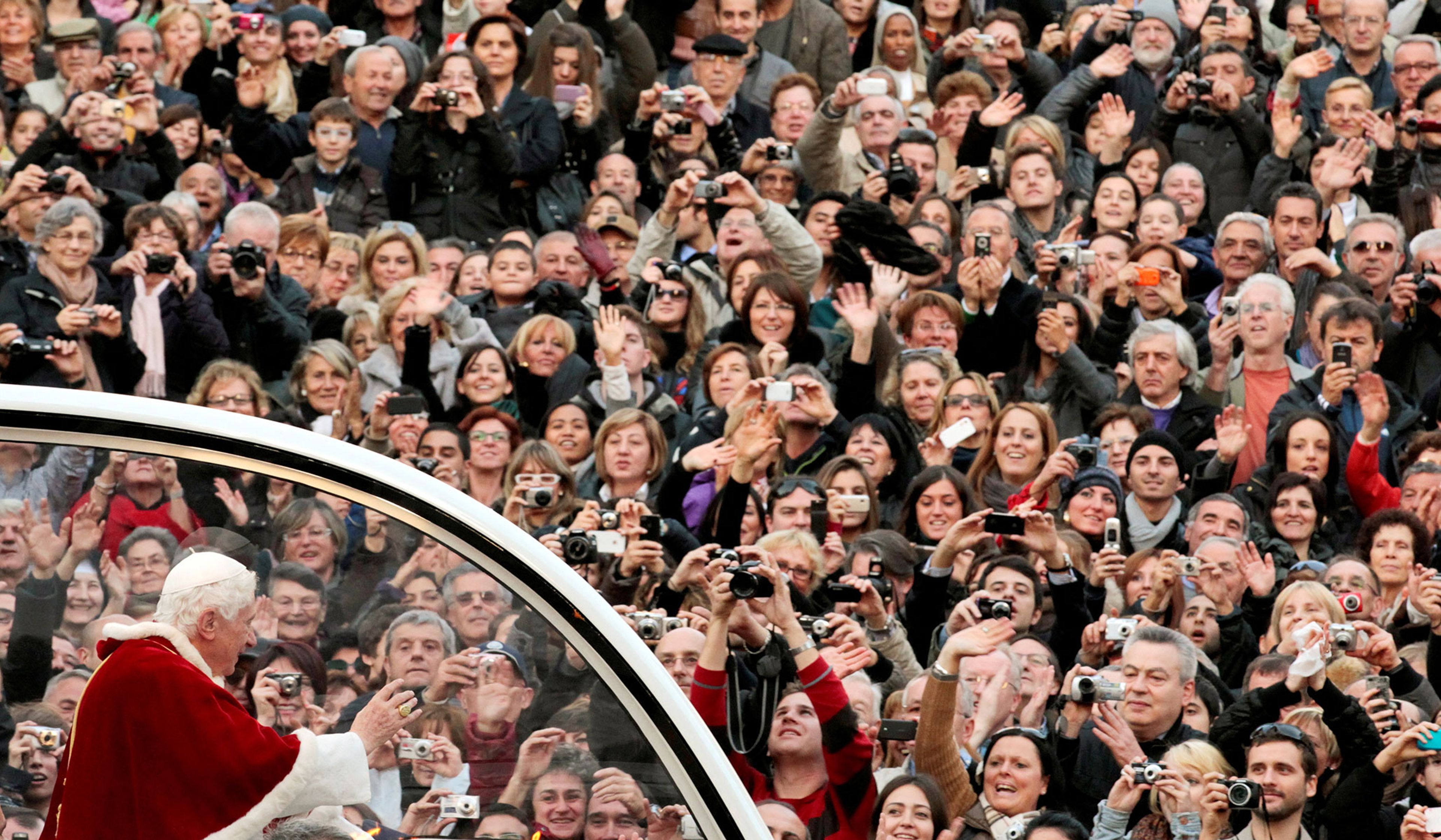
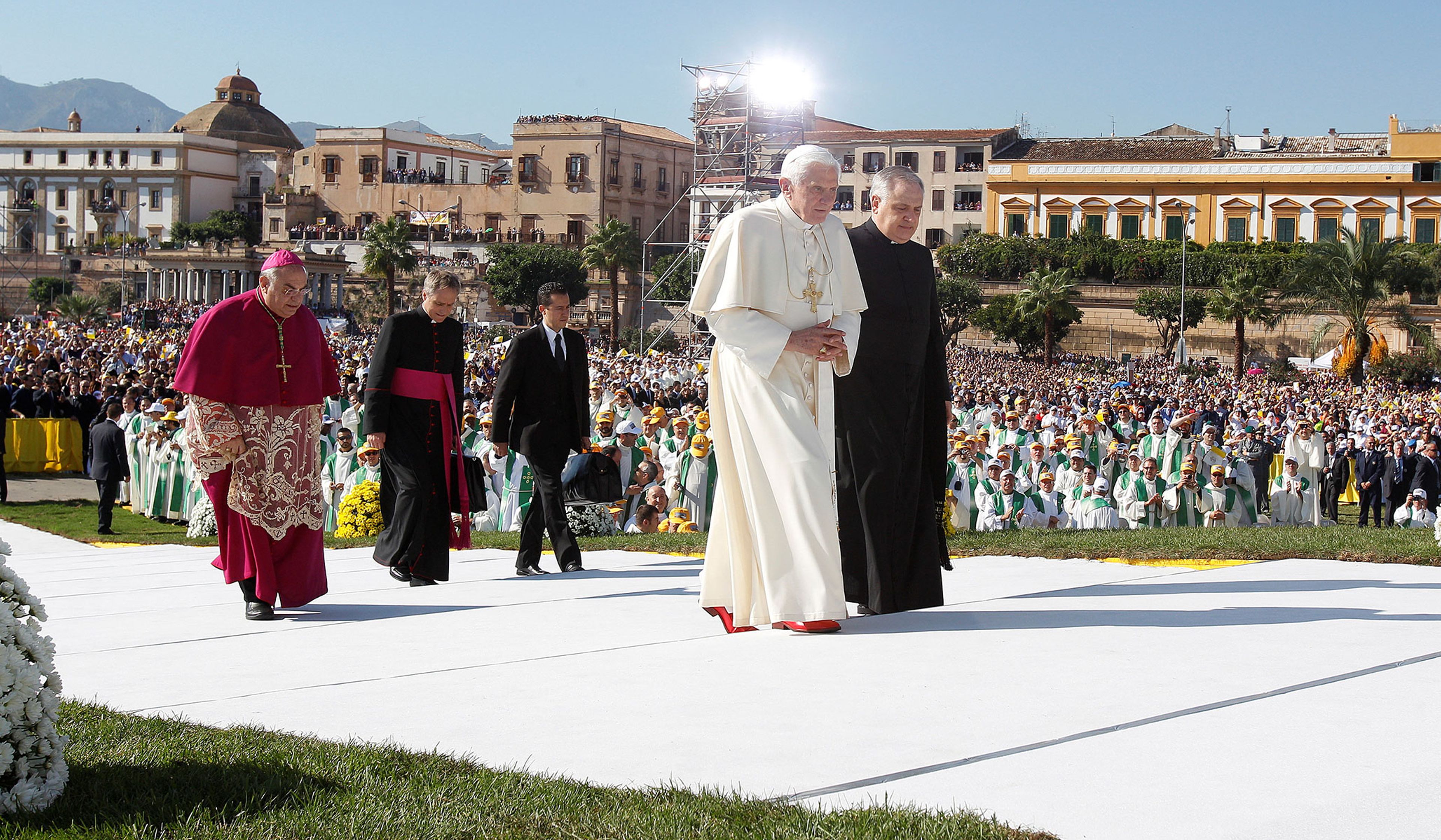
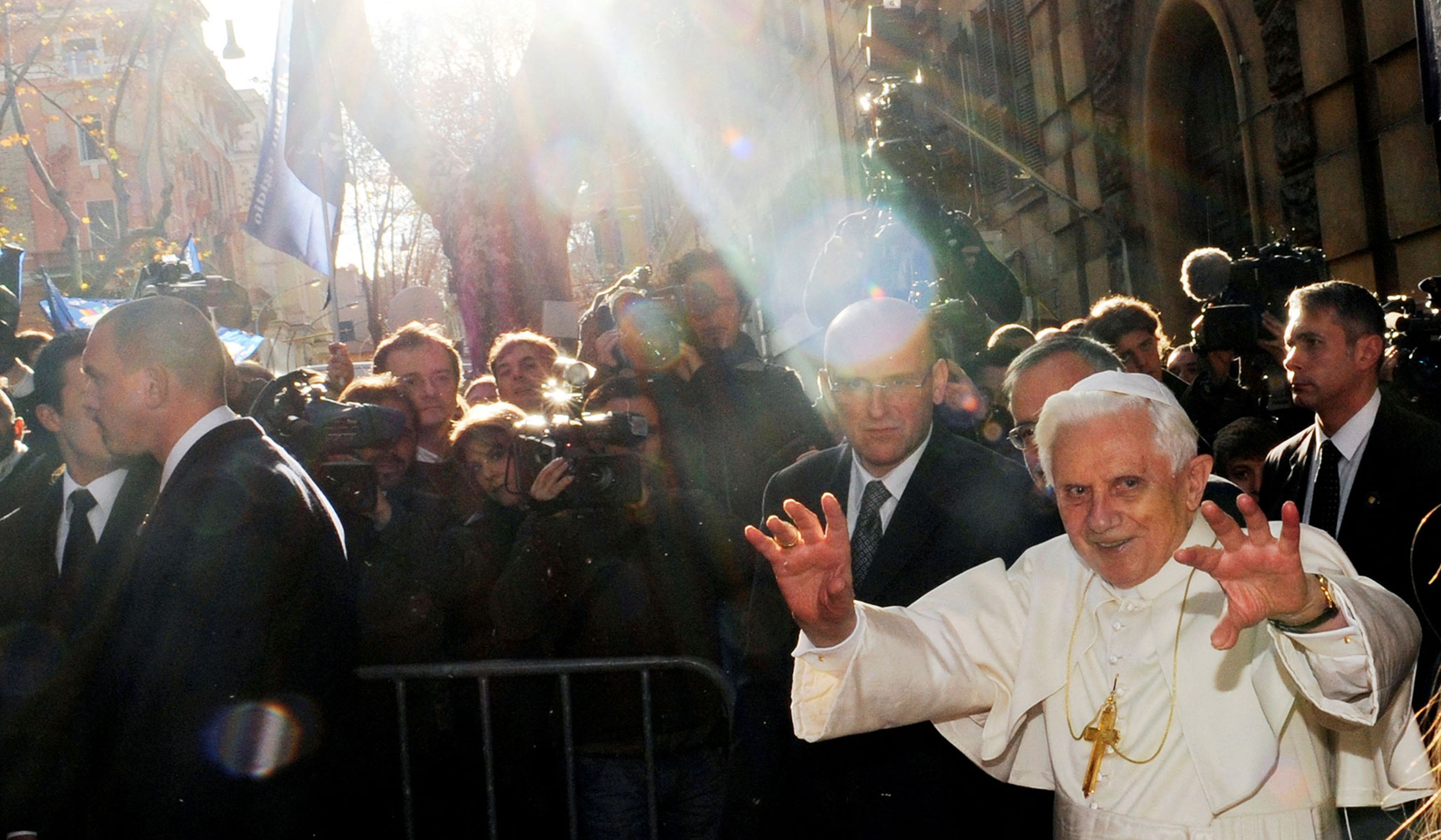
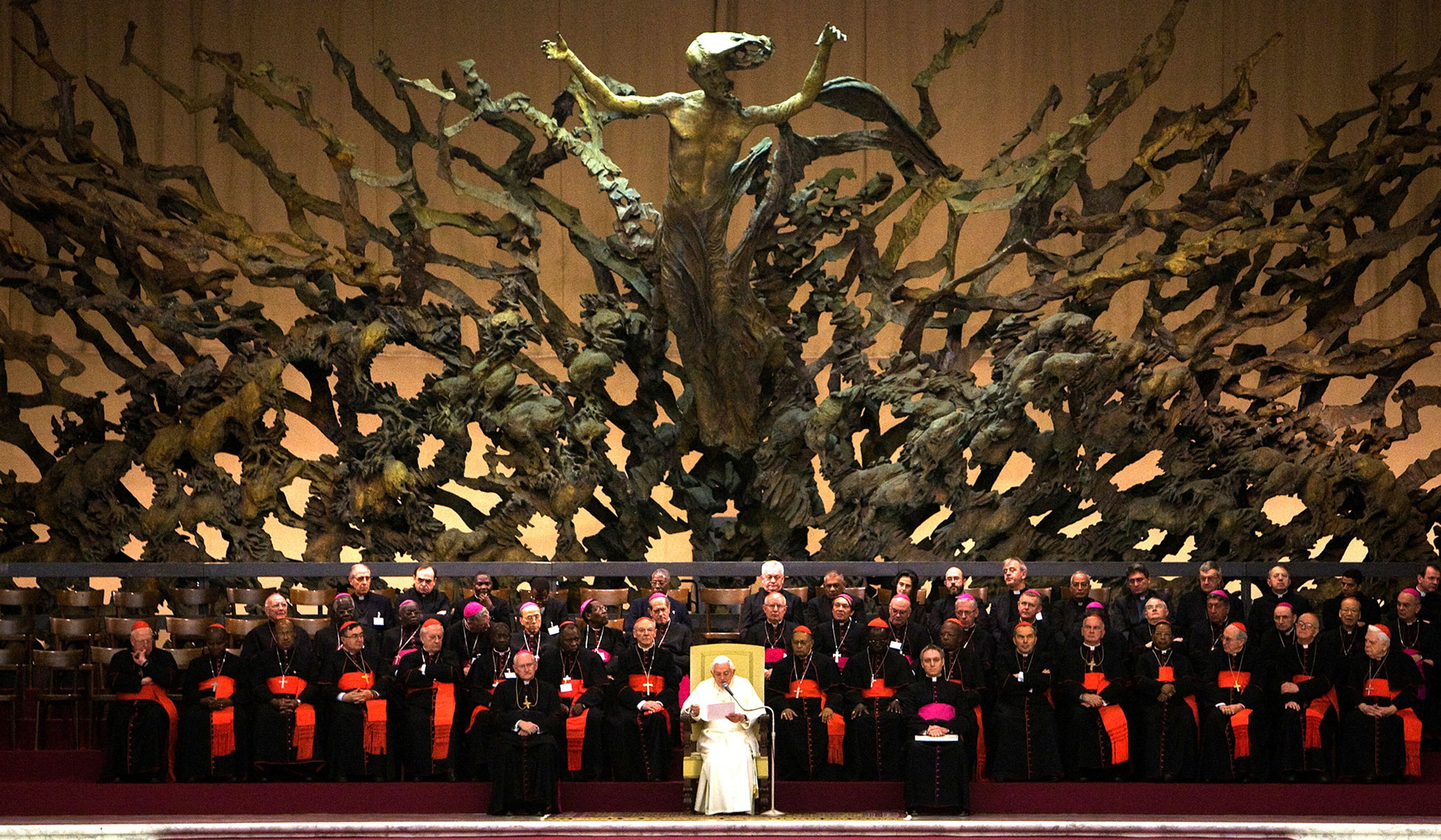
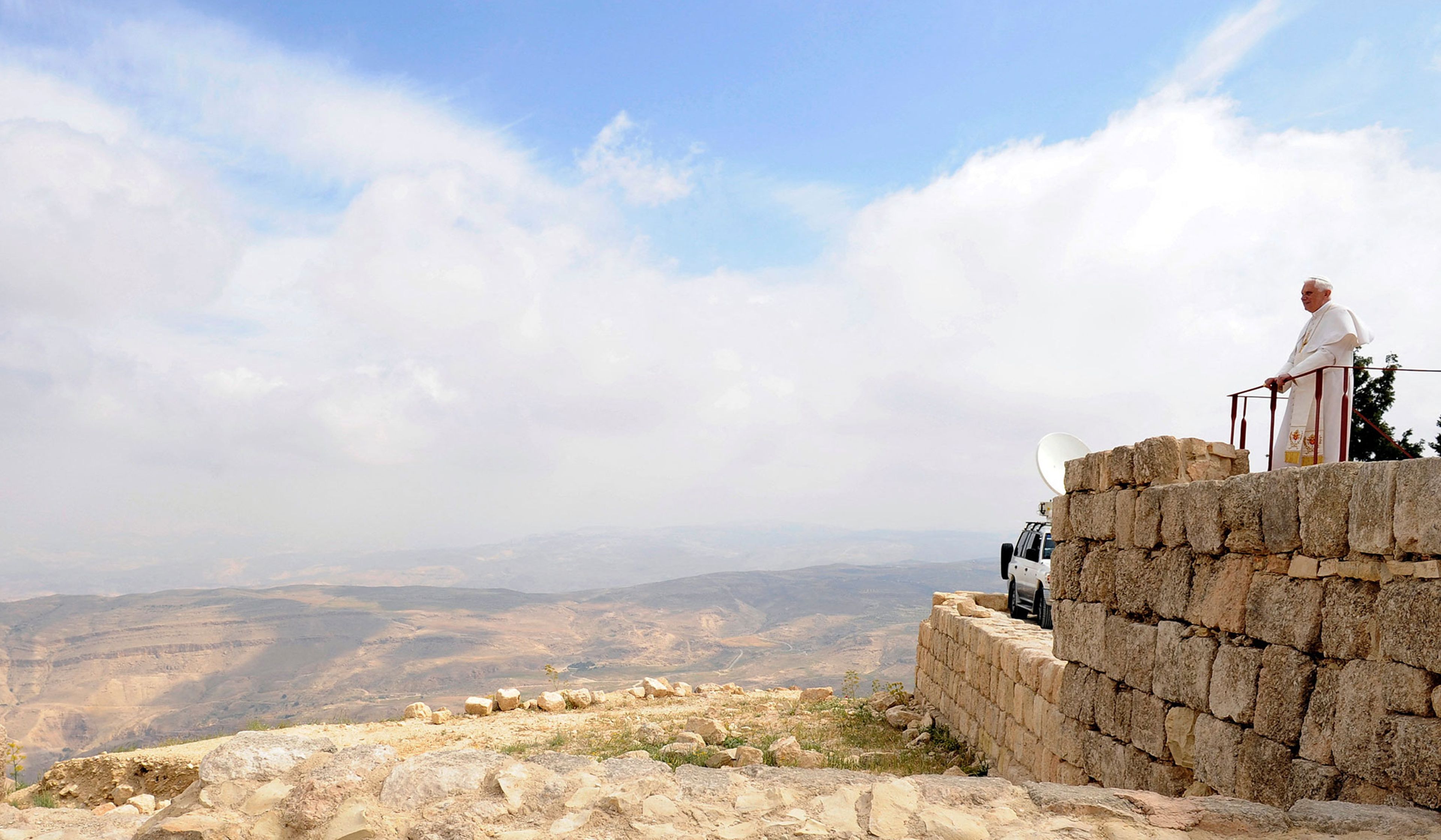
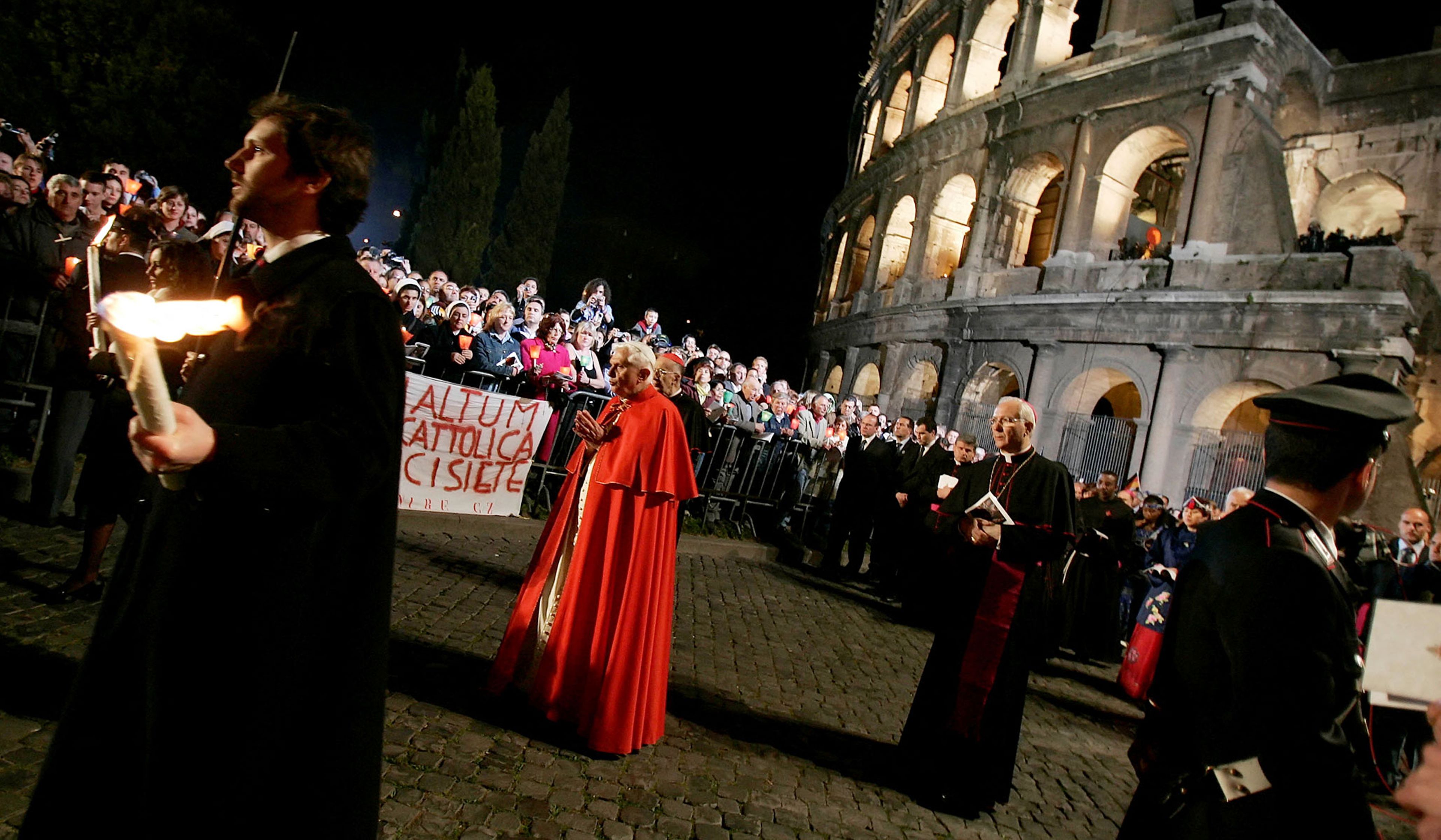
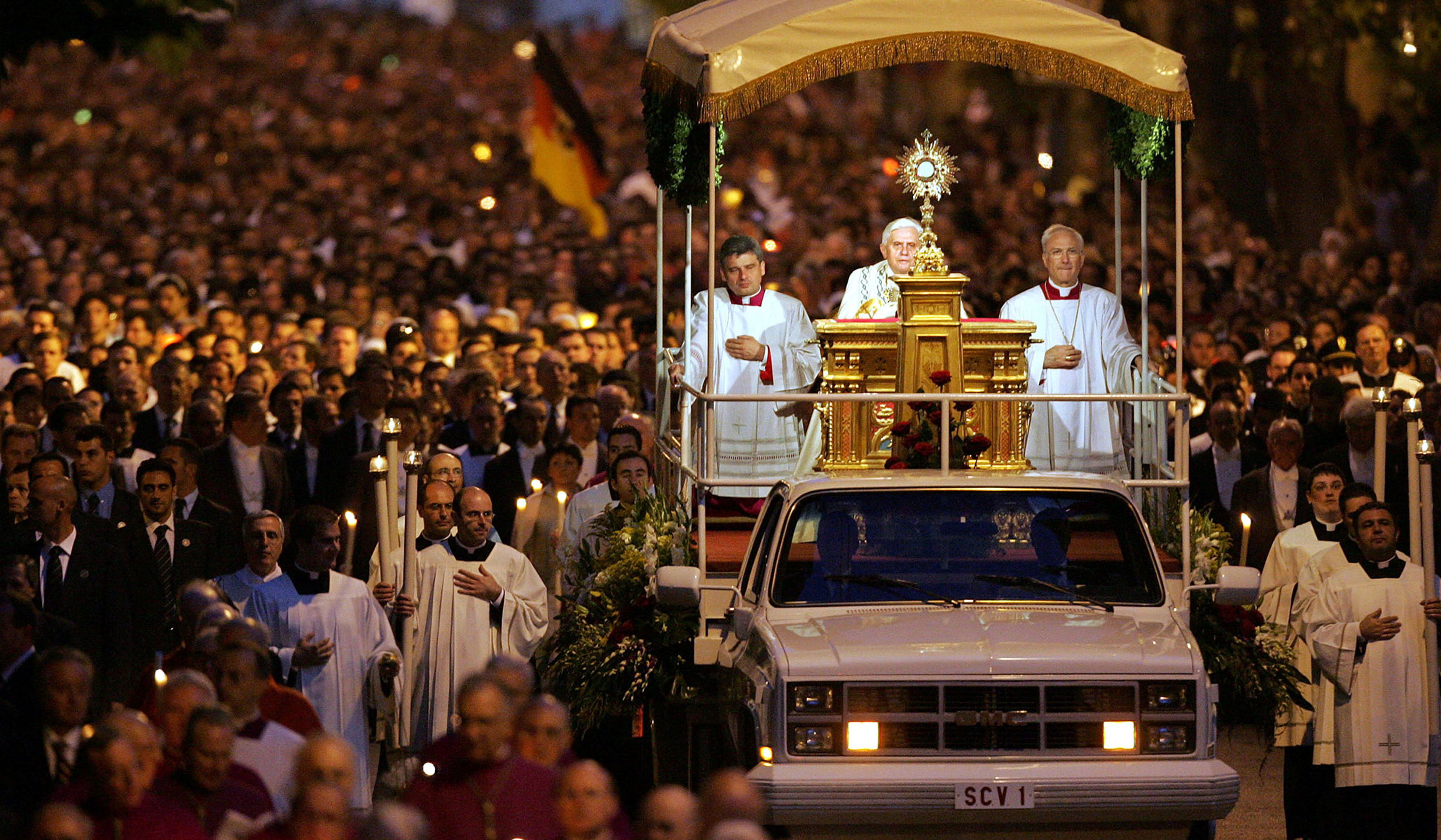
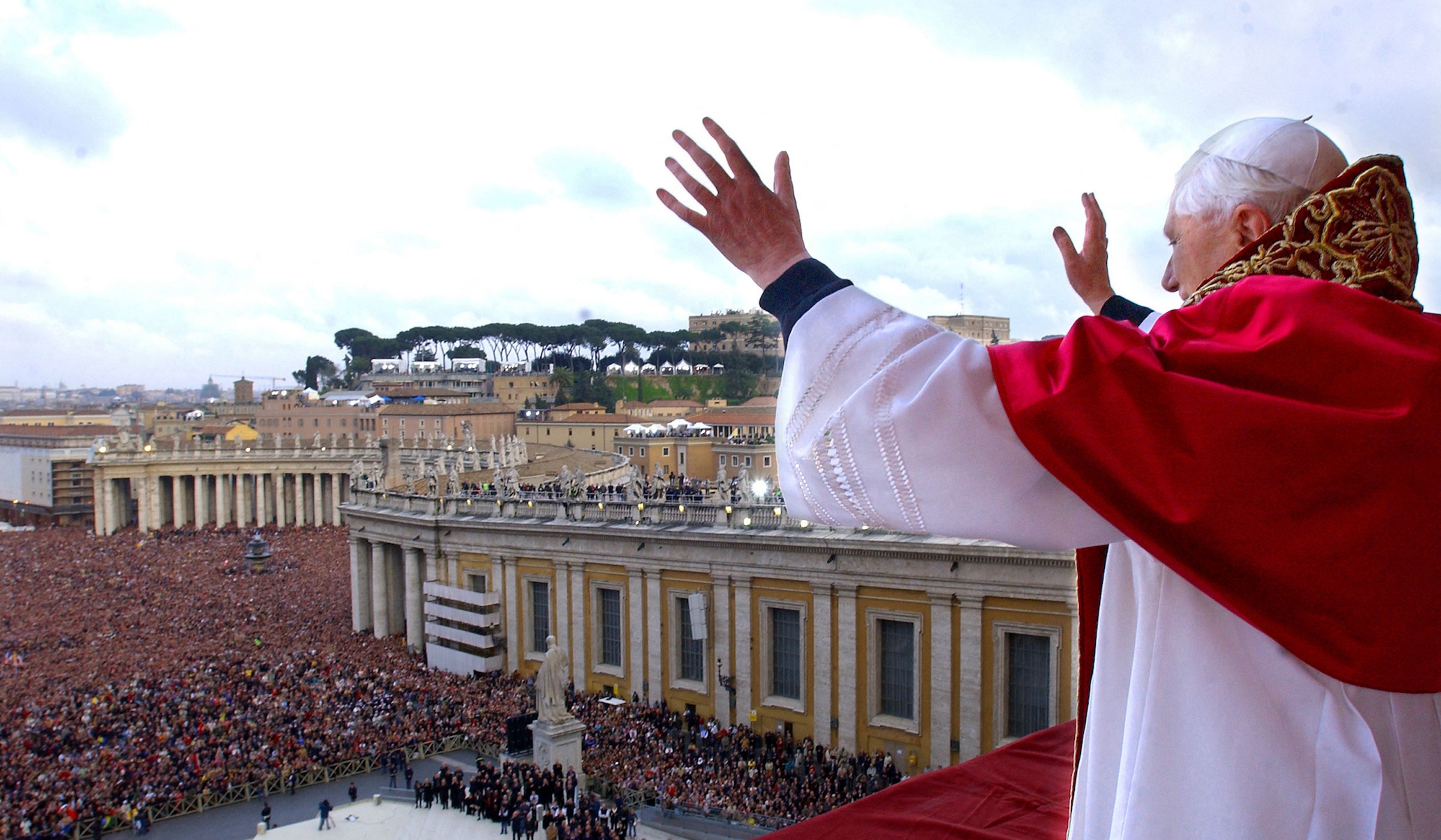
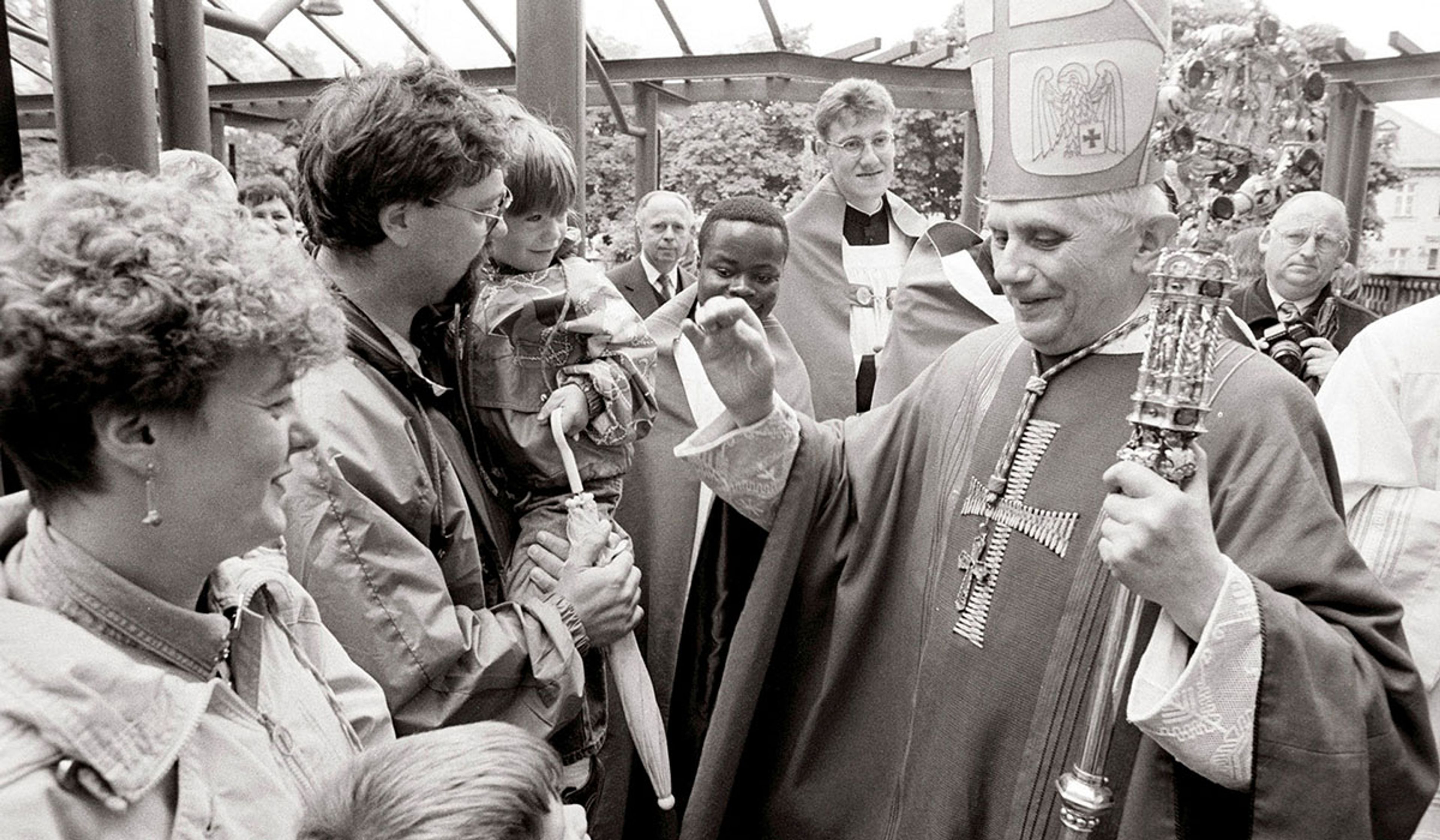
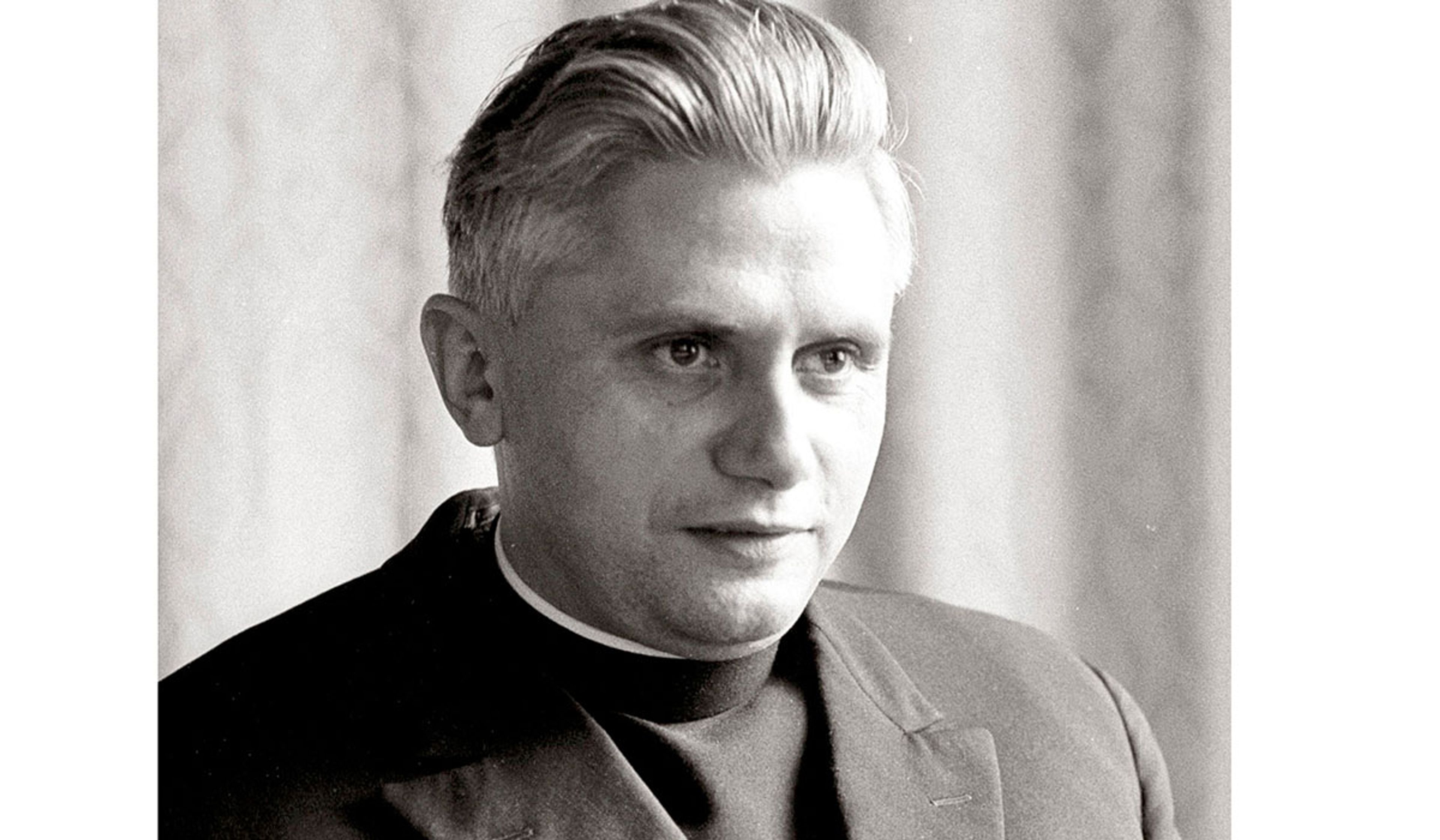
Pope Benedict XVI waves from a balcony of St. Peter’s Basilica in the Vatican after being elected by the conclave of cardinals, April 19, 2005.
Max Rossi/Reuters
Shortly after being elected Pope Benedict XVI in 2005, the new pontiff gave a lecture at Regensburg on the relationship of faith and reason. It is widely remembered because the pope’s quotation of a disparaging remark about Islam made by a medieval Christian was used as an excuse for the murder of a Christian nun and rioting among Muslims in several cities. But the lecture was a profound reflection on the recent withering of the concept of reason to merely the concept of what is scientifically falsifiable. This impoverished vision of human reason robs men not just of their faith but also of philosophy and the speculative power that distinguishes man from other creatures. In this lecture and in homilies given in his 2010 visit to the United Kingdom, Benedict was outlining his response to what he saw as the “dictatorship of relativism,” according to which a pervasive skepticism robbed life of all grounded meaning and left the human person marooned, vulnerable to the tyranny of “one’s own ego and desires.”
As pope, Benedict XVI continued publishing his scholarship. He began his three-book series Jesus of Nazareth while still a cardinal and the head of the church’s doctrinal office, and he finished the final two as pope. Some, even I, questioned at the time whether it was appropriate for a pope to publish academic work while holding an office that is surrounded by the mystique of infallible authority, but it is perhaps these books that will be his most enduring legacy.
The three volumes of Jesus of Nazareth are Benedict’s theological response to the faithless historical criticism of the Gospels that had begun in his native Germany two centuries earlier. Ratzinger’s method in these books is to survey the debris and flinders of the Gospels left by the wrecking ball of the historical-critical method. Benedict’s approach to the Gospels insisted on “a synthesis between an exegesis that operates with historical reason and an exegesis that is guided by faith.” With this method, he recovers the theological and liturgical vision that informs the choices made by Gospel writers, and he vindicates their religious message as the only reasonable and sophisticated reading of these ancient texts. The result was to redeem the scholarship of the Bible for faith after a 200-year project of using it to sow doubt. It is a single-handed and heroic accomplishment whose influence continues to grow.
Benedict’s papacy will also be remembered for his rehabilitation of the pre-conciliar form of the liturgy, the traditional Latin Mass. “What earlier generations held as sacred, remains sacred and great for us too, and it cannot be all of a sudden entirely forbidden or even considered harmful,” he wrote, liberating the old rite and articulating a principle so obvious and profound that his successor, Pope Francis, has been unable to overcome it, despite epic straining to do so.
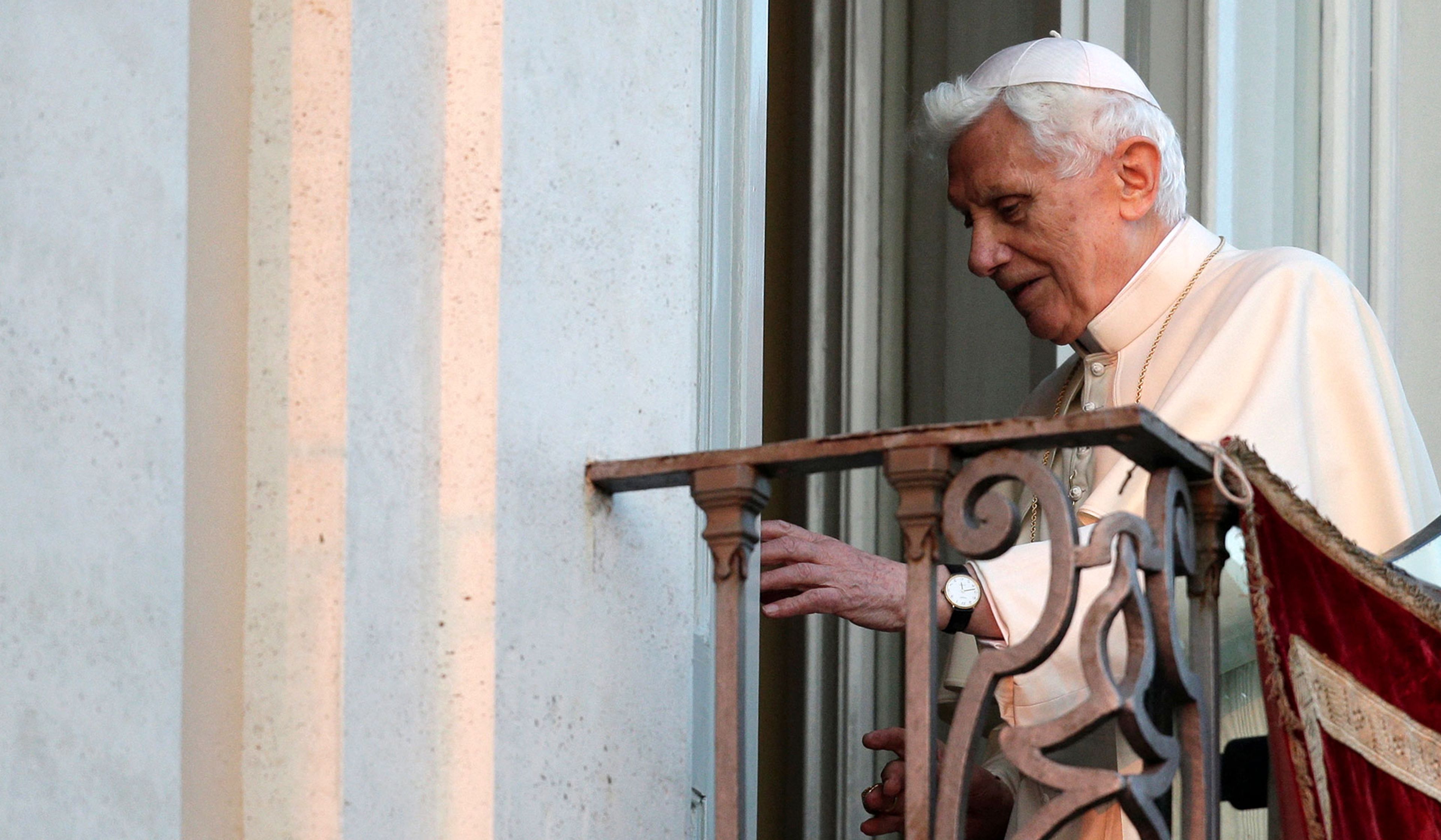
Finally, Benedict will be remembered for his resignation, one clearly meant to set a precedent in an age when people live many years at the end of life with degenerative mental conditions: Alzheimer’s, dementia, or Parkinson’s disease, the last of which afflicted his predecessor. For some Catholics, the papal resignation is the bitterest fruit of his papacy — and an admission of defeat. Benedict began his papal ministry by asking the faithful, “Pray for me, that I may not flee for fear of the wolves.”
Were not Benedict’s enemies running wild and frantically trying to undo his legacy? But any review of his achievements as a scholar, theologian, and churchman shows they utterly dwarf his missteps.
In 1950, the cultural critic Jacques Barzun observed that when we, in the present, look back to “great ages shining in history by their art, science, and the merged glory of worthy lives and deeds, we long for their clear outlines and envy their unchallengeable merit.”
There is something restful about what cannot be changed, and obviously Queen Anne is immovable. Versailles, Racine, Milton, Dryden, Molière, Pope, Louis XIV, Newton, Locke are — as we like to say — “fixed values,” whereas our own are in doubt and in flux. But this fixity is something which we enjoy and they did not. They were in the same flux and perhaps at a greater disadvantage toward it than we to ours.
There is something restful and immovable about Joseph Ratzinger, Benedict XVI, already. His legacy as a theologian pope is so formidable, of such unchallengeable merit, that his detractors and enemies already appear as fools and zealots, as rank amateurs, ignoramuses, and windbags. Benedict XVI was the greatest mind to reach the papacy in a millennium. We write his obituary now. But centuries hence, he will be recognized as the man who buried the dictatorship of relativism and, with it, the doubts of the 20th century.












Comments