Few words are more confusing, or potentially confusing, than “liberal” and “conservative.” People mean different things by them. It’s helpful to find out what your interlocutor means, before proceeding in conversation with him.
You remember the U.S. presidential election of 1932. (Don’t you?) FDR and his men were calling themselves “liberals.” Hoover and his men were aghast: “No, we are!”
Conservative intellectuals such as Harvey Mansfield say that the purpose of the American conservative is to preserve the liberal tradition — i.e., the principles and ideals of the Founding. Other conservatives (self-described) consider the Founding a colossal mistake.
When it comes to conservatism, the question is, “What are you trying to conserve?” Back in the ’80s, we Reaganites were cross at the “mainstream media” because they were calling hard-line Communists in the Soviet Union “conservatives.” “See?” we said. “For the media, the bad guys always have to be ‘conservatives,’ whether they’re American or Soviet, anti-Communists or Communists.”
I hate to say it, but the “MSM” had a point: The Soviet hard-liners were conservatives, in that they were trying to preserve the Soviet system against Gorbachevian reforms.
Today, the big figures in the Republican Party regard themselves as staunch conservatives. (This goes for politicians and media personalities alike.) George F. Will, the veteran columnist, is different. Asked why he quit the Republican Party, he answered, “For the same reason I joined it: I’m a conservative.”
Churchill serves as an interesting case. He is a monumental British Conservative, who belonged to the Liberal Party for 20 years (1904 to 1924). In his biography of Churchill, Paul Johnson writes, “If Churchill was ever anything, he was a Liberal (as well as a traditionalist and a small-c conservative).”
In 1962, a member of Parliament told Johnson a story. The MP had had an encounter with Churchill, now in his late 80s. As Johnson recounts,
the old man glared and said: “Who are you?” “I’m Bill Mallalieu, sir, MP for Huddersfield.” “What party?” “Labour, sir.” “Ah. I’m a Liberal. Always have been.”
William F. Buckley Jr. habitually wrote of “left-liberals,” sometimes “Left-liberals.” To put it briefly: He wanted to distinguish Hayek from John Kenneth Galbraith (WFB’s dear friend). Or he wanted to distinguish Galbraith from Milton Friedman (another dear friend).
Friedman dealt with this problem of words in the introduction to his book Capitalism and Freedom (1962, again). “Because of the corruption of the term liberalism,” he wrote, “the views that formerly went under that name are now often labeled conservatism.” But this was unsatisfactory, to Friedman.
He told the reader, or warned the reader, that he was going to stick with “liberalism.” He would use it “in its original sense — as the doctrines pertaining to a free man.”
Michael Walzer is a liberal, but he’s no capitalist — in fact, he’s an anti-capitalist. But he is not really a liberal either. Rather, he is “liberal,” as he explains. A liberal what? More on that in a moment.
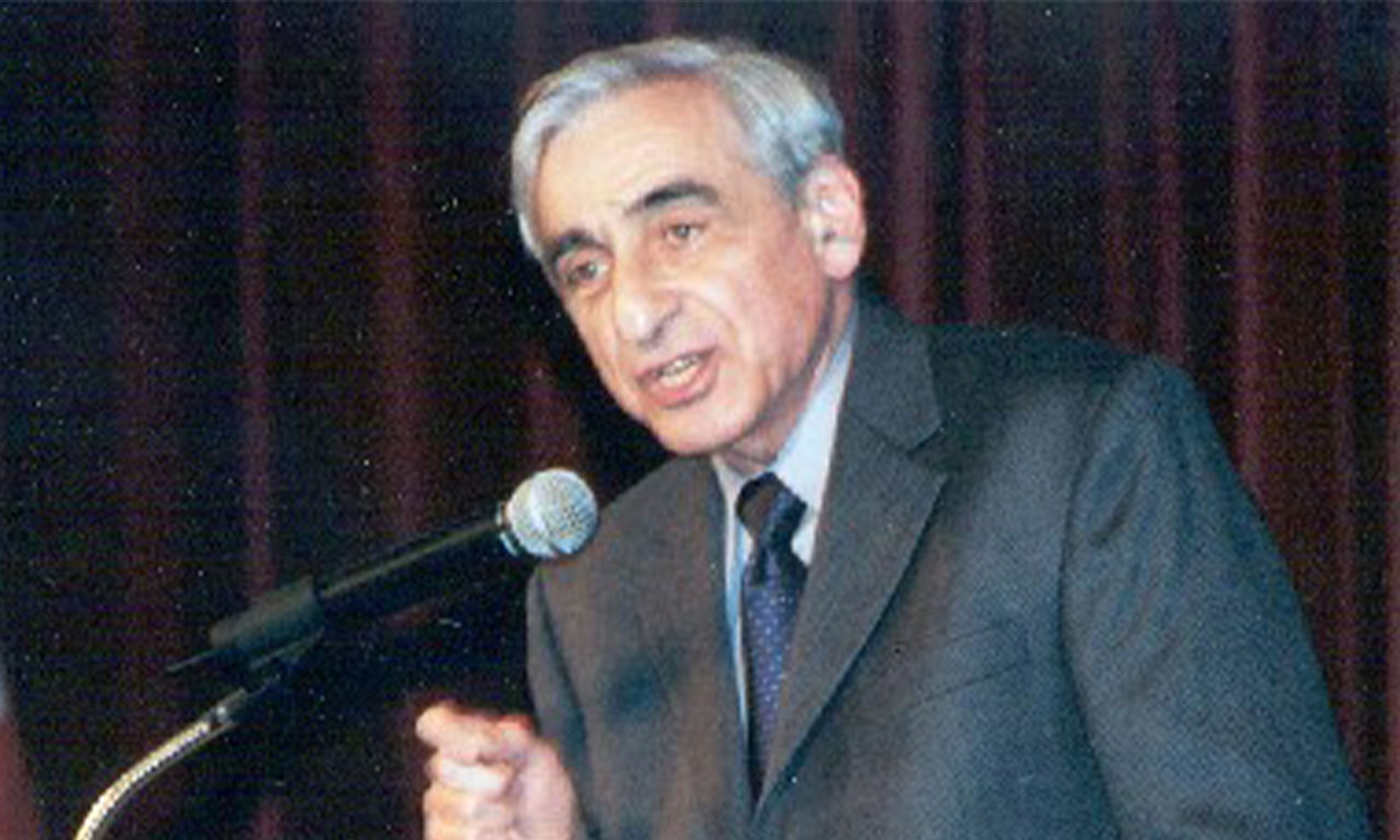
Professor Walzer is one of the leading political thinkers and writers of our time. Born in 1935, he is a professor emeritus at the Institute for Advanced Study, in Princeton. He has long been associated with Dissent magazine. He calls one of its founders, Irving Howe, his “mentor.”
In 2002, Walzer published a wave-making essay, in Dissent: “Can There Be a Decent Left?” It was about U.S. foreign policy, and the Left’s critique of it from the Vietnam War onward. That critique, said Walzer, “has been stupid, overwrought, grossly inaccurate.”
His new book, too, has the word “decent” in its title: “The Struggle for a Decent Politics.” More interesting yet, however, is the subtitle: “On ‘Liberal’ as an Adjective.”
Walzer wrote this book during the pandemic. Lots of people had “pandemic projects”; this is his. It is dedicated to his wife, Judith Borodovko Walzer, “with whom I have been sheltering in place(s) for more than sixty years.”
The book is a little one, just 150 pages. It is conversational, casual, yet perfectly serious. The book is about the basics — the big and simple questions of politics — and sophisticated as well. It is madly learned. But it is pitched to the common reader (not that the author aimed for this — it just came out that way, I sense).
Walzer’s book reminds me of the one that George Will published in 2019: The Conservative Sensibility. Will’s is a big book, 640 pages, but I link the two nonetheless. The Conservative Sensibility is a kind of summa, a Ce que je crois. Will told me that he was thinking of calling it “Closing Argument.” He opted against, however, reasoning that he had a lot more writing to do. (This has proven true in the ensuing years.)
In the preface to The Struggle for a Decent Politics, Walzer says, “This may be my last book.” He has distilled, crystallized, what he has learned and believes.
The book has nine chapters. The first is headed “Why the Adjective?” The last is headed “Who Is and Who Isn’t?” In other words, who’s liberal and who’s not? In between are chapters on liberal democrats, liberal socialists, liberal nationalists and internationalists, liberal communitarians, liberal feminists, liberal professors and intellectuals, and liberal Jews. Walzer, as he says, is all of those things. His book is an explication.
So, what does he mean by “liberal”? This adjective, he says, has “pluralizing effects.” It tempers the dogmatic or absolute. It allows for difference, and the rights of people at large. Walzer believes that everyone should be liberal, whatever his noun is, or nouns are. The adjective may be of greater importance than the noun.
Hang on a second: Is Walzer equating “liberal” with “decent”? I’m afraid he is. Conservatives will choke on this, of course, at least initially. But, as they read and ponder, they may swallow it, to a degree.
One of Walzer’s models is Carlo Rosselli, an Italian writer and activist who argued for “liberal socialism.” He was born in 1899 and died in 1937, murdered by his Fascist opponents. “Liberal socialism” may strike some as a contradiction in terms. But this was the politics of Clement Attlee, says Walzer — Attlee among many others.
Another of Walzer’s models is Yael Tamir, an Israeli intellectual and politician. In 1993, she published Liberal Nationalism, which began as a Ph.D. dissertation under Sir Isaiah Berlin, that model liberal (classical branch).
In his chapter on nationalism, and internationalism, Walzer says, “People calling themselves cosmopolitans condemn all nationalisms.” Frankly, I have never heard anyone call himself a “cosmopolitan.” Perhaps I should get out more.
Walzer is wry, ironic, amusing. By contrast, ideologues never are, I find. Here is a passage from Walzer:
I am not sure that what we called participatory democracy in the 1960s is an example of liberal democracy. In the political movements of those years democracy often amounted to the rule of the participants, which meant in practice the rule of the young militants who had time for all the meetings.
Have another passage:
I remember a time when you couldn’t publish an article in one of the leading journals of political theory unless it had at least four footnotes to Giorgio Agamben (I am exaggerating, but that’s how it felt).
On reading this, I thought of a composer, who years ago told me the trick of getting a grant: “Tell them you’re going to incorporate gamelan,” from the Indonesian tradition. “The check will arrive the following week.”
Professor Walzer may not like to hear me say this, but I believe he is, at heart, anti-“woke.” He has no time for student snowflakes who melt every time they hear something they don’t like. He is critical of conformity on campus. He says that, when he taught political theory, he made sure to include the strongest arguments of the other side, i.e., the side opposite him.
Incidentally, when they were colleagues at Harvard, Walzer and Robert Nozick co-taught a course on capitalism and socialism. That was worth the price of admission, or tuition, for sure.
There is much for a conservative to like about Michael Walzer. Do you remember Florence King? “If Christopher Hitchens is a Marxist, I want to be one too.” But there is plenty to dislike as well.
For the life of me, I don’t understand why people — even the estimable Walzer — equate FDR’s Court-packing scheme with President Trump’s nomination of conservatives to the federal judiciary. Every president nominates people with whom he is in sympathy — Obama, Trump, Biden, all of them.
“I doubt that there can be a liberal capitalism given the inequalities that capitalism produces and the coercion it requires to keep workers in line,” Walzer writes. I think this is nuts. For one thing, who can out-coerce a socialist? But I will listen to Walzer. He is a bona fide teacher, and I hope not to be a snowflake.
I’m surprised that Walzer capitalizes “black” and “white,” in reference to Americans. That strikes me as . . . semi-illiberal. I hope the author will reconsider for the next edition. He’ll want to know, too, that Bret Stephens spells his first name unusually, not the conventional “Brett.” And “principle” versus “principal” always bears watching.
Warts and all, this is a lovely, deep, provocative book. It stimulates a hundred thoughts in you, on every page. I marked up my copy like mad. I think I wrote more words, in the margins, than Walzer did in his whole little book. Anyone willing to learn from Walzer — whatever the reader’s political disposition — will.
I get what he means by “liberal,” easily. I must say, however, that I’ve grown frustrated with words: political words. We live in a blizzard of nouns and adjectives: “social democracy,” “national conservatism,” “illiberal democracy,” “national socialism” (oops) . . . Tell me what your ideas are, designations aside. And may those ideas be humane and freedom-tending.












Comments