I don’t remember where I was for the hinge moment of the early 21st century, the great cultural turning point that arrived when Steve Jobs stepped onto a San Francisco stage bearing the first iteration of the iPhone. I don’t know what I thought about his presentation; I certainly had no idea that the tiny everything machine would take the world by storm, still less that it would come to seem like an agent of so much derangement and depression.
I do remember that at that time I owned a BlackBerry.
Why I did, and why nobody owns one anymore, is the subject of a new movie with an admirably simple title: “BlackBerry.” Like Air, the recent Ben Affleck production about the wooing of Michael Jordan by the shoe salesmen at Nike, it’s a film about a group of driven eccentrics achieving an unlikely business liftoff. Unlike Air, it lacks the glamour of Jordan and the NBA, the dark-green canopies of Nike’s Pacific Northwest headquarters, and the star power of Affleck and Matt Damon. What it offers instead are actors you’ll find vaguely familiar yelling at each other in the dreary suburbs of Waterloo, Ontario. If “Worthwhile Canadian Initiative” was famously the deadliest headline that the editors of the 1980s-era New Republic could imagine, then BlackBerry may merit the deadliest possible capsule summary: “Worthwhile Canadian Business Movie.”
But that “worthwhile” isn’t just a joke; there’s a lot to like about the movie. We begin in 1996, with best friends and tech nerds Mike Lazaridis (Jay Baruchel) and Doug Fregin (Matt Johnson, also the movie’s director) delivering a pitch for a device they call PocketLink, which combines cellphone technology with email capability, via a tiny, thumb-friendly keyboard. They understand tech, but business isn’t their forte: Their company, Research in Motion, is a nerd’s paradise of programming, video games, and Indiana Jones movie nights, with Fregin as its benevolent Falstaff, while bigger companies exploit their naïveté and the loans that Lazaridis has taken out threaten to come due.
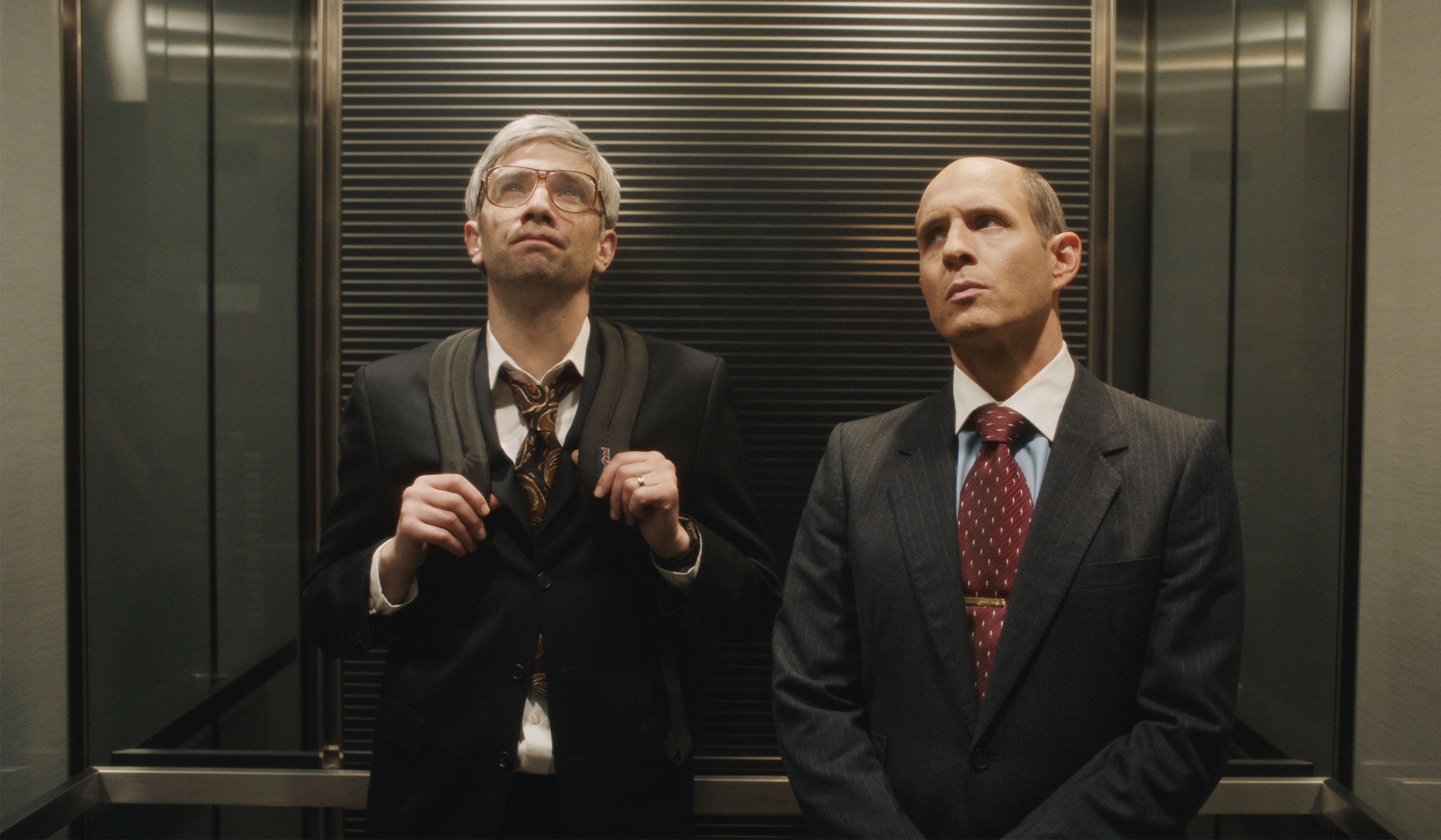
Enter Jim Balsillie (Glenn Howerton), a mid-level corporate shark laid off for being a little bit too predatory, who sees the PocketLink’s potential and, in return for a share of the company and a co-CEO title, helps the nerds sell their tech in big, bad New York City, where the humble PocketLink is transmuted into the celebrated BlackBerry. In so doing, he begins the process of separating Lazaridis, a great computer talent, from Fregin, the more ordinary nerd but also the more joyful character, whose star is destined to set as the company becomes more ruthlessly competitive.
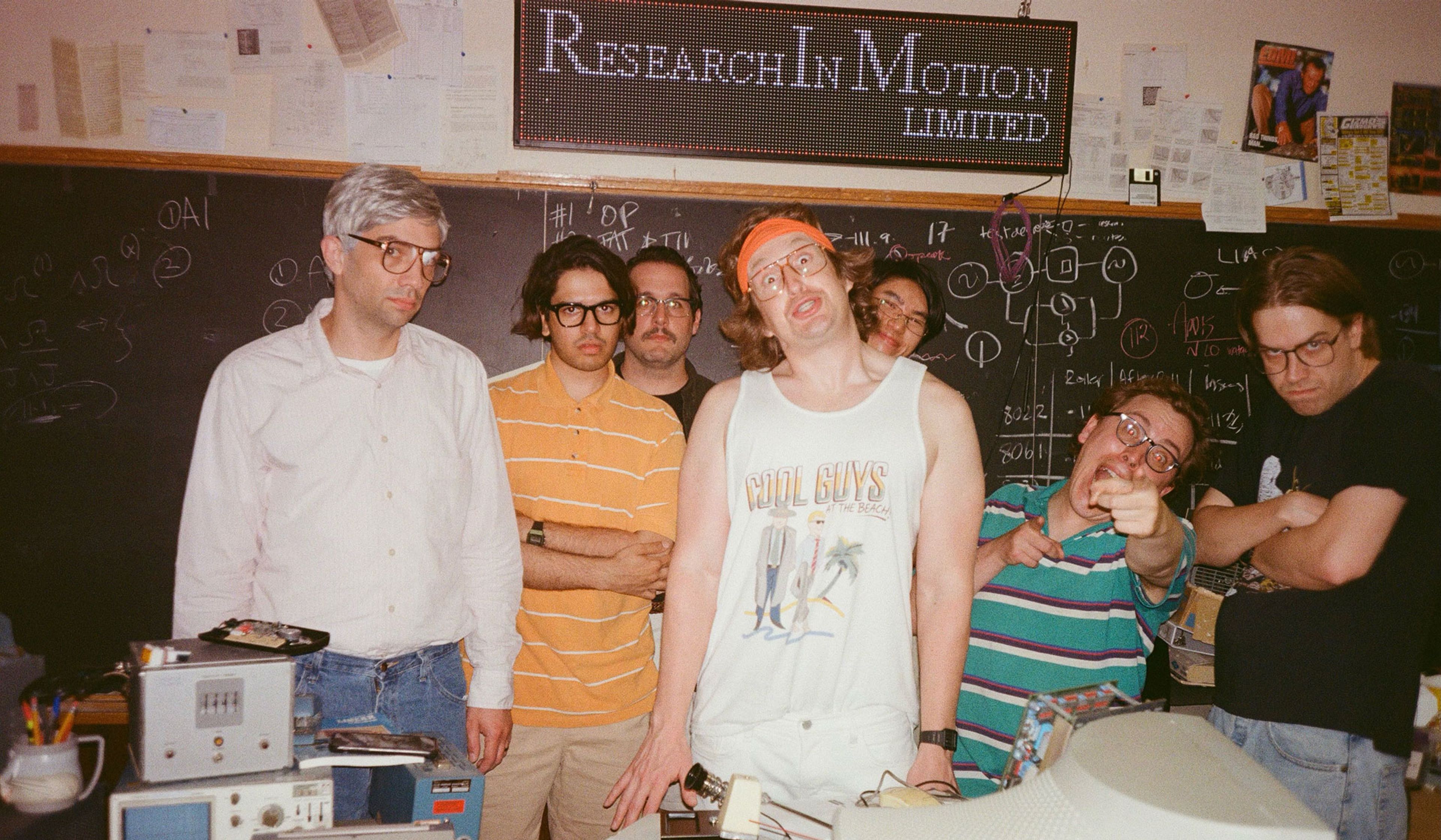
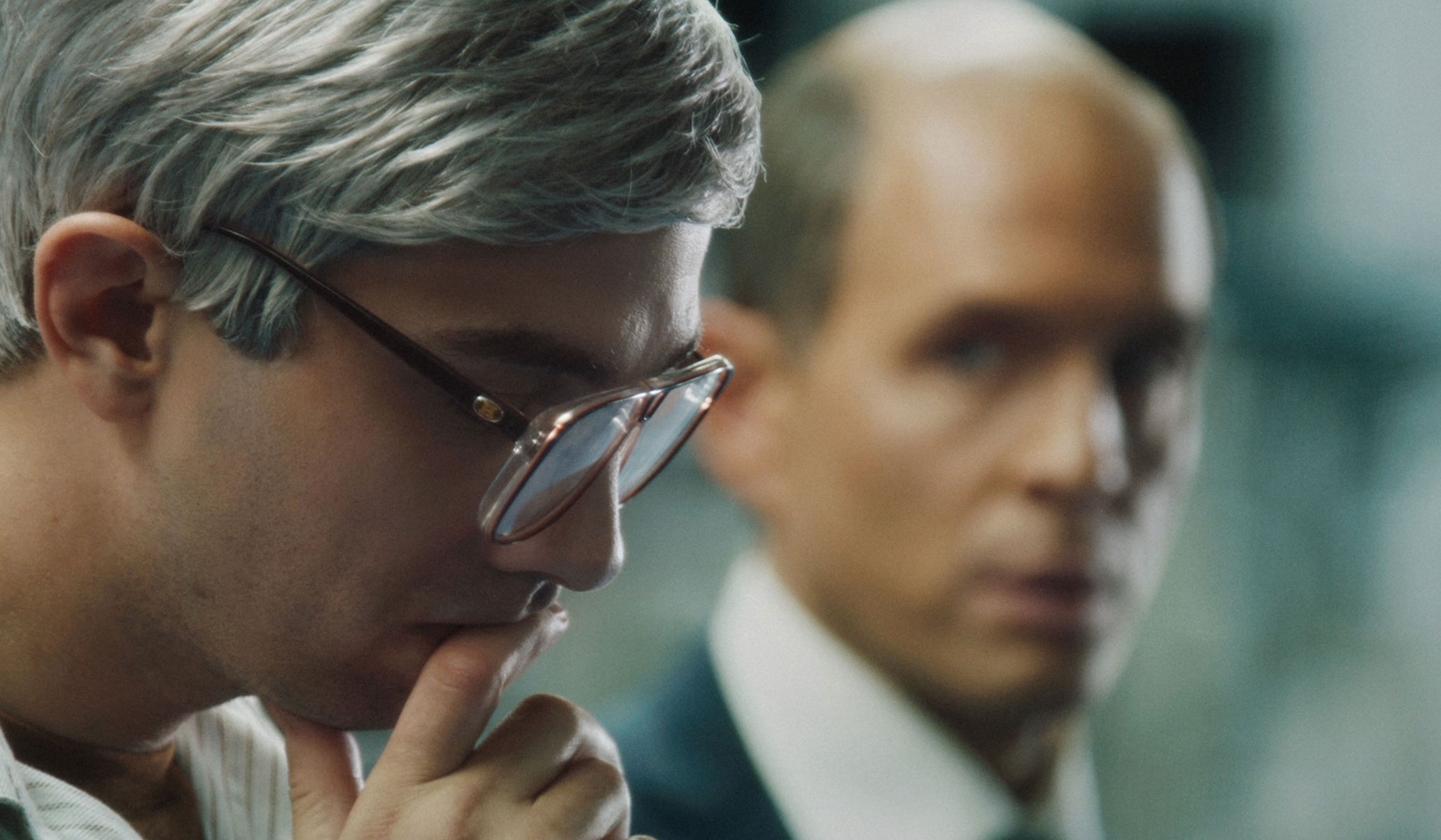
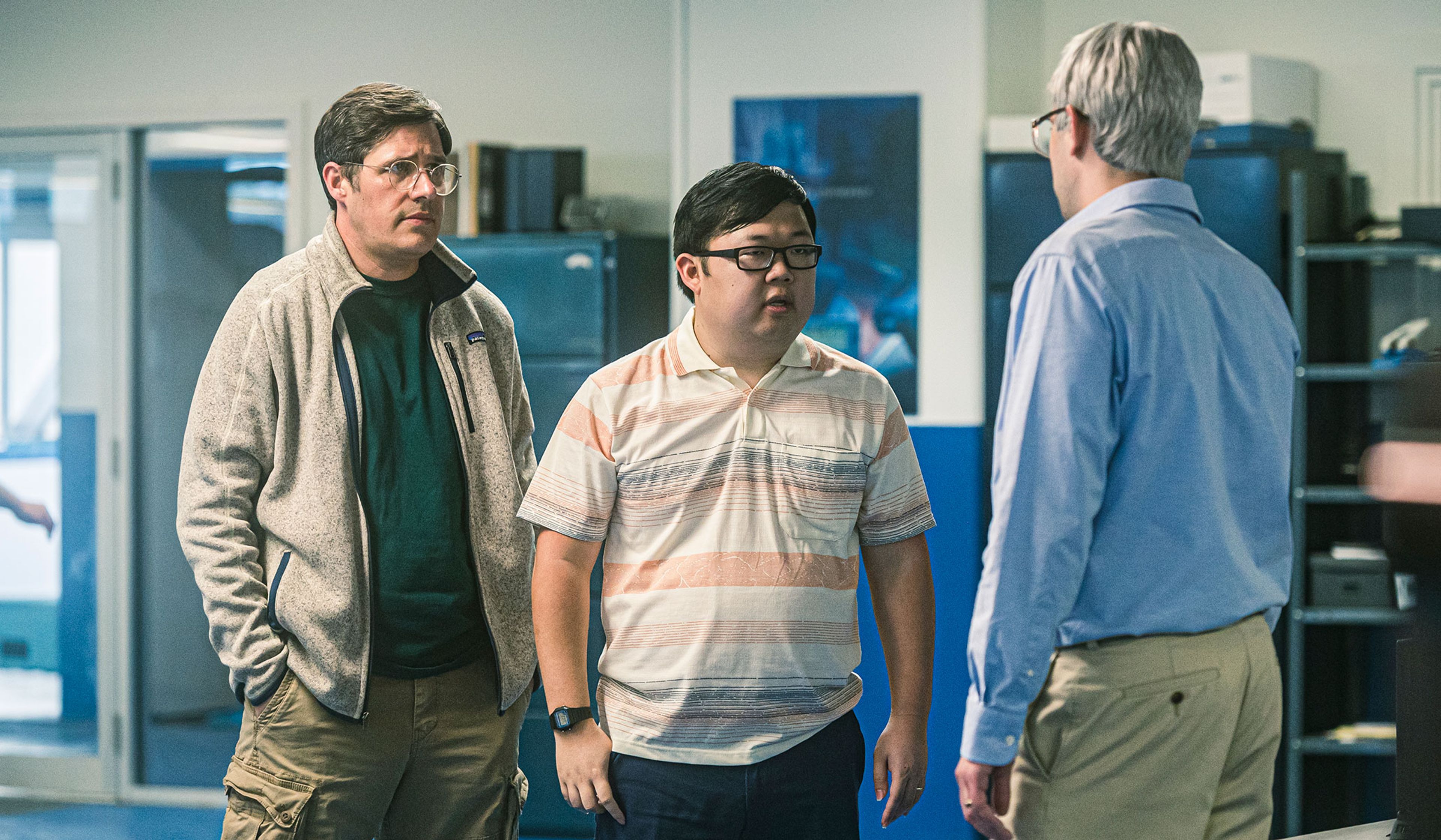
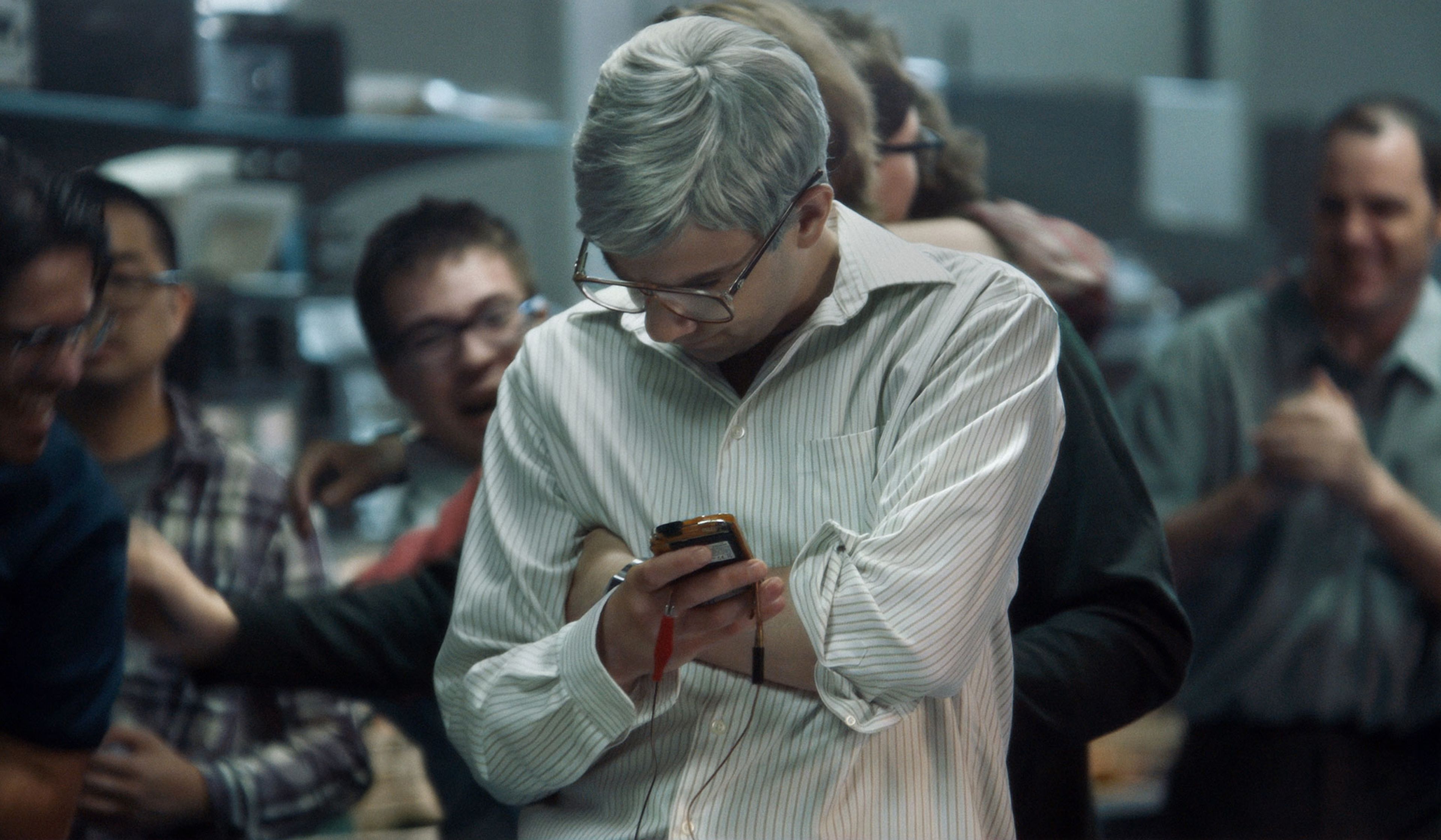
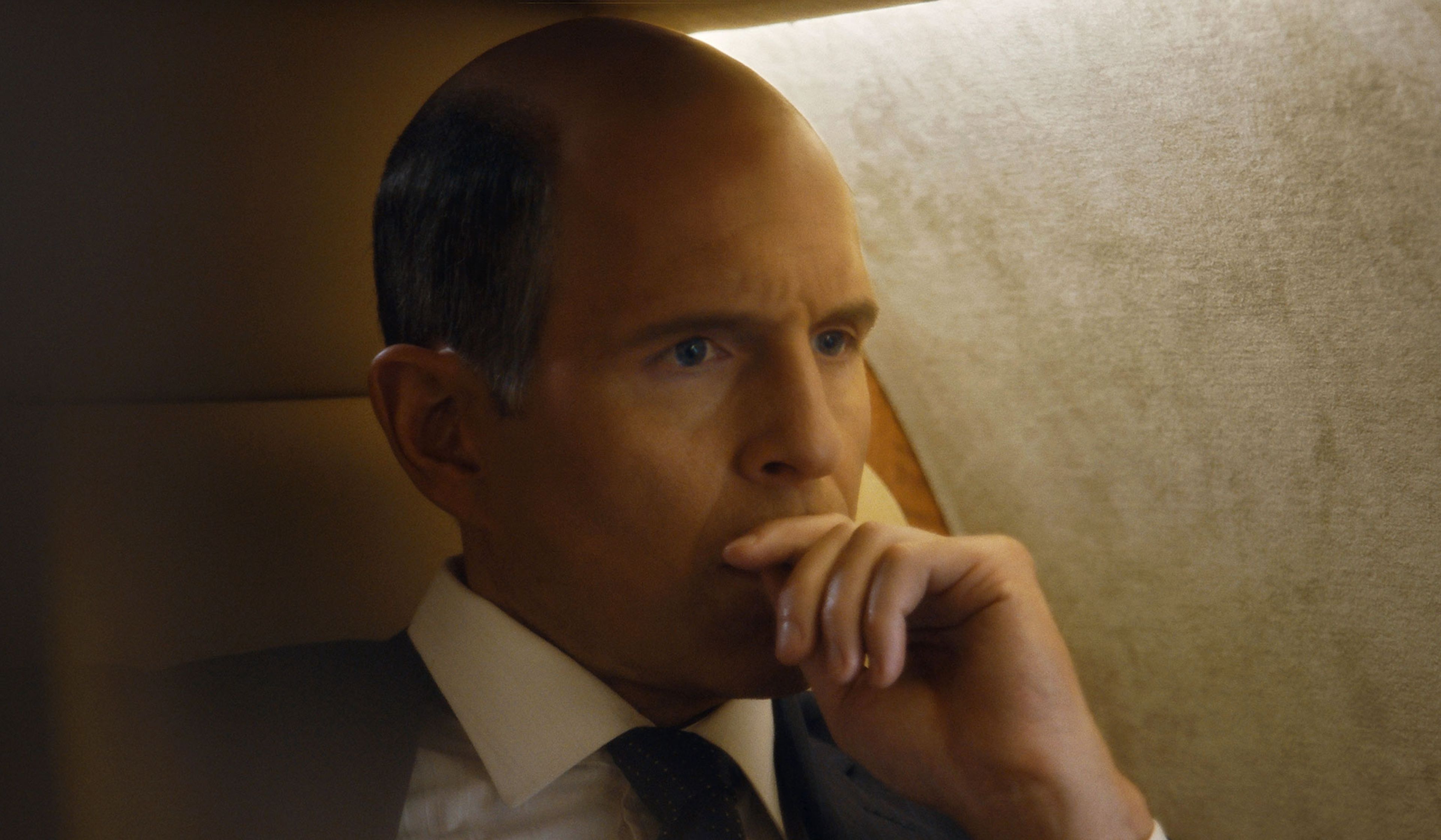
Jay Baruchel, Michael Scott, James Tiskin, Matt Johnson, Ben Petrie, and Ethan Eng in BlackBerry
Elevation Pictures
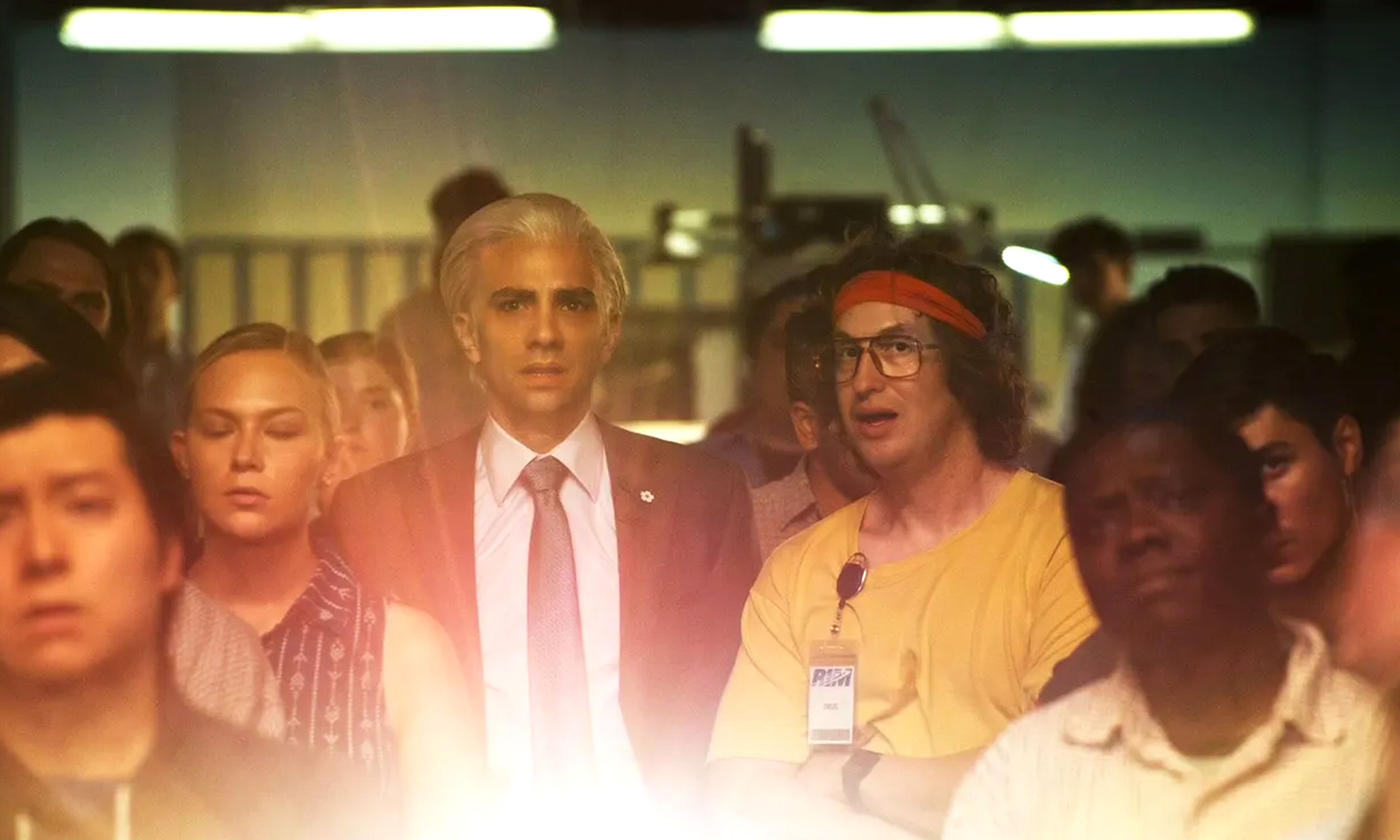
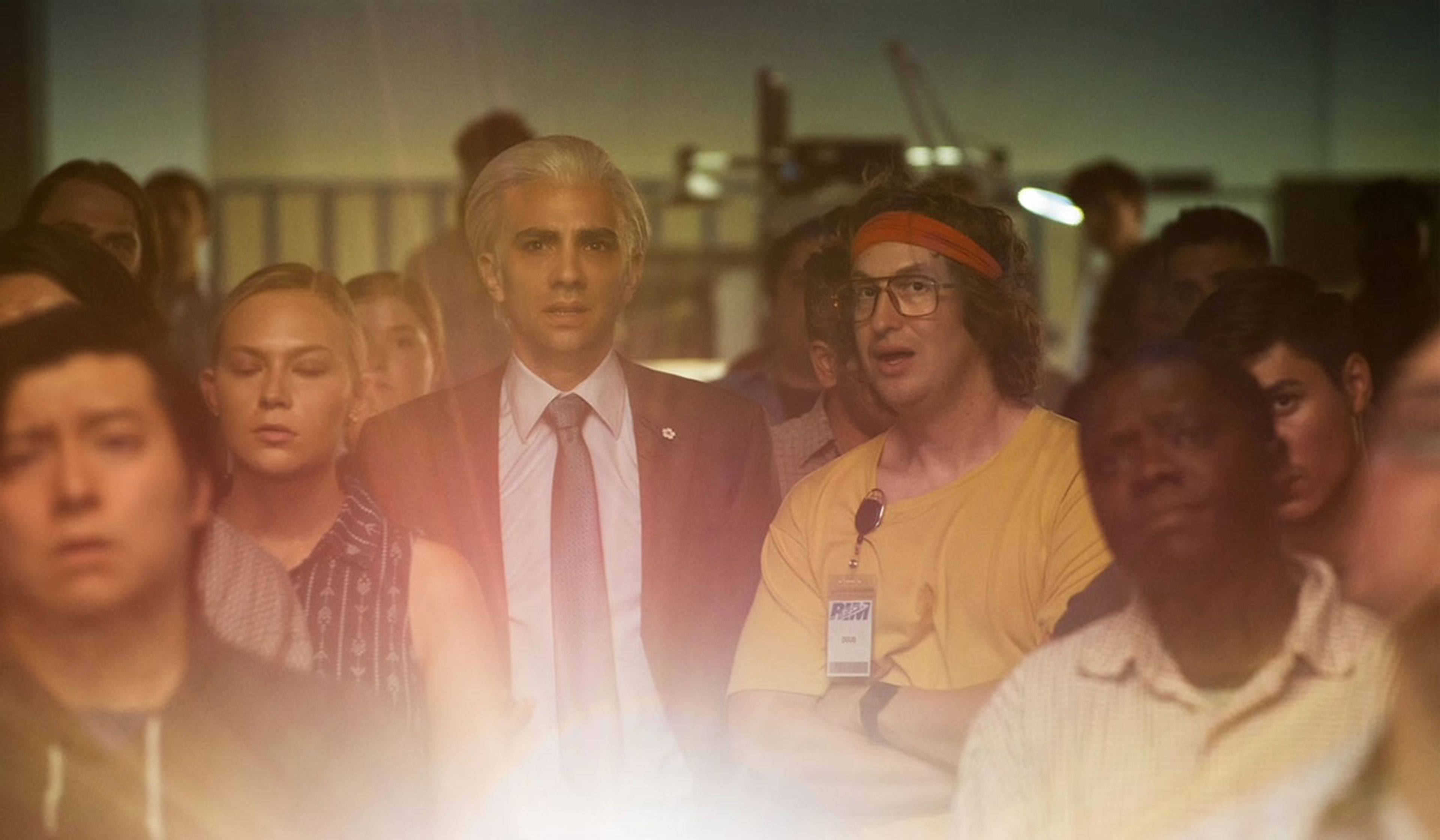
From there the movie jumps ahead to 2003, when to fend off a hostile takeover by PalmPilot (that’s Cary Elwes, a long way from The Princess Bride, as its CEO), Balsillie has to push Lazaridis through a new technological breakthrough, with an assist from not entirely SEC-compliant hiring tactics that help the Canadian underdog poach Silicon Valley engineers. And then it’s on to 2007, by which time BlackBerry bestrides the cellphone world, Lazaridis has grown out a white pompadour and shed some of his decency, Balsillie is trying to buy an American hockey team and move it north of the border, and the iPhone enters as the Californian nemesis of all that they have built.
Like Air but even more so, this is a movie about male businessmen in which domestic and romantic life is notably absent. We watch the BlackBerry protagonists across more than a decade and never get a sense that they have any motivations or commitments beyond technological and professional competition (along with, yes, Balsillie’s love of hockey). The family stuff in rise-and-fall dramas is often pro forma and cutting it helps streamline the storytelling, but you can feel its absence here. Baruchel and especially Howerton give terrific performances but, as Johnson’s Fregin is sidelined, they really exist only in relation to each other, a two-man play with some running in airports thrown in.
But perhaps that’s the point: that, as a company, BlackBerry was always destined to be superseded, because it was a pair of stars up against a constellation, a cluster of provincial talents facing the consolidated power of Silicon Valley. (“You said they were the best engineers in the world!” Balsillie barks at one point, when their team hits a wall. “I said they were the best in Canada,” Lazaridis dolefully replies.) To invent one temporarily dominant device, more civilized than its successors if not exactly more elegant, was all that the boys from suburban Ontario could reasonably hope to do; to compete in the long run they would have had to bottle lightning every year.
At its most effective moments, that’s the sort of elegy BlackBerry is offering: not the predictable lament for friendships sacrificed on the altar of commerce, but a ballad of the provincial talent that briefly made Waterloo an unlikely power center, before the empire inevitably struck back.












Comments