This is a column about F You Money. Do I think too much or too little of the National Review reader in assuming you know what I mean by that?
If you don’t, you can google it. But I think it’s one of those self-disclosing neologisms that contain their own definition.
That is, achieving F You Money means having enough money to say “F You.” To employers present and future. To spouses or antecedents. To vendors or service providers. To governments, even. “F You” to anyone or anything that previously unsatisfactory pecuniary circumstances once compelled you to depend upon, a dependence which in turn obliged you to hold your tongue. But no more. Now you have “secured the bag,” as the kids say, shored up your finances well enough that you can tell them what you really think. Take your custom elsewhere. Or start your own custom.
The People’s Republic of China has F You Money. And increasingly they’re saying “F You.”
China’s F You Money manifests itself in the “Belt and Road Initiative,” a multi-decade plan of investments in ports, rail, and other critical infrastructure in Asia, Africa, the Middle East, and elsewhere. A kind of Yuan Diplomacy that kindly, gently makes client states of its largely third-world recipients.
Other countries — including key U.S. allies in the greater Pacific — have experienced the less kind, less gentle side.
The Aussies, for instance, have faced hard-core boycotts and retaliatory trade policy for little more than hurt feelings — including those over Australia’s call for a full investigation into the origins of the coronavirus. These policies don’t even pretend to have a broader economic rationale. More bloodily, India was party to perhaps the world’s first all-bludgeoning border skirmish since the dawn of the Bronze Age. Rather than bullets or blades, soldiers representing the two countries beat and stoned each other to death after China objected to Indian construction in a remote mountain region claimed by both countries. The casualties numbered in the dozens for each side.
And, of course, the United States has increasingly gotten the high hat from the PRC. Word is Defense Secretary Lloyd Austin can’t even get his Chinese opposite number on the phone. Say what you want about Donald Trump’s wisdom in starting — or the follow-through in waging — his trade war with China, but Beijing has not exactly been suing for peace. Instead it is meeting U.S. tariffs and boycotts tit for tat and keeping up the pressure on a variety of other issues, from the pandemic to freedom of navigation in the South China Sea.
And worse than all that — or, if not worse, at least more dispiriting — is China’s seemingly complete F You ownership of America’s corporate and entertainment classes.
Some time ago I wrote in this space about the NBA and LeBron James’s communist curtsies. About companies like Apple that did things like quietly removing Taiwanese-flag emojis from their platforms at the PRC’s request while kinda sorta maybe relying on slave labor from disfavored Chinese minorities.
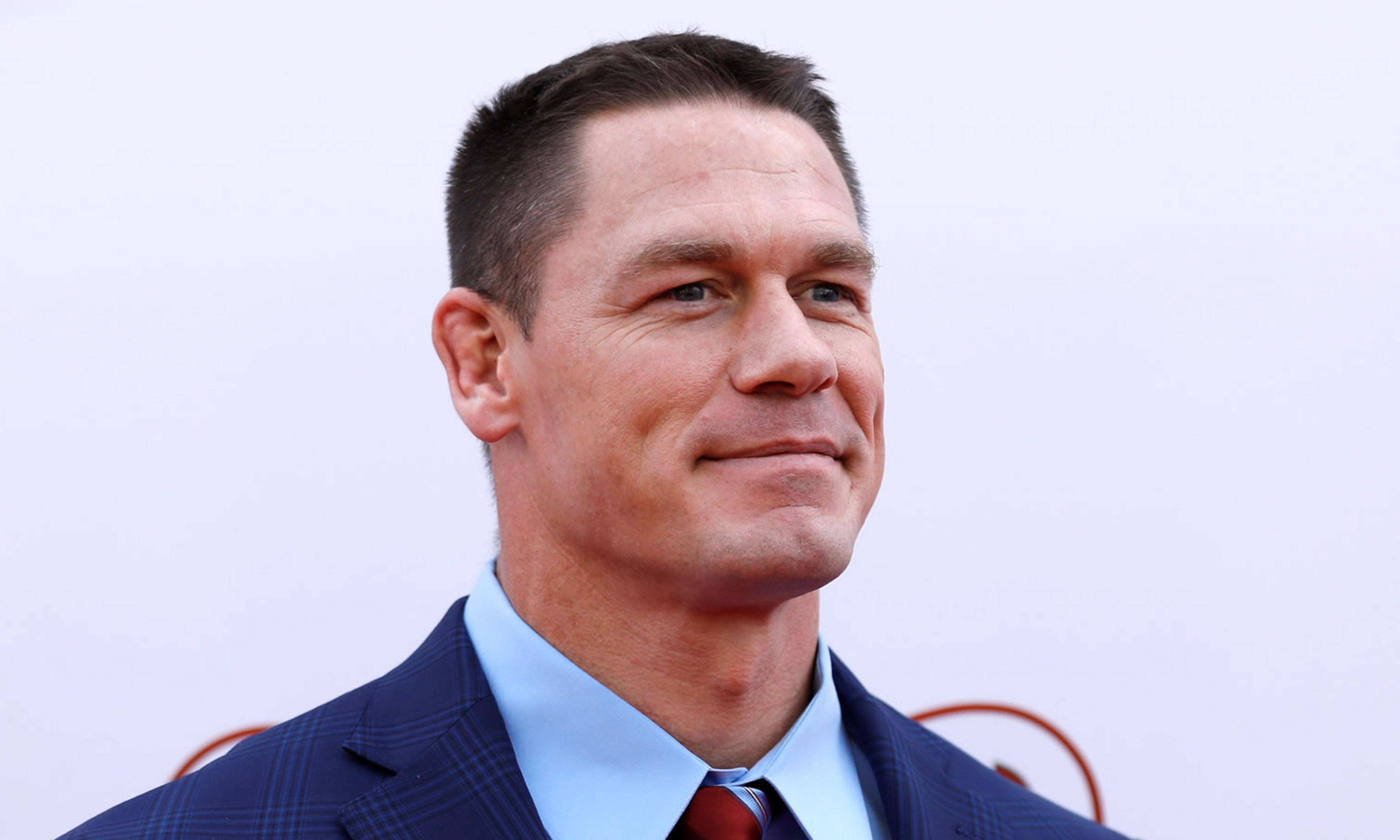
This week there was a new, even more abject self-abasement to add to this dubious ledger, from professional wrestler turned action-comedy star John Cena, who taped an apology to “the Chinese people” for mistakenly referring to Taiwan as a “country” (which, you know, it is).
Everything about the video is icky. Cena the wrestler was a red-state icon whose brand was an extension of Hulk Hogan’s Reaganish Americana. He delivers the hostage-video mea culpa in Mandarin.
Cena was undoubtedly in a bad spot. Had he not apologized, the Chinese state might have pulled the umpteenth Fast and Furious sequel he was promoting from its theaters, costing its producers, and his peers, beaucoup bucks. But what makes it so dispiriting is that Cena and his people must have known how gross and dishonorable the video would read to American audiences, and he felt compelled to do it anyway — knowing where his bread is buttered.
I’m on the record with my own mea culpa on China. I was among the many who were wrong in thinking, since the ’00s, that China couldn’t become rich and powerful without liberalizing. What none of us counted on was that China would get rich and powerful quickly enough that it could corrupt global capitalism before global capitalism corrupted it. We didn’t count on China hitting F You Money.
Compared with the United States, whose love affair with free enterprise is foundational, fundamental, genetic, China has a relationship to its own economic development that is more instrumental. It isn’t just that growth betters the lives of its people — it might not even be primarily about that — it’s that growth gives it a powerful tool to remake the world within and without its borders in other significant ways. It’s why time and again the CCP has shown a willingness to endure economic pain to inflict it on its enemies. For spite. To save face. To make a point. Whatever its deeper motives, the CCP knows that Apple, the NBA, John Cena’s producers, are — at least in their dealings with Beijing — primarily motivated by money. And they make use of that knowledge with a brutal efficiency.
And if a few bucks were all that was at stake, it’d be hard to blame our celebrities and C-suites for washing their hands of the geopolitics and reading the lines the Chinese state writes for them. But that’s not how Beijing sees it. And it’s certainly not how the Uyghurs, the Taiwanese, or the democracy activists in Hong Kong do.












Comments