Sometimes a strong aesthetic is enough. The first language of cinema is always visual, and if you understand beauty, if you have a distinctive vision of what you want to show the world, your script and story can lag or plod and that won’t be what your audience remembers.
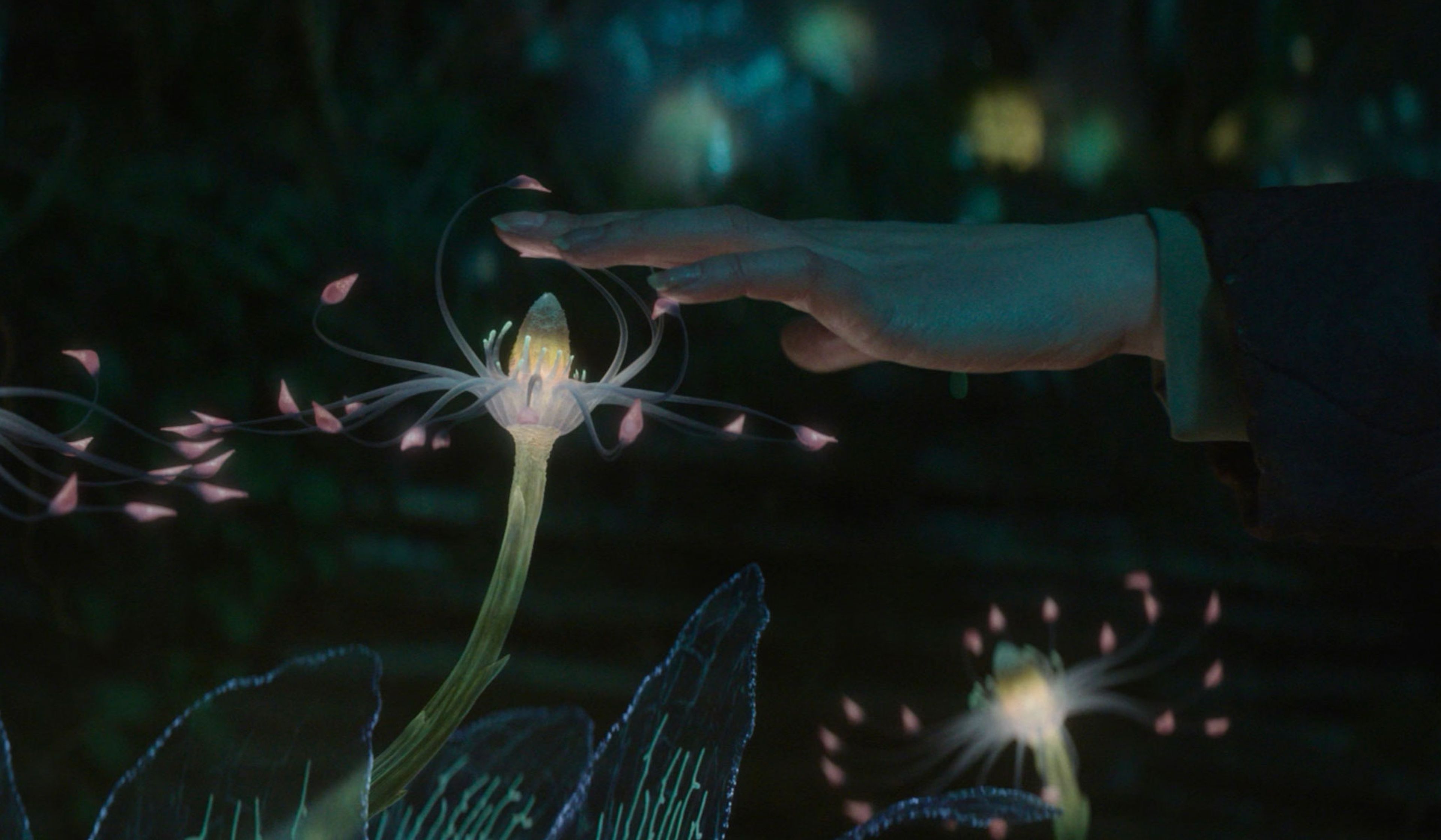
Such is the case with Vesper, a science-fiction fairy tale produced on a definitely-less-than-Marvel budget by two filmmakers, Kristina Buozyte of Lithuania and Bruno Samper of France, with an English-language script and cast. The movie is set in a future whose premise is familiar — science run amok, civilization wrecked — but whose actual manifestation is novel, unusual, and beautiful. In its world some kind of ambitious synthetic biology has transformed organic life beyond recognition, erasing animals entirely and creating forests and fields full of strange, intelligent-seeming, often deadly plants.
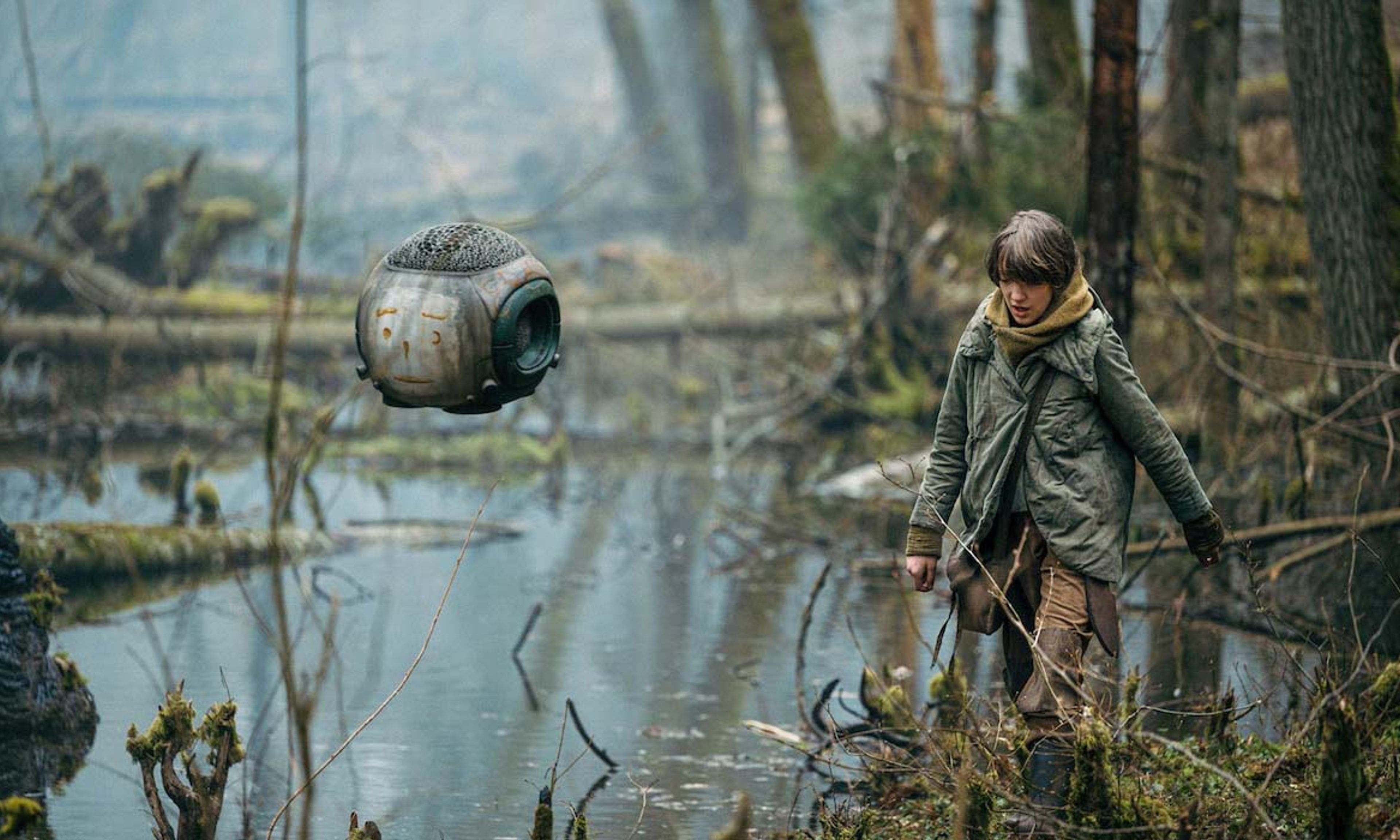
This brave new landscape is extremely dangerous for humans, and it has sent the overclass fleeing into protected redoubts, the Citadels, whence they dispense engineered seeds to the people left outside in exchange for bags of youthful blood — for what purpose, no one knows. The youth we’re interested in is the Vesper of the title, a watchful 13-year-old girl (played by Raffiella Chapman) living with her crippled father, Darius (Richard Brake), in the dangerous woods. A former soldier for the Citadel, he’s bedridden and physically mute, but he can communicate with his daughter via what looks like a floating robot’s head that travels at her shoulder and dispenses grim advice.
Nearby is Darius’s brother Jonas (Eddie Marsan, giving the movie’s best performance), who has made the most of his post-apocalypse, running a small compound where he fathers children on a harem of women, sells his kids’ blood to the Citadel, and reaps the seeds to grow food in return. He wants his niece as one of his breeders, but all she’ll give him is occasional doses of her own blood, in exchange for the organic material whose energy powers her father’s house, its generator, and his life support.
These unhappy arrangements are disturbed by a crash landing, a Citadel craft that ditches in the forest, leaving a posh survivor, Camellia (Rosy McEwen), lying unconscious, to be found by the questing Vesper. Camellia is not what she initially appears to be, but then neither is Vesper, who turns out to be an amateur synthetic biologist in her own right, maintaining a laboratory of luminous creations in the wreckage of a barn. The combination of Camellia’s true identity and Vesper’s gifts supplies a modest sort of hope for the world outside the Citadel — a hope that’s then menaced by Jonas’s “better to reign in hell” self-interest and the overclass’s guns.
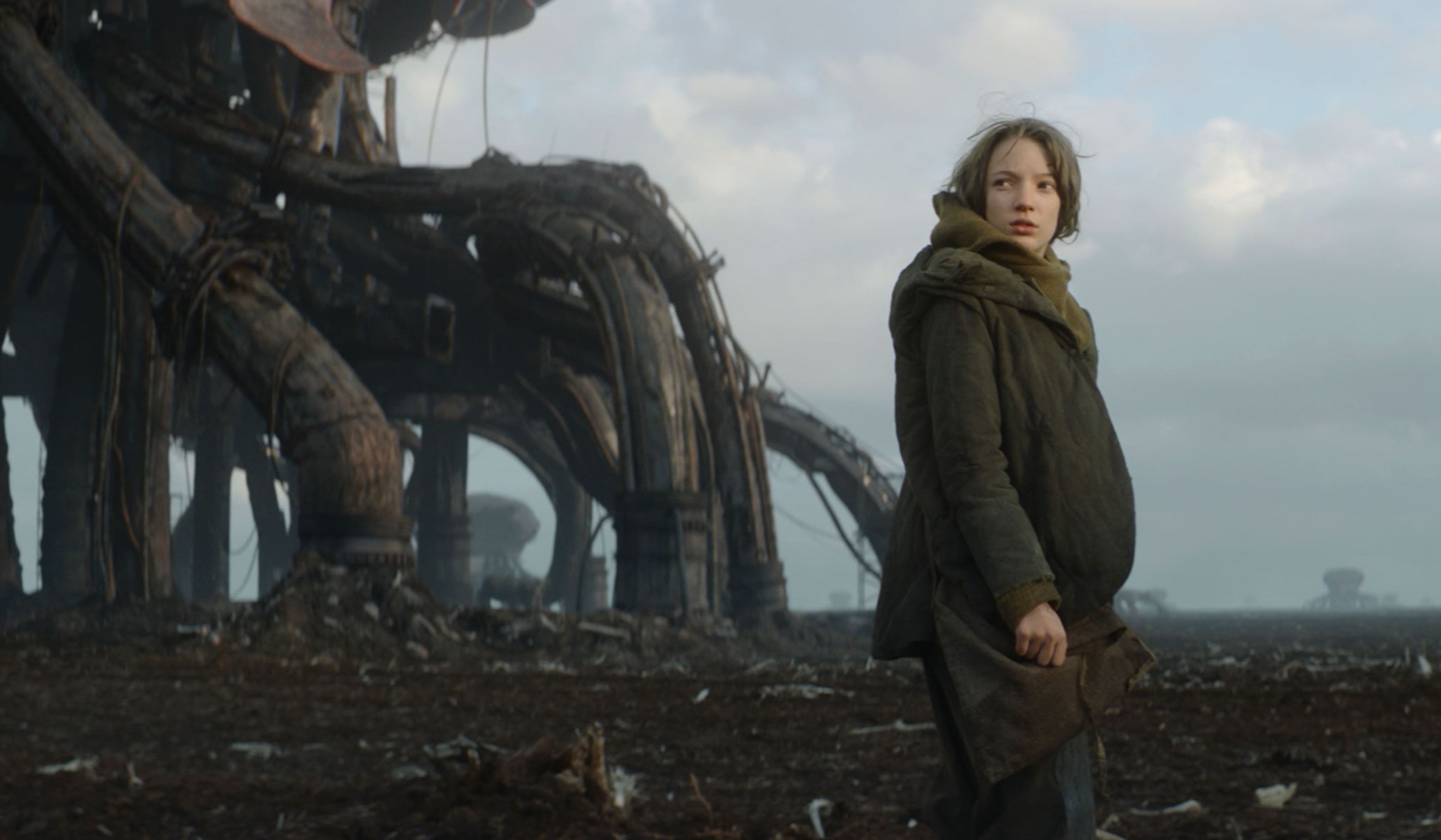
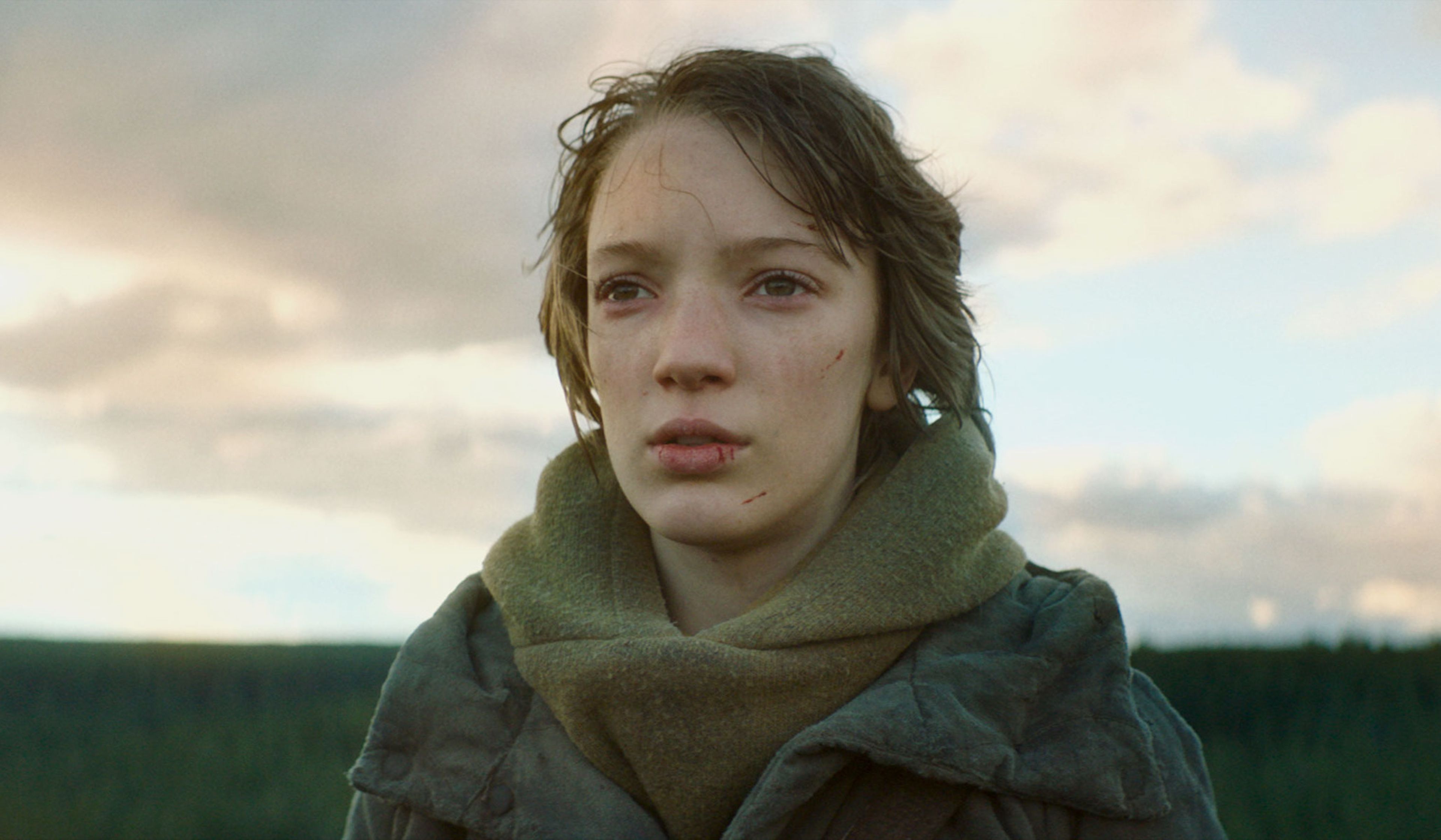
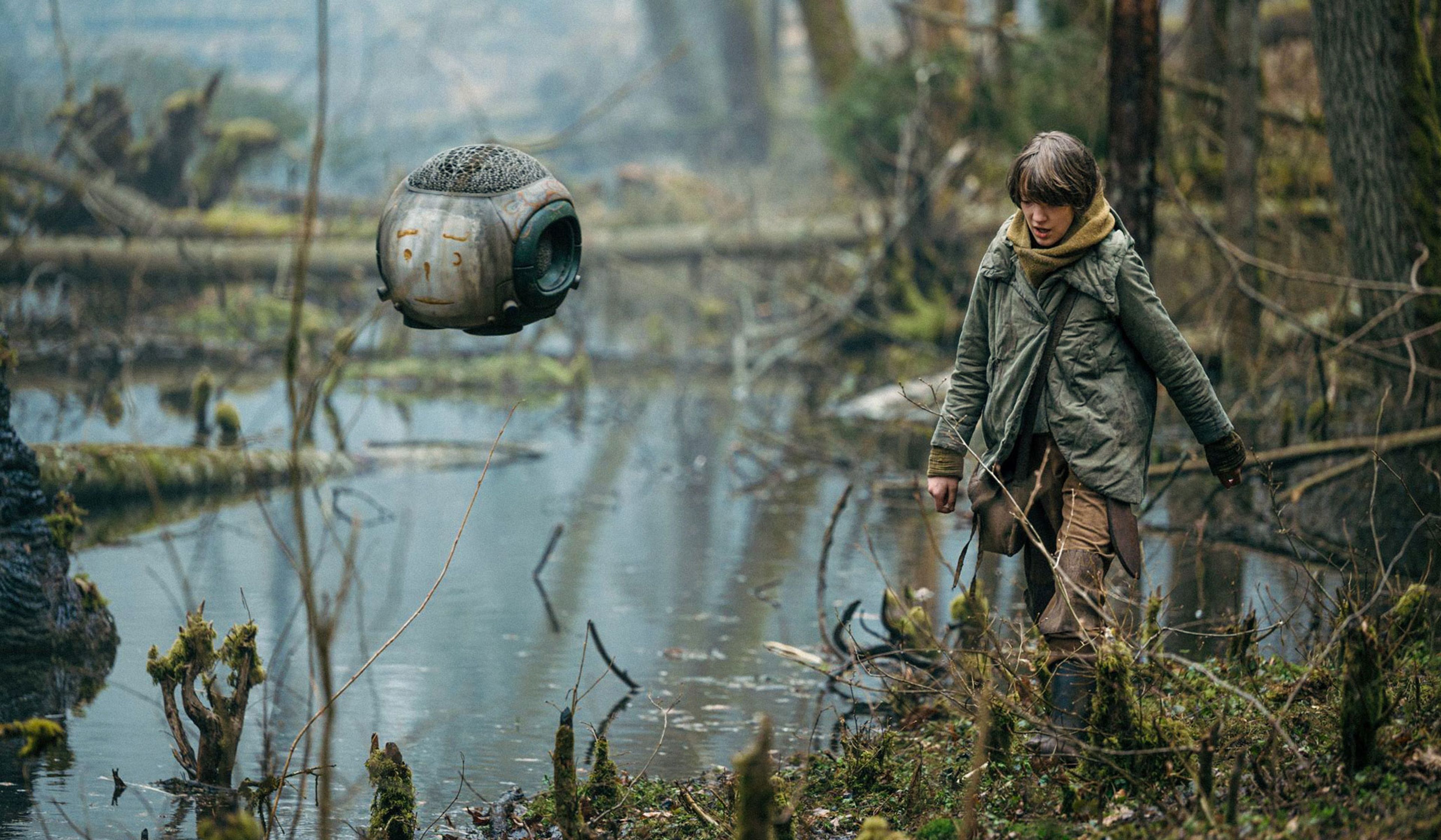
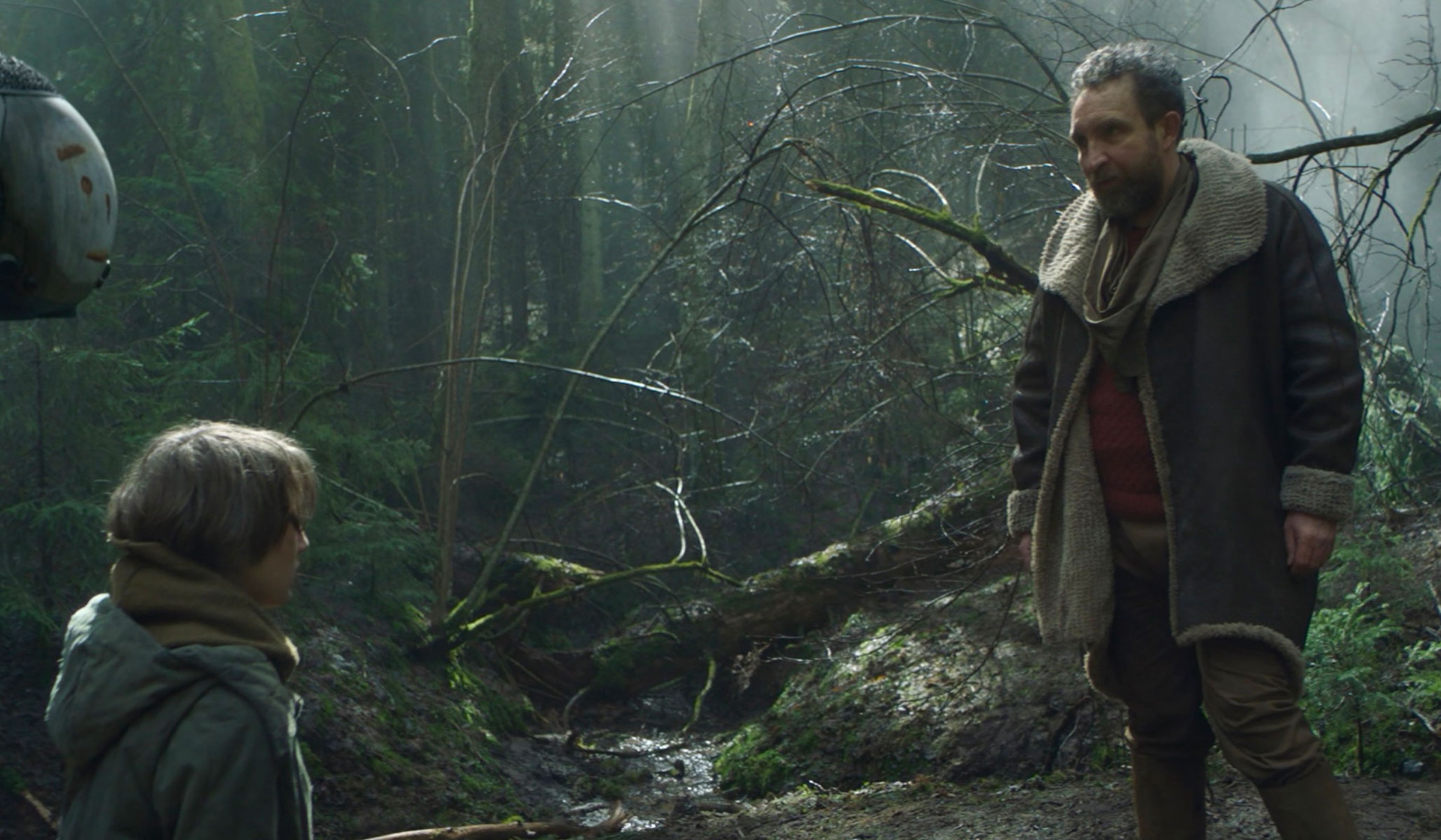
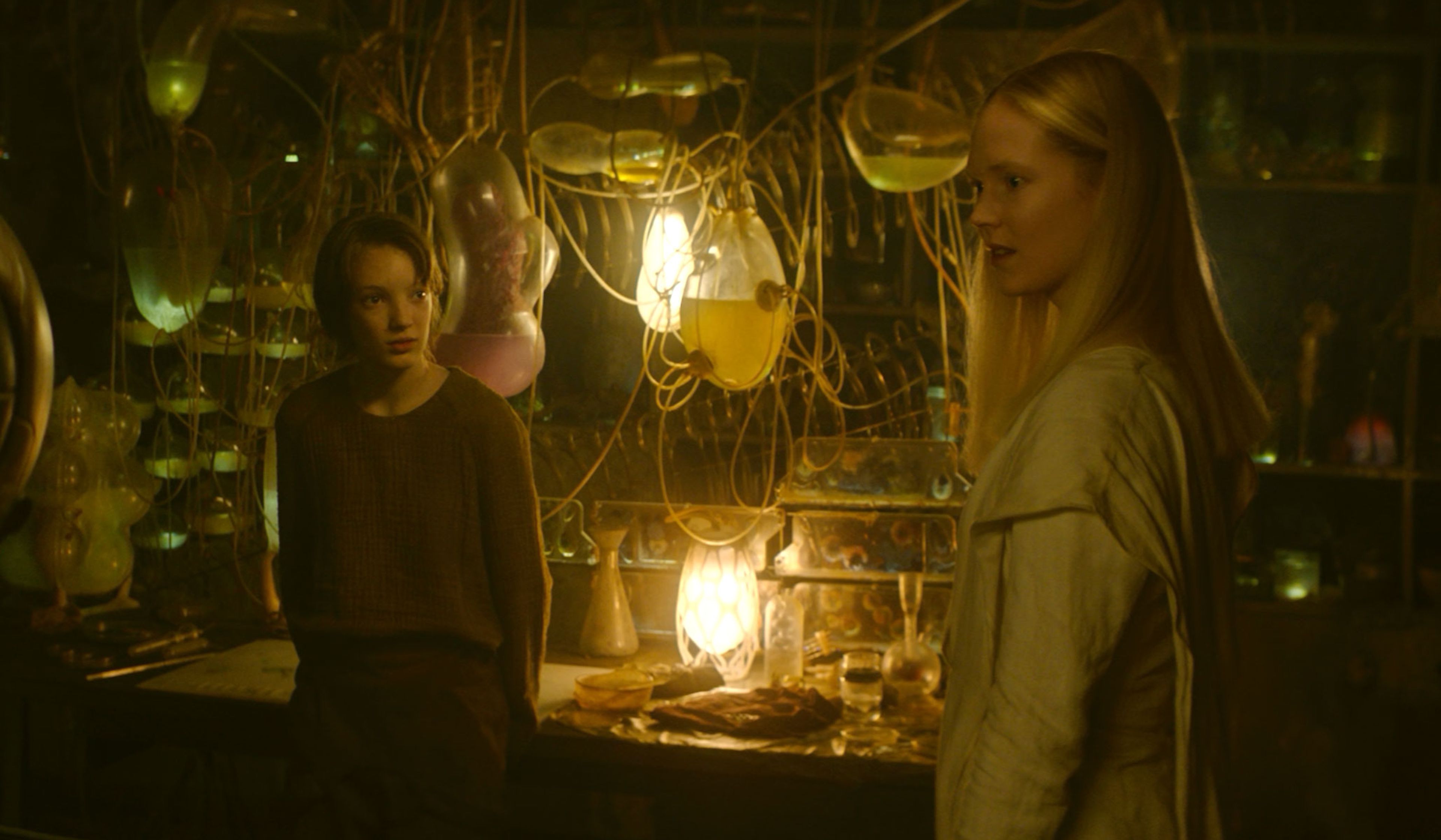
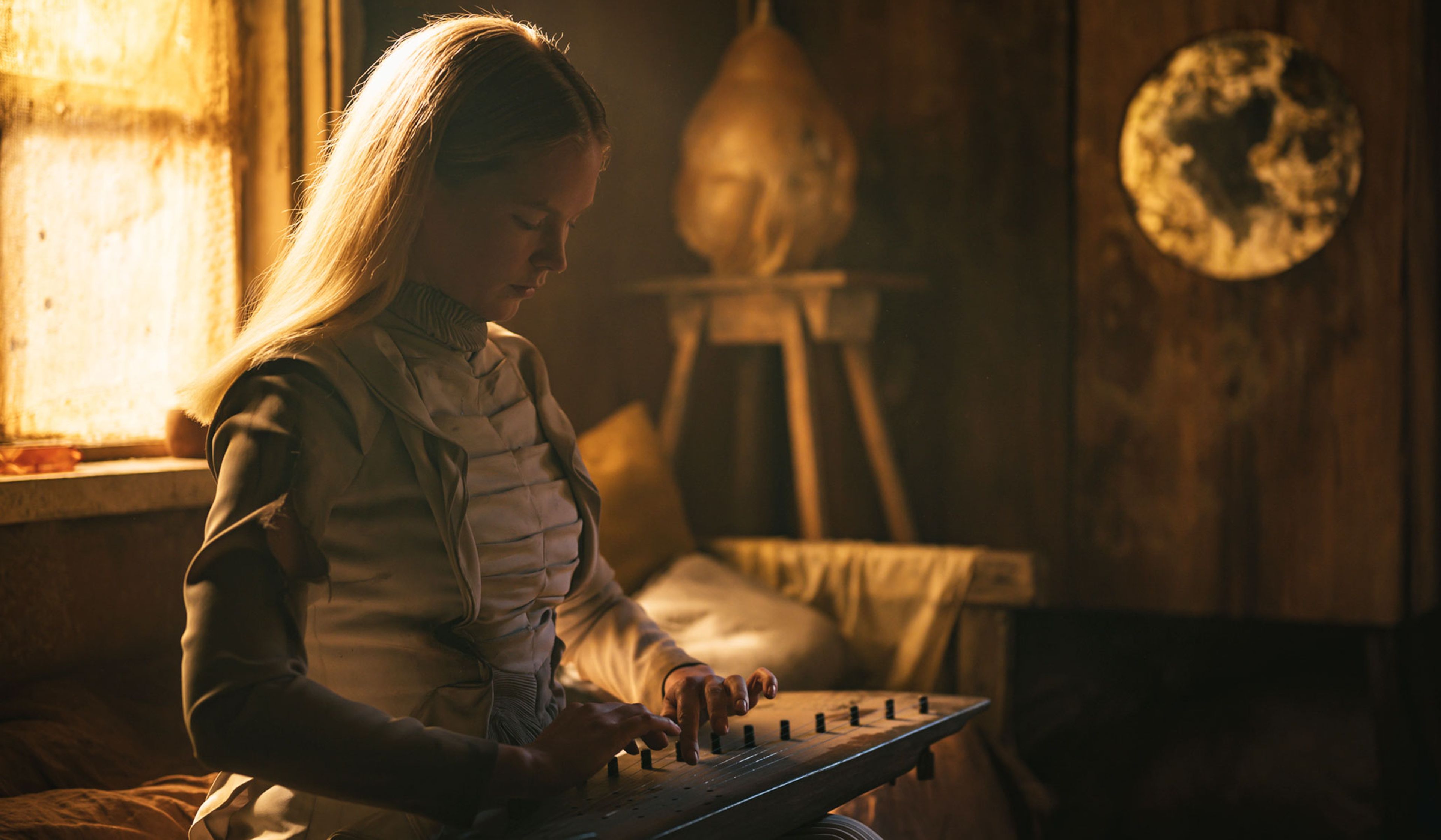
Rafiella Chapman in Vesper.
IFC Films
It’s a slight plot, in the end, almost deliberately undeveloped, with various aspects of the world left unexplained and unexplored. (My suspicion is that we would have had a glimpse inside the Citadel if only the budget had allowed it, but maybe it’s better that it didn’t.) The movie thrives instead on arresting images and moments: a “Jug,” a humanoid subspecies manufactured for service in the Citadel, lying pinned beneath a collapsed construction site, issuing a weird almost-human whine; the “Pilgrims,” a cult that abandons home and family and goes about with covered faces, dragging civilization’s detritus, rusted junkyard scraps, through a barren wintry field; the interior of Vesper’s father’s floating ball, not a machine as we know it, no wires or circuit boards, just a strange damp organic structure that somehow connects to both consciousness and voice.
And then there’s the transformed landscape itself — not a barren, life-threatening dystopia in the style of a Mad Max desert or the post-apocalyptic tundra of Snowpiercer, but a realm of life forms with their own integrity and beauty, whose purposes may be dangerous to humanity but that you would not wish to see destroyed.
There are some resemblances to the realm of mutable organic matter in the recent film Annihilation (and its novelistic sources), which turned on the encounter between human beings and something with altogether alien intentions. But in Vesper there is no controlling consciousness to be confronted: This world is much more of a knight-errant’s landscape, thick with dangers and pitfalls, alien in the way of Faerie but not always necessarily hostile, and beautiful even in its peril.
The most striking shot in the movie finds Camellia lying unconscious in the new world’s verdure, garbed like a sleeping princess, surrounded by waving, probing, multicolored tendrils, some of which have already begun to work themselves into her flesh. Nothing of him that doth fade, / But doth suffer a sea change / Into something rich and strange. Vesper is a small, imperfect movie, but its world is rich and strange indeed.












Comments